Quick Summary: Cavapoo buyers face heavy scam risk because the dogs are popular and pricey, with the BBB logging thousands of complaints and about 60% of victims never receiving a puppy. Fraudsters rely on stolen photos, below-market pricing, pressure tactics, and payment requests via Zelle, wire or crypto, often adding surprise shipping fees after a deposit clears. The article walks through a checklist for vetting any breeder: reverse-image search the puppy photos, confirm OFA health testing and vet records, insist on a live video call, demand written contracts, and only pay with traceable methods like a credit card. Sage Puppies is presented as a model program that publishes transparent pricing, shares health details openly, and matches puppies through an application rather than pressure.
A “Cavapoo for sale” listing that demands a Zelle or gift card deposit, prices a puppy hundreds below market, and dodges your phone call is almost always a scam. The BBB estimates roughly 10,000 puppy scam complaints in the past three years, and about 60 percent of those buyers never received a dog. Cavapoo puppy scams work because the breed is in high demand and families fall in love fast.
This guide fixes that. It turns FTC, BBB, and AKC advice into a simple verification workflow you can run on any breeder before you send a dollar, so avoiding Cavapoo scams becomes a checklist instead of a gamble. You will learn the red flags, the questions that expose fake breeders, and what honest pricing looks like. Real Cavapoo scam prevention starts here: see our current available puppies and our transparent pricing and reservation process.
Step 1: Understand How Cavapoo Puppy Scams Actually Work
Cavapoo puppy scams follow a script. Once you know the four most common patterns, spotting them gets much easier. Fraudsters rarely invent anything new. They copy the same tricks because the tricks keep working on buyers who fall in love with a photo before they verify anything.
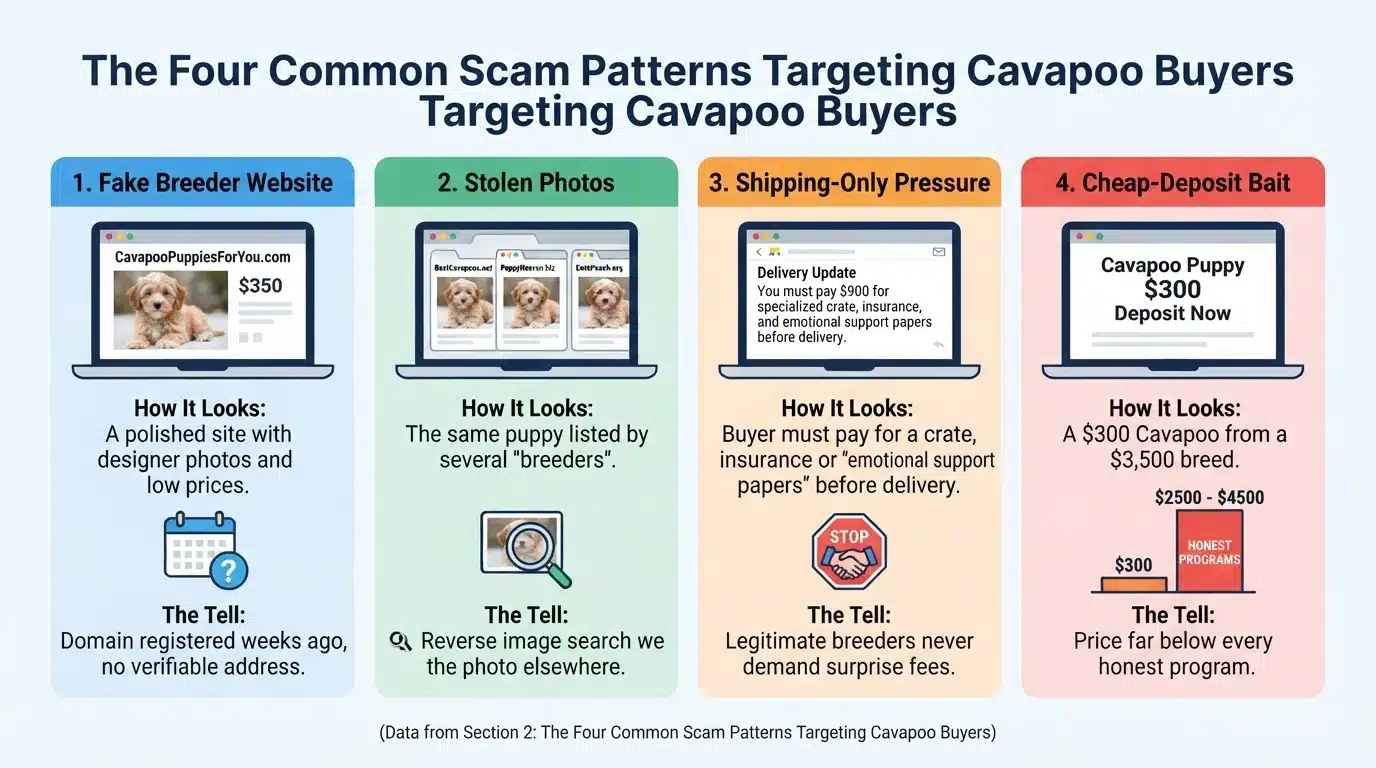
The Four Common Scam Patterns Targeting Cavapoo Buyers
| Pattern | How It Looks | The Tell |
|---|---|---|
| Fake breeder website | A polished site with designer photos and low prices | Domain registered weeks ago, no verifiable address |
| Stolen photos | The same puppy listed by several “breeders” | Reverse image search shows the photo elsewhere |
| Shipping-only pressure | Buyer must pay for a crate, insurance or “emotional support papers” before delivery | Legitimate breeders never demand surprise fees |
| Cheap-deposit bait | A $300 Cavapoo from a $3,500 breed | Price far below every honest program |
Most Cavapoo puppy scams blend two or more of these. A scammer may lift photos from a real breeder’s litter, then invent a shipping problem that costs another $900. The Better Business Bureau warns that pet scams are among the most reported fraud types, and the losses climb fast once wire transfers or gift cards enter the picture.
Why Cavapoos Are a High-Value Target for Fraudsters
Demand is the engine. Cavapoos are popular, hard to find locally in many states, and families routinely pay $3,500 to $4,500 for a well-bred puppy. That gap between want and supply is exactly where fraud grows. The FTC advises buyers to see the puppy in person or through live video before paying anything.
Scammers also know many buyers search nationally and rely on delivery, which removes the chance to visit. Anyone can claim a Cavapoo litter online. Verification, not charm, is what protects your money. Our guide to finding a responsible Cavapoo breeder walks through that vetting process step by step.
Step 2: Spot the Red Flags in a Cavapoo Listing
Most Cavapoo scams follow a pattern. Once you know the pattern, you can screen a listing in about two minutes. The BBB regularly reports on online puppy sale fraud, where buyers pay deposits for dogs that never arrive, so treat the signs below as reasons to walk away.
Price, Pressure, and Payment Red Flags
Start with price. A purebred-registered Cavapoo “free to good home” or a $400 puppy from a cross-country shipper is almost never real. As of 2025, well-bred Cavapoos from US programs typically run $2,000 or more, and if a seller’s price is far below that, ask why. At our own program, the range for a wisely bred puppy is $3,500-$4,500, and we publish it openly on our pricing and reservation page. Scam pricing works the other way: it hides.
Then listen for pressure. Phrases like “three other families are paying today” or “deposit required before you can video call” exist to rush you past your doubts. A real breeder expects questions and answers them.
Finally, check how they want to be paid. Anyone requesting gift cards, wire transfers, Zelle, Venmo, crypto, or payment apps is following the fraud playbook, because those payments are hard to reverse. Legitimate breeders accept traceable methods and put deposit terms in writing.
Warning: Never send a deposit before you have seen the puppy on a live video call, at the location the seller claims.
Communication and Photo Red Flags Specific to Cavapoo Posts
Cavapoo scams lean heavily on stolen photos. Reverse-image search the puppy photos; if they appear on multiple sites or in older ads from other states, stop. Watch for mixed litters too, since real listings usually show the same consistent puppies and parents.
The same applies to communication:
- Vague location, then a last-minute out-of-state handoff
- Refusal to show the mother or breeding setup on video
- Generic answers about health testing
- New accounts with no history
Real breeders talk about parents, dates, and what makes a responsible Cavapoo breeder without hesitation.
Step 3: Run a Verification Workflow Before You Pay
Good listings survive a little digging. Scam listings rarely do. Before any deposit, run these three checks in order. They take under an hour, and they catch most fake Cavapoo litters before money leaves your account.
Reverse-Image Search and Open-Source Checks
Scammers reuse photos from real breeders or stock sites. Save the puppy photos, then upload them to Google’s reverse image search. If the same puppy appears on three websites under different names and prices, stop. Next, check the address on Google Maps: many fake breeders list a vacant lot or a mailbox store. Search the phone number and email in quotes too. A legit program like ours has one name, one location, and a history you can trace across pages. Inconsistency is your clearest signal.

Verify Health Claims Through OFA and Veterinary Records
Any breeder can claim “health tested parents.” Ask which registry holds the results. Reputable programs submit to the Orthopedic Foundation for Animals, and you can search a dog’s registered name or number free on the OFA site. Look for patella and eye results, both common concerns in Cavapoos. Then ask for a veterinary record for the puppy itself: exam date, vaccines given, and the clinic’s name. Call the clinic to confirm the visit happened. A real breeder shares records without complaint. Vague answers like “the vet has it all” deserve a walk-away.
Run a Live Video Call With a Script
Photos lie; live video rarely does. Ask for a video call, not a pre-recorded clip, and request it on the breeder’s own schedule. During the call, follow a simple script:
- Ask them to show the puppy moving around a room.
- Have them hold up a written date or your name on paper.
- Ask to see the mother, or explain why you cannot.
- Request a view of the puppy’s environment.
Refusal or constant excuses are your answer. A brief, calm call protects your whole budget, and you can always confirm next steps, pricing, and reservation terms on our pricing and reservation page before you commit.
Step 4: Compare Listings Using a Safe Buying Process
By now you have filtered out the obvious scams and checked that photos are real. The next step is narrowing your options to a small set of programs you can actually verify, then sequencing your payment so no money moves before the paperwork does.
Build a Shortlist of Two or Three Vetted Programs
Long lists create pressure, and pressure is how rushed decisions happen. Pick two or three programs that passed your earlier checks, then compare them side by side. Score each one on the same points: health testing of both parents, a written contract, clear vaccination and deworming records, willingness to video chat with you, and how they answer questions about the puppy’s upbringing.
A shortlist also gives you leverage. If one breeder dodges a question, you can calmly move to the next instead of talking yourself past a warning sign. Programs that welcome scrutiny, like a boutique operation where the owner handles matching personally, usually contrast well with volume sellers who push you to reserve same day. Keep notes in one place so the comparison stays honest rather than emotional. For a deeper look at what separates careful programs from the rest, see this guide to finding a responsible Cavapoo breeder.

Time Your Payment to Match Factual Paperwork
Deposit timing matters as much as the deposit itself. A safe pattern looks like this: verify the litter and parents first, confirm health testing and veterinary care in writing, then pay a modest deposit against a written contract. Full payment should come close to pickup or delivery, not weeks earlier.
Watch how a seller reacts to that sequence. Scammers often demand full payment up front, or push wire transfers, gift cards, or payment apps because those are hard to reverse. The FTC’s advice on puppy scams is blunt about this: never pay with a wire transfer or gift card. Reputable programs accept traceable methods and put terms in writing.
If anything in the paperwork does not match what you were told, stop. Your money is only as safe as the facts behind it.
Step 5: Choose Pickup or Delivery Without Inviting Last-Mile Scams
Scammers love the shipping step. Once you have paid for the puppy, a “transport agent” emails saying the crate is ready but you owe an extra fee, often a few hundred dollars, before the puppy can fly. The BBB warns this is one of the most common moves in puppy scams: the breeder never existed, and the fee is just a second harvest from the same buyer.

Why Last-Mile Fees Are a Common Scam Lever
The fee works because it arrives at the moment you are most invested. You have picked a name, told the kids, and paid a deposit. A sudden “temperature-controlled crate” charge feels small compared with losing the puppy. Legit breeders quote the full cost of pickup or delivery up front, in writing, before any money moves. If a fee appears after payment, treat it as a scam signal, not a hiccup. Real transport never requires gift cards, wire transfers, or payment apps to a stranger.
Pickup, Flight Nanny, and Ground Transport Done Safely
Three safe options cover almost every situation:
- In-person pickup. Visit the home, meet the mother, and take your puppy home yourself. It is the hardest step to fake.
- Flight nanny. A person flies in-cabin with your puppy and hands it to you at your airport. You meet a human, not a cargo claim ticket.
- Licensed ground transport. Ask for the company’s USDOT number, confirm it online, and pay the transporter directly.
Decide the plan and the price before you reserve. At Sage Puppies, delivery details stay part of the original agreement, so no surprise fees show up later.
Step 6: Respond If a Listing, Message, or Payment Looks Like a Scam
Trust your gut the moment something feels off. Scammers count on hesitation and emotion, so act fast instead of hoping it works out.
If You Have Not Yet Paid: Stop and Document
Do not send a deposit, and stop all contact with the seller. Screenshot the listing, their profile, the conversation, and any payment instructions before they can delete the ad. Then report the post to the platform, whether that is a classifieds site, social network, or breeder directory, so it gets flagged for the next family. A legitimate breeder will answer questions, share vet records, and let you verify them. If someone pressures you to pay today, ask them to explain the rush. Watch for common red flags before you ever move money.
If You Already Paid: Recovery and Reporting Steps
Act quickly, because recovery odds drop with time. Call your bank or card issuer right away and ask about a chargeback or fraud claim. If you wired money or sent gift cards, contact those companies too, though funds are rarely returned. File a report with the FTC at ReportFraud.ftc.gov and notify your local police for a paper trail. Then check the puppy’s health and adoption checklist against your next search, so your second attempt starts safer than your first.

You know the red flags now, so choose a breeder who invites scrutiny. At Sage Puppies, Cassie Milar shares health details, answers questions directly, and matches Cavapoo puppies through a clear application rather than pressure. Start your application today and move from worrying about scams to planning pickup day. Wisely Bred. Beautifully Loved.
Frequently Asked Questions
Q1: What does a safe online cavapoo buying process look like?
Verify the breeder’s address, meet the puppy’s parents on video, request health records, and pay only with a traceable method. A clear application and written deposit terms signal a real program.
Q2: How much should a Cavapoo puppy cost?
Expect roughly $3,500 to $4,500 from a reputable program. Prices far below that range often point to scams or puppy mills.
Q3: Should I ever pay with gift cards or wire transfers?
Never. Gift cards, Zelle, and crypto offer no buyer protection. Use a credit card or a payment service with dispute rights.
Q4: Can I get a Cavapoo delivered safely to my state?
Yes, through licensed ground transport or flight nannies with live tracking. Ask who travels with your puppy and request updates.
Q5: What health paperwork should a breeder provide?
Vaccination records, deworming history, a vet exam note, and a written health guarantee covering genetic conditions.
Q6: How do I spot a fake puppy listing?
Stolen photos, prices that seem too low, pressure to reserve quickly, and refusal to video chat are the biggest red flags.
Q7: When should I apply instead of browsing listings?
Apply when a program’s breeding practices and health standards check out. Waiting lists protect you from impulse decisions. Start with Sage Puppies’ application to join a qualified waitlist.
A Calm Closing Thought
Most Cavapoo scams fall apart under simple checks: a video call with the puppy, proof of recent vet care, a written health record, and a payment method with real buyer protection. Slow down when a price looks too good, and walk away when a seller resists proof.
You do not need to rush. Ethical breeders welcome questions, and a legitimate waitlist beats a fast deposit you regret. If a listing cannot pass these steps, close the tab and keep looking.
A well-bred Cavapoo from a careful program is worth the patience, and the application process exists for exactly that reason. Verify first, pay last, and trust the calm voice over the urgent one.