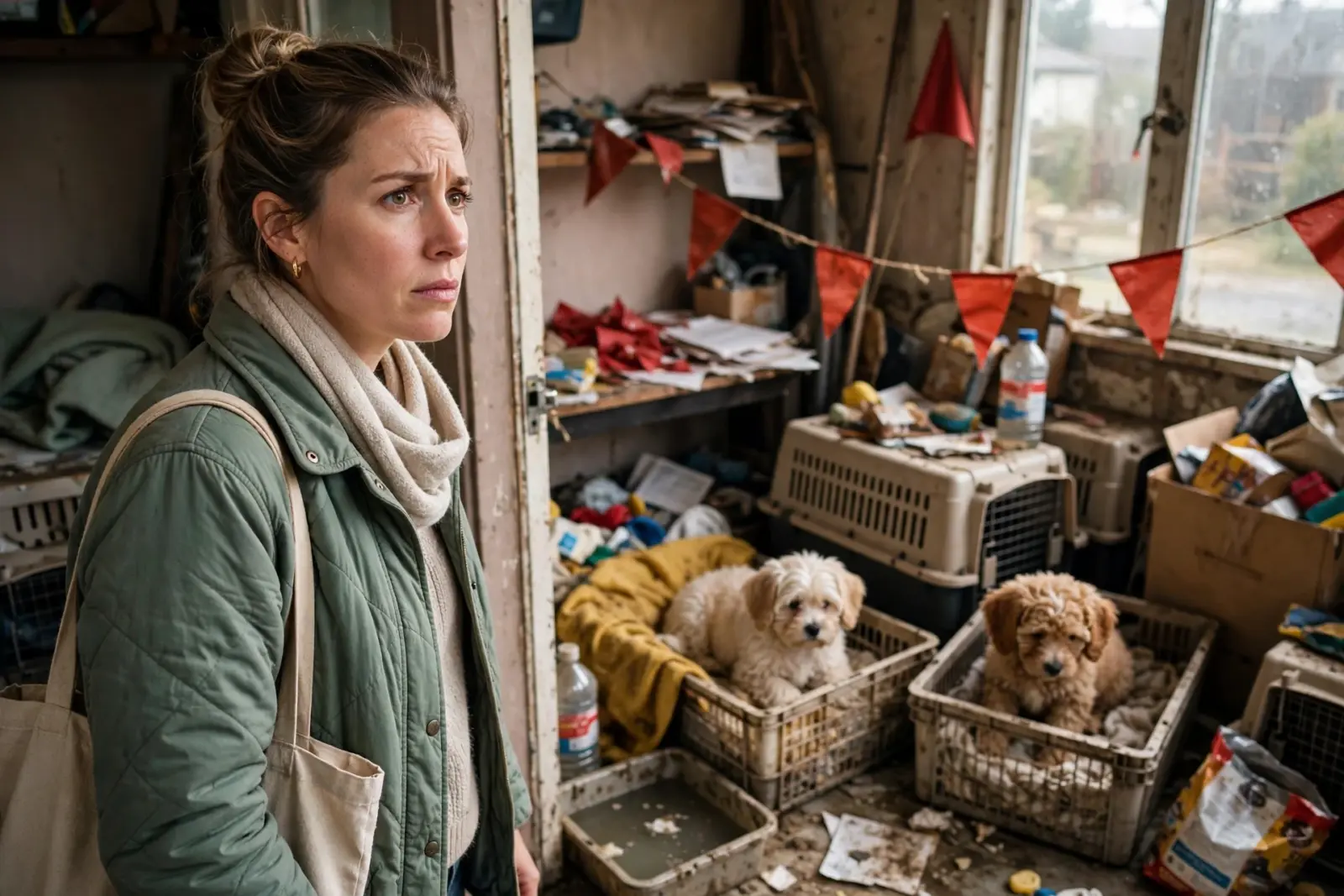
Quick Summary: Verify a home breeder through four checks: confirm licensing or exemption, authenticate health records yourself, meet the dam and assess the home, and review the written contract before paying. Proceed when records and references match, pause when a missing item has a clear explanation, and walk away from pressure, unsafe payment requests, or no return clause. Sage Puppies is presented as meeting these standards through upfront health records, applications, owner-managed matching, and transparent deposit terms, though buyers should still compare every breeder against the same checklist.
How do you verify a family home breeder before you buy? Run four passes: check licensing, request health records, meet the dam, and review the contract. Most families searching for family-raised puppies for sale near me start with a cozy kitchen photo and a price. Very few know which document to ask for next. So verifying a home breeder comes down to paperwork, not charm. The gap between a transparent home and a disguised puppy mill usually shows in the first ten minutes of the conversation. This guide walks through each record by name: where to look it up, what it should contain, and the red flags that end a deal. Verifying a home breeder this way takes an afternoon, and it protects your family from deposit fraud and heartbreak later.
Step 1: Confirm Legal Registration, Licensing, and Business Disclosures
The quickest filter in verifying a home breeder is paperwork. Ask for a business name, a state registration, and license numbers in writing before you talk price. Honest breeders answer fast; evasive ones stall.
Federal Requirements and the Limits of Licensing Exemptions
Is a home breeder required to be USDA licensed? Often no. Under the Animal Welfare Act, breeders with four or fewer breeding dogs who sell pets face-to-face are exempt from USDA licensing, and many small programs qualify. An exemption is legal, not a warning sign. What matters is whether the breeder knows the rule and explains where they stand.
An unlicensed breeder is not automatically a bad breeder. A breeder who cannot explain the licensing rules is.
State and Local Licensing Rules to Check
Your state sets the real floor. Many states, including Utah, require a commercial breeder license once you keep a set number of breeding dogs or sell a set number of litters, plus a local business license and sales tax permit. Check the state agriculture department’s breeder records or kennel license lookup, and confirm any business name on your contract is registered with the state.
| Record | Where to Verify |
|---|---|
| State commercial breeder license | State agriculture department |
| Business registration | Secretary of state search |
| Sales tax permit | State tax authority |
What a Legitimate Home Breeder Will Tell You Up Front
A trustworthy breeder volunteers this information before you ask. Expect a full business name, the exact address for pickup, a written contract, and clear deposit terms. Vague answers about location, cash-only payment, or a refusal to sign anything point toward deposit and payment fraud risk. The USDA’s Animal Welfare Act inspection database lets you check any licensed breeder’s inspection history free.
Some families compare home programs while reading up on family-raised puppies versus shelter rescue, and the same rule applies to both paths: documentation comes before cuteness. Verifying a home breeder starts here because every later step depends on knowing who legally stands behind your puppy.
Step 2: Request and Authenticate the Health Testing Records
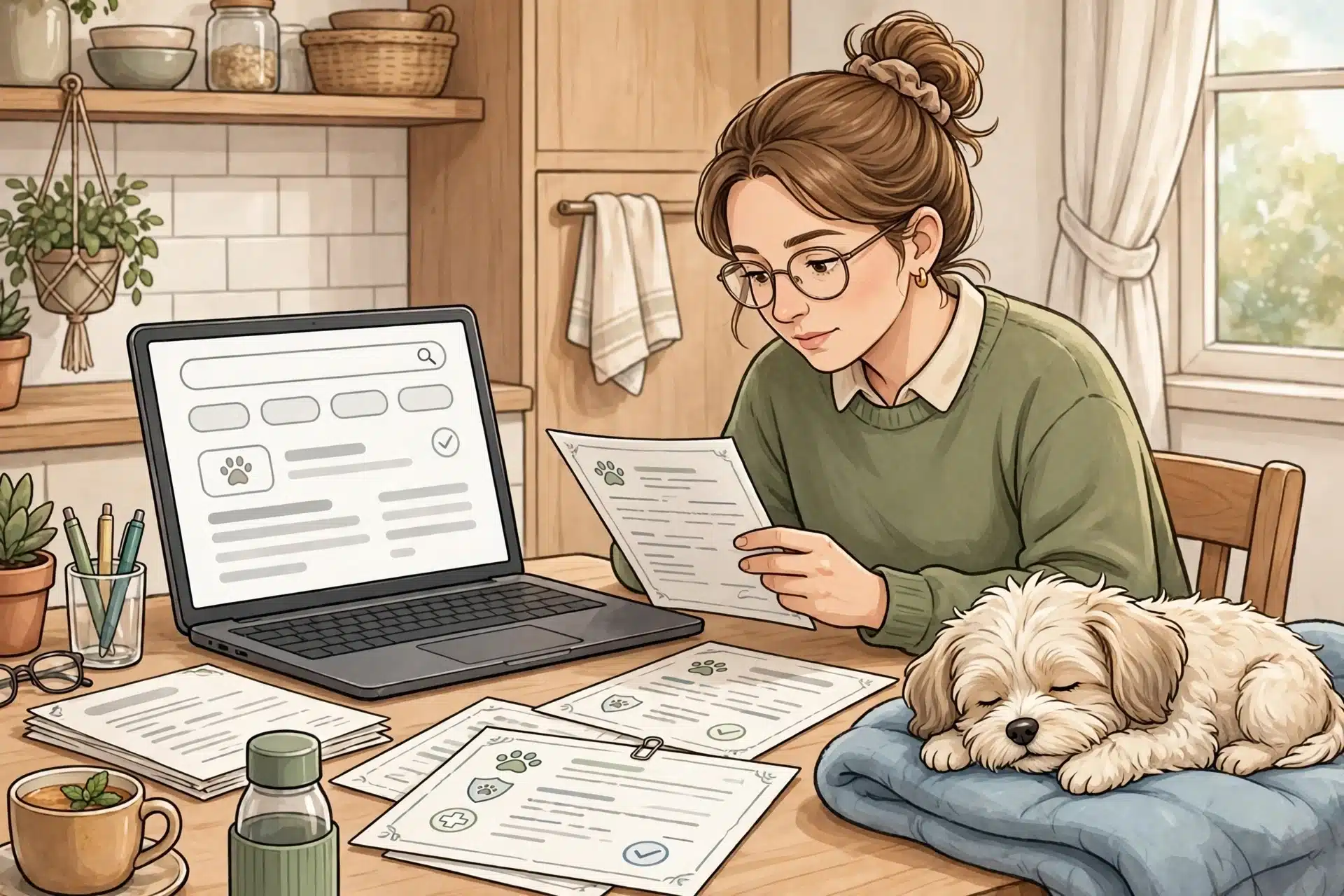
A home breeder can talk a great game. Paperwork is where claims either hold up or fall apart, so ask for records early and verify each one on your own before you send a deposit. If a breeder resists sharing documents at this stage, treat that as information too.
The Four Record Types Worth Collecting
What documents should you request from a home breeder, and how do you check each one?
- Parent DNA panel results: get the lab report, then confirm the results on the lab’s own site or in the OFA database.
- Orthopedic and cardiac clearances: patellas, hips, and heart exams should appear in the OFA’s public records, searchable by registered name or number.
- Eye exam results: request the most recent CAER (eye) certificate for both parents.
- Pre-purchase health examination records: the puppy’s own vet check, dated within days of your pickup or delivery.
How to Authenticate Each Record Independently
Never rely on screenshots. Type the parent’s registered name into the OFA search yourself and match breed, birth year, and results. A CHIC number confirms the parents completed the required screenings for the breed, though you still want to read each individual result. For DNA panels, ask which laboratory ran the test and look the report up on that lab’s site. Names should match across every document; a different spelling of the dam’s name deserves a direct question.
Handling Missing or Unverifiable Records
One missing record is a conversation. A pattern of them is a warning. If a result does not appear in a public database, ask why: some tests are recent, but real breeders can usually produce the lab invoice or the vet’s original report. Vague answers like “the vet said they’re fine” are not documentation. Some programs, including Sage Puppies, provide records upfront as part of the application process, which saves you the chasing.
Questions About Testing That Show Experience
Ask why the breeder chose each test, what results would have stopped a pairing, and how they handle a carrier match. Experienced breeders answer in specifics, not slogans.
Step 3: Inspect the Home, the Setup, and the Puppy’s Daily Life
When you visit a home breeder, check five things: where the puppies live, where the dam lives, how clean the space is, how the puppies respond to people, and whether the breeder lets you see all of it. Good breeders welcome the tour. Poor conditions hide, so a refusal to show you around matters as much as anything you see.
Where the Puppies and Dam Actually Live
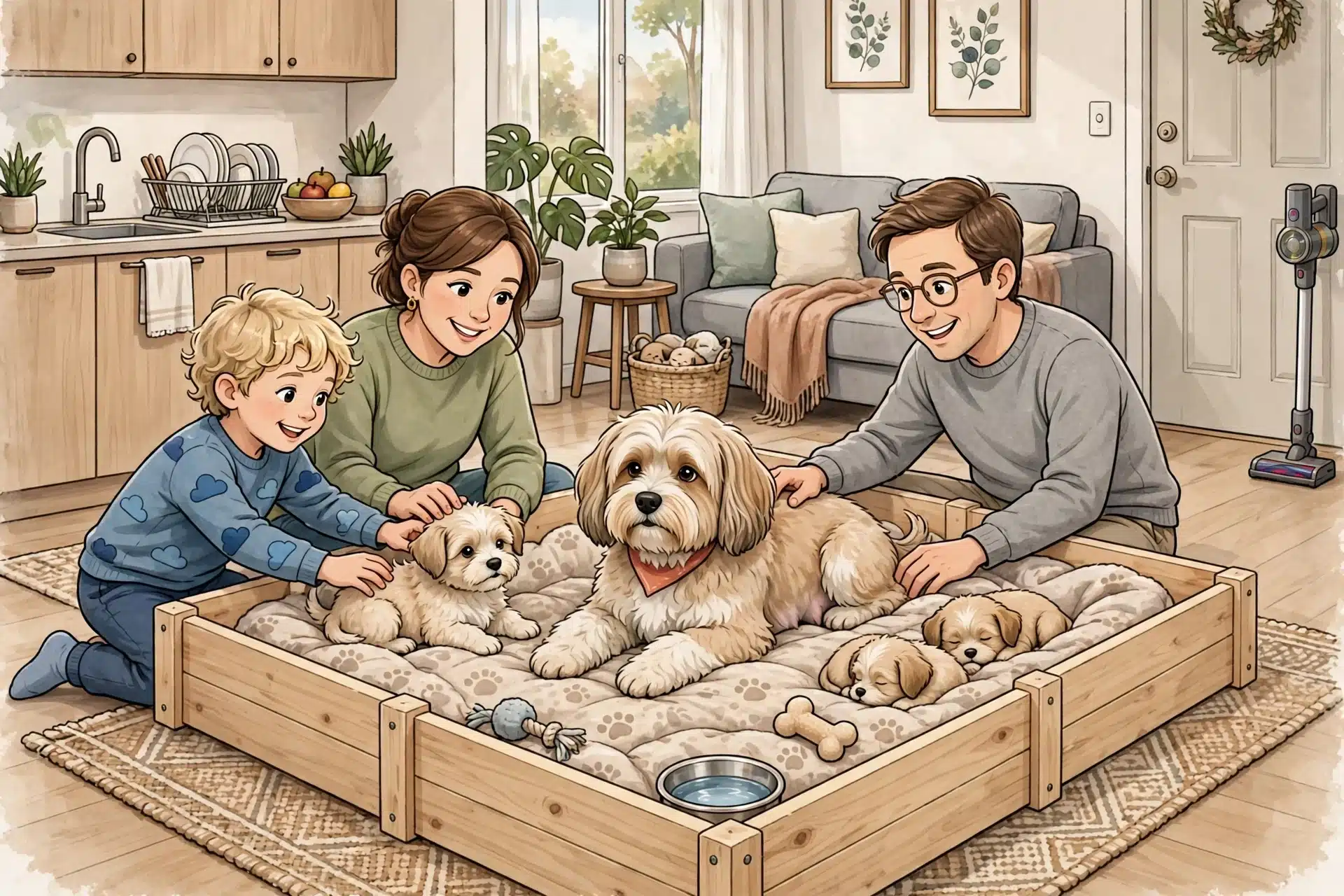
Ask to see exactly where the puppies sleep, eat, and play, and where the dam spends her days. The area should smell clean, have soft bedding, fresh water, and safe toys. Puppies raised in the home hear dishes, doorbells, and vacuums. A separate kennel building or a garage pen is a warning sign for a companion breed like a Havanese or Cavapoo, since those settings produce puppies with less household exposure.
Socialization, Handling, and Enrichment in Practice
Watch how the puppies react to you. Curious puppies that approach, climb, and accept gentle handling have been touched often. Flinching, freezing, or hiding suggests thin socialization. Ask what the breeder does daily: different surfaces, new sounds, short car rides, and time with children all build confidence. Trainers recommend seeing evidence of handling, sounds, surfaces, and ordinary objects rather than accepting a claim at face value, per this puppy socialization checklist.
When a Visit Is Refused or Only Offered by Video
Video calls are reasonable for out-of-state families, but local buyers should expect an in-person meeting with the dam and breeder home visit. If a breeder refuses any visit, offers only a parking lot handoff, or wants to meet you at a store instead of the home, treat it as a serious red flag. Some guard against disease, but honest breeders solve that with sanitized visits, not secrecy. Meet the dam and see the setup before any payment.
Reading the Breeder’s Answers About Temperament
Strong breeders describe each puppy’s personality with specific examples: which one is bold, which is a lap dog, which chews shoes. Vague answers like “they’re all sweet” show limited daily contact with the litter.
Step 4: Meet the Parents and Evaluate Temperament and Care Records
What Meeting the Dam Reveals
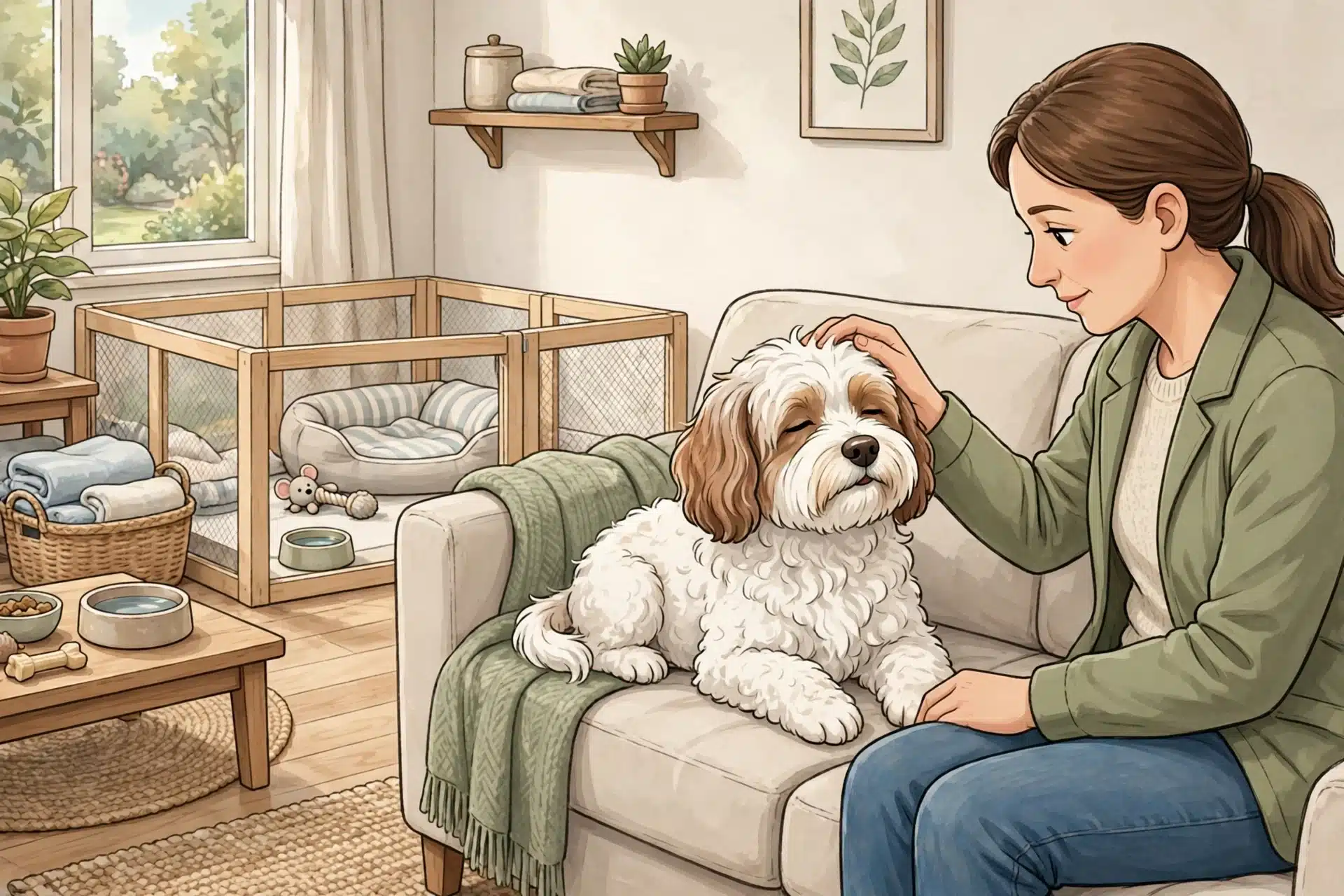
The mother tells you more than any certificate. Watch how she greets strangers, how she responds to handling, and whether she looks healthy and well kept. Her calmness matters because research links a dam’s fear and stress to poorer welfare in her puppies, according to a 2025 study in PMC. Ask to see the area where she lives and whelps. A trusted on-site breeder visit shows you clean bedding, safe space, and dogs that act like family pets, not kennel stock.
When You Cannot Meet a Parent, and What to Ask Instead
Sometimes the sire lives elsewhere, and that is normal. Many programs use stud dogs from other homes. The dam, though, should be viewable in person or by live video. If a breeder refuses both without a health reason, treat it as a red flag. Ask for short videos of the dam walking, playing, and being touched. Request the sire’s owner’s contact information and his temperament history, including how he acts around children. Screenshots of a dog you have never seen move are not evidence.
Retention, Rehoming, and Retirement Practices
Responsible programs put breeding-dog terms in writing. Look for three items in the contract:
- Retention clauses stating the breeder keeps co-ownership only when clearly defined
- Rehoming policy promising the breeder takes any dog back at any age
- Retirement plans covering where a retired dam or sire lives afterward
If a breeder dodges these questions, the dogs may be treated as inventory. Ask anyway. Their answers reveal how they view the animals long after your puppy leaves.
Step 5: Review the Contract, Guarantee, and Payment Process
A written contract protects both of you. Ask for it before you place any deposit, and read it slowly. Reputable breeders expect this and will send a sample agreement on request, as the AKC’s breeder contract guide notes.
Reading the Purchase Contract Section by Section
Look for these parts in order:
- Parties and puppy details: full names, microchip number, date of birth, and price.
- Spay/neuter terms: most pet contracts require it by a set age.
- Return clause: a breeder who takes the dog back at any point in its life is showing real commitment. A contract with no return option is a serious warning sign.
- Rehoming restrictions: many breeders forbid resale or transfer to a shelter.
If any section is vague or oral-only, get it in writing before you sign.
Comparing Health Guarantee Structures
Guarantees vary widely, so compare them side by side:
| Structure | What it covers | Watch for |
|---|---|---|
| Short-term infectious illness | 72 hours to 14 days for parvo, distemper | Requires your vet exam within days |
| Genetic or congenital | Hips, elbows, heart, eyes, often to age 2 | May demand proof from your vet records |
| Replacement only | New puppy if a covered condition appears | No refunds unless stated |
A document-heavy breeder usually backs the guarantee with records you already verified in Step 2, like pre-purchase exam and parent health testing paperwork.
Deposits, Payment Methods, and Red Flags
Deposits commonly run a few hundred dollars toward the total price. Pay by a traceable method such as a credit card, and get a written receipt that states whether the deposit is refundable or transferable. Refuse wire transfers, gift cards, crypto, or payment apps to strangers, since these are classic deposit and payment fraud patterns. Never pay the full balance before you see the puppy or confirmed delivery details.
Questions About Screening and Process Expectations
Ask how applicants are screened, when you will meet the dam, what updates you get before pickup, and which vaccine schedule applies. Sage Puppies, for example, walks every family through an application and owner-managed matching process, and you can compare a breeder’s deposit and reservation terms in writing the same way.
Step 6: Run Independent Cross-Checks Before You Pay
Verifying Records Against Outside Sources
Match each document to a source the breeder does not control. Search the breeder’s name in the USDA Animal Care search tool to find inspection reports if they hold a license. Call the vet clinic listed on vaccination records to confirm the visits happened. Ask the DNA testing lab to verify that a panel report belongs to the dam, not a borrowed dog.
Using References Without Being Sold to
Ask for two or three families who bought puppies in the last two years. Call them yourself and ask what arrived on time and what did not. Listen for a script. If a “reference” pushes you toward a fast deposit or reads from notes, treat it as marketing, not evidence. Real buyers mention small annoyances, so be wary of anyone who recalls none.
The Scale of Puppy Mill Activity in 2025 and 2026
Cross-checks matter because the problem is large. Advocates estimate about 10,000 puppy mills operate in the United States, according to Humane World for Animals. In 2024, the ASPCA documented more than 800 animal welfare violations at USDA-licensed breeding facilities, and enforcement often trails those findings. The Horrible Hundred 2025 report names problem dealers state by state, so check it before you send money.
Proceed, Pause, or Walk Away
Proceed when records, references, and lookup results all match. Pause when one item is missing and the breeder gives a straight reason. Walk away from any seller who pressures you to skip a check.

Now you know which documents to demand and why. If you want to see those standards in practice, look at how Sage Puppies handles applications, health records, and matching for Havanese, Havapoo, and Cavapoo families. Then compare any breeder you’re considering, including us, against the checklist above.
Frequently Asked Questions
Q1: How do I verify a family home breeder?
Run four passes: confirm the breeder’s license or exemption, authenticate health testing records in public databases, meet the dam, and read the contract before any deposit. Most checks are free and take one afternoon.
Q2: Do small home breeders need a USDA license?
Usually not. Breeders with four or fewer breeding dogs who sell face-to-face are exempt under the Animal Welfare Act. Ask the breeder to explain where they stand.
Q3: Which health records matter most before I pay?
Parent DNA panel results, OFA-listed orthopedic and cardiac clearances, a current CAER eye certificate, and the puppy’s pre-purchase vet exam. Verify each on the lab’s site or OFA yourself.
Q4: Should I buy if a breeder refuses an in-person visit?
Not as a local buyer. Honest breeders offer sanitized home visits. Video-only meetings suit out-of-state families, but a parking lot handoff is a red flag.
Q5: How can I avoid deposit fraud?
Pay by credit card, get a written receipt stating refund terms, and refuse wire transfers, gift cards, or crypto. Never pay the full balance before you see the puppy.
Q6: Is a breeder without a health guarantee acceptable?
A written guarantee covering infectious illness early on and genetic conditions to about age two is standard. No return clause at all is a serious warning sign.
Conclusion
Verifying a home breeder comes down to four passes: confirm the license or exemption, authenticate the health testing records yourself, meet the dam, and read the contract before money moves. Each check is free, and together they take an afternoon. The records separate a transparent home from a disguised puppy mill, so let paperwork, not charm, make your decision. Proceed when lookup results match the documents. Pause when one item has a straight explanation. Walk away from pressure, cash-only demands, or a contract with no return clause. Families searching for family-raised puppies for sale near me can hold every breeder, including small Utah programs, to this same document-by-document standard before paying a deposit.