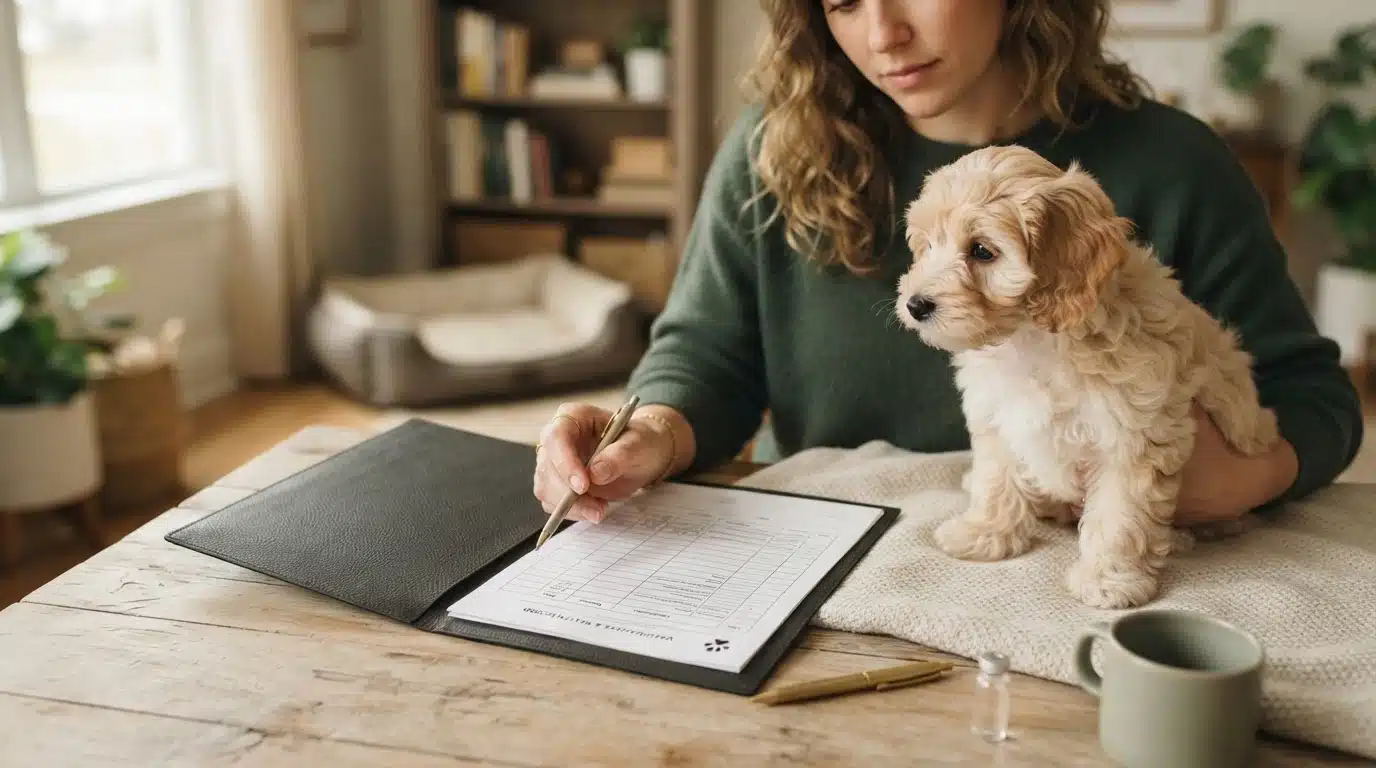
Quick Summary: A solid puppy breeder visit comes down to verified evidence, not warm feelings. Walk the space first to check for clean floors, fresh water, and lively puppies with clear eyes and shiny coats, then meet the dam and note her temperament. Verify paperwork on the spot: vet-stamped health records, a microchip you watch get scanned, OFA results you look up yourself, and registration papers that match the address. Respect biosecurity limits on handling newborn puppies, and walk away from hard stops like missing records, a mother you never saw, or pressure to pay before the evidence checks out.
You drive forty minutes to a breeder’s home with a list of questions on your phone. The dam greets you at the door, and within five minutes you have to decide whether the picture you were sold online matches the room you are standing in. That single conversation deserves a puppy breeder visit checklist, not a feeling.
Most first-time families walk in ready to fall in love and walk out having missed the details that matter: vaccination records with vet stamps, microchip paperwork, where the dam actually lives, and why a breeder might limit which rooms you can enter. A good puppy breeder visit checklist turns those observations into evidence you can verify later. This guide gives you one, built around what to check in person for a Havanese, Havapoo, or Cavapoo, including how to handle a breeder who offers delivery instead of a visit. Bring the puppy breeder visit checklist on your phone and mark items off as you go.
Step 1: Read the Environment Before You Meet the Dogs
Your first ten minutes at a breeder’s home will tell you more than any question you can ask. Start observing the moment you pull into the driveway, before anyone hands you a puppy. The AKC lists a clean home or kennel and lively, well-fed puppies among the core signs of a responsible breeder, and most of those signs are visible from where you stand.
Sight, smell, and sound signals
Use your senses first. A well-run home should smell like clean dog, not strong ammonia. Look at the floors, the puppy area, and the food and water bowls. Bowls should hold fresh water and look scrubbed, not scummed over.
Now look at the dogs themselves. Coats should be shiny and free of mats. Eyes and noses should be clear, with no discharge. Puppies should move toward you with curiosity rather than cowering or flinching. That matters even more for people-oriented breeds like the Havanese, Cavapoo, and Havapoo, which are bred to want human contact.
Listen, too. A chorus of excited barking when a visitor arrives is normal. Constant distressed howling, or dogs that seem hoarse from nonstop noise, points to dogs spending too much time confined.

Whelping setup and puppy zone
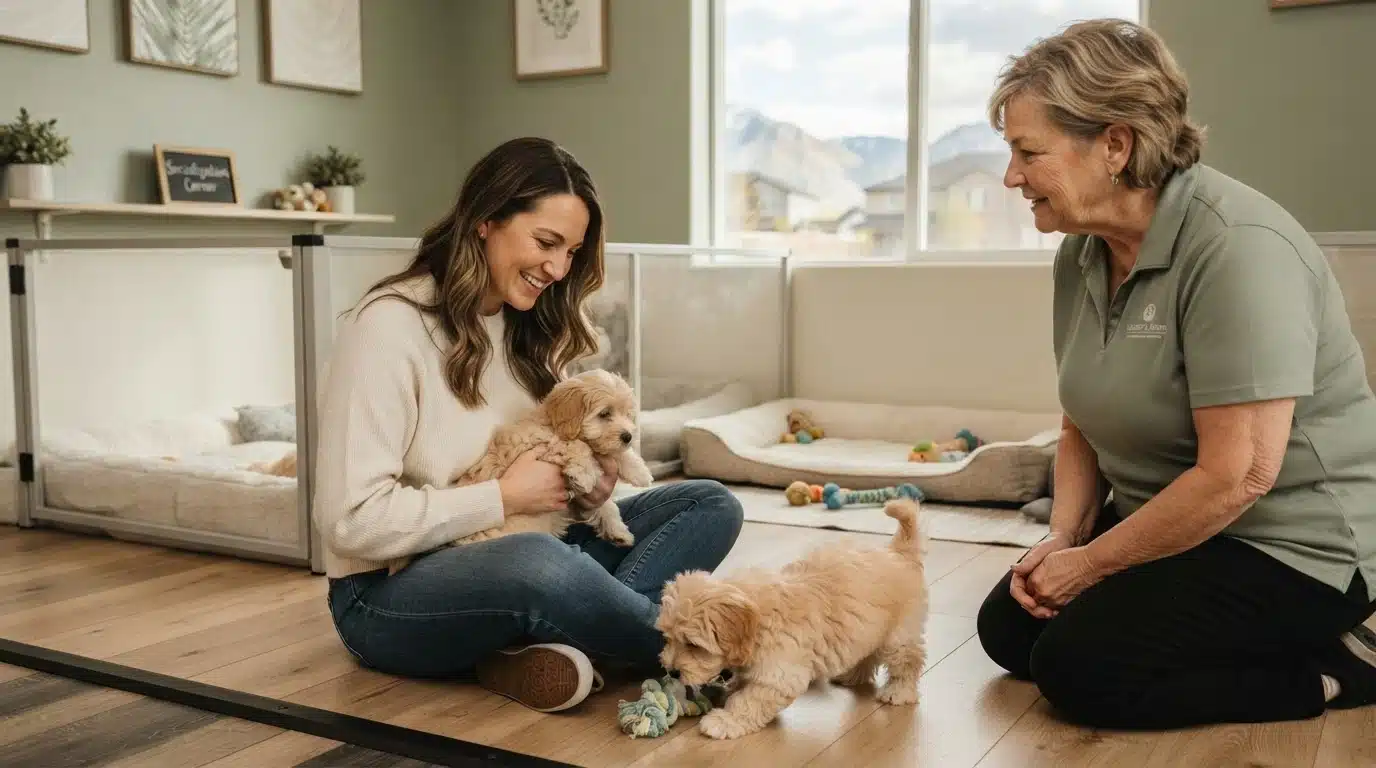
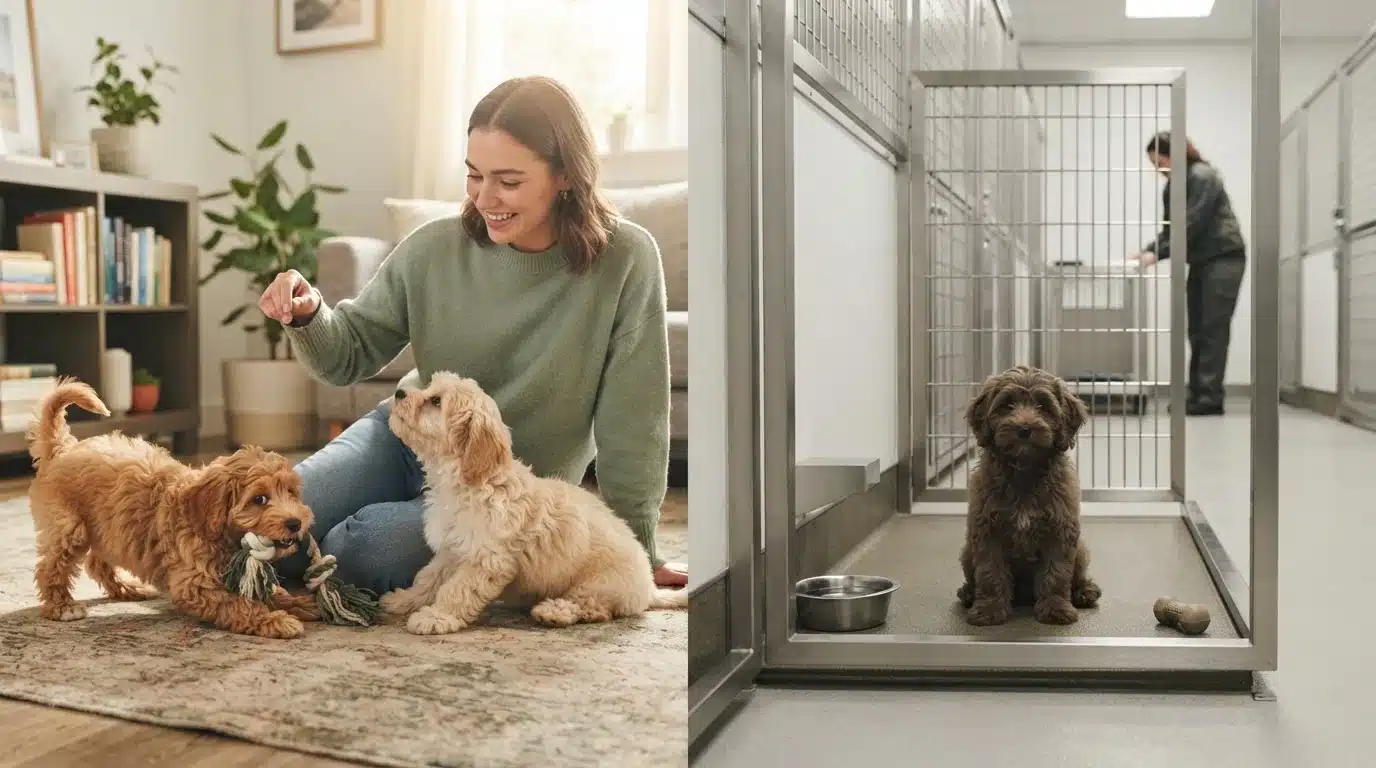
Ask to see where the puppies were born and where they live now. You can read the full background on how to pick the right puppy breeder, but on-site you want to see it yourself. A good setup includes a whelping pen with clean, soft bedding, room to move, and age-appropriate toys. The CVS vet group describes a healthy setup as a clean, safe area with a whelping pen, plenty of clean bedding, and fresh food and water bowls. Puppies raised in the home hear normal household sounds, which makes early socialization easier. Small breeds should not be housed on wire floors or in stacked cages.
Biosecurity limits you should respect
Here is a surprise for many first-time buyers: a good breeder may say no to parts of your visit. You might be asked to remove shoes, sanitize your hands, or view newborns through a gate rather than holding them. That is not secrecy. Young puppies have weak immune systems, and parvo and other viruses can ride in on clothes and shoes. A breeder who lets every stranger handle a two-week-old litter is the one who should worry you. Respect the limits, and ask why they exist. A clear, calm answer is a green flag.
Step 2: Meet the Dam, the Sire If Available, and the Litter
Photos tell you almost nothing. Standing in the room with the mother and her puppies shows you temperament, coat, and how the litter was raised, which is exactly what you came to verify.
Observing the dam
The mother is your best predictor. Watch how she greets you: a friendly dam often passes calm, people-focused temperaments to her pups. Note her body condition. A nursing dam is naturally leaner, but she should still look healthy, with clear eyes and no limp. Check that she seems comfortable around her puppies and lets you approach the whelping area without panic. Ask which health tests she has completed. For Havanese, that usually means OFA hip and patella results, an eye exam by a veterinary ophthalmologist, and a BAER hearing test. You can confirm claims yourself with an OFA lookup rather than trusting a binder on a shelf. A dam that cowers, growls, or hides from visitors is a yellow flag worth asking about directly.
Observing the sire and other adults
The sire often lives elsewhere, so many breeders use stud males you will never meet on a visit. That is normal. Ask to see photos, health testing, and a pedigree instead, and confirm his OFA and genetic panel results the same way you checked the dam’s. If he is on site, apply the same observations: gait, eyes, coat, and how he responds to strangers. Also watch any other adult dogs in the home. Their condition and manners show you the daily standard of care, not just the litter that is for sale. Any adult kept in a run or crate with matted fur deserves a question.
Handling the puppies briefly
Ask before you touch, and follow the breeder’s biosecurity rules. Many programs ask visitors to handle pups with clean hands or skip handling before vaccinations, and that caution is a good sign, not a red flag. When you do hold a puppy, feel for a well-fed body, a clean coat, and no flinching. Watch the litter interact: a mix of confidence and gentle play beats one pup bullying the rest. If you want a deeper checklist before your visit, our page on choosing a breeder for your family covers the questions worth asking. At programs like Sage Puppies, visits are kept small so each litter stays calm, which makes your observations more accurate.
Step 3: Verify Paperwork Before You Leave
Words are cheap on a phone call. On the visit, ask for documents and read them while you stand there. A good breeder expects this and hands things over without a sigh.

Health records for the puppies
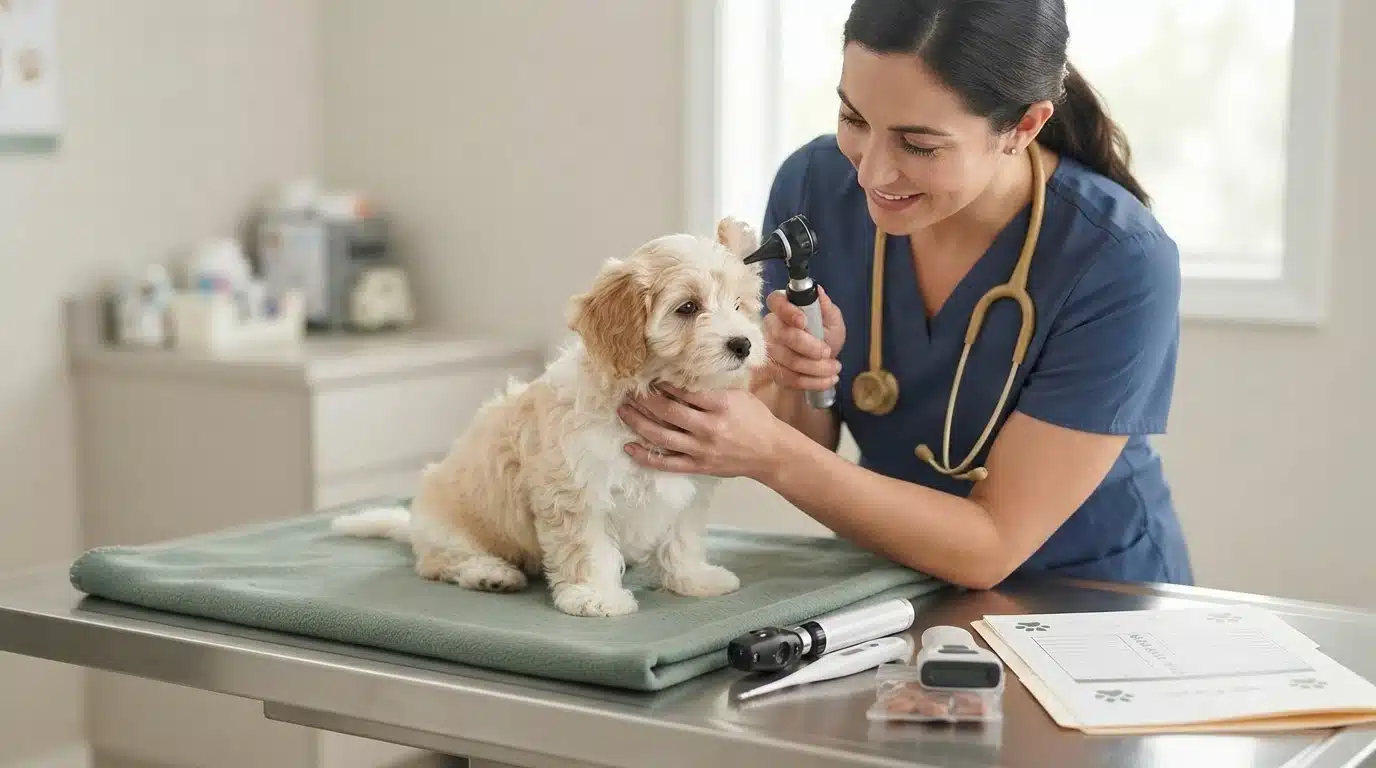
Ask for the puppy’s health record and check three things: the exam date, the vaccine dates given, and a deworming log. Puppies usually get their first shot around six weeks, so a seven-week-old should show at least one entry. Match the vaccine sticker or lot number to the puppy you are holding, not a generic sheet. If a vet examined the litter, the record should carry the clinic’s name and a stamp or signature. Snap a photo of every page before you leave. If the breeder offers a written health guarantee, take it home and read the fine print rather than signing on the spot.
Parent health screening evidence
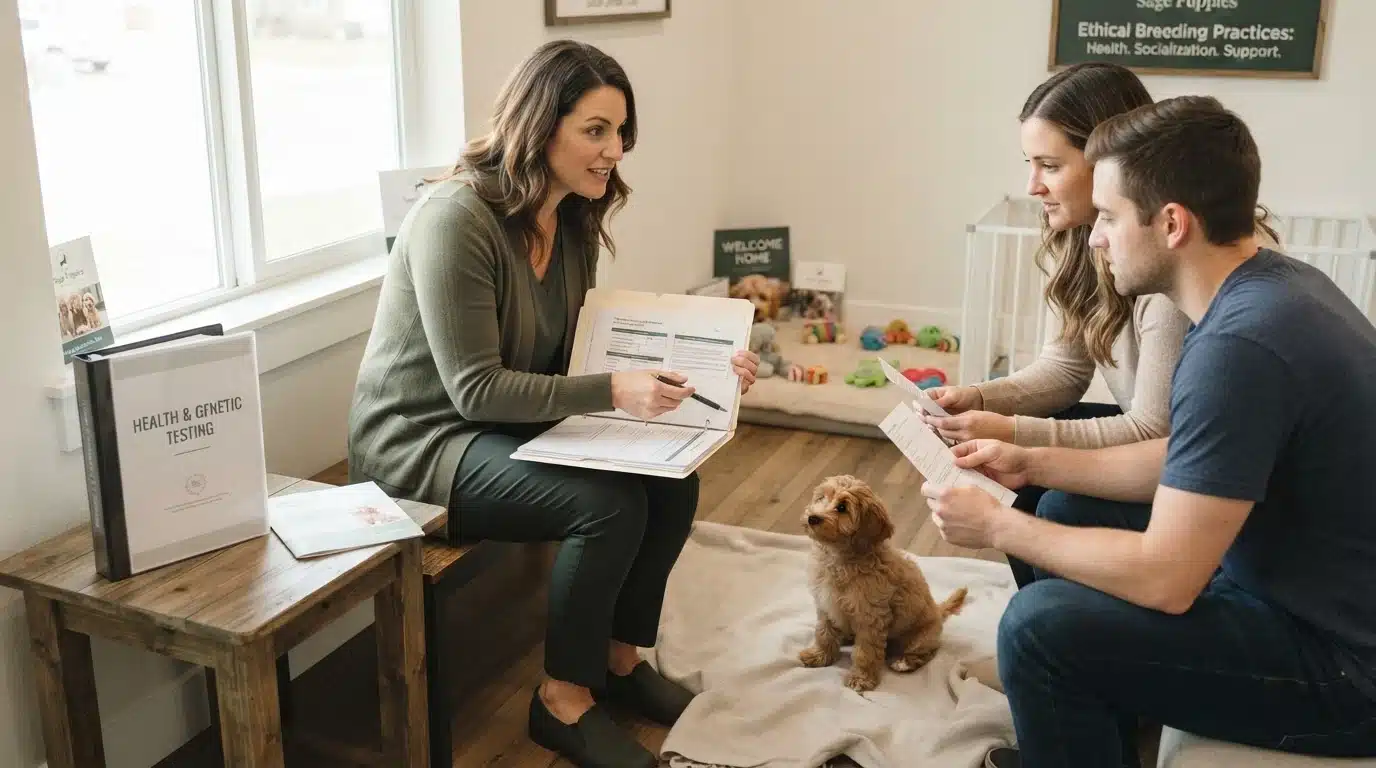
Ask which tests the parents have and then verify them yourself. The Orthopedic Foundation for Animals keeps a public database, and you can search a dog by name or kennel name to see real results instead of taking claims on faith. Look up the dam and sire on the OFA advanced search right at the kitchen table. For a Havanese, hip and elbow results, patellar luxation scores, cardiac exams, and eye clearances matter most; the Cavapoo and Havapoo parents should carry the same testing on both sides of the cross, since a poodle line is half the genetics. CHIC numbers are another good sign, because that program exists to give buyers accurate results in one place. If neither parent appears in the database, ask why. Some young dogs have pending results, which is fair. A breeder who says “we do our own checks” with nothing in writing is not.
Registration, microchip, and contract
Check the microchip number in writing, then have the staff scan the puppy so the number matches. Ask for the AKC registration paperwork or the breeder’s plan for it, and compare the address on the papers to where you are standing. Registration should be filled out or clearly promised with a date in the contract. Read the purchase agreement line by line: the spay or neuter terms, any health guarantee period, what happens if the puppy returns, and who pays for it. Ask which vaccines and exams remain and who covers them. Reputable breeders walk you through every page, and some, like Sage Puppies, include a written record set with the puppy so nothing depends on memory later.
By this point you have toured the property and read the paperwork. Now fill in the gaps with questions. Good breeders answer these easily, and they expect them.
Socialization, diet, and routine
Ask how puppies are raised day to day. Good answers cover early handling, household sounds, and exposure to different surfaces and people. The AVSAB recommends breeders start socialization at three weeks, so ask what that looks like in practice. Find out what food the puppy eats now, how often it’s fed, and whether the breeder sends a starter bag home. A sudden diet switch causes stomach upset, so ask before you plan a change. For a Havanese or Cavapoo, also ask about grooming exposure: brushing, nail trims, and early coat handling.
Purchase terms and post-sale support
Get the specifics on paper before you leave. Ask what the price covers, what deposit and total cost look like, and when the puppy can go home. Most small breeds stay with the breeder until eight to ten weeks. Ask whether a spay or neuter clause applies, and what the contract says about returning a puppy if your family can’t keep it. Reputable breeders require that a dog come back to them, at any age. Clarify what support you get after pickup or delivery, and who to call with questions.

First vet visit and ongoing communication
Plan your puppy’s first checkup within a few days of going home, and ask the breeder when the last vet visit and vaccine dose happened. Confirm which records you’ll receive that day. Before you decide, it helps to have a clear picture of the breeder’s matching process, which you can compare against our own application and matching approach. Then settle how you’ll stay in touch: many breeders enjoy photo updates and answer questions for the dog’s whole life.
Step 5: Translate Observations Into a Decision
Score the visit against your checklist
Sit down within a day, while details are fresh. Pull out the checklist you brought and rate each item: pass, fail, or unclear. Health records stamped by a vet, a microchip you verified, a dam you actually met, clean living conditions, and answers that held up under follow-up questions all count as passes. Unclear is not a failure by itself. Some things, like OFA results on a young sire, may simply be pending. Mark them and ask for the paperwork later. A breeder who sends records promptly after the visit earns credit; one who goes quiet does not.

When to walk away
Walk away if anything on the evidence side failed. No vet records, no microchip, a mother you never saw, or registration papers that do not match the breeder’s story are all hard stops. So is pressure: a breeder pushing you to pay a deposit before you can verify claims is telling you how they will behave after the sale. Trust the exit. There are other litters, and a puppy you met on a shaky visit will cost you more than money later.
When to plan a second visit or move forward
If most boxes passed and only a few stayed unclear, ask for a second visit or a video call. A confident breeder welcomes that. Once records check out, move to reservation steps and prepare your home for pickup or delivery day.
Common Mistakes to Avoid During a Breeder Visit
Mistakes that hide red flags
The biggest one is being too polite. If something looks off, ask about it on the spot instead of nodding along. Skipping the paperwork review is another: a visit means nothing if you never see vet records, microchip paperwork, or registration details. Do not let one cute puppy rush you either. Meet the dam, watch litter behavior, and ask for documents you can verify later. If a breeder limits tours to protect puppies from germs, that limit is reasonable, but you should still see them handle health records openly.
Mistakes that exaggerate green flags
Falling for a clean kitchen or a friendly personality is easy, but a tidy home is not a health program. Green flags only count when they are verifiable: stamped vet visits, an OFA or eye check you can look up yourself, and parents you actually met. A breeder who hands over records without being asked is showing you the real thing. Photograph everything before you leave, then confirm registrations and health clearances at home, because trust should hold up even after the warm feeling fades.

A visit tells you a lot, but it works best when you know what to ask next. Bring your checklist to Sage Puppies, or start with the application and we will walk you through health records, matching, and pickup or delivery step by step. Wisely bred, beautifully loved.
Frequently Asked Questions
Q1: What to look for during an on-site puppy breeder visit
Watch for a clean environment with fresh water and scrubbed bowls, lively puppies with clear eyes and shiny coats, a friendly dam you can meet, and vet-stamped health records. Verify microchip and OFA results in writing before you leave.
Q2: Can I visit a breeder if I’m buying out of state?
Many breeders offer video calls showing the dam, litter, and paperwork. That works, but ask for the same documents you would photograph in person: vet records, microchip numbers, and registration details.
Q3: Is it a red flag if the breeder won’t let me hold newborn puppies?
No. Young puppies have weak immune systems, and parvo can ride in on shoes. Limited handling, sanitized hands, and viewing through a gate are signs of a careful program.
Q4: Should the sire be on site during my visit?
Often not. Sires frequently live elsewhere, so ask for photos, his pedigree, and verified OFA and genetic panel results for both sides of the cross.
Q5: What paperwork should I photograph before leaving?
Photograph every health record page, the deworming log, microchip details, the contract, and any health guarantee. Match vaccine stickers to the puppy, then read the fine print at home before signing.
Q6: How old should puppies be before going home?
Most small breeds like Havanese, Cavapoos, and Havapoos stay with the breeder until eight to ten weeks. A seven-week-old should already show at least one vaccine entry in its written record.
Conclusion
A breeder visit works when you trust evidence over feelings. Walk the space first: clean floors, fresh water, lively puppies. Meet the dam and note how she greets you. Then verify everything on paper: vet-stamped health records, a microchip you watched get scanned, OFA results you looked up yourself, and registration that matches the address on the door. Photograph every page before you leave.
Respect biosecurity limits, because careful handling rules protect the litter, not hide it. Score each checklist item within a day, and walk away from hard stops like missing records or a mother you never saw. Used well, a puppy breeder visit checklist turns one afternoon into proof your Havanese, Havapoo, or Cavapoo came from a program worth its word.