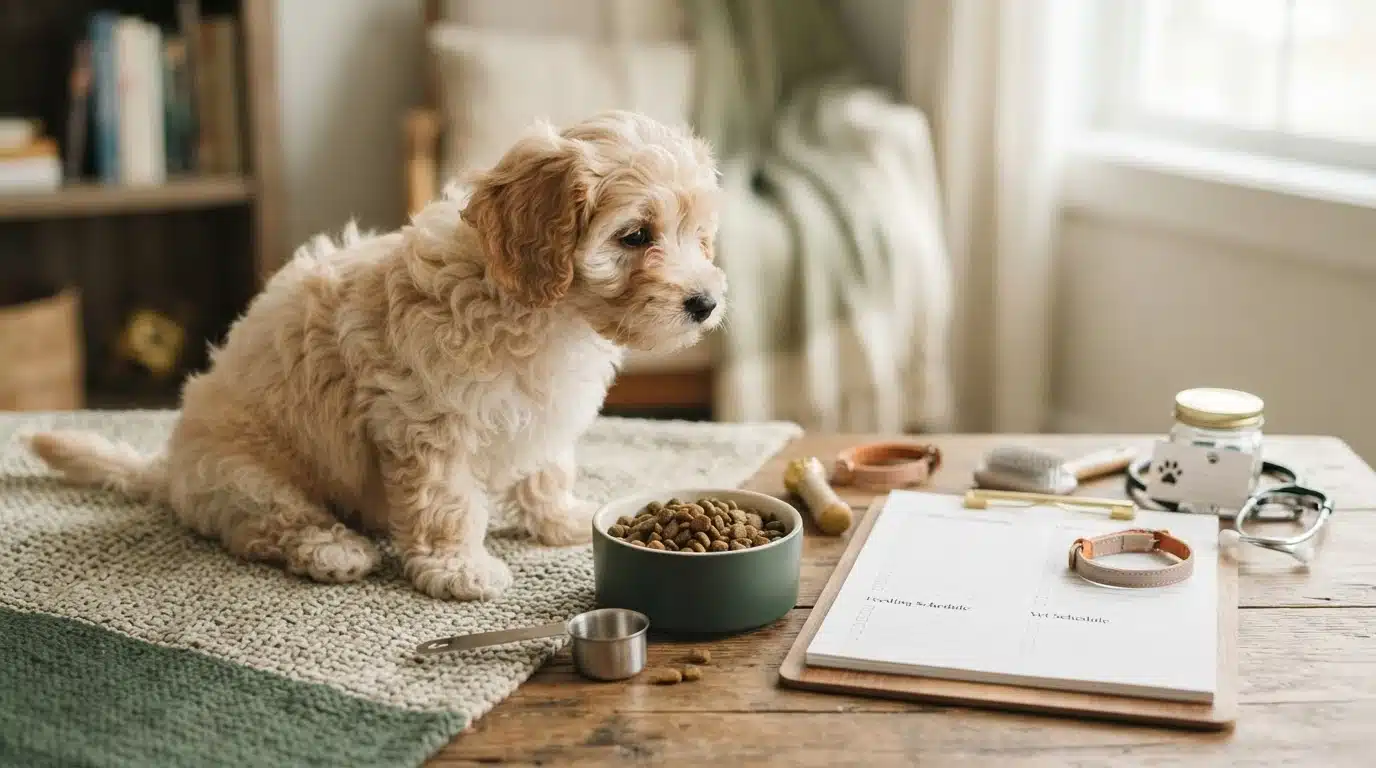
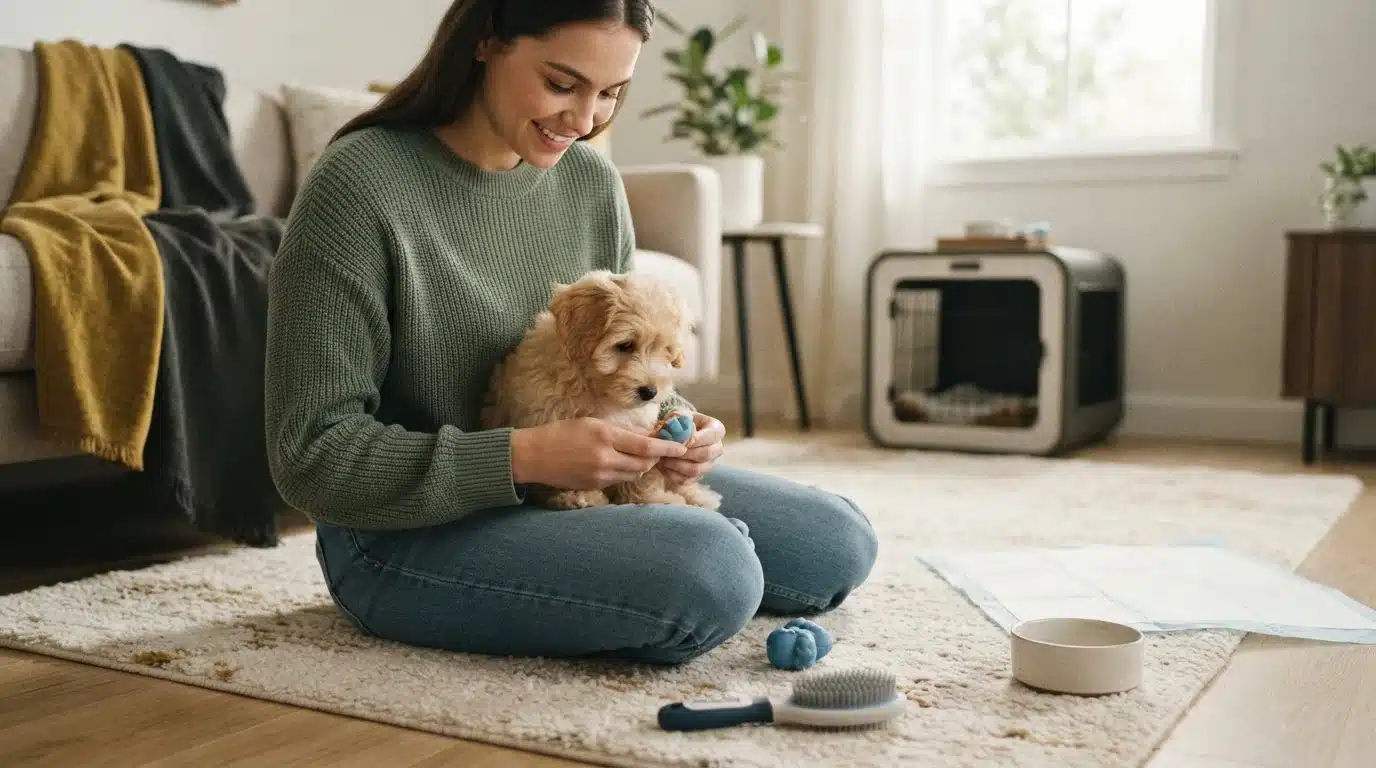
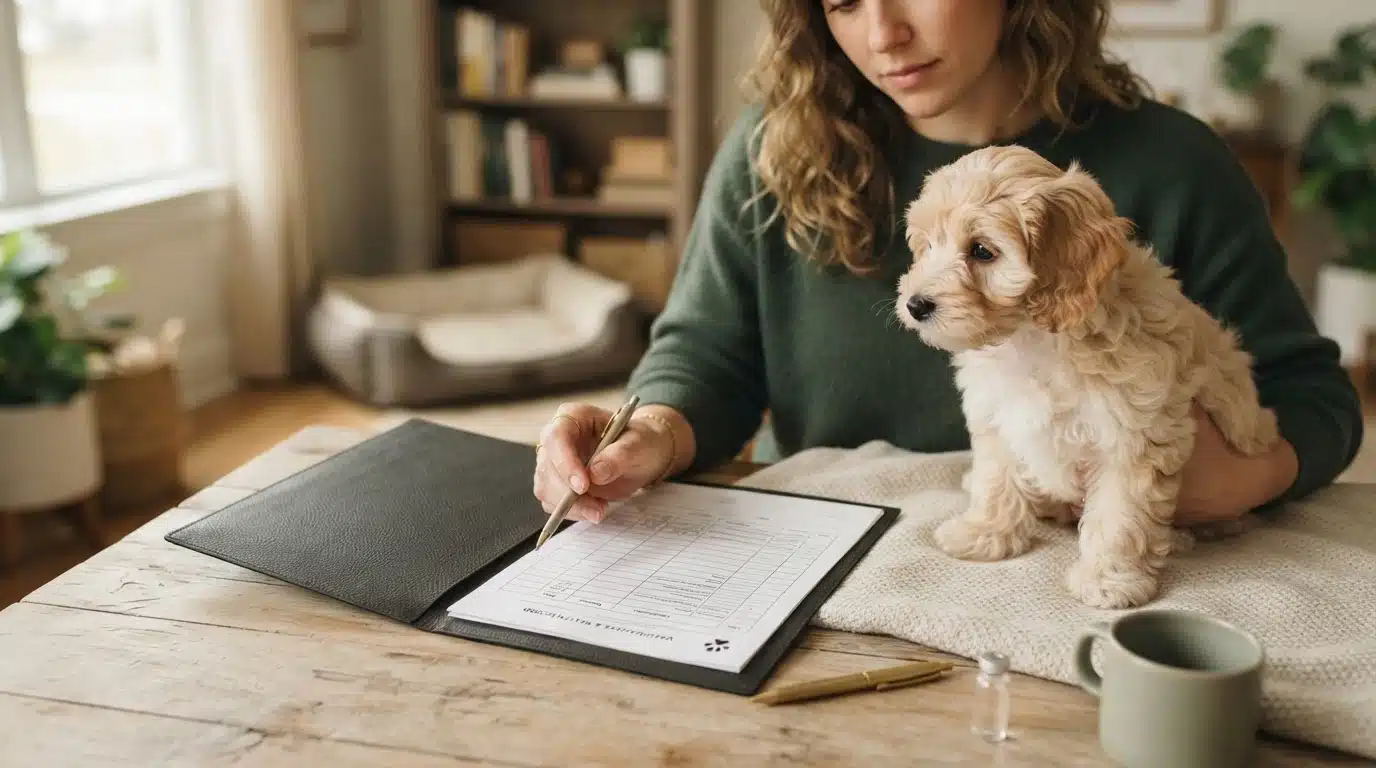
Quick Summary: Havapoo puppies should be fed by their current weight and the kcal per cup on the food bag, split into three to four small meals a day with treats kept under 10 percent of daily calories. Owners should weigh the puppy weekly, treat the label chart as a starting point, and adjust portions by about 10 percent every two to four weeks based on body condition rather than the numbers alone. The guide draws on Sage Puppies’ experience raising Havanese and Havapoo puppies in South Jordan, Utah, and addresses common feeding mistakes like free-feeding, overusing treats, and switching foods too quickly.
Your Havapoo weighs seven pounds at ten weeks, the breeder sent you home with one cup of kibble, and the bag’s chart tells a different story than the one you found online. Conflicting numbers like this are the most common feeding question new Havapoo families ask, because a small-breed puppy’s needs change fast. Every cup and calorie number in this Havapoo feeding guide is a label-based starting estimate, not a fixed rule. You will find separate charts for Toy and Mini Havapoo sizes, plus how to adjust portions as your puppy grows. We raise Havanese and Havapoo puppies at Sage Puppies in South Jordan, Utah, and this guide reflects the questions our puppy families ask most. Treat it as your working Havapoo feeding guide, and let your puppy’s body condition, not just the bag, have the final say.
Step 1: Read Your Havapoo’s Food Label the Right Way
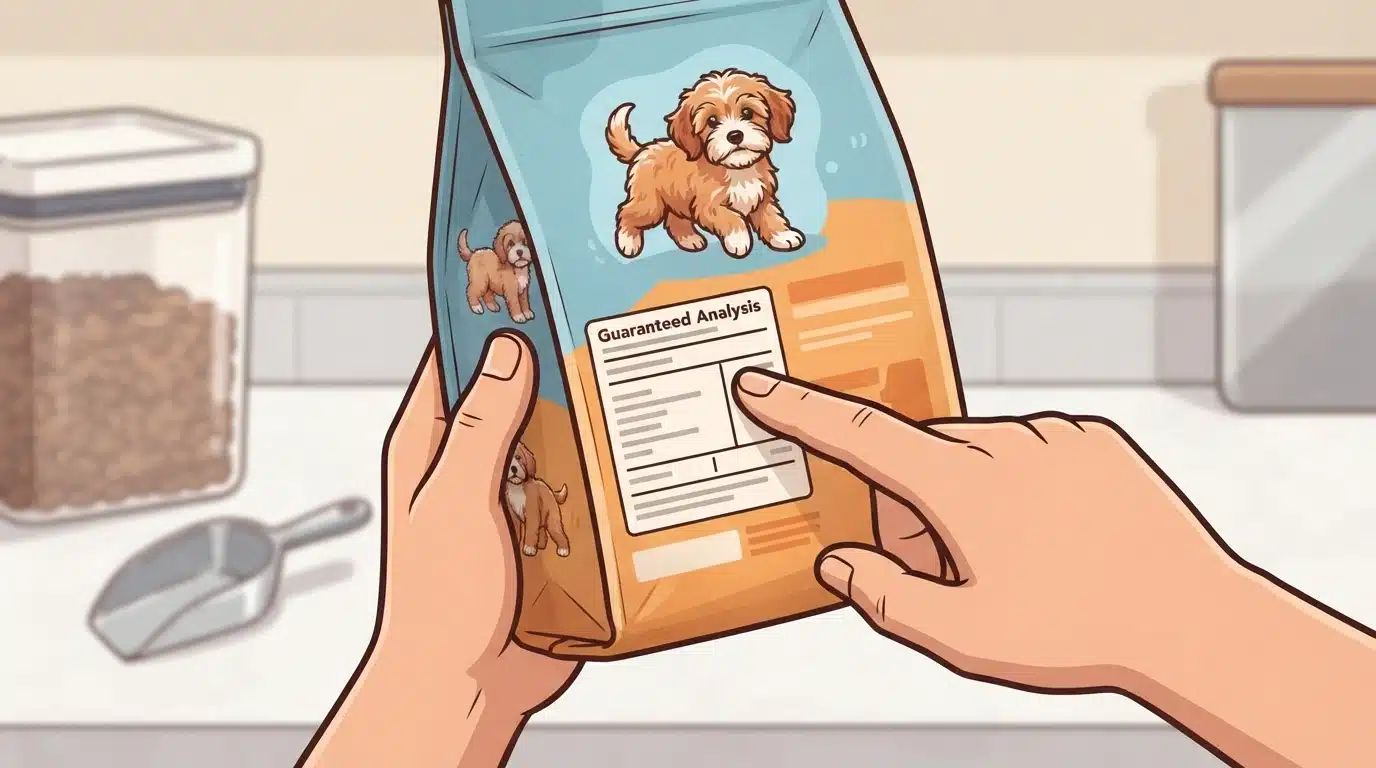
Every Havapoo feeding guide starts with two numbers printed on the bag, not with a rule someone memorized. The first is the calorie count, listed as kcal per cup. The second is the AAFCO nutritional adequacy statement, which tells you if the food is formulated for growth. Once you can find both, every chart and feeding calculation in this article becomes a quick check instead of a guess.
Where to find the kcal/cup number on the bag
Flip the bag over and look for the heading “Calorie Content.” It is usually placed near the guaranteed analysis or feeding chart. You will see a line like Metabolizable Energy: 3,600 kcal/kg, 410 kcal/cup. The kcal/cup figure is the one you want, because the cups in your measuring scoop are what actually land in the bowl. Ignore the kcal/kg number for day-to-day feeding; that per-kilogram value is for lab math.
Different brands vary a lot, often 350 to 450 kcal per cup for puppy formulas. That is why a cup of one food is not a cup of another, and why feeding charts list ranges instead of one answer. The bag’s own feeding chart is a starting point built around this exact calorie number, and as the AKC’s label guide explains, that printed guideline reflects the food’s calorie density. Write your food’s kcal/cup on a note stuck to the container. You will use it in Step 2.
What AAFCO ‘growth’ actually means for a small puppy
Now check the AAFCO statement, a short paragraph usually near the guaranteed analysis. It names the life stage the food supports, such as “for growth” or “all life stages.” Growth means the recipe meets nutrient profiles designed for puppies, including the higher protein and fat a developing body needs, as outlined in AAFCO’s label guidance. An adult-maintenance food is not a safe substitute during the first year.
For a Toy or Mini Havapoo, prefer a statement that also mentions growth for large-size dogs only if your vet advises it; small breeds usually do fine on standard puppy formulas. What matters most is that the words “growth” or “all life stages” appear at all.
Step 2: Pick the Right Starting Range for a Toy or Mini Havapoo
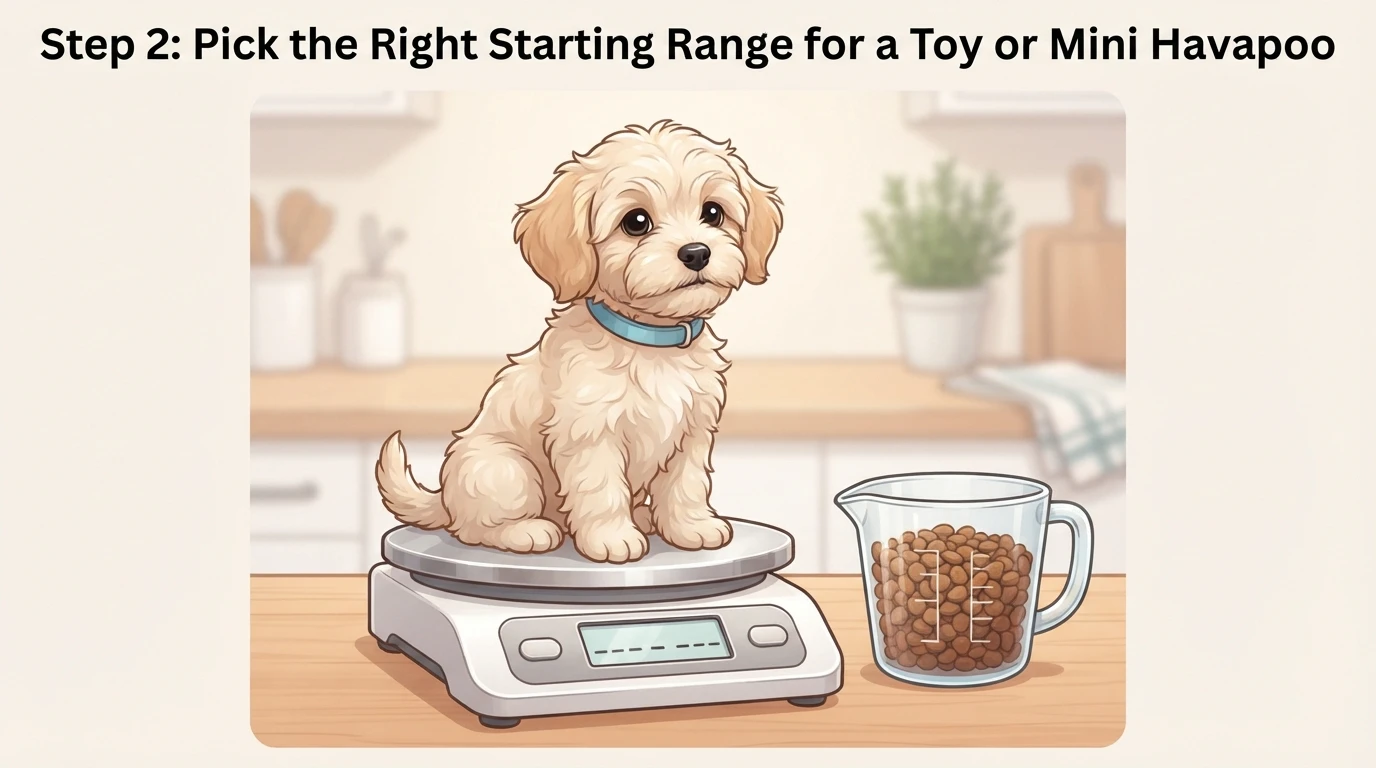
Havapoos are a mix of the Havanese, which weighs 7 to 13 pounds, and usually a Toy Poodle (4 to 6 pounds) or Miniature Poodle (10 to 15 pounds), according to PetMD’s breed profile. That parent mix decides which band your puppy lands in. Once you know the band, the feeding chart on the food bag starts to make sense.
Toy Havapoo band: about 7 to 12 pounds fully grown
A Toy Havapoo comes from a Toy Poodle parent, so the puppy inherits the smallest size range. Dogster notes that Havapoos with a Toy Poodle parent often stay at or under 10 pounds, and our own size guide puts most Havapoos between 9 and 20 pounds depending on the poodle parent. For this band, use the food label’s weight row that covers your puppy’s current weight, not its adult weight.
Expect a Toy Havapoo to eat small amounts often. The label row for a 4-pound puppy might call for a half cup a day, split into three or four meals. That sounds tiny, but small breeds burn calories fast. If your breeder expects your puppy to finish near 8 pounds, this is your band.
Mini Havapoo band: about 13 to 25 pounds fully grown
A Mini Havapoo has a Miniature Poodle parent, so it matures larger. These dogs need the label rows for bigger puppies, and they usually move to two meals a day a bit sooner than toys.
Ask which poodle size the parents were. That one question tells you which band, and which chart rows, actually apply to your puppy.
Step 3: Use the Havapoo Feeding Chart by Age and Weight
You have the label numbers. Now match them to your puppy’s age and current weight, and the chart becomes a starting point instead of a guessing game. Find the row that fits today, feed it for a week, then adjust.
How to read the chart without overfeeding
Pick the row by current weight, not the weight you hope your puppy reaches. A 4-pound Havapoo eats for 4 pounds, even if she is headed for 9. Checking weight every week keeps you in the right band as she grows. Toy and Mini Havapoos sit in different rows almost from the start, which is why the chart splits them.
Read the daily total first, then divide. A label row might call for a half cup a day for a tiny puppy, so that becomes three or four small meals: 2 tablespoons each, roughly. Small breeds burn energy fast and can’t store much, so frequent meals matter more than big ones.
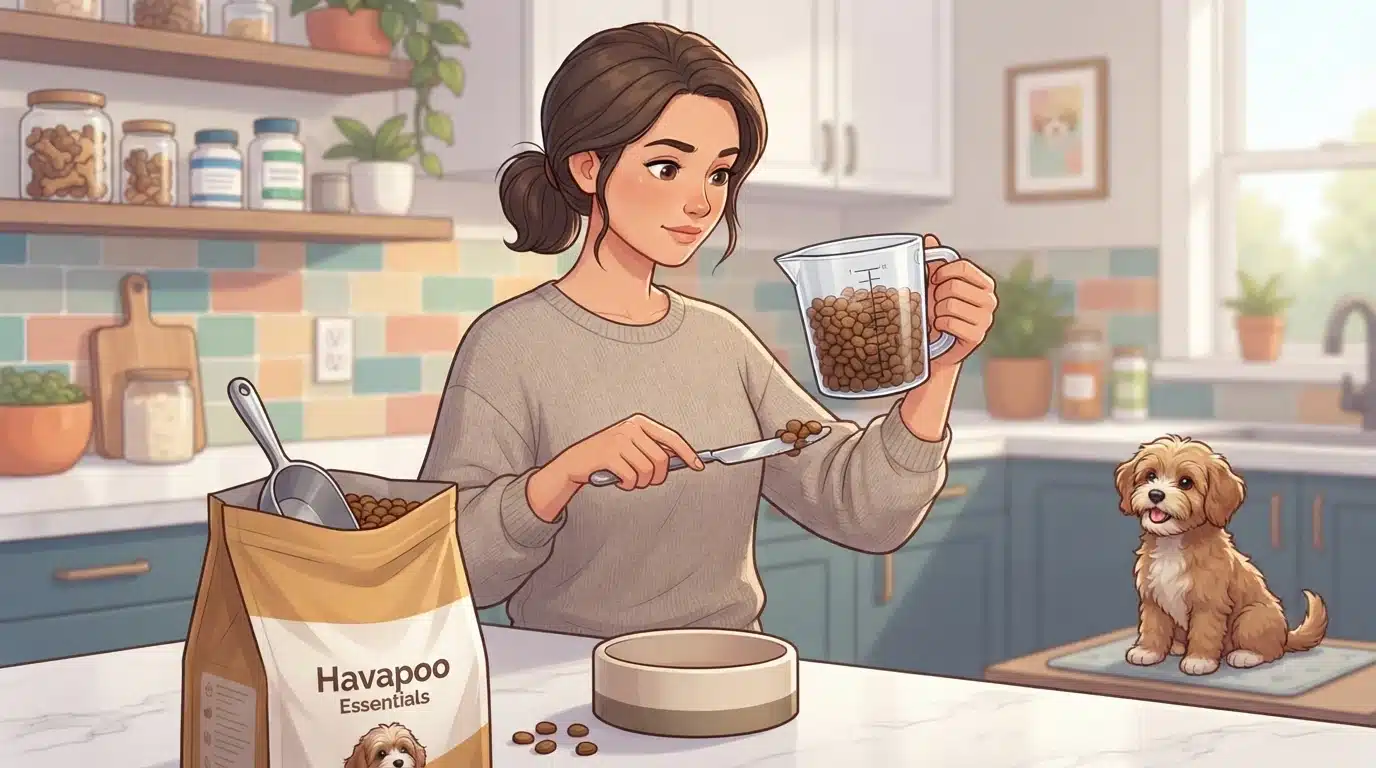
Use an actual measuring cup or a kitchen scale, not a mug or your palm. A slightly heaped scoop adds 20 to 30 percent, and on a 400-calorie cup of food that quietly becomes a third meal.
Then watch the puppy, not just the cup. Ribs you can feel but not see, a visible waist, and steady weekly gain mean the row is right. Ribs you must press to find, or a round belly after meals, means drop a band. Under the target weight for two weeks with clean stools? Move up one band. The chart starts the plan, and your puppy’s body finishes it.
Treats and training food on top of the chart
The chart covers meals only. Everything else counts, and on a 10-pound puppy everything else adds up fast. Vets and veterinary nutritionists advise keeping treats, chews, and table scraps at or under 10 percent of daily calories, so the other 90 percent stays balanced food (AKC, UC Davis).
The math is humbling. If your chart row lands near 400 kcal a day, the whole treat budget is about 40 kcal. One medium biscuit can hit that. A chunk of cheese or a strip of jerky can blow past it before dinner.
Two easy fixes work well in early training:
- Use kibble as treats. Set aside part of the daily ration and carry it in a pouch. Free calories from the puppy’s perspective, free budget from yours.
- Break treats into pea-sized pieces. Your Havapoo cares about the reward event, not the size, and one soft treat becomes twenty rewards.
Log treats for one honest week and you’ll see where the extras are sneaking in.
Step 4: Set a Meal Schedule That Matches a Small Stomach
Why tiny stomachs do better with more, smaller meals
A Havapoo puppy’s stomach is about the size of a golf ball at eight weeks. It simply cannot hold a full day of food at once, and a big single meal often comes right back up. Puppies also burn through energy fast, so blood sugar can dip between meals. That is why small-breed breeders and vets recommend three to four meals a day until about six months old, then two to three. Take the daily total from the label and divide it across those meals. A half-cup day becomes three portions of a few tablespoons each.
Adjusting the schedule when life gets in the way
Real weeks are messy, and a feeding schedule has to bend a little without breaking. If breakfast runs late, shift the other meals back by the same gap rather than stacking two meals close together. A puppy who eats at 7 a.m., noon, and 5 p.m. can move to 8 a.m., 1 p.m., and 6 p.m. on a busy day without any fuss.
For workdays, many families feed once before leaving and ask a neighbor or a midday dog walker to handle the middle meal. If no one can come, split the same daily amount into two slightly larger meals for that day only. Watch for skipped meals: one is fine, but two in a row calls your vet, especially in tiny puppies.
Pick times you can hold on most days, because predictability also helps with potty training and overnight sleep.
Step 5: Transition Foods Without Upsetting the Chart
A new food means a new calorie count, so your chart row shifts the day you switch. Change gradually anyway. Small-breed puppies have touchy stomachs, and a fast swap often causes loose stools or refusal to eat. Vets usually recommend a seven-day transition that mixes old and new food.
Day 1 to 3, 4 to 6, 7 to 10: a simple mix plan
Keep each day’s total cups and calories the same as your chart row says. Only the ratio changes:
| Days | Old food | New food |
|---|---|---|
| 1 to 3 | 75% | 25% |
| 4 to 6 | 50% | 50% |
| 7 to 10 | 25% | 75% |
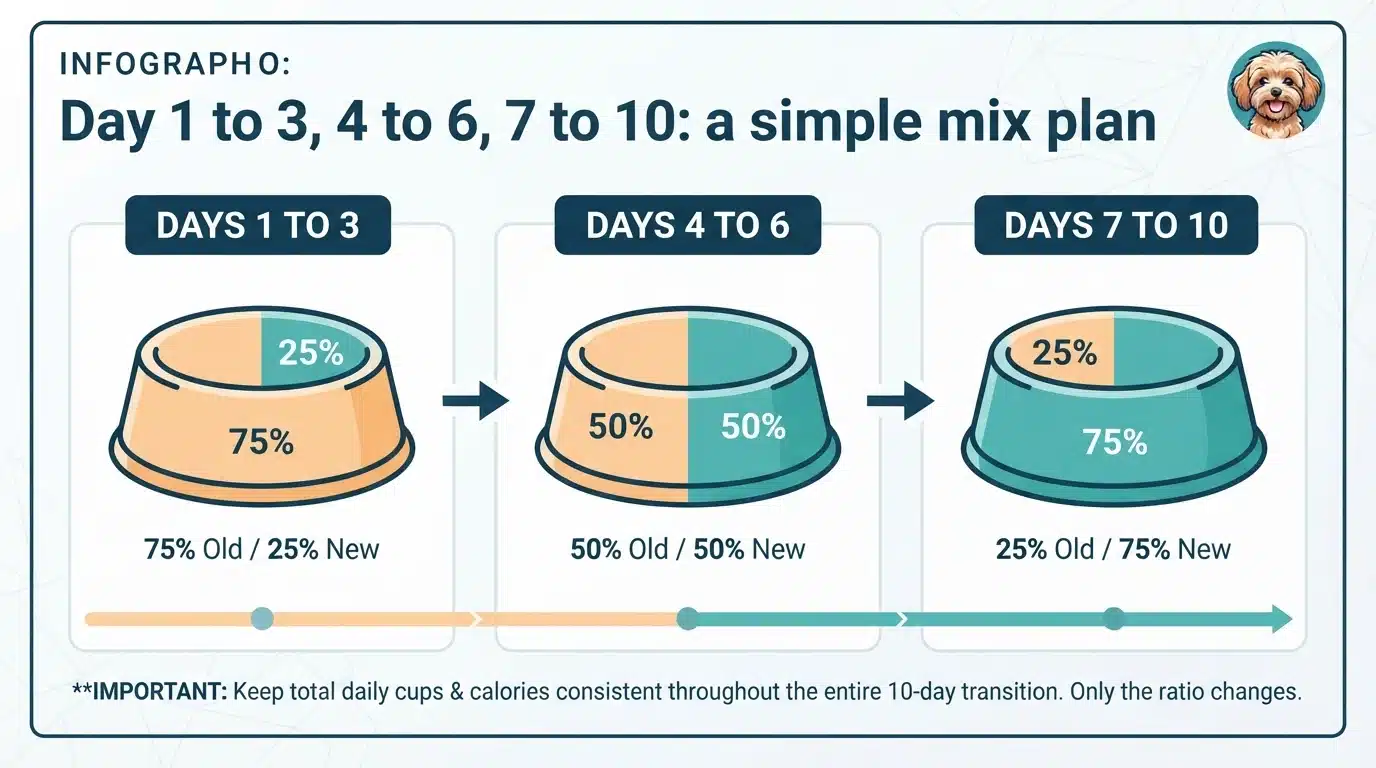
So if your chart calls for a half cup a day, days 1 to 3 look like a little under a quarter cup of each food per day, split across the usual meals. Weigh the two portions with the same measuring cup you already use, then move to the next ratio only if stools stay firm.
When to slow the transition or call the vet
Soft stool for a day or two is common. If it lasts longer than 48 hours, step back to the previous ratio and hold there for a few more days before trying again. Skip a forward step whenever your puppy skips a meal or scratches at her ears, since both can signal the food isn’t agreeing with her yet. Call your vet right away for vomiting, blood in the stool, no appetite for two meals, or a puppy who seems weak, because tiny breeds dehydrate fast.
Step 6: Recheck the Chart Every 2 to 4 Weeks
A feeding chart is a starting point, not a permanent answer. Your Havapoo grows in bursts, so the number that fit her at 10 weeks will underfeed her by 16. Weigh her regularly, find her new row, and adjust. Most puppies need a fresh look every two to four weeks during the first year.
A 30-second weekly weigh-in that fits on the kitchen scale
You do not need a vet visit to track growth. Step on your bathroom scale holding the puppy, then step on alone and subtract. For a young Havapoo, a kitchen scale works too: place her in a box or on a towel and read the display. Log the weight the same day each week, ideally before breakfast. A steady climb of a few ounces per week is what you want. If the number stalls for more than a week or drops, recheck her chart row and mention it at your next vet appointment.
Plateaus and growth spurts: how to adjust the daily total
Puppies rarely grow in a straight line. During a spurt, your puppy may act hungry and lean, so move up one chart row early rather than waiting for the scale to catch up. When weight plateaus for two or more weeks at a healthy body condition, hold the current amount instead of adding food. If ribs feel sharp or the waist disappears, adjust by about 10 percent in the needed direction and reweigh in a week. Small, repeated changes beat big swings, and if you are unsure whether she is too thin or just lean, your vet can show you the body condition scale at a routine visit.
Common Mistakes to Avoid With a Havapoo Feeding Chart
Treating the chart as a prescription instead of a starting point
The biggest error is reading the label row as a rule. It is an estimate for an average puppy at that weight, not a verdict on yours. A Havapoo who burns more energy playing needs a bit more food; a laid-back puppy needs less. Watch her body, not just the bowl. You should feel her ribs easily under a thin layer of fat and see a visible waist from above. Adjust by about 10 percent at a time, then give the change a week before judging it.
Free-feeding and table scraps on top of the chart
Leaving food out all day hides appetite changes, invites overeating, and makes house-training harder. Serve measured meals on a schedule so you know exactly what she ate.
Treats, chews, and scraps all count. Keep them at or under 10 percent of daily calories, or the chart quietly stops describing her real intake.
Table scraps are the sneaky one. A few bites of cheese or chicken can double a small puppy’s treat budget in seconds, and rich foods can upset a tiny stomach.

Feeding a tiny puppy shouldn’t feel like guesswork. Use the chart above as your starting point, weigh her weekly, and adjust as she grows. Want more help preparing for your Havapoo? The team at Sage Puppies shares honest guidance for new puppy families, from feeding to first-week setup.
Frequently Asked Questions
Q1: Havapoo feeding chart by age and weight
Find your puppy’s current weight row on the food label, split the daily total into three or four meals until six months, then two to three. Adjust by body condition every two to four weeks.
Q2: How much should a Havapoo puppy eat per day?
Most eat a quarter to a full cup daily, depending on the food’s kcal per cup and their size band. Treats count too, so keep them under 10 percent of daily calories.
Q3: When should I switch from puppy food to adult food?
Small breeds usually switch around 9 to 12 months once growth slows. Transition over seven to ten days and recheck the chart, because adult formulas often have fewer calories per cup.
Q4: Why does my Havapoo puppy always seem hungry?
Growth spurts, fast metabolisms, and small meals all play a part. Check ribs and weekly weight first. If she’s lean and gaining steadily, move up one chart row.
Q5: Is free-feeding okay for a small puppy?
No. Measured meals on a schedule protect against overeating, reveal appetite changes early, and support potty training.
Putting the Havapoo Feeding Chart to Work
The chart works when you treat it as a starting point, not a prescription. Read your bag’s kcal per cup, pick the row for your puppy’s current weight in her Toy or Mini band, and split the daily total into three or four small meals. Keep treats under 10 percent of daily calories, transition foods slowly over seven to ten days, and weigh her every week. Adjust by about 10 percent when ribs or waist tell you the row no longer fits, and recheck every two to four weeks as she grows. Her body condition always outranks the bag. For a broader look at keeping a Havapoo healthy, our guide to Havapoo and Cavapoo health issues covers what to watch beyond the bowl.