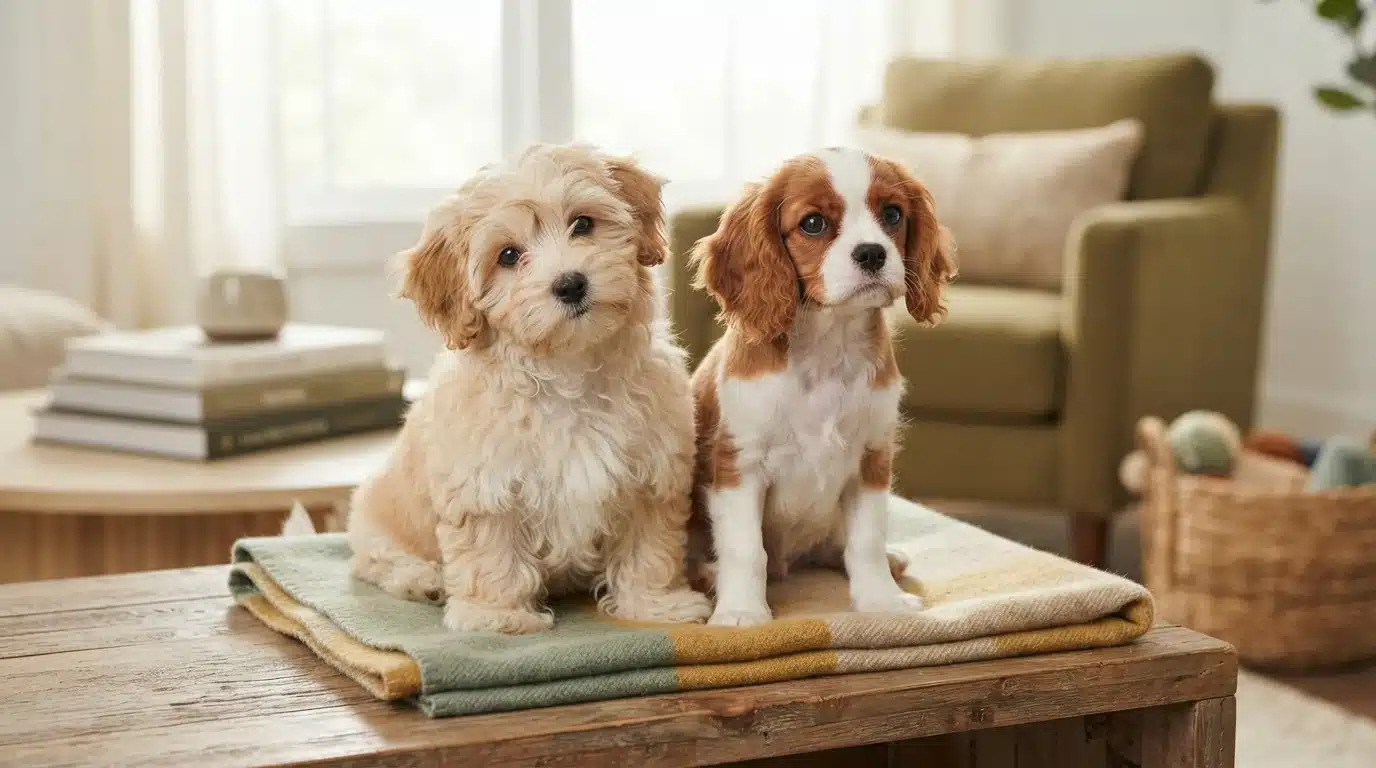
Quick Summary: A yard is optional for a Cavapoo puppy, but structure is not. Short, flexible activity sessions (5 to 15 minutes for an 8 to 12 week old, building toward 20 to 30 minutes total by six months) work better than long walks, since growth plates are vulnerable. Rotate sniffing games, hallway recalls, rolled fetch, and two to five minute training drills to tire the brain as much as the legs, and avoid high impact stair and ball work before 12 weeks. Plan potty trips around wake, eat, and play times, and swap walks for indoor games when heat, cold, or storms hit, while watching for lagging, heavy panting, or limping as signs to rest.
You brought home a bouncy Cavapoo puppy, picked the perfect apartment, and now every walk depends on the weather, the elevator, and whether the courtyard happens to be open. That is the real challenge of Cavapoo apartment exercise: keeping a small, energetic puppy happy when you have no yard at all.
The good news is that Cavapoos need far less space than you might think. They need structured activity, and this guide shows you how to provide it. You will find age-based exercise plans, safe Cavapoo indoor activities, and simple ways to handle rain, heat, and elevator trips. Exercising Cavapoo indoors works well for this breed, and the advice here draws on years of breeding and placing Cavapoo puppies with families in apartments across the country.
Step 1: Know How Much Activity Your Cavapoo Puppy Actually Needs
Cavapoo apartment exercise works best in short, flexible bursts rather than one long walk. Puppies under a year old tire fast, heal slower from strain, and need mental work as much as movement.
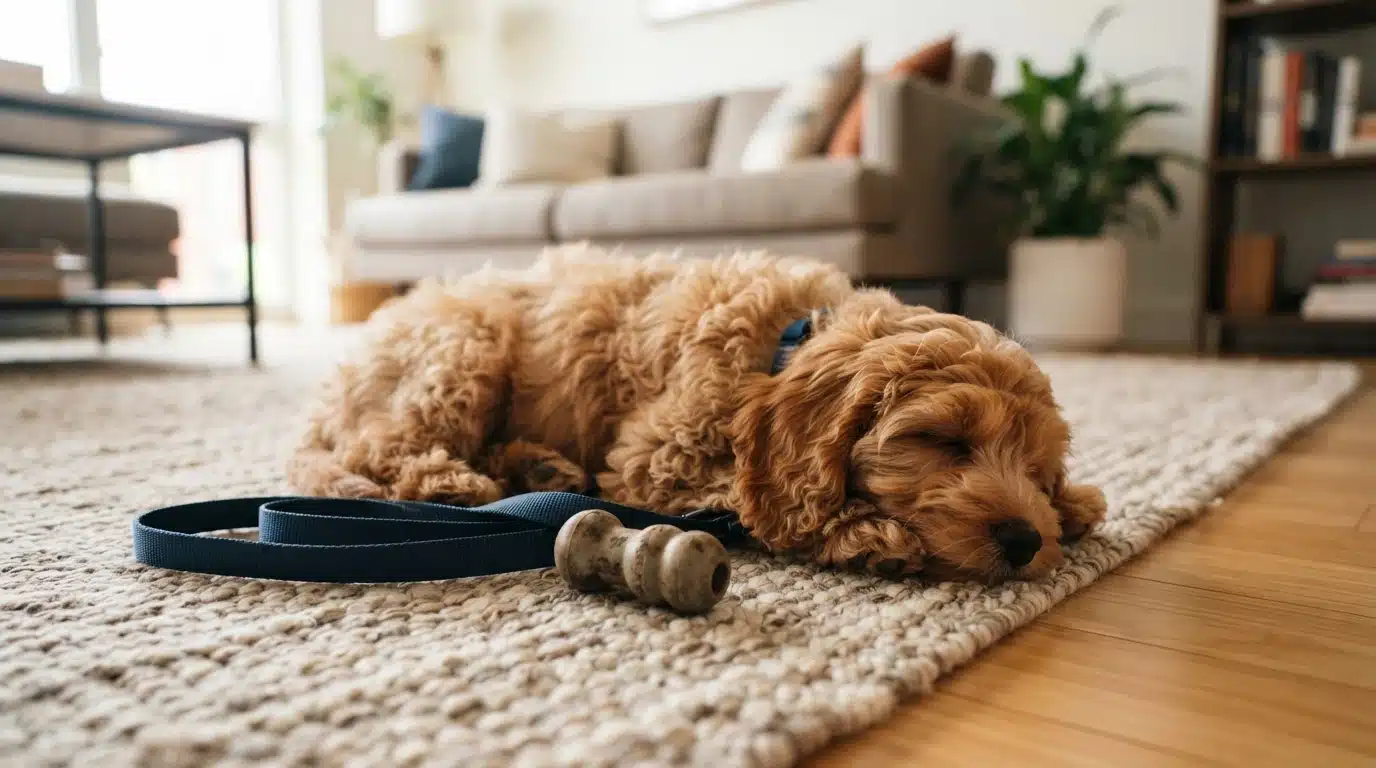
Why Puppies Need Less Forced Exercise Than Adult Dogs
Puppies grow through open growth plates, the soft areas at the ends of their bones. Strenuous, repetitive activity such as long jogs or stair sprints can injure these plates before they close, so avoid forced routines like jogging beside a bike. The widely shared “five minutes per month of age” rule has no scientific basis, but the instinct behind it is sound: let your puppy set the pace. Free play, sniffing, and short training sessions are safer than a fixed distance, according to VCA Animal Hospitals.
A Rough Daily Activity Range for a Cavapoo Puppy
Aim for two or three short sessions a day, five to fifteen minutes each for an eight to twelve week old puppy, stretching toward twenty to thirty minutes total by six months. Split it up: a hallway fetch game, a sniff walk around the block, and a puzzle feeder count as activity. Watch for lagging behind, lying down mid-play, or heavy panting, and end the session when you see them. Cavalier King Charles Spaniel and Poodle mixes are companion dogs, so a tired brain often matters more than tired legs.
When to Call the Vet Instead of Adding More Play
Limping, reluctance to rise, swelling in a leg, or exhaustion that lasts past a nap all point to a problem, not a need for more exercise. Slowing down can also signal pain or illness. The Veterinary Nurse notes that highly repetitive games like ball chasing stress growing joints, so call your vet if symptoms appear rather than adjusting the schedule yourself.
Step 2: Build a Safe Indoor Exercise Zone
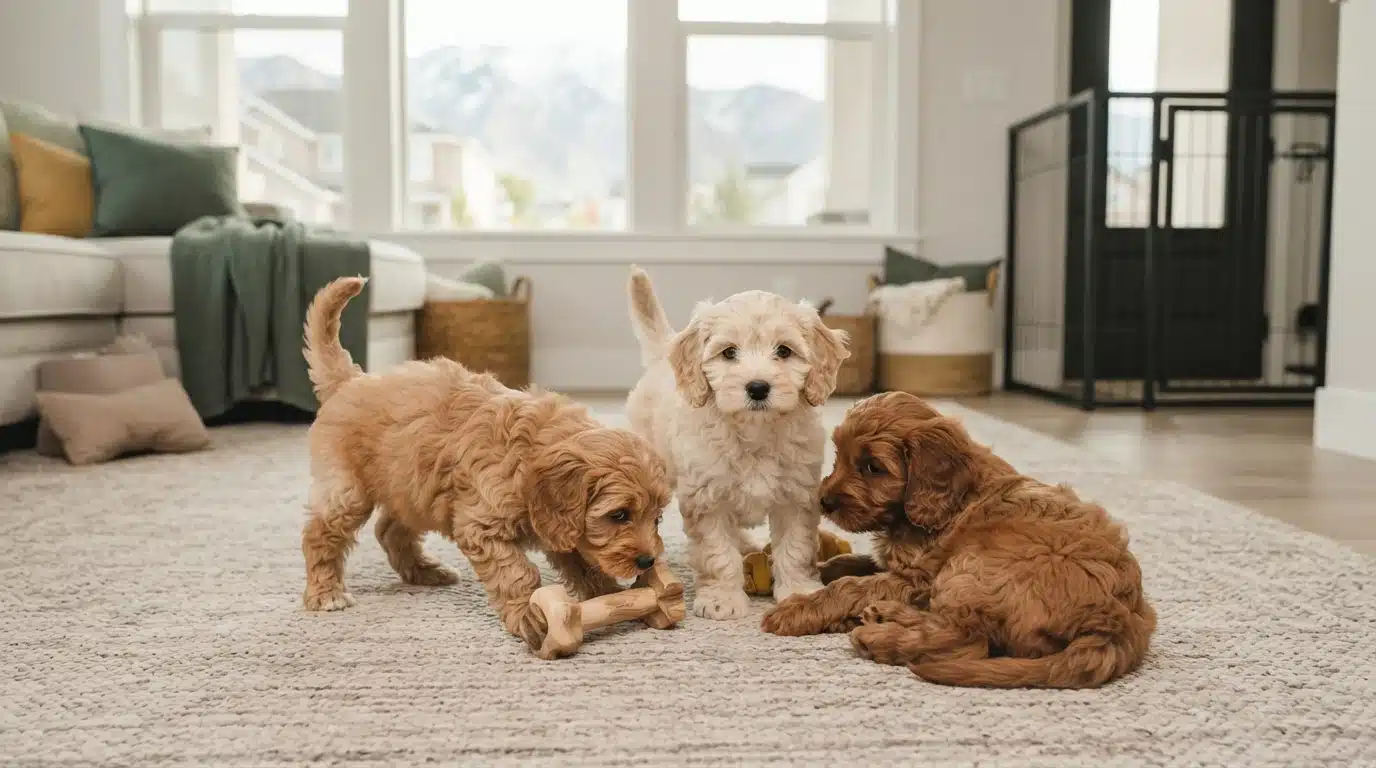
A small play space lets your puppy run hard without hurting herself. Clear a room or corner, then make the floor and the area around it safe.
Flooring, Rugs, and Joint-Friendly Surfaces
Hardwood and tile get slippery, and slips strain growing joints. Lay non-slip rugs or foam mats along the main running path. Short bursts are fine on carpet, so a hallway can work well for fetch. Washable runners are cheap insurance for muddy paws and accidents. Check that rug edges lie flat, because a curled corner can catch a tiny paw mid-sprint.
Puppy-Proofing the Play Zone Without a Yard
Good Cavapoo apartment exercise starts with removing hazards, not adding equipment. Get down to puppy eye level and scan the room:
- Tuck cords behind furniture or cover them with cord protectors
- Move plants up high; many common houseplants are toxic to dogs
- Bin small items like socks, coins, and kids’ toys that are swallowing risks
- Block stair tops and balcony doors with a baby gate
- Store trash and cleaning supplies behind a closed door
Keep water nearby so play breaks stay short. Place potty pads or a turf patch at one end of the zone, since young puppies cannot hold it long during a session.
Step 3: Use Sniffing Games to Tire a Puppy’s Brain
A tired body is not always a calm puppy. Scent work tires the brain, and research on scent activities shows olfactory enrichment can reduce stress and boost confidence. Five minutes of sniffing often does more for a restless Cavapoo than a lap around the block, which matters when your “yard” is a hallway. The AKC notes that indoor scent games channel sniffing instincts safely inside.
The ‘Find It’ Game in Hallways and Rooms
Start simple. Show your puppy a treat, say “find it,” and drop it a foot away. Once that clicks, hide treats behind furniture legs, under a rug corner, or along a hallway. Keep hides easy at first; a frustrated puppy quits. Build difficulty over a week by using colder rooms, tucked spots, or longer waits before you release her. Three short rounds of five hides beat one long session. End on an easy find so she finishes confident, then follow with a chew or a nap. Sniffing lowers arousal, so this game works well before bedtime or before you leave for work.
Snuffle Mats and Towel Wraps for Slow Feeding
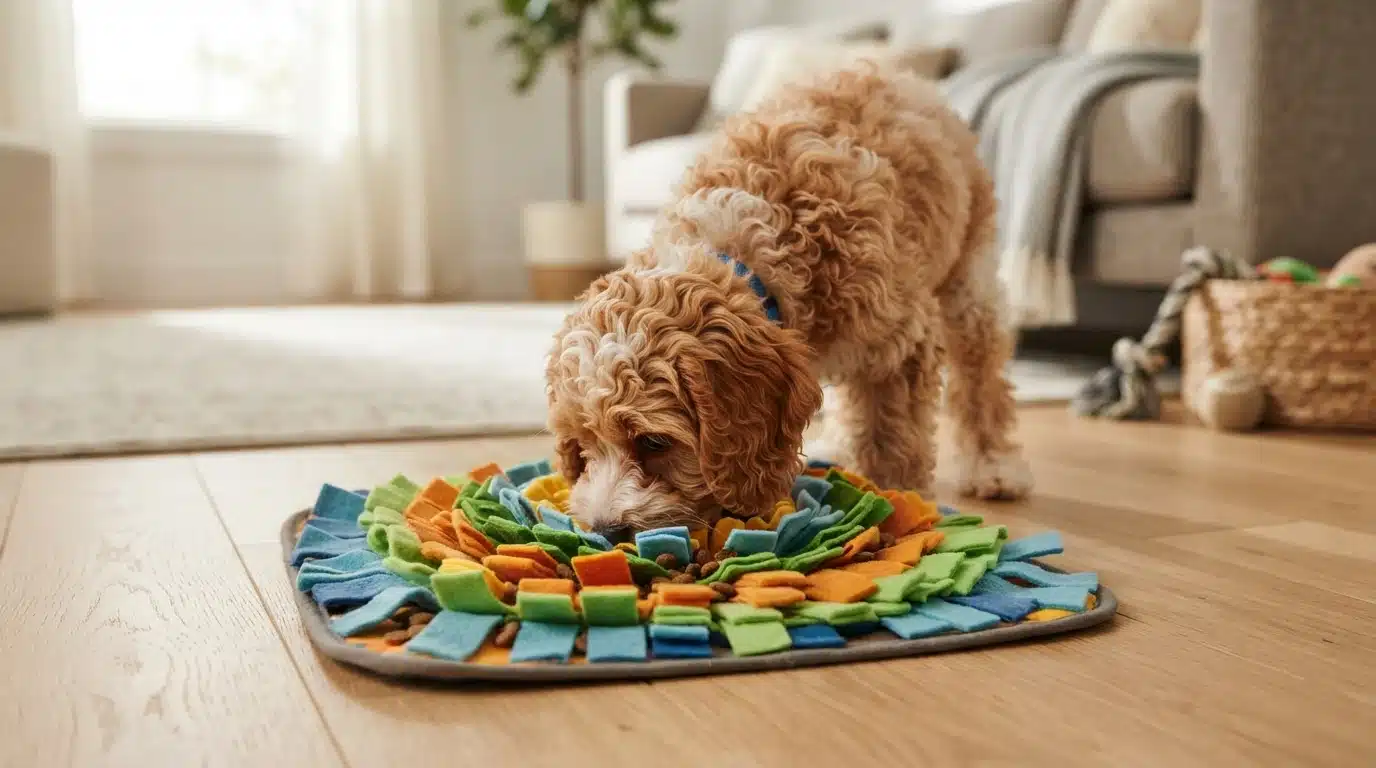
Feed one meal a day through a snuffle mat instead of a bowl. Sprinkle kibble into the fabric folds and let her root it out. No mat? Roll kibble inside a bath towel. Speed eaters get calmer, and mealtime doubles as brain work.
If you want gear guidance that fits small breeds, Cassie’s Picks on Sage Puppies covers enrichment toys with real pros and cons.
Step 4: Run Hallway Recalls and Light Fetch
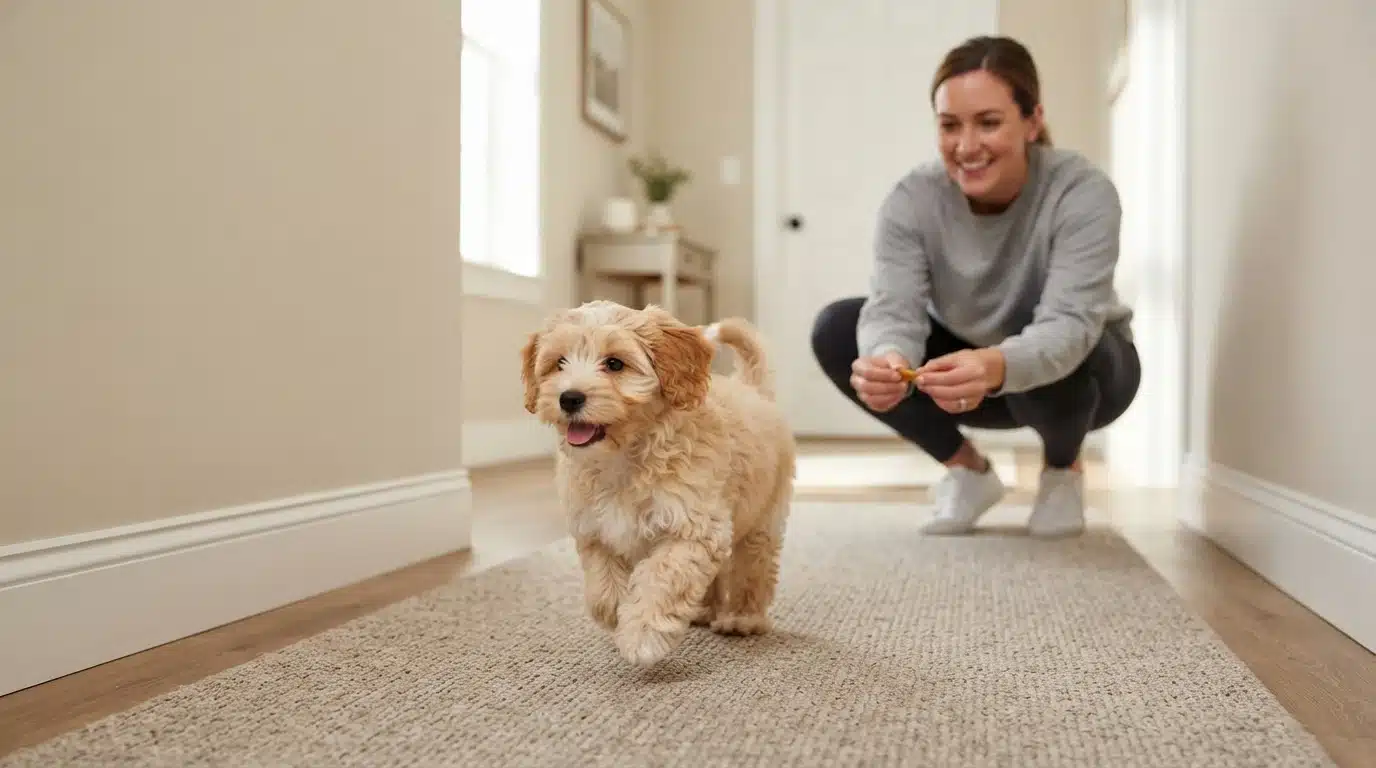
Hallway recalls are the best cardio a no-yard puppy has. Clear the path first, then work the run in short bursts. A hallway gives your Cavapoo a straight line with no corners to cut or furniture to leap off, which is exactly what growing joints need.
Setting Up a Hallway Recall Safely
Close doors at both ends so there is one exit and no escape route. Lift loose rugs, sweep stray kibble, and move anything with sharp corners. Stand at one end, cue a happy “come,” and reward with a small treat when your puppy reaches you. Then walk to the other end and repeat. Four to six runs is plenty for a young pup. Keep the surface non-slip; carpet is ideal, but bare floors work if you slow the pace.
Low-Impact Fetch That Respects Growing Joints
Fetch works indoors if you control the style. Roll a soft ball along the floor instead of throwing it high, and skip skidding stops. Repetitive, high-impact exercise can strain the growth plates in young bones, so VCA Hospitals advises keeping puppy workouts short and controlled. Three or four rolls, then a break. If your pup tires of the game, try a puzzle feeder; the indoor options in this Havapoo vs Cavapoo exercise comparison work for both breeds.
Step 5: Fold Training Into Daily Exercise
Training burns mental energy, and mental work tires a puppy faster than laps around the living room. In a home without a yard, treats and cues become your best indoor workout tools. Short drills before naps also help your puppy settle, which matters in a small space.
Two- to Five-Minute Training Sessions
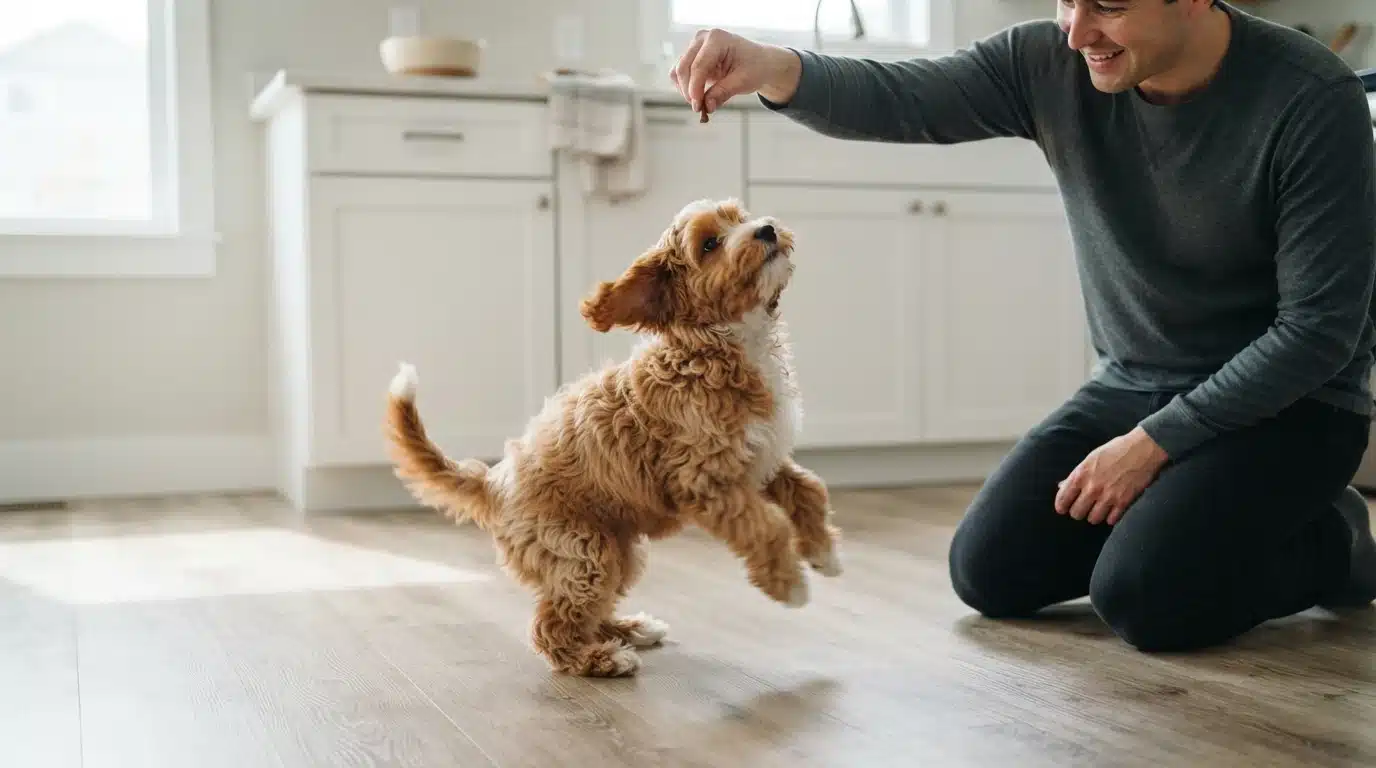
Puppies learn in bursts. Groups like Dognition recommend short daily sessions, and many trainers suggest three five-minute rounds beat one long drill. End each round while your puppy still wants more, so the next session stays fun.
Spread sessions through the day: one after a potty break, one before a meal, one before your puppy’s evening nap. Use pea-sized treats and mark the exact moment your puppy gets it right. If your Cavapoo starts sniffing the floor or nudging your hand, stop and rest. That’s fatigue, not stubbornness.
Tricks That Double as Exercise
Some cues are quiet workouts. Try these:
- Spin: a full turn in each direction works the body
- Sit to stand: repeated reps build young muscles gently
- Find it: hide treats around one room and let your puppy hunt
- Name game: call her name, reward the turn toward you
Rotate two or three so play stays fresh and paws stay busy.
Step 6: Add Stairs, Tug, and Other Bigger-Muscle Games
Once your Cavapoo handles short walks well, add games that build real strength. Just keep the doses small, because growing joints have limits.
Stair Work: Powerful but Easy to Overdo
Climbing stairs is one of the best muscle builders you can do indoors. It works the hips, thighs, and shoulders in a few seconds of effort. But the same motion is hard on young joints. A long-term study of dogs found that puppies who climbed stairs often in early puppyhood had higher rates of hip dysplasia later, while time on soft ground and room to roam was protective (see the AVMA study). So use stairs as a tool, not a workout. A few climbs, done slowly, two or three times a week is plenty. Carry your puppy down until her coordination is steady, since descending is the hardest part. Skip stair work entirely before 12 weeks.
Keep each stair session under 5 climbs, and stop if your puppy hesitates or hops with both back legs together.
Tug, Wobble Work, and Other Apartment-Safe Games
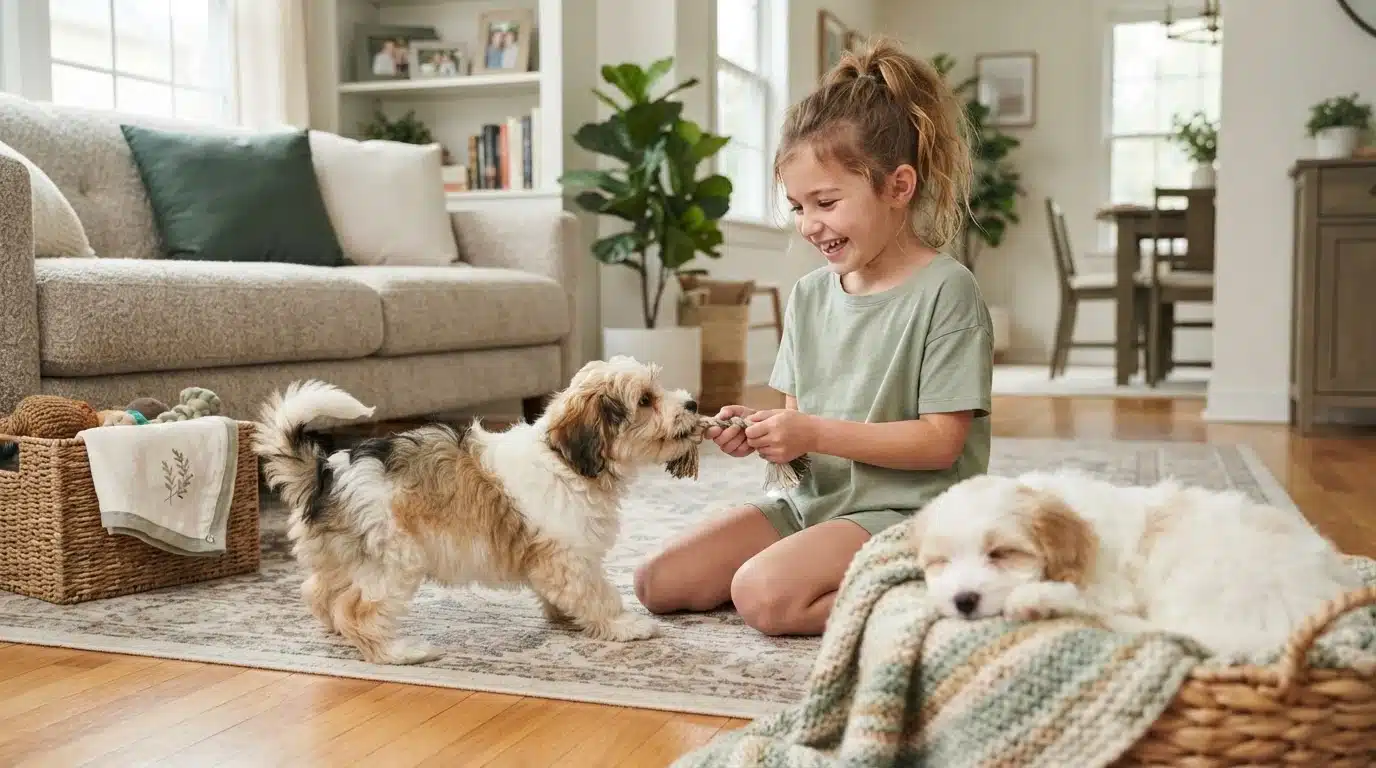
Tug builds the neck, shoulders, and grip, and it burns energy in about two square meters of space. Use a soft rope, keep pulls gentle and low to the ground, and let your puppy win often. For balance, try slow sit-to-stands or a few seconds standing on a folded blanket or wobble cushion. Quiet games like these work well on rainy days or in buildings with thin walls. Concussive games like hard ball chasing should wait until growth plates close, which vets warn happens closer to a year (The Veterinary Nurse).
Step 7: Layer in Outdoor Time Without a Yard
Outdoor time rounds out indoor play. Streets, lobbies, and sidewalks become your yard, so a little planning keeps walks safe and calm.
Short Leash Walks and Lobby Routines
Start with brief, slow leash walks after potty trips. Let your puppy sniff; sniffing is real exercise and mental work. A common guideline of five minutes of structured walking per month of age, twice a day, has no hard science behind it, so watch your puppy instead. Slow down or head home if she sits, lags, or gets mouthy with the leash. Keep lobby time boring: no greetings until she can sit calmly, because every neighbor becomes a reward. Sniff-and-stroll sessions of about 15 minutes work well once she’s had her vaccinations, per guidance from service-dog trainers. Pair each walk with a potty stop so routines stay predictable. For more on that, see our guide to potty training a puppy in an apartment.
Weather Decisions: Heat, Cold, and Rainy Days
Test pavement with the back of your hand for seven seconds. Too hot for you means too hot for small paws; walk early or late instead. Cavapoos tolerate cool weather better than deep cold, so shorten walks when she shivers or lifts her paws, and use a fitted coat on freezing days. Rain is fine for most puppies, but towel her off, check between toes, and swap a walk for indoor games during storms or extreme heat warnings.
Step 8: Potty Training, Noise, and an Honest Weekly Plan
Potty Training an Apartment Cavapoo Puppy
Without a yard, every potty trip means a walk, so success depends on timing. Take your puppy out after waking, eating, and play sessions, and reward her calmly the moment she finishes outside. At 8 weeks, most puppies need a break every 30 to 45 minutes while awake, according to PetMD’s potty training guide. A patch of grass mats, a balcony turf tray, or a consistent lobby spot gives you a backup when the elevator is slow or the weather turns. If you want the full method, our guide to potty training in an apartment covers pad-to-outdoor transitions step by step.
Keeping Apartment Noise Manageable
Cavapoos are not big barkers, but boredom and startling sounds can fill a hallway. Build quiet time into the day: a stuffed chew in a calm corner after walks teaches her to settle. Practice short alone spells daily so she does not panic when you shower or take out the trash. If the hallway sets her off, redirect with a treat before she barks rather than correcting after. Consistent naps matter too; an overtired puppy is a noisy one.
A Sample Weekly Plan You Can Adjust
| Day | Focus |
|---|---|
| Mon-Fri | Morning potty walk, midday sniff stroll, evening play, pre-bed trip |
| Sat | Longer walk or indoor game session, plus car-ride practice |
| Sun | Quiet day: enrichment toys, grooming intro, extra naps |
Rotate the details, but keep the wake, eat, play, potty rhythm steady.

No yard? Your Cavapoo puppy still needs daily movement, sniff time, and play, and a small space works fine when you plan it well. The team at Sage Puppies matches families with well-bred Cavapoo puppies and shares practical care guidance, so start with the puppy care guide on their site.
Frequently Asked Questions
Q1: How much exercise does a Cavapoo puppy need without a yard?
Two or three short daily sessions work best. An 8 to 12 week old puppy needs five to fifteen minutes each, building toward twenty to thirty minutes total by six months. Let her set the pace, and end play if she lags, lies down, or pants hard.
Q2: What are the best indoor exercises for Cavapoo puppies?
Hallway recalls, rolled fetch with a soft ball, “find it” scent games, snuffle mats, tug, and two- to five-minute training drills. Rotate a few each day. Short stair climbs also build muscle, but wait until 12 weeks and keep sessions under five climbs.
Q3: Can you potty train a Cavapoo puppy in an apartment?
Yes. Take her out after waking, eating, and play, and reward her immediately. At 8 weeks, expect a break every 30 to 45 minutes while awake. Grass mats or a balcony turf tray give you a backup when the elevator or weather fails.
Q4: Can a Cavapoo puppy get enough exercise in bad weather?
Yes. Swap walks for sniffing games, hallway recalls, and training rounds. A tired brain often calms a puppy as well as tired legs, so rainy days can be just as effective indoors.
Q5: When can my Cavapoo puppy start walking outside?
After your vet confirms her vaccinations are complete. Until then, keep outdoor trips short and potty-focused, and let sniffing, indoor play, and training carry the exercise load.
Q6: How do I know my puppy has had enough exercise?
Look for lagging, lying down mid-play, heavy panting, or floor sniffing during training. Those signals mean rest, not more activity. Exhaustion lasting past a nap or any limping warrants a vet call.
Conclusion
A yard is optional for a Cavapoo puppy; structure is not. Keep sessions short and let your puppy set the pace, since her growing joints matter more than any fixed routine. Rotate sniffing games, hallway recalls, rolled fetch, and two- to five-minute training drills to tire her brain as much as her legs. Time potty trips around waking, eating, and play, and swap walks for indoor games when heat, cold, or storms hit. Watch for lagging, heavy panting, or limping, and treat those as a signal to rest or call your vet. Done well, apartment life gives a Cavapoo everything she needs to grow into a calm, healthy companion.