Quick Summary: Book your puppy’s first vet visit within a week of bringing it home, ideally within 48 to 72 hours, and bring all breeder health records, a fresh stool sample, and a list of questions. The vet will run a nose-to-tail exam, set a vaccine schedule (including Nebraska’s rabies shot at three months), and plan parasite prevention, so leave with written next steps and the next appointment booked. Preparation prevents repeated vaccines and missed care, and documented histories from breeders like Sage Puppies make the visit smoother.
If you plan to buy puppies in Nebraska and bring home a Havanese, Havapoo, or Cavapoo, the first vet visit matters more than you might expect. It is where your veterinarian checks the puppy’s baseline health, reviews the breeder’s records, and sets the vaccine and care schedule for the months ahead.
The challenge? Most first-time owners walk in unprepared and miss details they can never get back later.
This guide fixes that. You will learn what paperwork to bring, which questions to ask, and how to time the appointment, whether you pick up your puppy locally or arrange nationwide delivery.
As a home-raised breeder of these exact breeds, we have helped many families make this transition smoothly. Here is how to do it right.
Step 1: Schedule the Appointment Before Your Puppy Comes Home
Most families plan the nursery, the food, and the crate. The vet appointment often comes last. Flip that order. Book the first visit as soon as you have a pickup or delivery date, because good clinics fill up fast and new puppies need to be seen quickly.
Aim for an Early Wellness Baseline
Get your puppy examined within a few days of arrival. Many veterinary sources recommend scheduling that first checkup within a week of bringing your puppy home, and some breeders even require it in their contract. This early exam sets a health baseline: weight, heart, lungs, teeth, and a stool test for parasites. It also keeps your vaccine series on schedule, since boosters follow a tight timeline in the first months.
If you plan to buy puppies in Nebraska and have them delivered, ask the clinic how soon they can see a new arrival. Knowing your appointment is already booked makes the first week far calmer.
Tell the Clinic Where Your Puppy Is Coming From
When you call, share the details up front:
- Your puppy’s breed and age, such as a Havanese, Havapoo, or Cavapoo
- The pickup or delivery date, so the visit lands within the right window
- Any health records, vaccine dates, and deworming history from the breeder
A responsible breeder hands over documented health history with every puppy. At Sage Puppies, each family receives written records so their veterinarian can pick up right where we left off. That paperwork prevents repeated vaccines and missed doses, and it gives your vet a clean starting point for lifelong care.
Also Read: Puppy Care Blog & Resources | Sage Puppies
Step 2: Assemble the Records and Questions Your Veterinarian Needs
A good first visit starts before you leave the driveway. Vets can build a smarter plan when they know exactly what care your puppy has already had. Without paperwork, they may repeat vaccines or deworming you already paid for, which wastes money and time. PetMD recommends bringing all health records so your vet can see what your puppy is still due for.
Bring Medical and Identification Records
Gather these items in one folder before appointment day:
- Vaccination records with dates and any vaccine stickers from the breeder
- Deworming history and any medications or preventives already given
- Date of birth and breed details
- Parent health history, if your breeder provided it
- Current food brand – a photo of the label works well
- A fresh stool sample in a sealed bag, collected the same day if possible
If you buy puppies in Nebraska through a breeder who ships or delivers, ask for digital copies of these records before travel day. Reputable programs, including ours at Sage Puppies, send documented health history with every puppy so nothing gets lost in transit.

Record the First Days at Home
Your vet will ask how your puppy is doing, so keep short daily notes for the first few days. Track eating amounts, potty habits, sleep, energy, and anything unusual. VCA Animal Hospitals notes that most puppies should see a vet at six to eight weeks to start vaccines and parasite prevention, so bring questions about that schedule too. Also jot down the food brand, portion sizes, and any behaviors you want to ask about.
Write your questions on paper or in your phone. Busy appointments go fast, and a list keeps you from forgetting the small stuff.
Also Read: 7 Nebraska Puppy Breeders Offering Health Guarantees and Vet Records
Step 3: Transport Your Puppy Safely to the Clinic
The car ride is part of the visit. Plan it with the same care as the appointment itself.
Use a Secure Carrier or Crate
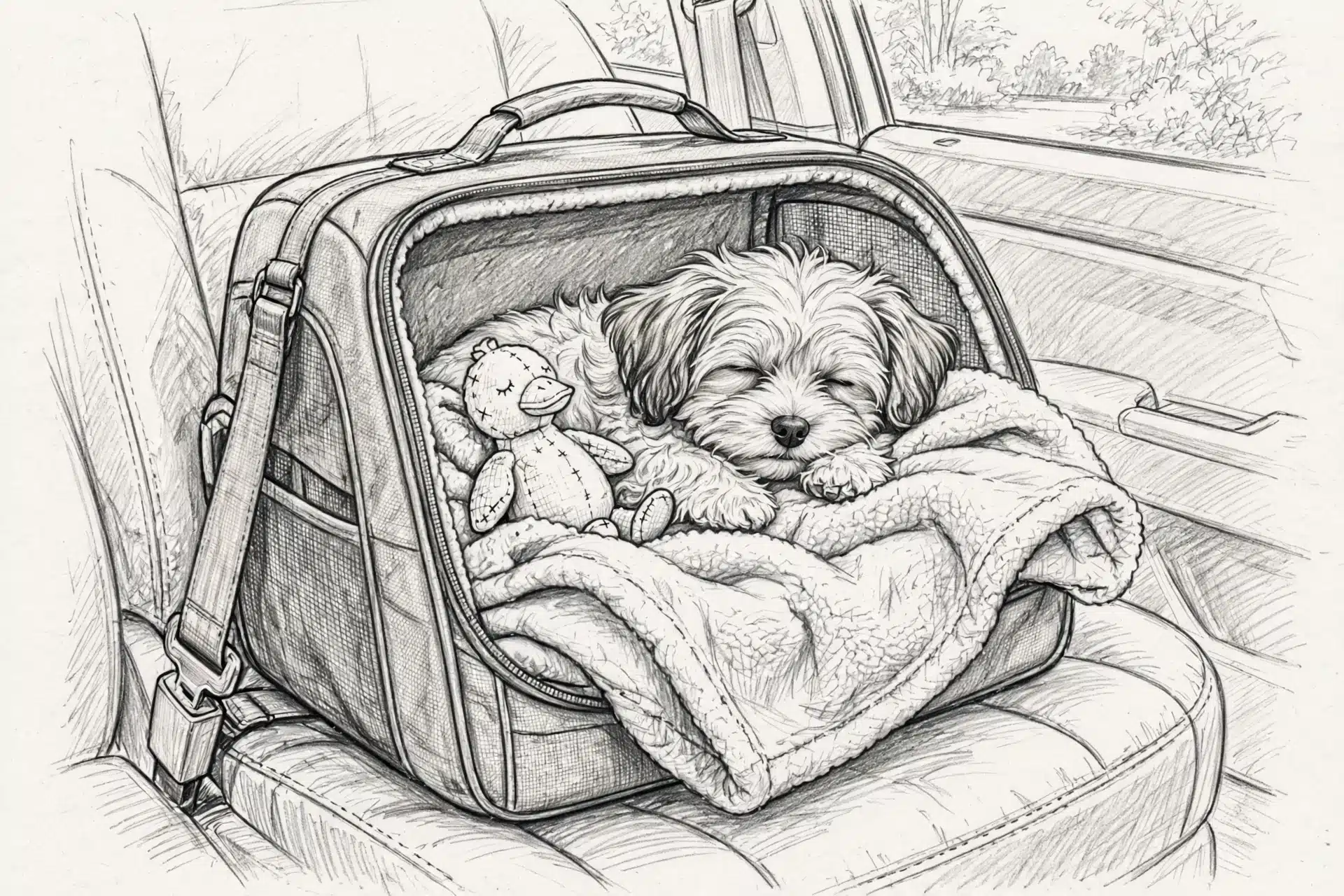
Put your puppy in a secure carrier or crate lined with a soft blanket. It keeps a small breed like a Havanese or Cavapoo steady in the car and safe in a waiting room where other animals may be present. If your puppy has outgrown a carrier, use a leash with a well-fitted harness instead. Add a familiar toy or the blanket that came home with your puppy from the breeder. Those smells calm a nervous pup. IDEXX Pet Health recommends asking your vet team for carrier guidance if you are unsure about size or fit.
Manage Exposure Before Full Vaccination
Skip the lobby floor if you arrive early. Carry your puppy from car to exam room and ask for a quiet corner or an empty room while you wait. Before the vaccine series is finished, puppies still have developing immune systems, so AVSAB guidance favors socializing safely rather than avoiding the world entirely. Calm handling, treats, and gentle praise during the ride count as good early socialization, too.
Also Read: Havapoo Puppy Checklist: Supplies, Scheduling, and First-Week Tips
Step 4: Know What the Veterinarian Will Evaluate
First visits follow a fairly predictable rhythm. Your vet will start with questions, then move into a hands-on exam. Knowing what comes next helps you stay calm, and that calm transfers straight to your puppy.
Expect a Nose-to-Tail Examination
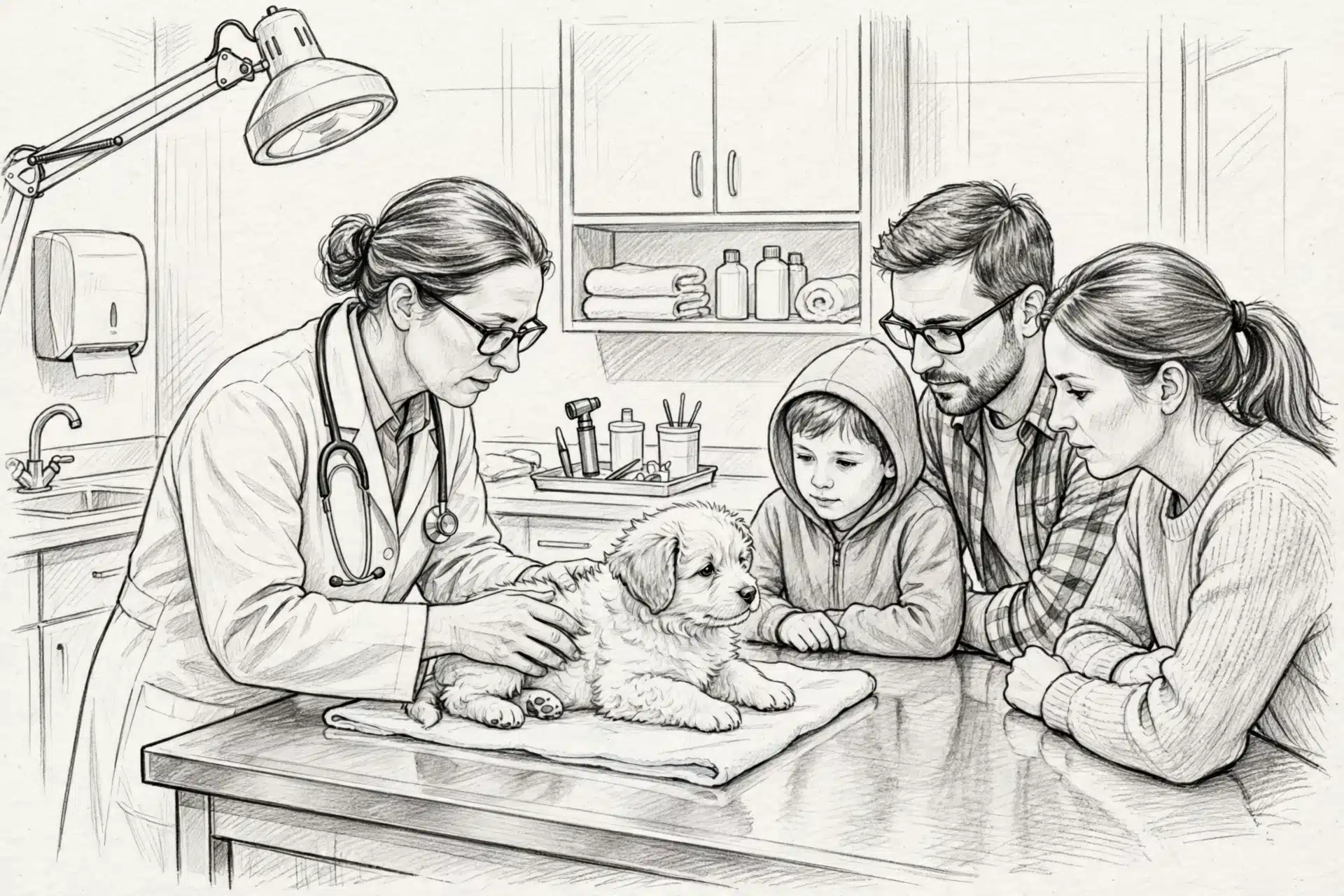
The physical exam is the heart of the appointment. According to AAHA’s puppy care guidelines, the vet will check your puppy’s temperature, body condition, skin, eyes, ears, nose, mouth, heart, lungs, joints, and belly.
Here’s what that looks like in practice:
- Weight and temperature come first, usually while your puppy settles in.
- Heart and lungs get a careful listen to catch murmurs early.
- Eyes, ears, and teeth get checked for discharge, infection, and bite alignment.
- Skin and coat are inspected for parasites, rashes, or dry patches.
- Belly, joints, and gait are felt and watched to rule out structural issues.
Your vet is also setting a baseline. Future visits get compared against today’s numbers, so this exam matters more than it might seem.
Discuss Growth, Nutrition, and Small-Breed Development
The exam ends with a conversation, and this part is just as valuable. Small breeds like Havanese, Havapoo, and Cavapoo puppies grow on their own timeline, so bring your food bag or a photo of the label.
Plan to cover:
- Food and portions – your vet can confirm amounts and feeding frequency for your puppy’s size and age.
- Growth pattern – steady weight gain matters more than hitting any specific number.
- Teething and chewing – baby teeth are coming in and falling out right now.
- Preventives – flea, tick, and heartworm options suited to your area.
- Next visit timing – most puppies return every 3 to 4 weeks until the vaccine series finishes around 16 weeks.
Bring the health records your breeder gave you. Sage Puppies sends each puppy home with a documented health history, which helps your vet see exactly what care your puppy has already had, so nothing gets repeated or missed.
Write your questions down before you go. The appointment moves quickly, and a list keeps you from driving home remembering the thing you meant to ask.
Also Read: How to Choose a Puppy Veterinarian in Idaho
Step 5: Build the Nebraska Vaccination and Rabies Plan
Your puppy’s vaccine plan starts before the first vet visit. Bring every record you received from the breeder, then ask your Nebraska vet to map out the rest of the series on a calendar. This keeps you ahead of boosters instead of chasing them.
Review the Core Vaccine Series
Core vaccines protect every dog, no matter its lifestyle. The 2022 AAHA Canine Vaccination Guidelines list distemper, adenovirus, parvovirus, leptospirosis, and rabies as core, with Bordetella and Lyme as common add-ons based on risk.
For puppies 16 weeks and under, the combination shot (often called DAP) follows a simple rhythm:
- First dose between 6 and 8 weeks of age
- At least three total doses, spaced 2 to 4 weeks apart
- Final dose no earlier than 16 weeks
- A booster one year later, then every three years
Leptospirosis usually starts around 12 weeks as two doses. Your vet may adjust timing based on what your breeder already gave. If you brought home a Havanese, Havapoo, or Cavapoo from Sage Puppies, the health record will show exactly which doses were completed and when.
Confirm Nebraska Rabies Documentation
Nebraska law is clear: every dog must be vaccinated against rabies by a licensed veterinarian. Under state statute 71-4402, an unvaccinated dog brought into Nebraska needs a rabies shot within 30 days of arrival, unless it is still too young.
Nebraska regulations set the first rabies vaccine at three months of age. A booster is due one year later, regardless of which vaccine was used.
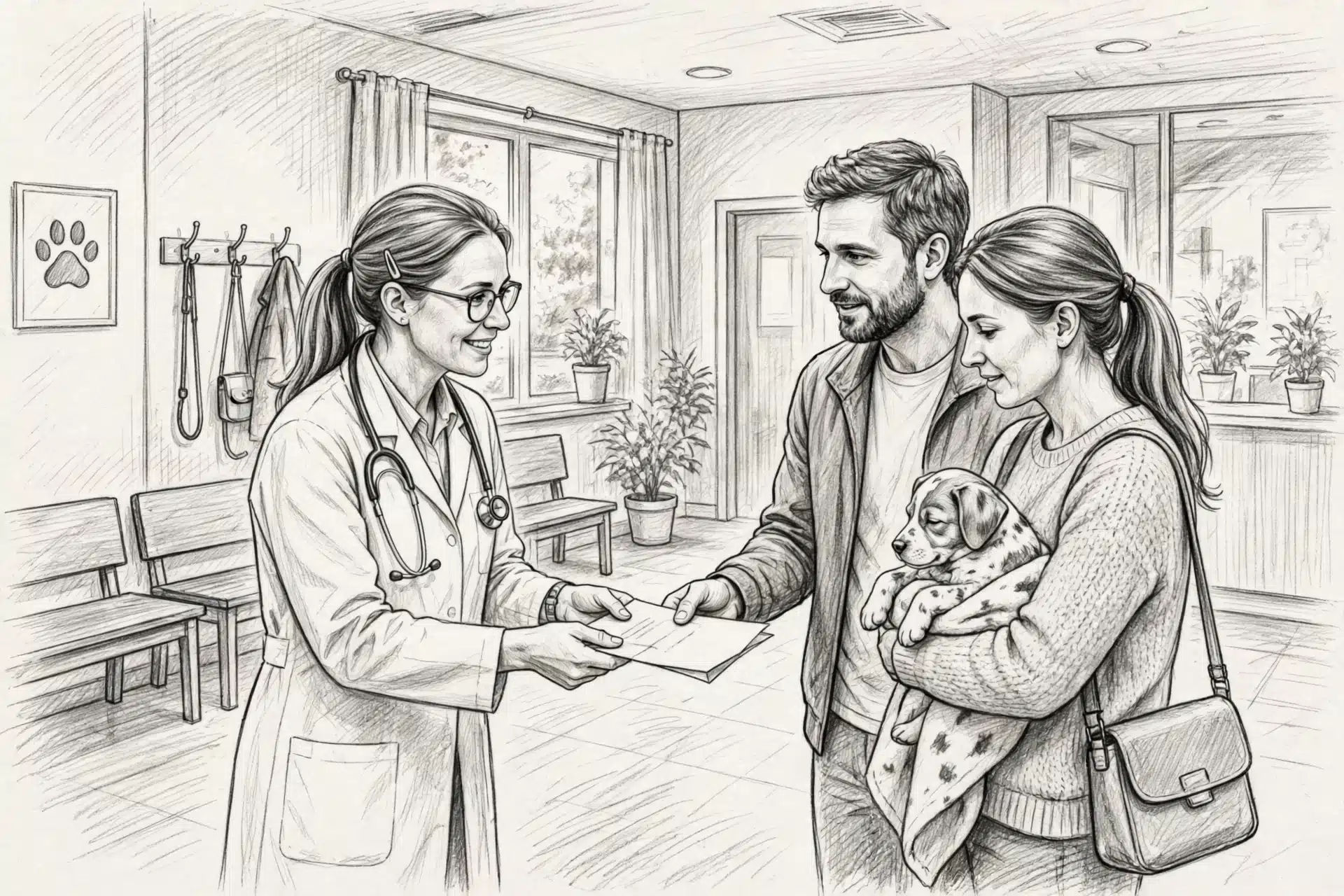
Ask your vet for the rabies certificate at the visit, not later. Many cities, including Omaha and Lincoln, require it for a pet license.
Also Read: 10 Signs a California Puppy Listing Is a Scam – Sage Puppies
Step 6: Ask About Parasites, Identification, and Preventive Care
Puppies carry worms more often than most new owners expect. Roundworms and hookworms are common, and some can spread to people, so this part of the visit matters.
Plan Fecal Testing and Parasite Prevention
Bring a fresh stool sample to the first visit. Your vet will run a fecal test to check for intestinal parasites, and your puppy will get deworming medication even if the sample comes back clean, since eggs are not always shed in every sample PetMD.
Ask these questions while you are there:
- How many fecal tests does my puppy need in the first year?
- Which dewormer did the breeder already use, and when?
- What heartworm preventive should we start, and at what age?
- Do we need flea and tick control year-round in Nebraska?
AAHA guidelines recommend several fecal exams in a puppy’s first year and year-round heartworm prevention starting by about 8 weeks of age. If you adopted through Sage Puppies, your puppy’s health records will show which dewormings and preventives were already done, so your vet can pick up right where we left off.
Note: heartworm testing with a blood sample usually starts around 6 months or later, not at the first visit.
Confirm Identification and Future Care
Ask your vet to scan for a microchip at the first appointment. If your puppy does not have one yet, microchipping is a quick in-office step and a smart safeguard against a lost dog AAHA. Before you leave, book the next visit. Puppies need follow-up exams every 3 to 4 weeks until their vaccine series is finished, so getting the next appointment on the calendar now keeps everything on schedule.
Step 7: Leave With a Written Follow-Up Plan
Your first visit sets the pace for the whole first year. Before you walk out, get the plan on paper.
Write Down the Next Dates and Daily Instructions
Ask the team to print or write out the next steps before you go. Most puppies return every 3 to 4 weeks for booster shots until about 16 weeks of age, so book that next visit before you leave. Jot down feeding amounts, parasite prevention, and anything your vet wants you to watch at home. Pair this with the health records from your breeder. If you worked with Sage Puppies, those documents show exactly which vaccines and dewormings your puppy already had, which helps your vet build the plan correctly.
Know When to Call the Veterinary Team
Not every odd day means a call, but some signs do. Per guidance from Banfield Pet Hospital, mild sleepiness or a sore spot after a vaccine is normal. Vomiting, facial swelling, hives, labored breathing, or collapse need a call right away. Chewy’s vet-reviewed guide also flags low appetite, diarrhea, coughing, or eye discharge as reasons to reach out. Save the clinic number in your phone now, not later.
Also Read: Guides – Sage Puppies
Common Mistakes to Avoid
Most first-visit problems come from preparation, not the puppy. Watch for these three.
Relying on a Generic Schedule
One vaccine calendar does not fit every puppy. Timing depends on age, health history, and when maternal antibodies fade, so the final dose should land at or after 16 weeks per AAHA-aligned guidance. Ask your vet to build the plan around your puppy, not a chart. Bring all breeder paperwork so nothing gets repeated.
Forgetting Travel and Exposure Details
Your vet needs to know how your puppy got home. Delivery, air travel, parks, and future boarding all change vaccine and prevention advice. Mention dog parks or daycare plans early, since AKC guidance stresses planning vaccines around lifestyle, not guesses.
Leaving Without Written Next Steps
Do not walk out with fuzzy memories. Before you leave, confirm:
- The date of the next vaccine and booster.
- When stool testing and deworming repeat.
- Which foods, treats, and activities are safe right now.
A short note in your phone keeps everyone honest. Sage Puppies families also receive a health record packet, so your vet starts with facts, not assumptions.

Ready to bring home a puppy with a clean bill of health and a documented head start? At Sage Puppies, our home-raised Havanese, Havapoo, and Cavapoo puppies arrive well-socialized and vet-ready, with pickup in South Jordan, Utah or nationwide delivery. Browse available puppies and apply today.
Frequently Asked Questions
Q1: where to buy puppies in Nebraska
Look for breeders who share health records and parent testing. Sage Puppies home-raises Havanese, Havapoo, and Cavapoo puppies with documented vet checks and offers safe nationwide delivery, including Nebraska.
Q2: When should my puppy see a vet in Nebraska?
Within 48 to 72 hours of arrival. This confirms health, starts your record, and catches any travel-related stress early.
Q3: What should I bring to the first visit?
Bring health papers, any food from the breeder, and a stool sample if possible. It speeds up testing.
Q4: How much does a first puppy vet visit cost?
Most Nebraska clinics charge $50 to $150 for an exam, depending on vaccines and testing needed that day.
Q5: Should I vaccinate before bringing my puppy home?
No. Breeders give early shots, but your vet sets the remaining schedule based on age and Nebraska’s risks.
Conclusion
Your puppy’s first vet visit comes down to three things: book it within the first week, bring every health record you have, and write your questions down before you walk in. A fresh stool sample and your puppy’s current food round out the checklist. The AKC recommends a full evaluation for every new puppy, and that first exam sets the health baseline your vet will use for years. Puppies from careful, home-raised programs like Sage Puppies arrive with documented histories, which makes that first appointment smoother and more useful. Do the small prep work now, and the visit sets a calm, healthy tone for your puppy’s whole life.