Quick Summary: Choose a puppy vet in Idaho by narrowing candidates to a realistic drive, verifying state licenses, and asking clinics specific questions about puppy care, emergencies, and costs before booking. The first wellness visit should happen within a week home, and you should score the clinic on exam quality, clear answers, and follow-through. Small-breed experience matters, so look for gentle handling and dental checks, and bring health records to avoid repeat shots.
When your Havanese, Havapoo, or Cavapoo puppy arrives in Idaho, the appointment that matters most is not an emergency one. It is the first wellness visit you book after reviewing your puppy’s records, travel plans, and local care options. Choosing a vet before you need one keeps puppy vet care calm, planned, and on schedule. The challenge is that Idaho ranges from dense Boise-area clinics to small-town practices hours apart, so not every Idaho vet fits a new puppy. This guide walks you through license checks, clinic access, communication style, preventive-care planning, and emergency logistics. You will also get a simple first-visit scorecard to bring with you. We raise Havanese, Havapoo, and Cavapoo puppies at Sage Puppies, and we have helped many families set up great first vet visits. Here is how to choose well.
Start With Idaho-Specific Candidates, Not Just Online Ratings
A five-star rating from a clinic two hours away won’t help your puppy much. Before you compare reviews, narrow the field to Idaho vets who can actually see your puppy on a normal Tuesday.
Define Your Realistic Service Area
Pick the drive you’ll genuinely make, not the one you’d make in an emergency. Most families in Boise, Meridian, or Nampa stay within 20 to 30 minutes for routine visits. If you’re in Idaho Falls, Coeur d’Alene, or a rural town, your range may be wider, and that’s fine. Just write the boundary down. Every later step gets easier when you’re comparing an Idaho vet inside it instead of scrolling clinics statewide.

Use Recommendations as a Starting Point
Online ratings tell you a clinic is popular. Local recommendations tell you why. Ask neighbors at the dog park, staff at local pet supply stores, and breeders who ship puppies into your area – we regularly point Sage Puppies families toward well-regarded clinics near their pickup or delivery location. Then cross-check: two or three independent mentions of the same practice beats a 4.9-star average from 40 anonymous reviews. Build a short list of three to five candidates before you go deeper.
Verify the Veterinarian’s Idaho License
This step takes five minutes and protects everything that follows. Every practicing Idaho vet must hold a license from the state Board of Veterinary Medicine, which falls under the Division of Occupational and Professional Licenses. The board’s site lets you search to confirm a veterinarian’s current license status, and the state also investigates complaints when something goes wrong.
For each candidate, confirm:
- The veterinarian’s name matches an active license
- The license shows no current discipline
- The clinic address matches where you’d actually take your puppy
Tip: Verify the individual veterinarian, not just the clinic name. Large practices have several doctors, and only one may handle puppy visits.
Also Read: 7 Idaho Puppy Search Filters for First-Time Dog Owners
Ask the Clinic Questions That Reveal Puppy-Care Fit
Phone calls tell you more than websites ever will. Before you book, call two or three clinics and ask the same set of questions. The answers show you how they handle puppies, not just dogs in general. Write down what each clinic says so you can compare fairly later.
Ask About the First Puppy Appointment
The first visit sets the tone for everything. Vets recommend a checkup within one week of bringing your puppy home, so ask how fast a new puppy can actually get in PetMD.
Good questions to ask:
- How soon can you see a new puppy after pickup or delivery?
- Will the vet do a full head-to-toe exam and review the records I bring?
- What vaccine plan do you build for a puppy’s first few months?
- Do you allow exam-room tours, or can I see where my puppy will be treated?
Listen for specifics. A clinic that talks through vaccine timing, stool testing, and baseline exams knows puppy care. A vague answer is a warning sign.
Ask How Preventive Care Is Personalized
Strong clinics tailor care to the puppy, not a one-size-fits-all plan. The AAHA/AVMA guidelines say vets should build preventive plans around life stage, lifestyle, and location AAHA.
Ask these:
- How do you adjust vaccine and parasite plans for Idaho conditions?
- Do you offer wellness plans or puppy packages that bundle visits?
- How do you time spay or neuter for small breeds like Havanese or Cavapoos?
- What do you recommend for heartworm and tick prevention in my area?
If a clinic can explain why a plan fits a small breed puppy, that’s a good sign. If they quote the same script for every dog, keep looking.
Test Communication Before You Commit
How a clinic answers your first call is how they’ll answer at 9 p.m. with a sick puppy. Try this before you decide:
- Call once with a simple question, like vaccine timing. Note the tone and wait time.
- Email the clinic. Count how many days pass before a reply.
- Ask how they handle after-hours emergencies and who covers them when closed.
You want quick, patient answers and a clear emergency plan. If the front desk seems rushed or dismissive now, it won’t improve later. Trust that instinct.
Also Read: 10 Adorable Havapoo Colors You Need to See (2026)
Evaluate Emergency Access and Referral Coverage in Idaho
Find Out Who Handles Emergencies
Most Idaho clinics do not run 24-hour care themselves. Ask your candidate vet one direct question: “What happens if my puppy gets sick at 2 a.m.?” A good clinic has a clear answer. Some offer extended urgent care hours, like Treasure Valley Veterinary Hospital in Meridian, which runs urgent care from 8 a.m. to 8 p.m. and refers after-hours cases to a 24-hour emergency hospital.
Know the dedicated ERs near you. In the Treasure Valley, WestVet Boise operates 24/7 with no appointment needed, and WestVet Meridian covers the same role. In eastern Idaho, Viking Veterinary Hospital in Idaho Falls stays open around the clock, every day of the year. Save the address and phone number for your closest ER before you ever need it.
Understand Referrals and Continuity of Records
Referrals work best when clinics share information. Ask how your vet sends records to the emergency hospital and how follow-up notes come back. You want your puppy’s vaccine history, weight, and any treatments in one thread, not scattered across three offices.
Also ask about specialists. Puppies occasionally need surgery, an eye exam, or advanced diagnostics. A clinic that routinely refers to trusted specialty hospitals shows you they know their limits and put your puppy first.
Tip: Before your first visit, request a printed or digital copy of your puppy’s health record so you can hand it over fast in an emergency.
Make the Plan Practical for Your Location
Idaho distances are big. A 30-minute drive matters when a puppy is in trouble. Map the nearest 24-hour ER from your home, and check the drive time in winter conditions. Families in rural areas may face an hour or more, so ask your vet which urgent-care options sit closer. If you bring home a Sage Puppies puppy, we share starter health records up front so any new clinic can hit the ground running.
Also Read: Guides – Sage Puppies
Review the Clinic’s Small-Breed Puppy Experience
A clinic can be licensed and convenient and still be a poor match for a five-pound Havanese puppy. Small breeds need different handling, different vaccine dosing care, and closer attention to teeth and blood sugar. Ask directly how often the clinic treats toy and small-breed puppies, and how they adjust their routine for them.
Look for Gentle, Low-Stress Handling
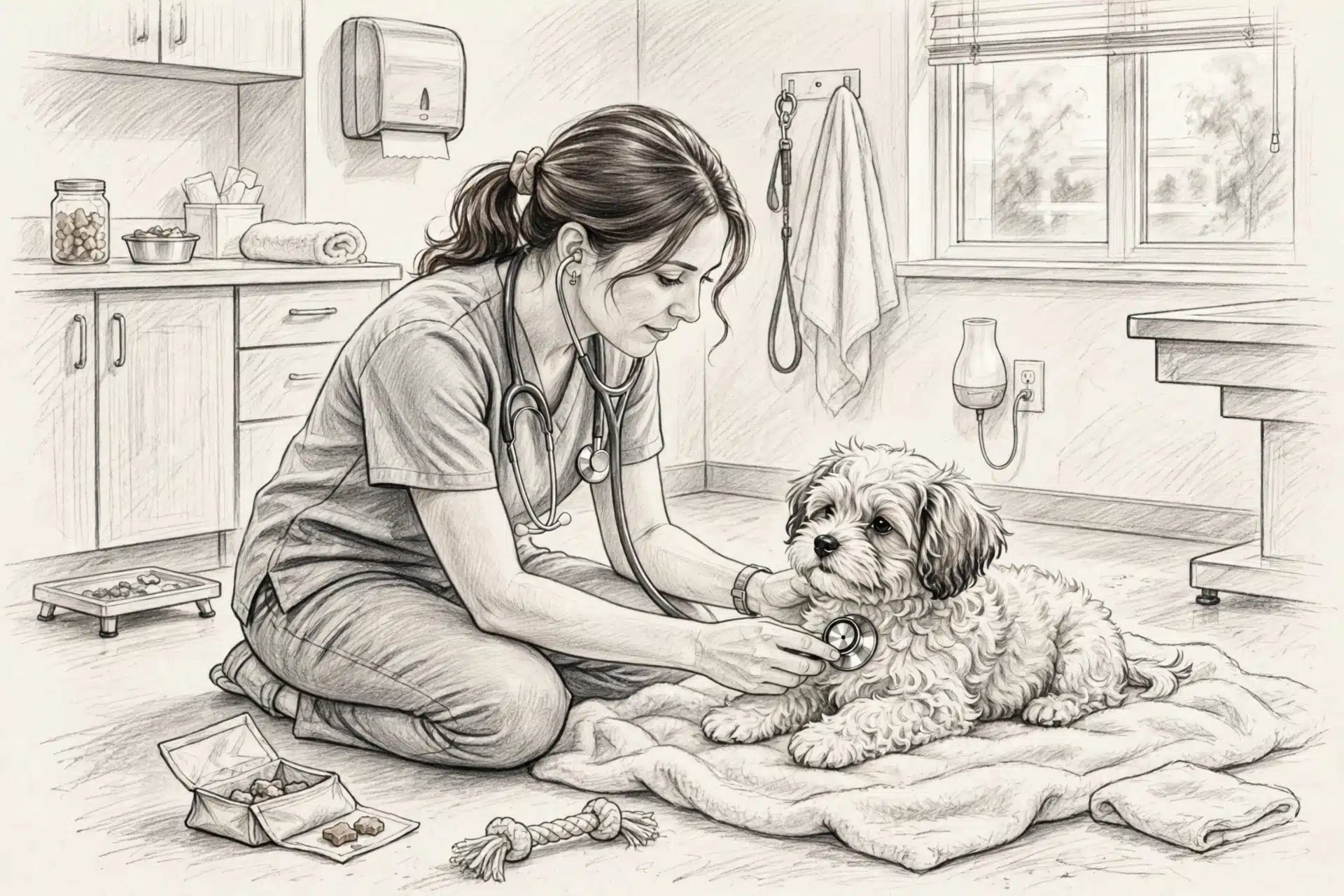
Watch how the team treats your puppy from the moment you walk in. Clinics trained in Fear Free or Low Stress Handling methods use minimal restraint, quiet rooms, and exams on the floor when needed. Cornell’s canine health center recommends asking any new vet how they reduce fear and stress during appointments, and it suggests “happy visits” where your puppy stops in just for treats and a weigh-in. If the staff rush the exam or take your puppy to the back, keep looking. A first visit should build trust, not fear.
Discuss Growth, Nutrition, and Dental Development
Small breeds grow on a faster curve and can be prone to low blood sugar, so portion sizes and feeding frequency matter. Ask what food, amount, and schedule the vet recommends for your puppy’s breed and expected adult weight.
Dental care deserves real attention too. Toy breeds are more likely to have crowded or retained baby teeth, and the Royal Veterinary College advises a dental check around five months so problems get caught early. A good clinic will examine the mouth at every puppy visit and walk you through brushing at home.
Bring Breed and Family Questions to the Appointment
Come with a written list. Useful questions include:
- How do you adjust exams and handling for toy-breed puppies?
- What vaccine plan fits my puppy’s age and our Idaho lifestyle?
- What growth rate and body condition should we expect at each visit?
- When should we schedule the dental check?
If you adopted through a home-raised program like Sage Puppies, share the health records and details about the parents. The more your vet knows, the better they can tailor a plan. A clinic that welcomes your questions and answers them plainly is one worth keeping.
Also Read: 7 Documents a Reputable Puppy Breeder Should Provide
Compare Services, Costs, and Clinic Policies Before Booking
Two clinics can look identical online and charge very different totals. Ask about money before you book, not after your puppy is on the table.
Request a Routine Puppy-Care Estimate
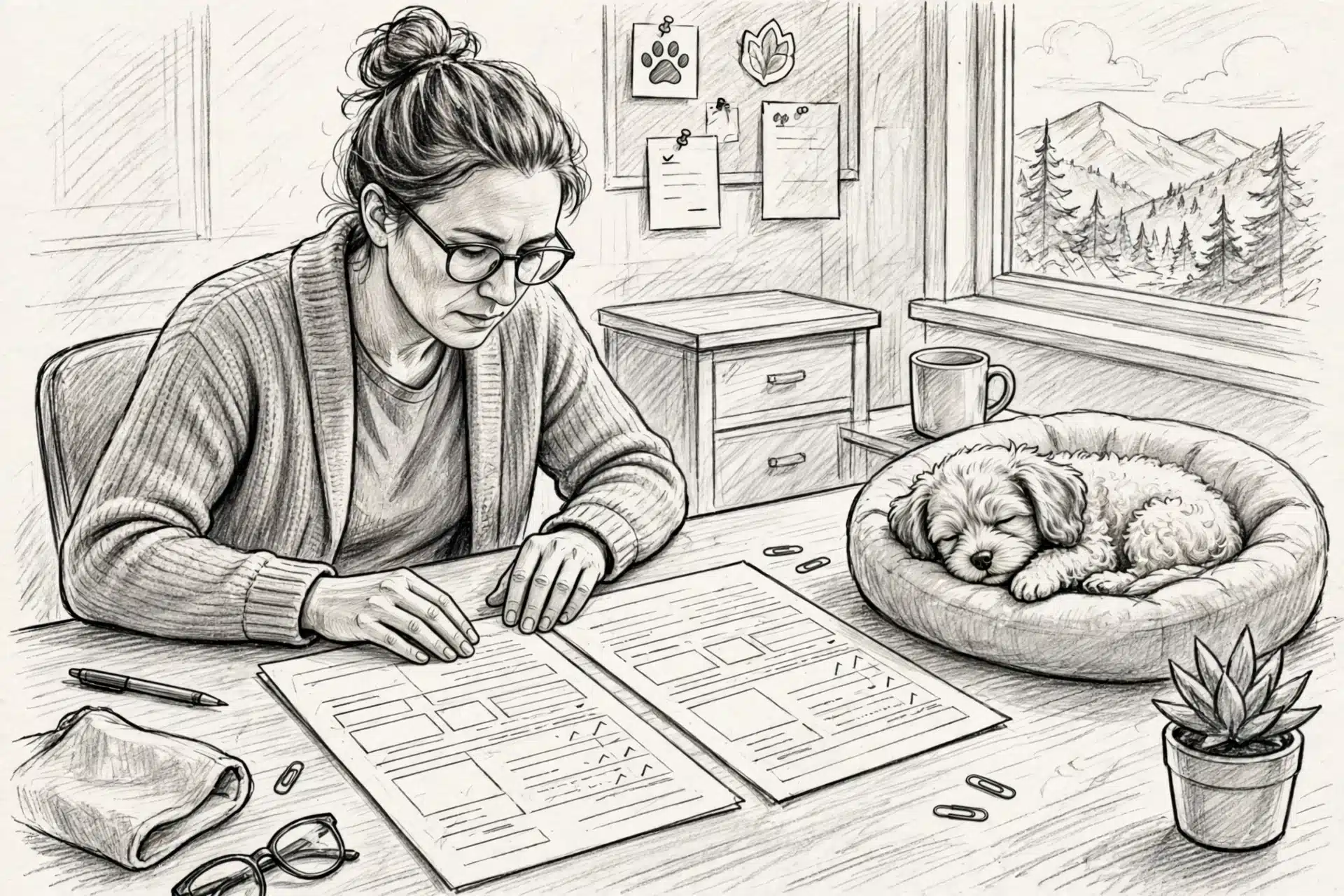
Call each clinic and ask for an itemized first-year estimate. A good clinic will send one without hesitating. It should cover the puppy vaccine series, exams, fecal tests, deworming, and preventives. Nationally, a full first-year vaccine series runs about $100 to $300, with individual vaccines from roughly $20 to $70 each, according to Chewy’s vet-reviewed vaccine cost guide. Ask what an exam costs at each visit too, since those fees add up fast. Bring the health records your breeder gives you so the clinic doesn’t repeat shots your puppy already had.
Clarify Payment, Insurance, and Estimates
Now ask how they handle payment. Key questions:
- Do you take pet insurance, and which providers?
- Do you accept CareCredit or offer payment plans?
- Do you sell wellness plans that bundle puppy visits?
- Will you give a written estimate before any procedure?
Standard insurance usually skips routine care like vaccines, but it can save you on emergencies. WSJ’s Buyside guide notes wellness plans and similar programs help offset early vaccine costs. Get every answer in writing.
Check Records, Appointments, and Policies
Finally, confirm the small stuff that shapes daily care:
- Records: Will they transfer records digitally? Can you access them online?
- Appointments: How far out is the next new-puppy opening? Who sees your puppy each visit?
- Policies: What is the cancellation rule? What are the late fees? Do they offer telehealth for quick questions?
Write the answers down. The clinic that answers clearly and promptly is usually the one that will communicate well when it matters.
Also Read: 7 Nebraska Puppy Breeders Offering Health Guarantees and Vet Records
Use the First Visit as a Final Fit Check
Your puppy’s first appointment is more than a health check. It is your best chance to see how this clinic actually works before you commit to it. Plan the visit within your first week home, as PetMD recommends, and treat it as an interview that goes both ways.
Bring the Right Information
Walk in prepared and the whole visit runs smoother. Pack these items:
- Health records from your breeder, including vaccines and deworming dates
- Parent health history, if you have it
- A fresh stool sample if the clinic asked for one
- Your food brand and feeding routine
- A written list of questions, so nothing gets forgotten
If you brought your puppy home from Sage Puppies, your pickup or delivery packet already covers vaccines, deworming, and vet checks. Hand it over early. A good clinic will read it instead of repeating care your puppy has already had.
Evaluate the Exam and Explanation
A thorough first exam follows a fairly standard playbook. Your vet should weigh your puppy, take a temperature, listen to the heart and lungs, and check eyes, ears, teeth, skin, and joints. They should scan for a microchip, run a stool test, and map out a vaccine schedule.
Pay attention to how they explain all of it. Do they name each vaccine and say why it matters? Do they pause for your questions, or rush toward the exit? Puppies need visits every 3 to 4 weeks until about 4 to 5 months old, so per AAHA’s life stage guidance, you will be back often. Clear talk now predicts clear talk later.
Score the Practice on Trust and Follow-Through
Before you leave, jot down quick scores from 1 to 5:
| What to Score | What Good Looks Like |
|---|---|
| Exam quality | Nose-to-tail check, nothing skipped |
| Clear answers | Plain words, no jargon wall |
| Follow-up plan | Next visit and vaccine dates in writing |
| Front desk | Easy scheduling, printed costs |
Also Read: Havanese, Havapoo & Cavapoo Puppy Care Blog

Choosing a great vet is easier when your puppy arrives healthy and well started. At Sage Puppies, our home-raised Havanese, Havapoo, and Cavapoo puppies come from health-tested parents and gentle early socialization. Browse our available puppies, review our pricing, or start your application today. Pickup in South Jordan, Utah or delivery to your Idaho door. Wisely Bred. Beautifully Loved.
Frequently Asked Questions
Q1: What should I look for in a puppy veterinarian in Idaho?
Look for an Idaho-licensed clinic, puppy experience, same-day sick visits, and clear communication. Ask about vaccine schedules, pricing, and how they handle fearful puppies. A clean facility and friendly staff matter too.
Q2: How do I find a good vet for my new puppy in Idaho?
Ask your breeder first, then check local Facebook groups and Google reviews. Tour two or three clinics near you. Many Idaho cities have several options, so compare before committing to one.
Q3: What questions should I ask a puppy veterinarian before choosing?
Ask about appointment availability, emergency coverage, vaccine protocols, and new-puppy exam costs. Also ask who sees your puppy each visit and how the clinic shares records.
Q4: When should my puppy see a vet for the first time?
Book a visit within a few days of bringing your puppy home, even if shots are up to date. Early exams catch issues while they are easy to treat.
Q5: Do rural Idaho families have fewer vet options?
Sometimes, but telehealth visits and mobile vets help fill gaps. Choose a clinic you trust and plan longer drives for routine visits.
Q6: How much does a first puppy vet visit cost in Idaho?
Most Idaho clinics charge $50 to $150 for a first exam, plus vaccines or tests. Ask for a written estimate so nothing surprises you.
Conclusion
Choosing a puppy veterinarian in Idaho comes down to a handful of checks: verify the license, confirm hours and emergency coverage, and see how the team treats you and your puppy on that first visit. The AVMA recommends comparing clinics on hours, payment options, and after-hours care before you commit – the same care you’d use picking your own doctor. It also helps to schedule a meet-and-greet early, since a good vet relationship is built over years, not one appointment.
Pair that with a vaccine and wellness plan, and your puppy has a healthy start. Families raising Havanese, Havapoo, or Cavapoo puppies want that same long-term thinking, and the first vet visit is where it begins.