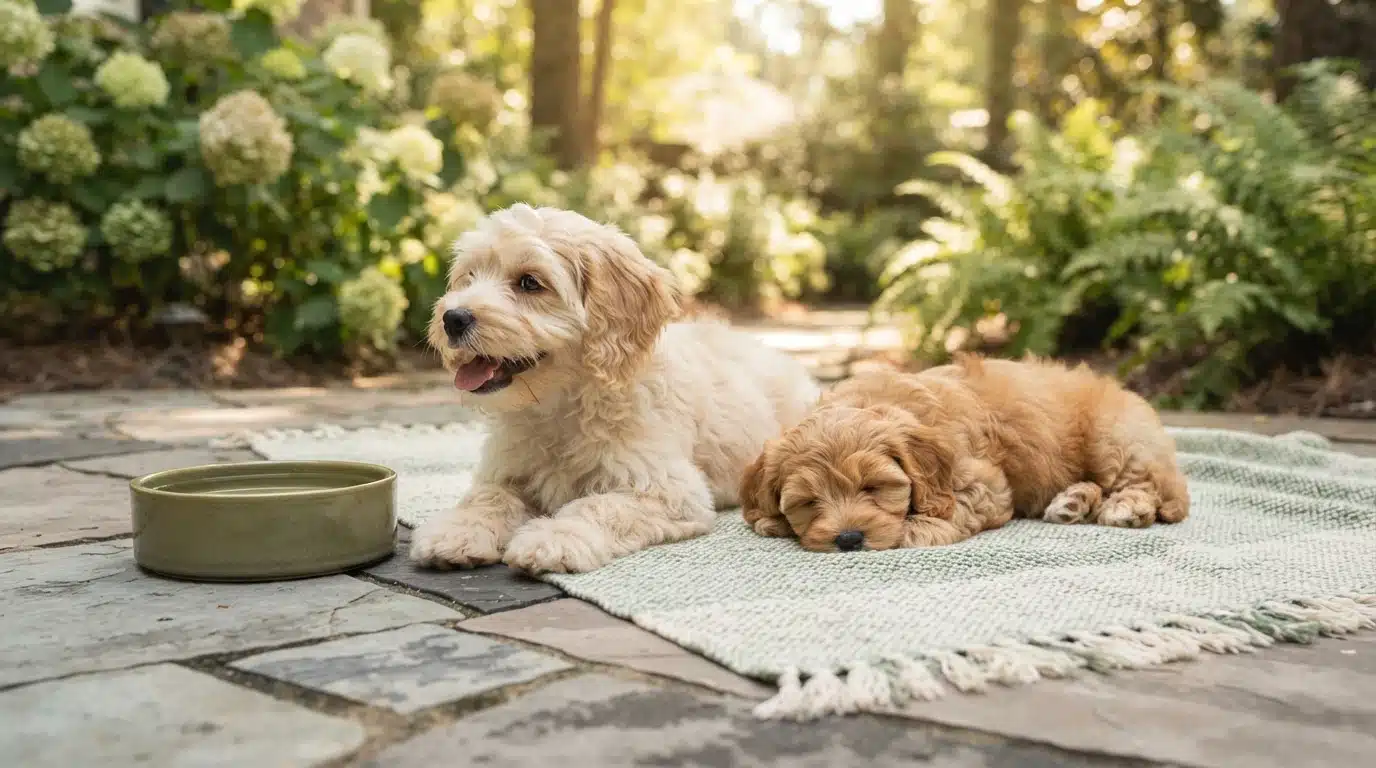
Quick Summary: Puppy exercise should follow the five-minutes-per-month rule for structured walks, but adjust for weather, breed, and individual signals. In Indiana, skip hot pavement and icy sidewalks, and keep play on soft surfaces until growth plates close. Watch for signs of over-exercising like limping or heavy panting, and prioritize rest since puppies need 18-20 hours of sleep daily. Sage Puppies, a breeder of Havanese, Havapoo, and Cavapoo puppies, emphasizes that a content puppy, not a tired one, is the goal.
An eight-week-old Cavapoo arriving in an Indiana home may be eager to investigate every corner of the living room, but she is not ready for a long neighborhood walk, a muddy trail, or a summer afternoon in the sun. Puppy exercise needs change fast, and new families often guess wrong in both directions. Too little activity leads to a bored, nippy puppy. Too much harms growing joints. This guide lays out an age-by-age puppy exercise schedule, an easy puppy exercise chart to keep handy, plus Indiana-specific tips on weather, vaccines, rest, and warning signs of overdoing it. As breeders of Havanese, Havapoo, and Cavapoo puppies raised in our home, we built this reference so you can start your puppy off right from week one.
The Flexible Puppy Exercise Chart: How Needs Change by Age
A Practical Starting Framework for Indiana Families
Puppy exercise needs shift fast. A Havanese or Cavapoo at 8 weeks is a different athlete than the same dog at 6 months. The chart below gives you a starting point, not a strict schedule.
| Puppy Age | Structured Walk Per Outing | Daily Pattern |
|---|---|---|
| 8-10 weeks | 5-10 minutes | Yard play, sniffing, naps |
| 3 months | About 15 minutes | 1-2 short walks on grass |
| 4 months | About 20 minutes | Walks plus brief training games |
| 5 months | About 25 minutes | Split sessions through the day |
| 6 months | About 30 minutes | Small breeds near adult pace |
The AKC’s guidance on puppy exercise recommends roughly five minutes of leashed walking per month of age, once or twice a day, on soft surfaces like grass. A few short sessions beat one long march. Free play in a fenced yard counts too, and puppies usually stop when they’re tired on their own.
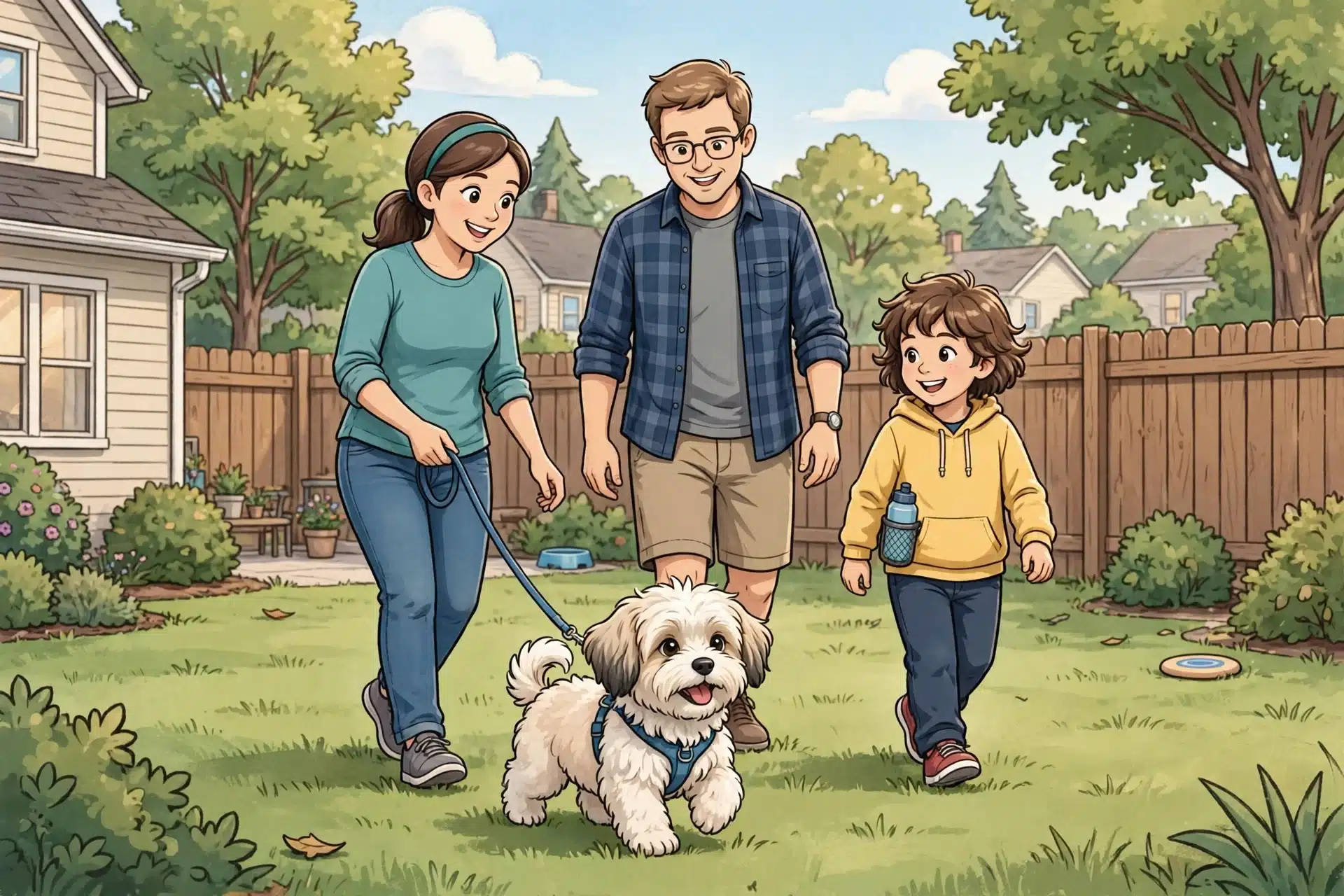
Hoosier weather changes the plan. Hot July pavement and icy January sidewalks shorten safe outings, so lean on indoor games and yard time in extremes.
Why the Five-Minutes-Per-Month Rule Needs Context
This rule is a ceiling for forced walking, not a daily quota. Your puppy’s breed, size, and personality all matter, and veterinary researchers have noted the guideline lacks hard evidence behind it, so treat it as a sensible starting framework you adjust.
Two small-breed notes:
- Toy breeds like the Havanese mature early, often closing growth plates around 6-8 months.
- Mental work, sniffing, and training tire a puppy as much as miles do.
Watch your dog, not the clock. If she sits down or lags, head home. That feedback matters more than any chart.
Also Read: 10 Red Flags to Avoid When Visiting a Local Puppy Breeder
Build a Balanced Puppy Exercise Schedule
The best schedule mixes three things: movement, thinking, and rest. A young Havanese or Cavapoo does not need marathon walks. Vets commonly use a simple starting point: about five minutes of structured walking per month of age, once or twice a day, with lots of sniffing breaks built in, according to guidance from the AKC. Keep the pace easy and let your puppy set it.
Combine Movement, Training, and Sniffing
A balanced day might look like this:
- Morning: a short, slow walk on soft ground with plenty of sniff time.
- Midday: two or three minutes of training practice, like sit, come, and name recognition.
- Afternoon: free play in a fenced yard or on a long line, at their own pace.
- Evening: a sniffing game, such as hiding treats around a room.
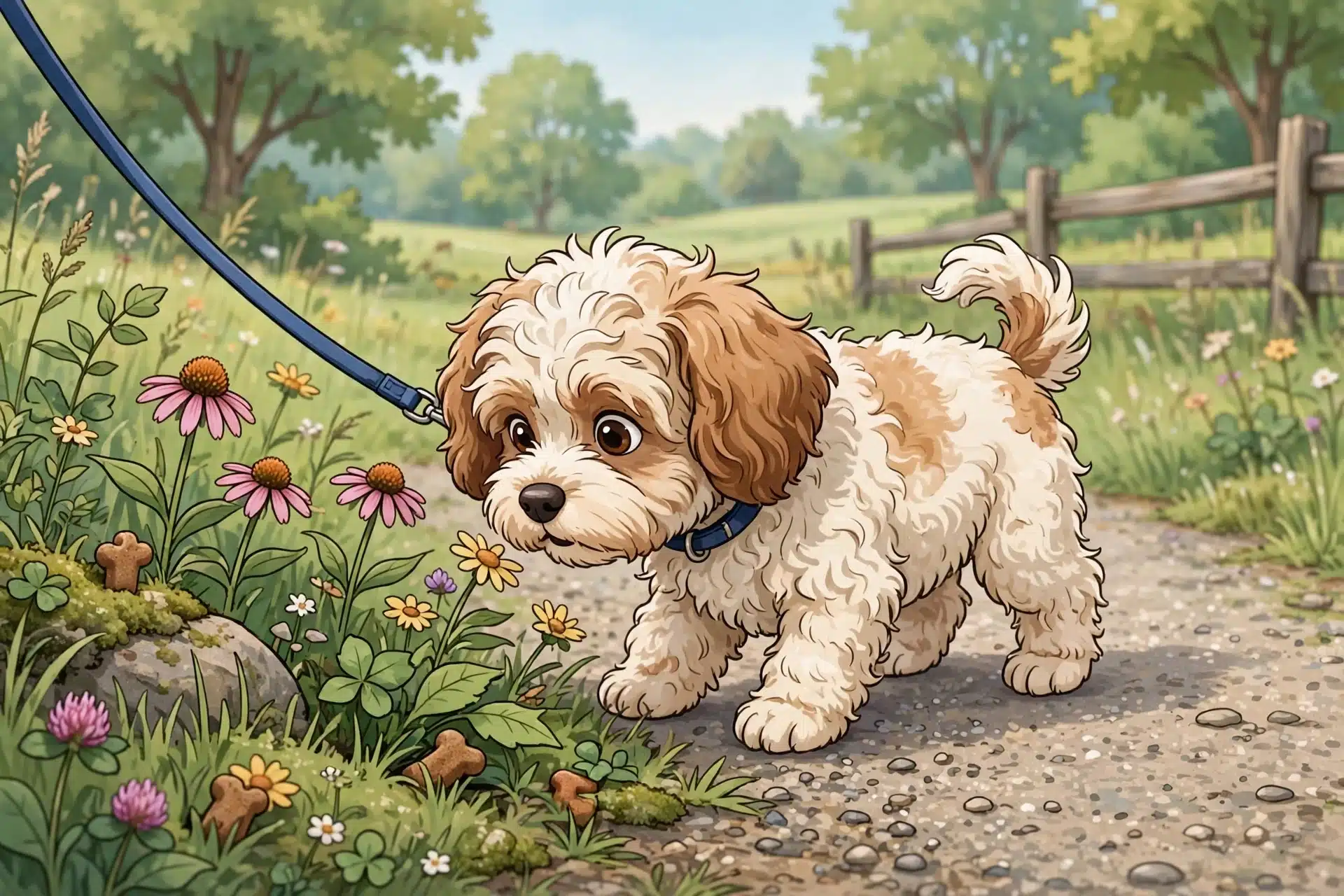
Sniffing matters more than most families realize. It works your puppy’s brain and often tires them faster than running. A short session of recall practice can be as tiring as a walk, which is why puppy exercise needs should be measured in quality, not distance.
Protect the Rest Your Puppy Needs
Rest is part of the schedule, not the opposite of it. Puppies sleep 18 to 20 hours a day, and deep sleep is when growth and learning actually happen, as the AKC notes. A simple rhythm works well: one hour up, then two hours of quiet crate or pen time.
Overtired puppies look hyper, mouthy, and unable to settle. Do not add more activity. Put them down for a nap instead. Watch your puppy, not the clock, and you will find the balance quickly.
Also Read: Puppy Care Blog & Resources | Sage Puppies
Choose Safe Puppy Activities for Indiana Weather and Surfaces
Indiana gives you four very different play seasons, and a small Havanese, Havapoo, or Cavapoo feels each one more than a big dog does. Match the activity to the weather and the ground under their paws.
Summer Heat, Humidity, and Stormy Days
Indiana summers bring heat, humidity, and sudden thunderstorms. Small puppies overheat fast, and vets warn that temps as low as 70 degrees can trigger heatstroke when the air is muggy. Walk early or after sunset, and skip the 11 a.m. to 4 p.m. window.
- Test pavement with your bare hand or bare foot. If it burns you, it burns paws.
- Stick to grass and shade, and carry water on every walk.
- Move fetch and training indoors when storms roll in. A hallway game of tug works fine.
If your puppy pants hard, drools thickly, or staggers, get to shade or air conditioning right away.
Winter Cold, Ice, Mud, and Paw Protection
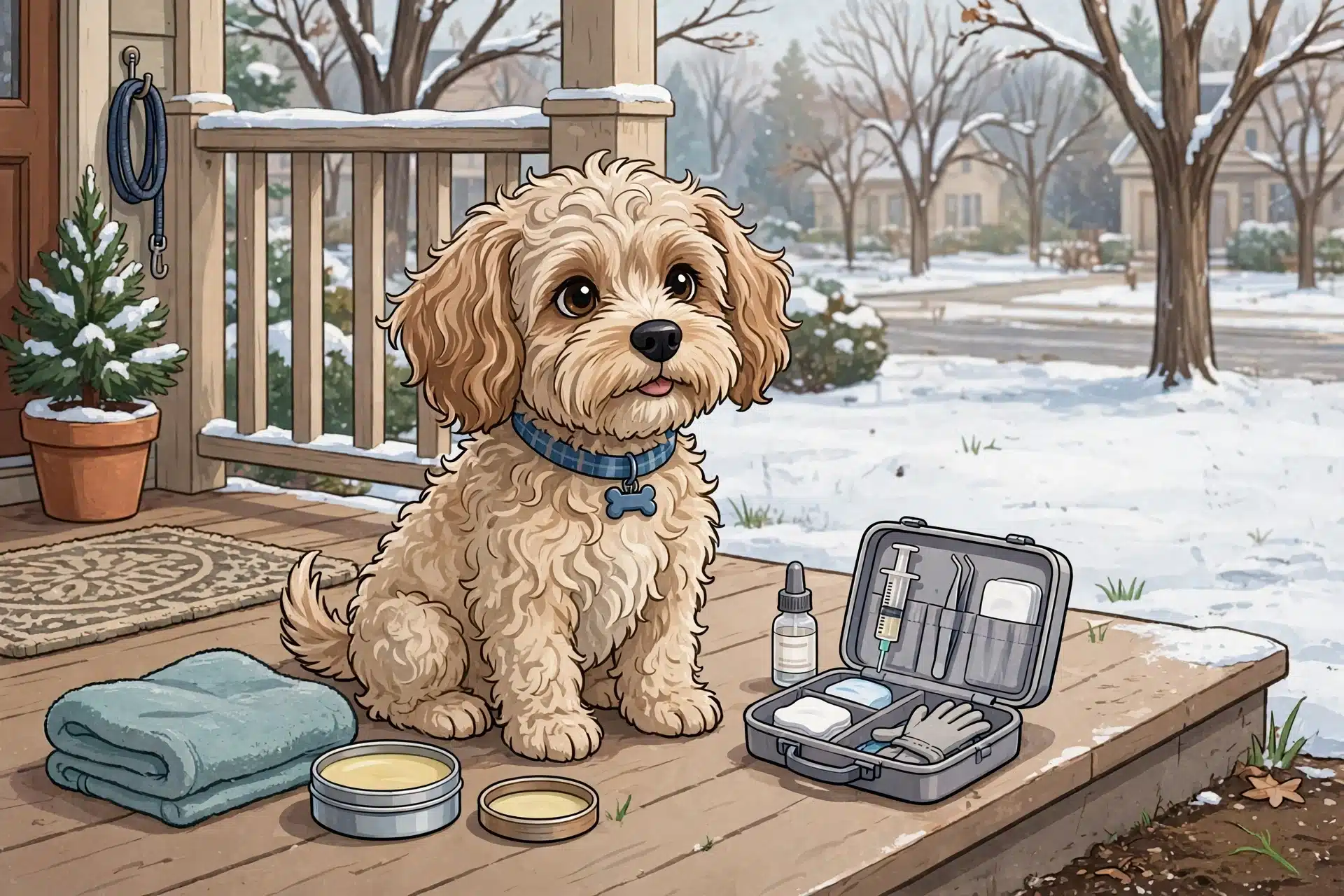
Indiana winters flip between snow, ice, and muddy thaws. Small breeds lose body heat quickly, so keep winter outings short and watch for shivering or a hunched, lifting-paws posture. Salted sidewalks sting, and road salt is harmful if licked. Rinse and dry paws after every walk, and consider booties or paw balm in deep cold. Skip frozen ponds entirely. On mud days, a towel by the door plus a quick paw wipe keeps both the house and your puppy’s skin in good shape.
Vaccination, Parvovirus, Ticks, and Public Spaces
Before full vaccination, keep play on your own clean yard and skip dog parks, pet store floors, and busy sidewalks. Puppies are cleared for public spaces about two weeks after their final core shots, usually around 18 to 22 weeks of age. Parvo survives in soil for months, so ask your vet about your neighborhood’s risk.
Indiana’s ticks are active from spring through fall. Start monthly parasite prevention early and check your puppy daily after outdoor time.
Match Exercise to Havanese, Havapoo, and Cavapoo Puppies
What Breed Can Tell You, and What It Cannot
Breed gives you a starting point, not a promise. All three of these small companions are people-focused, moderately active, and happy with short daily sessions instead of long workouts. Adults generally do well with 30 to 60 minutes spread across the day, and puppies need far less than that.
But every puppy is an individual. Sage Puppies’ own comparison points out that breed tendencies are starting points, and the individual puppy’s energy, parentage, and temperament matter just as much. A Havanese usually stays steady and portable. A Cavapoo often carries a bit more Poodle bounce. A Havapoo sits between the two.
So watch your puppy, not the label. A pup who plays, explores, and settles calmly afterward is getting the right amount. One who lags, pants heavily, or naps for hours needs shorter sessions. Breed tells you where to begin; your puppy tells you where to stay.
The goal is never to tire your puppy out. A tired puppy is not a well-exercised puppy. A content one is.
![Cavapoo [Cavoodle] exercise guide](
)
Examples of Appropriate Activities for Each Breed
| Breed | Typical daily target | Good activities |
|---|---|---|
| Havanese | About 30 to 45 minutes total | Short walks, indoor fetch, trick training, sniffing games |
| Havapoo | About 30 to 45 minutes total | Neighborhood walks, tug, puzzle feeders, hide-and-seek |
| Cavapoo | About 45 to 60 minutes total | Two shorter walks, gentle fetch, training reps, food puzzles |
Keep sessions short and low impact while your puppy grows. Small breeds like these can be prone to joint issues such as luxating patella, so gentle, varied activity works better than long runs or repeated jumping, as this Cavapoo exercise guide explains. Rotating activities keeps all three breeds mentally fresh.
Also Read: 10 Signs a California Puppy Listing Is a Scam – Sage Puppies
Recognize Over-Exercising and Adjust the Plan
Puppies rarely stop on their own. A Havanese or Cavapoo will chase, romp, and play right past the point of tired, so you have to read the signals for them. Watch during the activity and again a few hours later, since some signs show up after rest.
Signs to Watch During and After Activity
Watch for these cues while your puppy plays or walks:
- Sitting down or lying down mid-activity and refusing to move
- Heavy panting, drooling, or labored breathing
- Limping, stiffness, or favoring one leg
- Worn, red, or torn paw pads after hard play on rough surfaces
- Falling behind on walks or losing interest in games they usually love
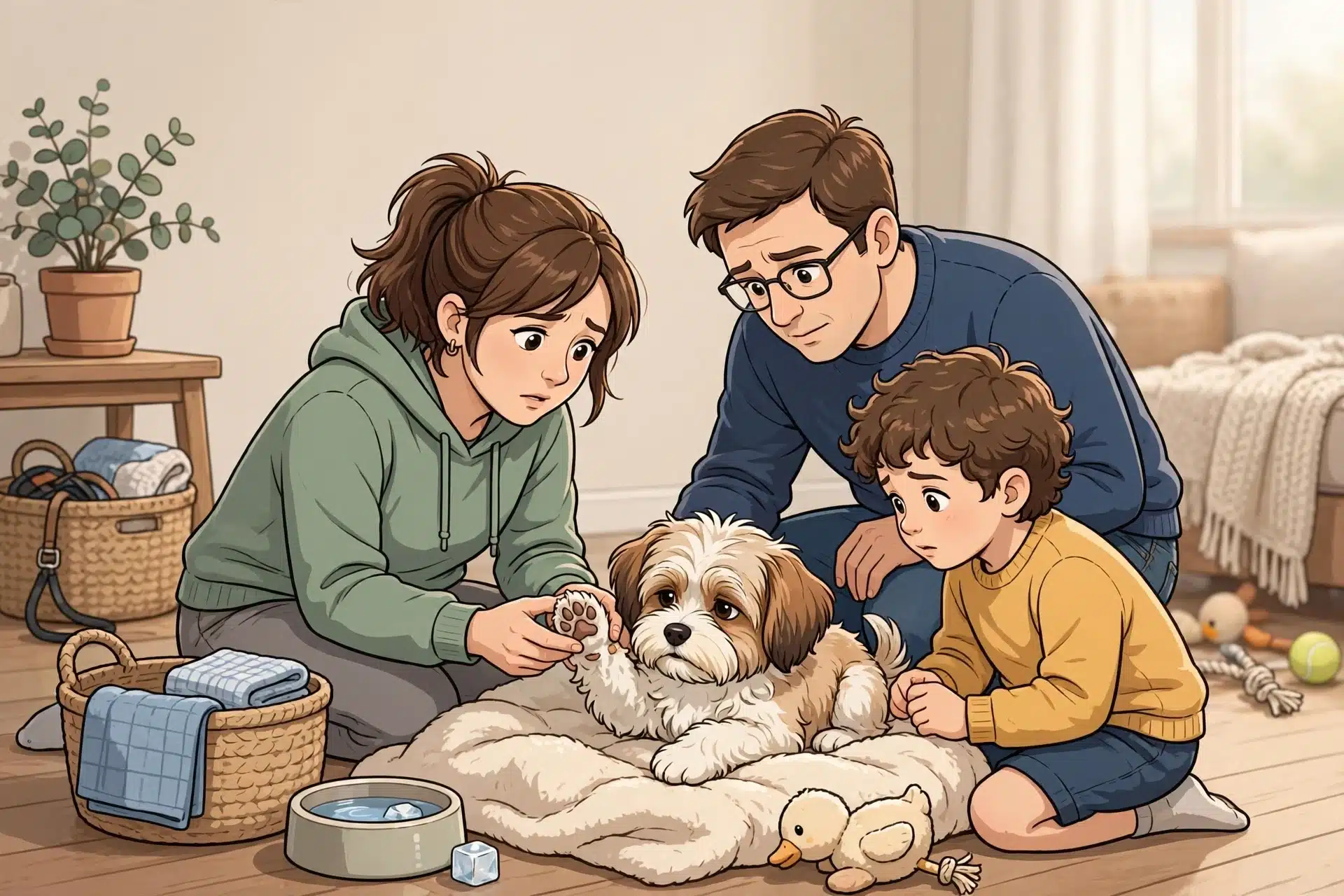
Afterward, sore muscles often appear once your puppy rests. PetMD lists struggling to rise, refusing stairs, and reluctance to jump as classic signs of too much exercise. Deep red or purple gums, vomiting, or confusion point to heat illness and need quick cooling and a call to your vet. If a limp lasts more than 15 minutes or your puppy will not bear weight on a leg, treat it as urgent and get them seen, per AKC guidance.
What to Do When the Routine Was Too Much
One hard day is not a disaster. Follow this reset:
- Stop all structured activity and let your puppy rest quietly for 24 hours.
- Offer water often and keep the room cool.
- Check paw pads and joints gently for sore spots.
- Restart with sessions cut in half, then rebuild by five-minute steps.
- Call your vet if limping, stiffness, or low energy lasts beyond a day.
Puppies are resilient. Adjusting calmly keeps exercise fun instead of fearful.
Also Read: Havanese, Havapoo & Cavapoo Puppy Care Blog
Know When Your Puppy Is Ready for More
Your puppy will tell you when the routine needs to grow. Watch for steady energy, quick recovery after play, and no stiffness the next morning. If a session ends with heavy panting, lagging, or a puppy flopping down mid-walk, hold steady. If everything feels easy for two weeks, add a little.
Increase One Variable at a Time
Change one thing per week. Add five minutes to a walk, or one new outing, never both. This is the heart of the five-minute rule: five minutes of structured exercise per month of age, twice a day. A four-month-old Cavapoo gets about 20 minutes per session.
After each change, check the next day. Look for:
- Normal appetite and mood
- No limping or favoring a paw
- Restful sleep, not restless pacing
If anything is off, step back a level and wait a week. Small breeds like the Havanese mature faster than big dogs, so you will likely graduate sooner than you think.
Delay High-Impact and Endurance Activities
Hold off on jogging, long hikes, stairs sprints, and repetitive fetch until your puppy is done growing. Growth plates stay open until roughly 8 to 12 months for small breeds, and injury to that soft cartilage can permanently change how a limb forms. Repetitive impact is the real risk, not play itself.
Skip these until maturity:
- Running or biking alongside you
- Jumping off furniture or from heights
- Frisbee catches with hard stops and turns
Self-paced play on grass is always fine. Your puppy stops when tired; a forced pace does not allow that.
Also Read: Guides – Sage Puppies
Common Mistakes to Avoid
Most puppy exercise problems come from good intentions, not neglect. Here’s what to watch for with a Havanese, Havapoo, or Cavapoo.
- Forced exercise on hard surfaces. Long leashed walks or jogs before your pup is grown can stress soft growth plates. Small breeds close them around 6 to 8 months, but until then, let play be self-paced (VCA Hospitals).
- Repetitive fetch. Sprinting and sharp turns after a thrown ball strain young joints. Keep sessions short and gentle.
- Skipping naps. Puppies often play past the point of tiredness. Enforce quiet rest between activity bursts.
- Public outings too early. Wait until your vet clears your pup after full vaccinations.
- Weather misjudgment. Indiana humidity and summer heat cause overheating fast. Watch for heavy panting and slow-downs (Rover).
- High-impact play. Jumping off furniture or stairs adds jarring stress to growing bones.
A pup raised in a home setting, like ours at Sage Puppies, usually arrives with healthy rest and play habits already started. Your job is simply to protect that balance.
Also Read: Indiana Puppies for Sale Near You: Compare Reservation Timelines

A well-matched puppy makes exercise easier for everyone. The Havanese, Havapoo, and Cavapoo puppies at Sage Puppies come from health-tested parents and arrive well-socialized, confident, and ready for family life. Browse our available puppies or start an application today, with pickup in South Jordan, Utah or delivery across the country.
Frequently Asked Questions
Q1: How much exercise does a puppy need by age?
A simple rule is five minutes of structured activity per month of age, twice a day. An 8-week-old Havapoo needs short play sessions, not long walks.
Q2: What are the signs of over-exercising a puppy?
Watch for heavy panting, lagging behind, limping, refusing to move, or extreme tiredness afterward. Small breeds like Cavapoos tire faster than you expect.
Q3: What are the best exercises for a puppy in Indiana?
Short sniffy walks, backyard fetch, puzzle toys, and indoor training games work well. In winter, keep sessions brief and watch for ice-melt salt on paws.
Q4: Can I walk my puppy before vaccinations are done?
Avoid public sidewalks and dog parks until your vet clears them. Backyard play and carrying them on short outings are safe alternatives.
Q5: How much rest does a Havanese puppy need?
Plenty. Puppies need 18 to 20 hours of sleep daily. Schedule exercise between naps so your puppy stays calm and learns well.
Conclusion
Raising a Havanese, Havapoo, or Cavapoo puppy in Indiana comes down to a simple rhythm: short walks, free play, plenty of sniffing, and lots of naps. The five-minutes-per-month-of-age rule is a helpful starting point, and veterinary researchers recommend keeping early walks gentle and on soft ground, per guidance from the AKC. Just as important, the AAHA reminds families to tailor exercise to each puppy’s age, breed, and temperament. Watch the weather, protect those joints, rest often, and your puppy will thrive.