
Quick Summary: Puppy energy is about rhythm, not speed, and new owners often mistake overtired behavior for extra energy, so the fix is usually a nap, not a longer walk. Match exercise to age using the five-minute rule per month of age, and in Georgia’s heat, walk early or late, test pavement, and favor indoor mental games like snuffle mats. Small companion breeds like Havanese, Havapoo, and Cavapoo tend to balance playful bursts with calm downtime, making them a good fit for apartments and first-time owners. Choose a breeder who knows each puppy’s temperament and health-tests parents, since individual personality matters more than breed labels.
Picture a puppy racing across a Georgia living room at 7 p.m. The instinct is to grab the leash and add a longer walk. Often that’s wrong. What that puppy needs might be a short enrichment game, a cool indoor space, and a nap. Summer heat, small-apartment living, and breed differences all shape puppy energy levels, and new owners frequently misread them. Some families want a calm puppy breed to match their lifestyle. Others have a high-drive pup that just needs smarter outlets. This guide breaks down what normal puppy energy looks like at each age, which small companion breeds tend toward calm, how to exercise a puppy safely through Georgia’s seasons, and how to choose a breeder who raises well-balanced pups. It draws on experience with home-raised, health-tested companion breeds. With that context, you can match a puppy’s energy to your home instead of guessing.
What Puppy Energy Levels Really Mean
A puppy’s “energy level” is not how fast it runs in circles. It is the amount of activity and rest the dog needs to stay balanced day to day. Breed sets the baseline, but age, sleep, and individual temperament shape what you will actually see.
The Difference Between Energy, Excitement, and Overtired Behavior
Energy is your puppy’s long-term baseline. Excitement is a short burst, like greeting guests. Overtired behavior looks like energy but is really stress: biting harder, zoomies, whining, ignoring cues.
The fix is often sleep, not more play. Young puppies may sleep 16 to 18 hours a day, and several short play sessions beat one long one, according to the AKC’s puppy schedule guide. If your puppy turns wild after about an hour awake, that is a nap signal.
Why Age Matters More Than a Breed Label
Breed labels describe adult dogs, not eight-week-old puppies. Every young puppy, even from calm puppy breeds, runs the same cycle: brief bursts of play followed by deep naps. A University of Bristol and Dogs Trust study of over 2,300 puppies found that 16-week-old puppies slept significantly more during the day than dogs at 12 months, confirming how much rest shapes early behavior (study here).
So do not judge a puppy’s adult energy by a single visit. Breed tendencies matter, but the first year is one long stage of growth.
The Energy Pattern First-Time Owners Should Look For
Look for rhythm, not speed. A healthy puppy plays hard, settles well, and wakes up ready again. Havanese, Havapoo, and Cavapoo puppies raised with steady routines at Sage Puppies tend to show exactly that: engaged when it is playtime, calm when it is not. That pattern predicts the adult dog better than any label.
Also Read: Havanese, Havapoo & Cavapoo Puppy Care Blog
All three breeds are small companion dogs, but their energy does not feel identical. Here is how Havanese, Havapoo, and Cavapoo puppies typically compare, based on breed tendencies and what we see in our home-raised litters at Sage Puppies in South Jordan, Utah.
Playful, Social, and Often Adaptable
The Havanese is a cheerful toy breed that AKC breed experts describe as highly adaptable and happy with people of all ages. Puppy energy tends to come in bright bursts: a wild game of chase, then a nap on your lap. They need only moderate exercise, so brisk walks and playtime usually cover it. Their energy is social by design. A Havanese puppy follows you from room to room and wants to be part of whatever the family is doing.
Interactive Energy With Flexible Activity Options
| Breed | Typical Energy | Daily Activity Pattern |
|---|---|---|
| Havanese | Moderate, playful | Short walks, indoor games, lap time |
| Havapoo | Moderate to lively | Walks, fetch, puzzle toys, rest |
| Cavapoo | Gentle to moderate | Strolls, soft play, cuddle sessions |
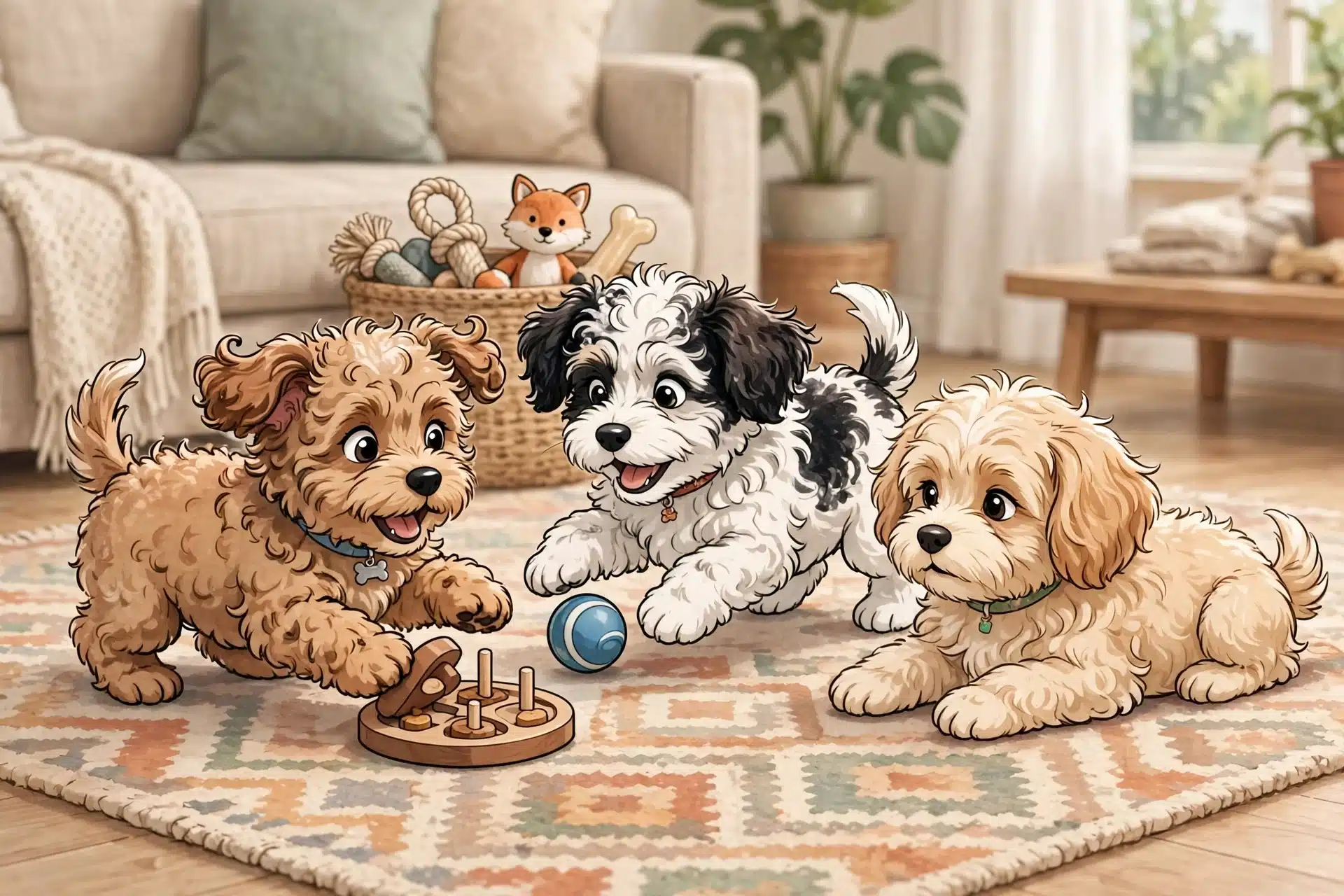
Havapoos often show a bit more spark, since the poodle parent contributes intelligence and a love of games. Their energy responds well to variety: a short walk, a puzzle toy, then a break. Cavapoos usually land on the calmer end, though every puppy is an individual.
Affectionate, Engaged, and Often Moderately Active
Cavapoos inherit the gentle, affectionate nature of both parent breeds. They are engaged and curious, but their activity level tends to stay moderate. A Havanese breed profile applies here too: these companion breeds thrive on attention more than intense exercise. Expect affection-driven energy, not endurance-driven energy, from all three.
How to Compare Puppies Within the Same Breed
Ask the breeder which puppies in a litter are boldest, which are calmest, and how each interacts during play. Individual temperament matters as much as breed.
Also Read: 10 Adorable Havapoo Colors You Need to See (2026)
How Much Exercise Does a Puppy Need by Age and Breed?
There is no single number. The right amount depends on your puppy’s age, breed, and the kind of activity. A common guideline is five minutes of structured, on-leash exercise per month of age, once or twice a day, though puppies can self-regulate during free play. The AKC recommends keeping sessions short and letting young puppies set their own pace on soft surfaces like grass.
| Age | Structured Exercise | What Works Best |
|---|---|---|
| 8-12 weeks | 5-10 minutes, twice daily | Play, socialization, leash intro |
| 3-6 months | 15-30 minutes, split up | Short walks, training games |
| 6-12 months | 30-45 minutes | Longer walks, sniffing adventures |
| 12+ months | breed-dependent | Jogging, once mature |
Eight to Twelve Weeks: Build Confidence, Not Stamina
At this age, your puppy is in a key social window. Focus on new people, sounds, and surfaces, not mileage. Free play in a safe area is fine because puppies pause when tired. Keep leash lessons to five or ten minutes.
Three to Six Months: Short, Structured Sessions
Now your puppy can handle real walks. Use the five-minute rule as a starting point: a four-month-old gets about 20 minutes of structured walking, once or twice a day. Split activity into several short blocks instead of one long session. Training counts as exercise, too, and it often tires a puppy faster than running. Skip forced jogging and repetitive jumping until growth plates close.
Six to Twelve Months: Manage Adolescent Energy Gradually
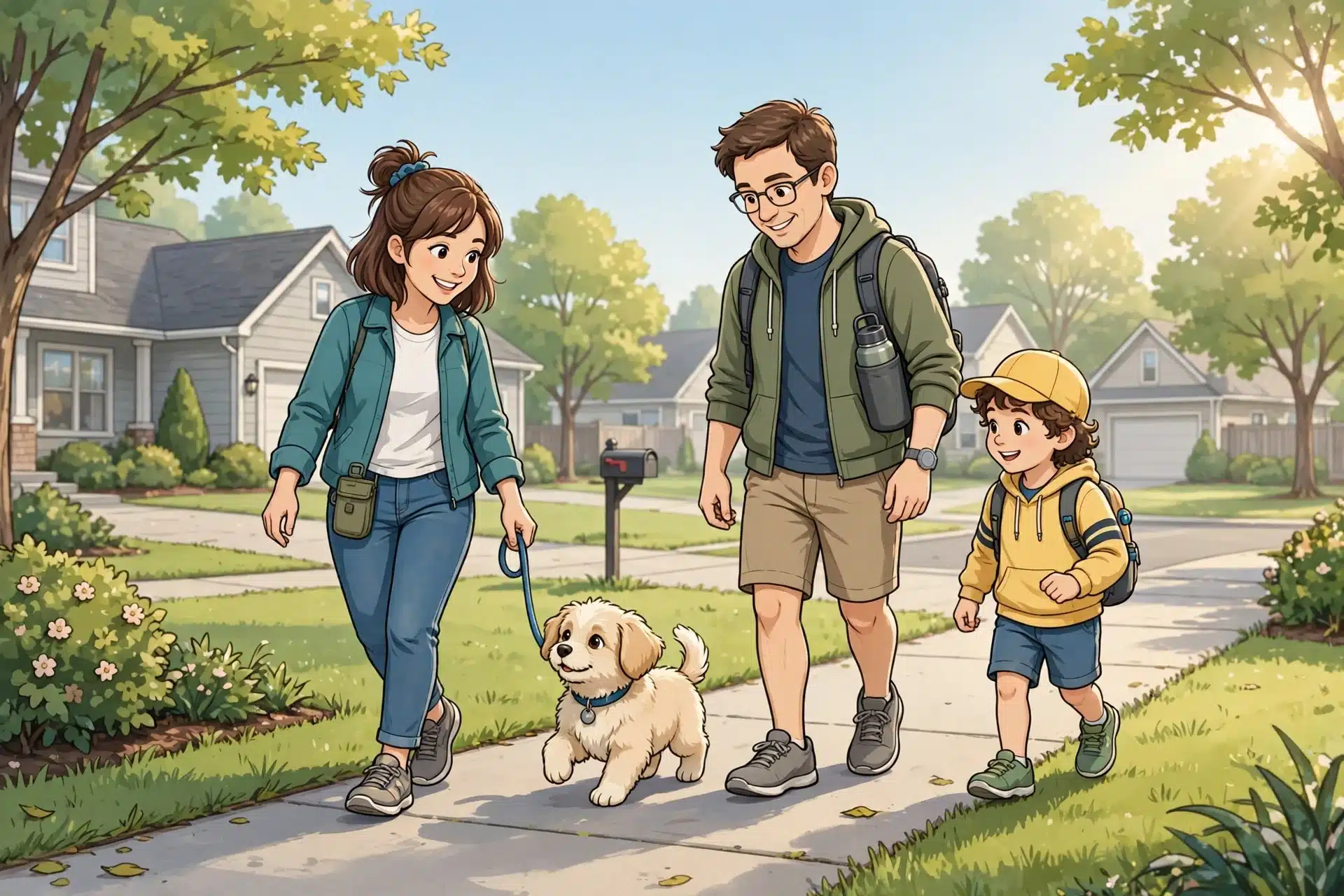
Adolescents test limits and get bored easily. This is the stage where under-exercised puppies turn into chewers and barkers. Increase walk length slowly, add sniffing exploration, and keep up training. A six-month-old small breed is close to skeletal maturity; larger breeds need more patience.
Watch for fatigue on every walk. If your puppy sits down, lags behind, or struggles to keep up, stop and rest. Small puppies can simply be carried home.
Why Breed Changes the Routine, But Does Not Set a Fixed Number
Breed shapes the type of exercise more than an exact minute count. A Havanese or Cavapoo thrives on interactive play and short adventures; a working breed needs far more output. As the AKC notes, every puppy is different, so watch your dog, not just the calendar. Talk with your breeder or vet about what fits your individual puppy.
Build a Calm Puppy Routine in a Georgia Home
A calm puppy does not come from luck. It comes from rhythm. Small companion breeds like Havanese, Havapoos, and Cavapoos settle quickly once meals, potty breaks, play, and naps happen in a repeatable order. This section shows you how to build that rhythm around a Georgia schedule.
A Flexible Weekday Rhythm for a Small Companion Puppy
Set the same anchors every day and let everything in between flex:
- Morning: potty first, then breakfast, then a short play block.
- Midday: a potty break, light training, and a real nap in a crate or pen.
- Late afternoon: another short play or sniffing session.
- Evening: dinner, calm family time, final potty, bedtime.
Puppies under six months nap hard. Plan two or three solid naps a day and watch the “witching hour” disappear. Families who adopt through Sage Puppies get a puppy already used to a home routine, which makes the first two weeks much smoother.
Mental Enrichment That Works When Outdoor Exercise Is Limited
Georgia weather will keep you inside more than you expect. Swap long walks for brain work:
- Snuffle mats and scattered kibble for sniffing games.
- Stuffed Kongs or lick mats during crate time.
- Five-minute training reps: sit, name recognition, crate games.
- Rotate toys every couple of days so old ones feel new.
Ten minutes of sniffing and problem-solving often tires a small puppy more than thirty minutes of running.
Georgia Heat, Humidity, Rain, and Pavement
Summer planning matters more here than in most states. Heat and humidity strain dogs because they cool mainly by panting, so Cornell’s canine health center recommends walking early morning or evening and skipping strenuous play on humid days. Pavement is the hidden danger: on an 86-degree day, asphalt can hit about 135 degrees, and AKC’s chief veterinarian suggests the ten-second hand test before any walk. Puppies have tender pads, so favor grass and shade.
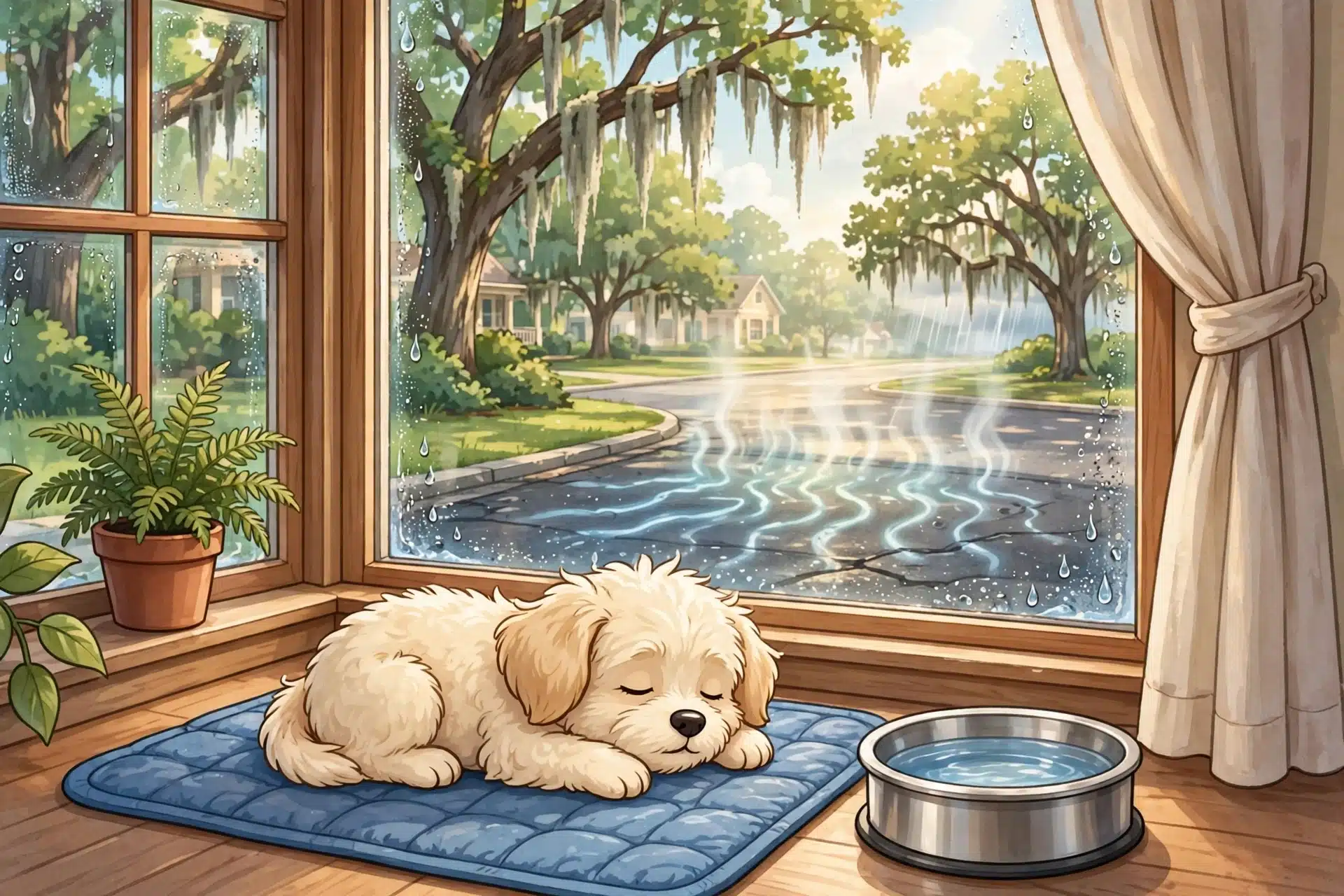
Quick heat checklist: walk before 9 a.m., carry water, test pavement with your hand, and keep midday potty breaks short.
Rest Is Part of the Energy Plan
Over-tired puppies act wild, then crash. Enforce naps, dim the lights, and keep a consistent bedtime. A well-rested puppy is a calm puppy.
Also Read: Puppy Care Blog & Resources | Sage Puppies
Read Your Puppy’s Energy Signals Correctly
Your puppy tells you how the routine is working. You just need to know what to watch for.
Signs the Routine Is Balanced
A well-balanced puppy plays hard, then flops down and sleeps. They eat well, settle in the crate without long fuss, and respond to cues they already know. Gentle mouthing stays soft, and they check in with you during play. That rhythm of activity and rest means the schedule fits.
Signs of Boredom or Too Little Enrichment
Bored puppies invent their own jobs. Watch for shredding paper, digging at couch cushions, pacing, and constant attention-seeking barking. Vets note that a puppy without enough exercise or entertainment will release pent-up energy through chewing, running wild, or jumping on guests (Dogster). If your puppy seems restless every evening, add short training games or a snuffle mat before adding more walks.
Signs of Overstimulation or Overexertion
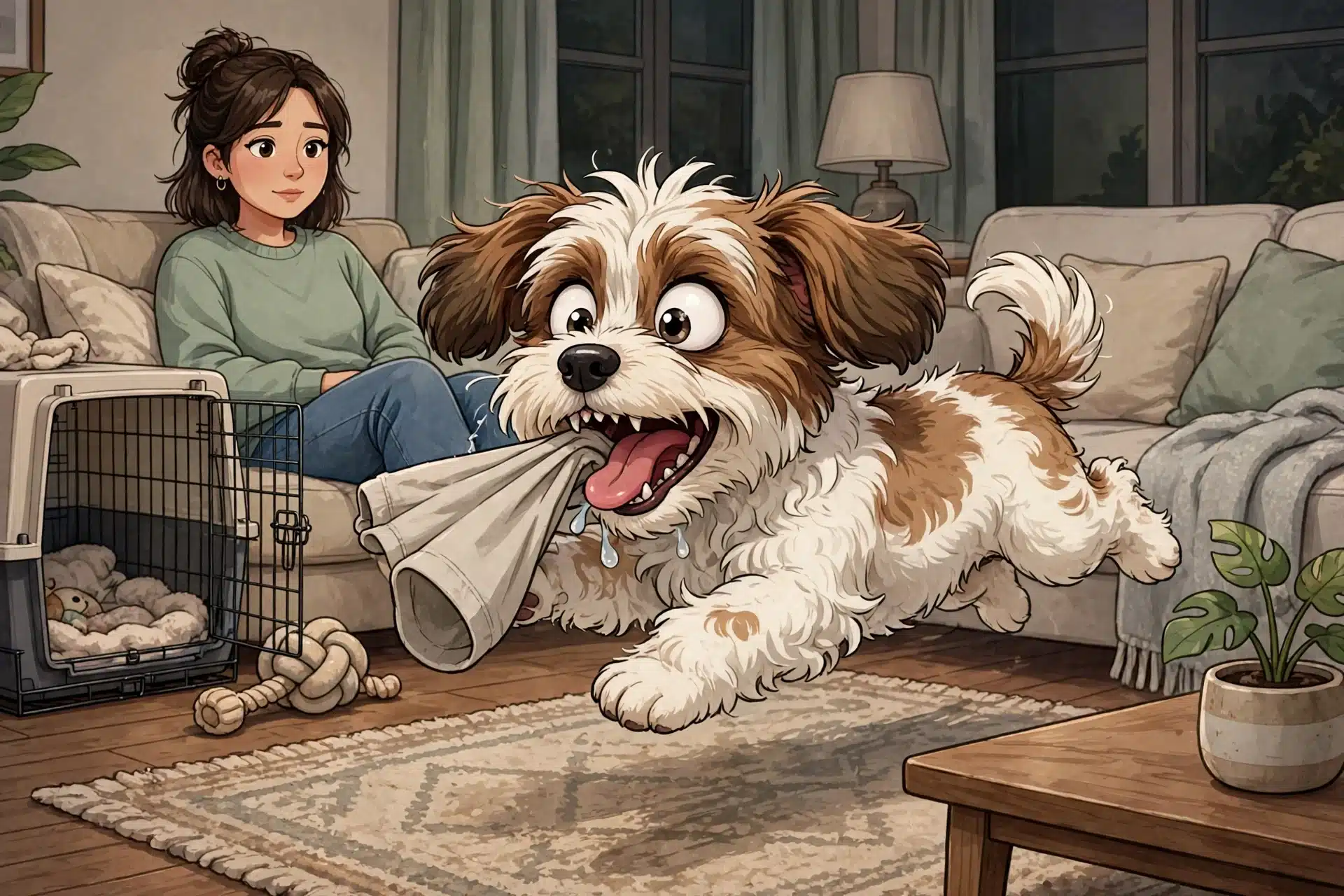
Overstimulation looks like energy, but it is overload. Trainers call out these red flags (Adopt-a-Pet):
- Frantic zoomies that end in hard, repetitive biting
- Grabbing hands and clothes instead of toys
- Ignoring cues they clearly know
- Wide eyes, heavy panting, or inability to settle
- Mounting or wild, escalating play
The fix is calm, not more play. Lower the lights, end the game, and guide your puppy to their crate for a nap.
When to Ask the Breeder or Veterinarian for Help
Call your vet if low energy, poor appetite, limping, or vomiting last more than a day, or if heat stress signs appear. For behavior questions, your breeder knows your puppy’s baseline. At Sage Puppies, families can reach out anytime, and we help you compare what is normal for the breed against what needs a vet visit.
Also Read: How to Choose Safe Puppy Transportation in Georgia
Choose a Puppy Whose Energy Fits Your Life
The right puppy is not the cutest one on the page. It is the one whose energy matches your real, daily routine. A mismatch in energy is one of the most common reasons first-time owners struggle, so it pays to be honest with yourself before you apply. The AKC’s breed-matching guidance starts with your lifestyle for a reason.
Start With Your Real Week, Not Your Ideal Weekend
Map out an average Tuesday, not your best Saturday. How long is everyone out of the house? Who has time for two walks a day? Havanese, Havapoos, and Cavapoos suit busy families and apartment homes because they are companion breeds that want to be with you, not to run marathons.
Questions to Ask a Responsible Breeder About Energy
A good breeder knows each puppy as an individual. Ask:
- Which puppies are more mellow, and which are bolder?
- How do they handle new people, sounds, and handling?
- What did the parents’ temperaments look like as adults?
- How much daily activity does this line typically need?
If a breeder cannot answer these, that tells you something too.
What Energy Fit Means for Georgia Pickup or Nationwide Delivery
Whether you pick up in Georgia or arrange delivery, the match matters more than the method. High-energy pups need a calm first week to settle; mellow pups often travel well. Ask the breeder how they prepare a puppy for the transition and which puppy they would place in your situation.
A Simple Final Decision Checklist
- Match activity needs to your schedule
- Confirm health testing of parents
- Ask about temperament of the specific puppy
- Plan travel and your first quiet week at home

Ready to meet a puppy whose energy fits your life? At Sage Puppies, our home-raised Havanese, Havapoo, and Cavapoo puppies come from health-tested parents, with early socialization and pickup in South Jordan or nationwide delivery. Browse our available puppies or start your application today.
Frequently Asked Questions
Q1: What are the typical puppy energy levels for first-time owners?
Most puppies come home with two speeds: zoomies and naps. Small companion breeds like Havanese, Havapoos, and Cavapoos balance playful bursts with calm downtime, which makes them easier for first-time owners than high-drive working breeds.
Q2: How much exercise does a puppy need by breed?
A common rule is five minutes of structured exercise per month of age, twice a day. Cavapoos and Havapoos need about 30-45 minutes daily as adults, while more active breeds may need an hour or more.
Q3: Which puppy breeds have the calmest energy for apartments?
Havanese rank among the calmest small breeds for apartment life. Havapoos and Cavapoos also adapt well, especially when matched with a lower-energy puppy from a litter.
Q4: When do puppies calm down?
Most small breeds settle noticeably between 12 and 18 months. Consistent routines, crate training, and mental enrichment speed that process along.
Q5: Can Georgia heat affect puppy exercise plans?
Yes. Walk early or after sunset in summer, keep sessions short, and watch for heavy panting. Swap midday walks for indoor play and puzzle toys.
Q6: Should I choose a puppy based on energy level?
Absolutely. Temperament matters more than coat or color long-term. A good breeder will match you with a puppy whose energy fits your household, whether you pick up in Utah or arrange delivery.
Conclusion
Puppy energy is not a mystery. It follows a pattern: short bursts of play, plenty of naps, and steady changes as your puppy grows from 8 weeks through the first year. The key takeaways are simple. Match activity to age, keep exercise low-impact, and give a small companion breed like a Havanese, Havapoo, or Cavapoo lots of mental games alongside short walks. In Georgia’s heat, plan around early mornings and shaded yards. Most of all, choose a breeder who raises puppies in a home, health-tests parents, and socializes early, since those first weeks shape temperament for life. Purina’s age-by-age guide confirms energy shifts with each stage, and the AKC notes the right exercise depends on age, breed, and breed-specific pace.




