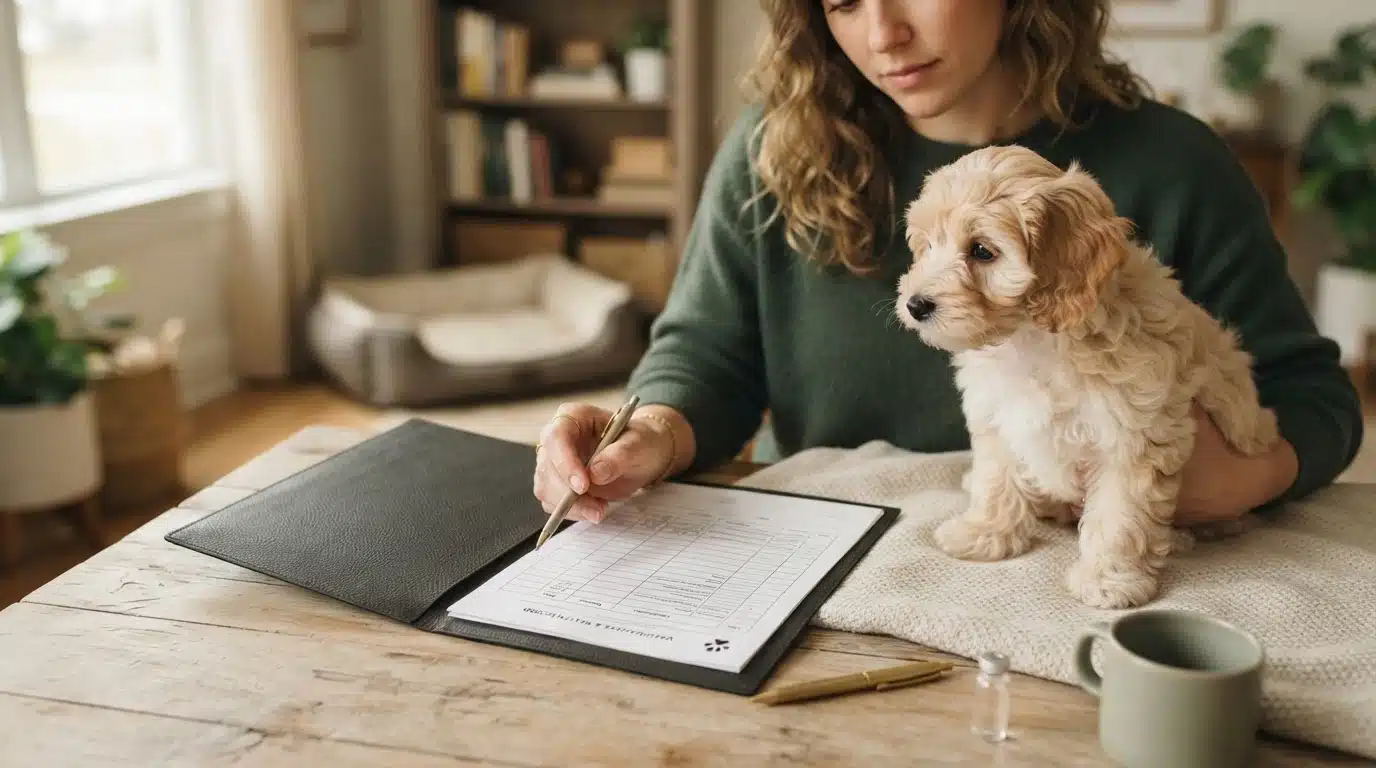
Quick Summary: Training a Havapoo comes down to sequence rather than speed, so start by reading the breed’s temperament before teaching any cue. Keep the first week to two-minute sessions focused on name recognition, hand-feeding, and a marker word, then layer in recall, eye contact, and a place cue for an off-switch. Build alone time, socialization, and bite inhibition early because Havapoos pick up both good and bad habits fast, and avoid common missteps like repeating cues or using the crate as punishment. Consistency and short, upbeat wins matter far more than long drills for this people-focused mix.
You bring home a soft, eight-pound Havapoo with a perfect curl on its head, and within forty-eight hours you realize the little hurricane in your living room does not yet know its name, where to potty, or that your kids’ shoelaces are not chew toys. That gap between the fluffy photo and daily life is exactly what these Havapoo training tips for new owners are here to close.
Because a Havapoo blends the Havanese’s people-first nature with the Poodle’s quick mind, it learns fast but also picks up bad habits fast. So the order you teach matters more than the hours you put in. This guide walks you through that sequence, week by week, from name recognition to crate and potty routines. If you want the full picture of the breed first, our Havapoo breed guide covers temperament and care in depth. These Havapoo training tips for new owners build on that foundation.
Step 1: Read Your Havapoo’s Temperament Before Teaching a Single Cue
Your Havapoo is a blend of two very different minds. The Havanese side wants to be with you. The Poodle side wants to figure things out. Training goes smoothly when you work with both, so it helps to know what each parent breed contributes. We cover this blend in depth in our Havapoo temperament guide, but here is the short version.
What the Havanese Side Brings to Training
Havanese are smart, outgoing companion dogs that the AKC describes as natural trick dogs. That people-first streak is a training gift: your puppy watches you, wants your approval, and picks up cues fast when the reward is your attention. The flip side is sensitivity. Havanese respond to tone, so a sharp voice can shut a lesson down. They can also grow clingy if every wake-up moment involves you, so build calm independence early.
What the Poodle Side Brings to Training
The Poodle parent contributes problem-solving brainpower and a working-dog focus. Poodles learn patterns quickly, which means your Havapoo may anticipate the next step in a routine before you cue it. That same cleverness cuts both ways. A bored Poodle-mix invents games, and not the ones you want, like unzipping your bag or opening the closet. Short, varied sessions keep that busy mind engaged.
Why “Easy to Train” Still Means Slow and Steady
Havapoos have a reputation as easy learners, and most are. But easy does not mean instant. Puppies under six months have short attention spans, so train in two-minute bursts, end on a win, and repeat daily. Consistency beats intensity every time.
Step 2: Build a First-Week Training Rhythm
Havapoo puppies learn fast when training follows a set pattern. Your goal for week one is simple: a few two-minute sessions a day, tied to meals and bathroom trips. Keep it short and end while your puppy still wants more.
Day 1 to Day 3: Name Recognition and Hand-Feeding Focus
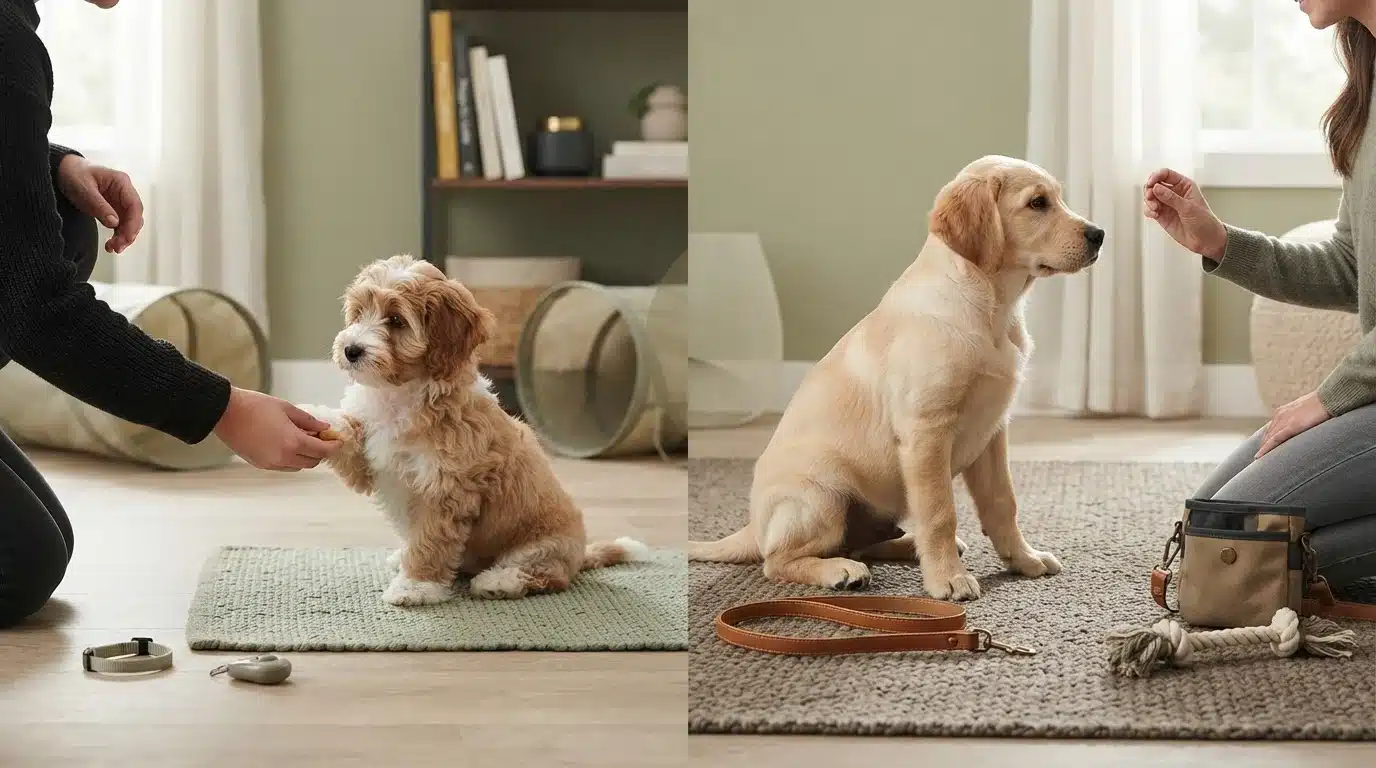
Start with the name. Say it once in a happy voice, and the moment your puppy looks at you, mark it with a treat. Trainers recommend waiting until your puppy looks away, then trying again, so the name always predicts something good (Best Buddy Dog Trainer). Feed at least one meal a day by hand. This builds trust, slows fast eaters, and teaches your puppy that human hands mean good things.
Day 4 to Day 7: Marker-Word Conditioning and the 5-Second Sit
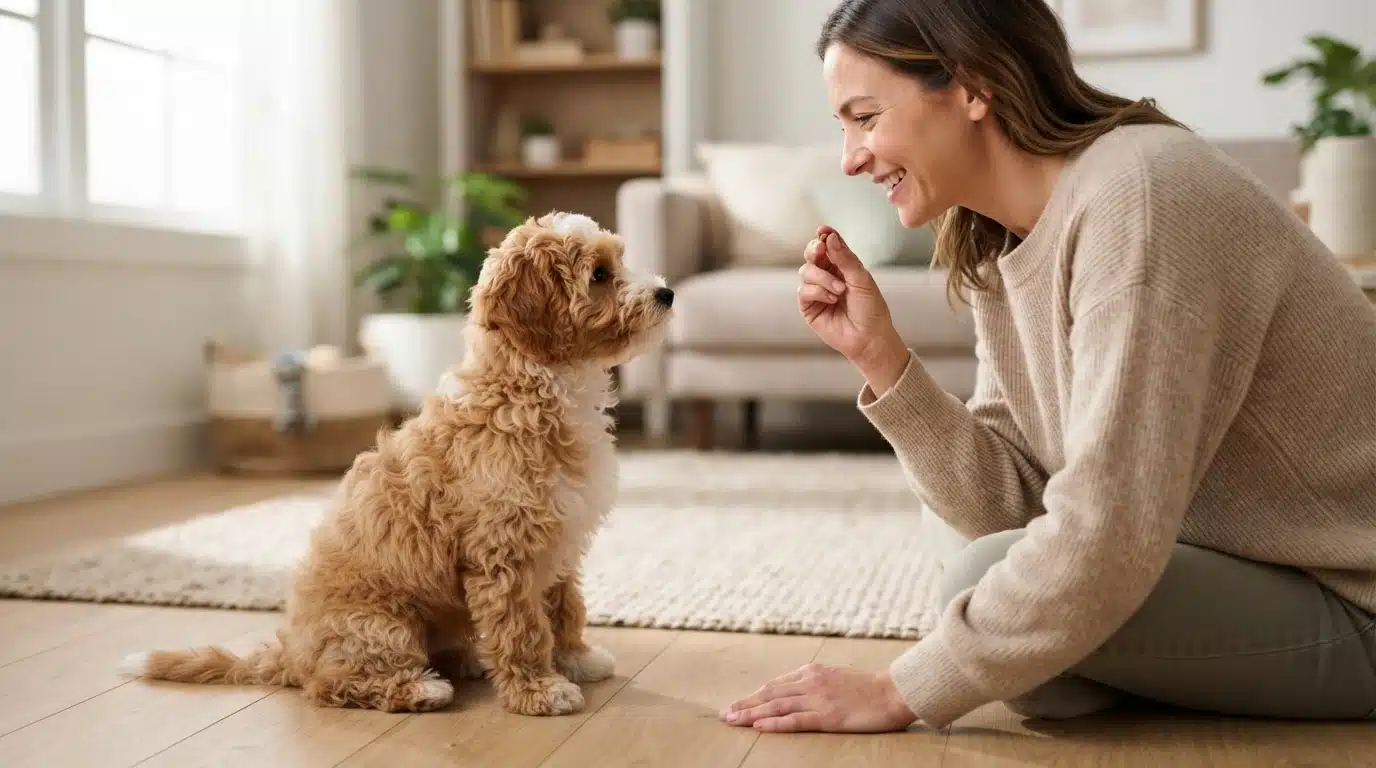
Now add a marker word. Pick one word, like “yes,” and say it the instant your puppy does something right, then treat. Ten reps a day is plenty. Once your puppy reacts to the marker, lure a sit: hold a treat just above the nose and move it back slowly. The moment the bottom touches the floor, mark and reward. Ask for only five seconds of holding the sit at first. Havapoos are eager to please, so short, upbeat wins work far better than long drills.
Where Bathroom Breaks Fit Into the Training Rhythm
Treat bathroom breaks as part of training, not a chore. Puppies this age need to go out every two to four hours, plus after meals, naps, and play (Purina). Take the same path, use the same cue word, and reward calmly right after they finish outside.
Step 3: Teach the Three Foundational Cues Every Havapoo Needs
Three cues carry most of the load in daily life with a Havapoo: eye contact, come, and down or place. Each one solves a problem this breed actually has. Havapoos are social, watchful, and eager to please, so reward-based training works beautifully with them. The AVSAB recommends reward-based methods for all dog training, and a food-motivated companion breed is the ideal student.
The Default Behavior That Pays for Itself
Teach automatic eye contact first. Hold a treat up, then wait. The moment your puppy looks at you instead of the treat, mark it and pay. Repeat until staring at you becomes the habit.
This one skill does triple duty. It gives you attention before every other cue, it interrupts jumping and barking without a word, and it teaches your puppy that checking in earns good things. Practice in the kitchen, then the yard, then on walks. Five short sessions a day beat one long one.
Recall (Come): Building a Bulletproof ‘Come’ From Day One
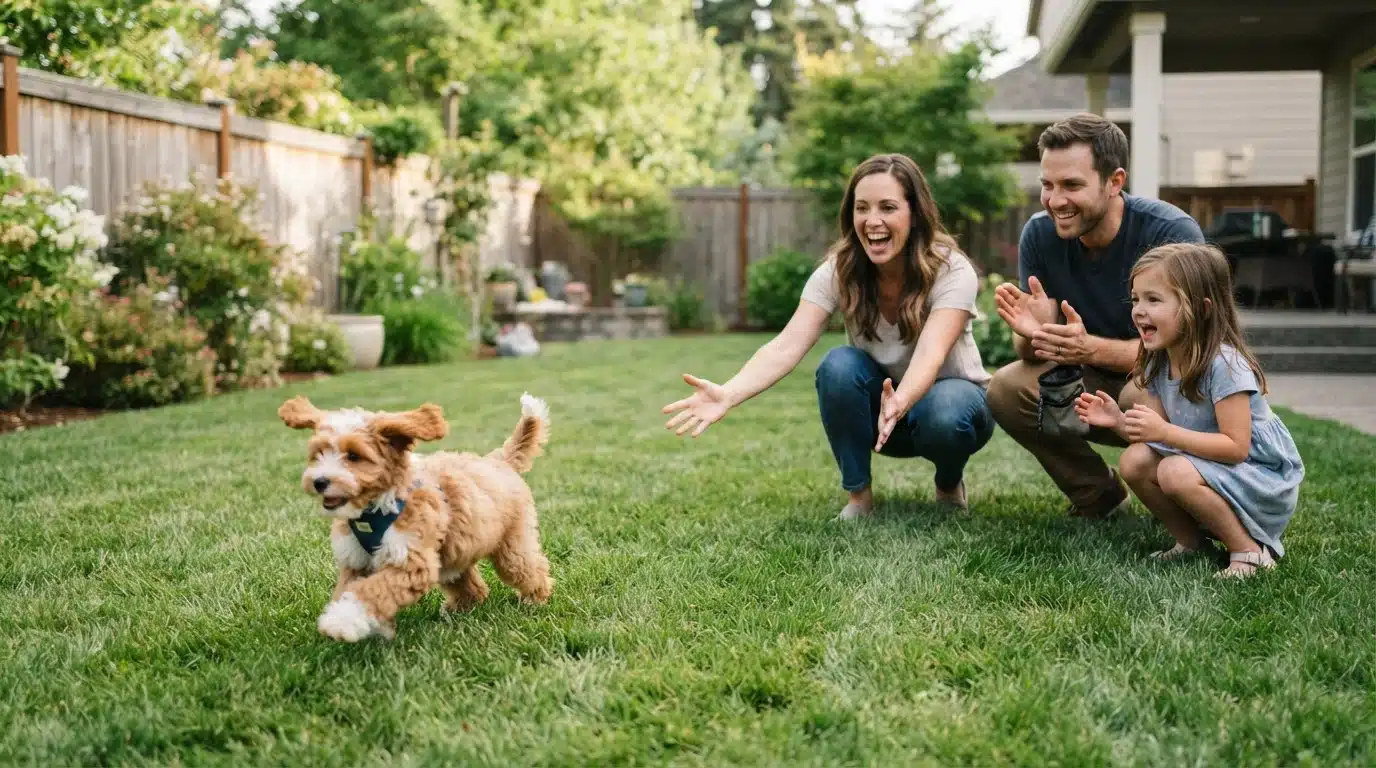
Never call your puppy for something unpleasant, like a bath or ending play. Come must always predict something great, so run a few steps away, cheer, and reward heavily when your puppy reaches you.
Start indoors, then a fenced yard, then a long line outdoors. Say the cue once. If your puppy ignores it, go get him instead of repeating yourself. Reward every single arrival for the first few months, because recall is the cue most worth overpaying for.
Down or Place: Teaching an Off-Switch for a Social Puppy
Havapoos love people and can struggle to settle. A place cue, such as a mat or dog bed, gives them a job. Lure your puppy onto the mat, reward, then slowly add duration.
Release with a consistent word like “free.” Short, calm sessions several times daily build a puppy who can relax during dinner or visitors.
Step 4: Prevent Separation Anxiety Before It Starts
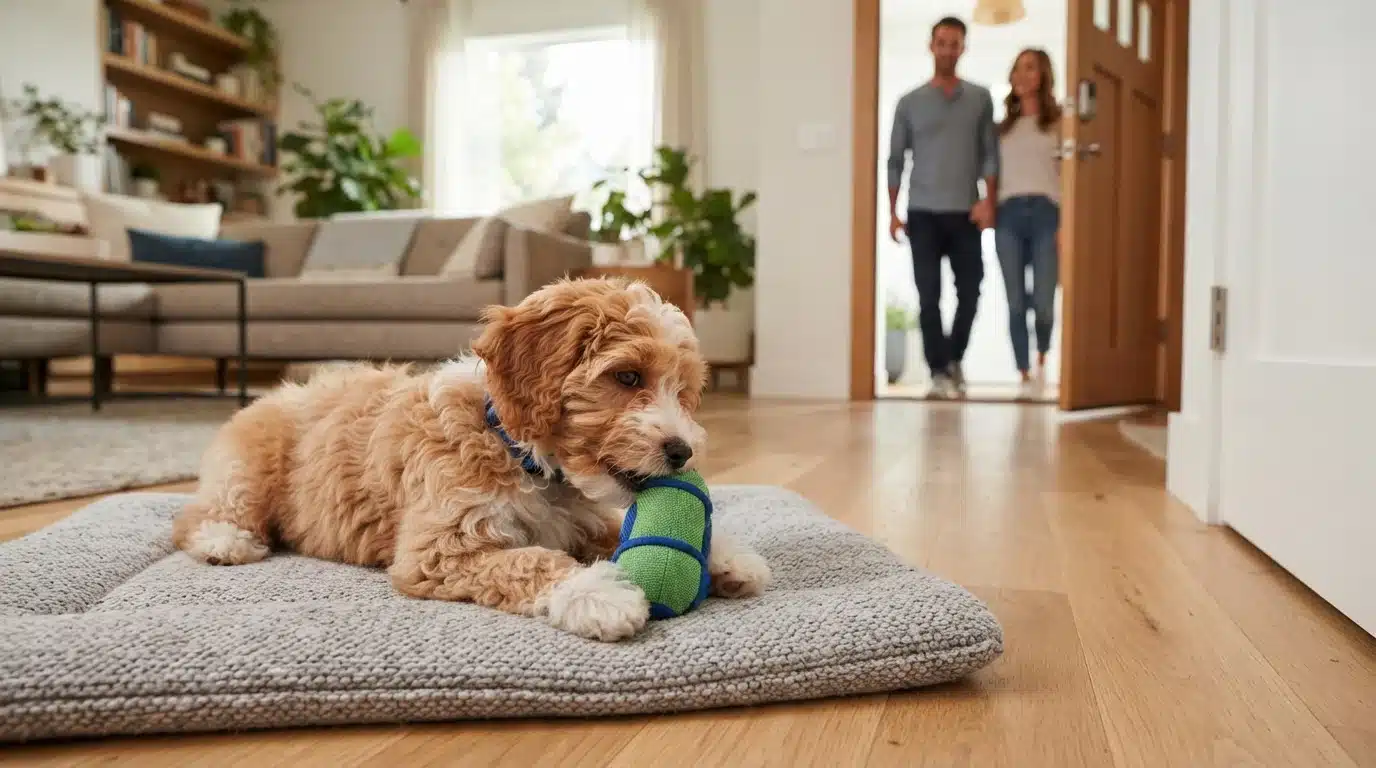
Havapoos bond fast, so alone time needs a plan from week one. The good news: prevention is far easier than treatment, and a few short sessions each day do most of the work.
Why Havapoos Lean Toward Velcro Behavior
Both parent breeds were made to sit with people. Havanese are historic companion dogs, and Poodles are people-focused workers, so your puppy inherits a strong pull toward constant company. Left alone without preparation, that pull can turn into whining, pacing or house soiling. Build independence early, in tiny doses, and most Havapoos learn that solo time is safe and even pleasant.
The 30-Second to 30-Minute Alone-Time Ladder
Start the day your puppy comes home. Walk out of sight for a few seconds, then return before any fussing begins. Gradually stretch the gap: 30 seconds, then one minute, then five, then ten. Aim for short, calm sessions several times a day rather than one long absence. The RSPCA advises building up alone time slowly so your puppy learns it is normal, and Blue Cross recommends working toward about half an hour before longer stretches. If your puppy struggles, drop back a step and rebuild. Calm exits help too: no big goodbyes.
Watch on a camera if you can. If the whining ramps up instead of fading, shorten the sessions.
Enrichment That Pays Your Puppy to Stay Calm
Food makes absence rewarding. The ASPCA notes that pairing alone time with something delicious changes how a dog feels about it. Try a frozen stuffed Kong, a snuffle mat, or a long-lasting chew given only when you leave. Vary the toys so they stay interesting, and pick up leftovers afterward. The ASPCA’s guidance on counterconditioning through good things like food applies to prevention as much as treatment.
Step 5: Socialization, Bite Inhibition, and Polite Greetings
Havapoos are social by design, but the window for shaping that trait is short. The most important period for puppy socialization runs from about 3 to 14 weeks of age, and the AVSAB position statement recommends safe exposure even before vaccines are finished. This step covers the three skills that matter most in those weeks: new experiences, soft mouths, and calm hellos.
Building a Socialization Checklist You Can Actually Finish
Think in terms of variety, not volume. Aim for a handful of new but positive experiences each week. Your checklist might include different floor surfaces, people with hats or beards, kids at a distance, car rides, gentle handling of paws and ears, and short outings where your puppy can watch the world from your arms. Keep every session short and end on success. If your puppy seems worried, increase the distance instead of pushing closer. For a week-by-week plan you can adapt at home, our family-raised puppy socialization schedule guide lays out the order and timing breeders use.
Teaching Bite Inhibition the Gentle Way
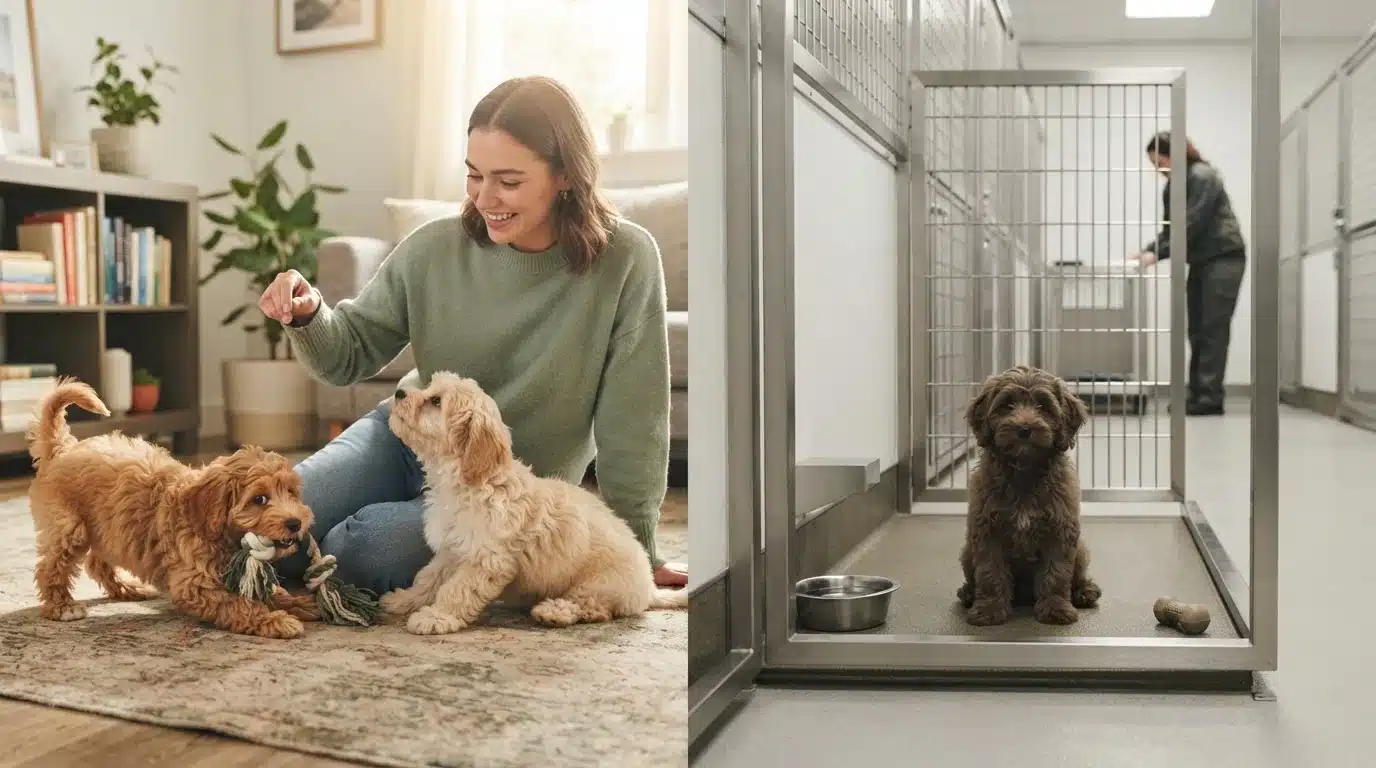
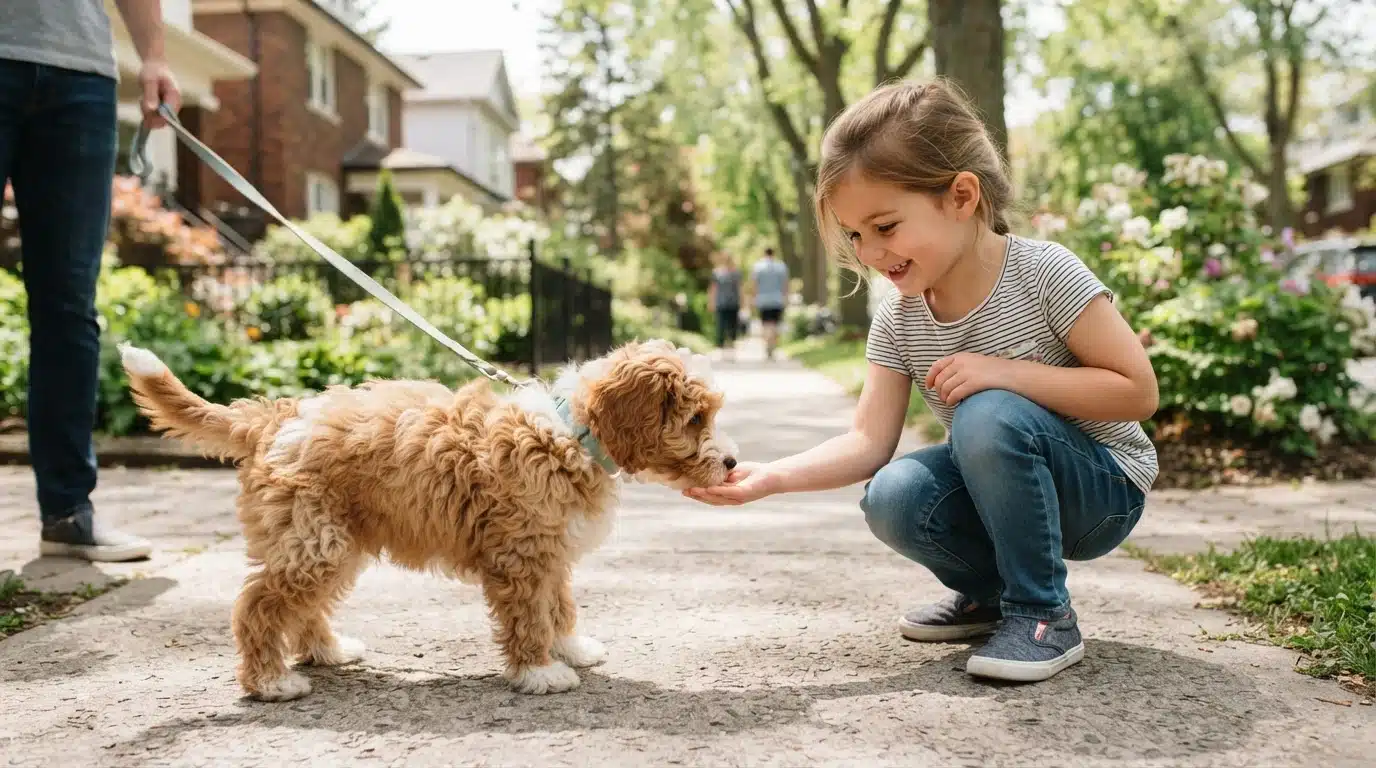
Havapoo puppies explore with their mouths, so nipping is normal, not a sign of aggression. Your job is to teach a soft mouth. When your puppy bites during play, let out a calm “ouch,” stop the game, and turn away for a few seconds. The fun ends when teeth land on skin. Resume once your puppy settles.
Then redirect. Keep a chew toy within reach so an acceptable option is always easy to find. Praise gentle licking and soft mouthing on toys. Never squeeze the muzzle or hold the mouth shut, because those methods damage trust and teach nothing. Consistency from every family member is what makes this work in two to three weeks instead of three months.
Four-Handed Greeting: Sit to Say Hello
Jumping up feels friendly to your puppy and alarming to your guests, so teach an alternative early. The method needs two people. One holds the leash while a helper approaches. The moment your puppy’s front paws stay down, or better, a sit happens, the helper greets and treats. If paws leave the floor, the helper steps back and waits. Your puppy learns that sitting makes people arrive and jumping makes people vanish. Practice with calm adults first, then add kids once the pattern holds.
Callout: Short, happy exposures beat long ones. Five good minutes a day beats one stressful afternoon at the park.
Step 6: Leash Skills and Calm in Public for a Small Breed
Choosing a Harness That Fits a 7 to 20 Pound Puppy
Skip the collar for walks. A Havapoo’s throat is fragile, and pulling pressure on the neck is a real risk for toy-sized dogs. A well-fitted harness spreads that force across the chest instead. Fit matters more than style: you should slide two fingers under every strap without pinching, and the front panel should not press into the armpits when your puppy steps. Measure the girth (around the widest part of the chest) before you buy, because sizing charts vary by brand. Research on walking equipment supports this choice, finding that flat collars suit dogs that already walk politely without pulling, while harnesses better protect small dogs still learning a 2025 review in PeerJ.
Loose-Leash Walking Indoors Before You Hit the Sidewalk
Start where distractions are low. Clip on the leash and let your puppy drag it around the house for a few minutes so the weight feels normal. Then hold the leash and reward any moment the slack stays loose. Walk a few steps, stop, and let your puppy catch up to your side before you move again. Turning away when the leash tightens teaches the lesson: pulling makes the walk stop, a slack leash makes it continue. Keep sessions under five minutes. Once your puppy gives you ten loose steps indoors, repeat the same game in the driveway before trying grass, then sidewalks.
Public Outings: Reset Before You Retreat
Public places overwhelm small puppies, so plan a short visit and a simple exit rule. If your puppy stops eating treats, hides behind your legs, or starts pulling nonstop, pause at a quiet spot and ask for one easy sit. If calm returns, stay a moment longer. If not, leave calmly and try a quieter location next time. Retreating is not failure; it protects the idea that the world outside is safe and predictable.
Common Mistakes New Havapoo Owners Make in Training
Havapoos are smart and eager to please, but a few common slip-ups can slow training down. Here are the three we see most often, and how to fix each one.
Mistake 1: Skipping the Marker Word
A marker word, like “yes,” tells your puppy the exact moment she got it right. Without one, rewards arrive too late and she guesses what earned the treat. Pick one word, say it the instant she complies, then reward within a second.
Mistake 2: Repeating Cues Until They Blur Together
Say “sit” once and wait. Repeating “sit, sit, sit” teaches your Havapoo that the cue is background noise, not an instruction. If she ignores it, wait two seconds, then help her into position and reward. Silence builds attention faster than volume does.
Mistake 3: Using the Crate as Punishment
The crate should feel like a bedroom, not a jail cell. Send her there for timeouts and she learns the crate means trouble, then whines and resists. Instead, feed meals inside and use it for naps so it stays a safe spot. Our guide to choosing a puppy crate vs playpen covers how to set this up.

Training a Havapoo works best when it starts with the right match, and a puppy raised with care learns faster from day one. If you want a well-started companion, Sage Puppies offers Havapoo puppies from a small, hands-on program. Apply today and we’ll help you find your fit.
Frequently Asked Questions
Q1: havapoo training tips for new owners
Start with name recognition and hand-feeding, then add a marker word, sit, recall, and a place cue in short two-minute sessions. Build alone time and socialization from week one, because Havapoos learn good and bad habits equally fast.
Q2: How long does it take to potty train a Havapoo?
Most Havapoo puppies get reliable within four to six months of consistent trips out every two to four hours, plus after meals and naps. Smaller bladders and eager-to-please natures help, but missed breaks will set you back.
Q3: Are Havapoos hard to crate train?
No, they usually take to crates well when the crate stays positive. Feed meals inside, use it for naps, and never use it as punishment so it stays a safe bedroom.
Q4: How do I stop my Havapoo from nipping?
Let out a calm “ouch,” end play for a few seconds, then redirect to a chew toy. Keep every family member consistent, and soft mouthing usually improves within two to three weeks.
Q5: When should I start training my Havapoo puppy?
The day you bring her home, usually around eight weeks. Early weeks should focus on name, crate, and bathroom routines, with socialization packed in before fourteen weeks.
Q6: What treats work best for Havapoo training?
Use tiny, soft, pea-sized pieces of high-value food like chicken or training treats. Small portions keep calories in check, and soft options mean faster swallowing and quicker reps.
Conclusion
Training a Havapoo comes down to sequence, not speed. Start with temperament: reward-based methods suit both the Havanese eagerness to please and the Poodle’s quick mind. Keep sessions at two minutes, teach the name, marker word, recall, and place cue in that order, and treat bathroom breaks as part of the routine. Build alone time and socialization from week one, because the 3-to-14-week window closes fast. Fix nipping and jumping early with consistent rules everyone follows. Do these small things daily, and your clever, people-loving puppy will grow into a calm, well-mannered companion.