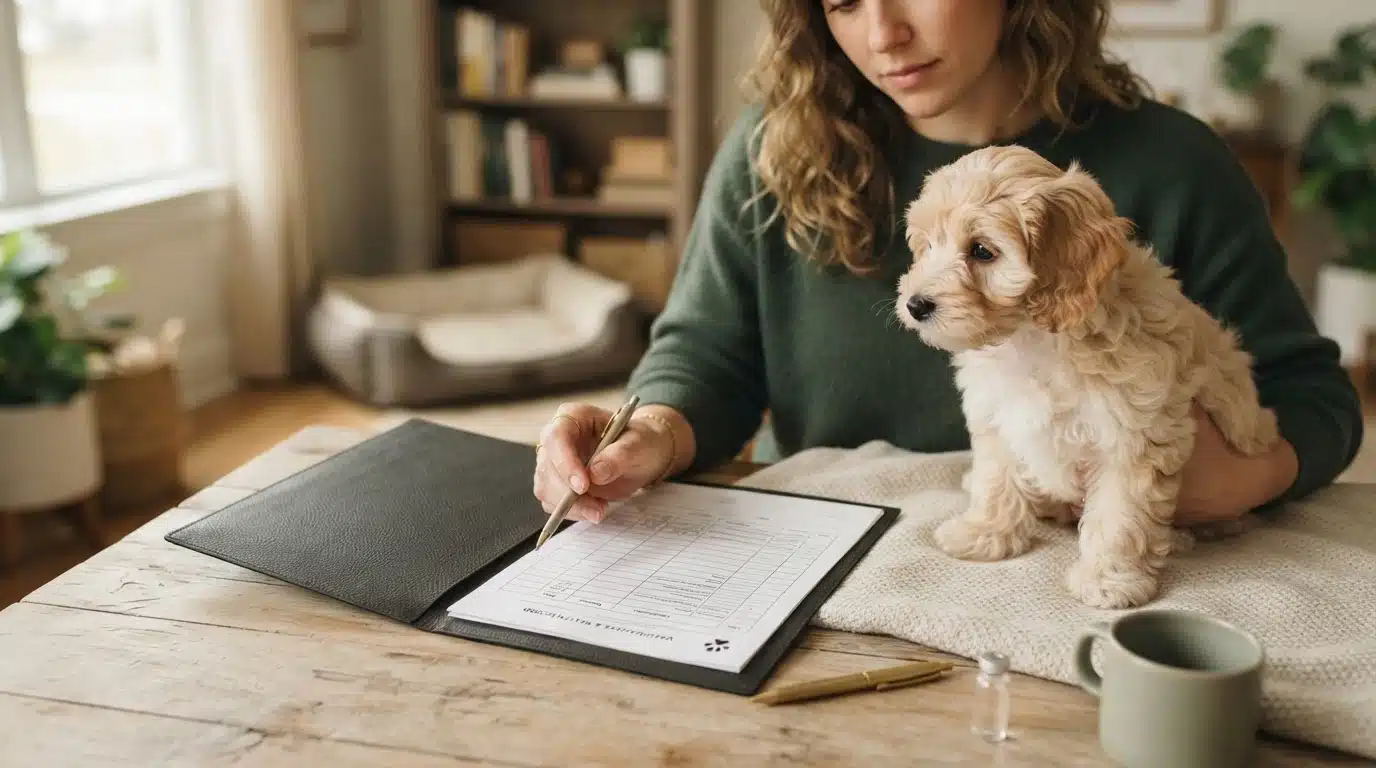
Quick Summary: Utah has no puppy lemon law, so buyer rights come mostly from the signed contract, not a state statute. Three other layers still apply: implied warranties under the Uniform Commercial Code, anti-fraud rules in Title 13, and federal USDA, DOT and shipping regulations for transported puppies. Since no statute forces refunds or vet reimbursements, a strong contract should spell out a 10-day infectious illness window, hereditary condition coverage through the first year, written refund or replacement terms, and the choice-of-law clause for out-of-state sales. Get a vet exam within 48 hours of pickup, keep dated records, and verify the contract before sending any deposit.
You hand over four thousand dollars for a small breed puppy in Utah, the breeder hands you a contract, and somewhere in that fine print is the only real safety net you are going to get. That surprises most first-time buyers, because many assume a lemon law covers sick or mislabeled puppies. Utah has no such law, so understanding Utah puppy laws and buyer rights before you sign matters more here than in most states. This guide explains which general consumer rules still apply, which contract clauses actually protect you, and what to do when a puppy arrives sick. We wrote it from our South Jordan program, where we place Havanese, Havapoo and Cavapoo puppies with families in Utah and across the country. Read the contract before the deposit, not after.
Does Utah Have a Puppy Lemon Law in 2026?
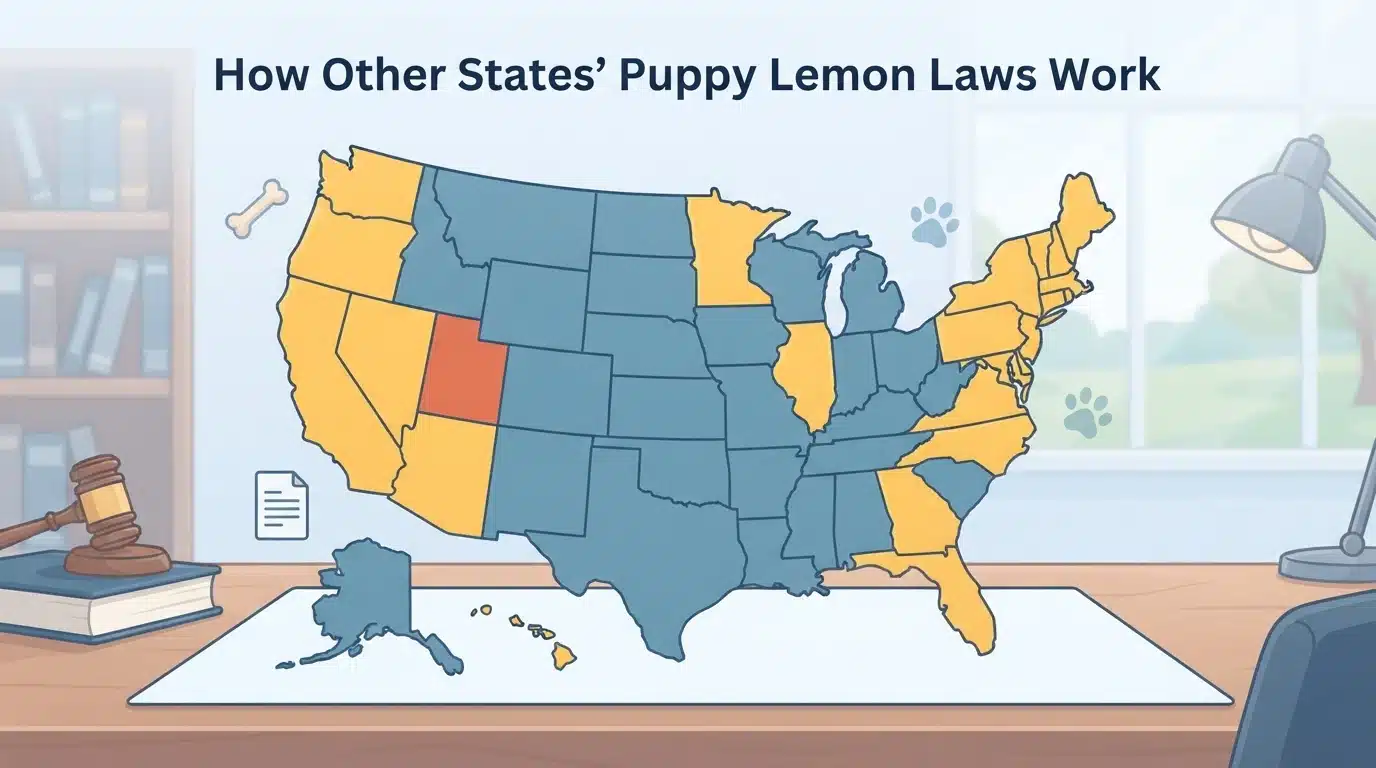
No. As of 2026, Utah is not on the list of states with a puppy lemon law. That surprises many buyers, because these laws are the main safety net in much of the country. It also means Utah puppy laws and buyer rights work differently here: your protection comes from your written contract and general consumer law, not a special statute.
How Other States’ Puppy Lemon Laws Work
A puppy lemon law is a state statute that protects buyers of a sick or misrepresented dog. As of 2023, 22 states have passed Pet Purchaser Protection Acts, according to Michigan State’s Animal Legal and Historical Center.
The details vary, but most give you three options if a vet finds a covered condition within a set window, often 10 to 14 days:
- Return the puppy for a refund
- Exchange it for a puppy of equal value
- Keep it and get vet bills reimbursed, usually capped at the purchase price
Many also cover congenital defects found within a year, and some require sellers to disclose health history in writing. The AKC’s policy analysis of these consumer protection laws outlines the common structure.
Where Utah Currently Sits on the State List
Utah appears on none of these lists. No state statute gives you an automatic refund, replacement, or vet reimbursement window. So the buyer’s job in Utah shifts from relying on the law to relying on paperwork. A clear written health agreement, vet exam rights, and refund terms do the work a lemon law would do elsewhere, which is why we cover contract clauses on our puppy buying contract page in detail. Verify everything before you pay.
What Utah Law Does Give You: UCC, Title 13, and Federal Layers
No lemon law does not mean no protection. Utah puppy buyers still hold three layers of rights: contract law under the Uniform Commercial Code, consumer fraud rules under Title 13, and federal shipping and breeding rules. Each covers a different failure, so it helps to know which one fits your problem before you file anything.
The Uniform Commercial Code and Implied Warranties
Utah follows the Uniform Commercial Code principle that every sale comes with unwritten promises. Goods must be fit for their ordinary purpose, and if you told the seller you needed a healthy companion dog, the puppy should reasonably fit that use. In plain terms, a breeder who sells you a puppy with a serious inherited illness may have breached an implied warranty of merchantability or fitness.
These warranty claims apply to private sellers and licensed breeders alike. Your sales contract matters here too: some breeders ask you to waive implied warranties in writing. Read that clause before you sign. If you are comparing programs, a breeder such as Sage Puppies puts its terms in writing up front so you know exactly what you are agreeing to.
Utah Consumer Sales Practices Act (Title 13)
Title 13 is Utah’s general anti-fraud law, and it applies to puppy sales like any other consumer purchase. The Utah Consumer Sales Practices Act bans deceptive and unconscionable acts by suppliers. That covers misrepresenting a puppy’s breed, age, health history or registration, and refusing to honor a written guarantee.
If a seller lies to close the sale, you can file a complaint with the Utah Division of Consumer Protection. Keep your contract, texts and vet records, because they are your evidence.
Federal Oversight: USDA, DOT, and Air-Shipment Rules
Three federal rules add a backstop. Breeders with more than four breeding females who sell sight unseen must hold a USDA license, which sets minimum care standards. The DOT regulates pet air carriers, so shipped puppies travel under federal animal welfare rules. And interstate sales fall under the federal Pet Leasing disclosure and health requirements, giving out-of-state buyers a federal claim when a seller ships a sick animal.
The Contract Is Your Real Safety Net in Utah
Because Utah has no puppy lemon law, the sale contract does the work a statute would do elsewhere. Everything you might later want to enforce, from a health guarantee to a refund window, only exists if the breeder wrote it down and signed it. So treat the contract review as the most important step before pickup or delivery. Our guide to finding puppies for sale in Utah walks through the vetting questions to ask first; this part covers what the paper itself should say.

Health Guarantee Clauses That Actually Help
A guarantee worth anything names the covered conditions, the deadline to examine the puppy, and who pays for the vet visit. Look for a window of at least 10 days for infectious issues, plus coverage for serious hereditary problems such as heart defects, luxating patellas or eye disease through the first year. Vague wording like “healthy to the best of our knowledge” gives you almost nothing. Insist on a written requirement that the breeder supply vaccination and deworming records, and that the guarantee survives if you use your own vet instead of the breeder’s.
Refund, Replacement, or Vet Reimbursement
States with lemon laws usually give buyers three remedies: return the puppy for a refund, exchange it, or keep it and get reimbursed for treatment. Your contract can offer the same menu without any statute behind it. Ask the breeder to specify, in writing, which option applies to a confirmed covered condition and on what timeline. A fair clause lets you keep a puppy you have already fallen for and still recover reasonable vet costs up to the purchase price. Refunds should be prompt, and replacement puppies should never require you to surrender the first one.
Return, Forfeiture, and Spay-Neuter Conditions
Read the forfeiture language closely. Some contracts void every guarantee if you miss a single vet check deadline or feed a food brand the breeder sells. Push back on terms that let the breeder take the puppy back while keeping your full payment. Limited registration and spay-neuter clauses are normal for pet homes; just confirm the deadline and that they do not cancel health coverage.
Crossing State Lines: When the Sale Is Not a Utah-Only Deal
Which State’s Law Usually Governs
Buy an out-of-state puppy, and the contract decides which state’s rules protect you. Most breeders include a choice-of-law clause naming their home state. Courts generally honor it, so a California clause means California law applies, even if you live in Utah. That matters because buyer protections differ widely by state. Since no state laws specifically govern internet pet sales, the choice of law in a cross-border sale can determine which remedies you keep, as Michigan State’s Animal Legal and Historical Center explains.
Read this clause before you sign. If the named state has a lemon law and yours does not, or the reverse, ask the breeder to explain it. Federal rules, including USDA licensing for shipped puppies, still apply on top of state law.
Delivery, Pickup, and the Chain of Custody
How the puppy travels changes your rights in practice. A health guarantee often starts when the puppy reaches you or your vet, so every extra transport day can eat into that window. Ask for the exact start date in writing.
Keep a clear chain of custody: who held the puppy, when, and how it was fed and watered. A flight nanny, ground transport, or a parking-lot handoff each look different if a dispute arises. Save transport records, vet certificates, and messages. If you are weighing options, our puppy delivery vs Utah pickup page breaks down how each route works. Either way, request a vet exam within 48 hours of arrival and document everything you find.
Red Flags, Disputes, and How Utah Buyers Actually Get Help
Documentation and Vet Records as Evidence
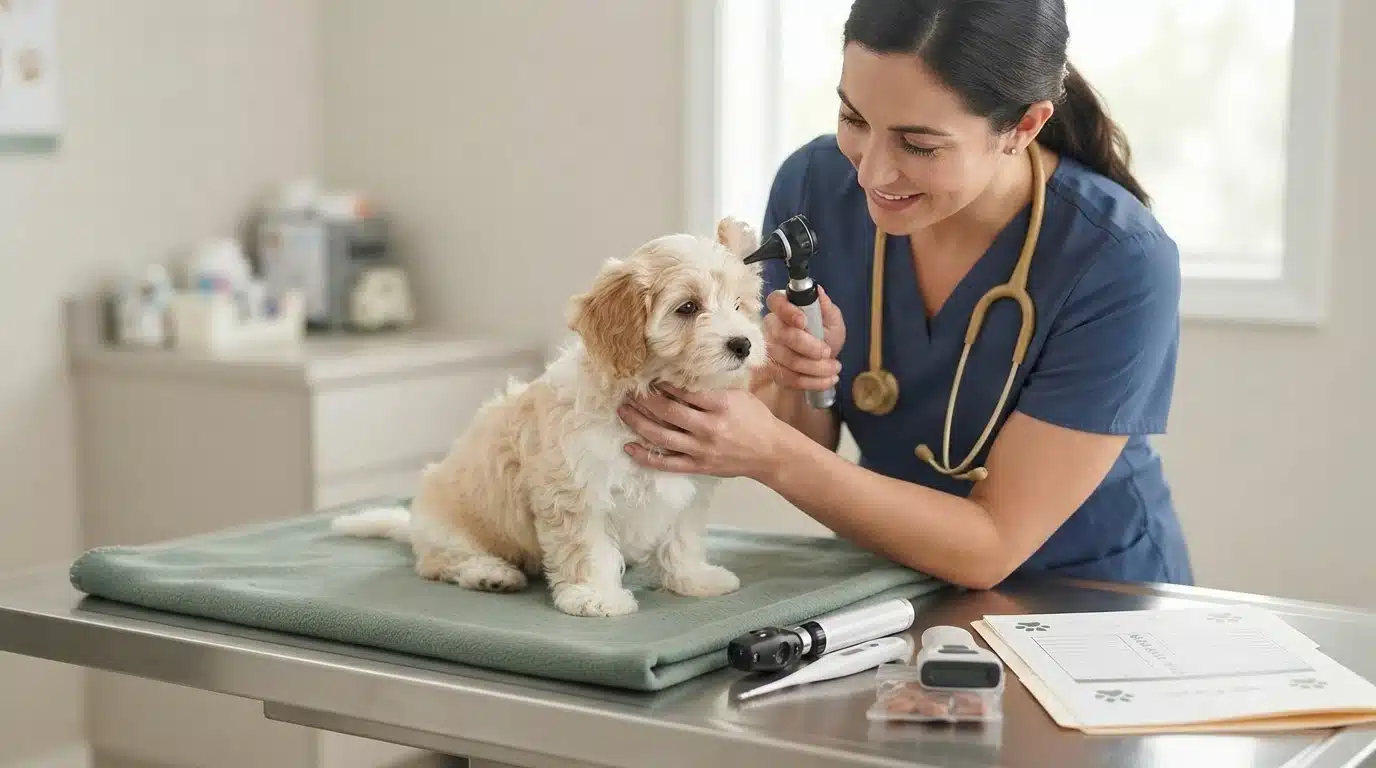
In a dispute, your paperwork is your case. Keep the signed contract, all payment records, texts and emails, plus a written vet exam from the first 48 hours. If your vet finds a problem, ask for a signed statement tying the condition to the puppy and listing a diagnosis, prognosis, and costs. Photograph symptoms and date everything. A breeder can argue about your memory, but not about a dated vet record. Sellers who resist giving a health record, delay pickup dates, or push you to pay by gift card or wire transfer are waving red flags. The Better Business Bureau’s puppy scam study urges buyers to see an animal in person before paying and to use a credit card for protection. More on avoiding trouble appears in our Utah puppy buyer guide.

Where Utah Buyers Can Actually Complain
Since Utah has no puppy lemon law, you route complaints through general channels. Start with the Utah Division of Consumer Protection under Title 13, then file with the Better Business Bureau. For out-of-state or shipped sellers, the FTC and USA.gov accept fraud reports. Small claims court covers contract disputes cheaply. If the seller runs a licensed breeding operation, USDA complaints go to APHIS.
What a Strong Utah Puppy Contract Looks Like in Practice
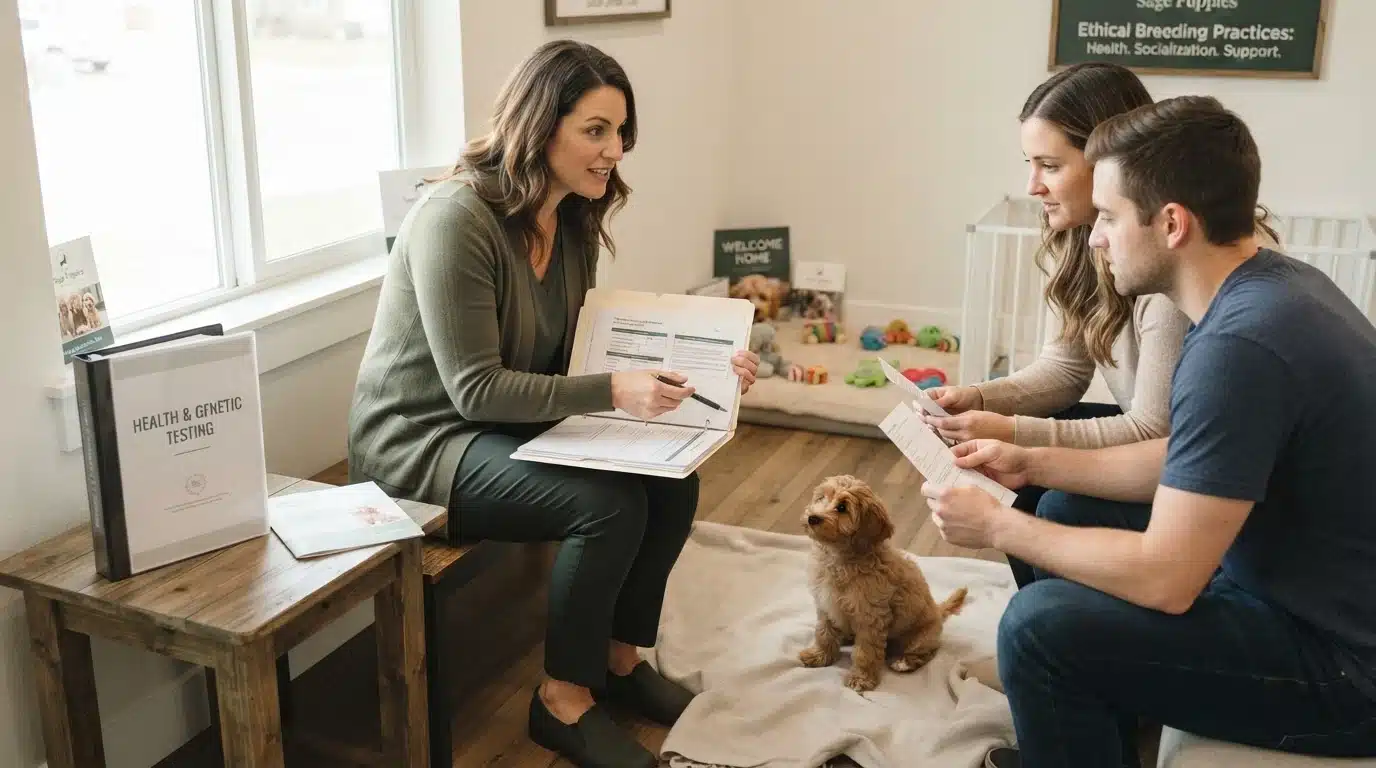
Because Utah has no puppy lemon law, the contract is your main protection. A good one spells out who pays for what, when, and how a dispute gets resolved. Read every clause before you send a deposit, and ask for changes in writing if something feels vague. Ethical breeders expect questions.
A Buyer-Side Contract Checklist
Before signing, confirm these items are on the page:
- Full names and contact details for both parties, plus the puppy’s microchip number and date of birth.
- Health window of at least 10 days for infectious issues, matching the 48-hour vet exam you should already plan.
- Hereditary coverage for heart defects, luxating patellas and eye disease through the first year or beyond.
- Return or reimbursement terms that state exactly how refunds are calculated.
- Spay or neuter and rehoming clauses you can actually live with.
- A signed copy in your files, alongside payment records.
Sage Puppies’ own health guarantee terms show the level of detail worth requesting from any Utah breeder.
Comparing Two Utah-Friendly Contracts Side by Side
| Feature | Weak Contract | Strong Contract |
|---|---|---|
| Health window | “See breeder” | 10-day infectious coverage, in writing |
| Hereditary issues | Not mentioned | Named conditions, defined claim steps |
| Refund terms | Discretionary | Stated amounts or full replacement |
| Dispute path | Vague | Utah venue, written notice first |
The weak version leaves everything to goodwill. The strong one gives you evidence you can take to the Utah Division of Consumer Protection if the relationship breaks down.
Common Mistakes Utah Puppy Buyers Make on the Legal Side
Paying Before the Contract Is Final
Deposits often move before anyone signs anything. Once the money is sent, your leverage drops. Ask for the full contract first, read every clause, and only then pay. A breeder who refuses to share terms before payment is telling you something. Serious programs, including Sage Puppies, run a written application and matching process before money changes hands, so there is time to review terms calmly.
Assuming Verbal Promises Will Hold Up
“I’ll cover any vet bills” means nothing in a dispute. Utah courts generally need written proof for promises about dog sales, so get health guarantees, return rights and delivery terms in the contract itself. If a breeder makes a promise by phone, ask for it in a text or email and keep it. Write the exact guarantee language in the agreement, not a vague line like “healthy puppy.” Verbal warmth is nice. Paper is what protects you.

Utah gives you no lemon law, so your contract and your paperwork do the heavy lifting. The breeders worth your deposit already put their promises in writing. At Sage Puppies, every Havanese, Havapoo and Cavapoo comes with clear terms you can read before you commit. Review the contract first, then ask your questions.
Frequently Asked Questions
Q1: utah puppy laws and buyer rights explained?
Utah has no puppy lemon law. Your rights come from your written contract, the UCC’s implied warranties, Title 13 anti-fraud rules, and federal USDA and DOT shipping regulations.
Q2: Can I get a refund if my puppy gets sick in Utah?
Only if your contract says so. Look for a 10-day infectious illness window and hereditary coverage through the first year, backed by written refund or reimbursement terms.
Q3: Do verbal promises from a breeder count in Utah?
Practically, no. Utah disputes usually require written proof, so get every health guarantee and return promise into the signed contract or saved in text.
Q4: What should I do within 48 hours of pickup?
Get a vet exam and keep the dated written results. That record becomes your key evidence if a health claim comes later.
Q5: Which law applies if I buy a puppy from another state?
Usually the state named in the contract’s choice-of-law clause. Read it before signing, since buyer protections differ widely between states.
Q6: Where do I file a complaint against a Utah breeder?
Start with the Utah Division of Consumer Protection, then the BBB. For shipped or out-of-state sellers, the FTC accepts fraud reports, and small claims court handles contract disputes.
Conclusion
Utah offers no puppy lemon law, so your protection comes from three other places: the contract you sign, the UCC’s implied warranties, and Title 13 anti-fraud rules, with federal USDA and DOT rules covering shipped puppies. Before you pay anything, get the full written agreement, confirm a 10-day health window and hereditary coverage through the first year, and read the choice-of-law clause if the breeder is out of state. See your vet within 48 hours and keep dated records, because paperwork is what wins disputes here. Breeders who put every promise in writing up front are showing you how they handle problems. Judge every Utah program by its paper, not its promises.