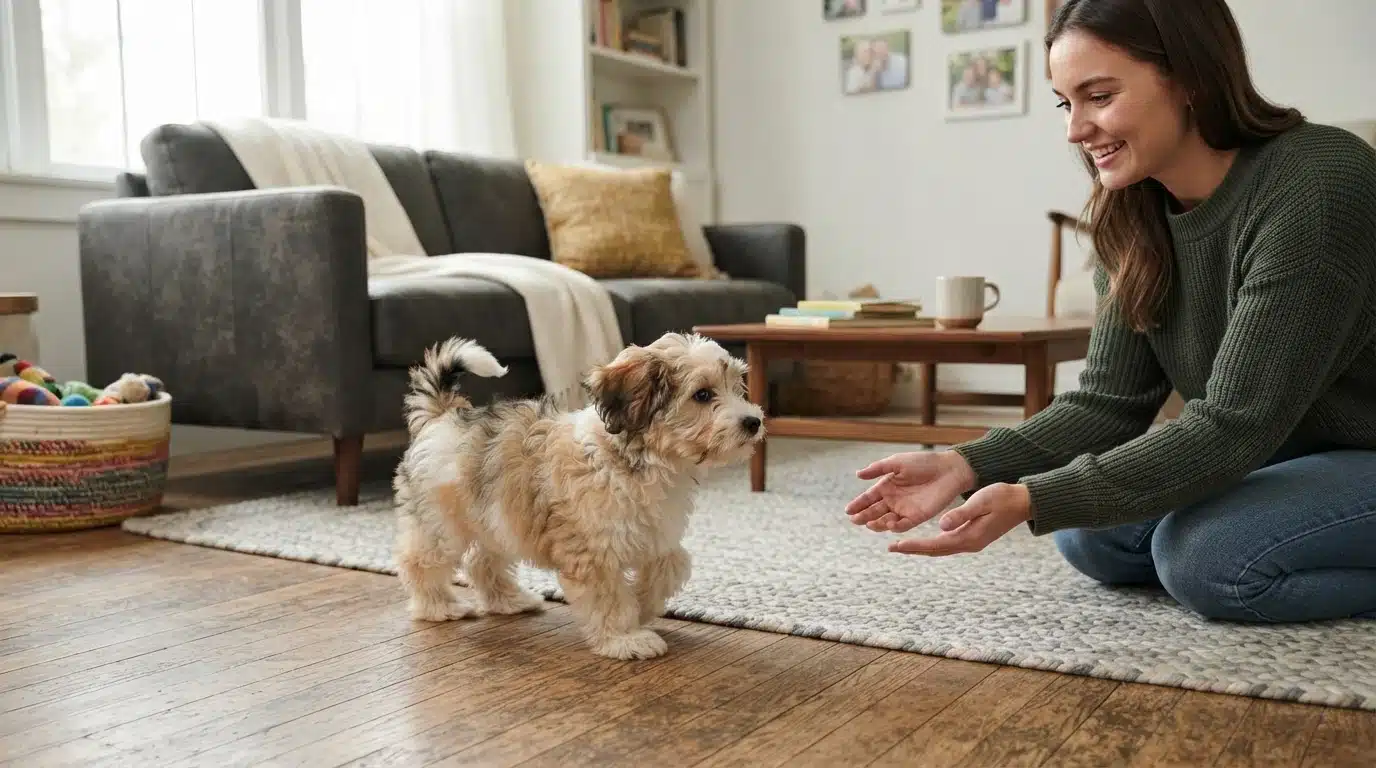
Quick Summary: Puppies raised in a busy home during their first eight weeks gain real advantages: they grow up calm around vacuums and doorbells, comfortable being handled by different people, and quicker to settle into crate and potty routines. The sensitive window from about three to fourteen weeks is when sociability outweighs fear, so exposures during the breeder half of that window stick for life. Socialization is not a guarantee, though; genetics still set a temperament baseline, and the best results come when breeders do the early work and families keep exposure gentle and steady after pickup.
A six pound Havapoo who has heard a vacuum, met a toddler, and napped beside a radio behaves differently in your living room than one raised in a quiet kennel. That gap is where the benefits of family-raised puppy socialization become real, and they show up long before the first vet visit.
The challenge for families is telling true early socialization from breeder marketing. This guide separates evidence from assumption, using the AVSAB 2024 position statement and Penn State Extension guidance as primary sources. You will also get a plain continuation plan for the weeks after pickup.
We draw on Cassie Milar’s documented experience raising Havanese, Havapoo, and Cavapoo puppies in her South Jordan home, where the benefits of family-raised puppy socialization are part of daily life, not a program add-on.
Why the First Eight Weeks at the Breeder Matter So Much
The Sensitive Window and What It Actually Opens
Puppies pass through a short biological window that shapes how they respond to the world for life. The AVSAB position statement calls the first three months the primary socialization period, when sociability outweighs fear. From about three to fourteen weeks, a puppy’s brain is built to absorb new sights, sounds, textures, and people as normal. Miss that window, and the same experiences can later register as threats.
Most puppies go home around eight weeks. That means the breeder controls the first half of the window, and you control the second half. What happens before pickup is not a bonus. It is the foundation your training builds on.
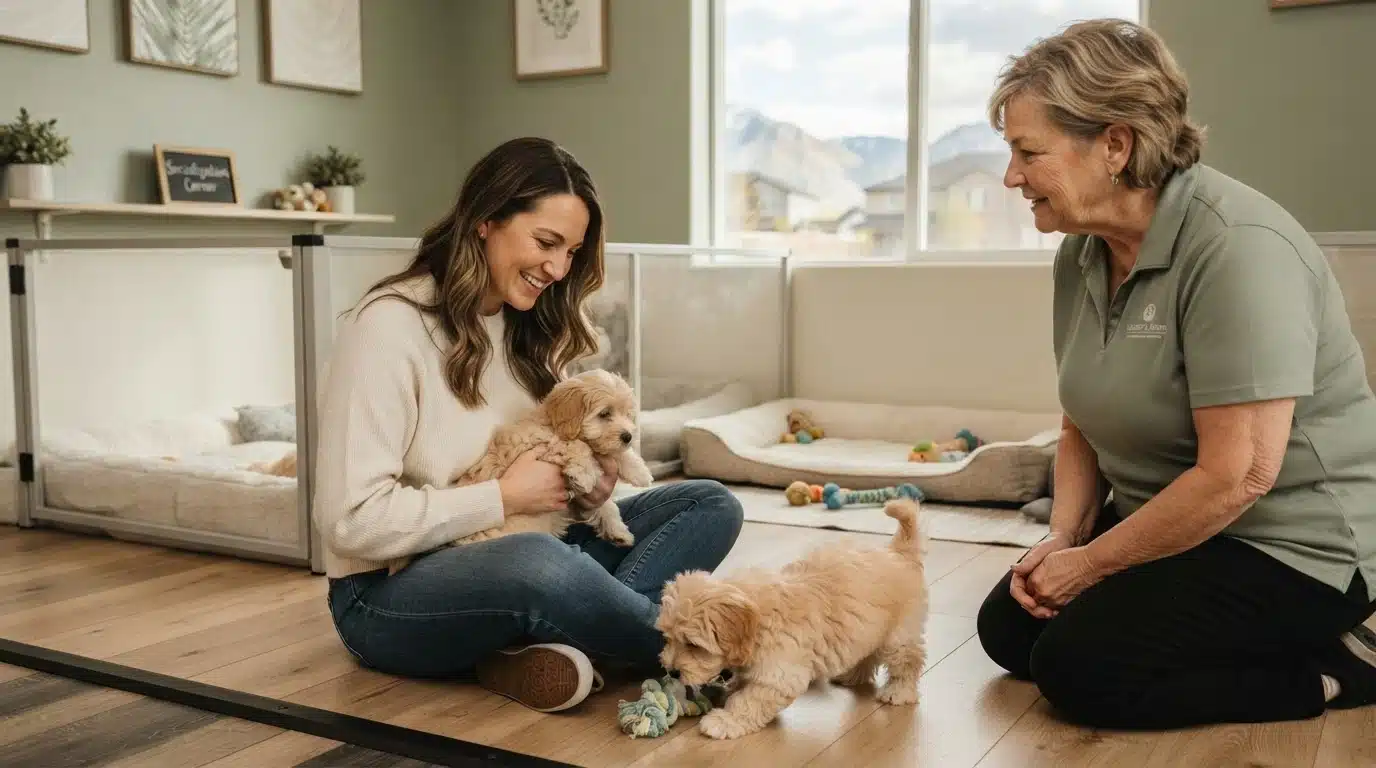
In a family-raised setting, those weeks include things kennel-raised puppies often miss. Handling by different people, including children. Household sounds like vacuums, doorbells, and television. Time on varied surfaces such as tile, carpet, and grass. Early teaching of gentle restraint, so nails, ears, and teeth can be touched without panic.
Research backs this up. An AVMA literature review notes puppies are most responsive to learning from unfamiliar dogs and people during this exact span. Well-socialized puppies tend to recover faster from stress, adapt to new homes more easily, and show fewer fear-based behaviors later.
Small companion breeds feel this acutely. A Havanese or Cavapoo will spend years being carried, groomed, and handled, so early tolerance for touch matters more than it might for a larger dog. That is why programs like Sage Puppies treat the pre-pickup weeks as active socialization work, not downtime.
None of this guarantees a confident adult dog. Genetics, health, and your follow-through all shape the outcome. But a strong start gives you far more to work with.
Exposure Versus Real Socialization
Exposure is simply noticing something new. Real socialization pairs new experiences with positive outcomes, so the puppy learns the world is safe. Breeders who reward calm curiosity, not just novelty, produce puppies that settle faster.
The Specific Benefits of a Family Raised Start
A puppy’s first eight weeks shape how it handles the world for years. Research on early socialization shows that dogs raised with intentional exposure to people, sounds, and handling grow into more adaptable, confident adults. A kitchen full of kids, a vacuum on the rug, and a parade of dinner guests do that work naturally. Here is what that kind of start delivers for a small companion breed.
Confidence With Everyday Household Sounds
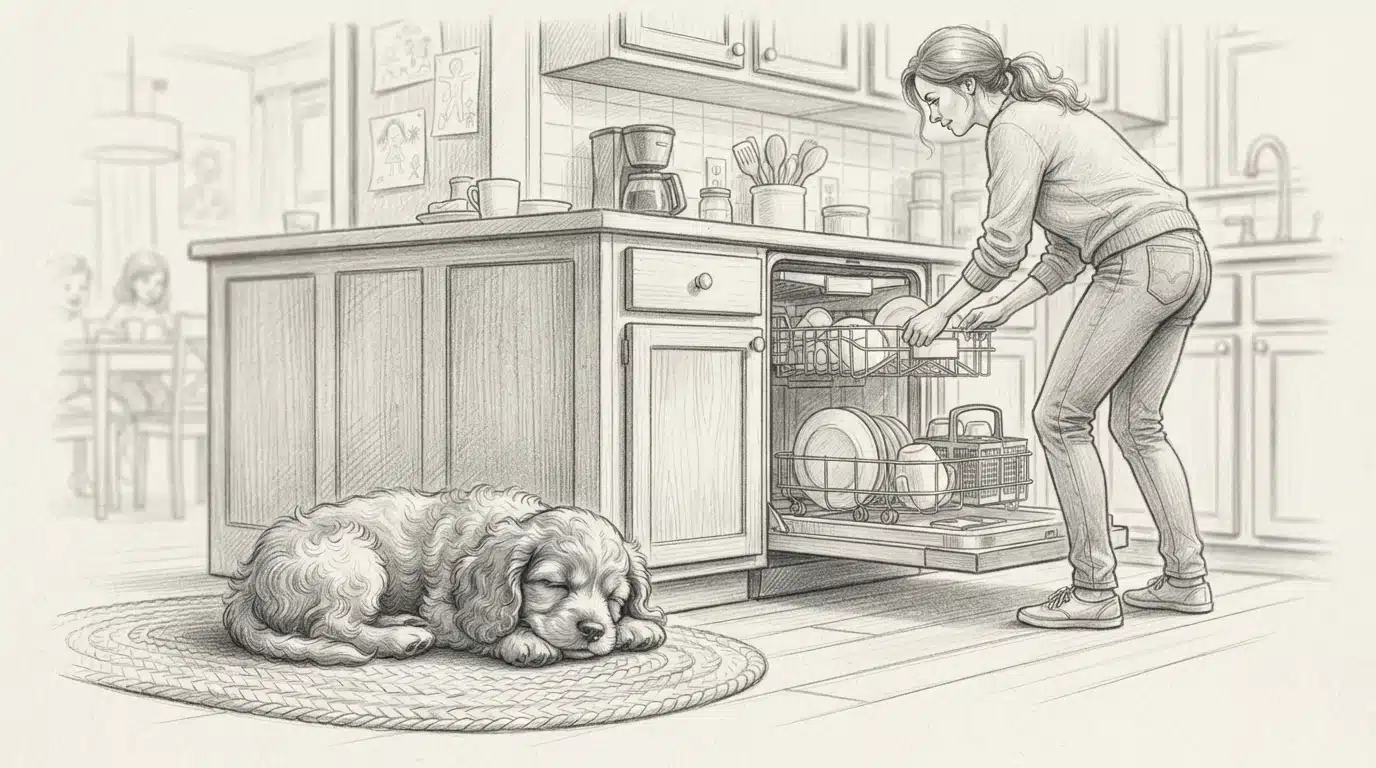
Dogs raised in kennels often meet blenders, dishwashers, and doorbells for the first time at eight weeks old. Puppies raised in a home hear these sounds during the weeks when their brains are most open to them. The window from about three weeks to twelve weeks is when a puppy learns what counts as normal. Sound that arrives during that window rarely triggers fear later.
A Penn State Extension series on puppy raising notes that early, intentional exposure builds adaptable, confident dogs. In a family setting, that exposure is not a training exercise. It is just Tuesday. The puppy naps through the laundry cycle and the TV, and you inherit that calm.
Comfort With Handling From Different Hands
Small companion breeds get handled a lot: groomers, vets, toddlers who hug too tight. A family raised puppy has already been picked up, turned over, and had its paws touched by people of many ages and sizes. That matters for a Havanese or Cavapoo that will need regular grooming for life.
Studies on early socialization link positive handling in puppyhood to lower rates of fear and aggression in adult dogs. A puppy that learns “hands mean good things” from several family members, not just one breeder, transfers that lesson to the groomer’s table and the exam room.
Easier Adjustment to New People and Visitors
A puppy that has only ever met two adults can find guests alarming. A puppy raised where friends, neighbors, and kids come and go treats a new face as routine. The AVSAB position statement on puppy socialization urges owners to socialize puppies well before vaccinations finish, because behavioral problems are far harder to fix than to prevent.
Family raised puppies arrive with that foundation already laid. Your first week home involves greeting you warmly, not hiding under the couch.
A Head Start on Crate, Potty, and Leash Routines
Homes teach routines that kennels cannot. A family raised puppy has usually slept in a crate, felt grass under its paws, and started learning that outside means potty. Some have worn a collar and followed a short leash around the yard. These first steps land during the same sensitive window, so they stick faster.
That means your first nights involve shorter crying spells and fewer accidents, not because the puppy is “trained,” but because the patterns have begun. If you want to see how a home environment shapes these habits in detail, this overview of what makes family raised puppies different walks through it.
None of this replaces your job after pickup. It just means you start from a stronger place.
What Family Raised Socialization Looks Like Day to Day
The AVSAB position statement is clear: the first three months of life are the most important window for socialization, because sociability outweighs fear during that time. Much of that window closes before pickup day, so what happens in the breeder’s home matters. Here is what that work looks like in practice.
Daily Routines That Build Familiarity
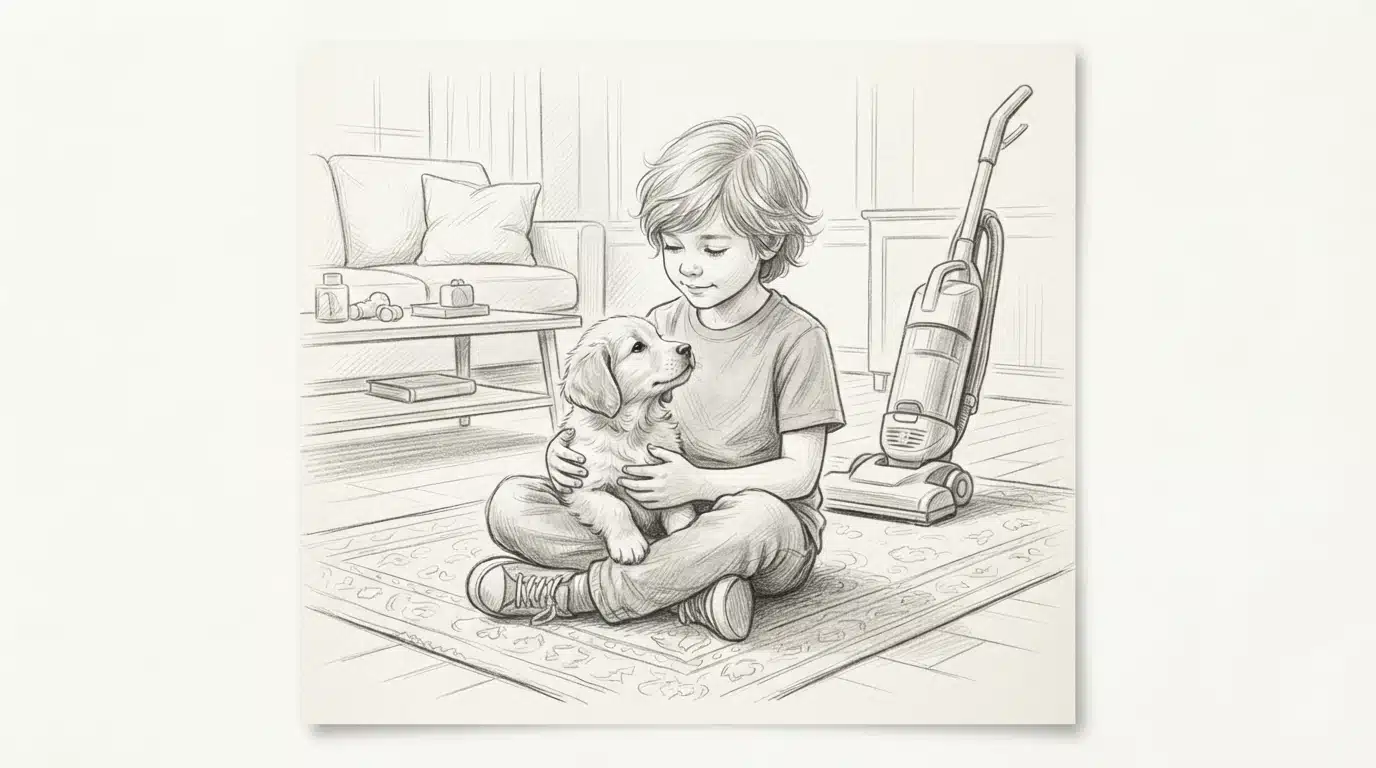
A family raised puppy lives inside ordinary household rhythm, not a kennel wing. That means the same dog hears meal prep, laundry, doorbells, and family conversations every day from week three onward. The repetition is the point. Each routine teaches the puppy that normal life is safe and predictable.
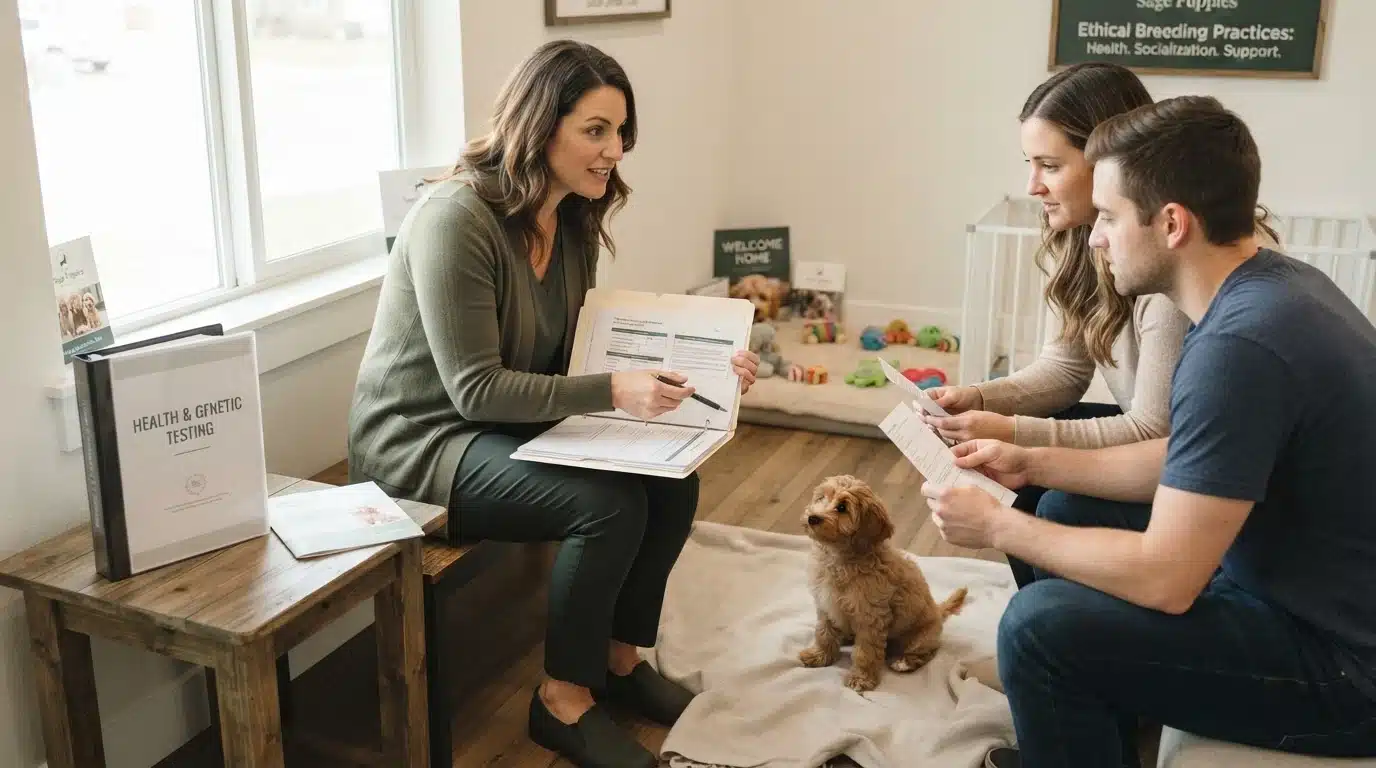
Good programs vary the routine on purpose. Puppies spend short stretches on different floor surfaces, see stairs, meet the mail carrier, and nap in separate rooms. Families who visit Sage Puppies can ask exactly which surfaces, rooms, and people each puppy has already met. If a breeder cannot describe a typical day, that tells you something too.
Gentle Handling and the People Variable
The AVSAB notes that puppies in the primary socialization period should meet people of different ages, sizes, and appearances. In a family home, this happens naturally: grandparents, teens, toddlers under supervision, and visitors all handle the puppy in short, calm sessions.
Handling covers body parts too. Ears, paws, mouth, and belly get touched gently and often, which later makes grooming and vet exams far easier. Watch for variety rather than volume. One adult handling a puppy fifty times a day builds less confidence than five different people doing it briefly.
Sound Exposure in a Real Home
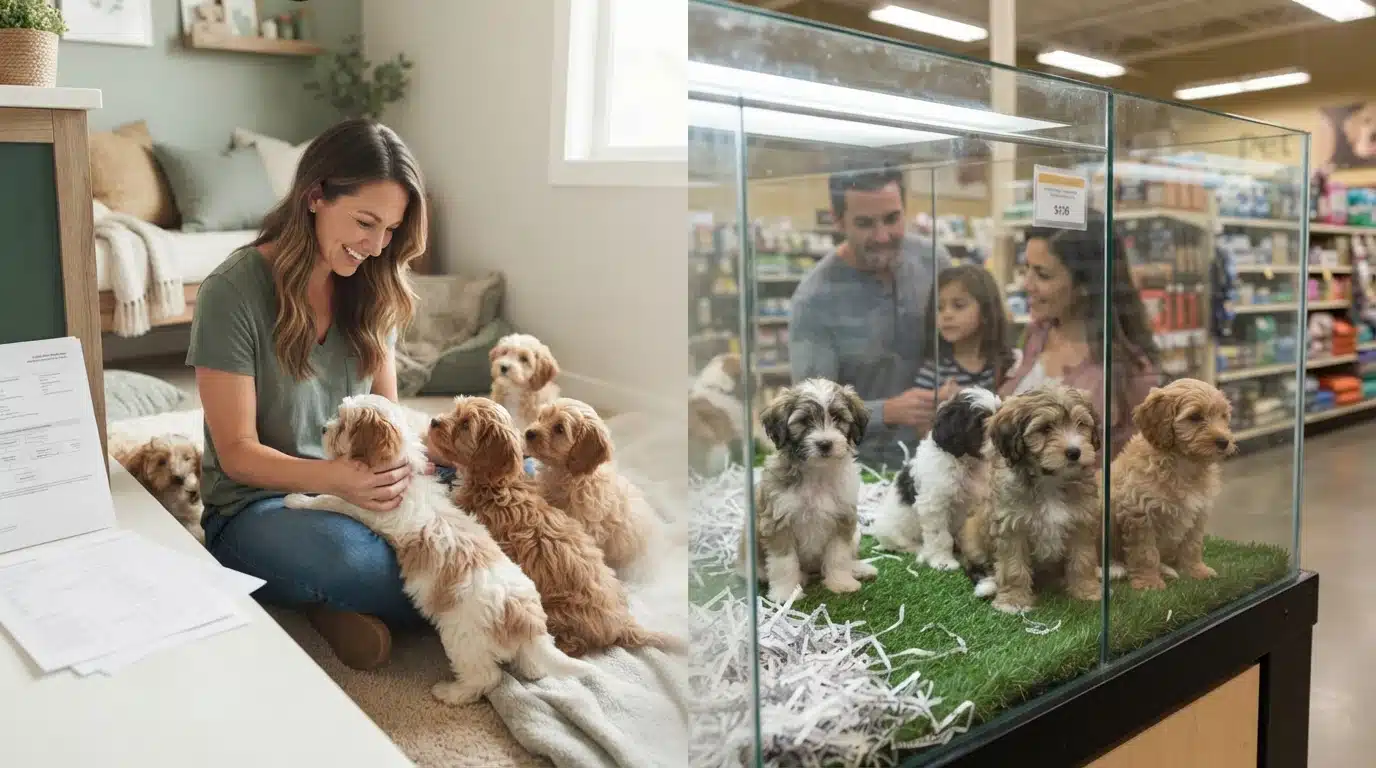
Kennel raised puppies often miss ordinary noise. Family raised puppies hear dishwashers, vacuums, televisions, doorbells, and children playing from an early age. The AVSAB recommends exposing puppies to as many new sounds, surfaces, and situations as possible during those first months.
You can verify this directly. Ask breeders to describe sounds their puppies already ignore, then look for relaxed body language in home videos.
Ask for that detail during your interview. A confident answer shows the socialization work is real.
What Socialization Cannot Promise
A well-socialized puppy is more likely to grow into a confident companion, but socialization is not a guarantee. Even the best-raised litter produces individuals with different temperaments. Knowing where a breeder’s work ends and yours begins helps you set fair expectations for the dog you bring home.

Genetics Still Set the Starting Point
Every puppy inherits a temperament baseline from its parents. Some lines lean bold and social; others are naturally watchful or slow to warm up. AVSAB’s position statement treats early socialization as essential, but it cannot rewrite inherited tendencies. A shy Havanese may become a steadier version of shy, not a different dog. Ask breeders about the parents’ temperaments, not just how the puppies were raised. Because Sage Puppies works with the Havanese, Havapoo and Cavapoo, parents’ dispositions are worth a direct question during the matching process.
Your Work After Pickup Completes the Picture
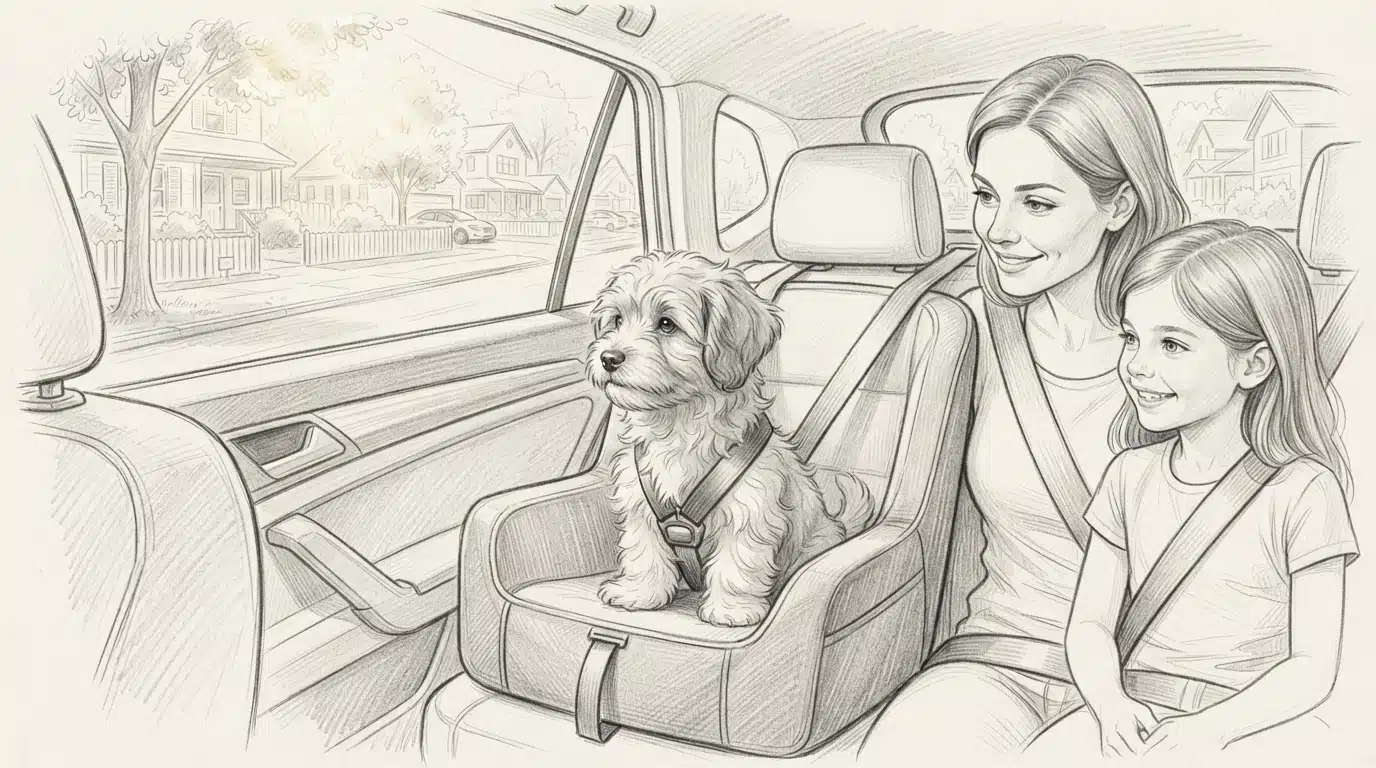
Socialization is cumulative, and it does not stop at eight weeks. The first three months matter most, so your first month at home still falls inside that window. Keep going: short car rides, new floors, gentle handling by strangers, and calm, graded exposure that matches your puppy’s personality, as AVSAB advises. Skip the floodgates approach. One quiet, positive outing a day beats a busy street fair, and small wins build the dog you actually live with.
Continuing Socialization After You Bring Your Puppy Home
A breeder’s work gives your puppy a head start, but the most sensitive learning window stays open for weeks after pickup day. The first three months of life are when sociability outweighs fear, according to AVSAB’s position statement, so the exposures you plan at home matter just as much as the ones your puppy got in our kitchen.
Your First Week at Home
Keep the first seven days quiet and low pressure. Your puppy is adjusting to a new family, new sounds, and new smells all at once, so resist the urge to invite every neighbor over at once.
A good pattern looks like this:
- Days 1-2: Let your puppy explore one or two rooms. Keep handling calm and short.
- Days 3-5: Add household sounds one at a time, like the washer, TV, and doorbell at low volume.
- Days 6-7: Introduce one or two new people, and let your puppy approach at their own pace.
Watch the tail, ears, and body. A loose, wiggly puppy is learning. A puppy who hides or freezes needs a break, not more practice. Pair every new thing with a treat and keep sessions under ten minutes.
Building a Simple Weekly Exposure Plan
Once your puppy settles in, aim for two or three gentle new experiences each week. Write them down so nothing gets skipped.
| Week | Focus | Examples |
|---|---|---|
| Week 1 | Home base | New rooms, household sounds, two new people |
| Week 2 | Surfaces and handling | Carpet, tile, grass, paws touched, ears checked |
| Week 3 | Places | Car rides, porch sitting, a quiet street walk |
| Week 4 | People and classes | Hats, kids at a distance, a well-run puppy class |
AVSAB notes that puppies can start class as early as 7 to 8 weeks with at least one vaccine set, so ask your vet what is safe in your area. Choose classes that use treats and play, not corrections, and keep group sizes small.
When to Bring in Professional Help
Most puppies bounce back from a scare within a day or two. Call a professional if yours does not. Warning signs include hiding most of the day, refusing food around strangers, growling at normal handling, or panicking on walks three weeks in a row.
Look for a certified trainer or veterinary behaviorist who uses reward-based methods. Ask how they handle a shy puppy before you book; the right answer is gradual, gentle exposure, never flooding a scared dog with too much at once.

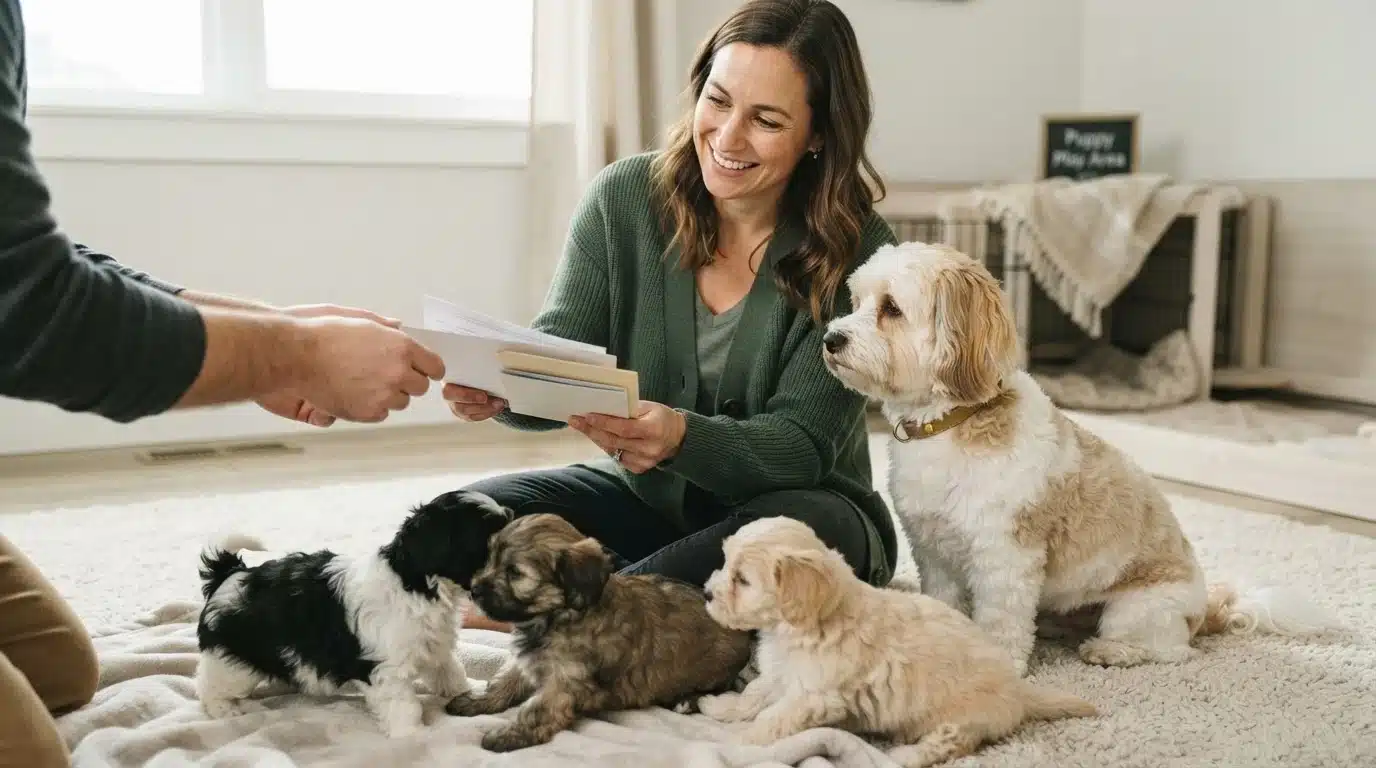
You want a puppy who settles into family life with confidence, and that starts with how it was raised before pickup. The family-raised puppies at Sage Puppies get daily handling, household sounds, and gentle new experiences from day one. Ready to meet your match? Start the application today.
Frequently Asked Questions
Q1: benefits of family-raised puppy socialization
Family-raised puppies hear household sounds, meet varied people, and accept handling before eight weeks. Research links that early work to calmer, more adaptable adults, especially in small companion breeds.
Q2: When does the puppy socialization window close?
The primary window runs from about three to fourteen weeks. Most puppies go home near eight weeks, so your first month at home still counts toward it.
Q3: Can my puppy meet people before vaccinations finish?
Yes. AVSAB recommends socializing before vaccines are complete, balancing risk carefully. Ask your vet, and favor quiet settings over public sidewalks early on.
Q4: How do I tell real socialization from breeder marketing?
Ask which sounds, surfaces, and people each puppy has met, and request home videos. Relaxed body language tells you more than slogans.
Q5: What should I do in my puppy’s first week home?
Keep it quiet: one or two rooms, gentle handling, then new sounds and one or two calm visitors. Pair everything new with treats.
Q6: Does socialization guarantee a confident adult dog?
No. Genetics set a baseline, and some puppies stay naturally watchful. Good socialization gives you a steadier version of the dog you have.
Q7: When should I call a trainer?
If your puppy hides daily, refuses food around strangers, or panics on walks three weeks running, contact a reward-based trainer or veterinary behaviorist.
Conclusion
Family-raised socialization gives a puppy real advantages before pickup: comfort with household sounds, easy acceptance of handling, calm greetings with new people, and early crate and potty routines. The evidence from AVSAB and Penn State Extension supports all of it, and the sensitive window from three to fourteen weeks explains why those first eight weeks count so much. What it cannot do is rewrite genetics or replace your work at home. The best outcome comes from both halves: a breeder who socializes on purpose, and a family that keeps exposure gentle and steady afterward. Knowing the difference between the two helps you choose well and set fair expectations for the dog you bring home.