Quick Summary: A puppy raised in a home during the first eight weeks gets daily handling, household noise, and steady human contact during the key brain-development window, which research links to calmer adult behavior. The label has no legal definition, so it only means what a breeder actually does, and buyers should ask for OFA parent clearances, vet exam records, and a written vaccination log to back up any claims. No dog is truly hypoallergenic, and early socialization builds a confidence baseline rather than a fixed adult temperament, so training and class work must continue after pickup. Programs that document each puppy’s exposure, like Sage Puppies in South Jordan, make it easier for buyers to compare evidence instead of slogans.
When a Utah family asks why the Havapoo sleeping in their kitchen feels calmer than the kennel-raised Lab they owned a decade ago, the answer usually starts in the same place: the eight weeks before the puppy ever came home. What makes family-raised puppies different is not luck or breed alone. It is early handling, household noise, and steady contact with people during the window when a puppy’s brain is wiring itself.
This guide separates the proven effects of home rearing from the myths, and shows you what to verify before you buy. We draw on primary sources like AVSAB, AVMA, OFA, and the Havanese Club of America, plus our own breeding program in South Jordan, so you can judge any breeder, including us, with clear eyes. That is what makes family-raised puppies different, and what makes this guide useful.
Defining Family-Raised Puppies
“Family-raised” describes where and how a puppy spends its first eight weeks: inside a home, around everyday household life. The term is not a legal standard, so buyers need to know what it should mean in practice before trusting a breeder’s use of it.
What the Term Actually Covers
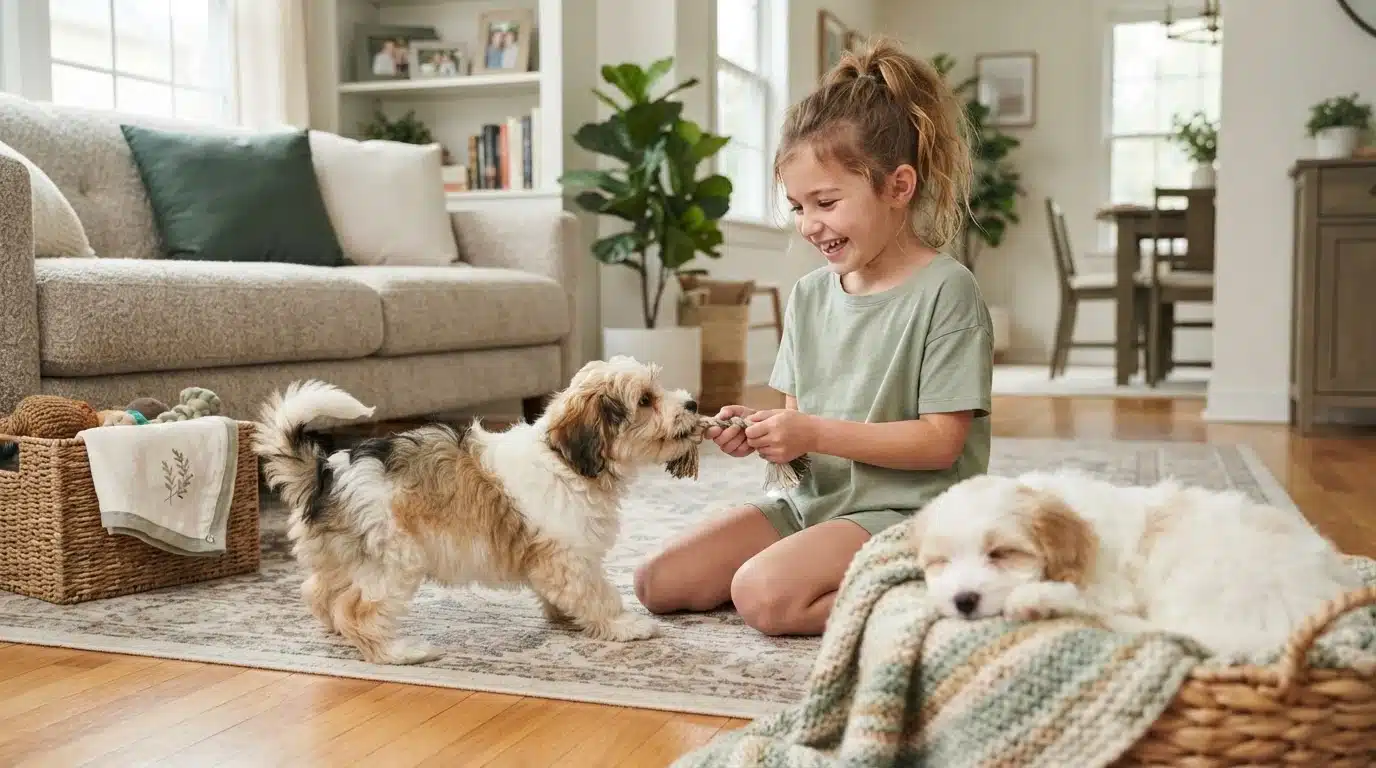
A family-raised puppy grows up in a breeder’s living space, not a separate kennel building. That means exposure to normal sounds and routines: vacuum cleaners, doorbells, children, other pets, car rides, and handling by different people each day. Good programs pair that home setting with real health work, including parent health testing through registries like OFA and early socialization habits described in guidance from groups such as AVSAB. The phrase covers environment plus daily handling, ideally backed by paperwork.
How It Differs From Kennel and Pet-Store Rearing
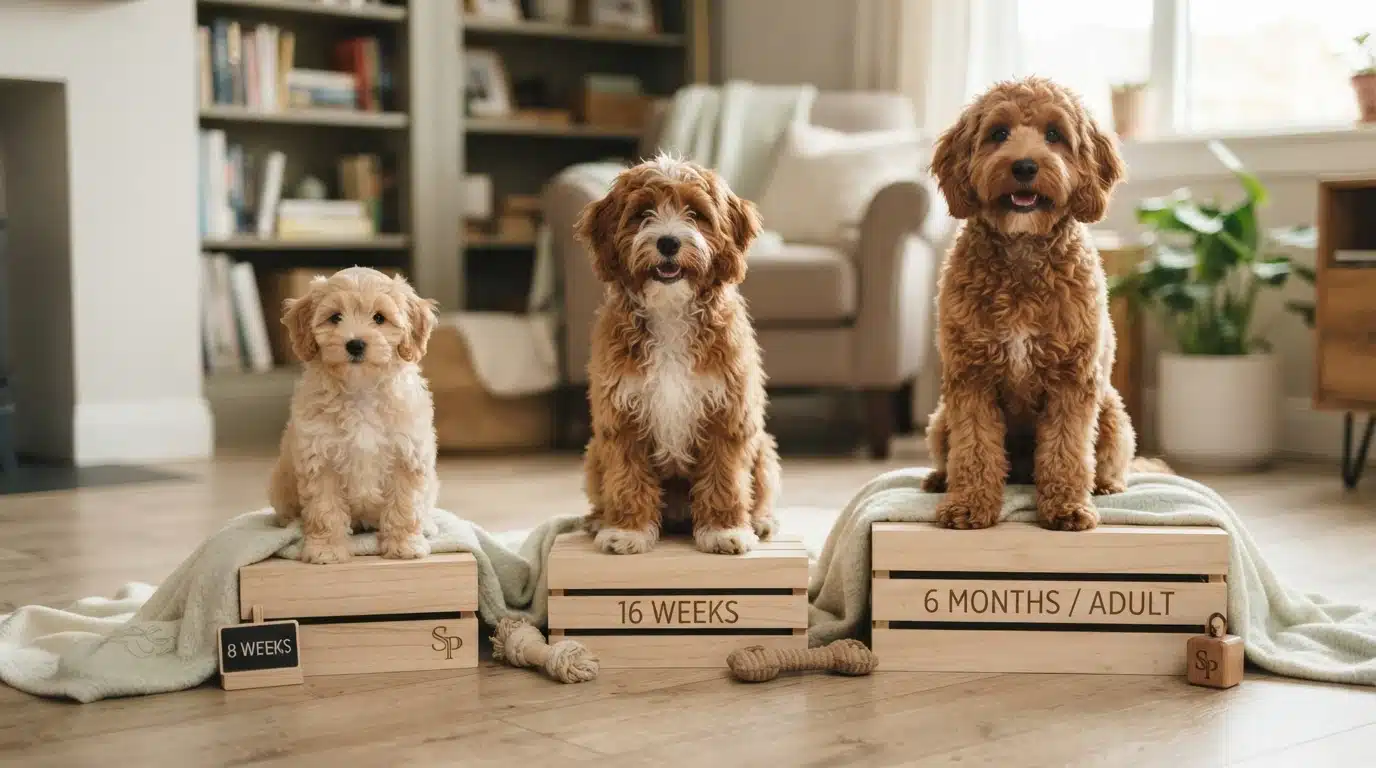
Kennel-raised puppies often live in runs or pens with limited human contact, so they meet fewer sights, sounds, and people during the most sensitive weeks of brain development. Pet-store puppies frequently come from large-scale suppliers, sometimes called puppy mills, a supply chain the USDA APHIS regulates but which rarely involves home rearing. Research summarized by veterinary behaviorists links early enrichment to calmer adult dogs, though no rearing style guarantees temperament. Programs like Sage Puppies keep litters in the home for exactly this reason.
What the Research Actually Shows
Family rearing is backed by real evidence, but the strongest findings are narrower than breeder marketing suggests. Knowing which claims hold up helps you judge a program fairly.
Home Rearing and Confidence Outcomes
The clearest evidence concerns early socialization, not “family-raised” as a label. The AVSAB puppy socialization position statement identifies the first three months as the key window and urges exposure to people, surfaces, sounds and handling before vaccinations are complete. Behavioral problems remain a leading reason dogs lose their homes, so early, positive experience carries real weight.
What research does not prove is that a home setting alone creates a confident adult dog. The outcome depends on what a puppy experiences, not where the whelping box sits.
How Breeders Describe Their Own Practices
Because no standard defines “family-raised,” the term means whatever a breeder says it means. Some puppies grow up amid daily household noise; others live in a quiet kennel with brief indoor visits. Both may advertise the same phrase, so treat it as a starting question rather than a guarantee.
Ask which adults and children handle the puppies, how often, and in what settings. A program like Sage Puppies documents each puppy’s household exposure, which lets you compare evidence instead of slogans. The AVSAB’s position statements offer a useful checklist for those conversations. You can also review a breeder’s socialization plan directly before you commit.
Early Socialization: The Window and Its Limits
Puppies learn fastest between 3 and 14 weeks of age, the primary socialization window. The AVSAB position statement notes that during these weeks sociability outweighs fear, so new sights, sounds and people are more likely to become familiar than scary. Good breeders start this work well before you bring a puppy home, and it continues in your living room.
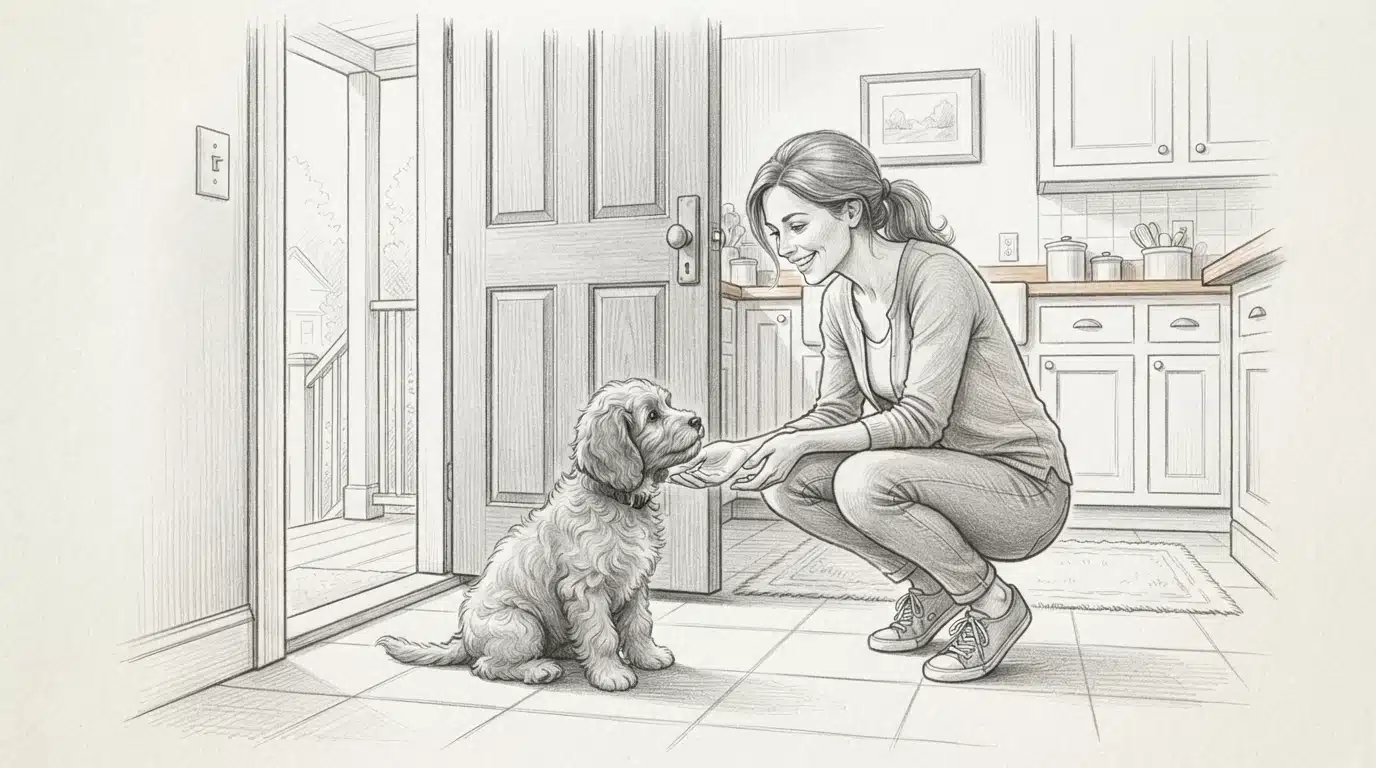
What Graded Socialization Looks Like in a Family Home
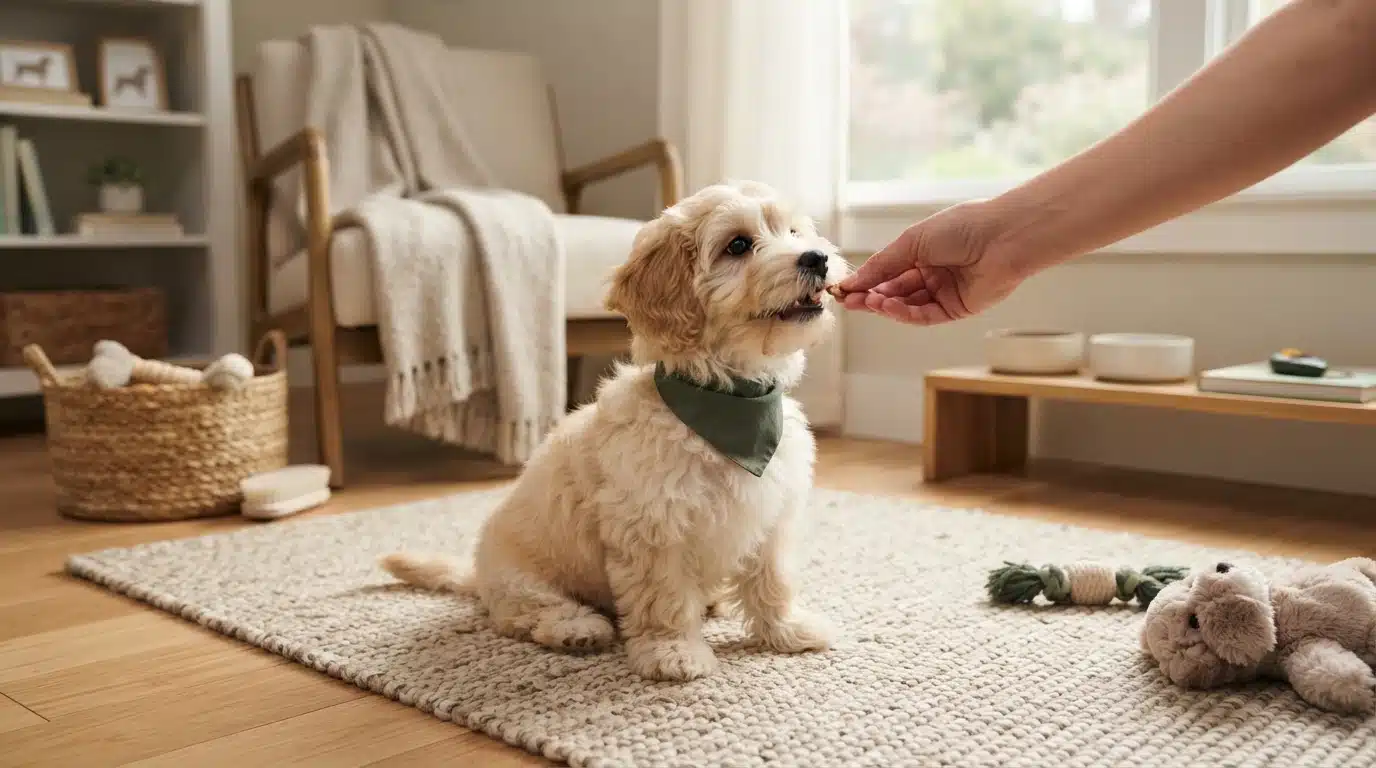
Graded means small, safe and positive, not a flood of new things. In a family home, that looks like puppies hearing vacuum cleaners and doorbells, walking on different floor surfaces, and meeting gentle kids and adults in short sessions. Each new experience stays calm, and the puppy can choose to step closer or back away. A written schedule helps track which sounds, textures and handling each puppy has already met, so progress is planned rather than accidental.
What the Window Does Not Guarantee
Early socialization sets a baseline. It does not guarantee a specific adult temperament, because genetics, individual nerve and later experiences all shape who a puppy becomes. A well-socialized puppy can still be wary of new things during fear periods in adolescence, and training must continue long past week 14. The AVMA recommends puppy classes start at 7 to 8 weeks, which shows the work is shared, not finished at the breeder’s door.
Health Foundations Built Into a Family Setting
Socialization shapes temperament, but health testing shapes what a puppy starts with. Both happen in the same home. When parent dogs are health screened before breeding and puppies grow up underfoot, you get structure and soundness working together rather than one compensating for the other.
Three Records, Three Questions
Ask any breeder for three documents, then use them to ask three things. First, the parents’ OFA records, which answer: were hips, patellas, and eyes evaluated by a board-certified reviewer? For Havanese, the Havanese Club of America’s testing guide lists patella, hip, and eye exams as the core CHIC requirements, so a missing result is a fair question, not an accusation. Second, the puppy’s veterinary exam record, which answers: did an outside vet check heart, knees, and eyes between six and eight weeks? Third, the vaccination and deworming log, which answers: did the breeder follow a written schedule instead of improvising? A program that keeps these records ready, as Sage Puppies does with its documented parent testing, makes verification easy. One that stalls or offers verbal reassurance instead of paperwork tells you just as much. Documents matter more than charm.
Why PennHIP and BAER Are Not the Same Test
These two tests sound similar but measure different things. PennHIP evaluates hip joint laxity using X-rays taken under sedation, and it can flag loose hips in dogs as young as six months. BAER is a hearing test. It measures brainstem responses to clicks and detects congenital deafness, usually done on puppies around five to seven weeks of age. Knowing the difference matters because the Havanese Club of America once listed BAER as a fourth CHIC test before making it optional. So when a breeder says “fully tested,” ask which tests were run and on whom. Hips tested on the dam say nothing about a sire’s hearing. Each screen covers one condition, in one dog, at one point in time.
Temperament, Matching, and the Honest Limits of Labels
“Family-raised” tells you how a puppy was nurtured. It does not tell you the adult dog’s exact personality. Good breeders match puppies to homes by observing each puppy, not by promising a fixed temperament.
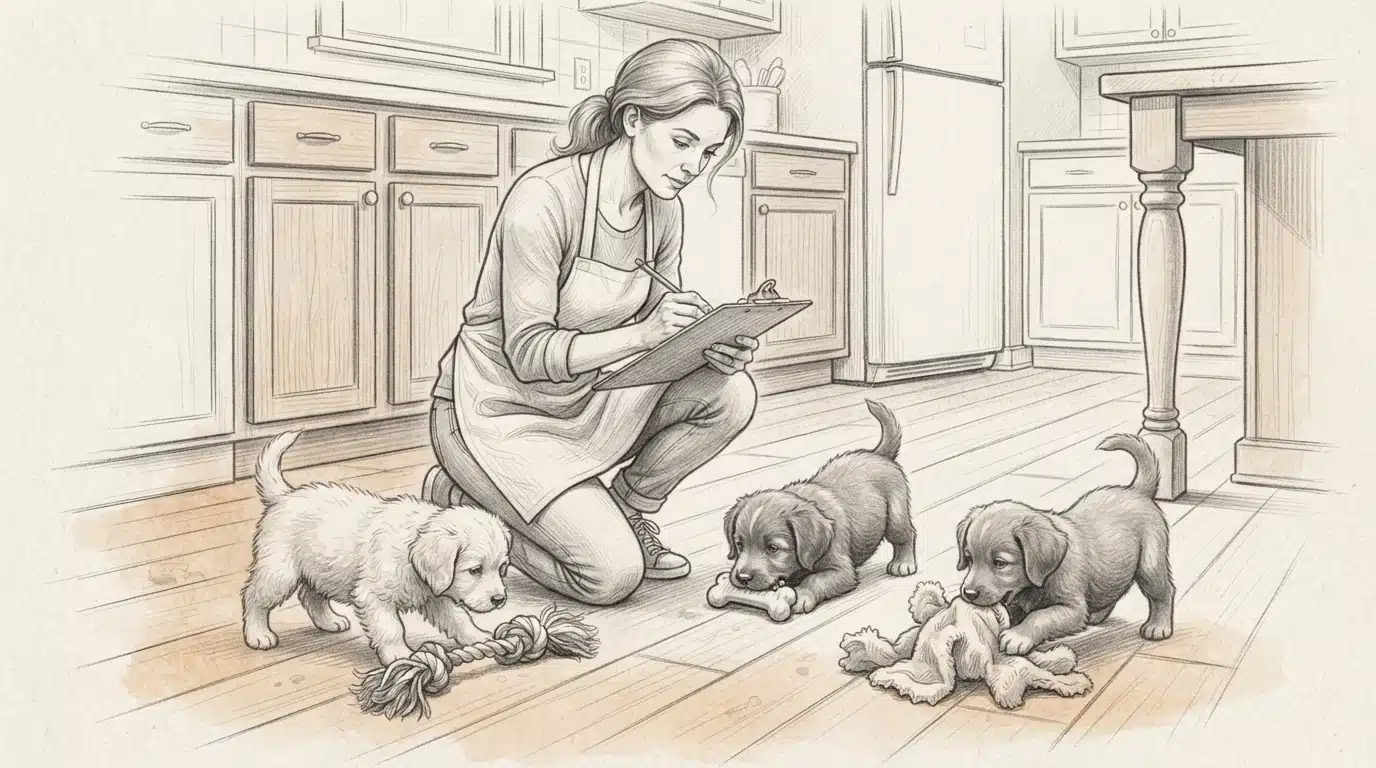
Observation Over Pass/Fail
No puppy fails a temperament test. What serious breeders do instead is watch, over weeks, how each puppy handles new people, handling, noise, and brief alone time. One pup may always be first to the toy pile; another hangs back and then commits fully. Those patterns matter more than a single score on a single day, because puppy behavior shifts with growth, sleep, and even the weather. Ask your breeder which puppies seek out people, which recover quickly from a startle, and which need a quieter home. At Sage Puppies, that daily observation record is how Cassie matches each puppy to a family rather than letting buyers pick from a photo.
What Family-Raised Does Not Do
Family-raising builds a base of trust and early exposure. It does not lock in a final personality. A confident eight-week-old can hit an adolescent fear period and suddenly worry about the vacuum, and a shy puppy can bloom in a patient home. Genetics set the range; environment shapes where the dog lands inside it. Training and socialization stay your job long after pickup, which is why the AVMA recommends puppy classes starting at 7 to 8 weeks. Be wary of any breeder who promises a temperament guarantee or claims their puppies are toddler-proof by default.
Daily Life, Children, and the Family Environment
A family-raised puppy grows up inside a working household, not a quiet kennel run. That daily contact shapes how the dog reacts to kids, guests, and ordinary noise for the rest of its life.
Gentle Exposure to Children and Visitors
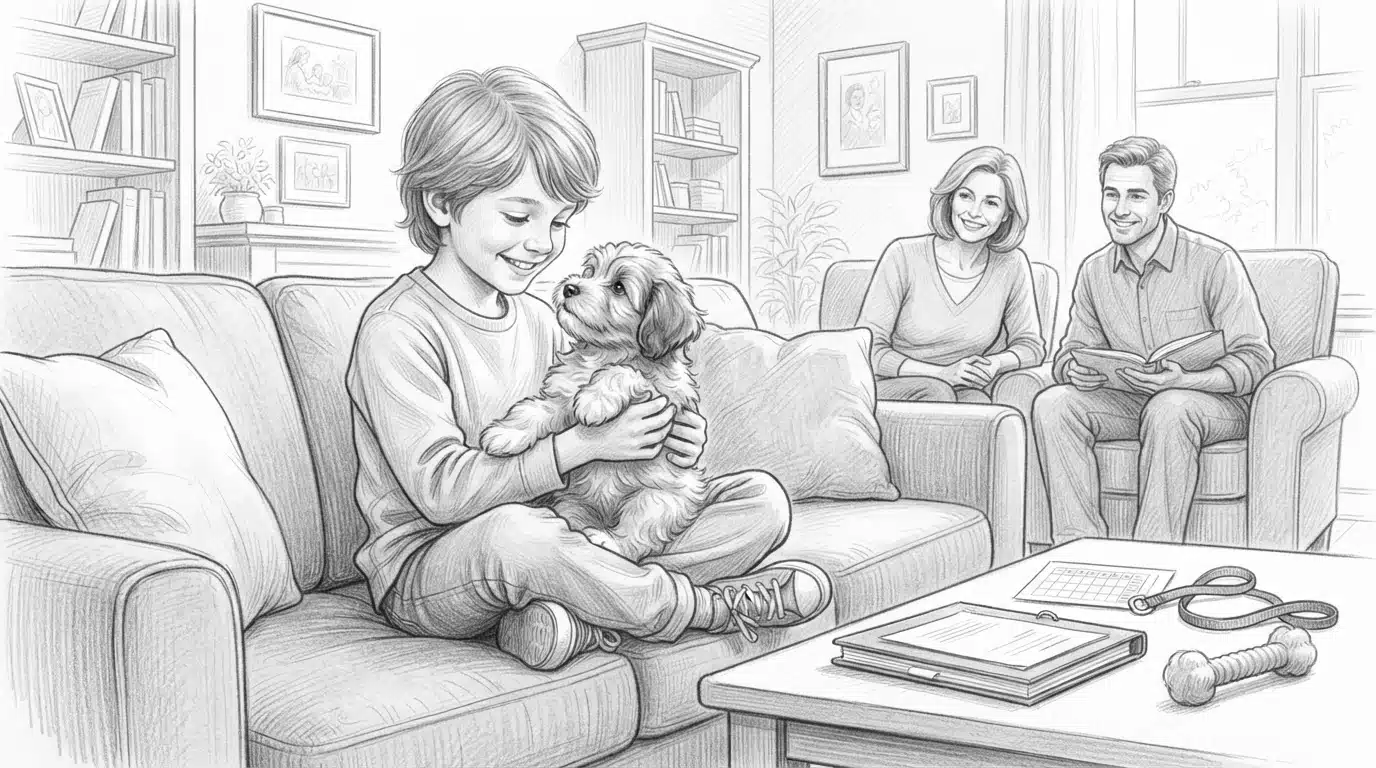
Puppies raised around children learn early that small hands move fast, squeal, and sometimes grab. Careful breeders supervise these meetings, so the puppy practices calm behavior instead of learning to jump or hide. Visitors add another layer. When different people of various ages handle the puppy gently, it grows up seeing strangers as normal rather than alarming. Ask a breeder how often children and guests interact with the litter, and what rules guide those moments. Good answers describe structure: short sessions, calm voices, and treats for relaxed behavior. Vague answers deserve follow-up questions.
Household Sounds and Routines
Everyday noise is its own form of socialization. Dishwashers, doorbells, vacuums, and television voices teach a young puppy that sudden sounds are safe background, not threats. Puppies that never hear these things can react with fear later, and fear is harder to fix than to prevent. Household rhythm matters too. Regular feeding times, potty breaks, and naps in a crate or pen give the puppy a predictable day. That predictability eases the move to your home, because the dog already understands that days have a shape.
Travel, Safety, and the All-Buyer Questions
In-Car Restraint and Cross-State Travel
An unrestrained dog becomes a projectile in a crash, so the first ride home matters as much as the last one. Use a crash-tested crate or a safety harness clipped to the seat belt system, and keep the puppy in the back seat away from airbags. Before you buy, ask how a breeder handles pickup-day safety and long trips, since ground transport and airline rules vary a lot by state. For a closer look at both paths, Sage Puppies breaks down the tradeoffs in its guide to puppy delivery and pickup options. Plan potty stops every two to three hours, and never leave a puppy alone in a parked car.
Allergies, Shedding, and Honest Claims
No dog is truly hypoallergenic. The American Academy of Allergy, Asthma and Immunology reports no consistent evidence that so-called hypoallergenic breeds produce fewer allergens, because dander and saliva, not just hair, trigger reactions. Havanese, Havapoo, and Cavapoo dogs do tend to shed less, and many allergic families do well with them. Still, the only honest claim is “lower shedding,” never “allergy-free.” Before you commit, spend time with the parents if you can, meet the puppy in person, and ask a breeder who will let you visit how a family member with mild allergies reacts. An AKC overview confirms that mixed breeds are no exception to this rule.
Verifying a Family-Raised Breeder Before You Buy
A good story is not proof. Ask for records, check them yourself, and watch how the breeder handles your questions. Anyone raising puppies in their home can usually show what you ask for.
Records to Request and What They Tell You
Health claims mean little on paper alone, so ask for documents you can check. The OFA Records Search lets you look up a parent dog by name and see which screenings were passed, so get the registered names of both parents. Request proof of screening, not just a “vet checked” puppy, because a clean bill at eight weeks says nothing about inherited conditions.
| Record | What it confirms |
|---|---|
| OFA clearances or CHIC number | Parents screened for breed-specific diseases |
| Eye exam results | Current eye health on breeding dogs |
| Written contract | Terms, take-back policy, and expectations |
A breeder who shares records freely has nothing to hide. Hesitation is a signal worth weighing.
Placement Conversations and Ongoing Support
How a breeder interviews you tells you as much as their website. Expect questions about your home, work schedule, children, and experience, because a careful match protects the puppy. The OFA’s breeder interview guide lists questions good breeders ask, and it works both ways.
Also ask what happens after pickup. Responsible programs stay available for training questions, want updates, and will take the dog back if your situation changes. Breeders who screen both directions, like the small programs around Utah, tend to offer that long-term support naturally. Ask before you commit, and trust the answers you hear.

Want a puppy raised in a home like yours, with health testing and steady socialization from day one? Sage Puppies matches families with well-loved Havanese, Havapoo and Cavapoo puppies. Start the application today, or visit our available puppies page to see who’s ready now.
Frequently Asked Questions
Q1: what makes family-raised puppies different
They spend their first eight weeks inside a home, getting daily handling, household noise, and contact with people during the key socialization window. That early exposure builds confidence, though it never guarantees adult temperament.
Q2: Are family-raised puppies healthier?
Rearing location alone doesn’t affect health. Health comes from parent testing through OFA, veterinary exams, and vaccination records, so ask for paperwork regardless of where puppies live.
Q3: Do family-raised puppies train faster?
They often settle in faster because household routines feel familiar. Training still depends on your consistency, and puppy classes should start around 7 to 8 weeks.
Q4: Are Havanese or Havapoo puppies hypoallergenic?
No. Lower shedding is the honest claim. Spend time with the breed before committing if allergies matter.
Q5: Can I visit a family-raised litter?
Most home-based breeders welcome visits or video calls. Hesitation when you ask is a signal worth weighing.
Q6: What should I ask a breeder first?
Request both parents’ registered names and health records, then verify them yourself through the OFA database.
Conclusion
Family-raised describes a puppy’s first eight weeks, and the evidence behind it is real but narrower than marketing suggests. Early handling and household noise build a confidence baseline; they never guarantee temperament. Health comes from paperwork, not location, so verify parent testing, vet exams, and vaccination records yourself. No dog is hypoallergenic, only lower shedding. The label means nothing until you ask what a breeder actually does: who handles the puppies, how often, and with what records. Ask specific questions, check the documents, and trust breeders who answer with evidence.