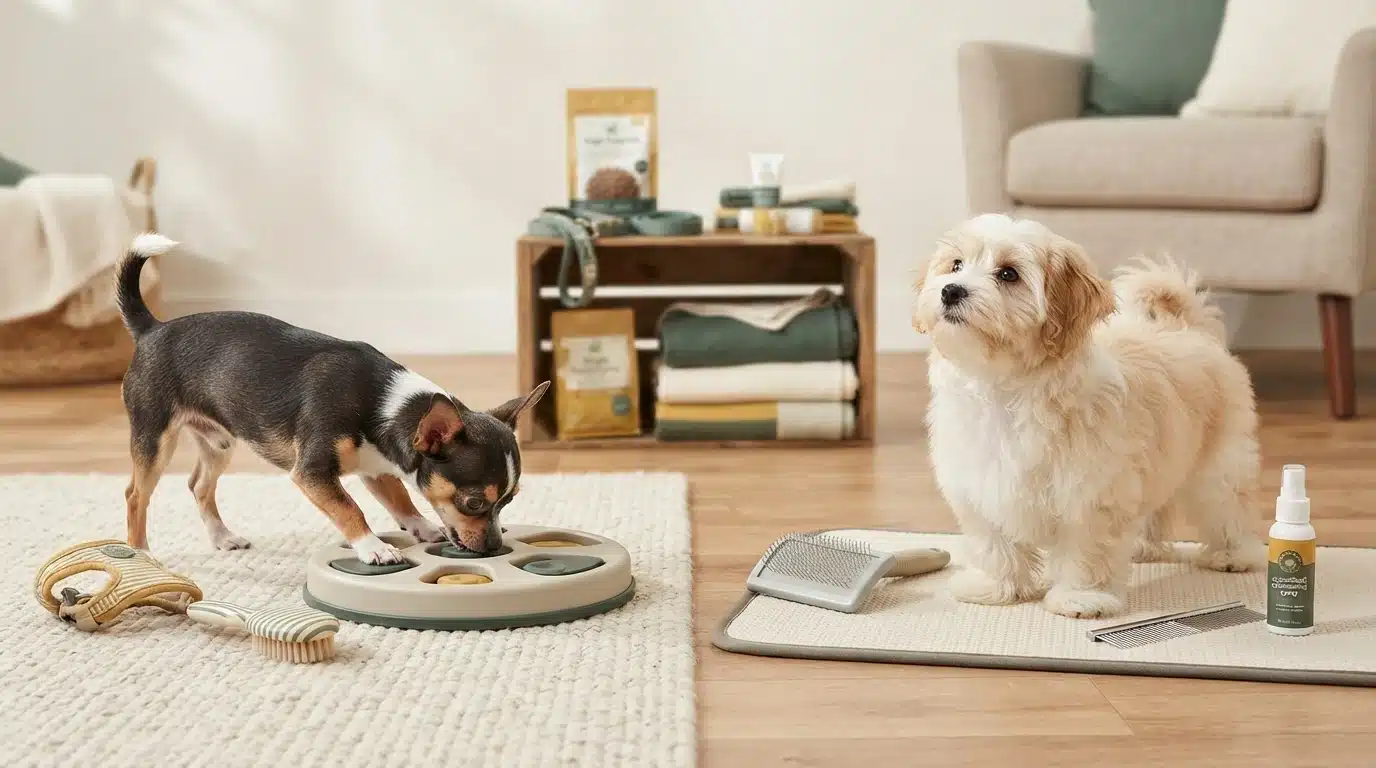
Quick Summary: Pick the Havanese if you have young kids, since its gentle, sociable temperament and moderate 30-minute daily energy match busy family life far better than the Yorkshire Terrier’s bold watchdog streak. A Yorkie can still work in homes with older, calmer children and owners willing to invest in steady socialization, daily brushing, and consistent bark training. Both breeds live 13 to 15 years, need serious grooming, and carry their own hereditary health risks like patellar luxation and tracheal issues, so asking breeders for health-test paperwork matters either way.
If you have young kids, the Havanese vs Yorkshire Terrier for families question usually ends one way: the calmer, “velcro” Havanese is the easier family companion, while a Yorkshire Terrier can thrive with a household that commits to steady socialization, calm handling and patience with barking.
Most comparison pages recycle breed-club bullet points or crown a blanket winner that never matches your actual living room. This Havanese vs Yorkshire Terrier for families guide looks instead at real household questions: temperament with children, energy, barking, grooming, health and trainability.
Cassie Milar, founder of Sage Puppies in South Jordan, Utah, has raised Havanese litters with families since 2025, so this comparison leans on daily puppy-household fit, not labels. That is the honest core of Havanese vs Yorkshire Terrier for families.
Havanese vs Yorkshire Terrier for Families: At a Glance
| Havanese | Yorkshire Terrier | |
|---|---|---|
| Temperament with kids | Affectionate, sociable, typically gentle when socialized early | Lively and devoted; needs careful socialization with small children |
| Energy and exercise | Moderate; about 30 minutes of daily activity | Moderate to high; daily walks and play |
| Bark level | Moderate; alert and may bark if untrained | High; alert watchdog tendencies |
| Grooming commitment | High; double coat, brush several times a week | High; daily brushing or short clips |
| Common health concerns | PRA, Legg-Calve-Perthes, patellar luxation | Luxating patellas, tracheal collapse, dental, brain and kidney disorders |
| Best-fit household | Families wanting a calm, cuddly companion | Households with older, calm children and steady training |
How Havanese and Yorkshire Terrier Compare
Havanese
The Havanese is a small, double-coated Bichon-type companion from Cuba. Bred to be a house dog, it tends to be affectionate and sociable with children and other pets when socialized early, which makes it a frequent pick for families wanting a calm, cuddly companion.
Key strengths
- Gentle, people-focused temperament around kids
- Moderate energy, about 30 minutes of daily activity
- Sociable with other pets when well socialized
Yorkshire Terrier
The Yorkshire Terrier is a toy terrier with hair rather than fur and a confident, lively streak. It suits households with older, calm children and steady training, since its bold watchdog nature needs consistent handling around small kids.
Key strengths
- Devoted, spirited personality in a tiny package
- Low-shedding coat, though it needs daily brushing or short clips
- Alert and quick to learn with regular training
Temperament With Children and Other Pets
Both breeds are small, but they handle family chaos very differently. Here is how each one tends to behave around kids and other pets.
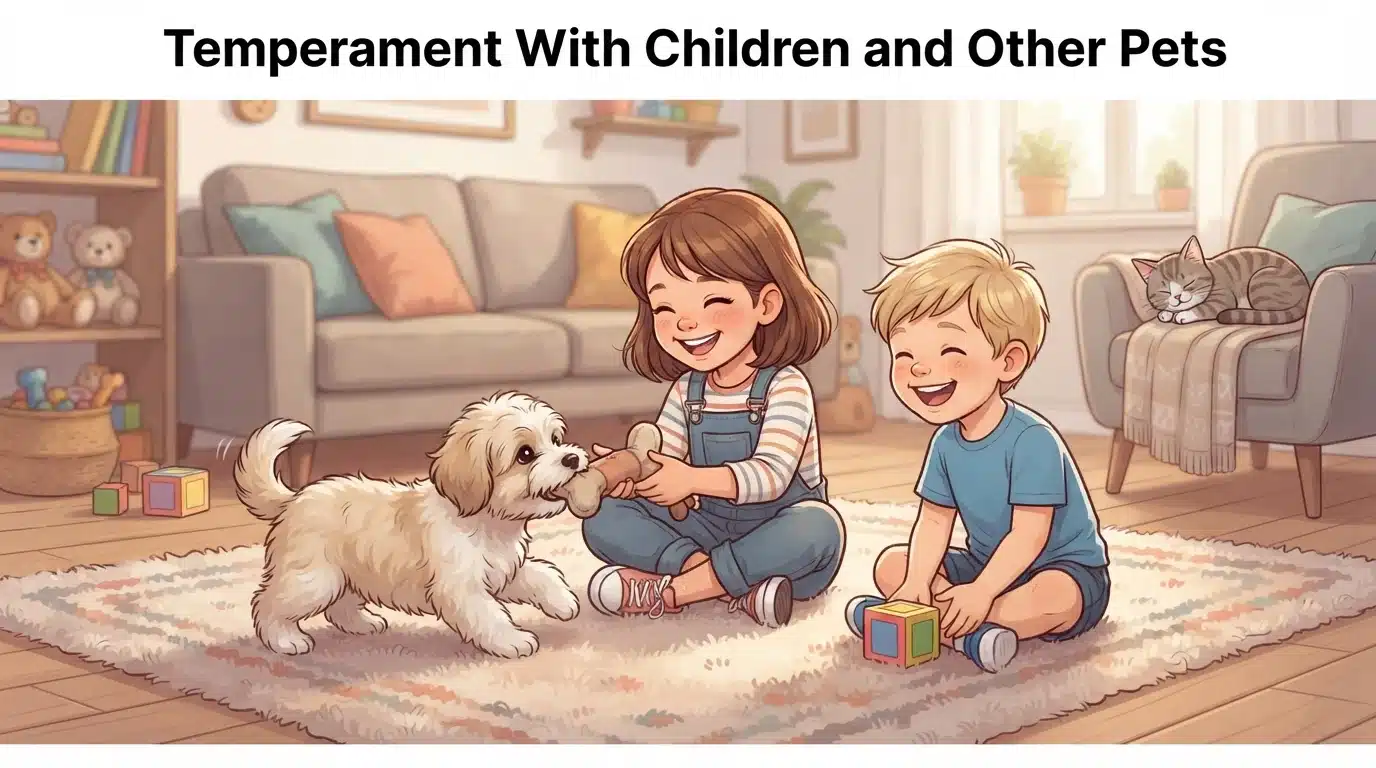
Why the Havanese tends to be the easier family companion
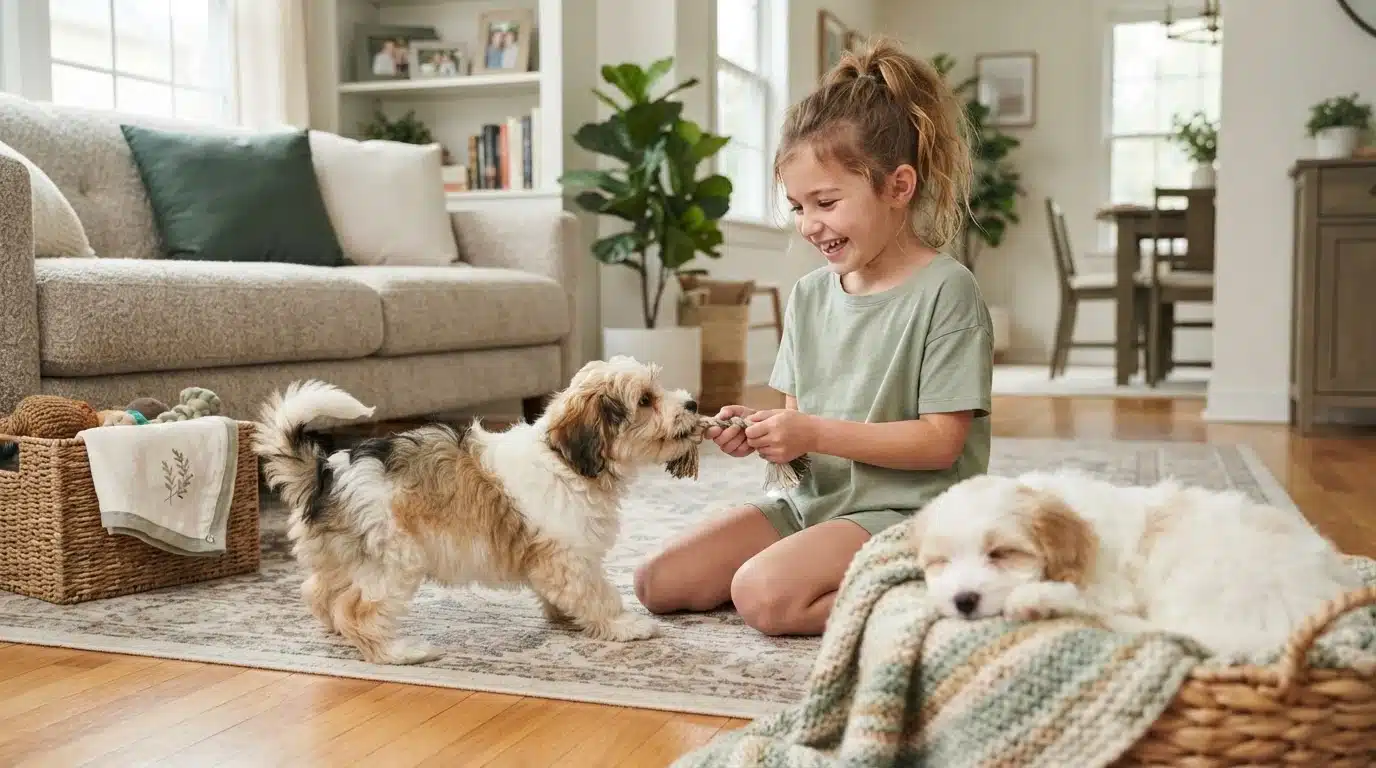
The Havanese was bred to be a companion first. The Havanese Club of America describes the breed as playful yet gentle, and it is often recommended for families with children. Havanese usually bounce back from noise, grabbed hugs, and dropped toys instead of holding a grudge. They also tend to get along with other dogs and cats, especially when raised together. Their moderate energy, roughly 30 minutes of daily activity, matches how young families actually live. That is a big reason Havanese sit near the top of most small dogs for families lists.
Where the Yorkshire Terrier can struggle in a busy family
Yorkies are bold, loyal, and deeply attached to one person. The AKC rates their patience with children lower than the Havanese, and that gap shows up in real homes. A Yorkie’s small frame makes rough play risky, and many will snap or growl when startled. They can also guard toys and get testy with other pets. If you want more context on how the Havanese fits a household, our guide to Havanese temperament and family compatibility breaks it down in detail.
Energy, Exercise and Daily Rhythm
Short, frequent activity fits most family schedules
A Havanese needs roughly 30 minutes of daily activity, split into short walks and indoor play. The AKC breed profile describes their needs as moderate: a brisk daily walk or backyard play session covers it. They do not carry the nervous energy many larger breeds build up indoors, so they settle easily between bursts of play. That rhythm works well when naps, school pickups and work calls break the day into pieces. Small dogs like these also fit comfortably in apartments, which our apartment-friendly small breed picks cover in more depth.
Yorkshire Terrier: small body, terrier-sized drive
Yorkies were bred to hunt rats, and that drive still shows. They typically want more play than their size suggests, plus daily walks and games that challenge their busy minds. Left bored, they invent their own jobs, often barking or chewing. Exercise helps, but training and toys matter just as much. For families, the practical difference is this: a Havanese coasts on your schedule, while a Yorkie needs you to actively schedule for it.
The takeaway: pick the Havanese if you want an easy daily rhythm, and the Yorkie if you enjoy a busier, more engaged routine.
Barking, Alertness and Apartment Living
Both breeds are small enough for an apartment, but they treat noise very differently. Size matters less to neighbors than how often the barking starts and how quickly it stops.

Yorkies as watchdogs: useful trait or daily frustration
Yorkies were bred as ratters and watchdogs, so they are naturally quick to bark at unfamiliar sounds, people at the door, and passing activity in the hall. That alertness is a genuine perk if you want a tiny alarm system. In a shared building, though, every hallway noise becomes a potential bark session, and repeated complaints can become a lease problem; some cities even let residents report noise from a barking dog. Consistent “quiet” training from puppyhood makes the difference between a useful watchdog and a daily frustration.
Havanese noise level: easier to live with, still not silent
Havanese are alert too. They will announce a knock or a delivery, which suits first-time owners who still want to know who is outside. The difference is off-switch behavior: most Havanese settle quickly once the trigger passes, so the barking stays event-based rather than constant. Pair that calmer baseline with their moderate, apartment-friendly energy and they tend to fit closely packed buildings with less training pressure. Early socialization keeps even that modest barking in check.
Grooming Reality: Double Coats, Hair That Grows and Allergy Hopes
Both breeds need real grooming, but the work differs. A Havanese carries a soft double coat, while a Yorkshire Terrier grows hair closer to yours. Neither dog is maintenance-free, so budget time before you pick.

Havanese double coat: brushing, mats and bath rhythm
The Havanese coat has a soft undercoat and a longer top coat, so brushing must reach the skin, not just glide over the surface. Miss a few days and tangles form behind the ears, in the armpits and under the harness. The Havanese Club of America suggests brushing a full adult coat two to three times a week, and more often during the coat change from puppy to adult, when mats show up fast. Most pet families keep a shorter puppy cut, which cuts brushing to a few minutes a day. Plan a bath every one to two weeks and dry the coat fully, because damp Havanese hair mats as it dries.
Yorkshire Terrier coat: hair, not fur, and what that means
A Yorkie’s coat is a single layer of fine hair that keeps growing, much like human hair. It sheds very little, which is why the breed gets its low-allergen reputation, but dander and saliva still trigger some people. That long, silky hair tangles easily, so daily brushing and a trim every four to six weeks keep it manageable. Many owners choose a short “puppy cut” for the same reason Havanese families do: less brushing, fewer mats.
No breeder can promise a truly hypoallergenic dog, so spend time with the breed first. Families who want that hands-on guidance can ask questions during Sage Puppies’ application process.
Health, Longevity and Hereditary Risks to Ask a Breeder About
Both breeds are generally sturdy, but each carries inherited risks. A good breeder welcomes specific questions, so bring this list to your first call.

Havanese health screening questions for a breeder
Havanese are usually long-lived, but ask about the conditions the breed club tracks. Key questions:
- Were the parents’ kneecaps evaluated? Luxating patellas are common in small breeds, so ask for OFA or vet clearance.
- Was a cardiac exam done? A vet-checked heart certificate rules out early murmurs.
- Did both parents pass an annual eye exam? Havanese can carry hereditary cataracts and other eye disease.
- Any hearing testing? BAER results matter in some lines.
- Can I see the paperwork? Certificates should match the parents’ registered names.
Yorkshire Terrier health screening questions for a breeder
Yorkshire Terriers live long lives, and a recent UK study of Yorkies in primary veterinary care found most were healthy, with brain and kidney disorders among the more common causes of death. Ask:
- Were the parents’ patellas checked? The same small-knee risks apply.
- Any history of liver shunts? Ask whether breeding dogs were tested.
- How do you handle trachea and dental health? Collapsing trachea and crowded teeth show up in this breed.
- What do you feed and how do you prevent low blood sugar? Tiny puppies need careful early care.
- Can I meet or see records for the mother? Her temperament and condition tell you a lot.
Lifespan, quality of life and the honest limits of testing
Expect roughly 13 to 15 years from either breed, with a Nature study of dog breed longevity showing small breeds generally outlive large ones. Health testing lowers risk, but no screening removes it, so ask breeders how they support owners after the puppy goes home.
Trainability, Independence and First-Time Owner Fit
Havanese as a willing student for the whole family
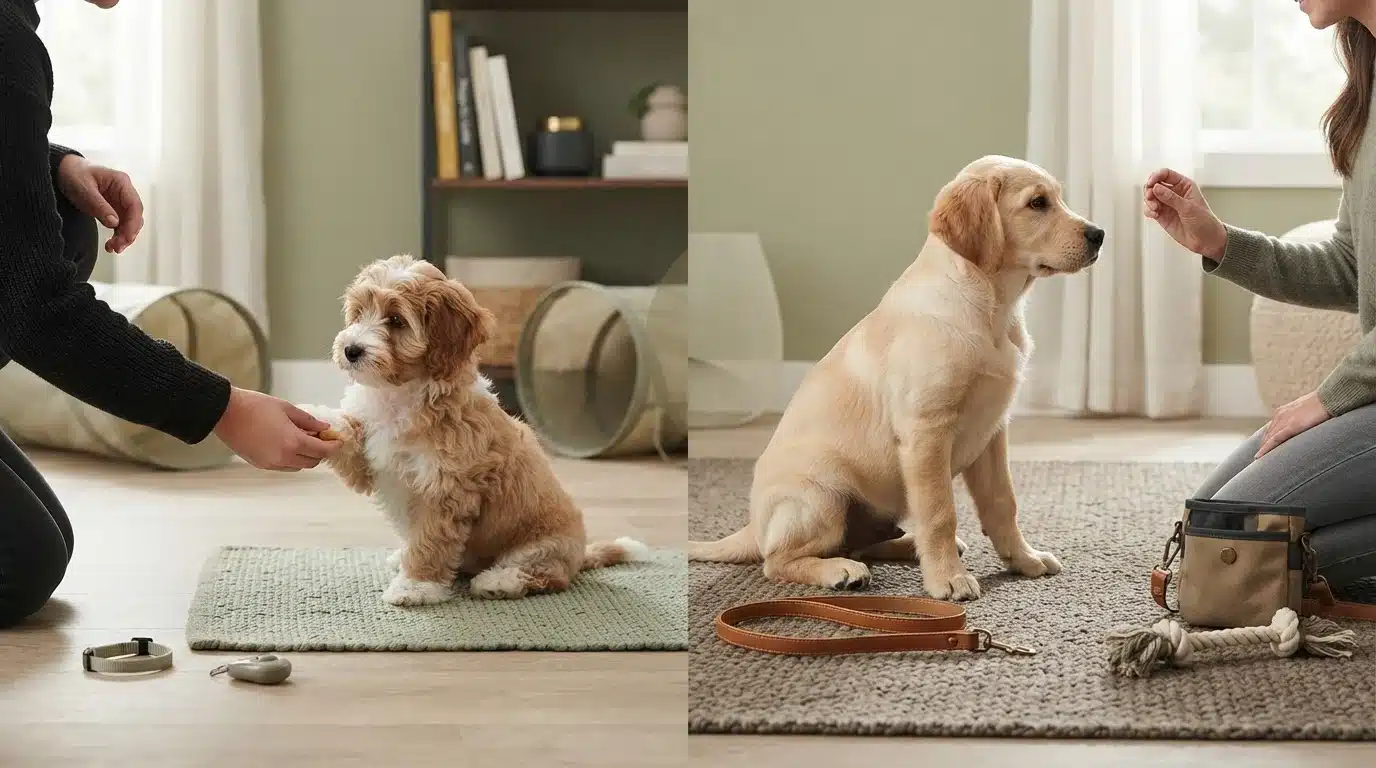
The Havanese is built for beginner success. The AKC breed profile describes the breed as highly intelligent and eager to please, easy to train with positive methods but sensitive to harsh corrections. That combination suits a busy household: everyone can use the same kind cues and get the same cheerful response. Kids can help with tricks and basic commands because the dog wants to cooperate, not debate. House training and short practice sessions usually go smoothly when the whole family stays consistent.
Yorkshire Terrier intelligence with a terrier streak
Yorkies are just as smart, and often quicker to learn a new cue. The catch is motivation. Terriers were bred to think for themselves, so a Yorkie will weigh whether your request is worth doing. Training takes patience, short sessions and steady rewards, which is doable for a first-time owner who enjoys the puzzle. Just expect a more independent partner, and keep recall practice on a leash or in fenced areas, because curiosity can outrun obedience outdoors.
Household Cost, Sourcing and Bringing One Home
Upfront and lifetime cost picture for each breed
Both breeds cost real money before and after pickup. A well-bred Havanese puppy from a breeder typically runs $1,200 to $3,500, with champion lines costing more, according to a 2026 US regional cost review. Yorkies from quality breeders often land in a similar range, though pet-quality pups can be somewhat less. Budget for first-year supplies, vet visits and spay or neuter care on top. Adult dogs often cost $1,200 to $4,300 per year between food, grooming and healthcare, per 2026 ownership cost data.
Where each breed typically comes from and what to verify
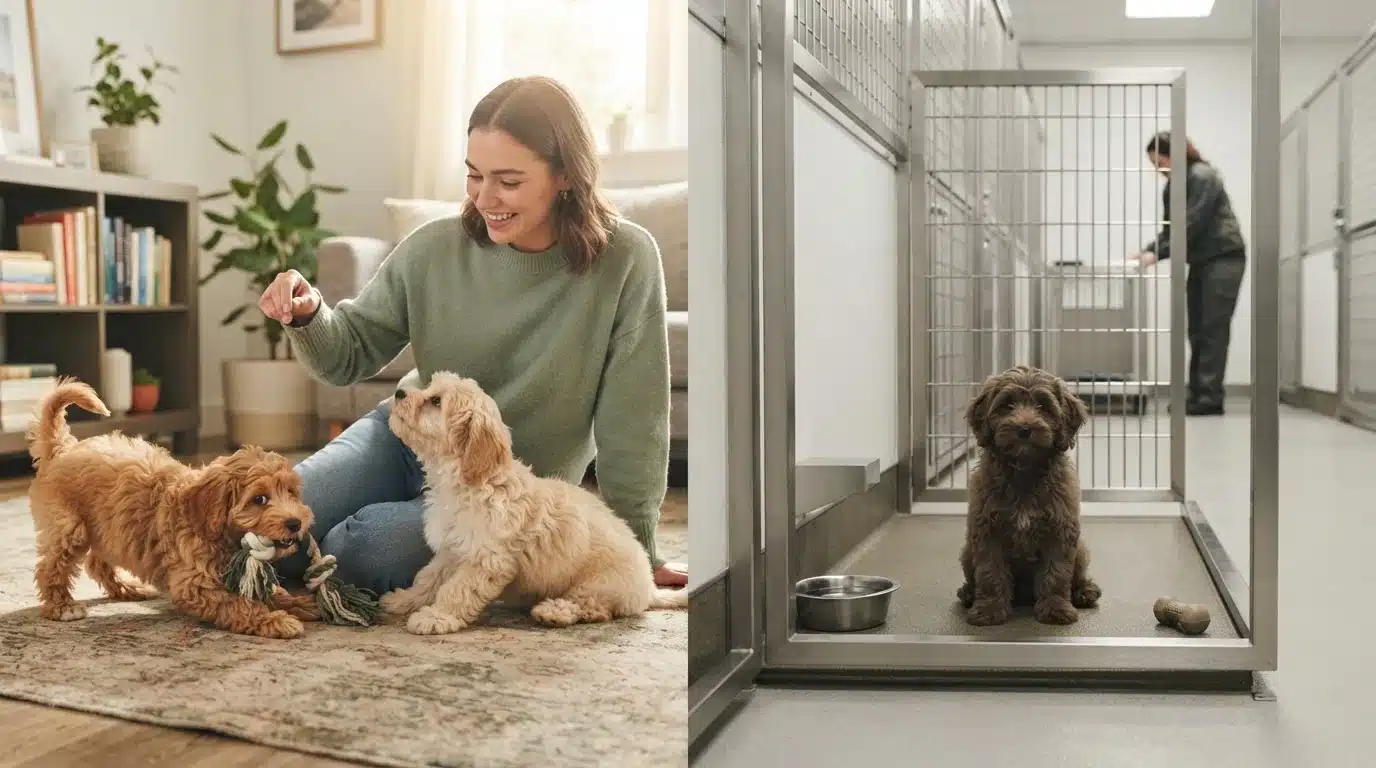
Responsible breeders for both breeds health-test parents and raise pups in the home. Ask for proof of testing, meet the mother when possible, and expect a written contract. Havanese litters can have longer waitlists because the breed is less common. Programs like Sage Puppies use an application and owner-managed matching process so families know exactly which puppy they are getting. Avoid any seller who won’t answer questions about the parents.
Which Should You Choose: Havanese or Yorkshire Terrier?
Match the breed to your household, not to cuteness. Here is the honest breakdown.
When a Yorkshire Terrier is the right family fit
A Yorkie suits families with older, gentle kids and adults who want a tiny, portable companion. They bond hard with one or two people and stay under 7 pounds, so apartments and frequent travel work well. Budget real time for coat care or keep a short trim. If your children are calm and supervised, a Yorkie’s bold spirit is a delight.
When a Havanese is the right family fit
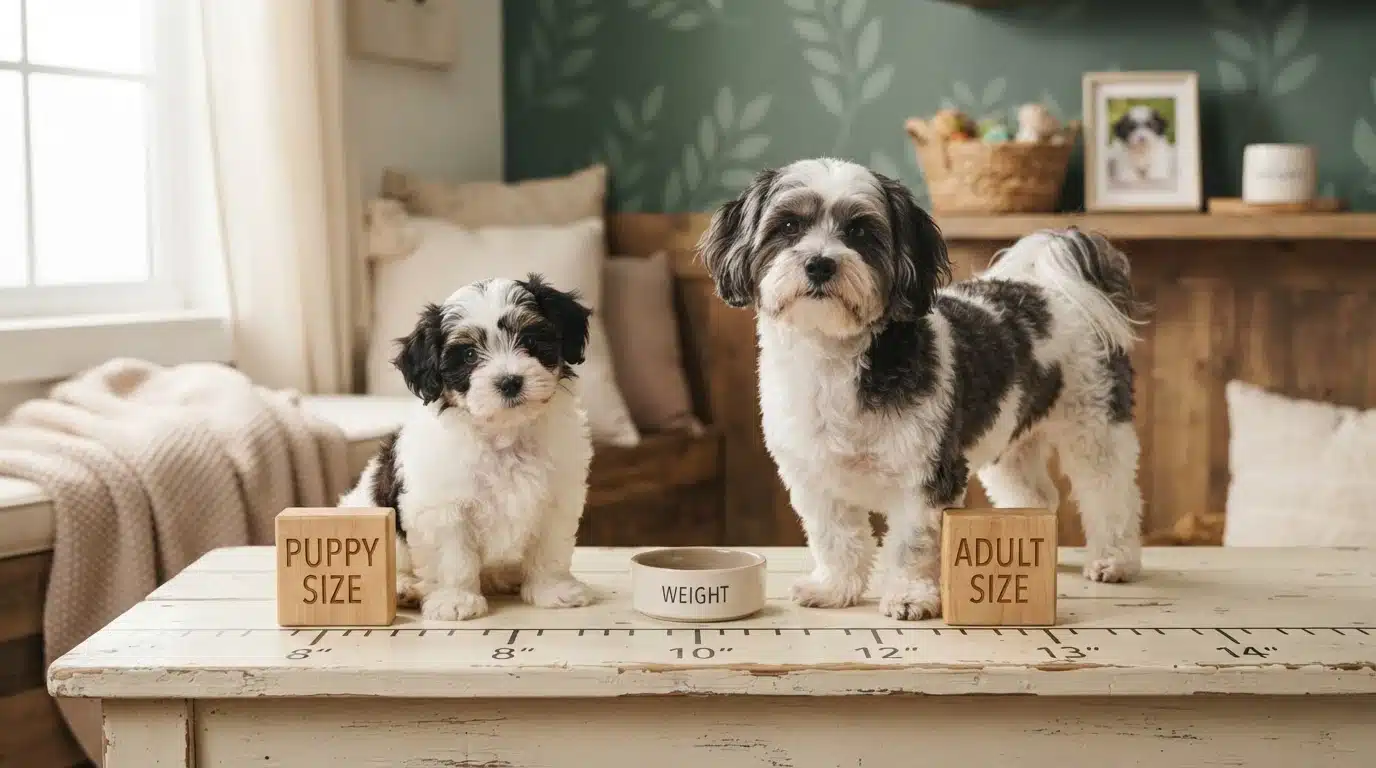
A Havanese fits homes with young children better than almost any small breed. They weigh 7 to 13 pounds, sturdy enough to handle careful kid handling, and their social nature means they want the whole family, not one favorite person. About 30 minutes of daily activity keeps them content. If laughter, play and togetherness describe your house, choose the Havanese.
Considering a similar small breed as an alternative
Neither breed perfect for you? The Cavapoo and Havapoo blend similar temperament with a softer, low-shedding coat, and both appear alongside Havanese in Utah-based programs like Sage Puppies. A Cavalier King Charles Spaniel works well for quieter homes. Whatever you pick, meet the parents and ask about health testing before you commit. The right match shows up in the first meeting, not the photo.

Still torn? Ask Cassie at Sage Puppies. Her owner-managed matching walks you through how a Havanese fits your kids, schedule and home, so your next step is a clear one: start the application and meet your puppy.
Frequently Asked Questions
Q1: havanese vs yorkshire terrier for families
For most families with young children, the Havanese is the easier fit. Its gentle, sociable temperament and moderate energy match busy households. A Yorkshire Terrier suits homes with older, calm kids and adults committed to steady training.
Q2: Are Havanese good with toddlers?
Generally yes, with supervision. They tolerate grabbed hugs and dropped toys better than most small breeds, but no dog should be left alone with a toddler. Teach children to sit on the floor and pet gently.
Q3: Do Yorkies or Havanese bark more?
Yorkies bark more. They were bred as watchdogs and alert to every hallway noise. Havanese also announce visitors, but most settle quickly once the trigger passes.
Q4: Which breed is easier to groom?
Neither is low-maintenance. Havanese need brushing two to three times weekly; Yorkies need daily brushing. Both shed little, and a short puppy cut cuts the work for either breed.
Q5: How much exercise does each breed need daily?
Havanese need about 30 minutes, easily split into short walks and play. Yorkies need daily walks plus mental games, since boredom often turns into barking or chewing.
Q6: Are either of these breeds hypoallergenic?
No. Yorkie hair sheds very little, which helps some allergy sufferers, but dander and saliva still trigger reactions. Spend time with the breed before committing, since no breeder can promise a truly hypoallergenic dog.
Q7: How long do Havanese and Yorkies live?
Both typically live 13 to 15 years. Small breeds generally outlive large ones, and health-tested parents lower, but never remove, hereditary risk.
Conclusion
The Havanese vs Yorkshire Terrier question comes down to your household’s age and energy. The Havanese is the easier family companion: gentle with young kids, moderate energy, and quick to settle after barking. The Yorkshire Terrier suits homes with older, calm children and owners who enjoy steady training and grooming. Neither breed is hypoallergenic or maintenance-free, and both live 13 to 15 years. Match the dog to your kids, schedule and living space, ask breeders for health-test paperwork, and choose the temperament that fits the life you actually live.