Quick Summary: Before buying a puppy, demand a specific, week-by-week socialization plan with records, not just vague claims like ‘socialized’ or ‘raised in-home.’ The key window is the first three months, and exposure must be gradual, reward-based, and paced to each puppy’s comfort, with rest and hygiene prioritized. Ask for written logs, videos, and transition guidance, and watch for red flags like secrecy, forced handling, or fear-based methods. A thoughtful breeder will match the puppy to your family and provide clear proof of safe, positive experiences.
Before you reserve a small companion puppy in Arkansas, ask what happened when the litter heard a vacuum, walked on tile, met a visitor, or had its paws gently handled. “Socialized” alone tells you very little.
The hard part is separating a real puppy socialization plan from a vague sales claim. Good early exposure must be safe, age-right, repeated, and matched to each puppy’s response.
This guide shows you how to review a breeder’s puppy socialization plan, ask for proof, and spot gaps before you commit. You will also get a practical puppy socialization checklist for socializing new puppy needs after homecoming.
A thoughtful puppy socialization plan supports the calm, adaptable companion your family hopes to bring home.
Start With the Plan, Not the Program Name
Ask When the Plan Begins and How It Progresses
Ask for a week-by-week outline before you focus on a breeder’s program name. The key social period is the first three months, according to the American Veterinary Society of Animal Behavior.
A clear plan should show how puppies move from calm handling to safe, positive new experiences.
- Early handling: gentle touch of paws, ears, mouth, and body.
- Home sounds and surfaces: vacuum noise, doors, rugs, grass, and safe steps.
- People and routines: age-appropriate visits, grooming, car rides, and rest alone.
Ask what staff watch for during each step. A puppy that freezes, hides, or avoids contact needs a slower pace, not more pressure.
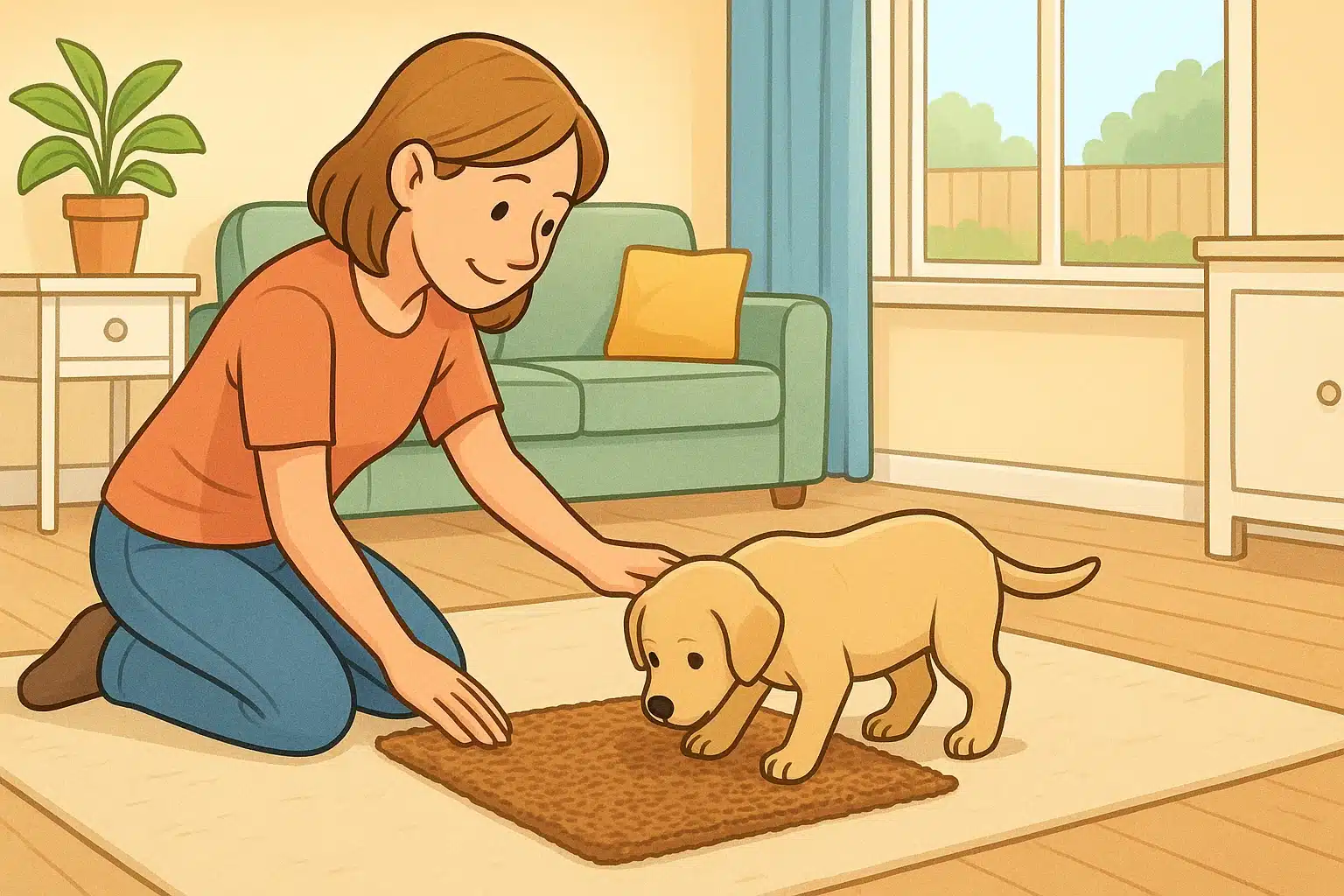
A good plan balances new experiences with naps, clean spaces, and each puppy’s comfort level.
| Ask | Strong answer |
|---|---|
| When does it start? | A specific age and routine |
| How does it change? | New experiences added gradually |
| What if a puppy seems worried? | The breeder adjusts the activity |
Treat Labels as Clues, Not Proof
Terms like puppy culture, enrichment, or raised in-home can be useful clues. They are not proof by themselves.
Ask for real examples, short videos, records, and a clear explanation of safe exposure. Good socialization is more than putting puppies near busy activity. It should build calm, willing responses through graded, positive practice, as AVSAB explains.
Look for answers that cover:
- What each puppy has experienced
- How the breeder keeps spaces clean and safe
- How they share transition guidance with your family
Also Read: Puppy Care Blog & Resources | Sage Puppies
Check Whether the Experiences Match Family Life
A strong plan prepares a puppy for the life you will actually share, not just for cute photos. Ask for specific examples, dates, and notes on each puppy’s response.
People, Children, and Calm Social Contact
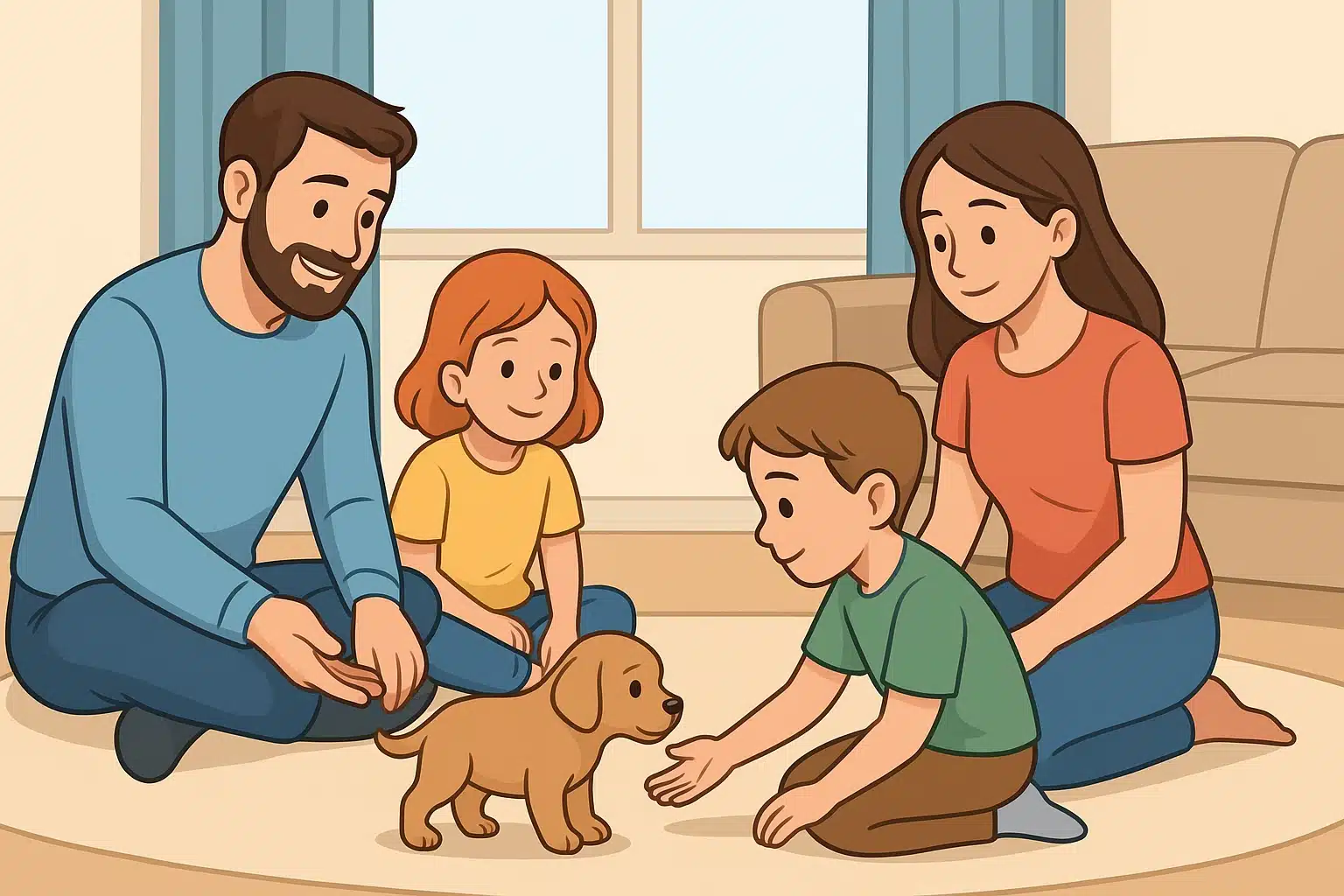
Ask who meets the puppies and how those meetings stay calm. A good plan includes adults of different ages, gentle children, and quiet time with familiar people.
Look for:
- Supervised child contact, never chasing or rough play
- Choice to approach, retreat, or rest
- Rewards for relaxed greetings
- Notes on each puppy’s comfort level
The AVSAB socialization guidance stresses safe exposure without pushing a puppy into fear or avoidance.
Ask, “What do you do if a puppy hangs back?” The right answer includes distance, patience, and positive rewards.
Handling, Grooming, and Veterinary Readiness
Small companion dogs need routine brushing, nail care, ear checks, and gentle body handling. Ask whether the breeder briefly handles paws, ears, mouth, tail, and coat while pairing each step with calm praise or treats.
A useful record states:
- What handling occurred
- How often it happened
- Which areas each puppy finds sensitive
- How the puppy responded
This groundwork matters. AVSAB recommends minimal stress and force-free care during veterinary visits in its positive veterinary care statement.
Sounds, Surfaces, Objects, and Everyday Places
Family life includes vacuums, doorbells, kitchen sounds, car rides, stairs, grass, tile, rugs, and crates. Ask what the puppy has experienced and whether exposure was gradual.
| Experience | What to verify |
|---|---|
| Household sounds | Low-volume, short sessions with calm recovery |
| New surfaces | Safe access to rugs, grass, tile, and textured mats |
| Travel and crate | Brief, positive practice rather than forced confinement |
A plan should build confidence, not create overwhelm. Request videos or a written log, then continue the same calm routine after pickup or delivery.
Also Read: 10 Adorable Havapoo Colors You Need to See (2026)
Evaluate the Method: Positive, Gradual, and Puppy-Led
Look for Relaxed Engagement and Recovery
A good plan builds confidence, not just exposure. Ask to see puppies meet a new sound, surface, visitor, or handled object. Watch the puppy, not the sales pitch.
Look for:
- Loose body posture and normal breathing
- Curiosity, play, sniffing, or choosing to approach
- A brief startle followed by a quick return to normal activity
- Space to move away and try again
A puppy can be cautious. That is not a failure. The key is whether the caregiver notices stress and lets the puppy recover at its own pace. The AVMA notes that gradual, controlled exposure helps dogs feel more at ease around people and animals. Read its socialization guidance.
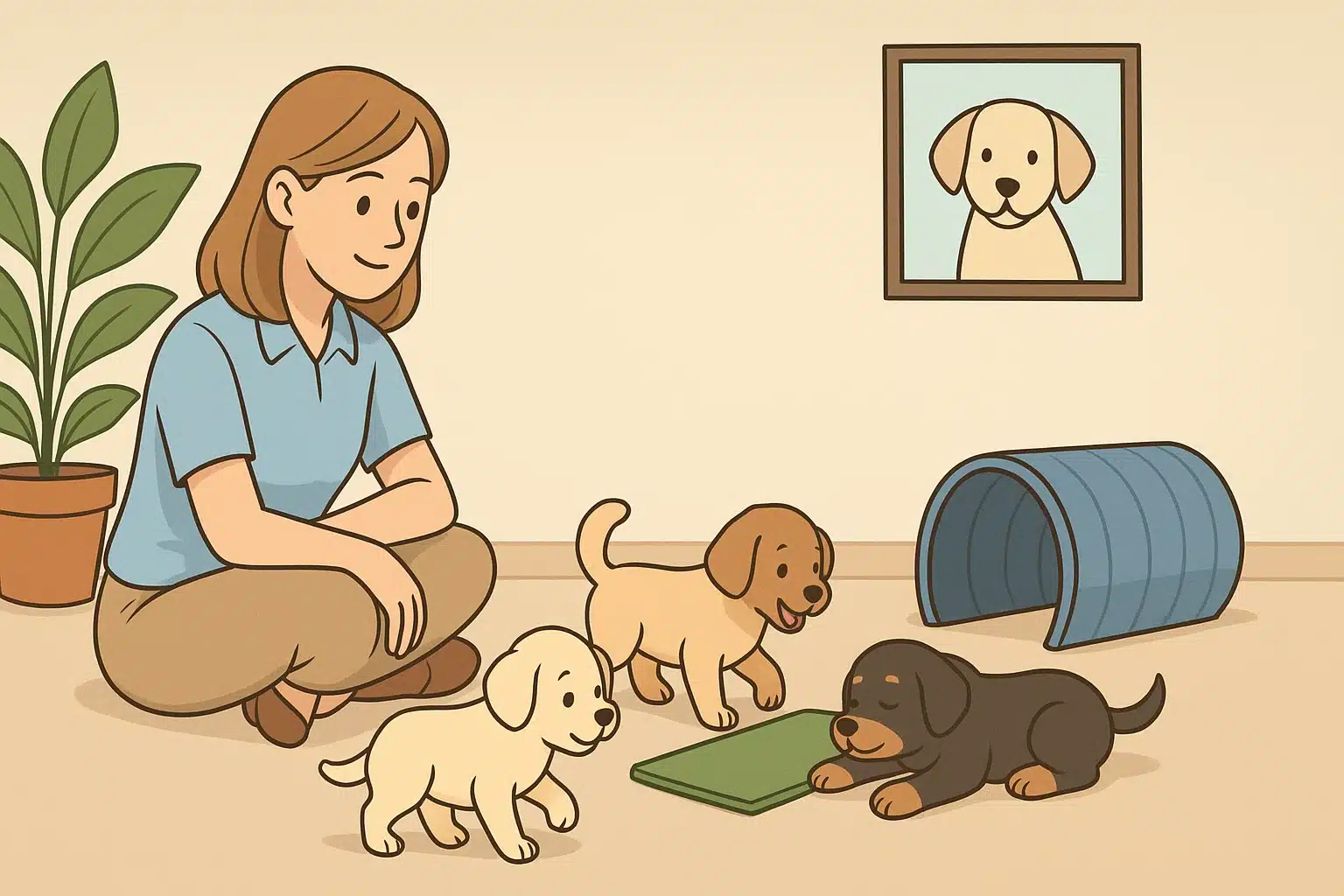
A puppy frozen in place, repeatedly hiding, or being held near a scary stimulus is not being confidently socialized.
Notice How the Caregiver Handles Hesitation
Ask, “What do you do when a puppy seems unsure?” A thoughtful answer should include distance, choice, and a simpler version of the activity.
| Helpful response | Red flag response |
|---|---|
| Pauses and lets the puppy observe | Pushes the puppy closer |
| Uses food, play, or a calm voice | Calls fear “being stubborn” |
| Ends on a calm note | Forces repeated contact |
The caregiver should never flood a puppy with noise, strangers, or handling until it stops reacting. Quiet support teaches more than pressure.
Confirm That Positive Reinforcement Guides the Plan
Ask what rewards the puppies receive for calm choices. Food, gentle praise, play, and rest breaks are all useful.
A sound plan also avoids startling corrections, leash jerks, or “dominance” tactics. Veterinary behavior experts report that reward-based training offers the most benefit with the least harm to welfare. See the AVMA summary.
- Ask for real examples of rewards used.
- Ask how activities change for shy puppies.
- Confirm the plan continues after pickup or delivery.
Ask How the Plan Protects Health and Welfare
Ask What Safety Boundaries Are in Place
A good plan does not mean exposing puppies to everything. It means choosing safe, short, positive experiences and stopping before a puppy feels overwhelmed.
Ask the breeder:
- How do you screen visitors and visiting dogs?
- Which areas are cleaned between litters and activities?
- How do you prevent contact with unknown dogs or public dog spaces?
- What signs tell you a puppy needs a break?
- Do you adjust activities for a shy or smaller puppy?
Puppies face higher disease risk in group settings because their immune systems are still developing. The AVMA explains these risks, including germs spread through shared surfaces, feces, bowls, and close contact.
Watch for clear answers. “We socialize them a lot” is not a health plan. A responsible breeder can explain hygiene, supervision, visitor rules, and how they respond if a puppy seems stressed.
| Ask about | Strong answer |
|---|---|
| New dogs | Known, healthy, age-appropriate contact only |
| Surfaces | Cleaned, dry, and managed between use |
| Puppy response | Activity stops or changes when stress appears |
Make Sure Rest Is Part of Socialization
Social time should alternate with sleep, quiet handling, meals, and time with littermates. A puppy that is always “on” may become tired, mouthy, or uneasy.
Ask whether each puppy can opt out and rest in a calm area. The AVMA review of puppy socialization stresses exposure at the puppy’s own pace, without signs of anxiety or struggle.
The goal is comfort, not a packed calendar. Calm recovery time helps a puppy process new experiences.
Also Read: Havanese, Havapoo & Cavapoo Puppy Care Blog
Request Evidence You Can Actually Review
Ask for a Written Overview and Sample Record
A real plan names what happens, when it starts, and how staff watch each puppy’s response. Ask for a written overview plus one redacted sample record from a past litter.
Look for notes on:
- Handling by adults and children
- New sounds, surfaces, toys, and gentle grooming
- Crate or travel practice
- Each puppy’s comfort level and recovery after something new
The AVMA advises breeders to provide puppies with socialization and early training, along with records and client care guidance. Its breeder guidance supports asking for proof, not promises.
A polished checklist alone is not enough. Ask how the breeder records a puppy that needs more time or shows worry.
Use Photos and Videos as Supporting Evidence
Photos and short videos should back up the written record. Request dated clips from normal routines, not only posed puppy photos.
| Evidence to request | What it can show |
|---|---|
| Handling video | Calm, gentle contact and puppy body language |
| Home routine clip | Clean setting, people, rest, and play |
| New-object session | Whether exposure is slow and positive |
Watch for loose bodies, willing approach, and breaks when puppies tire. A clip cannot prove everything, but it can confirm the plan is being used.
Ask How Individual Puppies Are Matched
Ask who observes each Havanese, Havapoo, or Cavapoo puppy, what they track, and how they connect those notes to your home. The AVMA says breeders should know each dog well enough to match temperament and needs to a family.
Ask direct questions:
- Which puppy is more settled with children?
- Who recovers fastest from a new sound?
- Which puppy needs a quieter start?
A careful breeder may steer you away from your first color choice. That can be a sign they are prioritizing fit.
Also Read: Arkansas Puppy Seller Reviews: Checking Experience With Your Breed
Watch the Puppy, the Litter, and the Raising Environment
Green Flags in Puppies and Their Environment
Watch the puppy interact before you decide. A healthy, well-started puppy may pause around a new person, then show interest, play, or recover quickly after a small surprise.
Look for:
- Clear eyes, a clean coat, and normal movement
- Gentle handling by the breeder, with no forced posing
- Littermates that play, rest, and eat in a calm routine
- Clean bedding, fresh water, safe toys, and separate potty space
- Age-appropriate exposure to household sounds, people, surfaces, and calm handling
- A mother dog who seems comfortable with her caregiver, when her presence is appropriate
The AVMA socialization review notes that positive, varied exposure should begin by or before three weeks of age.
| What you see | What it can suggest |
|---|---|
| Puppy explores after a brief pause | Healthy recovery from novelty |
| Clean, lived-in family space | Daily care and safe routine |
| Breeder explains each puppy’s response | Individual attention, not a sales script |
A bold puppy is not always the best match. Ask which puppy fits your children, schedule, and experience.
Red Flags That Need Follow-Up or a Pause
Pause if the breeder will not show where puppies are raised, live or by a clear remote visit. Ask why before moving forward.
Follow up on:
- Strong odor, dirty coats, diarrhea, coughing, or crowded pens
- Puppies that freeze, panic, or cannot settle after gentle handling
- No proof of regular cleaning, health records, or socialization notes
- Claims that every puppy has the same temperament
- Pressure to reserve before your questions are answered
A clean, safe, low-stress space and early training are core AVMA breeder best practices.
One shy moment is not a verdict. Repeated fear, poor hygiene, or secrecy deserves a clear answer or a walk away.
Confirm the Handoff From Breeder to Family
Ask for the Puppy’s First-Weeks Transition Guidance
A good handoff includes more than a puppy and paperwork. Ask for clear, written guidance that helps your family keep the first days calm and familiar.
Your breeder should explain:
- Current food, meal size, and feeding times
- Sleep, crate, and potty routine
- What the puppy has already experienced
- How to introduce children, visitors, and resident pets
- Vaccine and deworming records, plus the next care steps
- What normal settling-in stress may look like
The AVMA advises breeders to give clients care instructions, socialization guidance, and medical records. Ask questions before pickup, not after a tired puppy arrives home.
Tip: Keep the first 48 hours quiet. Follow the puppy’s known routine before slowly adding new people, rooms, and outings.
Clarify Pickup, Delivery, and Ongoing Communication
Confirm the exact pickup or delivery plan in writing. For local Sage Puppies families near South Jordan, ask who will meet you, what to bring, and when the puppy last ate.
For nationwide delivery, confirm the route, carrier, travel crate, weather plan, health paperwork, and who contacts you if plans change. Interstate travel may require a certificate of veterinary inspection, and destination rules can differ, according to the AVMA’s travel guidance.
| Ask Before Handoff | Clear Answer Looks Like |
|---|---|
| Arrival time | A specific window and contact person |
| Travel documents | Copies provided before or at handoff |
| Post-arrival help | A direct way to ask routine questions |
Also Read: Georgia Puppies: How to Assess Early Puppy Socialization
Use the Checklist to Make a Calm Buying Decision
The Eight-Point Buyer Checklist
Use this list before sending a deposit. The key socialization window is the first three months, and each experience should stay safe and free from overwhelm, according to the AVSAB socialization statement.
- Ask when handling begins.
- Request the weekly socialization plan.
- Confirm new people, sounds, surfaces, and gentle grooming.
- Ask how the breeder watches each puppy’s comfort level.
- Check that exposure uses rewards, not force.
- Review health, vaccine, and deworming records.
- Ask what routine continues during travel or pickup.
- Get written transition guidance for your first weeks home.
A long activity list is not enough. Good socialization moves at the puppy’s pace and allows rest.
When to Proceed, Ask More, or Walk Away
| Decision | What you see | Next step |
|---|---|---|
| Proceed | Clear records, specific answers, calm puppy responses | Reserve with confidence |
| Ask more | Vague details or missing routine notes | Request proof before paying |
| Walk away | Pressure, secrecy, or fear-based handling | Choose another breeder |
A thoughtful breeder welcomes careful questions.

Choose a puppy program that can explain the socialization behind each pup. Sage Puppies raises Havanese, Havapoo, and Cavapoo puppies at home with health-tested parents, early socialization, and clear adoption guidance. View available puppies and take the next step with confidence.
Frequently Asked Questions
Q1: What should a puppy socialization plan include?
It should cover safe, positive exposure to people, handling, home sounds, surfaces, grooming, car rides, and age-appropriate dogs. Ask for dates, routines, and notes on each puppy’s response.
Q2: How do I know if my puppy is well socialized?
Look for calm curiosity, quick recovery after a new sound, and comfort with gentle handling. A well-started puppy may be cautious, but should not shut down or panic.
Q3: What are the signs of poor puppy socialization?
Watch for freezing, nonstop barking, hiding, biting from fear, or slow recovery after mild stress. One moment does not define a puppy, so ask how staff supports and tracks progress.
Q4: Can I ask for socialization records before reserving?
Yes. A thoughtful breeder should explain what each puppy experienced, when it happened, and how the puppy responded.
Q5: Does early socialization guarantee an easy adult dog?
No. It provides a strong start. Your home routine, training, health, and gentle exposure after pickup still shape adult behavior.
Conclusion
A strong socialization plan is specific, safe, and easy to verify. Ask what puppies experience, when it begins, how staff read each puppy’s comfort level, and what records go home with you.
The first three months are a key learning window, according to the AVSAB puppy socialization statement. Still, more exposure is not always better.
Choose a breeder who uses calm, reward-based practice, avoids overwhelming puppies, and prepares families for the work after pickup or delivery. A well-raised Havanese, Havapoo, or Cavapoo puppy needs a thoughtful start and steady support at home.