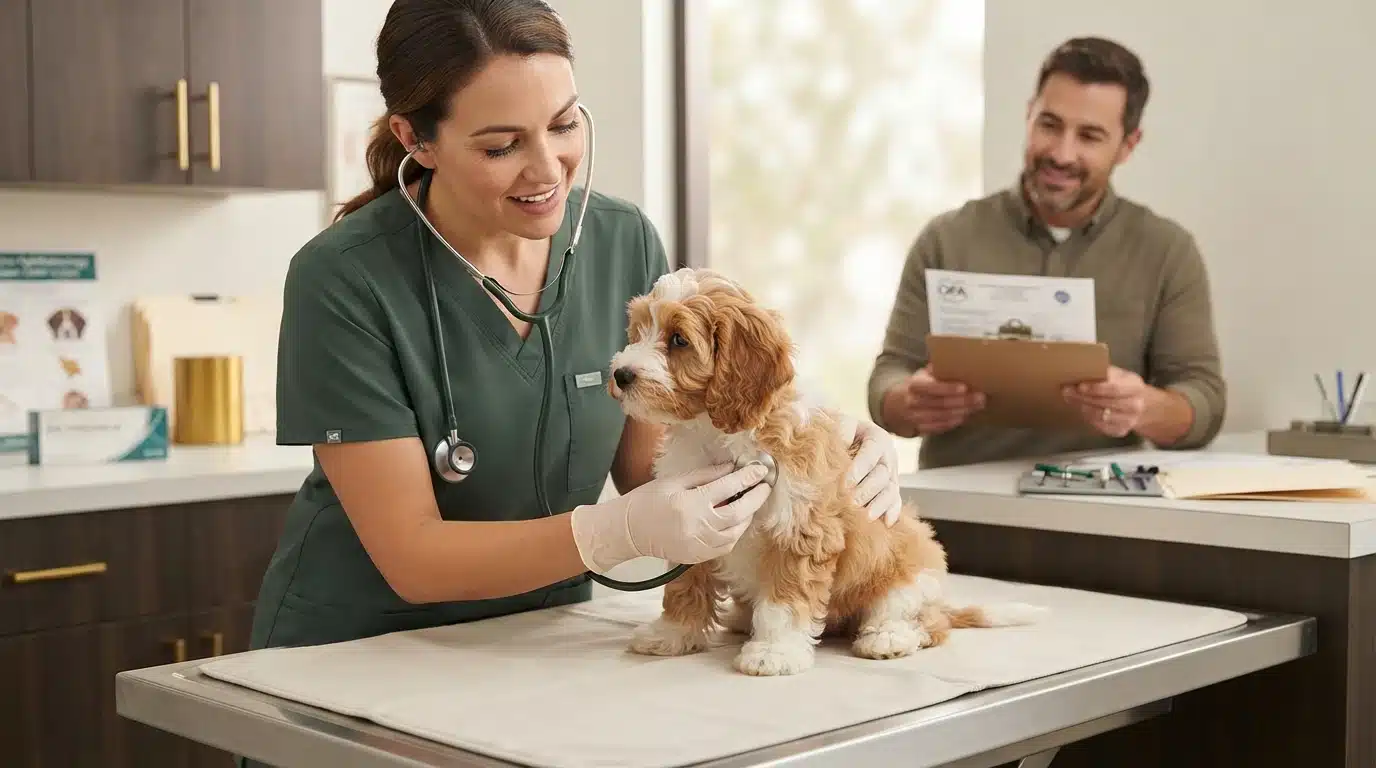
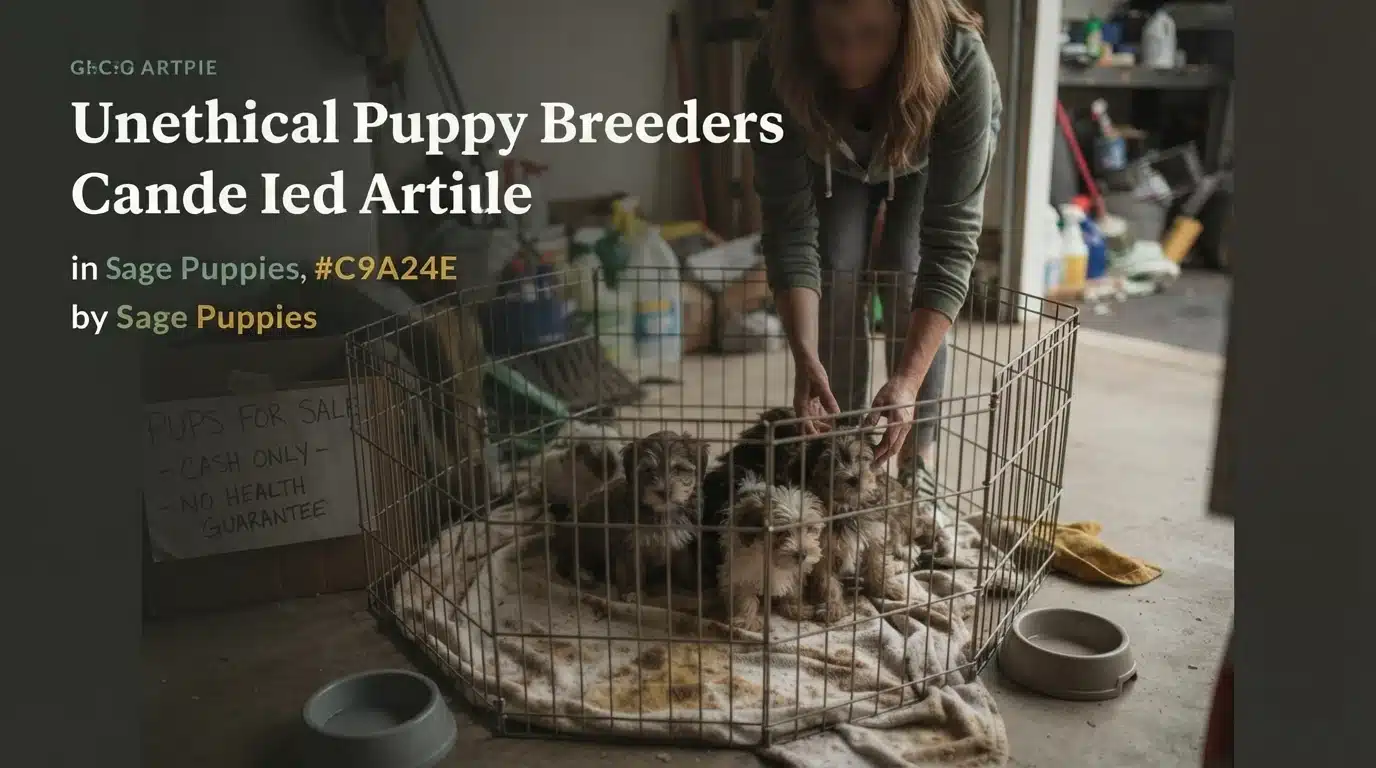
A search for puppies Georgia near me often leads to a claim that a litter grows up with children, home sounds, and daily handling. Ask what those moments looked like, when they began, how each puppy reacted, and how the breeder knew the exposure helped rather than stressed the puppy.
That detail matters. “Socialized” is easy to say, but it can hide rushed, random, or overwhelming exposure. Families looking for puppies Georgia near me need a clear way to judge care before they commit.
This guide shows you what meaningful early socialization includes, which questions reveal real routines, and what warning signs deserve a closer look. It also connects early experiences to health practices, temperament, pickup, and delivery. Sage Puppies raises small companion puppies in a home setting, so this guidance reflects the careful, family-first standards qualified puppies Georgia near me buyers should expect.
Start With the Developmental Timeline, Not the Marketing Label
“Socialized” should describe daily care, not a sales phrase. Ask what happened at each age, how often, and how each puppy responded.
Birth to Two Weeks: Gentle Handling and Individual Care
Newborn puppies mainly sleep and nurse. Their eyes and ears are still closed, so this is not the time for busy visits or big challenges. Thoughtful care means a clean, calm space, close time with their mother, and brief, gentle handling that respects each puppy’s needs.
- Ask who handles the litter each day.
- Ask how the breeder watches feeding, warmth, and weight gain.
- Expect calm care, not claims of a “fully socialized” newborn.
A breeder should explain routines clearly without turning normal newborn care into a promise about adult temperament.
Days 3 to 16: Understanding ENS Without Overpromising
Early Neurological Stimulation, often called ENS, refers to short, age-specific exercises sometimes used from day 3 through day 16. AKC guidance notes this timing, but ENS cannot replace sound breeding, health care, or later social experiences.
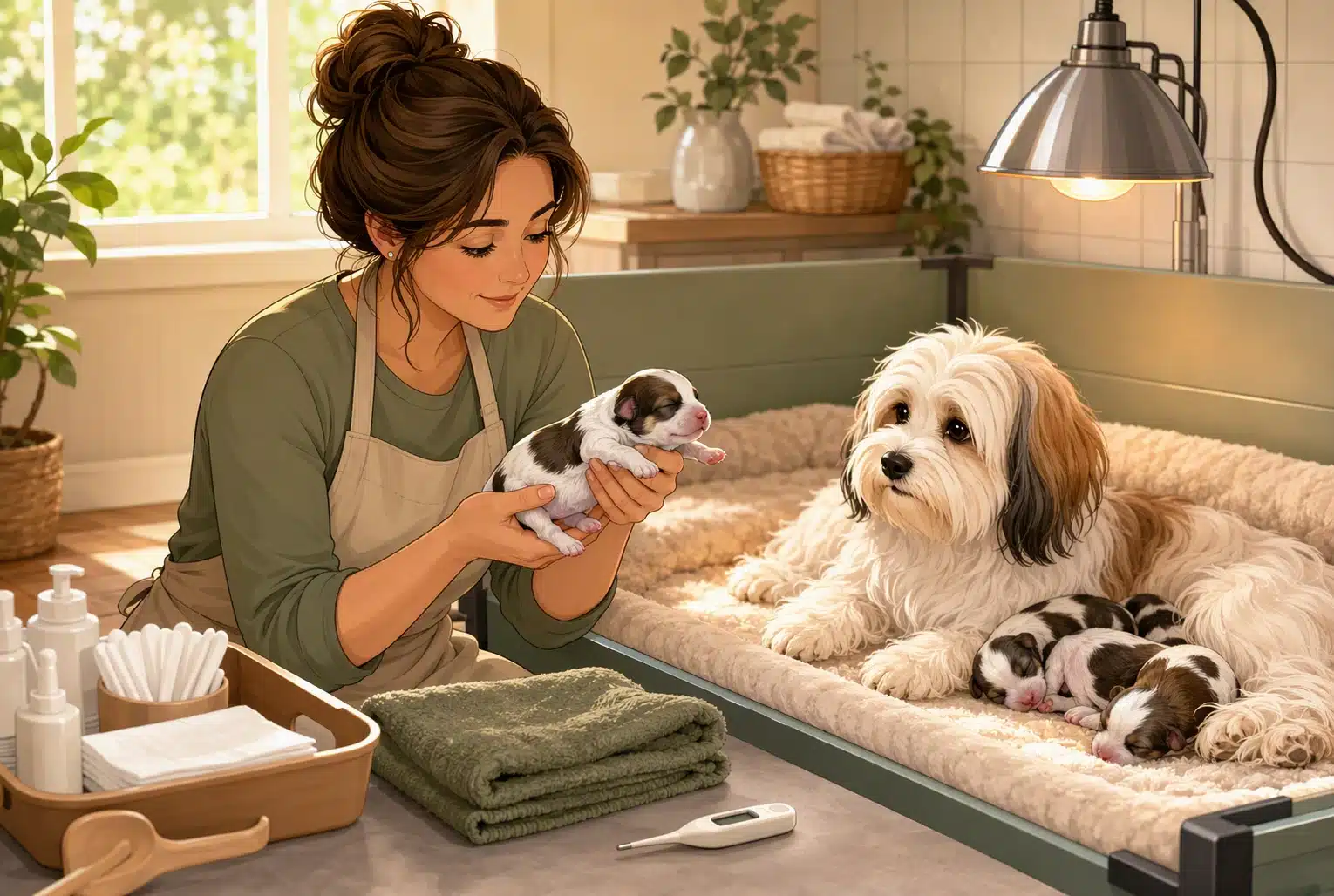
Ask whether the breeder uses ENS, what exercises they use, and whether they stop if a puppy seems stressed. A good answer is specific and measured.
Three to Eight Weeks: The Main Observation Window
At about three weeks, puppies begin to see, hear, move, and interact more. The AKC describes this as the start of a key social period.
Look for gradual, positive exposure to:
- Gentle people of different ages
- Safe surfaces, sounds, toys, crates, and grooming
- Littermate play and rest breaks
| Ask the breeder | Strong answer |
|---|---|
| What did puppies experience? | A dated, clear list with routines |
| How did you assess response? | Notes on curiosity, recovery, and comfort |
| What if one puppy was unsure? | Slower exposure, never forced contact |
Also Read: Puppies for Sale in Georgia: Find Healthy Local Litters
Look for a Real Program Across People, Places, and Everyday Life
People and Gentle Handling
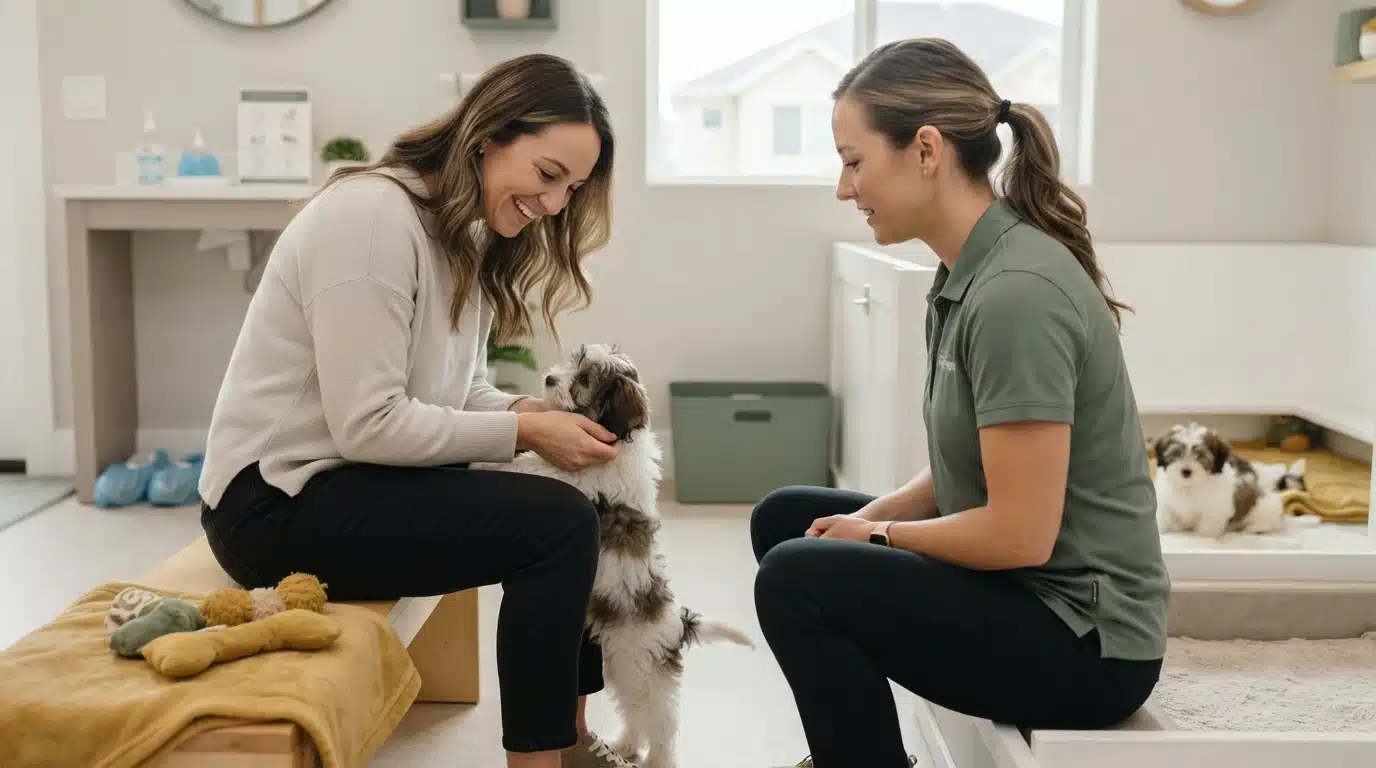
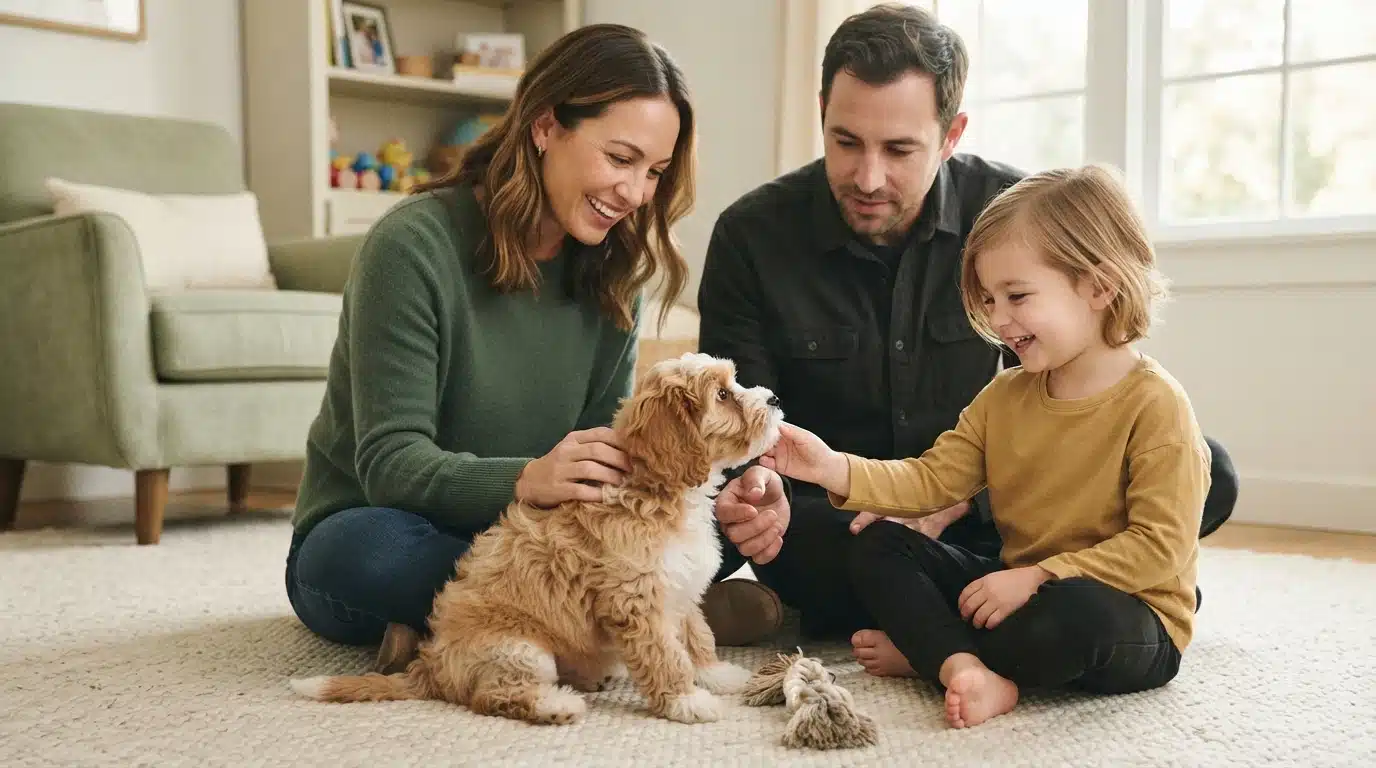
Ask what handling happens every day, not just whether puppies are “well socialized.” A real plan includes calm, brief touch from different adults, plus age-appropriate exposure to respectful children.
Look for practice with:
- Holding and settling
- Touching paws, ears, and mouth
- Being gently picked up and placed down
- Short, happy grooming sessions
The AVSAB puppy socialization statement supports early, safe exposure to people and gentle body handling.
Household Sounds, Surfaces, and Objects
A home-raised puppy should meet normal life in small, positive steps. Ask which sounds and surfaces the litter has experienced, and how the breeder watches each puppy’s response.
| Experience | What to ask |
|---|---|
| Household sound | Have puppies heard vacuum, doors, TV, and kitchen activity? |
| New surfaces | Have they walked on tile, rugs, grass, and non-slip mats? |
| Everyday objects | Have they seen brooms, bags, toys, and mobility aids calmly? |
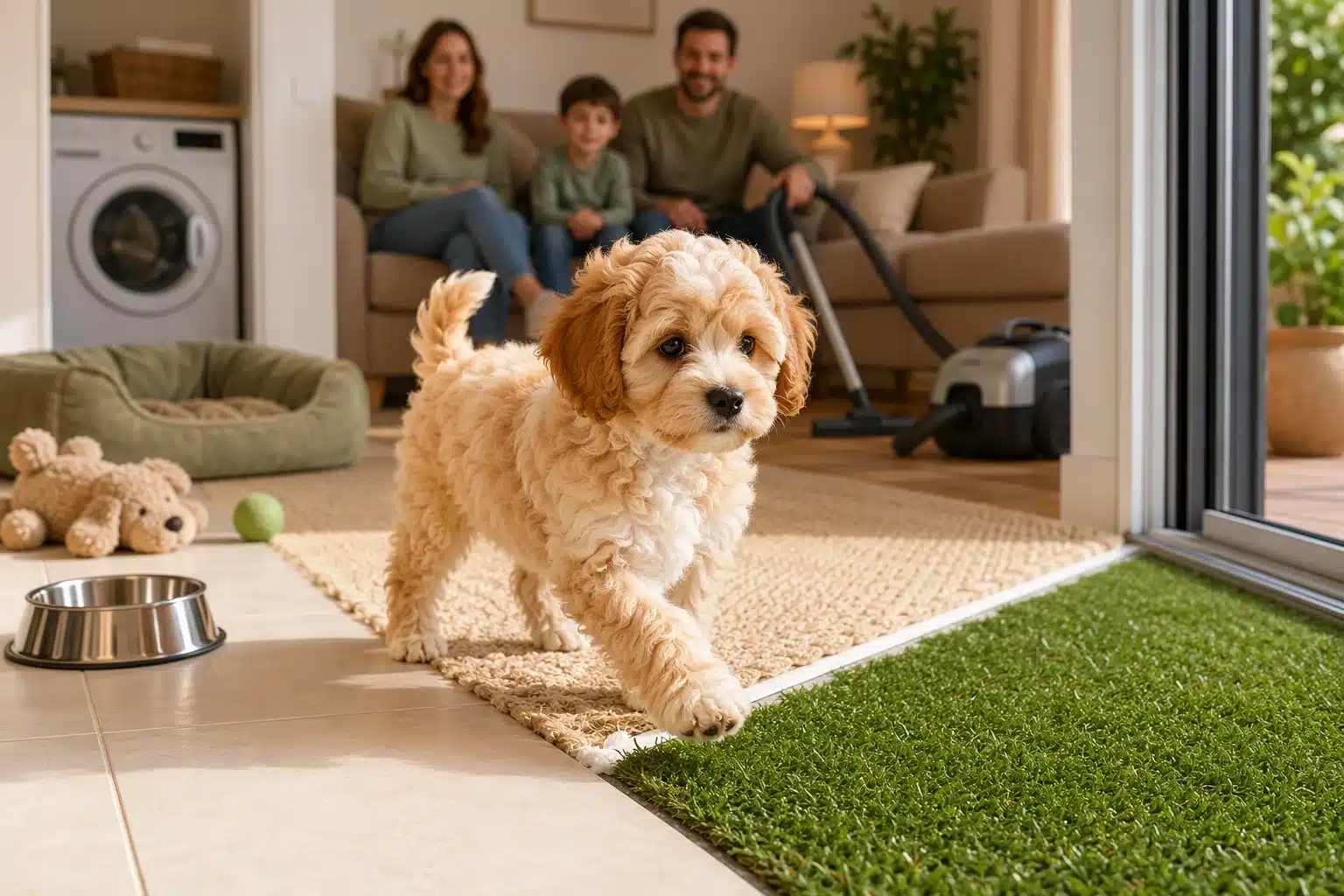
A puppy who pauses, then chooses to investigate, is learning. A puppy pushed through fear is not.
Crate Comfort, Grooming, and Travel Preparation
Crate exposure should feel safe, never like punishment. Ask whether puppies nap with an open crate, eat treats nearby, and spend short calm periods inside.
A useful early routine includes:
- Entering the crate by choice.
- Brief brushing and face wiping.
- Gentle nail and paw touch.
- Short car rides in a secure carrier or crate.
This preparation matters for South Jordan pickup, Georgia travel, or nationwide delivery. AVSAB notes that crate comfort can reduce stress during car or air travel.
Safe Animal and Environmental Experiences
Ask about controlled contact with healthy, well-mannered adult dogs, not busy dog parks or random public floors. Safe exposure is gradual, clean, and matched to the puppy’s comfort level.
A breeder should be able to explain:
- Which animals puppies met
- How they kept experiences low-stress
- What they do if a puppy seems unsure
Good socialization builds choice and confidence. It never means overwhelming a puppy to “get used to it.”
Also Read: Reputable Puppy Breeder Near Me: 9 Signs to Trust
Judge the Quality of Each Experience by the Puppy’s Response
The value of early socialization is not the number of sights a puppy has seen. It is whether the puppy felt safe enough to learn from each one.
Green Flags: Curiosity, Recovery, and Relaxation
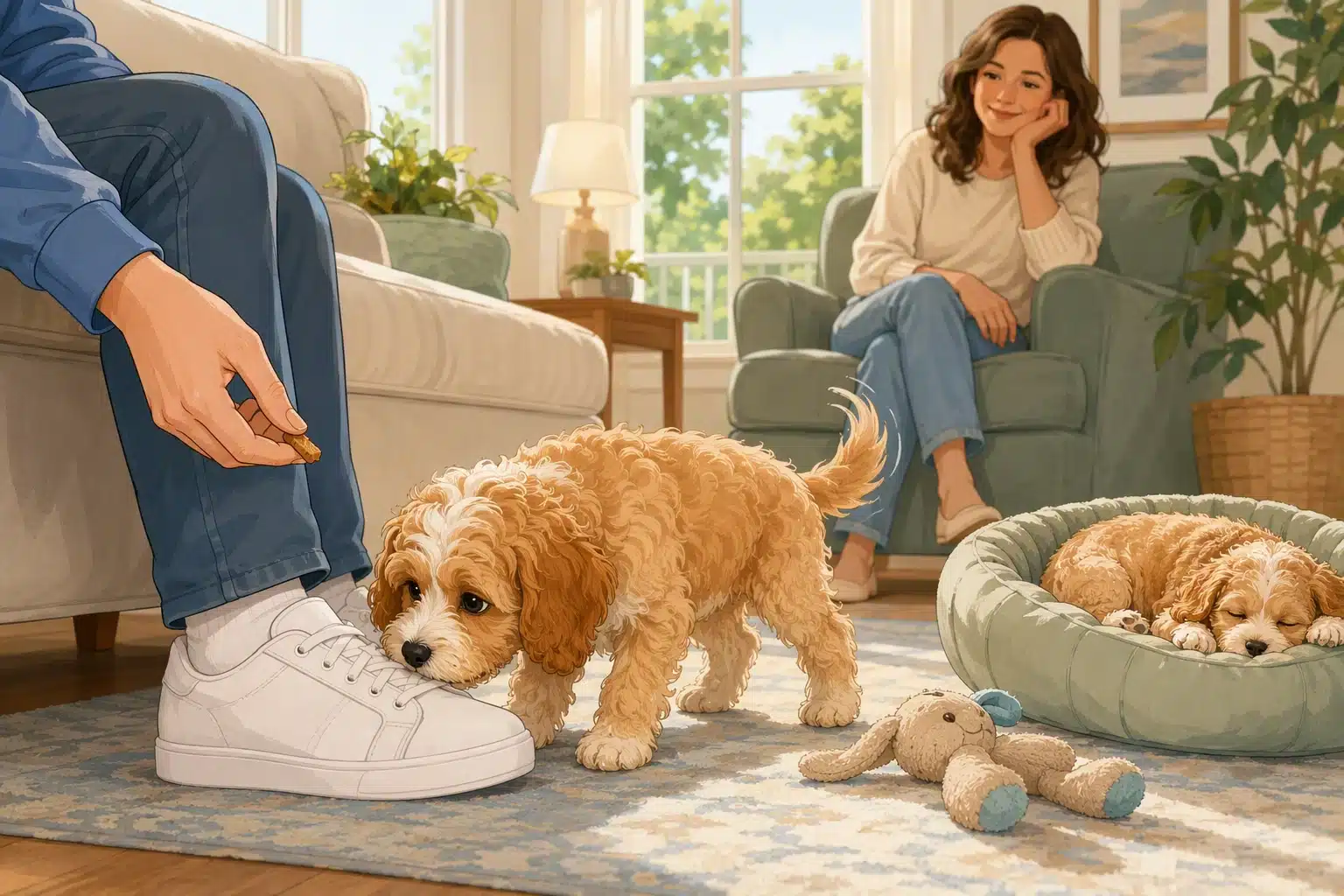
Look for a puppy who chooses to investigate. A brief startle at a new sound is normal. What matters is recovery.
- Sniffs a new object, person, or surface
- Returns to play after a short pause
- Takes a treat or engages with a toy
- Shows a loose body, soft eyes, and normal breathing
- Settles or naps after activity
The AVSAB guide on socialization advises families to watch for relaxation and adjust each experience to the individual puppy.
Yellow Flags: Pausing, Watching, or Needing More Distance
A cautious puppy is not a failed puppy. Pausing to watch can mean the experience needs to move slower.
| Puppy response | What to do |
|---|---|
| Stays still and watches | Give space and let the puppy choose |
| Hangs back from a visitor | Ask the person to sit quietly and toss treats |
| Steps away after a noise | Lower the volume or increase distance |
| Takes a break from play | Allow a calm rest period |
A good breeder does not force confidence. They give the puppy time, choice, and positive support.
Red Flags: Forced Interaction and Overstimulation
Be concerned if a puppy is repeatedly pushed into greetings, crowded play, loud activity, or handling after clear stress signals. Warning signs include freezing, hiding, tucked tail, frantic escape attempts, prolonged trembling, refusal of treats, or failure to settle.
Ask how the breeder responds when a puppy needs a break. The right answer includes quiet space, shorter sessions, and gradual repeat exposure – not “they will get used to it.” The AVSAB position statement warns that socialization should avoid overstimulation marked by excessive fear, withdrawal, or avoidance.
Also Read: How to Check Georgia Puppy Health Records and Vaccination History
Ask Georgia Breeders for Evidence, Not Just Reassurance
Kind words matter, but clear proof matters more. A careful breeder can explain what each puppy experiences, show records, and answer follow-up questions without pressure. This is especially important if you will meet your puppy through delivery rather than at a Georgia home visit.
The Eight Questions Worth Asking
Ask these questions before sending a deposit:
- What handling do puppies receive each day?
- Which people, sounds, surfaces, and rooms do they experience?
- How do you introduce crates, grooming, and car rides?
- What do you do if a puppy seems unsure?
- Can I see dated photos, videos, or a weekly log?
- What health tests were completed for both parents?
- Can I review the puppy’s vet and vaccine records?
- How will pickup or delivery protect the puppy’s routine?
Early positive exposure matters. The AVMA socialization review notes that puppies are most open to new dog experiences from about 3 to 14 weeks.
A breeder should welcome specific questions. Vague answers such as “they are very social” need examples.
What Useful Documentation Looks Like
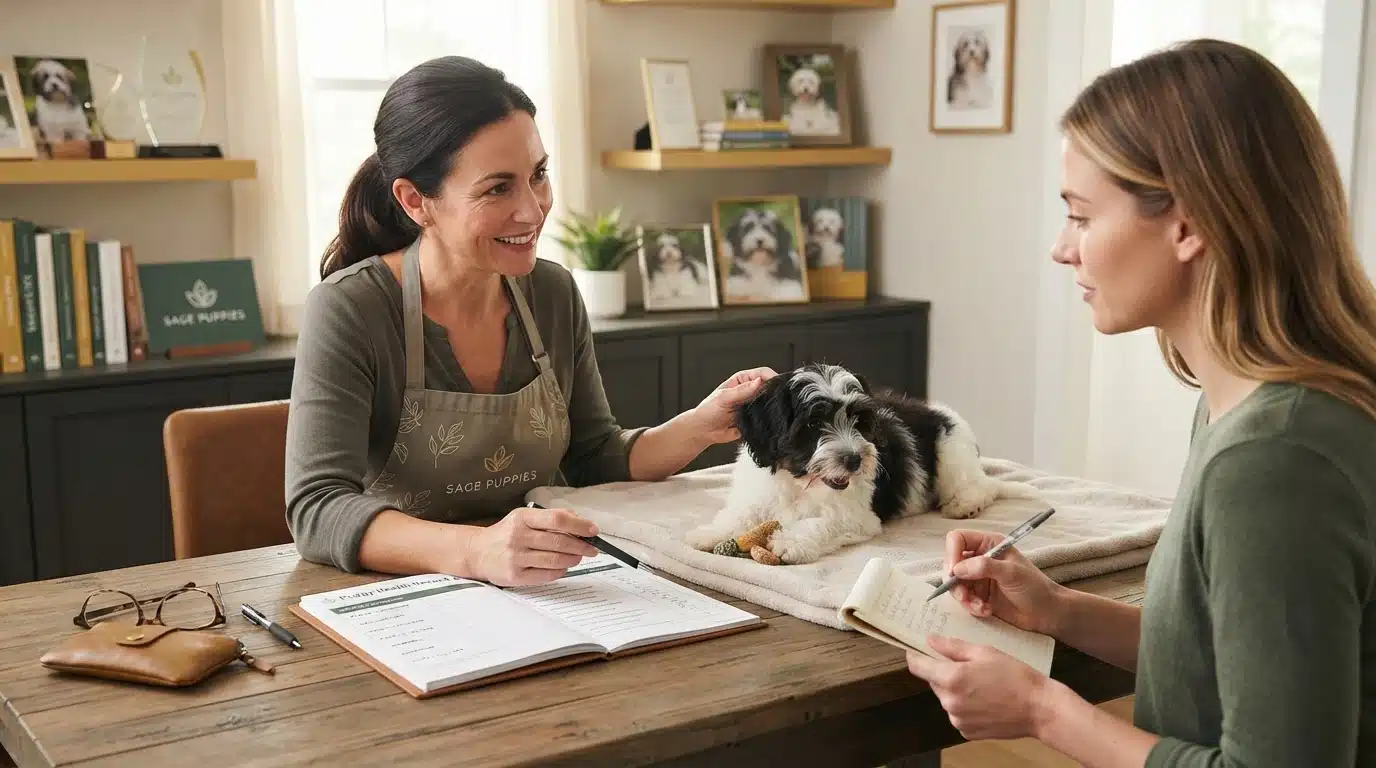
Look for material that connects each claim to a real puppy and date.
| Evidence | What it should show | Why it helps |
|---|---|---|
| Socialization log | Activities, dates, and puppy response | Shows a repeatable routine |
| Short videos | Calm handling, play, grooming, or crate time | Lets you see body language |
| Parent records | Named tests and results | Supports informed decisions |
| Vet paperwork | Exam, vaccine, and deworming details | Gives your veterinarian a starting point |
A health record alone does not prove good socialization. Still, the AVMA says responsible sources should provide current health records and help match puppy temperament to family needs in its pet selection guidance.
How Health Practices Support Socialization
Healthy routines make calm learning easier. Puppies need rest, clean spaces, steady meals, gentle handling, and safe limits around new exposure.
Ask how the breeder manages:
- Sick-puppy separation and cleaning
- Vet checks and vaccine timing
- Sleep between play sessions
- Gradual exposure instead of forced contact
Do not expect a perfectly fearless puppy. A good start means the puppy can recover, explore at its own pace, and accept gentle support.
At Sage Puppies, families should expect clear discussion of parent health testing, early experiences, and the plan for South Jordan pickup or nationwide delivery.
Compare Breeder Claims Without Falling for Common Shortcuts
A Program Name Is Not the Same as a Program
Names like “Puppy Academy” or “Confidence Curriculum” sound reassuring. Ask what happens each week, who handles the puppies, and how the breeder responds if a puppy seems unsure.
A real plan has clear, age-fit steps:
- Gentle handling and grooming practice
- Calm household sounds and new surfaces
- Positive time with trusted people
- Rest breaks, not forced exposure
Ask for examples, not slogans. A breeder should explain the routine in plain language.
A Busy Video Is Not Proof of Positive Exposure
A fast video of puppies around toys, children, and noise can look impressive. It does not show whether each puppy felt safe or had a choice to step away.
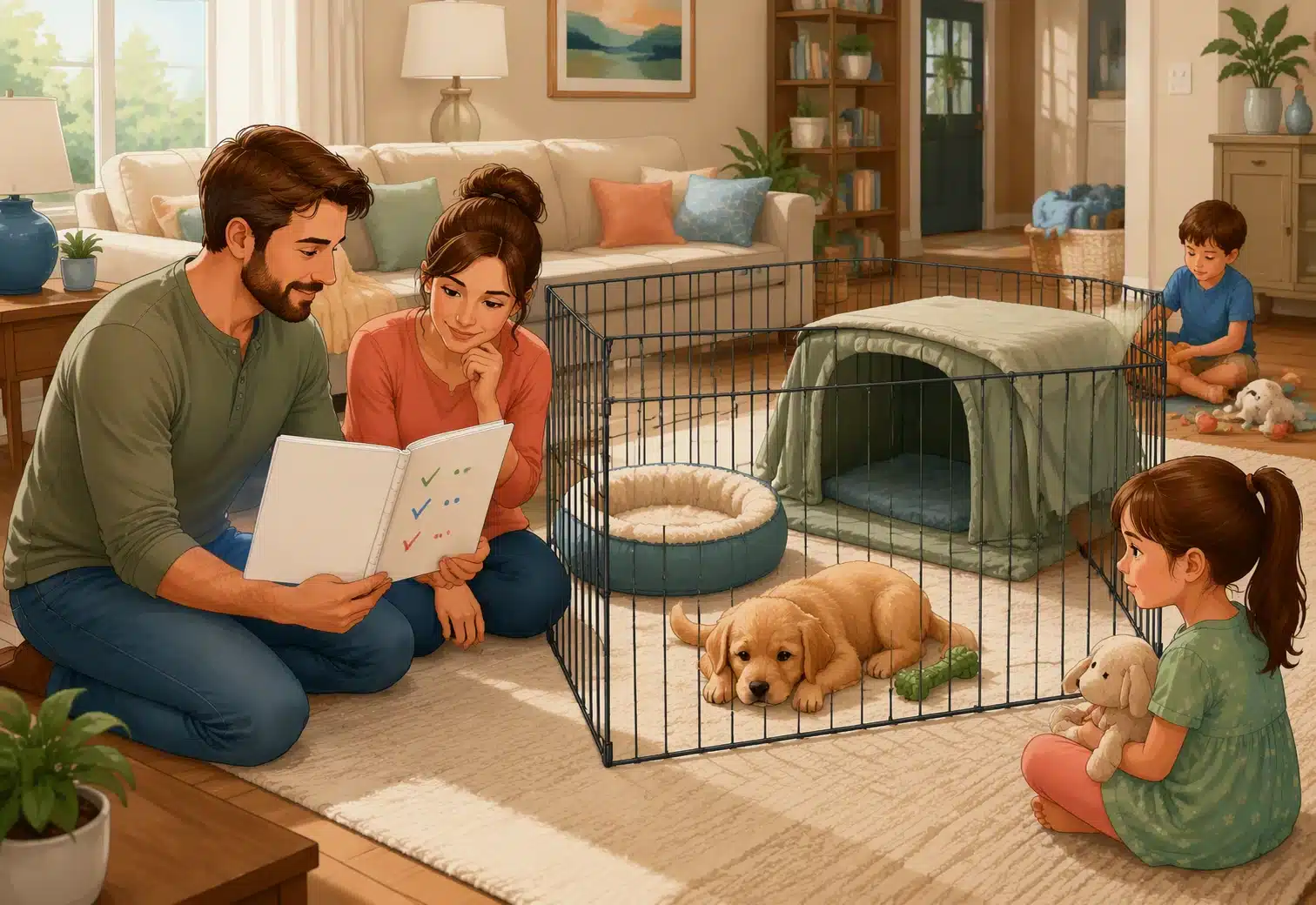
The AVMA socialization review stresses diverse positive early experiences. Watch for loose bodies, curiosity, and calm recovery after a new sound.
| What you see | Better follow-up question |
|---|---|
| Puppies in a crowded room | “How do you prevent overwhelm?” |
| Many toys | “Which new surfaces and sounds are introduced?” |
| Visitor footage | “How do shy puppies get support?” |
A Guarantee Cannot Replace Good Questions
A health guarantee matters, but it cannot show how a breeder makes daily choices. Ask for parent health information, puppy records, temperament notes, and a clear plan for pickup or delivery.
The AVMA advises choosing providers who know each dog and can help match its needs to your family.
- Can you meet or learn about the parents?
- What records come home with the puppy?
- What support is available after placement?
A thoughtful breeder welcomes careful questions. Pressure to reserve before answers is a warning sign.
Also Read: 10 Must-Ask Questions Before Buying a Puppy Locally
Make the Handoff Part of the Socialization Plan
Before Pickup or Delivery
A puppy’s move is a major new experience. Keep the handoff quiet and simple, whether you pick up locally or arrange delivery. Ask for the puppy’s current food, feeding rhythm, sleep routine, and familiar comfort item. Set up a crate or pen before arrival.
- Choose one calm room for the first day.
- Limit greetings to immediate household members.
- Schedule a vet visit and ask about safe outings based on your puppy’s vaccine plan.
A smooth handoff protects the good start your puppy already received. It is not the day for a crowded welcome party.
The First Days in a New Home
Let your puppy rest, eat, potty, and learn your home’s rhythm. Short, kind interactions build trust faster than constant handling. Offer treats for calm choices, such as entering the crate or settling near you.
Watch body language. A tucked tail, freezing, hiding, or turning away means the puppy needs more space. The AVSAB guidance on socialization stresses that exposure works best when it stays positive and matches the puppy’s comfort level.
- Keep introductions brief.
- Let the puppy approach guests first.
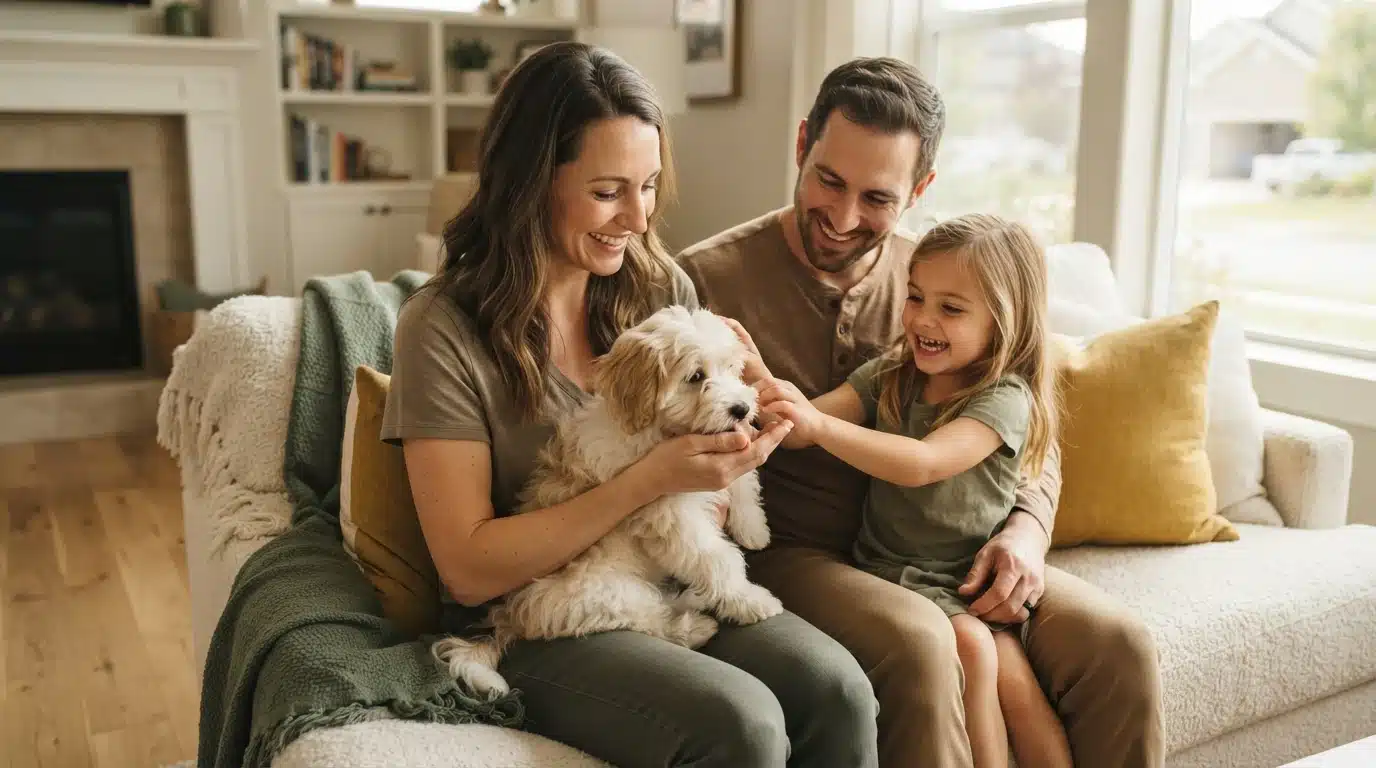
- Give children clear, gentle handling rules.
Build a Safe First-Month Socialization Plan
Add one small new experience each day, then repeat easy wins. Focus on calm, not quantity. The AVSAB puppy socialization statement recommends safe exposure during the first three months while avoiding overstimulation and high-risk dog areas.
| Week | Practice | Keep It Safe |
|---|---|---|
| 1 | Household sounds and handling | Use treats and short sessions |
| 2 | Friendly visitors and car rides | Keep meetings one-on-one |
| 3 | New surfaces and calm streets | Carry your puppy if advised |
| 4 | Puppy class or known healthy dogs | Follow your vet’s guidance |
Avoid dog parks and unknown-dog areas until your vet confirms it is safe.
Also Read: 10 Red Flags to Avoid When Visiting a Local Puppy Breeder
Use a Clear Final Checklist Before You Reserve
The Seven-Point Socialization Checklist
Before you reserve, ask for clear answers, not broad promises. The AVMA recommends asking for a socialization plan that covers what a puppy has experienced and what comes next.
- People: Has the puppy met calm adults and age-appropriate children?
- Handling: Are paws, ears, coat, and mouth touched gently?
- Home sounds: Has the litter heard normal household noise at a safe level?
- New surfaces: Has the puppy explored safe indoor textures and areas?
- Positive pace: Are treats, play, and rest used instead of forced exposure?
- Health records: Can the breeder explain parent health testing and puppy care?
- Transition plan: Will you receive guidance for pickup or delivery and the first week home?
A thoughtful breeder can explain the why behind each step, not just say puppies are socialized.
When You Are Ready to Take the Next Step
A reservation should follow a good conversation, not replace one. Confirm the puppy fits your household, schedule, and travel plan. Ask how Sage Puppies supports South Jordan pickup or nationwide delivery, then prepare a quiet sleep space, food plan, and veterinary visit.
Early learning continues after homecoming. The AVMA notes that positive exposure is most useful during the early puppy window, so keep new experiences calm and gradual.
| Before reserving | Confirm |
|---|---|
| Family readiness | Everyone agrees on daily care |
| Breeder answers | Details are specific and consistent |
| Home plan | Supplies and a safe routine are ready |
Also Read: 10 Adorable Havapoo Colors You Need to See (2026)

Ready to ask better socialization questions? Sage Puppies raises Havanese, Havapoo, and Cavapoo puppies in a home setting with health-tested parents and early family exposure. Review available puppies, ask about each puppy’s routine, and choose local pickup or nationwide delivery with confidence.
Frequently Asked Questions
Q1: How is early socialization handled by Georgia breeders?
Ask for specific routines, not broad claims. Good breeders describe safe handling, home sounds, gentle visitors, grooming practice, crate time, and age-fit exposure. They should also explain how they protect young puppies before full vaccination.
Q2: What proof should I ask for?
Request dated updates, notes on each puppy, and clear details about daily care. Photos alone show little. Look for consistent evidence of calm handling and normal home life.
Q3: Is a confident puppy always well socialized?
No. A puppy may seem bold in one short visit yet struggle with new sounds or touch. Watch for recovery after surprise, curiosity, and relaxed body language.
Q4: Can socialization continue after pickup?
Yes. Keep it gentle and steady. Add safe outings, kind people, car rides, brushing, and short crate sessions without flooding your puppy.
Q5: Does delivery affect socialization?
It can add stress. Ask how the puppy is prepared for travel and plan a quiet first day at home.
Conclusion
Early puppy socialization should be clear, calm, and documented. Look beyond broad claims. Ask how puppies meet people, experience home sounds, handle gentle touch, rest in a crate, and respond when something feels new.
A good program respects each puppy’s pace. It does not force busy outings or overwhelm a shy pup. The AVSAB puppy socialization statement identifies the first three months as the key window for safe, positive exposure.
Health testing, honest temperament insight, and a smooth pickup or delivery plan matter too. Your own steady, reward-based routine will carry that early work into adult life.