Quick Summary: A reputable puppy breeder should allow in-person visits, show healthy, well-socialized dogs, and provide proof of health testing and registration. They prioritize waiting until puppies are fully socialized and offer transparent policies on pickup, delivery, and support. Red flags include vague records, pushy sales tactics, and refusal of live visits, so buyers should verify all details before committing.
A search for a reputable puppy breeder near me can show plenty of cute small-breed litters fast. That is not the hard part. The hard part is knowing which breeder can prove strong health testing, early social care, clear records, and careful puppy placement.
This guide solves that problem. It helps you sort past pretty photos and focus on the signs that matter most before you commit. If you have typed reputable puppy breeder near me more than once, you likely want proof, not promises.
You will learn the nine trust signals smart families use, plus how to spot red flags early. We built this for buyers looking for a reputable puppy breeder near me with honest paperwork, well-raised puppies, and clear pickup or delivery steps.
1. Verify the breeder will meet you and let you see the dogs
A good breeder does not hide the dogs or the setup. USDA says buyers should be able to personally observe the animal because that helps protect its health and humane treatment under the retail pet store rule. If a breeder pushes for shipping first, or offers to meet only in a parking lot, slow down.
What a real breeder visit should show you
You should see more than a clean puppy pen. Look for:
- The puppy with its mother, when age allows
- Where the dogs live, sleep, eat, and play
- Normal behavior – relaxed dogs, curious puppies, no panic
- Basic records ready – vaccine log, health testing, contract, microchip details if used
A strong visit also shows daily life. Are puppies used to household sounds? Are they handled gently? Do they seem clean, bright, and steady on their feet?
If the breeder says, “Biosecurity means no visits,” ask for a live video tour with the mother dog, sleeping area, and play space shown in real time. A blanket excuse is still a red flag.
How to judge the breeder’s behavior during the visit
Watch the breeder as closely as the dogs. A trustworthy breeder answers direct questions and does not rush you. USDA rules also require licensed breeders to allow APHIS access to animals, facilities, and records for inspection under the Animal Welfare Act regulations, so secrecy is not a good sign.
Use this quick check:
- Do they welcome questions?
- Do they know each puppy’s temperament?
- Do they talk openly about health risks and breed fit?
- Do they ask about your home and schedule?
Good breeders screen buyers too. If they will sell to anyone with a deposit, walk away.
Also Read: Sage Puppies vs Happytail Puppies: Health Screening Comparison
2. Check whether the puppies and parents look stable, healthy, and well-socialized
Why meeting the parents matters
Ask to meet the mother, and the father if possible. You are not judging perfect obedience. You are checking for steady nerves, clean living conditions, and normal dog behavior.
A good parent dog should look:
- Clean and alert
- Comfortable with the breeder
- Curious, not shut down
- Calm enough to recover after excitement
The CDC says buyers should choose a puppy that is bright, alert, and playful and get routine vet care started early according to CDC guidance. That same common-sense check starts with the parents.
Red flags matter:
- Extreme fear
- Hard staring, lunging, or frantic barking
- Dirty coats, runny eyes, or obvious coughing
- Puppies hidden away from normal home life
If a breeder will not show you where the dogs live or how the dam acts around people, slow down.
What early socialization should look like
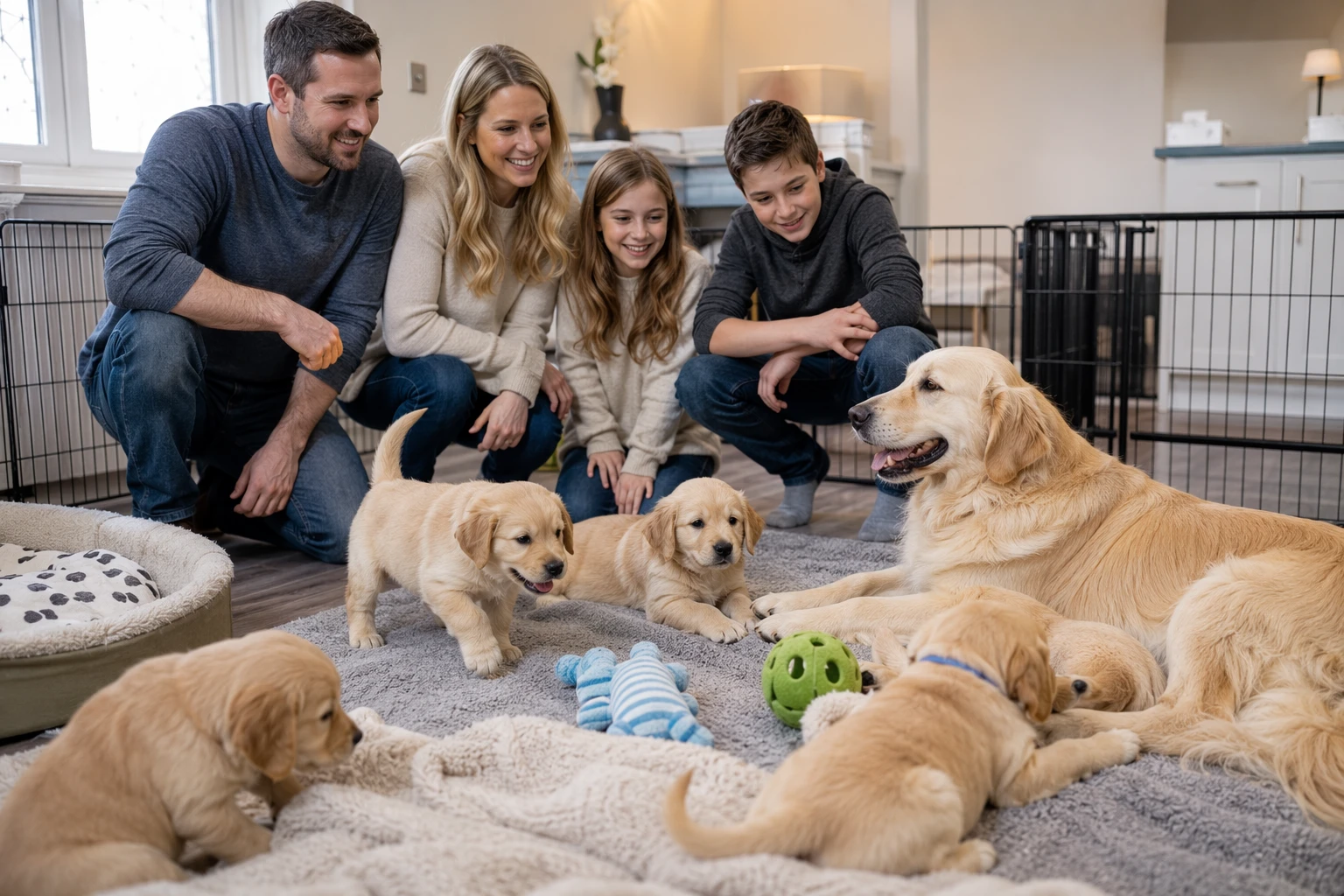
Good socialization is not chaos. It is safe, gentle, repeated exposure to normal life. The AVMA review says puppies benefit from diverse, positive experiences early, and puppies are most responsive to unfamiliar dogs from about 3 to 14 weeks in the AVMA literature review.
Look for a breeder who can show a simple plan like this:
| Good sign | What it looks like |
|---|---|
| Household exposure | Normal sounds, daily handling, short car rides |
| People exposure | Calm adults, kind kids, varied voices |
| Recovery | Puppy startles, then settles quickly |
| Body handling | Ears, paws, mouth, brushing introduced gently |
Ask:
- What have the puppies seen and heard?
- How do you handle shy puppies?
- Do you use rewards, not force?
Well-socialized puppies are not always bold. The key is that they can settle, engage, and learn.
Also Read: Puppy Health Guarantees: What Good Breeders Include
3. Ask for health testing proof, not just verbal reassurance
A good breeder should show you records fast. If they only say, “our dogs are healthy,” keep pushing. OFA advises buyers to ask for proof of screening and review the parents’ results, not just a puppy wellness check.
What documents to request
Ask for these before you place a deposit:
- OFA or CHIC records for the sire and dam
- DNA test results tied to the parents, not just the litter
- Eye, heart, patella, or hip exam results if those apply to the breed
- Registered names or numbers so you can verify the dogs yourself
- A sample contract showing how health is handled
According to the AKC’s CHIC guidance, a CHIC number shows the breed’s recommended screenings were completed and made public.
| Ask for | Why it matters | Red flag |
|---|---|---|
| OFA record | Confirms public testing history | Breeder will not share registered names |
| DNA report | Shows inherited risk screening | Only says “clear by parentage” with no backup |
| Specialist exam results | Covers breed-related issues | Only offers a routine vet note |
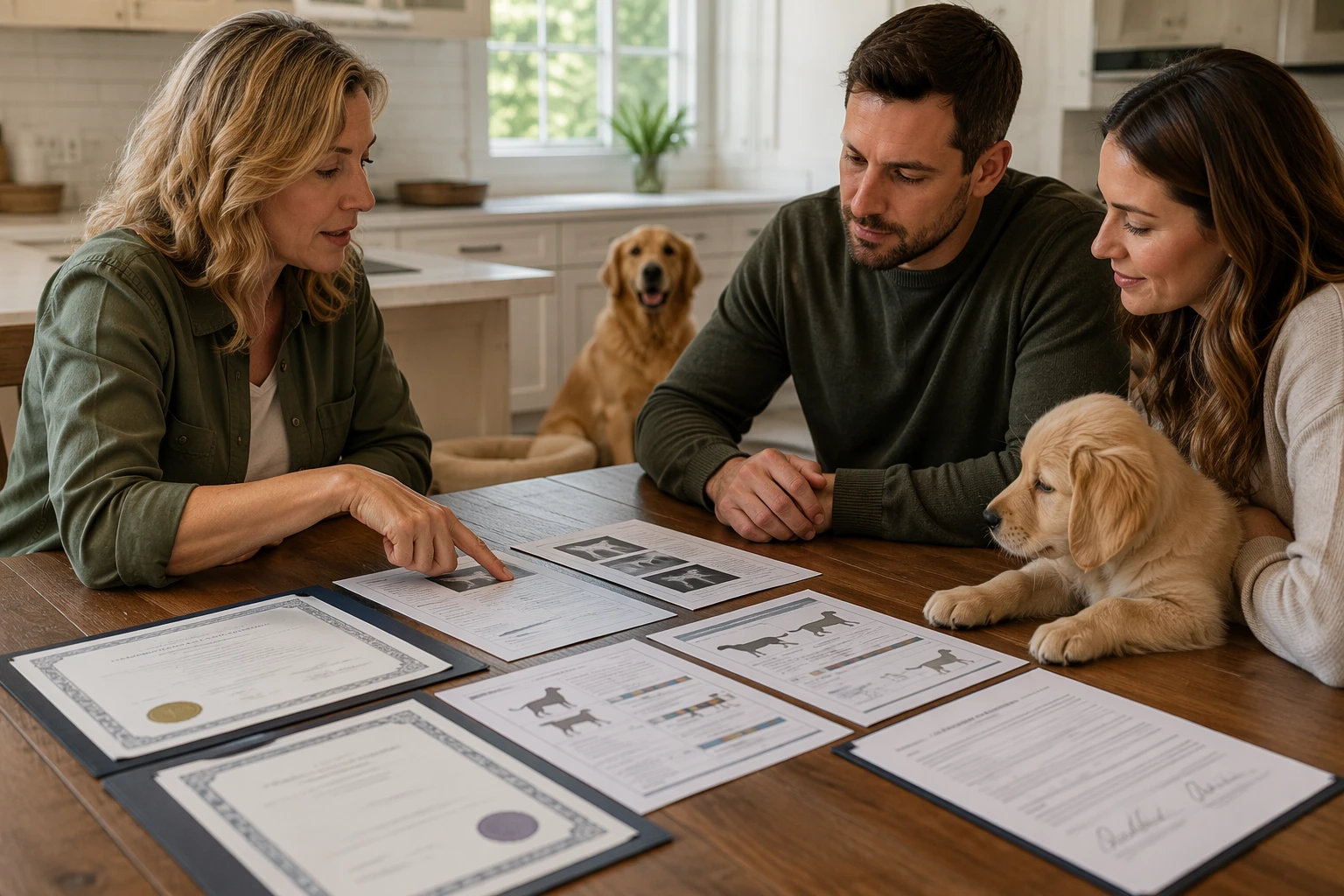
A vet check on the puppy is helpful, but it is not the same as full parent health testing.
Why breed-specific testing matters
Testing is not one-size-fits-all. OFA explains that breed clubs set different screening needs by breed, and AKC notes that DNA testing should match what is relevant for that breed or line. See OFA’s breed-specific screening system for the core idea.
That means a breeder should explain:
- Which tests matter for this breed
- Why they chose those tests
- What the results mean for your puppy
How to tell if the breeder knows their breed deeply
Listen for clear, calm answers. A serious breeder can explain family lines, common issues, and why one pairing made sense.
Good signs:
- They know the weak points in their breed
- They show records without getting defensive
- They explain limits honestly
If a program like Sage Puppies talks through parent testing in plain English and gives paperwork up front, that is the kind of transparency you want.
4. Look for breeder programs, registration, and real paperwork
Breeder programs can help, but they are not a free pass. They matter because they show the breeder agreed to outside standards. For example, the AKC Bred with H.E.A.R.T. program requires health testing tied to breed club guidance, annual breeder education, and agreement to inspections and care rules, according to AKC program requirements.
Use program badges as a starting point, then verify the details yourself.
- Ask what program the breeder belongs to
- Ask what they had to submit to join
- Ask whether they can show proof, not just a logo
- Ask if the puppy is registered, registrable, or neither
A reputable breeder explains the difference between a breeder program, breed registration, and health testing. Those are related, but not the same thing.
| Item | What it can signal | What it does not prove by itself |
|---|---|---|
| Breeder program | Some outside standards and education | Perfect breeding practices |
| Registration | Recorded pedigree or litter record | Health, temperament, or ethics |
| Health paperwork | Specific testing or vet care | Overall quality without context |
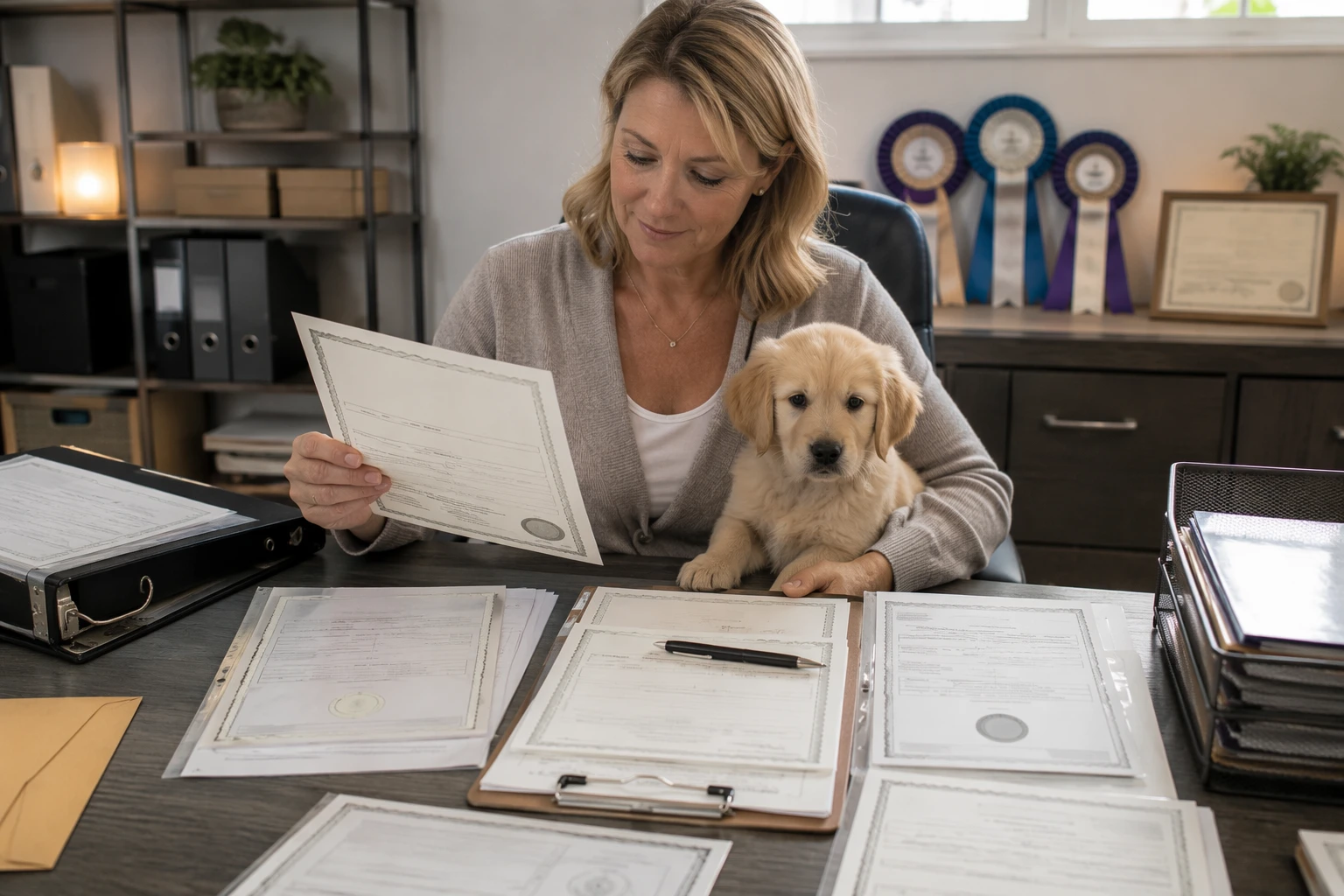
The paperwork should match the puppy in front of you. If papers feel vague, delayed, or oddly incomplete, slow down.
Ask for:
- A sales contract
- Vaccination and deworming record
- Microchip details, if used
- Parent registration info, if applicable
- Health testing proof for the parents
- Written pickup, delivery, and return terms
USDA APHIS says some animal sellers must be licensed, while some direct, in-person sellers may be exempt under the Animal Welfare Act rules, as outlined in USDA licensing guidance. That is why you should ask what rules apply to the breeder’s setup.
Also Read: 10 Signs a California Puppy Listing Is a Scam – Sage Puppies
5. Judge whether the breeder makes you wait for the right puppy
A good breeder does not rush handoff day. They protect the puppy first. That often means keeping puppies with their mother and littermates until they are ready, not just until a buyer is eager.
Research published through NCBI notes that welfare groups and veterinary bodies widely recommend puppies stay in maternal care until at least eight weeks. The AVMA review on puppy socialization also explains that early exposure to littermates, the mother, people, and normal home life shapes later behavior.
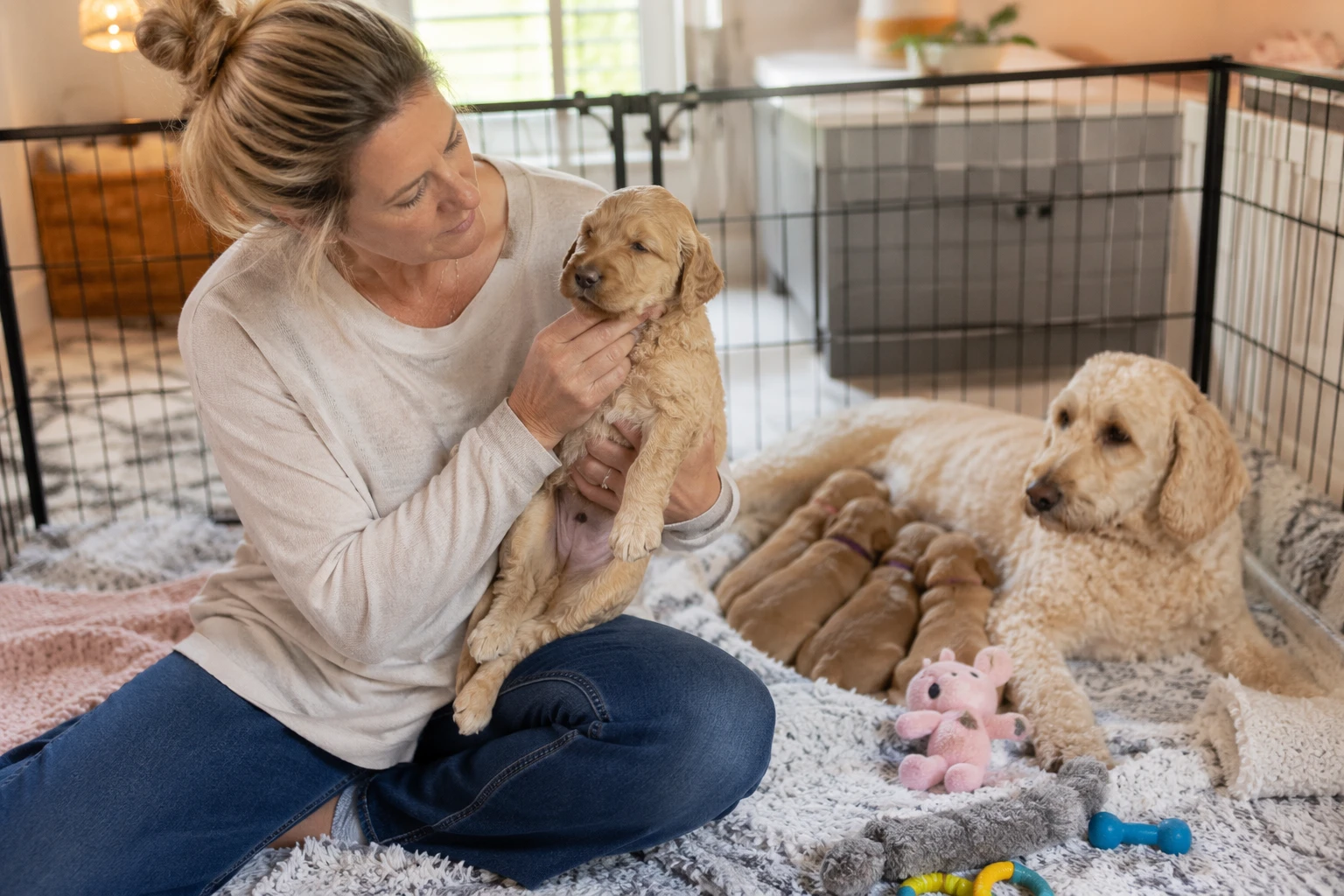
That wait matters because puppies learn key skills before they come home:
- Bite control through play with littermates
- Dog manners from feedback by mom and siblings
- Confidence from safe, gradual new experiences
- Better transition to grooming, crates, sounds, and travel
Watch for these green flags:
- The breeder says no early pickup, even if you ask.
- They match puppies by temperament and fit, not color alone.
- They explain why one puppy may need extra time before going home.
If a breeder lets buyers choose and take home puppies too early, that is not flexibility. It is a warning sign.
For small companion breeds, waiting a little longer can be especially reasonable if the breeder is actively socializing and preparing the puppy well.
Also Read: Puppy Breeder Near Me vs Pet Store: Key Differences
6. Notice whether the breeder educates you instead of rushing you
A good breeder does not push for a deposit before you understand the puppy, the breed, and the process. The best ones teach first. The AKC says responsible breeders should answer your questions, explain health testing, and stay available after pickup in their role as a long-term resource for buyers.
Questions a reputable breeder welcomes
Look for a breeder who is calm, clear, and happy to go deep on details like:
- Parent health testing and what each test means
- Temperament of the puppy, parents, and litter
- Grooming, training, and housebreaking needs
- Feeding routine, vaccine schedule, and go-home timing
- Pickup, delivery, and what support comes after adoption
They should also ask you smart questions back. That is a good sign, not a hassle.
| Good sign | Red flag |
|---|---|
| Explains pros and cons of the breed | Says every puppy fits every home |
| Answers without pressure | Pushes for payment before education |
| Gives honest limits and expectations | Promises an easy puppy with no challenges |
If you feel rushed, pause. Pressure and trust rarely belong together.
What supportive follow-up looks like
Support should continue after you bring your puppy home. The AKC notes that ethical breeders encourage ongoing contact and act as a breed mentor over the dog’s life after pickup.
Good follow-up often includes:
- A clear go-home packet
- Check-ins during the first few days
- Help with food changes, crate training, and settling in
- Fast answers if something feels off
At Sage Puppies, this kind of steady guidance fits the trust-first process families want.
7. Use the breeder’s policies on delivery, pickup, and home placement as a trust test
Clear delivery and pickup rules tell you a lot. A good breeder explains who handles transport, where pickup happens, what paperwork comes with the puppy, and what happens if plans change.
Look for details like these:
- Pickup location and available dates
- Delivery method and who escorts the puppy
- Health records, microchip details, and feeding notes
- Final payment rules and refund terms
- Home placement steps, including how the breeder matches puppies to families
A trustworthy breeder should also spell out travel documents when needed. For air travel, USDA notes that a health and acclimation certificate should be signed by a licensed vet within 10 days of travel, and kennel safety rules matter too, per APHIS pet air travel guidance. If a puppy is crossing into the U.S. by air, the CDC says each dog needs its own CDC Dog Import Form receipt.
If a breeder sounds vague about handoff, route, records, or who is responsible during travel, slow down.
Use this quick trust check before you commit:
| Policy area | What you want to see | Red flag |
|---|---|---|
| Pickup | Specific place, date window, ID check | “We will figure it out later” |
| Delivery | Named process and handler | No clear chain of care |
| Placement | Questions about your home and schedule | First pay, first served only |
Also Read: 10 Adorable Havapoo Colors You Need to See (2026 Guide) – Sage Puppies
8. Watch for the red flags that should end the conversation
Some issues are not small concerns. They are stop signs.
The most serious red flags
Walk away if the breeder refuses a phone call, avoids live video, or will not let you see where the puppy is raised. The FTC warns that legit sellers should allow an in-person or video meeting, and scammers often push upfront payment instead of real access to the puppy FTC pet scam advice.
Other deal-breakers include:
- Gift cards, wire transfers, crypto, or payment apps only
- Pressure to send a deposit fast
- No health records or vague answers about parent testing
- Stock-looking photos or copied listing text
- A price far below normal market range
- Extra surprise fees for crates, insurance, or shipping
- Meeting only in a parking lot or roadside spot
- No contract, no pickup details, and no clear return policy
A breeder who hides basic facts before payment rarely becomes more transparent after payment.
USDA action in 2026 also shows why buyers should take chronic welfare issues seriously, with federal agencies increasing enforcement against repeat dog welfare violators USDA enforcement update.
How to respond when something feels off
Keep your next steps simple:
- Pause the conversation
- Do not send more money
- Save screenshots, emails, and payment requests
- Ask direct questions once
- Leave if the answers stay vague
You do not need to argue or prove anything. A calm, firm message works:
- We are not moving forward without live verification, records, and clear payment terms.
Good breeders expect careful questions. The wrong seller will act annoyed, evasive, or pushy.
If you want a breeder that matches these trust signs, start with Sage Puppies. You can review available Havanese, Havapoo, and Cavapoo puppies, learn about health-tested parents, and see how Utah pickup or nationwide delivery works before you apply.
Frequently Asked Questions
Q1: best reputable puppy breeders near me
Start with proof, not distance. Ask for health testing, parent info, contracts, sample records, and socialization details. A breeder near you is only a good fit if they are transparent, responsive, and never rush payment or pickup.
Q2: How do I verify health testing?
Ask which tests were done on both parents and request copies. Good breeders explain results in plain English and show how those tests match the breed’s common risks.
Q3: Is home-raised better than kennel-raised?
Often, yes for companion breeds. Puppies raised in a home usually get more daily handling, sound exposure, and people time, which can help with confidence and easier family adjustment.
Q4: Should a breeder allow delivery?
Yes, if the process is clear and humane. Ask who handles transport, how long travel takes, what updates you get, and whether local Utah pickup is also available.
Q5: What paperwork should I expect?
You should get a contract, vaccine and deworming record, microchip details if included, feeding notes, and clear next steps. Missing paperwork is a real warning sign.
Conclusion
A reputable puppy breeder near you should make trust easy to verify. The strongest signs stay the same: real health testing, clear records, early socialization, a clean setting, thoughtful screening, and support after pickup or delivery. Cornell notes that good breeders test for breed-specific conditions and provide lifelong support in many cases, not just a quick sale Cornell guidance. The AKC also says reputable breeders should ask you questions, use contracts, and avoid sending puppies home too early AKC breeder signs. If a breeder welcomes proof, patience, and questions, you are likely on the right path.