Quick Summary: A good puppy health guarantee clearly states what is covered, for how long, and what proof is needed. It should include short-term vet exam deadlines and longer-term coverage for hereditary issues with specific remedies. Families should review the fine print before reserving, asking about testing, care, and return policies. Strong guarantees reflect responsible breeders who provide transparency, detailed records, and ongoing support.
If you are comparing Havanese, Havapoo, or Cavapoo puppies for sale near you, the contract matters more than the cute photos. Puppy Health Guarantees show what a breeder will stand behind after pickup, delivery, and the first vet visit.
Many families see vague promises, but not enough detail. That makes it hard to tell real protection from sales language. The biggest problem is simple: some Puppy Health Policies sound strong until you read the fine print.
This guide helps you read Puppy Health Guarantees the smart way. You will learn what Good Breeder Guarantees usually include, what weak contracts leave out, and which health testing terms actually matter for small-breed puppies. We focus on practical contract details serious puppy families should check before they commit, especially when comparing premium breeders in Utah or nationwide. Puppy Health Guarantees should be clear, specific, and easy to verify.
What a Real Puppy Health Guarantee Covers
A real puppy health guarantee should tell you what is covered, for how long, what proof you need, and what the breeder will actually do if a problem shows up. Good contracts are specific. Vague promises like “healthy puppy guaranteed” are not enough.
Short-Term Coverage After Pickup
Most solid contracts give you a short exam window after pickup or delivery. The goal is simple – confirm the puppy was healthy at transfer and catch major issues early. AKC notes that breeder contracts often include health guarantees and clear next steps for buyers in its guide to breeder contracts.
Look for these terms:
- A vet exam deadline, often 48 to 72 hours
- Written proof from a licensed veterinarian
- Coverage for a puppy found unfit for purchase at delivery
- Clear remedies such as:
- replacement puppy
- partial refund
- full refund after return, if the contract says so
If the contract requires a vet visit in 72 hours, missing that deadline can void the guarantee.
| Short-term item | What good breeders state |
|---|---|
| Exam window | Exact number of hours after pickup |
| Proof required | Vet record and diagnosis in writing |
| Buyer action | Notify breeder right away |
| Remedy | Refund, replacement, or stated credit |
Longer-Term Coverage for Hereditary or Congenital Conditions
This is the part families should read most closely. A real guarantee usually covers hereditary or congenital problems for a longer period, often 1 to 3 years. The contract should name the condition type, the proof needed, and any limits.
The USDA Animal Welfare Act focuses on humane care, treatment, and transport of animals sold as pets, but it does not create a standard breeder health guarantee for buyers, according to the federal law text. That is why the written contract matters so much.
Strong long-term terms often include:
- Covered issues such as:
- congenital heart defects
- severe orthopedic disease
- breed-linked inherited disorders
- Required proof:
- specialist diagnosis
- imaging or lab results
- records sent within a set time
- Defined remedy limits
Good breeders also explain whether you can keep the puppy and receive support, or if return is required.
What Is Usually Excluded
Most guarantees do not cover every health problem. Exclusions are normal, but they should be easy to read.
Common exclusions include:
- Minor parasites or common puppy stomach upset
- Illness tied to stress, travel, exposure, or poor follow-up care
- Injuries after pickup
- Problems caused by missed vaccines, overfeeding, or unsafe exercise
- Normal traits like adult size, coat, bite, or fertility unless promised in writing
A weak contract hides exclusions in fine print. A good one puts them in plain English.
Also Read: Puppy Breeder Near Me vs Pet Store: Key Differences
The Health Testing Behind Good Breeder Guarantees
Parent Health Testing Should Be Written Into the Conversation
A real health guarantee starts before the litter is born. Ask what tests were done on the sire and dam, who reviewed them, and whether the breeder will show proof. For many breeds, health testing should follow parent club guidance, and the AKC says those breed-specific requirements come from the national breed club, not from breeder opinion or marketing claims AKC breed health testing requirements.
Use this quick check:
| What to ask for | Why it matters | Good sign |
|---|---|---|
| OFA or other screening results | Shows actual testing, not vague promises | Breeder shares records clearly |
| Breed-specific DNA testing | Helps reduce inherited risk | Tests match the breed |
| Public health record lookup | Adds transparency | Parent dogs can be verified |
| Contract language | Tells you what the guarantee really covers | Clear terms, dates, and limits |
The OFA explains that a CHIC number means a dog completed the breed’s required screenings and the results are public, but it does not mean every result was normal OFA CHIC program.
Ask for test names and results, not just the phrase health tested.
Early Care, Clean Rearing, and Socialization Also Matter
Health guarantees should not act like genetics are the whole story. Early care shapes how a puppy starts life. Clean housing, weight tracking, vet checks, age-appropriate vaccines, parasite prevention, and daily handling all matter.
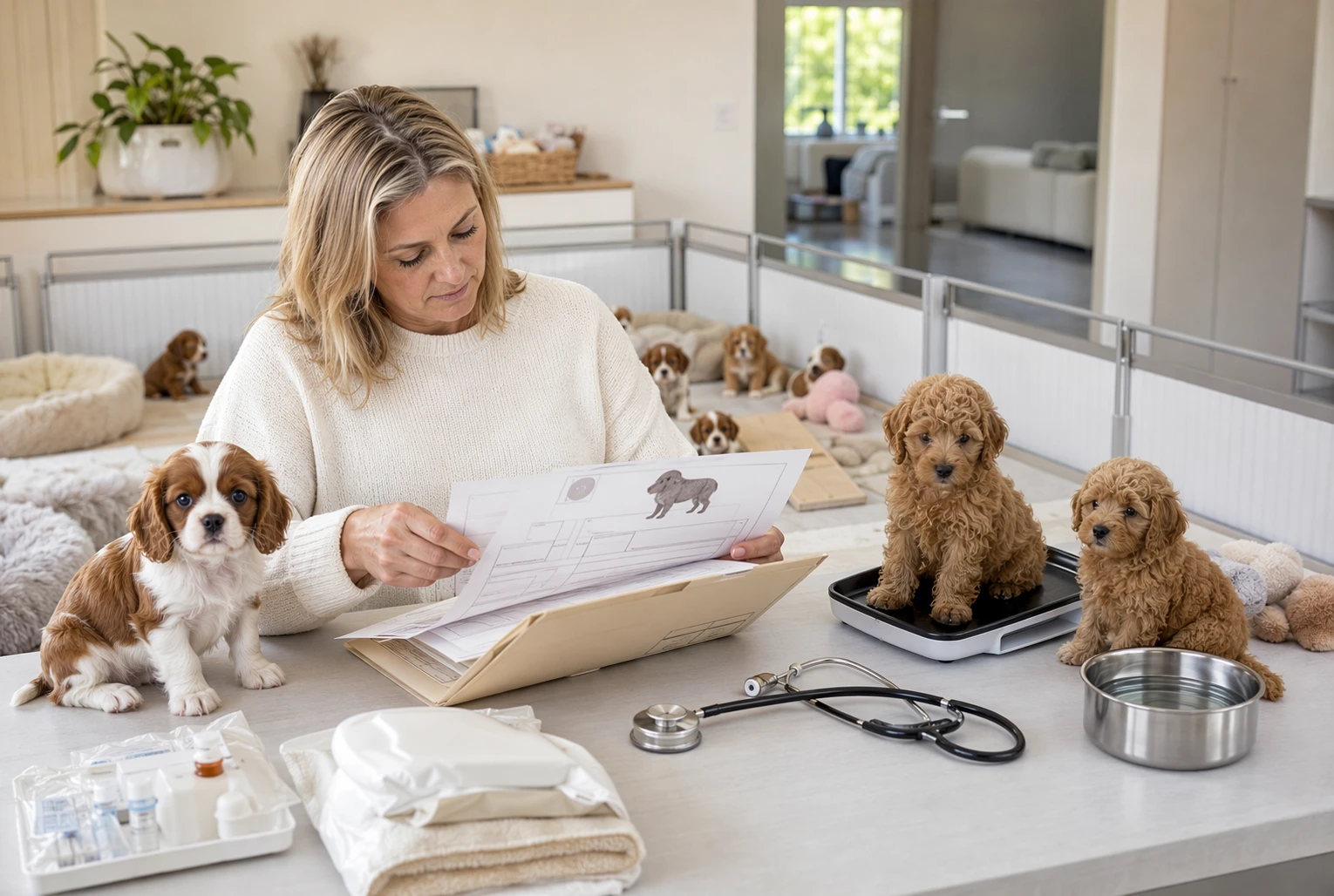
Look for breeders who can explain their routine in plain English:
- Sanitation – clean bedding, fresh water, safe play areas.
- Monitoring – appetite, stool, growth, and behavior checks.
- Socialization – gentle exposure to people, sounds, surfaces, and normal home life.
- Transition prep – food guidance, records, and support after pickup or delivery.
A weak guarantee often skips these basics and leans on a short vet window alone. A better breeder talks about how puppies are raised day by day. That is where confidence, resilience, and smooth family adjustment begin.
A puppy can pass a vet exam and still be poorly prepared for real family life.
Why Small-Breed Families Should Care About the Details
Small breeds can have issues that need careful screening, such as patella, eye, heart, or breed-linked DNA concerns. That makes the fine print more important, not less. Families buying Havanese, Havapoos, or Cavapoos should ask which parent tests match those lines and how the breeder chose that pairing.
Good breeders welcome specific questions. They do not rush you past them.
- Ask what the guarantee covers
- Ask what testing supports it
- Ask what care happened before go-home day
At a program like Sage Puppies, this level of detail fits the promise better than broad claims ever will.
Also Read: 8 Illinois Puppy Sale Documents Every Buyer Should Check
How to Read the Fine Print Before You Reserve
Read the contract before you send a deposit, not after. The fine print tells you what the breeder expects from you, what help you can count on, and where the risk shifts to your side. For state buyer protections, some laws require a fast vet exam after purchase. Minnesota, for example, ties certain remedies to a vet exam within 10 days and written notice steps under its pet purchase rules.
Ask What Must Happen After Pickup
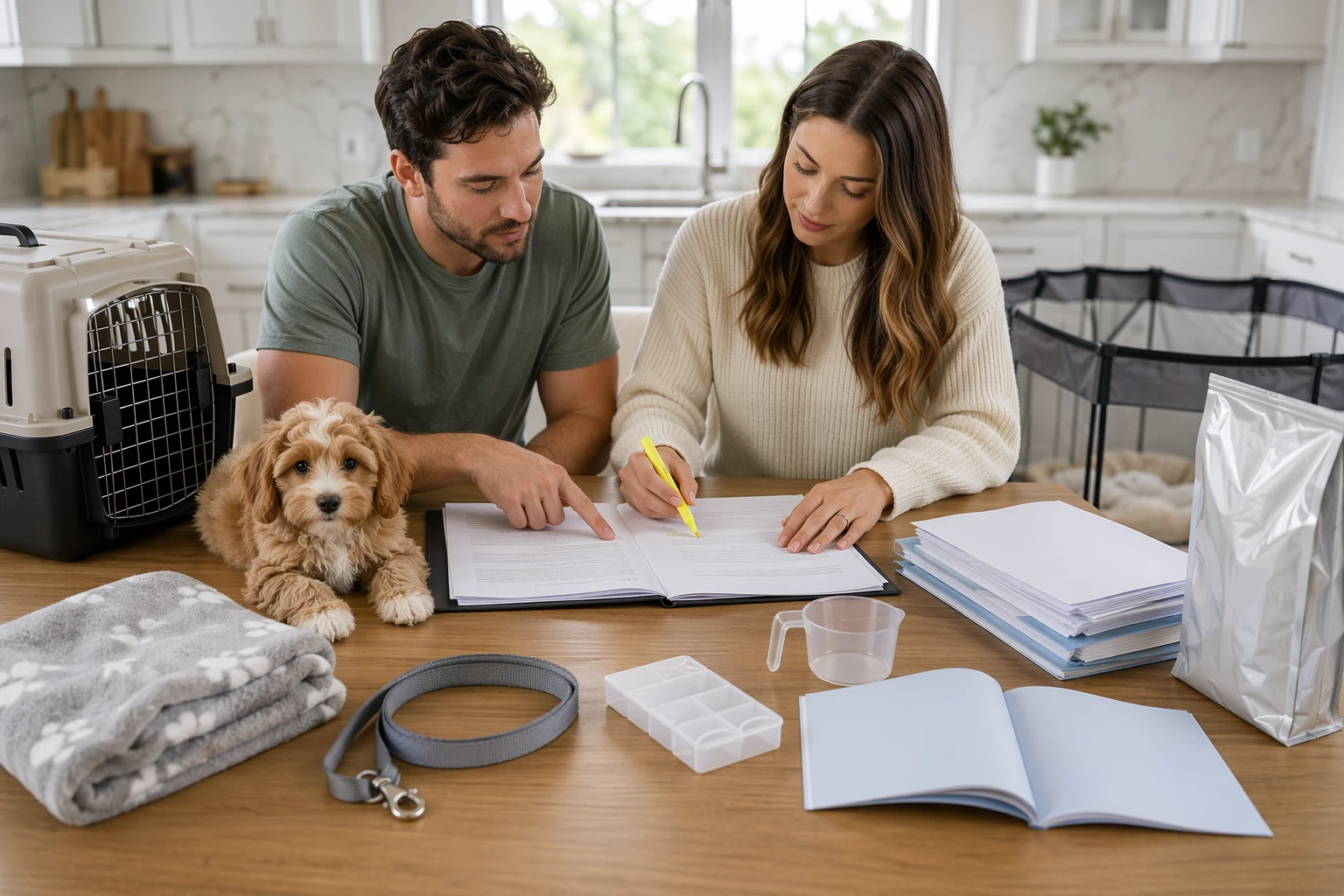
Some guarantees only apply if you follow exact steps right away. That is where families get tripped up.
Ask the breeder:
- How soon must my vet see the puppy?
- What records do I need to send back after that exam?
- What care rules void the guarantee?
Look for contract terms like:
- a required exam within 48 hours, 72 hours, or 10 days
- vaccine timing rules
- parasite prevention rules
- limits on strenuous exercise, stairs, or rough play for small breeds
- food change rules for the first week
If the contract says “guarantee void if instructions are not followed,” ask for those instructions in writing before you reserve.
A strong breeder makes this simple. The steps should be clear, realistic, and easy to document.
Ask What Remedy the Breeder Offers
“Health guarantee” means very little if the remedy is weak. You need to know what happens if a vet finds a serious issue.
Use this quick check:
| Contract question | Good sign | Caution sign |
|---|---|---|
| Is the remedy written clearly? | Refund, replacement, or credit terms are specific | Vague words like “at breeder discretion” only |
| Are vet costs addressed? | States what is covered and what is not | No mention of costs at all |
| Are hereditary issues defined? | Names time window and condition type | Broad exclusions with no examples |
Many state puppy buyer laws center on three basic remedies: refund, replacement, or vet reimbursement, as outlined in this overview of puppy lemon laws.
A replacement-only clause can be a problem if you are emotionally attached and want to keep the puppy while treating the issue.
Ask What Happens If Life Changes
Good breeders plan for real life. Ask what the contract says if you cannot keep the puppy later.
Check for:
- a return-to-breeder requirement
- whether rehoming on your own is allowed
- whether your deposit is transferable
- whether delivery fees are refundable
- whether breeding rights are restricted
This matters more than buyers think. Responsible breeders often require the dog to come back to them if your situation changes. California’s attorney general says reputable breeders commonly ask buyers to sign a contract and return the pet if they can no longer keep it, according to this consumer alert on deceptive breeders.
For families comparing breeders, this is where careful programs stand out. A clear, family-first contract usually signals better support after pickup too.
Red Flags in Puppy Health Guarantees
A good guarantee should be clear, fair, and tied to real breeder work. If it feels slippery, one-sided, or hard to verify, treat that as a warning.
Vague Promises Without Written Details
If a breeder says, “We guarantee health,” but cannot show the exact contract, slow down. A real guarantee names what is covered, for how long, what proof is needed, and what remedy you get. Some state laws even require written disclosures about known illness, treatment history, and hereditary or congenital conditions, as shown in California breeder sale rules.
Watch for promises like:
- “Healthy at pickup” with no vet terms
- “Genetic guarantee” with no listed conditions
- “We stand behind our puppies” with no written remedy
If the guarantee changes in text messages, ads, and the contract, trust the contract version only.

Unreasonable Buyer Burdens
Some contracts look protective but are built to block claims. One common example is a very short vet exam window. A prompt exam is normal, but impossible rules are not. The AKC notes that early vet checks are common, yet contract duties should be clear and reviewable before you commit to the puppy in a breeder contract.
Red flags include:
- Claim deadlines that are too short to meet
- Rules that void coverage over minor paperwork errors
- Refund terms only if you return a sick puppy immediately
- No option for partial vet cost help
A fair contract should not force families into a rushed, painful choice.
Guarantees That Ignore Health Testing
The biggest red flag is a long guarantee with no proof of parent health testing. Cornell’s vet school says good breeders test for conditions recommended by their breed club and may do more. A guarantee is not a substitute for screening.
Use this quick check:
| Claim | Good sign | Red flag |
|---|---|---|
| Genetic guarantee | Names conditions and terms | Sounds broad but says little |
| Parent testing | OFA, eye, heart, DNA records shared | “Parents are healthy” only |
| Breeder support | Helps after diagnosis | Disappears after pickup |
Also Read: Family-Raised Puppy Contracts: Key Terms to Review First
Common Questions Families Should Ask Before Signing
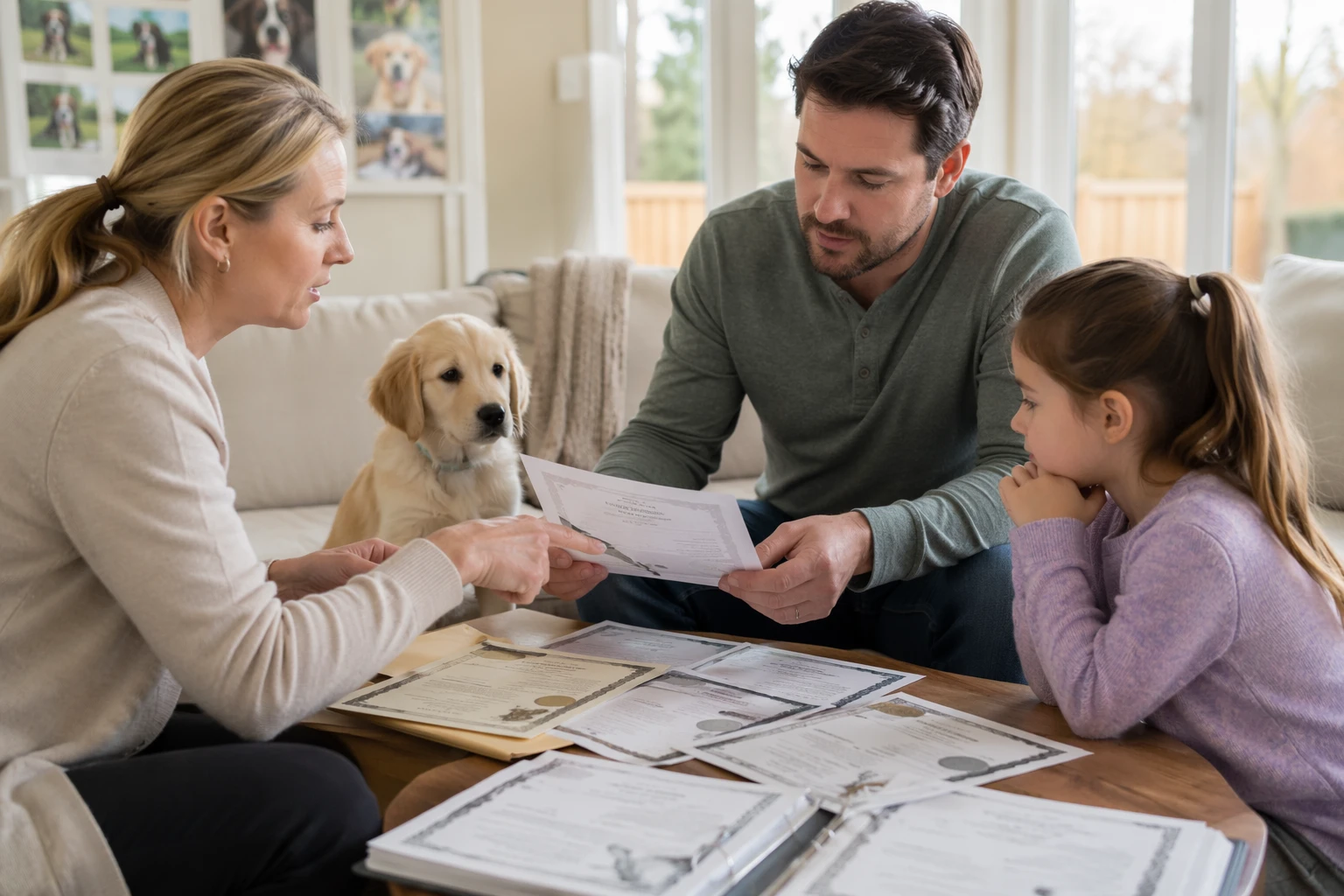
Ask these questions before you send money or sign anything. A solid breeder should answer clearly, show records, and give you time to review the contract.
Questions About Testing and Coverage
- Which health tests were done on both parents?
- Can I see the actual results, not just a promise?
- Are the tests breed-specific? The AKC says health testing should match the breed parent club’s recommendations, not a one-size-fits-all panel breed health testing requirements.
- What exactly does the guarantee cover?
- How long does the coverage last, and what proof is required?
Ask if the guarantee covers only genetic issues, only life-threatening defects, or specific organs like heart and eyes.
Questions About Care and Support
- What vet care has the puppy already had?
- How soon must my vet exam happen after pickup or delivery?
- What food, routine, and vaccine schedule do you want me to follow first?
- If a problem comes up, who do I call first?
- Do you require the puppy to come back to you if we cannot keep it?
AKC notes that reputable contracts often include early vet-check timelines, health records, and a return-to-breeder clause in case life changes what’s in your puppy contract.
Questions About Fit and Next Steps
- Why is this puppy a good match for our home?
- What is the reservation, pickup, or delivery process?
- What parts of the contract are non-negotiable?
- Can we review the full contract before committing?
If a breeder rushes you, avoids records, or gets vague about next steps, pause.
Also Read: 7 Health Checks for Small Breed Puppies Before Sale
What a Strong Guarantee Says About the Breeder
Health Testing and Education Go Together
A strong guarantee usually points to a breeder who plans ahead, not one who just writes nice sales language. The best contracts match real health testing, breed-specific screening, and clear buyer teaching. AKC notes that good contracts often spell out health screenings, records, and early vet check steps in plain terms What’s in Your Puppy Contract?.
- They explain what was tested
- They share records before pickup
- They tell you what to do in the first few days
If a breeder cannot explain the testing behind the guarantee, the guarantee is mostly marketing.
Accountability Matters After Pickup Day
A meaningful guarantee also shows the breeder expects a long relationship, not a fast handoff. Good breeders stay available after pickup, require a prompt vet visit, and explain what happens if a serious inherited issue appears later. That kind of follow-through matters, especially for families buying from another state. USDA rules also place oversight on certain sight-unseen pet sales, which is one reason transparency matters so much in remote puppy purchases Animal Welfare Act and Animal Welfare Regulations.
| Strong signal | What it tells you |
|---|---|
| Written next steps | The breeder expects questions |
| Return policy | The breeder stays responsible |
| Clear remedy terms | The breeder has thought it through |
A Good Guarantee Should Feel Clear, Not Complicated
You should not need to decode it.
A solid guarantee is:
- Specific
- Readable
- Balanced
It names the covered issues, timeline, buyer duties, and remedy. It does not bury key terms in vague language or hard-to-meet rules.
Clear contracts usually come from breeders who are organized, honest, and used to supporting families well after go-home day.
If you want a puppy from a breeder who explains health testing, contracts, pickup, and delivery clearly, start with Sage Puppies. You can review available puppies, learn the process, and ask smart questions before you commit.
Frequently Asked Questions
Q1: What should I look for in a reputable breeder offering health-tested puppies near me?
Ask for proof, not promises. A good breeder shows parent health test results, explains the contract clearly, shares vet records, and answers hard questions. Look for clean home raising, breed knowledge, and support after pickup or delivery.
Q2: How does a health guarantee protect my puppy’s future health and what’s typically covered?
A solid guarantee sets clear terms if a serious inherited condition appears. It often covers a limited time window, vet diagnosis rules, and what remedy applies. Read exclusions, deadlines, and whether it offers refund, replacement, or partial support.
Q3: What health screening tests are important when buying a puppy from responsible breeders?
The right tests depend on breed. For small breeds, ask about patella, heart, eye, and genetic screening tied to the parents’ lines. A responsible breeder should explain why each test matters, not just say the parents are healthy.
Q4: Should I trust a “vet checked” claim by itself?
No. A vet check is helpful, but it is not the same as breed-specific health testing. It shows the puppy looked well that day. You still need parent screening, records, and a contract with clear health guarantee terms.
Q5: What red flags in a puppy contract should make me walk away?
Be careful with vague wording, no list of covered conditions, short claim windows, or rules that make claims nearly impossible. If the breeder will not explain the contract line by line, that is a strong reason to keep looking.
Conclusion
A good puppy health guarantee should be clear, narrow, and tied to real proof. The safest breeders show health testing, explain the contract before you commit, and spell out what happens if a vet finds a problem soon after pickup. AKC notes that strong puppy contracts often include health records, return terms, and defined buyer and breeder duties in its guide to puppy contracts. Buyer protections also vary by state, and Michigan State’s Animal Legal & Historical Center tracks how puppy purchaser laws differ. In short, trust specifics, not sales language.