Quick Summary: Before buying a small breed puppy, ensure the breeder has completed key health checks like parent testing, breed-specific genetic screening, vet exams, parasite prevention, vaccinations, weight and hydration monitoring, and provides detailed health records at pickup. These checks help identify potential health risks early and verify responsible breeding practices. Clear documentation and honest communication are signs of a trustworthy program, like Sage Puppies, which emphasizes health-tested parents and transparent records. Avoid breeders who lack detailed health information or rely solely on vague promises.
Before you reserve a small breed puppy, focus on one thing first: did the breeder complete the right health checks before sale? Cute photos matter far less than clear proof. For Havanese, Havapoo, and Cavapoo buyers, good Health Checks Puppies standards help you judge safety, planning, and breeder honesty before pickup day.
Many families hear phrases like health checked or vet approved and still do not know what was actually done. That gap matters more with tiny companion breeds. Small puppies can look fine in pictures while important details stay vague. Without real answers, it is harder to tell strong breeding practices from good marketing. Clear Health Checks Puppies records make that process easier.
This guide ranks the seven checks that matter most, so you can compare programs with more confidence and ask better questions before you commit. You will see what solid Puppy Health Screening should include, where Puppy Health Tests fit in, and which documents should be ready before a puppy goes home. The goal is simple: help you spot complete Health Checks Puppies steps, not broad promises.
We chose these seven checks because they are the most useful for qualified buyers reviewing small breed puppies before sale: parent screening, puppy veterinary exams, parasite prevention, vaccinations, breed-relevant health awareness, age-appropriate records, and a final go-home readiness review. For the full buyer checklist, keep this guide linked to the main pillar on choosing a responsible small-breed puppy program.
Quick Health Check Comparison
| Check | Best for | What it should confirm | Buyer question to ask |
|---|---|---|---|
| Health-tested parents | Reducing inherited risk before a litter is planned | The parents were screened in a breed-aware, documented way | What health testing was completed on the puppy’s parents? |
| Breed-relevant genetic screening | Matching screening to the puppy’s actual parent lines | Breed-relevant hereditary concerns were considered | Which breed-specific tests were used for this litter? |
| Veterinary puppy exam | Confirming current health before the puppy goes home | A licensed vet examined the puppy for general wellness | When was the puppy’s last veterinary exam? |
| Parasite prevention and deworming | Reducing early digestive and growth setbacks | The puppy received a documented deworming plan | What parasite prevention or deworming schedule was followed? |
| Vaccination record review | Verifying preventive care before the puppy goes home | Age-appropriate vaccines were documented properly | Which vaccinations has the puppy already received? |
| Weight, body condition, and hydration check | Monitoring growth and readiness in small puppies | The puppy is maintaining appropriate weight and hydration | How has the puppy’s weight and condition been tracked? |
| Go-home records and follow-up plan | Making the transition to your home and vet smoother | The puppy leaves with clear, usable health records | What health paperwork will I receive at pickup or delivery? |
1. Health-tested parents
The most important health check starts before the litter is even born. For small breed puppies, parent testing gives you a clearer starting point and helps a breeder make smarter pairing choices before any puppy is offered for sale.
Highlights
- Look for breed-aware screening, not vague claims like “our dogs are healthy.”
- Ask which tests were done and compare them with AKC breed health testing requirements.
- Confirm the breeder can explain the difference between testing the parents and simply vet checking puppies.
- Strong programs document parent results before reservations, not after.
- You can also review whether a breed has recommended screening protocols through the OFA disease and breed screening lists.
Specs
- Best for: Reducing inherited risk before a litter is planned
- What it should confirm: The parents were screened in a breed-aware, documented way
- Buyer question to ask: What health testing was completed on the puppy’s parents?
Pros
- Helps you judge the breeder’s standards early
- Supports more informed breeding decisions
- Often leads to clearer talks about the parents and litter
Cons
- Testing does not remove every future health risk
- The right testing scope can vary by breed and line
This ranks first because if the parents were not screened thoughtfully, the puppy’s health story starts on weaker ground.
Last updated: July 17, 2026
Also Read: 10 Unique Care Tips for Small Breed Puppies in Urban Settings
2. Breed-relevant genetic screening
Genetic testing should match the breed background behind the puppy. Good breeders do not lean on a vague “DNA tested” claim. They explain which inherited risks they screened for, how those tests fit the sire and dam, and what the results can and cannot predict.
Highlights
- Ask if screening was breed-specific, not just part of a generic panel. The AKC notes breeders should use tests relevant to their breed and that not all variants are validated in every breed or included in one kit, according to AKC breed-specific DNA recommendations.
- For Havapoos and Cavapoos, the parent lines matter most. A mixed small-breed puppy should reflect concerns tied to both sides, not a one-size-fits-all claim.
- Clear language builds trust. You want a breeder who can explain what a result means for pairing decisions and litter planning.
Specs
- Best for: Matching screening to the puppy’s actual parent lines
- What it should confirm: Breed-relevant hereditary concerns were considered
- Buyer question to ask: Which breed-specific tests were used for this litter?
Pros
- Adds detail to breeder health claims
- Helps buyers compare programs more fairly
- Useful for purebred and mixed companion puppies
Cons
- Depends on which tests the breeder actually used
- Not every problem can be predicted genetically, and DNA identity tests alone do not diagnose disease, as AKC explains here
It ranks here because genetic screening strengthens parent health testing by checking known inherited risks before a puppy goes home.
Last updated: July 17, 2026
Also Read: Puppy Socialization & Early Development | Sage Puppies
3. Veterinary puppy exam
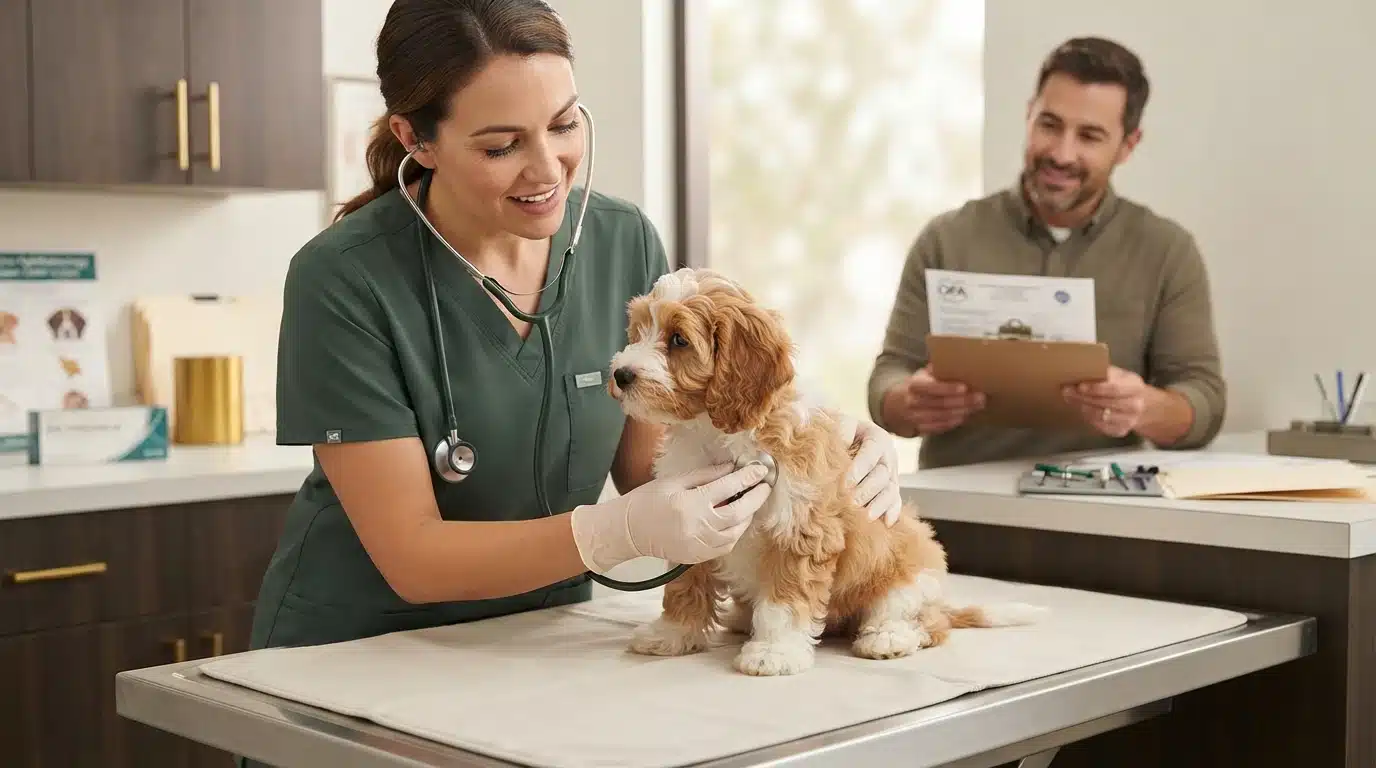
A hands-on vet exam gives you the clearest snapshot of a puppy’s health right before pickup. For small breed puppies, that matters a lot because tiny bodies can change quickly, and a licensed vet check helps confirm current wellness before sale.
Highlights
- Confirms the puppy was physically examined before sale.
- A proper puppy exam usually includes weight, temperature, heart, lungs, eyes, ears, mouth, skin, and body condition, as outlined by AKC’s first vet visit guide.
- AAHA notes puppy wellness visits should include a thorough physical exam and nutritional assessment, which helps buyers ask better follow-up questions about growth and overall condition in toy and small breeds during puppy care visits.
- A good breeder should tell you when the exam happened and what the vet looked for.
Specs
- Best for: Confirming current health before the puppy goes home
- What it should confirm: A licensed vet examined the puppy for general wellness
- Buyer question to ask: When was the puppy’s last veterinary exam?
Pros
- Gives buyers a current health snapshot
- Supports safer decision-making before pickup
- Can reveal issues that are not visible in photos
Cons
- A clean exam does not guarantee future health
- Exam scope can vary by veterinary practice
It ranks here because it is one of the most buyer-relevant health checks right before a puppy goes home.
Last updated: July 17, 2026
4. Parasite prevention and deworming
Small puppies need careful parasite control before they go home. Intestinal parasites can affect appetite, weight gain, and hydration fast, which matters even more in Havanese, Havapoo, and Cavapoo puppies.

Highlights
- Ask for the exact deworming dates, product used, and what comes next after pickup.
- Look for written records, not verbal promises alone.
- Puppies can carry roundworms and hookworms very early in life, and the CDC notes puppies as young as 2 to 3 weeks can have many worms in its pet owner guidance.
- The AVMA also notes that pets can look healthy and still have intestinal parasites, which is why records and follow-up matter in routine parasite screening.
Specs
- Best for: Reducing early digestive and growth setbacks
- What it should confirm: The puppy received a documented deworming plan
- Buyer question to ask: What parasite prevention or deworming schedule was followed?
Pros
- Simple for buyers to verify with records
- Helps support early comfort and growth
- Common in responsible breeder care
Cons
- Prevention does not mean the puppy can never pick up parasites later
- Records matter more than broad promises
It ranks here because this is a clear, measurable health check that helps families start the first week at home with fewer surprises.
Last updated: July 17, 2026
5. Vaccination record review
Age-appropriate vaccines should be documented before sale. The record matters as much as the shot itself because it shows the puppy’s care was tracked, dated, and ready to share with your own vet.
Highlights
- Check that the vaccine schedule matches the puppy’s age. The AVMA notes that puppies usually start vaccines at 6-8 weeks and finish the first series at 16 weeks or older.
- Ask for written records that list the date, product, and what is still due next.
- Make sure the breeder can tell you which vaccinations the puppy already received.
- Good records make the first vet visit smoother and cut down on guesswork at home.
Specs
- Best for: Verifying preventive care before the puppy goes home
- What it should confirm: Age-appropriate vaccines were documented properly
- Buyer question to ask: Which vaccinations has the puppy already received?
Pros
- Easy to review and store with your own records
- Supports a smoother first veterinary visit
- Shows the breeder is tracking routine care
Cons
- Vaccines alone do not confirm overall health
- Timing should be read by age and vet guidance
- CDC guidance notes rabies timing has age rules, so dates matter
This ranks here because vaccination records are a practical checkpoint that helps buyers verify preventive care before pickup or delivery.
Last updated: July 17, 2026
Also Read: Top 9 Small Breed Puppies for Sale Near You in 2026
6. Weight, body condition, and hydration check
Tiny puppies need close attention to growth, body condition, and hydration. A quick look is not enough. For small breeds, you want a clear weight trend, normal appetite, and signs the puppy is handling daily life well.
Highlights
- Ask for recent weight updates, especially in toy-sized litters. VCA notes that puppies should be weighed regularly and should gain weight each day.
- Check body condition, not just pounds. PetMD explains that weight and body condition score together give a clearer picture than either one alone.
- Look for bright eyes, steady energy, moist gums, and normal interest in food.
- This helps when comparing littermates or deciding if an early-release puppy needs more time.
Specs
- Best for: Monitoring growth and readiness in small puppies
- What it should confirm: The puppy is maintaining appropriate weight and hydration
- Buyer question to ask: How has the puppy’s weight and condition been tracked?
Pros
- Very relevant for toy and small companion breeds
- Helps you assess readiness, not just cuteness
- Can show when a puppy needs more time before go-home
Cons
- One weigh-in matters less than a pattern
- Body condition scoring can be subjective without context
It ranks here because small breed puppies can slip fast after missed meals, dehydration, or poor growth.
Last updated: July 17, 2026
Also Read: 12 Small Breed Puppies That Are Perfect for Kids (2026) – Sage Puppies
7. Go-home records and follow-up plan
A healthy puppy should leave with more than a promise. You need clear records, feeding notes, and next steps so your vet can keep care on track after pickup or delivery.
Highlights
- Ask for a written health packet, not a verbal summary.
- Confirm it includes vaccine dates, deworming dates, and wellness notes.
- If you may travel later, know that pet health paperwork can require exact vaccine and ID details, as USDA explains in its pet travel process overview.
Specs
- Best for: Making the transition to your home and vet smoother
- What it should confirm: The puppy leaves with clear, usable health records
- Buyer question to ask: What health paperwork will I receive at pickup or delivery?
Pros
- Makes after-sale care more organized
- Helps your vet continue care correctly
- Shows the breeder is prepared and transparent
- Written records matter because puppy preventive care plans track core vaccine timing and risk-based decisions, as shown in the AAHA canine vaccine toolkit.
Cons
- Paperwork only helps if the earlier health checks were done well
- Record format can vary from breeder to breeder
This ranks last because it is the final proof step, but it still protects your puppy’s handoff and first vet visit.
Last updated: July 17, 2026
How to choose the right small breed puppy health check setup
Start with the breeder’s health testing story, not the puppy photos. If a breeder leads with color, size, or “ready now” before they explain parent testing, keep looking. The best programs can clearly walk you through what they test and why it matters for that breed mix.
Use these criteria to choose:
-
Parent testing comes first
Ask what health testing was done on the sire and dam before breeding. Sage Puppies stands out here because the program centers health-tested Havanese, Havapoo, and Cavapoo parents, not impulse listings. -
Screening matches the breed
Ask if the checks are breed-specific. Havanese, Havapoo, and Cavapoo puppies should not all be treated with the same generic checklist. A strong breeder explains what applies to the parents and what the puppy exam covers now. -
Records are written, not verbal
Request written veterinary records that show:- exam date
- vaccination status
- deworming schedule
- any follow-up notes
If a breeder says “the puppy is healthy” but cannot show paperwork, treat that as a red flag.
-
They talk about body condition, not just cleanliness
A clean puppy can still be underweight or dehydrated. Look for breeders who discuss growth, hydration, appetite, and stool quality. -
The go-home plan is clear
Good programs explain what happens next with your own vet, when to schedule the first visit, and how to continue care after pickup or delivery.
| What to look for | Strong sign | Weak sign |
|---|---|---|
| Health communication | Specific and documented | Vague promises |
| Puppy exam records | Written and current | “Available on request” |
If you want a puppy program that makes these health checks easier to verify, start with Sage Puppies. Sage Puppies raises Havanese, Havapoo, and Cavapoo puppies in South Jordan, Utah, with health-tested parents, early socialization, and a clear family-first process. You can review available puppies, learn how adoption works, and ask direct questions before you commit. If you are comparing breeders, this is a smart next step for finding a healthy, well-started small breed puppy.
Frequently Asked Questions
Q1: What are the essential health checks to perform on small breed puppies before sale?
Check a full vet exam, age-appropriate vaccines, deworming record, stool check if needed, heart and lung sounds, eyes, bite, patellas, skin, coat, and body condition. Ask for weight tracking too. Small breeds can change fast, so recent records matter most.
Q2: Why are early health screenings important for small breed puppies’ long-term wellbeing?
Early screenings help catch issues before stress, travel, and growth make them worse. In small breeds, low blood sugar, kneecap looseness, murmurs, and poor bite alignment can show up early. Good screening gives you a safer starting point and clearer follow-up care.
Q3: What health tests should responsible breeders conduct for Havanese, Havapoo, and Cavapoo puppies in the US?
Puppies need routine vet care, but breeders should also health test parent dogs. Ask about patella, cardiac, eye, and breed-relevant DNA screening. For Havanese, Havapoo, and Cavapoo puppies, responsible programs should explain what was tested, why it matters, and what results mean.
Q4: How can I verify that a puppy’s records are real and current?
Ask for dated records from a licensed vet, including vaccine lot details and exam notes. Match the puppy’s age to the care given. If something feels vague, ask direct questions. Clear, organized paperwork is usually a sign of a transparent breeder.
Q5: What small breed warning signs should make me pause before buying?
Pause if the puppy seems dull, has a pot belly, runny stool, coughing, crusty eyes, bad odor, hair loss, limping, or trouble eating. Also watch for weak social response. At Sage Puppies, families should expect clear answers, recent records, and confident puppy handling.