Quick Summary: A reputable breeder offers far more accountability than a pet store, including access to the parents, verifiable health records, buyer screening, a written contract, and long-term support. Before paying, request both parents’ DNA results, the puppy’s veterinary and vaccination records, and clear return and health guarantee terms, then verify licensing and test results through official databases. Refusal to share documents, meet the parents, or answer questions is a reason to walk away, while waitlists and higher prices can reflect careful breeding rather than a problem.
You spend an afternoon at a pet store, fall in love with a puppy, and get home before the questions start. Who bred it? Were the parents tested? Is that vaccine record real? A puppy source comparison answers all of that before you pay anyone anything, and a reputable breeder near you will volunteer the answers. This guide walks through that puppy source comparison step by step: health testing, paperwork, contracts, and how each seller actually treats the dogs behind the litter. The goal is simple. By the end, you can evaluate any seller on documents, not feelings, and choose the right puppy source comparison winner for your family.
Puppy Breeder vs Pet Store at a Glance
The Core Difference in One Paragraph
A reputable breeder raises puppies at home, knows each parent dog, and stays involved after the sale. A pet store usually acts as a middleman: puppies are bred in large commercial facilities, shipped to brokers, and sold by staff who never met the parents. Advocacy groups estimate that around 2 million puppy-mill puppies are sold in the U.S. each year, many through pet stores and online sellers, according to Humane World for Animals.
| Factor | Reputable Breeder | Pet Store |
|---|---|---|
| Where puppies are raised | Home or small program | Commercial kennel, often off-site |
| Parent health history | Genetic panels, viewable parents | Rarely documented |
| Meet the parents | Usually yes | No |
| Buyer screening | Application and interview | Payment |
| Ongoing support | Lifetime breeder contact | Store policy only |
That gap in accountability is why the application-first process many boutique programs use, including Sage Puppies’ breeding program, looks so different from a retail transaction.
Where the Puppy Actually Comes From
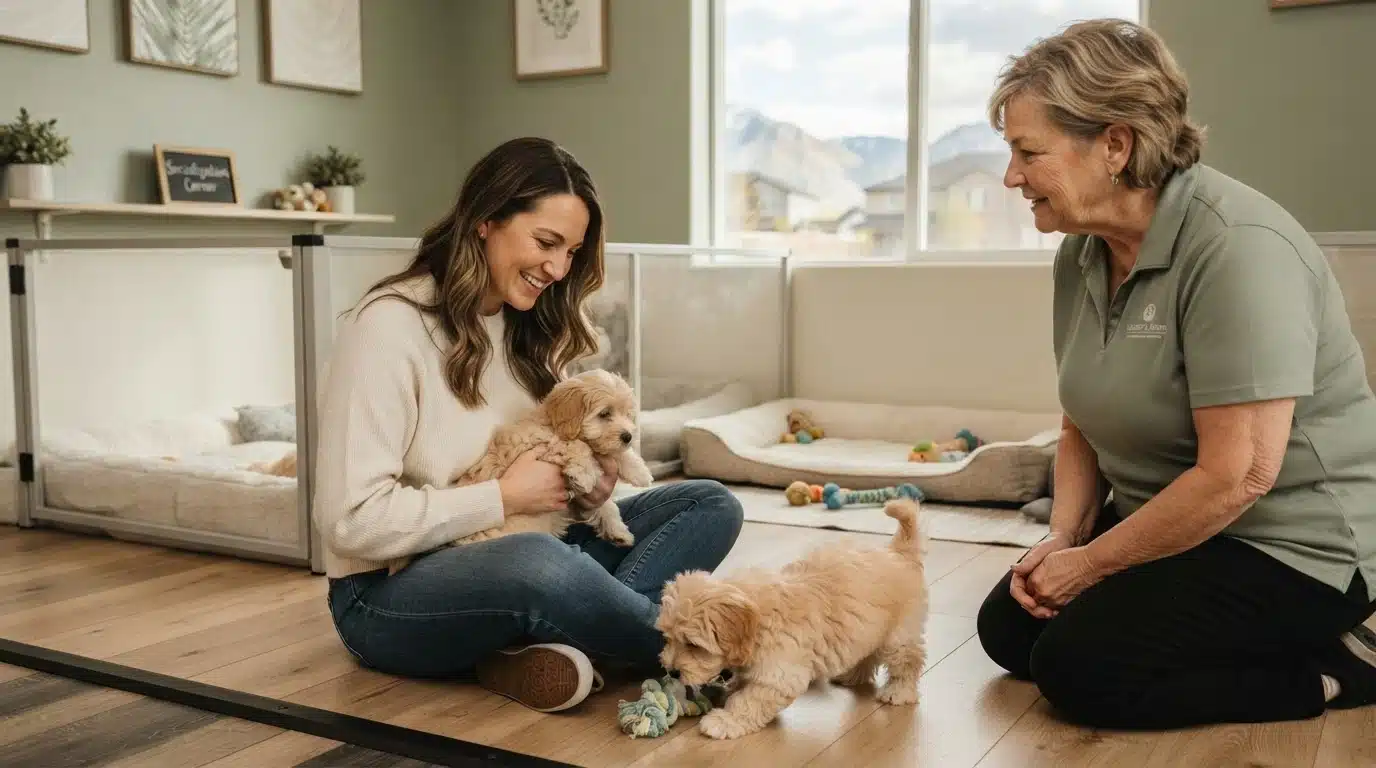
Most pet store puppies are born in large-scale commercial breeding kennels, shipped to distributors, and resold through retail outlets. A reputable breeder, by contrast, raises the litter herself. That single difference shapes health, early socialization, and how much you ever learn about the parents.
How the Retail Supply Chain Works
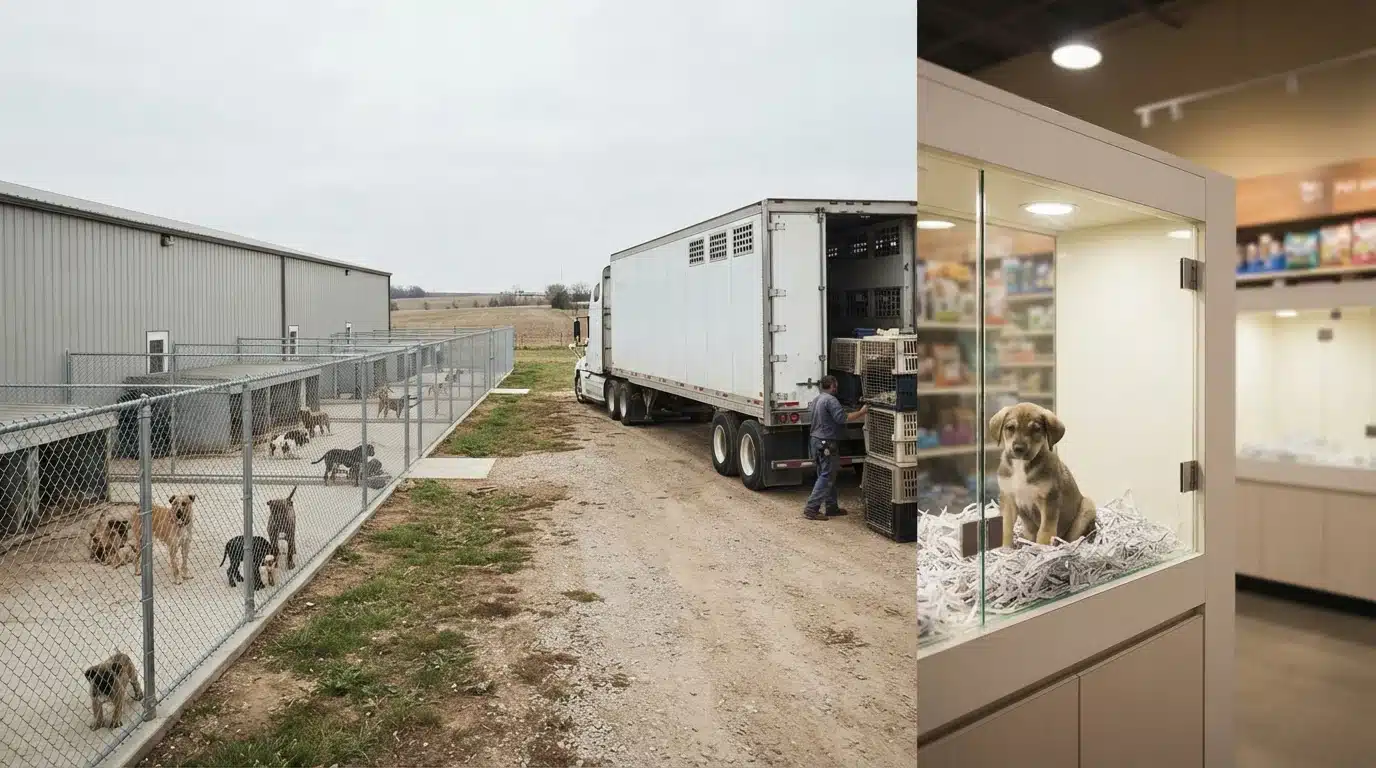
A store rarely breeds its own dogs. Puppies come from USDA-licensed kennels, many of them large operations where breeding dogs live in cages year-round to keep costs low and output high, according to the Humane Society Veterinary Medical Association. The puppy may travel weeks by truck before reaching a glass enclosure.
What the Research Says About Store Puppies
The evidence here is documented, not anecdotal. Researchers have linked pet-store sourcing to higher rates of behavior problems, and a multi-state outbreak of antibiotic-resistant Campylobacter infections was traced to pet store puppies. Early life in a cage, away from household noise and handling, appears to shape temperament too. Store staff usually cannot tell you who the parents are or what health testing they passed, because the supply chain erases that history. Breeders who raise litters at home can answer every one of those questions in person.
Why Some Puppy Mill Puppies Still End Up Beloved
Plenty of store puppies grow into wonderful, healthy companions. A lucky bloodline, decent early care, and a committed family can overcome a rough start, so a beloved store puppy is not proof the system works. It is proof that dogs are forgiving. The point of checking a seller’s sources is not to shame anyone’s dog. It is to tilt the odds toward a healthy puppy and away from kennels that profit by cutting corners on the parent dogs.
Health Documentation and Genetic Testing
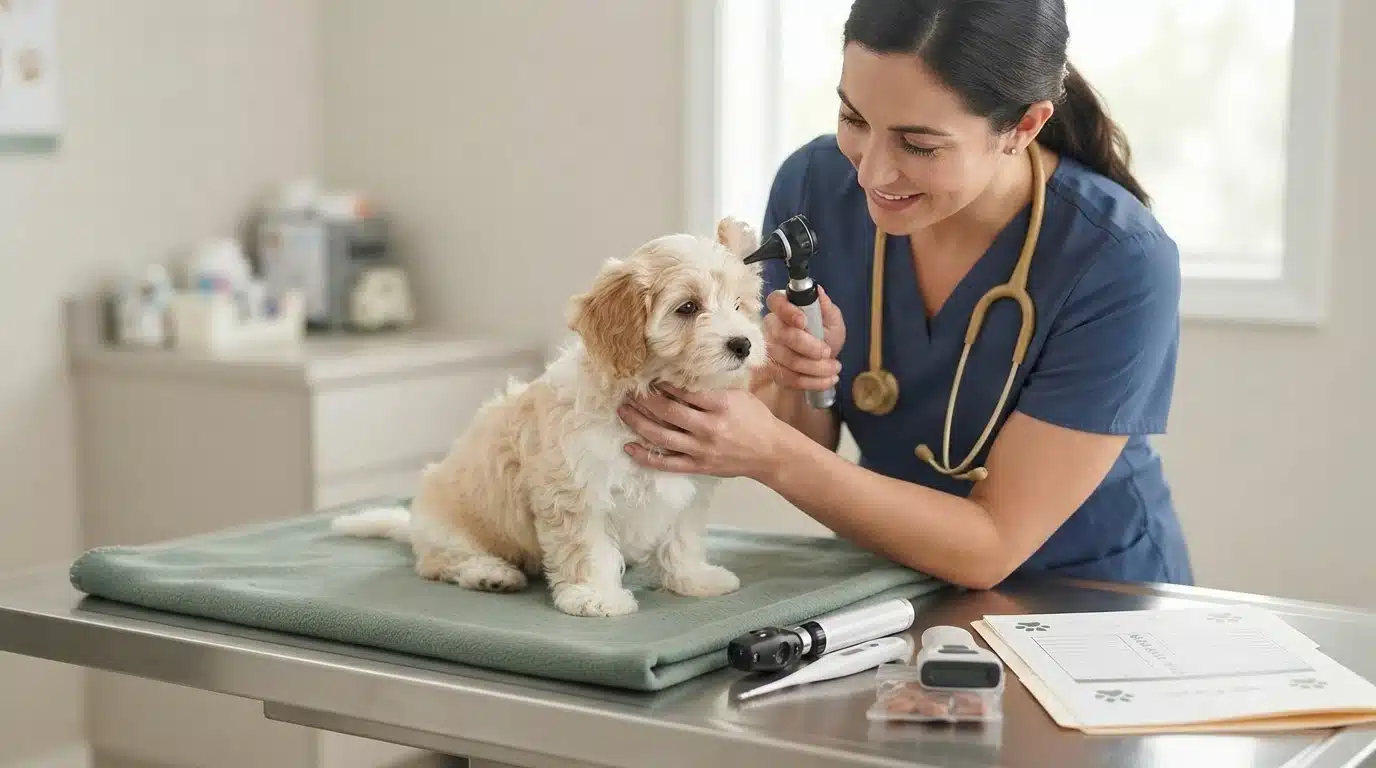
Paperwork separates claims from proof. A reputable breeder shows veterinary exam records and DNA results for the parent dogs. A pet store usually shows nothing you can check, because the breeder who produced the litter never met you.

A Veterinary Exam Is Not the Same as Genetic Testing
A vet check tells you how a puppy looks today. Genetic testing tells you what its genes carry for life. A clean exam can miss inherited diseases that show up at age two or three, so treat “the puppy saw a vet” as the floor, not the finish line.
What to Ask For When You See a Puppy
Ask for four things, and treat refusals as answers:
- Vet exam records with dates and the clinic’s name
- Vaccination and deworming history matched to the puppy’s age
- DNA test results for both parents, not just one
- Registration or screening numbers you can look up yourself
Screening results you can verify live in the OFA’s CHIC program, a public database of breed-specific health test results. Breeders who test share numbers because they have nothing to hide. If you want a deeper list of the records that matter, our guide to genetic health tests every puppy should have walks through them.
Why Crossbred Puppies Still Benefit From Parent Testing
“Hybrid vigor” gets oversold. Mixing two breeds lowers the odds of some problems but does not erase shared ones. Both Havanese and Poodles carry genes for conditions like progressive retinal atrophy, so a Havapoo can inherit two copies if both parents carry the variant. DNA panels catch that before a breeding happens. That is why we test our Havanese, Havapoo and Cavapoo parents even though crossbreeding already helps. The test results are specific; the vigor argument is general. Ask for the specific thing.
The Buying Process: Application, Visit and Screening
A reputable breeder screens you before you ever see a puppy. Pet stores skip this step because their goal is a sale today, not a fit for life.
Why Good Breeders Ask Questions About You
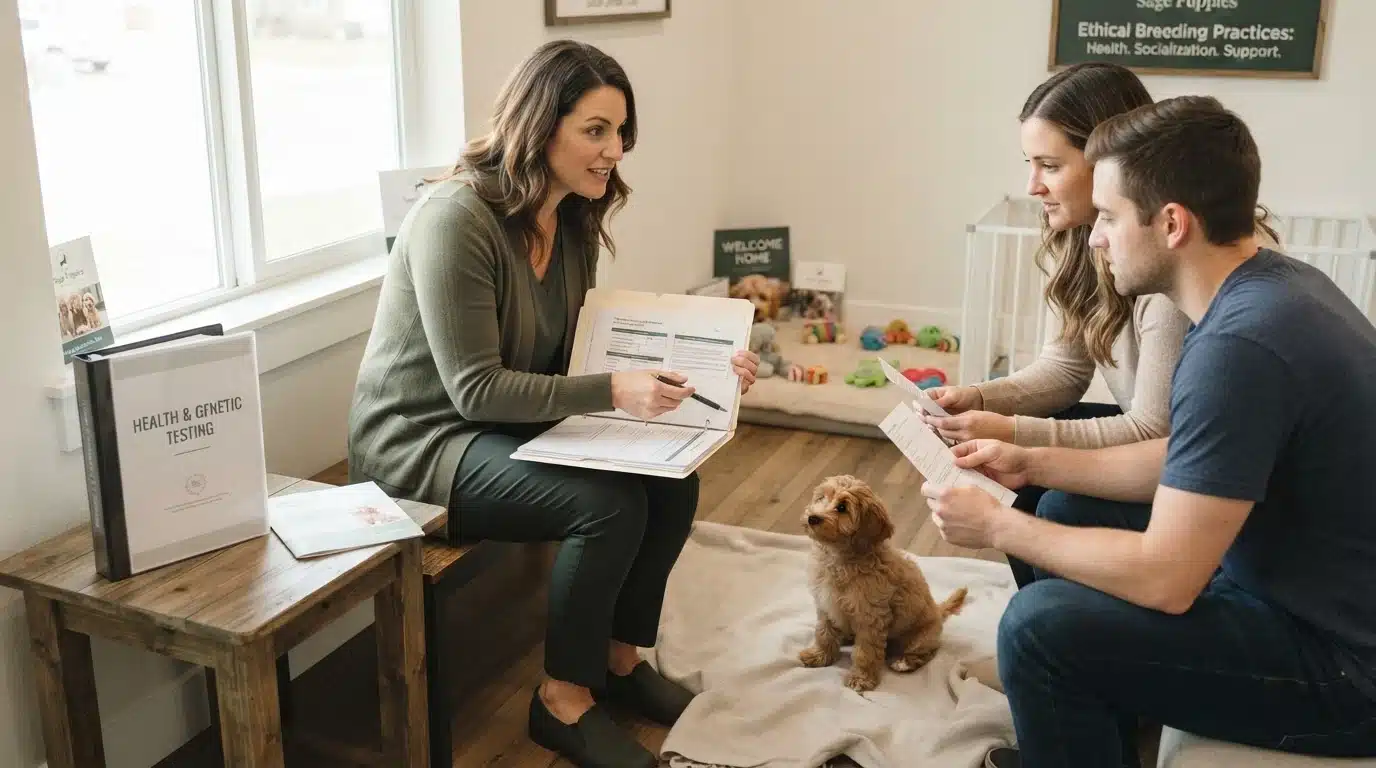
Expect an interview, not an order form. Responsible breeders ask about previous dogs, household members and ages, your work schedule, yard setup and training plans, according to the AKC’s breeder guide. Some programs start with a written application so they can match a puppy’s temperament to your family rather than hand you whoever is available. Sage Puppies, for example, uses an application-first process where families describe their home and lifestyle before matching begins. If a seller never asks about you, ask yourself why.
What a Home Visit or Video Tour Should Show
The mother dog and the whole litter should be visible, in the place where the puppies were born and raised. Whether you visit in person or join a video call, look for a clean, safe space where puppies handle people with confidence. The OFA’s breeder interview checklist also suggests asking how long the breeder has worked with the breed and whether both parents were health tested. A seller who refuses any look at the parents or living area is hiding something, so walk away.
Signs of a Transparent Seller
Transparency shows up in documents and willingness. You should be able to see parent health clearances, veterinary records, vaccination dates and a written contract without pressing for them. Clear answers about pricing, waitlists and what happens if the match fails also matter. Good breeders invite questions, and good buyers ask them; the AKC’s ownership guide recommends preparing your list before the first conversation. Silence or vagueness is your answer.
Contracts, Guarantees and What to Read Before Signing
A reputable breeder hands you a written contract. A pet store usually hands you a receipt. That difference matters more than any price tag, because the contract is where a seller puts their promises in writing.
A Retail Receipt Is Not a Contract
Most pet store sales come with a receipt, a warranty card, and sometimes a corporate “puppy protection plan.” None of that tells you who bred the puppy, what health tests the parents passed, or who is responsible if a genetic disease shows up at age two. A breeder’s contract usually does. State consumer rules like California’s Pet Buyer Protection Act give store buyers some recourse, but a good written contract goes further and names the people behind the puppy.
Clauses Worth Reading Line by Line

Before you sign, slow down on four sections:
- Health guarantee window – how many days you have for a vet exam, and what conditions are covered later.
- Return clause – whether the breeder must take the dog back at any age, for any reason.
- Spay or neuter terms – deadlines, required proof, and any exceptions.
- Breeder’s rights – many reputable programs reserve the right to reclaim a dog before it lands in a shelter.
If a clause sounds vague, ask for it in plainer words. Vague language benefits the seller, not you.
Questions to Get Answered in Writing
Verbal answers disappear. Written ones hold up. Ask for:
- The parents’ names and genetic test results
- Vaccination and deworming dates, plus the vet’s contact information
- What happens to your deposit if the litter changes
- Whether the guarantee transfers if you move
Any breeder worth trusting will put these on paper without hesitation. If you want a model of what that looks like, review how a puppy health guarantee should spell out coverage, exam windows and return terms before you commit.
Early Care, Socialization and the First Months Home
The first eight weeks shape a puppy’s temperament more than anything you do later. What a breeder does in that window, and what you do in the first two weeks home, sets the tone for years.
Questions to Ask About the First Eight Weeks
Ask any seller what daily handling looks like. Good breeders expose puppies to gentle touch, new surfaces, household sounds and brief car rides before they leave. Some follow Early Neurological Stimulation, short handling exercises done once daily from day three to day 16, and the AKC describes this routine as a common breeder practice. Research on gentle early handling suggests it can benefit puppy welfare, according to a 2022 study.
Useful questions: How many people handle the puppies? Do they meet children and other dogs? Are they litter box or crate introduced? Have they seen a vet?
Your First Two Weeks at Home
Plan for quiet, structured days. Keep the same food the breeder used, since sudden switches upset small stomachs. Set up a crate, a potty routine and short handling sessions. Most reputable breeders send home a familiar blanket and feeding notes, and many stay available by phone. Call your vet within the first week to schedule the booster visit and ask about the socialization window.
Price, Availability and Logistics When the Breeder Is Not Local
Buying from a breeder in another state changes the math. You pay more up front, wait longer for a puppy, and plan travel or delivery carefully.
Why a Waitlist Is Normal, Not a Warning Sign
Good breeders plan one or two litters a year, so puppies are often spoken for before they are born. A waitlist or an application-first process usually means the breeder controls volume and screens buyers. In fact, programs like Sage Puppies match families through an application rather than first-come buying. Be more concerned when a seller always has eight breeds ready to go the same week. That pace rarely comes from small, careful programs.
What Puppy Pricing Actually Covers
Expect $3,500 to $4,500 for a well-bred Havanese, Havapoo or Cavapoo. That price covers far more than the puppy: health testing of the parents, prenatal and whelping care, early socialization, first vaccinations, a vet exam and microchip, plus breeder support for the dog’s life. Pet store puppies often cost similar amounts but fund retail margins instead. Ask any breeder for an itemized breakdown of what the fee includes so you can compare fairly.
Pickup and Delivery Safety
Puppies should stay with their mother until at least eight weeks old, so a breeder who ships a six-week-old puppy is cutting a safety corner. For travel, most states require a health certificate issued by a licensed veterinarian, and the AVMA explains these certificate requirements. If you fly, airlines also set their own pet documentation rules, so confirm them before booking. For ground transport, use a known, insured service and get the puppy’s records in hand before the trip.
How to Verify a Seller in Any State
A Verification Routine You Can Reuse
Ask for named documents, not promises. Request the parents’ genetic panel results, a signed health record from a licensed vet, and the puppy contract before you send money. Then confirm the breeder’s license or registration with your state’s agriculture department if one is required. A [USDA inspection reports search](https://ategoricalno link) lets you check federal kennel records in minutes. Reputable programs like Sage Puppies walk buyers through these documents during the application, not after the deposit clears.
When a Seller Pushes Back, and What to Do Next
Hesitation tells you something. If a seller claims paperwork is “in the mail,” refuses a video call with the puppy, or wants payment by gift card or wire transfer, stop. The FTC lists these as common pet scam red flags, and wiring money means you likely cannot get it back. Step away without apologizing. Then report suspicious sellers to the FTC and your state attorney general so the next family has better information than you did.
(Note: the USDA link above was not verified in this conversation; please replace or remove before publishing.)

Ready to meet a breeder who does it the right way? Apply to Sage Puppies and bring home a well-bred Havanese, Havapoo or Cavapoo from South Jordan, Utah, with local pickup or nationwide delivery available.
Frequently Asked Questions
Q1: What is the difference between a reputable breeder and a pet store?
A reputable breeder raises the litter at home, health tests the parents, screens buyers and stays in contact after the sale. A pet store resells puppies from large commercial kennels, so the parents’ history is rarely documented.
Q2: Should I buy a puppy from a pet store or a breeder?
For most families, a breeder is the safer choice. You can meet the parents, verify DNA test results, read a written contract and get lifetime support. A store offers same-day availability, but with no accountability.
Q3: Are pet store puppies from puppy mills?
Many are. Puppies often come from USDA-licensed commercial kennels, pass through brokers, and travel by truck before reaching a store. Ask where the litter was born; vague answers tell you what you need to know.
Q4: How much should a well-bred Havanese or Cavapoo cost?
Expect $3,500 to $4,500. That covers parent genetic testing, vet exams, first vaccinations, a microchip, socialization and breeder support.
Q5: Do breeders require an application before buying?
Good ones do. Application-first programs match a puppy’s temperament to your home, work schedule and family rather than selling to whoever pays first.
Q6: Is a waitlist a red flag?
No. Waitlists usually mean careful, small-scale breeding. Worry instead when a seller always has many breeds ready the same week.
Conclusion
The gap between a reputable breeder and a pet store comes down to documents and accountability. A breeder can show you the parents, their DNA test results, vet records and a written contract. A store can show you a price tag. That difference shapes health, temperament and who answers the phone if something goes wrong. Use the verification checklist in this guide on any seller, trust named paperwork over promises, and the odds of a healthy, well-matched puppy tilt firmly in your family’s favor.