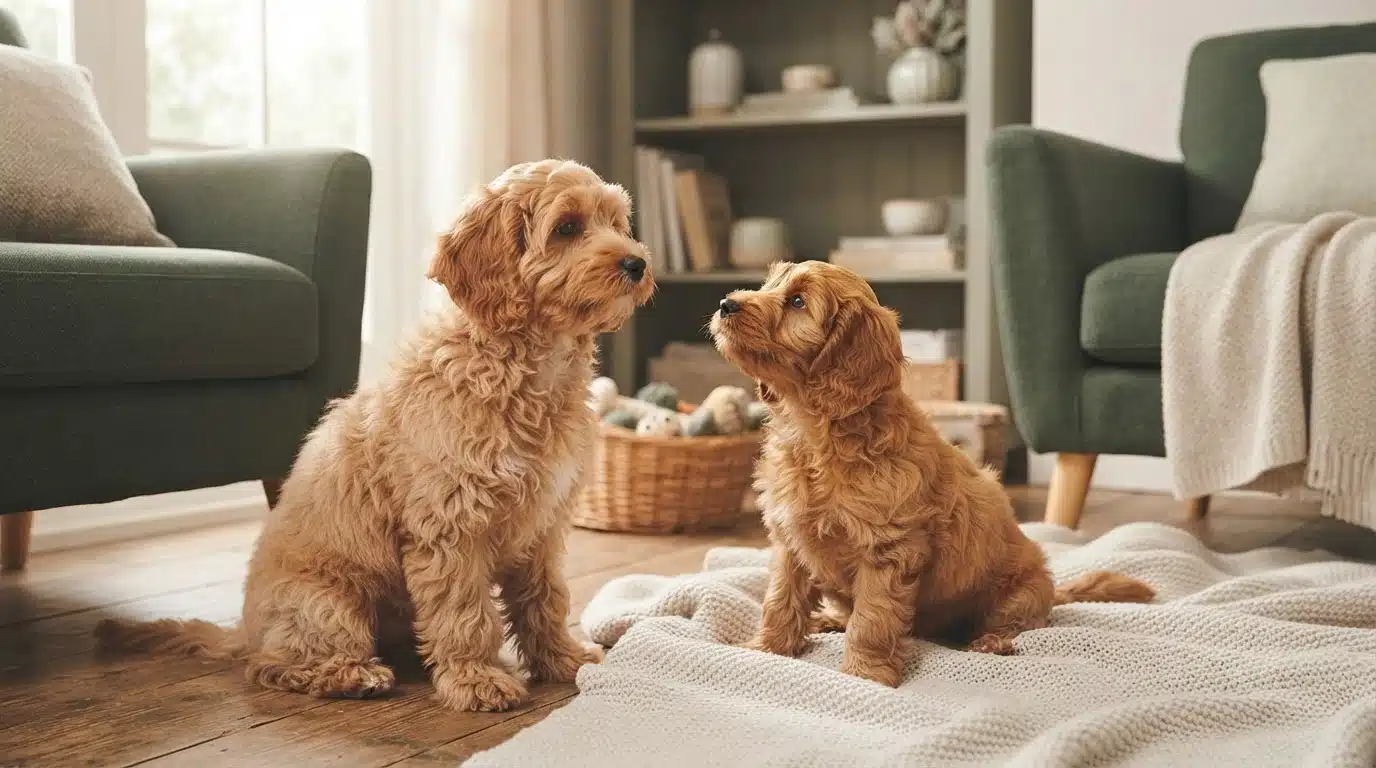
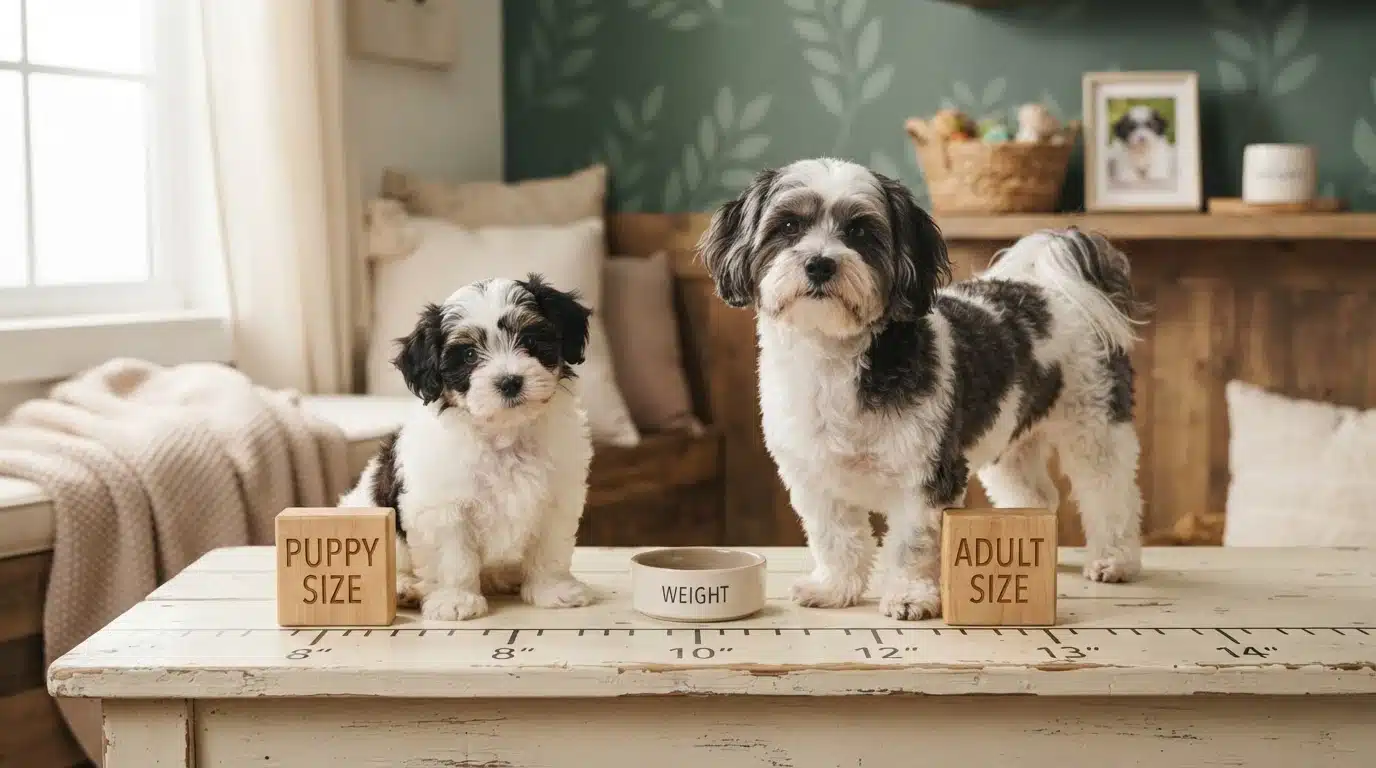
Quick Summary: A friendly, people-first temperament matters more than size when picking a small breed puppy, and the article walks beginners through scoring breeds on four factors: temperament, trainability, energy, and care demands. It highlights Havanese, Cavapoo, and Havapoo puppies as top beginner fits, noting their low-shedding coats, quick learning, and forgiving nature, while warning that tiny dogs still need real training, grooming, and dental care. Drawn from the Sage Puppies breeding program in South Jordan, Utah, the piece also covers first-year budgeting (around $4,300-$6,300), breeder red flags, and a 30-day plan for crate training and socialization.
Picking a small breed puppy as a first dog feels easy until you realize a calm, friendly puppy can quietly become a barker, a shredder of your couch cushions, or a 14-year commitment to daily brushing. The best dogs beginners can actually live with share a few traits: a soft temperament, modest grooming needs, and patience with imperfect training. This guide scores popular small breeds against that beginner fit, then goes deep on three of them. Havanese puppies beginners often choose for their people-first nature, Cavapoo puppies beginners love for their easygoing smarts, and the Havapoo blend all get honest coverage here. Everything comes from Cassie Milar’s breeding program in South Jordan, Utah, where Havanese, Havapoo, and Cavapoo litters are the only ones raised.
What Makes a Small Breed Puppy a Good Fit for Beginners
The best dogs beginners can pick share four traits you can check before you fall for a cute face. Look past size and score each breed honestly.
The Four Beginner-Fit Factors
First, temperament: a friendly, people-focused puppy forgives rookie mistakes. Second, trainability: breeds that pick up routines fast make house training and basic manners far easier. Third, energy level: a match for your real daily schedule beats a high-drive breed you cannot exercise. Fourth, care demands: grooming, barking, and separation habits decide how much work lands on you. Score any breed against all four, not just one.
Why Size Alone Misleads New Owners
Small does not mean simple. A 6-pound puppy can be a louder, more stubborn handful than a calm large breed, because many tiny breeds were bred to be alert watchdogs. Size also brings risks beginners miss: fragile joints, hard-to-house-train bladders, and a bigger jump from a low step. So use size as a filter, then judge the factors above.
Tip: Fit beats cuteness. A breed that matches your schedule will feel easier within weeks, no matter its weight.
Honest Tradeoffs No One Mentions
Every small companion breed asks something of you. Fluffy coats need regular brushing or paid grooming. Velcro breeds can struggle when left alone, so plan help in the first months. And small bladders mean more potty trips, not fewer. None of these are dealbreakers. They are just costs worth knowing before you commit, and matching them to your life is what separates a happy first year from a hard one. If you are still comparing sources, our guide to puppy breeder red flags helps first-time buyers spot the differences.
Beginner-Friendly Small Breeds Worth Considering
Some of the best dogs beginners can choose come in small packages, but they are not all alike. Temperament, coat care, and training needs differ from breed to breed. Here are the small breeds and mixes that tend to make first ownership easy, starting with the three Sage Puppies knows best.
The Cheerful Companion
The Havanese is Cuba’s national dog, bred for one job: keeping people company. The AKC breed profile describes it as affectionate, outgoing, and good with children and other dogs. That people-first nature makes training feel like play instead of work. The trade-off is company time. A Havanese left alone all day can get anxious, so it suits families where someone is usually home.
Low-Shed Coat, People-First Personality
Many first-time owners want a small dog without a snowstorm of hair. The Havanese has a silky, low-shedding coat that needs regular brushing but drops far less than a double-coated breed. Pair that coat with a gentle, eager-to-please attitude and you get a dog that forgives beginner mistakes. Among the best dogs beginners can raise, this breed asks mainly for time and consistency.
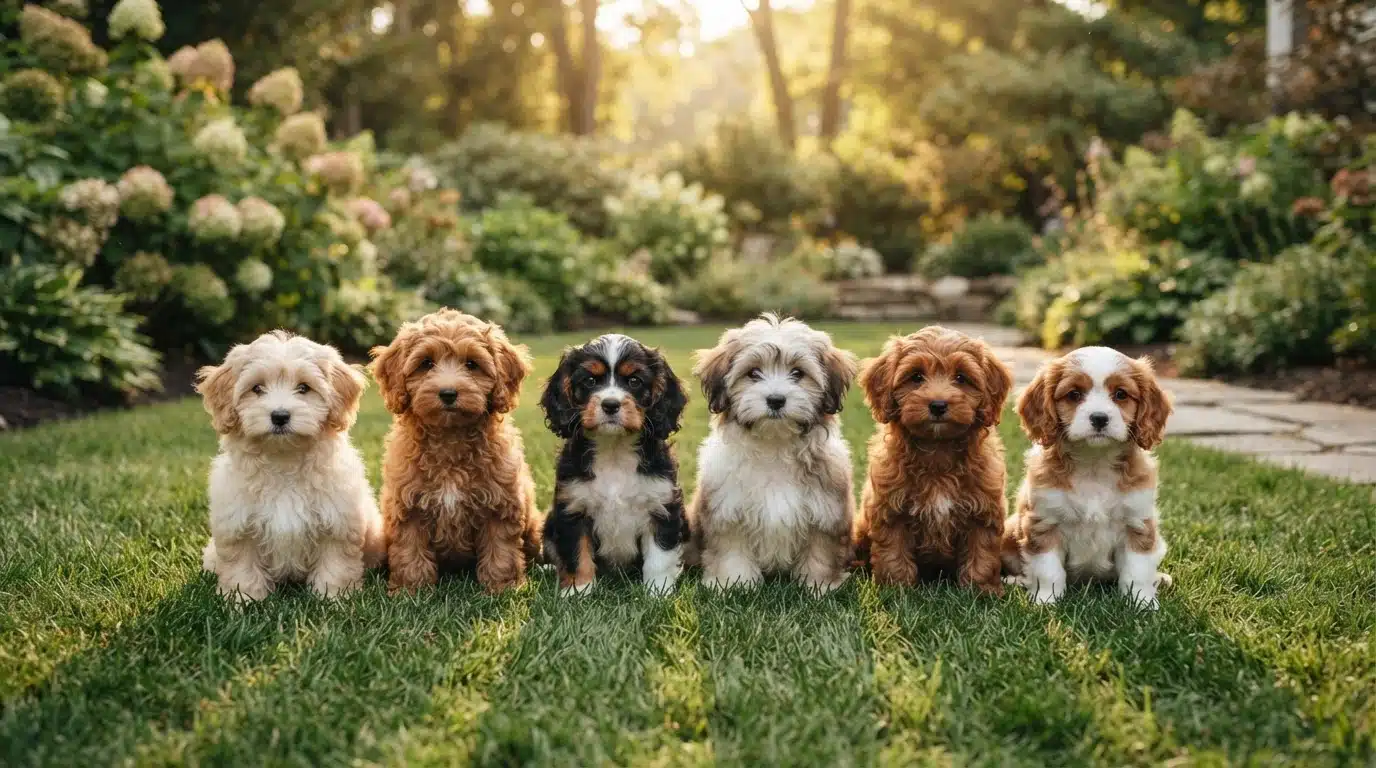
Calm and Affectionate Hybrid
Havapoos and Cavapoos blend the traits above with poodle smarts, and many first-time families find the mix forgiving on both grooming and training. A Cavapoo leans toward the Cavalier side: soft, mellow, and happiest curled up nearby. A Havapoo often carries a bit more energy and playfulness. If you are weighing the two, the breakdown in Sage Puppies’ Havapoo vs. Cavapoo temperament guide compares how each mix behaves day to day. Either way, expect a companion that wants to be part of the family, not a yard dog.
Cavalier King Charles Spaniel: A Gentle Starter
The Cavalier is a classic starter breed. It is sweet, quiet, adaptable, and takes new people and new situations in stride. Grooming is modest, and training usually goes smoothly because the dog genuinely wants to please. The main caution is health: Cavaliers carry a higher risk of heart disease, so choose a breeder who screens their breeding dogs.
Shih Tzu, Bichon Frise, and Maltese: The Calm Lap Dogs
These three are the mellowest small breeds most beginners will meet. The Shih Tzu was bred to sit on laps, and it still takes that job seriously. The Bichon Frise adds a cheerful, clownish streak and a curly, low-shedding coat. The Maltese is tiny, gentle, and bonded to its person. All three need patient house-training and regular coat care, and none tolerate rough handling, so they fit calm homes best.
Papillon, Mini Poodle, and Boston Terrier: Sharper, Trainable Picks
Want a small dog that learns fast? These three sit near the top of the trainability chart. The Papillon is a whip-smart athlete in a tiny frame. The mini Poodle is bright, low-shedding, and needs real mental work. The Boston Terrier is sturdy, funny, and easy to live with. Bright minds need a job, so plan short daily training sessions from day one.
Matching the Puppy to Your Real Life
The best breed for a beginner is the one that fits the home you actually live in. Size and cuteness matter less than noise, energy, coat care, and how much company your puppy will get each day.
Apartments, Small Homes, and Noise
Small breeds suit small spaces, but not every quiet-looking pup stays quiet. Havanese tend to be sociable and adaptable, while some alert little dogs bark at every hallway sound. If you share walls, plan for training from day one and teach a “quiet” cue early. A busy street or thin walls is a real factor, not a dealbreaker.
Families With Kids and Visitors
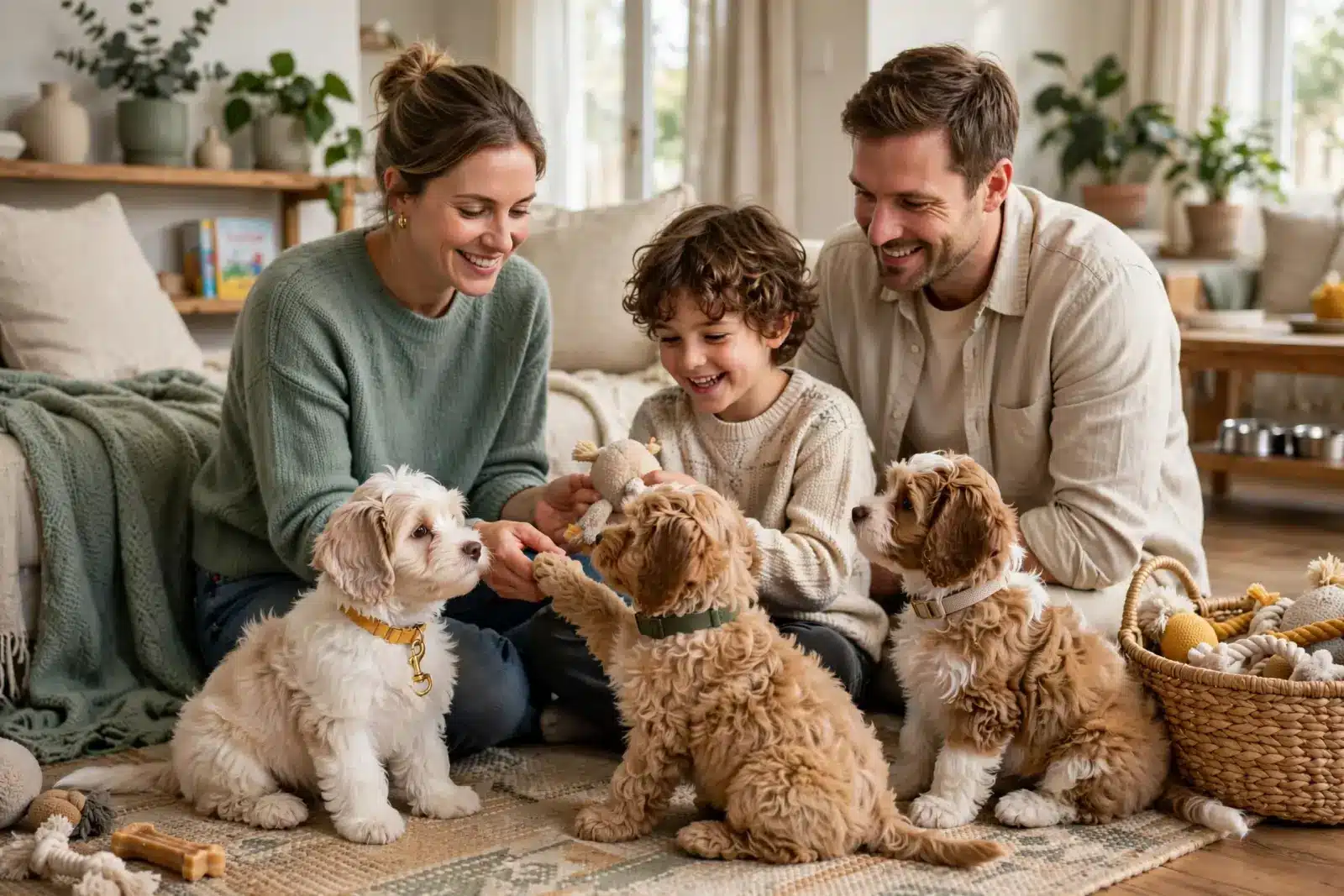
Gentle, people-focused breeds handle chaos better than nervous ones. Havanese, Havapoo, and Cavapoo puppies are usually eager to be part of the action, which helps with birthday parties and playdates. Still, children need rules: no grabbing, no chasing, and always supervision. A shy puppy can become fearful fast if kids overwhelm it in the first weeks.
Allergies, Shedding, and Grooming Budget
No dog is truly allergy-proof, and any breeder who promises one is overselling. Poodles crossed with Havanese or Cavaliers usually shed less, so many families with mild allergies do well with a Havapoo or Cavapoo. But low shedding means regular brushing and grooming every few weeks, which adds up. Budget for it before you fall in love with a curly coat.
Active Owners vs Homebodies
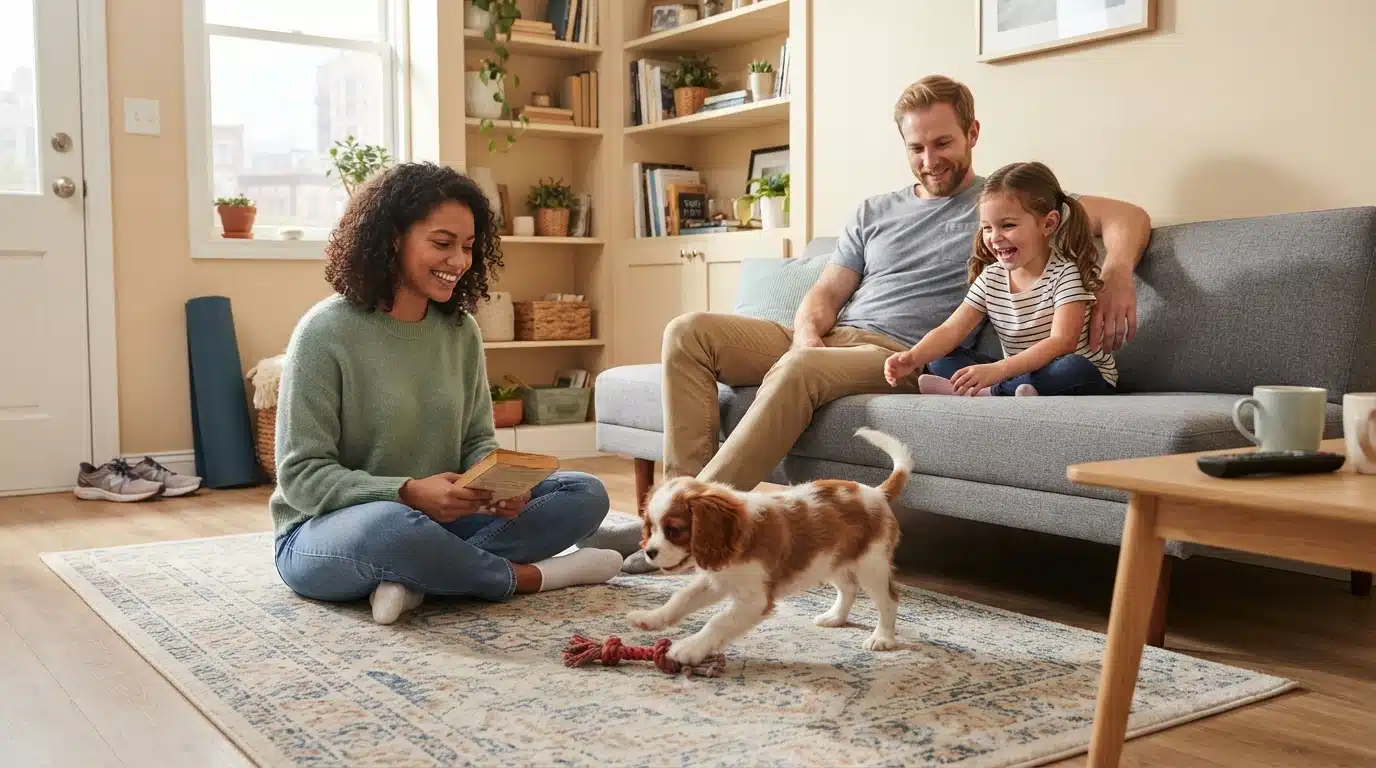
Match energy honestly. A daily jog calls for a sturdier, more athletic pup, while a homebody who wants a lap dog should pick a calmer line. Sage Puppies matches families by lifestyle rather than looks, so an honest answer here pays off for years.
What to Ask Before You Bring a Puppy Home
A good breeder expects questions. The answers tell you as much about the puppy’s future as any breed chart.
Health Records and Early Socialization
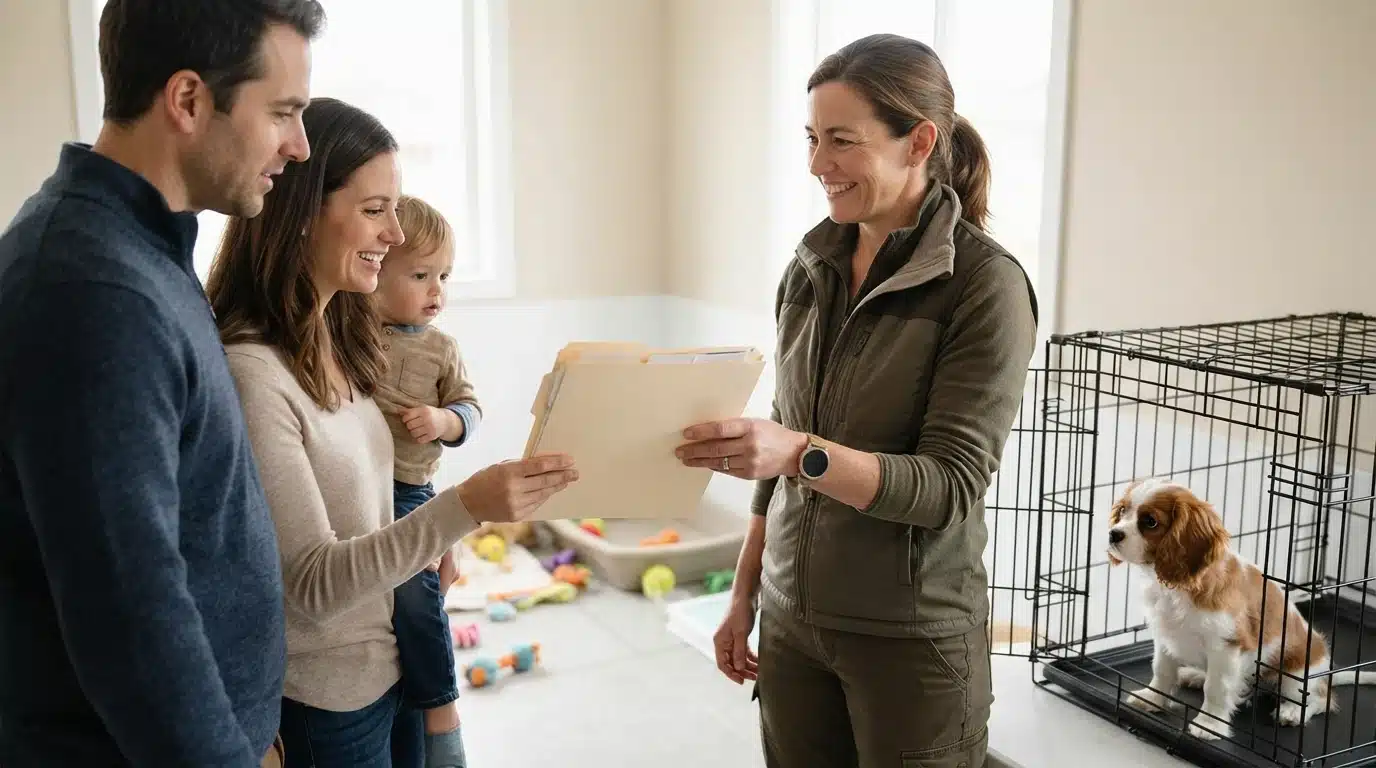
Ask for written records, not verbal promises. Confirm which vaccinations and dewormings the puppy has had and which are still due, then ask to see where the puppies were raised. Puppies handled daily, exposed to normal household sounds, and raised around people tend to settle into family life faster. Ask what the puppy eats, too, so you keep the same food during the switch to your home.
Go-Home Timing and What to Bring
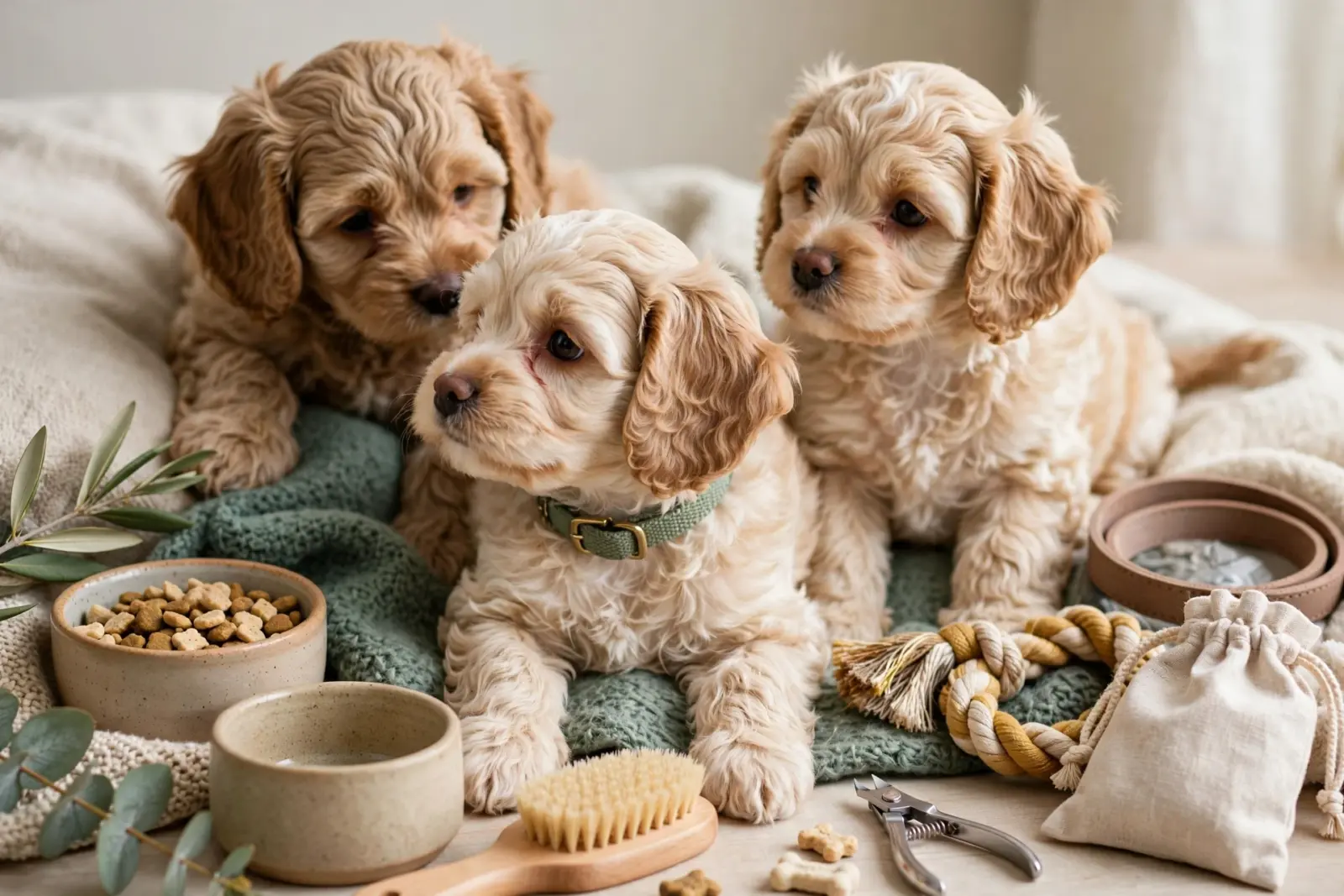
Most breeders release puppies between 8 and 12 weeks old, and earlier is not better. Ask for the exact go-home date, what food and bedding to bring, and how the ride should go. Small puppies get cold and carsick easily, so pack a crate, water, and a towel. A short gear list before pickup day saves you a gas-station shopping trip.
Ongoing Breeder Support and Contracts
Read the contract before you pay anything. The American Kennel Club suggests asking what happens if a serious health issue appears, and whether the breeder will take the dog back if you cannot keep it. A breeder who answers texts after go-home day is worth more than one with a glossy website.
Your First 30 Days With a Small Breed Puppy
The first month sets the pattern for the next 14 years. Keep it simple: one potty spot, one crate, one short training session a day.
Week 1: Settle In and Start Potty Training
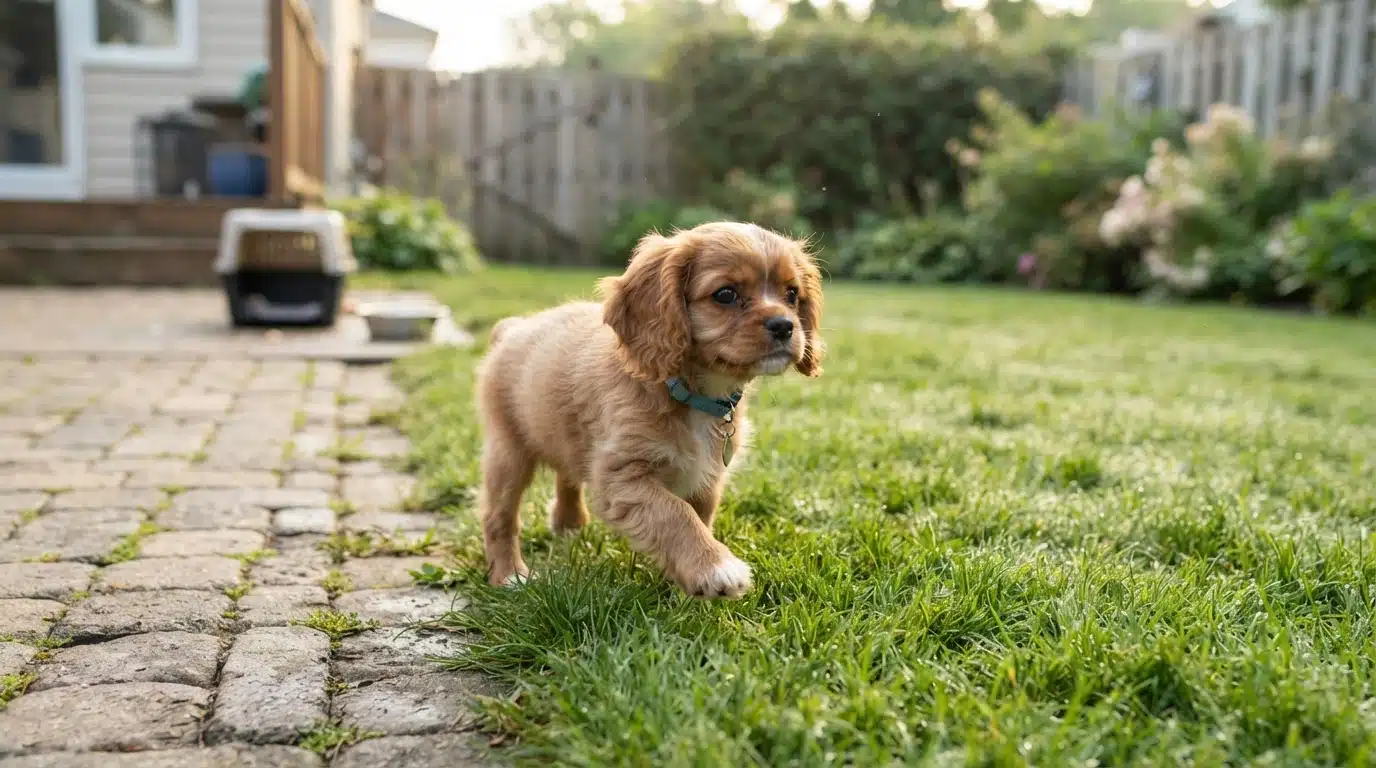
Expect accidents and sleepless nights. Take your puppy outside after every nap, meal, and play session, then reward calmly the moment they go. Pick one potty spot and stick with it. Keep the house quiet and the routine predictable so your puppy learns the rhythm of your day.
Week 2: Crate Comfort and Name Recognition
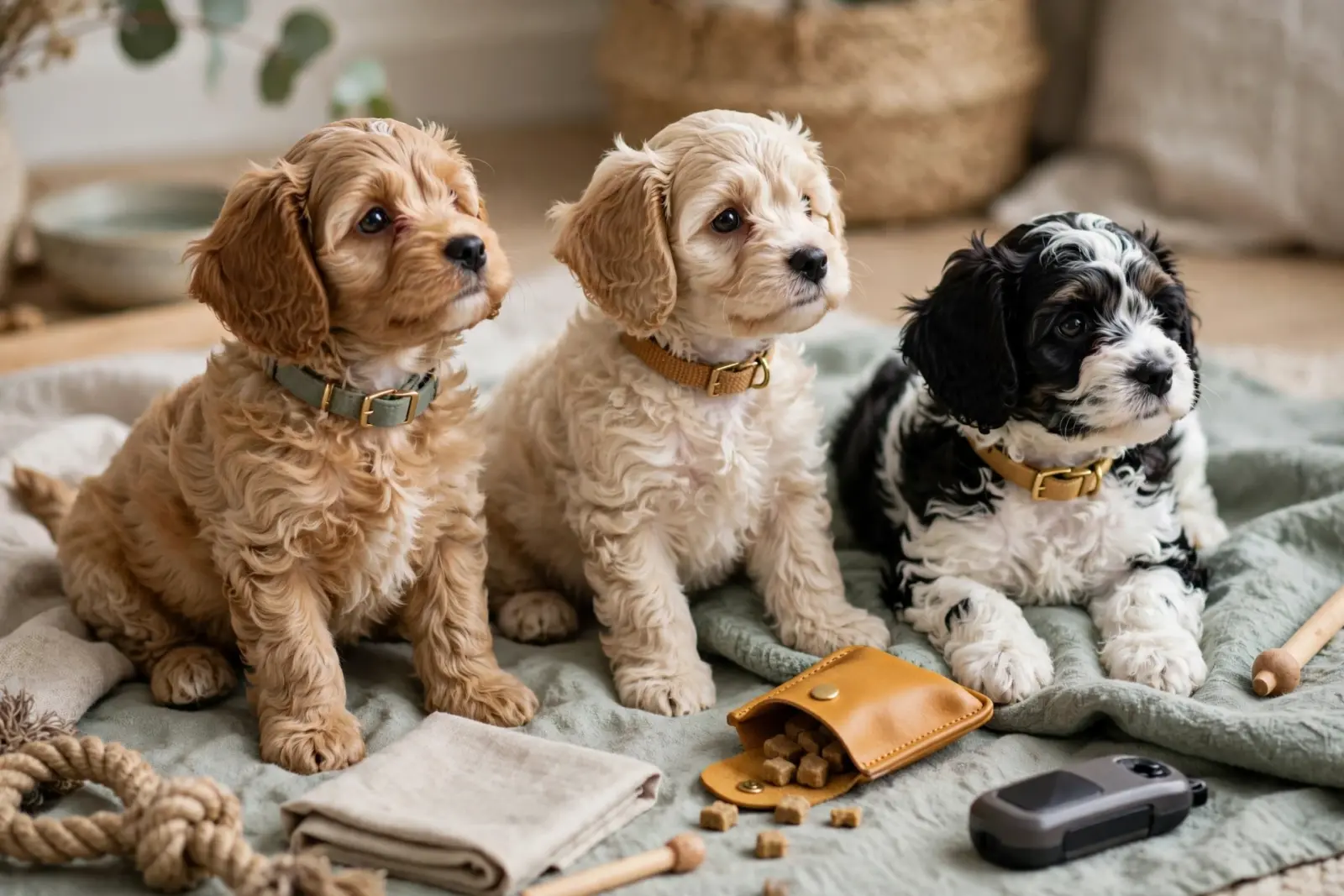
Feed meals inside the crate and leave the door open at first, so the crate feels like a good place rather than a punishment. Short naps in the crate, two or three times a day, build comfort fast. Meanwhile, practice the name: say it once, mark the moment your puppy looks at you, and pay with a treat.
Weeks 3 to 4: Vet, Socialization, and Loose Leash Intro
Book a full vet check now, even if your breeder already started vaccines. Then start socializing early, because the most important window closes around 14 weeks, and the AVSAB position statement supports meeting new people, sounds, and surfaces before vaccines are finished. Keep it positive and low pressure. End with short leash sessions indoors, rewarding your puppy for staying near your left leg.
Common Mistakes First-Time Small Breed Owners Make
Most trouble with small breed puppies comes from habits, not the dog. Here are three mistakes that cause the most headaches, and how to avoid each one.
Skipping Training Because the Puppy Is Small
A tiny puppy can’t pull you down the street, so training feels optional. It isn’t. Small breeds learn the same way big ones do, and bad habits like nipping, barking, and door-dashing grow roots fast. Start short daily lessons the week your puppy comes home, and build consistency before problems show up. Our guide to small breed potty training in an apartment shows how one routine can fit any home.
Treating the Dog Like an Accessory
Carrying a puppy everywhere feels loving, but it denies the exercise, sniffing, and play that keep a dog settled. A pup raised in a bag often becomes anxious and vocal. Let it walk, explore, and make choices on the ground each day.
Underestimating Grooming and Dental Care
Havanese, Havapoo, and Cavapoo coats mat within days without brushing, and small breeds collect tartar quickly, which can mean costly cleanings later. Brush several times a week, book regular trims, and start tooth brushing early so it becomes routine.
Cost, Value, and Finding a Healthy Small Breed Puppy
First-Year Costs, Labeled as Examples
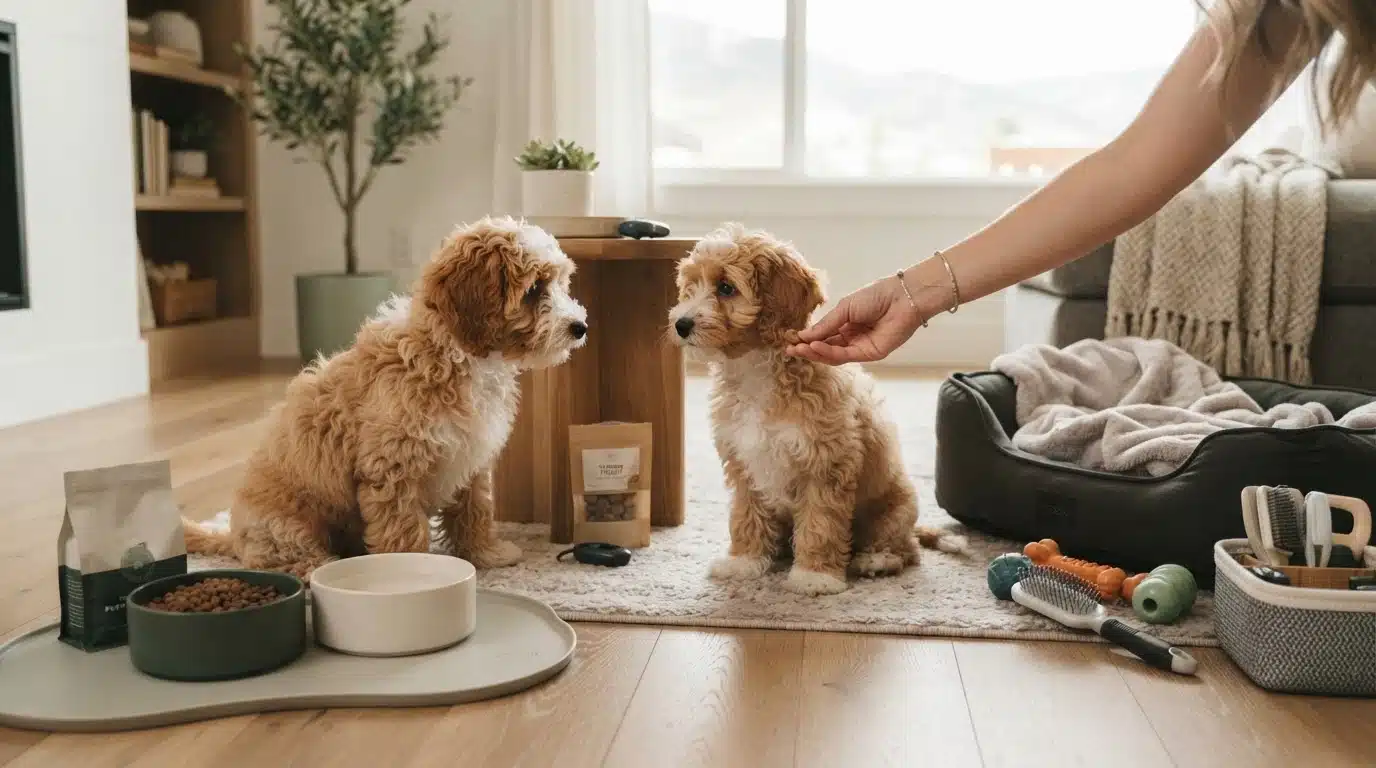
Budget examples vary by vet, region, and choices. Your first year usually includes the puppy price, vet exams, vaccines, spay or neuter, food, gear, and a starter training class.
| Expense | Example Range |
|---|---|
| Puppy price | $3,500-$4,500 |
| Vet care, year one | $300-$700 |
| Food and gear | $400-$800 |
| Training classes | $100-$300 |
| Example total | $4,300-$6,300 |
Add these up yourself before you apply. For current prices and reservation steps, see the pricing and reservation details.
Why Health-Tested Companion Puppies Cost More
Health testing parents costs real money. So does time with a litter, early socialization, and honest support after pickup. Breeders who skip these steps can charge less, but the risk lands on you. A well-bred puppy is cheaper than years of vet bills or behavior trouble.
Red Flags When Looking for a Small Breed Puppy
Watch for these before you send money:
- No health testing on the parents
- Puppies offered before 8 weeks old
- No questions asked of you
- Multiple litters, always “available”
- No contract, no vet records, no meet-and-greet
A breeder who interviews you is a good sign, not a barrier.

If any of this matched your worry, Sage Puppies makes the next step simple. We raise Havanese, Havapoo, and Cavapoo puppies only, and we match each one to your home through an honest application. Visit Sage Puppies to apply or ask a question first.
Frequently Asked Questions
Q1: What is the best small breed puppy for first-time owners?
There is no single winner, but Havanese, Cavapoo, and Havapoo puppies score highest on beginner fit: friendly temperaments, quick trainability, and coats that shed less. Pick the one whose energy level matches your actual daily schedule.
Q2: Which small dog breeds are easiest to train for beginners?
Mini Poodles, Papillons, and poodle mixes like the Cavapoo and Havapoo learn fastest. They want to please and stay engaged in short sessions, which suits new owners still finding their training rhythm.
Q3: Are Havanese puppies good for first-time dog owners?
Yes, if someone is usually home. They forgive rookie training mistakes and love families, but they bond deeply and can grow anxious when left alone all day, every day.
Q4: How much should I budget for a small breed puppy’s first year?
Plan roughly $4,300 to $6,300 as an example, covering the puppy price, vet visits, vaccines, food, gear, and a starter class. Add grooming every few weeks for curly or silky coats.
Q5: Do low-shedding puppies work for people with allergies?
Often, but no dog is allergy-proof. Havapoos and Cavapoos usually shed less, so many families with mild allergies do well. Spend time around the breed first before committing.
Q6: How old should a puppy be when it comes home?
Between 8 and 12 weeks. Earlier is not better, because those final weeks with the litter teach bite control and confidence that make your first month far easier.
Conclusion
The best small breed puppy for a beginner is the one that fits your real life. Temperament, trainability, energy level, and care demands matter far more than size or looks. Havanese suit families with someone home most days, while Cavapoos and Havapoos add forgiving, low-shedding coats for busier households. Budget honestly, from the $3,500-$4,500 purchase price through first-year vet and training costs. Ask breeders hard questions, watch for red flags, and treat a small puppy like a real dog. Do that, and your first 90 days set up 14 great years.