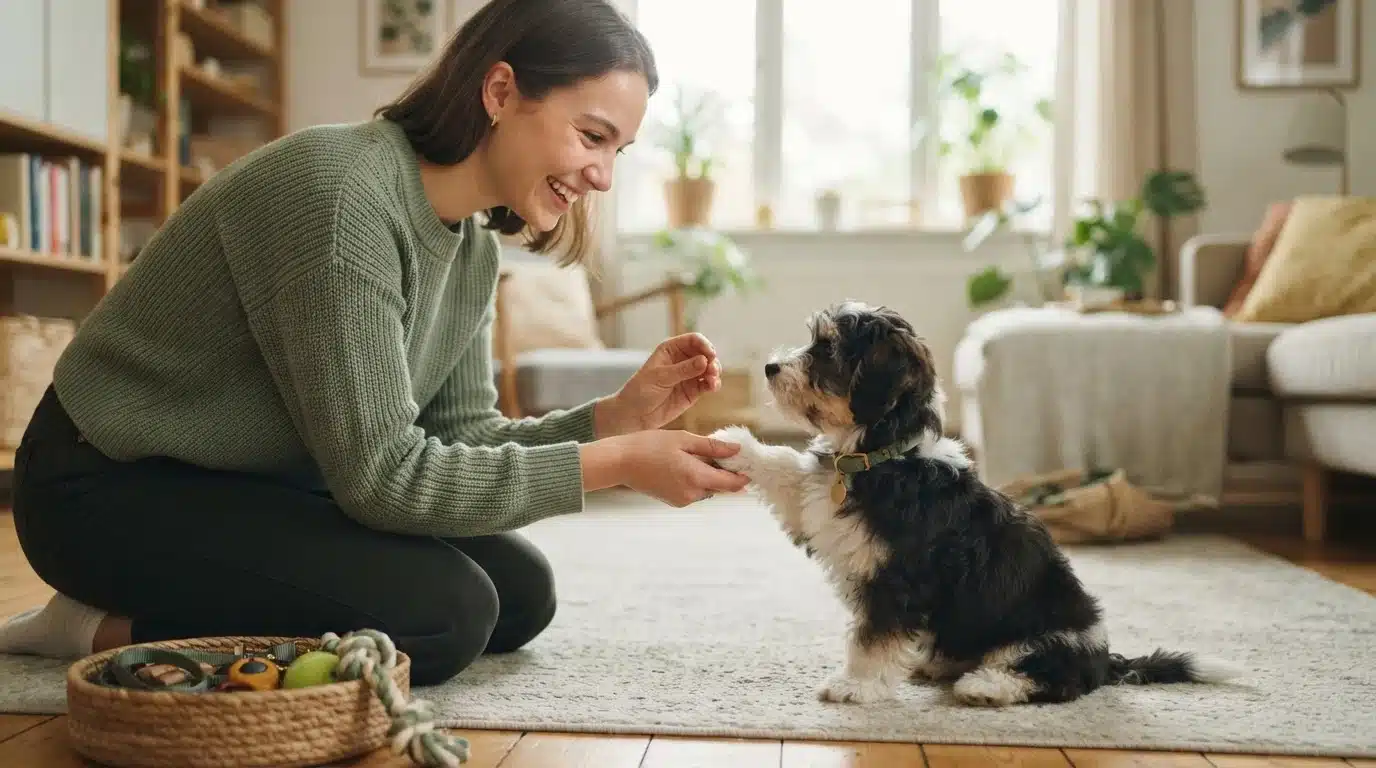
Quick Summary: A Cavapoo’s first year depends on steady sequencing: prepare a safe home, follow vaccinations through at least 16 weeks, feed measured portions, and begin socialization before the window closes around 14 weeks. Start grooming early, brush the soft coat three to four times weekly, use short reward-based training sessions, and expect some regression between 6 and 12 months. Expect first-year costs of roughly $2,000 to $4,500 beyond the purchase price, and verify parent health testing, vaccination records, and breeder practices before paying a deposit.
A complete Cavapoo first year care plan covers six stages in order: bringing your puppy home, veterinary visits and the puppy vaccination schedule, nutrition, socialization and training, coat upkeep and grooming, and adolescent correction as growth settles.
The timing matters more than most buyers expect. A Cavapoo’s first year is roughly 52 weeks of small but compounding decisions. The food you measure tonight, the vaccine appointment you book this week, and the new sound you let your ten-week-old investigate each shape how manageable the months ahead feel. Get the sequence right and the year runs mostly on routine. Get it wrong and you spend month seven undoing habits that took weeks to form.
This guide walks each stage chronologically, pairing veterinary and behavioral guidance with the Cavalier King Charles Spaniel and Toy Poodle traits that make Cavapooo care distinct, so you can separate documented evidence from opinion before you commit to any source.
What a Cavapoo Is and Why the First Year Deserves Its Own Plan
A Cavapoo is a cross between a Cavalier King Charles Spaniel and a Poodle, usually a Toy or Miniature. It was bred to combine the Cavalier’s gentle, people-focused nature with the Poodle’s low-shedding coat and quick learning. That mix is why the breed suits families, apartments and first-time owners so well.
Cavalier and Poodle Traits That Carry Into Year One
Expect a puppy that wants to be with you, learns fast, and picks up habits quickly, both good and bad. The soft coat grows continuously, so grooming starts early. Because Cavaliers are companion dogs, Cavapoos can struggle with long stretches alone if you skip early confidence building.
The Three Phases of the First Year
Good cavapoo first year care follows three phases. Months one to three center on bonding, crate and potty basics, and socialization while the window is open. Months four to six bring teething, adolescent testing and more training. Months seven to twelve focus on calm routines, coat upkeep and adult food. Choosing a well-matched pairing early makes each phase simpler.
Inherited Health Considerations to Discuss With Your Veterinarian
Cavalier lines carry mitral valve disease risks, and small breeds can face loose kneecaps, so ask your vet about heart and patella checks. PetMD notes MVD is inherited and a leading Cavalier concern. Build health records from day one and keep every cavapoo first year care visit on schedule.
Sage Puppies explains what a well-planned pairing looks like before a puppy ever comes home.
Before the Puppy Arrives: Home Setup and the First-Week Supply Plan
A Cavapoo puppy needs a safe space and a short supply list before pickup day, not a shopping spree. Get the house ready first, then buy only what the first week truly requires.
Room-By-Room Puppy-Proofing for a Small Breed
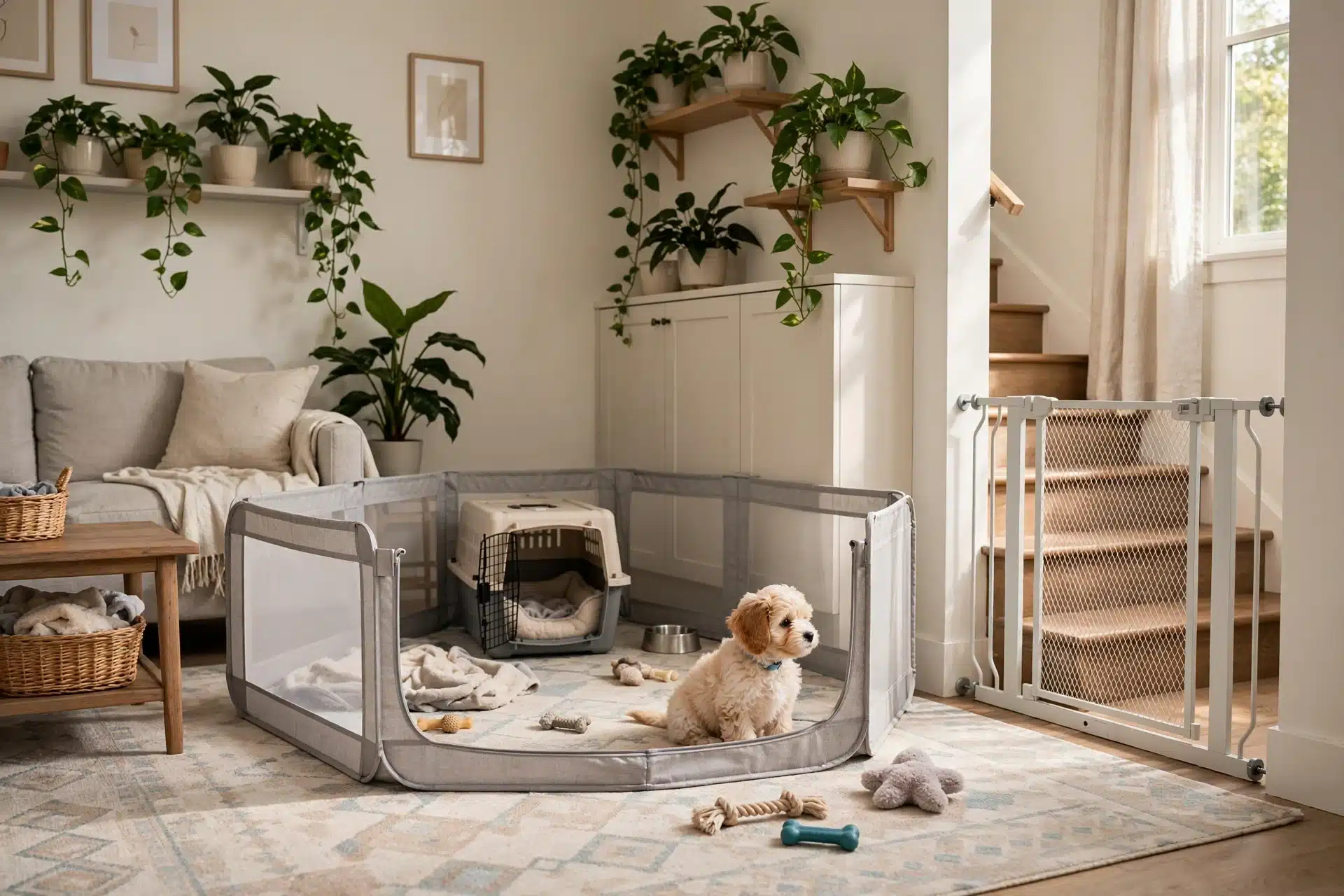
Get down to knee height and scan each room the way an eight-pound puppy would. Tuck charger cords behind furniture, move houseplants up high (many, like pothos, are toxic), and secure loose rugs that slide under tiny paws. Block staircases with baby gates, since stairs strain small joints, and keep the trash, cleaning supplies and medications behind closed doors. Pick one room as the puppy’s home base for week one.
The Core Supply List and Where to Spend Carefully
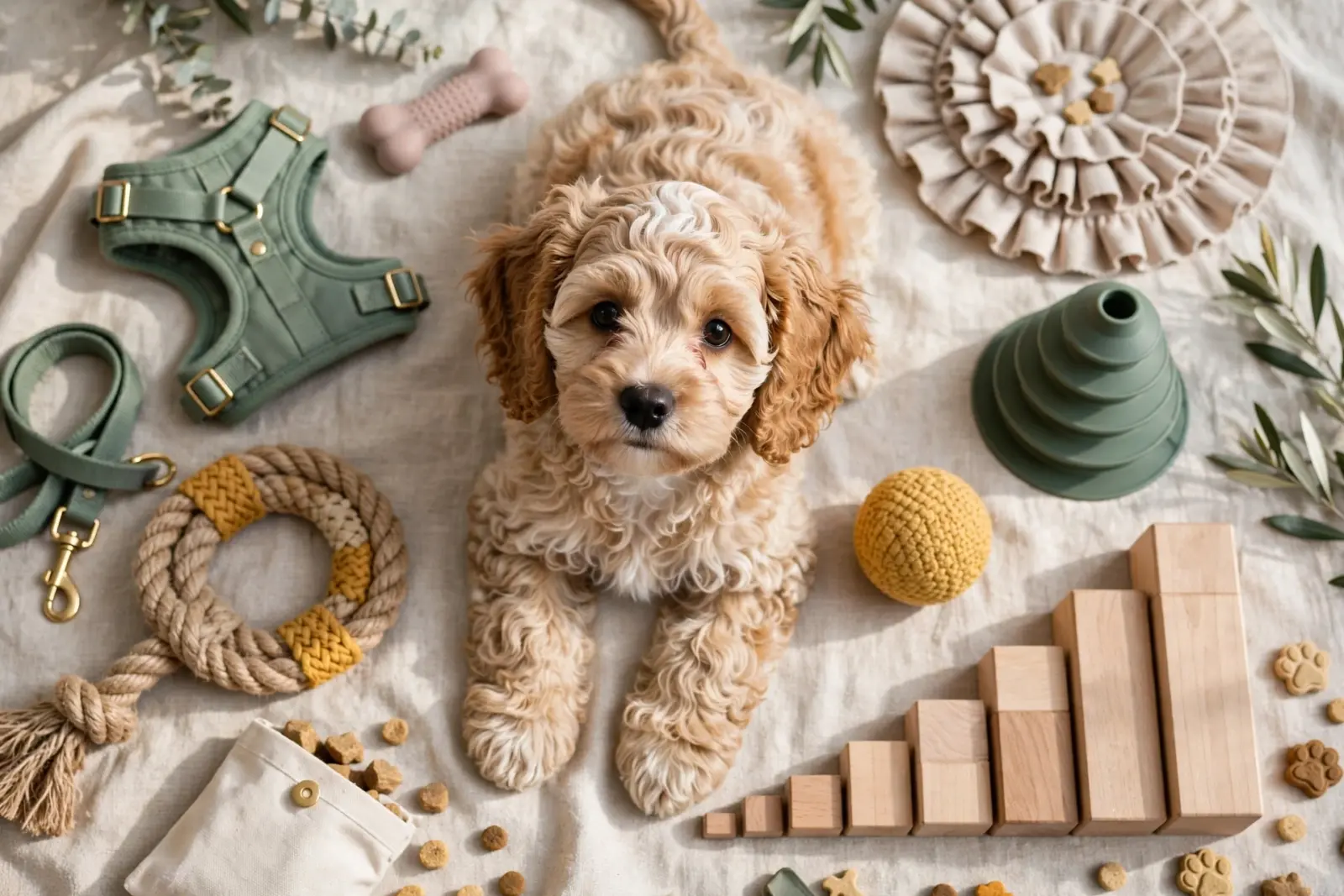
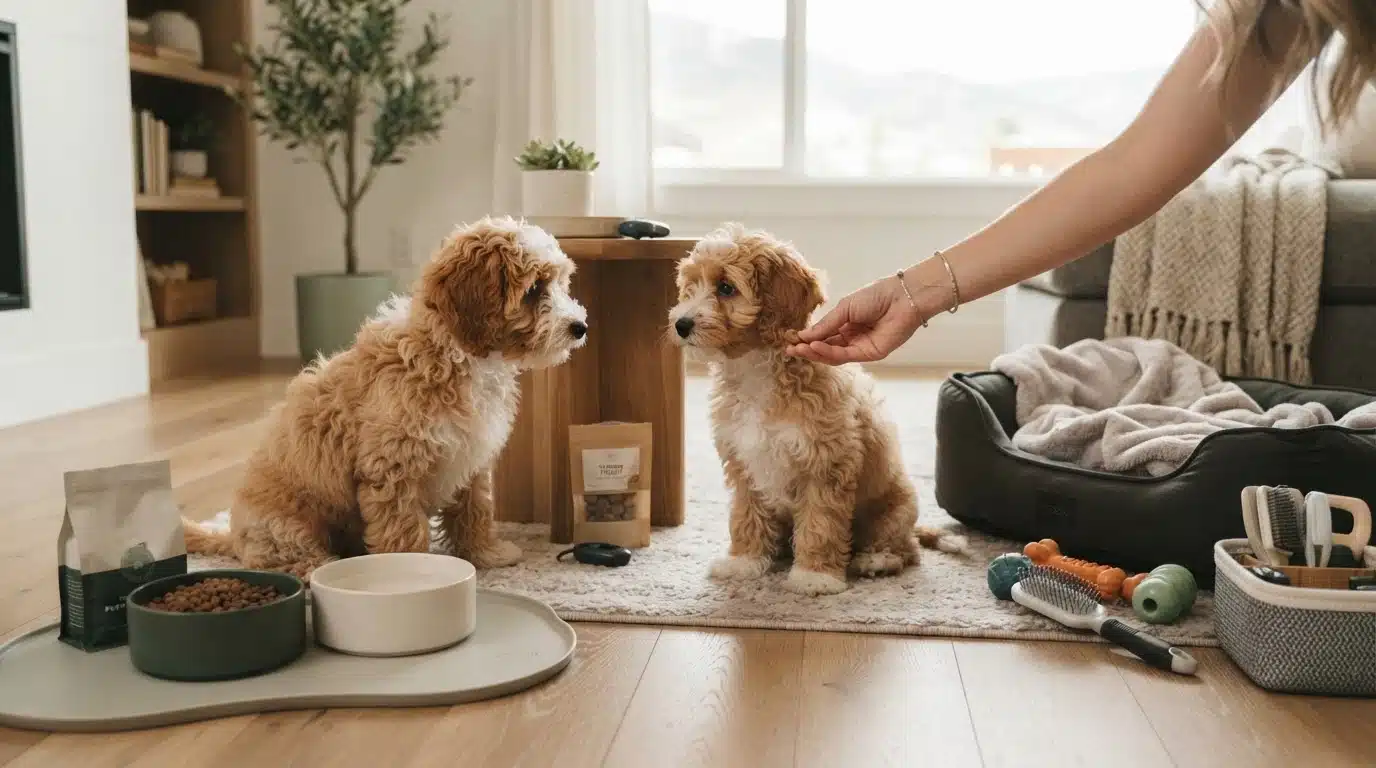
Buy a few quality items and go budget on the rest. A correctly sized crate, a harness with a flat leash, and puppy food matching what the breeder fed are worth careful choices. Bowls, a brush, enzyme cleaner and chew toys can be inexpensive at first. If you want a fuller walkthrough, this small-breed puppy care checklist covers feeding and vet basics in more detail.
Setting Up the Crate, Potty Area and Sleep Routine
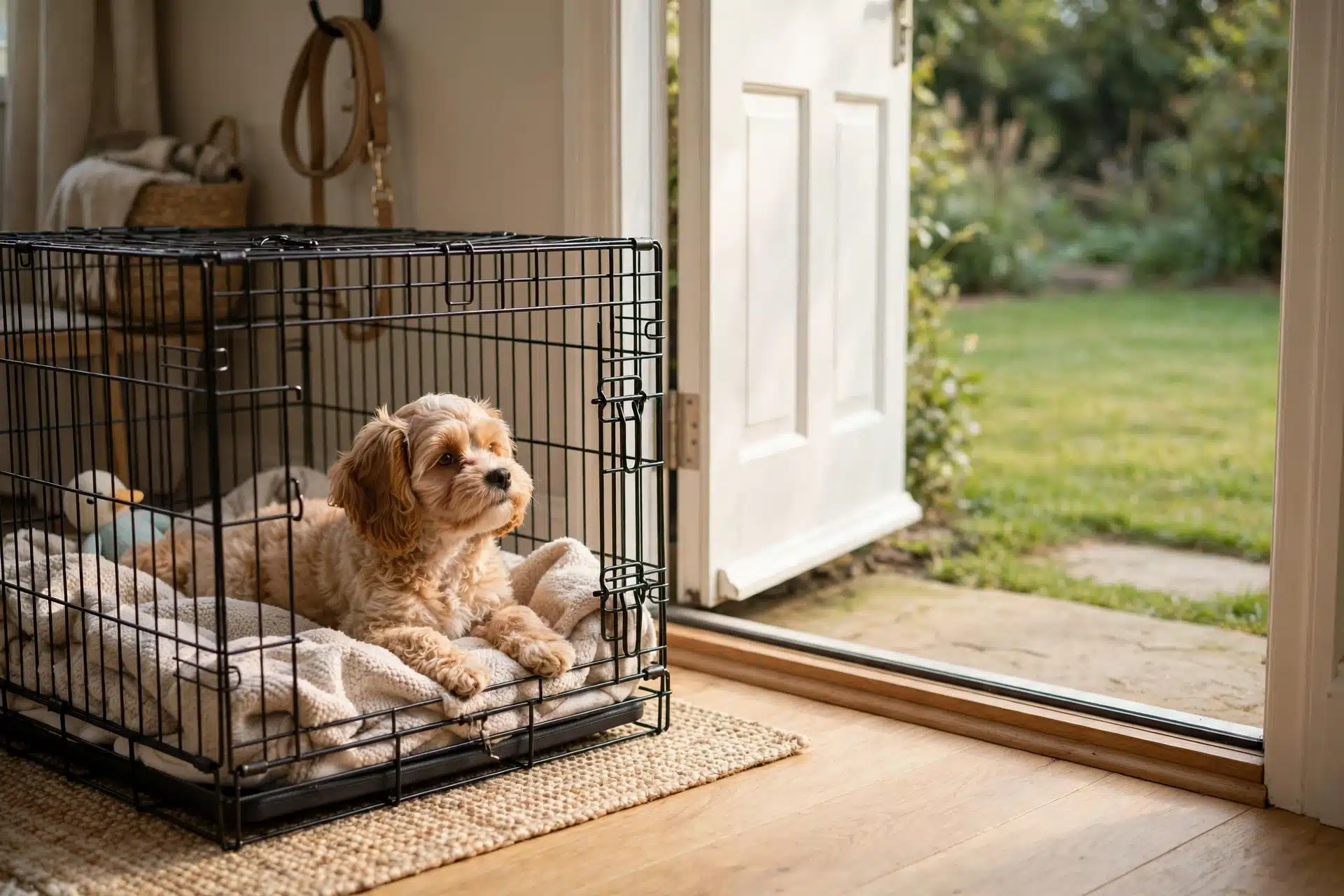
Place the crate in a quiet corner of your bedroom so the puppy feels near you at night. Set up one outdoor potty spot and carry the puppy to it after every nap, meal and play session. Keep the first-week schedule boring and predictable. Short, calm days help a young puppy settle, and our Havapoo training tips for new owners apply just as well to Cavapoos.
The First Two Weeks Home: Adjustment, Routine and the Potty Baseline
The First 72 Hours: What Adjustment Actually Looks Like
Expect a rough start. Your Cavapoo just left her mother and littermates, so whimpering at night, loose stools and shaky appetite are normal for two or three days. Keep the world small: one room, a crate, short play bursts and plenty of naps. UC Davis vets advise taking puppies aged 6 to 14 weeks out for elimination breaks 8 to 10 times daily, so plan your housetraining around that clock rather than hoping she’ll tell you.
Building a Reward-Based Toilet Routine
Structure beats luck. Take your puppy out first thing in the morning, after every meal, after naps and after play. Walk her to the same spot, say a simple cue, and praise warmly the moment she finishes. Then bring her straight inside; don’t linger. If you catch an accident mid-stream, interrupt gently and carry her out. Never scold after the fact, because she won’t connect the punishment with the mess. Consistency in these two weeks sets the pattern for months.
The Paperwork Habit That Makes Year One Easier
Start a simple record on day one: dates for deworming, vaccines, vet visits, weights and food changes. Keep breeder paperwork in the same folder. When you later compare records against your puppy’s schedule by age, the pattern is easy to spot and your vet visit goes faster.
Nutrition and Feeding From Eight Weeks to Twelve Months
Choosing a Complete and Balanced Puppy Food
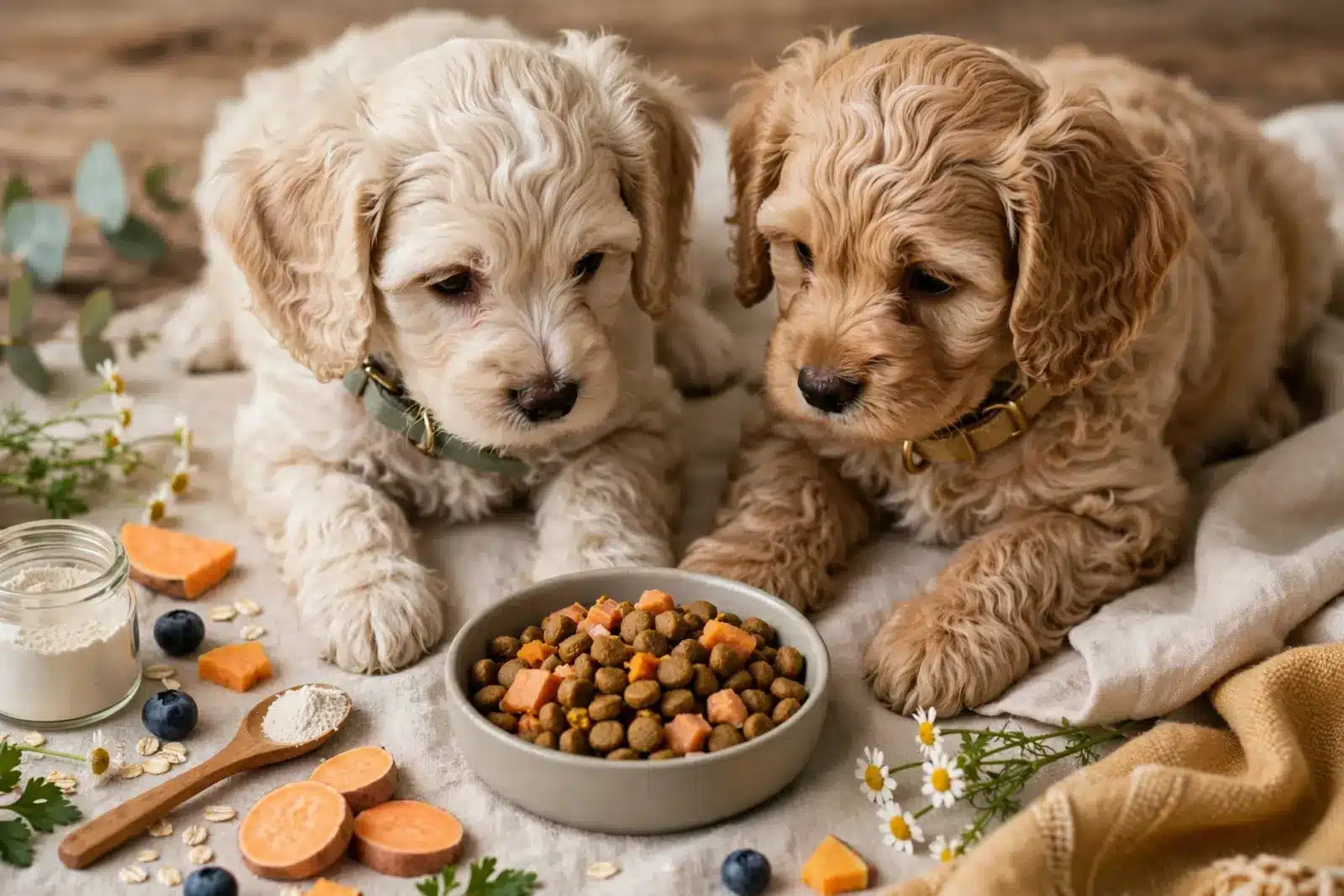
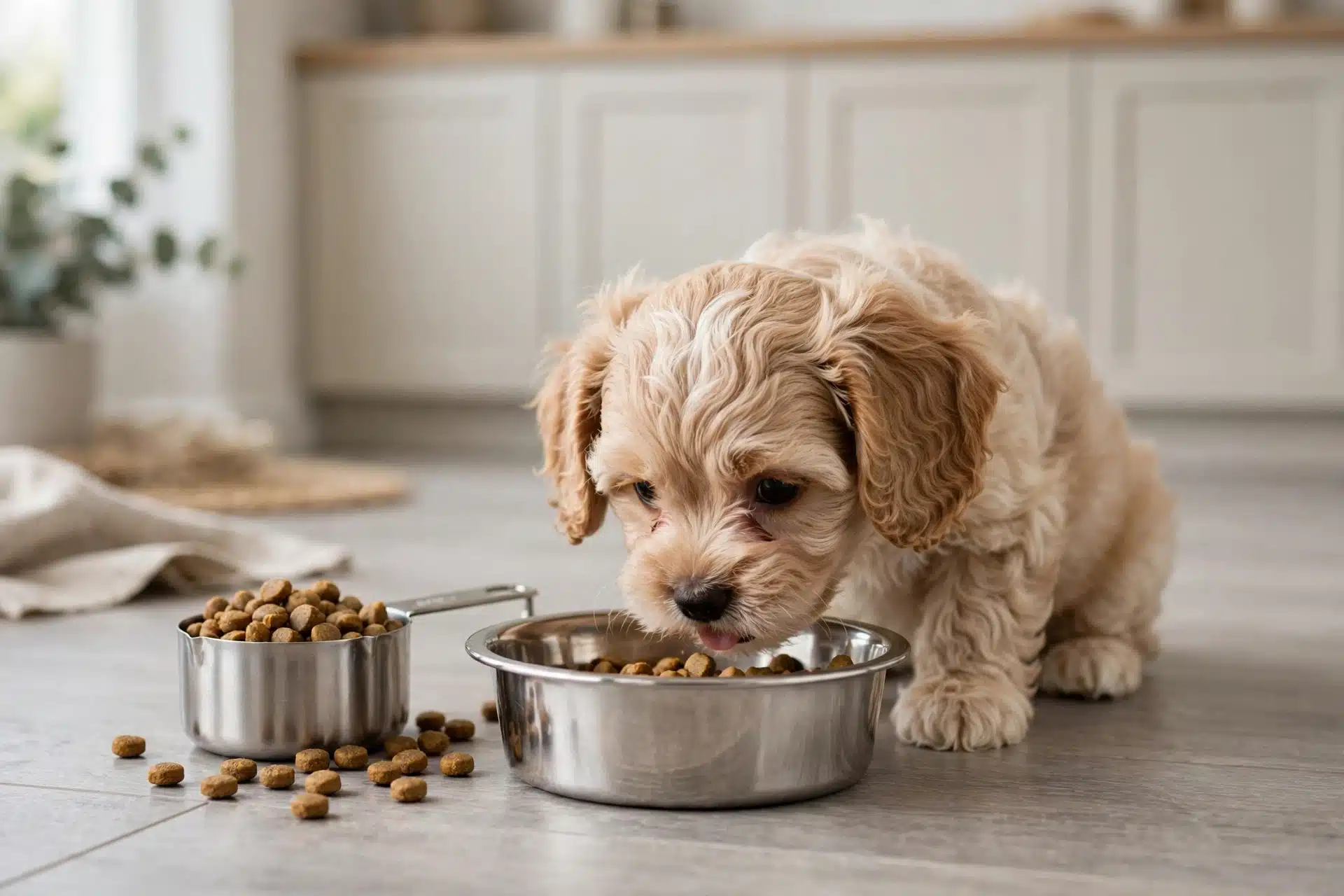
Start with the label. A food legally called “complete and balanced” must meet AAFCO nutrient standards for a stated life stage, and the FDA explains how to find that statement. Pick a formula made for growth or all life stages, since small breed puppies burn more calories per pound than adults. Your vet can confirm the choice fits your Cavapoo’s size and any sensitivities.
Portion Sizes, Meal Frequency and Growth Plates
Feed by the bag’s chart, then adjust to your puppy’s body condition rather than the scale alone. Most eight-week-old puppies eat three or four meals a day, dropping to two around six months. Free feeding invites overgrowth, and steady, moderate growth protects the growth plates that close near the first birthday.
Food Transitions, Treats and Common Feeding Errors
Switch foods over seven to ten days, blending a little more of the new food each meal so her stomach adjusts. Keep treats under ten percent of daily calories, and count training tidbits in that total. Common errors: sudden brand changes, table scraps and oversized portions. A steady routine now sets up your Cavapoo’s healthy adult eating habits.
Veterinary Care, Vaccination and Preventive Health
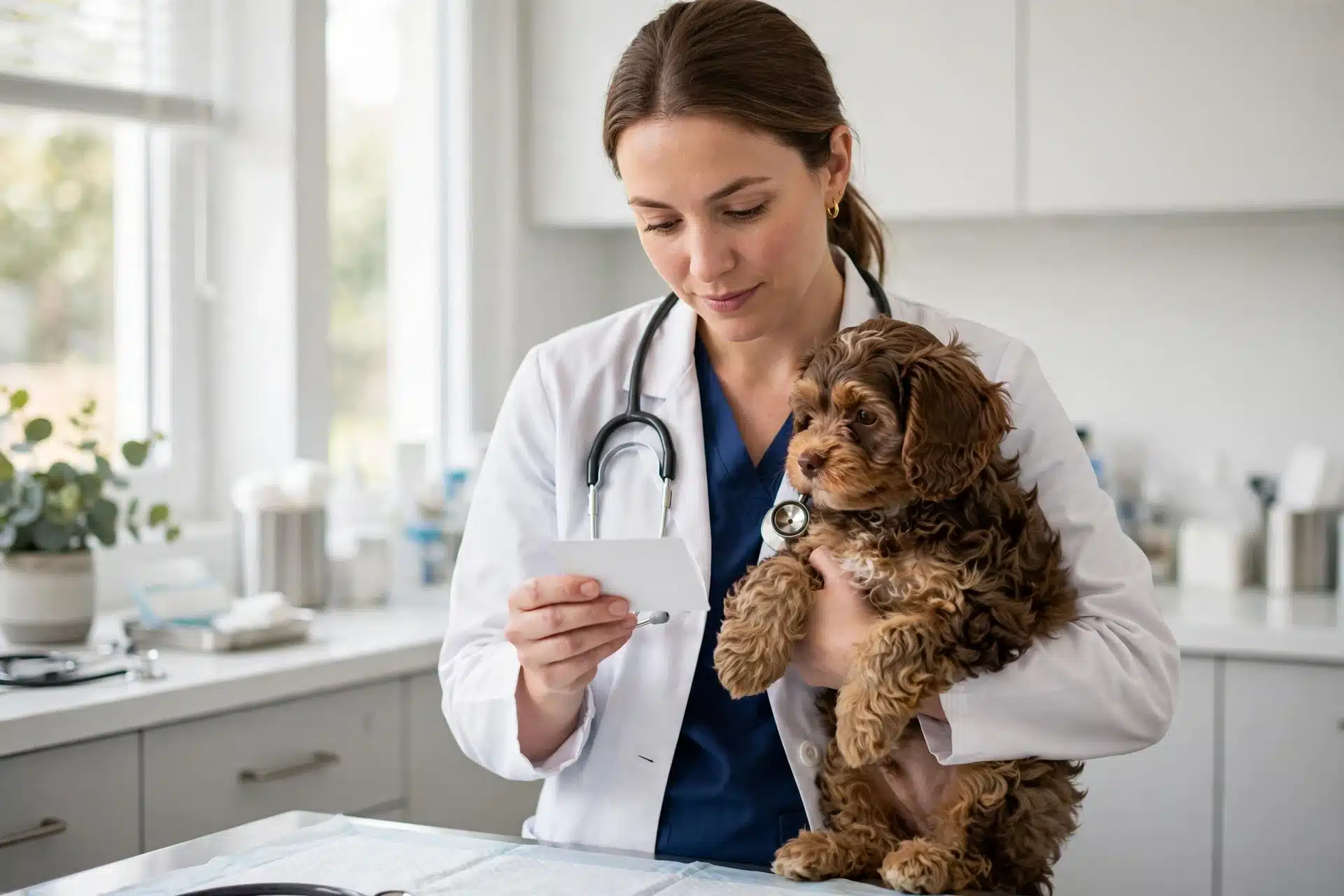
A Cavapoo puppy vaccination schedule follows one core series through the first year: a combination distemper, adenovirus and parvovirus (DA2PP) shot starting at 6 to 8 weeks, repeated every 2 to 4 weeks until at least 16 weeks of age, plus rabies at 12 to 16 weeks. A DA2PP booster comes one year later. Ask your breeder for the dates of any shots already given, because the final dose must land at 16 weeks or older.
| Vaccine | Timing | Why |
|---|---|---|
| DA2PP (distemper, adenovirus, parvovirus) | 6-8 weeks, then every 2-4 weeks to 16+ weeks | Protects against often fatal viruses |
| Rabies | 12-16 weeks, booster at 1 year | Core vaccine required by most states |
| DA2PP booster | 1 year after the puppy series ends | Confirms lasting protection |
Optional Vaccines and the Discussion to Have With Your Vet
Lifestyle decides the extras. Bordetella matters if your puppy will board, groom or join puppy classes, and leptospirosis makes sense where wildlife or standing water is common. Your vet may also suggest canine influenza. Bring your plans for daycare and travel to the first visit so the shots match your real routine.
Deworming, Parasite Prevention and Routine Checks
Most puppies carry roundworms, so vets typically deworm at each early visit and run a fecal test. Plan monthly heartworm prevention year-round and flea control, since small breeds react badly to infestations. Keep every record in one folder, including results from your puppy’s health records and any tests the breeder provided. Weight checks and a first-year dental look round it out.
Socialization, Training and the Skills That Matter Most
What the Socialization Window Actually Says
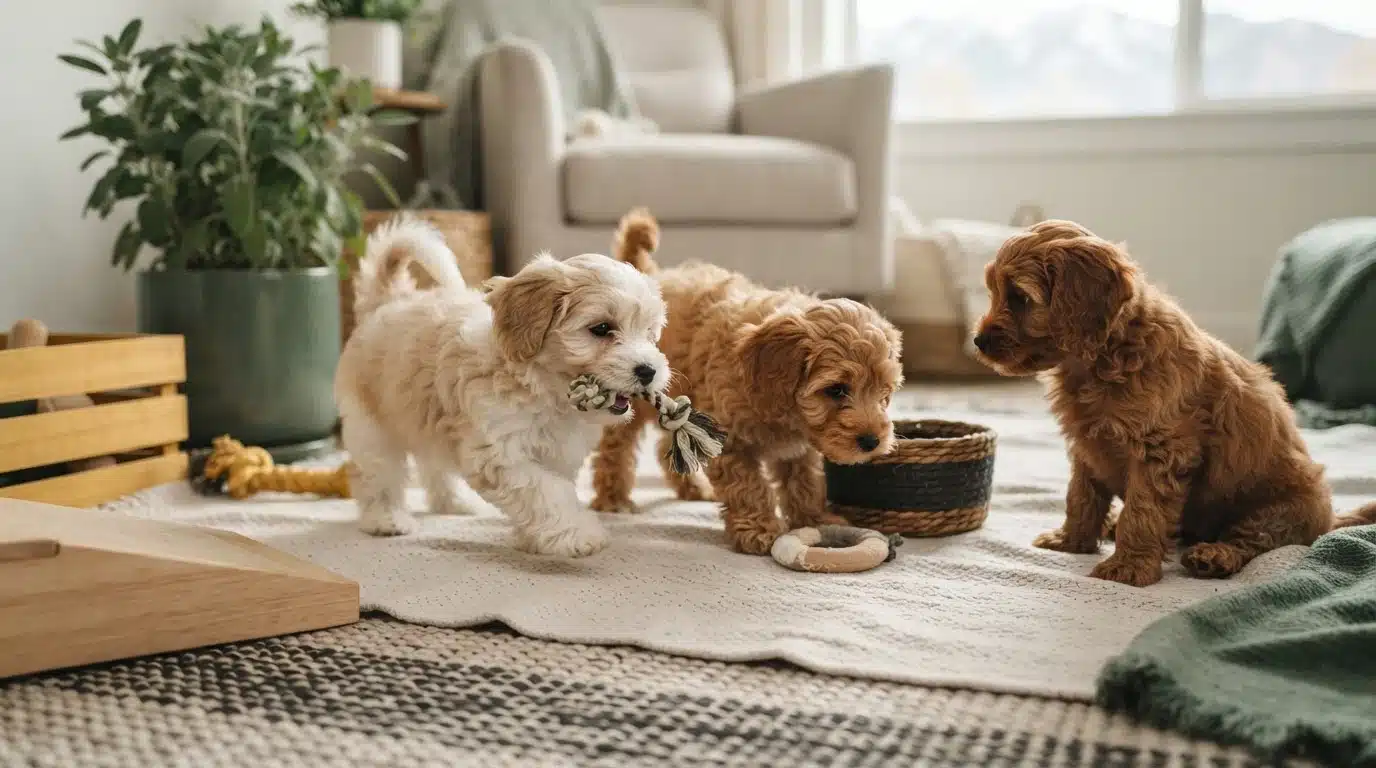
Socialization should start the week your Cavapoo puppy comes home, because the primary window closes around 14 weeks of age. The American Veterinary Society of Animal Behavior advises that puppies begin social outings before their vaccine series finishes, since behavioral problems kill far more dogs than early infections. Pair each new experience with treats, and keep outings short and positive. A first-12-weeks socialization checklist helps you track surfaces, sounds, people and handling.
Building a Calm Puppy: Handling, Grooming and Vet Cooperation
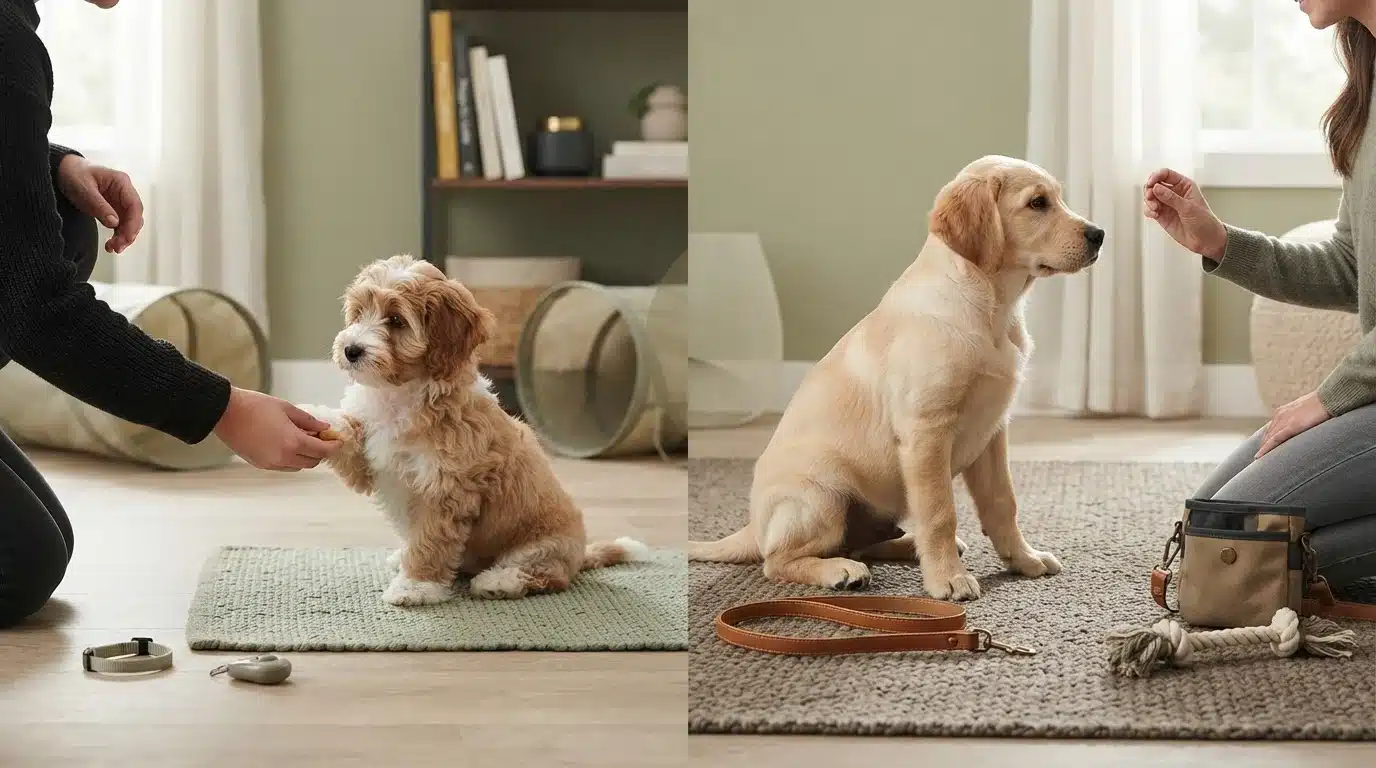
Cavapoos need grooming for life, so start early. Handle paws, ears and muzzle daily, run clippers near her, and brush a few minutes at a time. Add quick fake vet checks: look in ears, lift lips, press gently on paws. Reward calm behavior every time.
Foundation Skills and a Realistic Training Timeline
Teach name response, sit, come and crate comfort in the first month. Add loose-leash walking and “leave it” by six months. Short sessions of 3 to 5 minutes, several times daily, work better than one long one. Food-motivated small breeds learn fast with reward-based methods. Cover the basics of early small-breed puppy training before adolescence arrives.
Separation, Alone Time and the Adolescent Regression
Build alone time slowly: minutes at first, then longer stretches as she settles in a crate or pen. Most puppies hit a regression around 6 to 12 months, forgetting house manners and recall. Stay consistent rather than alarmed; it passes with steady routines.
Grooming, Exercise and Everyday Health Management
A Weekly Grooming Rhythm for a Cavapoo Coat
A Cavapoo grooming routine works best when brushing happens three to four times a week, and daily for longer coat styles, because that soft Poodle-like coat mats fast. A slicker brush plus a metal comb that reaches the skin catches tangles behind the ears, under the legs and around the collar before they tighten. Many owners also book a professional trim every 4 to 8 weeks, as one grooming guide recommends.
Tear Staining, Nail Care and Ear Checks
Rust-colored tear staining shows up often in light-coated small breeds. Wipe the area daily with a damp cloth and keep the face fur trimmed short; stubborn stains deserve a vet visit, since blocked tear ducts or eye irritation can be the cause. Trim nails every few weeks, taking off just the tip. Floppy ears trap moisture, so lift each ear weekly, look for redness or odor, and clean only with a vet-approved solution.
Exercise, Floors, Stairs and Heat Safety
Keep sessions short: five to ten minutes of play several times a day suits a small puppy better than one long walk. Avoid repetitive stairs and jumping until growth plates close, offer non-slip rugs on hard floors, and skip midday heat in summer. Watch for heavy panting, and stop before your puppy seems tired.
Year-One Costs, Safety Planning and What Comes After the Birthday
Most families spend between $2,000 and $4,500 in a Cavapoo’s first year, on top of the purchase price. Budget in two buckets:
One-time: spay or neuter, crate and bedding, baby gates, initial vet exam, microchip, training classes.
Recurring: food, flea and heartworm prevention, vaccines, grooming every 4 to 8 weeks, pet insurance, toys and replacements.
Building a First-Year Budget From Real Categories
Start with vet care, because it anchors everything else. Add the exam, the vaccine series, preventives and the spay or neuter fee. Then food sized for a small breed, grooming, insurance and a training class. Label your budget as an estimate and check your own totals, since prices vary widely by region and clinic. Ask whether the quoted purchase price includes puppy health records and starter vaccines before you commit.
Choosing a Breeder: What to Verify Before You Pay
Verify health testing of the parents, meet the mother when possible, and ask for the vaccination dates already given. A good breeder answers questions freely and lets you see where puppies are raised. Buyer-safety guidance from the AVMA stresses seeing the breeding facility and the puppy’s parents before paying any deposit. Programs like Sage Puppies follow this open-door pattern, and so do several honest small breeders elsewhere.
Travel, Delivery and the Year-One Checkpoint
Whether you pick up in person or arrange delivery, keep the first trip short and calm, with water offered and no improvised restraints. Plan a vet visit within a few days of arrival. At the one-year mark, book the DA2PP booster and rabies booster from the earlier schedule, and reassess food portions for her adult size.

First-year Cavapoo care feels lighter with a breeder who stays in your corner. If you’re ready to bring home a well-bred, well-loved puppy, apply through Sage Puppies. Cassie’s owner-managed matching helps you find a Cavapoo that fits your family, with honest guidance before and after pickup.
Frequently Asked Questions
Q1: cavapoo puppies | complete first-year care guide
A complete first-year plan covers six stages in order: home setup, the puppy vaccination schedule, feeding, socialization and training, grooming, and adolescent correction. Follow the sequence and the year mostly runs on routine.
Q2: When can my Cavapoo puppy go outside safely?
Short outings on your own property are fine from day one. Public places work once your vet clears it, usually after the 16-week vaccine dose, though AVSAB guidance supports careful social outings before then.
Q3: How often should I brush my Cavapoo’s coat?
Brush three to four times weekly, and daily for longer styles, since the soft coat mats quickly behind the ears and under the legs. A slicker brush plus a metal comb that reaches the skin works best.
Q4: What does the first year actually cost?
Most families spend roughly $2,000 to $4,500 beyond the purchase price, covering vet care, food, preventives and grooming. Treat it as an estimate, since clinic and regional prices vary widely.
Q5: When should I switch from puppy to adult food?
Around the first birthday, when growth plates close. Transition over seven to ten days by blending in more of the new food each meal so her stomach adjusts.
Q6: How much alone time is safe for a Cavapoo puppy?
Build it gradually: a few minutes at first, then longer stretches in a crate or pen. Most puppies regress around 6 to 12 months, but steady routines fix it.
Q7: What health issues should I ask a breeder about?
Ask about parent heart testing, since Cavalier lines carry mitral valve disease risk, plus patella checks and vaccination dates already given. Verify records before paying any deposit.
Conclusion
A Cavapoo’s first year rewards sequence over intensity. Set up a safe home, follow the puppy vaccination schedule to 16 weeks, feed measured portions, socialize before the window closes around 14 weeks, and brush that soft coat three to four times a week. Expect a wobble around 6 to 12 months, then steady routines carry you both to the first birthday, when boosters and an adult food transition mark the finish.
The same logic applies to choosing your puppy. Verify parent health testing, vaccination dates and records from any source before you pay, and Cavapoo puppies raised with that openness tend to start year one ahead.