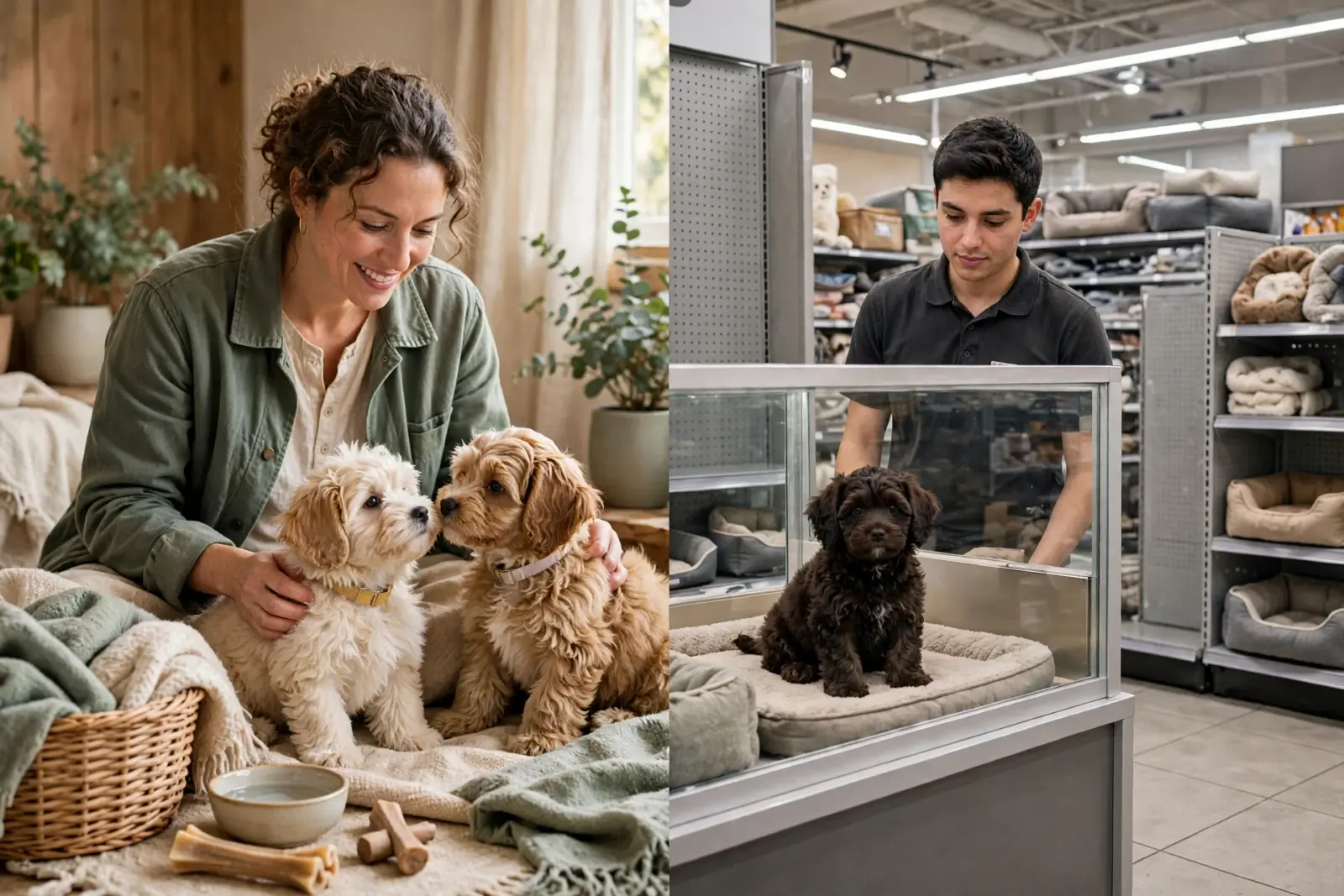
Quick Summary: Ask for verifiable records before buying a puppy: both parents’ health test results, the puppy’s vet history, where and how it was raised, and a written contract with clear guarantee and return terms. Direct breeders are usually the stronger choice for most families because buyers can meet the mother and see the paperwork, while puppy shops offer same-day convenience but may provide only polished claims and limited sourcing details. Sage Puppies supports this approach with owner-managed breeding, health-tested parent records, written contracts, and lifetime guidance, although buyers should still verify the records and visit terms firsthand.
The same puppy can be listed as “from a local breeder,” “vet certified,” and “backed by a health guarantee.” One follow-up question is often enough to make two of those phrases fall apart. This guide on breeder questions vs puppy shop claims gives you both sides: the questions to ask a breeder and the record each answer should produce, plus the most common puppy shop claims and the test question for each. Framed as breeder questions vs puppy shop claims, it covers health testing, contracts, socialization, pricing, and licensing. Direct-from-breeder purchases, where you meet the litter and parents, are the stronger option for most families, while shops suit buyers who want same-day convenience and verify the store’s breeder partner in writing. A purchase you cannot document through real breeder questions vs puppy shop claims carries lifetime health and behavior costs.
Breeder Questions vs Puppy Shop Claims: At a Glance
| Sage Puppies | Puppy shop and pet store sales | |
|---|---|---|
| Transparency and records | Application-based process with documented health and veterinary records | Store-level paperwork; parent and litter records may be limited |
| Health testing evidence | Health-tested parents and vet-reviewed records offered before reservation | Often limited to a general vet exam rather than parent DNA screening |
| Where puppies are raised | Home-style, family-raised environment in South Jordan, Utah | Puppies typically arrive from off-site breeding facilities, not the store |
| Contract and aftercare | Written purchase contract with health guarantee terms and return provisions | Store sale agreement with widely varying guarantee terms |
| Price and payment structure | Documented $3,500 to $4,500 range with specific and guardian terms preserved | Higher markup on price than the breeder’s own asking price |
| Post-purchase support | Lifetime guidance from the breeder with delivery and pickup options | Store-level support that may end once the sale closes |
How Sage Puppies and Puppy shop and pet store sales Compare
Sage Puppies
Sage Puppies is Cassie Milar’s owner-managed program in South Jordan, Utah, raising Havanese, Havapoo, and Cavapoo puppies in a home-style setting. It suits families who want breeder contact, documented records, and a written contract with health guarantee terms before they reserve. Its angle here: every claim comes paired with paperwork you can see.
Key strengths
- Health-tested parents with vet-reviewed records shared before reservation
- Documented $3,500 to $4,500 range with specific and guardian terms preserved
- Lifetime breeder guidance, plus pickup and delivery options
Puppy shop and pet store sales
Puppy shops sell through store locations, usually sourcing puppies from off-site breeding operations with little direct breeder contact. This channel fits buyers who want to see a puppy the same day. Its angle here: store paperwork often can’t answer where a puppy came from or how its parents were screened.
Key strengths
- Immediate, in-person availability at store level
- Standard sale agreement at purchase
What a Reputable Breeder Will Actually Show You
A good breeder proves claims with records, not promises. Health test results, vet paperwork, parent photos and a written contract all come out before you ask. The OFA’s breeder interview guide lists the basics worth covering, from how long someone has bred the breed to whether both parents have current health testing.

The Questions Worth Asking Before You Visit
Start by phone or email. Ask how long the parents have lived in the home and what health testing they’ve had, then ask to see the actual results. Responsible breeders share them without hesitation, and the AKC’s breeder guide treats that openness as a core sign of a serious program.
Also ask where the puppies are raised, how many litters the household has each year, and what happens if you ever can’t keep the dog. A breeder who requires the dog back tells you they care about outcomes, not just the sale. At Sage Puppies, the application stage covers matching questions before any deposit changes hands.
Questions Asked on the Visit Itself
On-site, ask to meet the mother. Her temperament and living condition matter more than any brochure. Watch how the puppies react to people and handling. Ask for the vet’s name, the vaccination and deworming dates, and a copy of the health record. If the visit is virtual, request a live video walk-through rather than pre-recorded clips, and ask to see paperwork on screen. Vague answers on any of these are a reason to pause.
Decoding Common Puppy Shop Marketing Claims
Puppy shop listings use polished phrases that sound like proof but often answer nothing. Two claim types deserve the closest read: where the puppy came from, and what the health language actually promises.
Sourcing Claims and “Local Breeder” Language
“Local breeder” can mean a family two towns over, or a broker shipping puppies across state lines. Ask which breeder, by name, and whether you can speak with them directly. A real breeder answers those questions easily. The ASPCA notes that registration papers and USDA licenses say nothing about how a dog was raised, so neither counts as sourcing proof. If a shop lists Havanese or Cavapoo puppies, ask who bred each litter and where those parents live.
Guarantee and “Vet Certified” Marketing
A health certificate is a snapshot from one vet visit, not a promise. The California Attorney General urges buyers to insist on a written guarantee and clear return terms. Read the fine print: many store guarantees exclude more than they cover, or cap refunds below your price. Reputable breeders, including our own program, put coverage, timelines, and return terms in writing before you pay a deposit.
Health Testing and Veterinary Evidence
A breeder proves health with documents, not promises. Ask for the parent dogs’ test results up front, and ask the puppy shop for the same records before you trust any claim.
Which Records to Request and How to Read Them
Ask for OFA results on both parents. The Orthopedic Foundation for Animals scores hips, patellas, cardiac, and eyes, and a CHIC number shows the breeder completed every test the breed’s parent club requires. For Havanese, that means OFA hips, patellas, and annual eye exams, as the Havanese Club of America explains. You can verify any result yourself on the OFA’s public database, so never accept a photo of a certificate as proof. With mixed breeds like the Cavapoo, ask which parent carried which test, and ask for DNA panels that name the conditions screened. A breeder who cannot produce a registry lookup you can run yourself has answered your question.
Routine Care, Vaccinations, and Microchipping
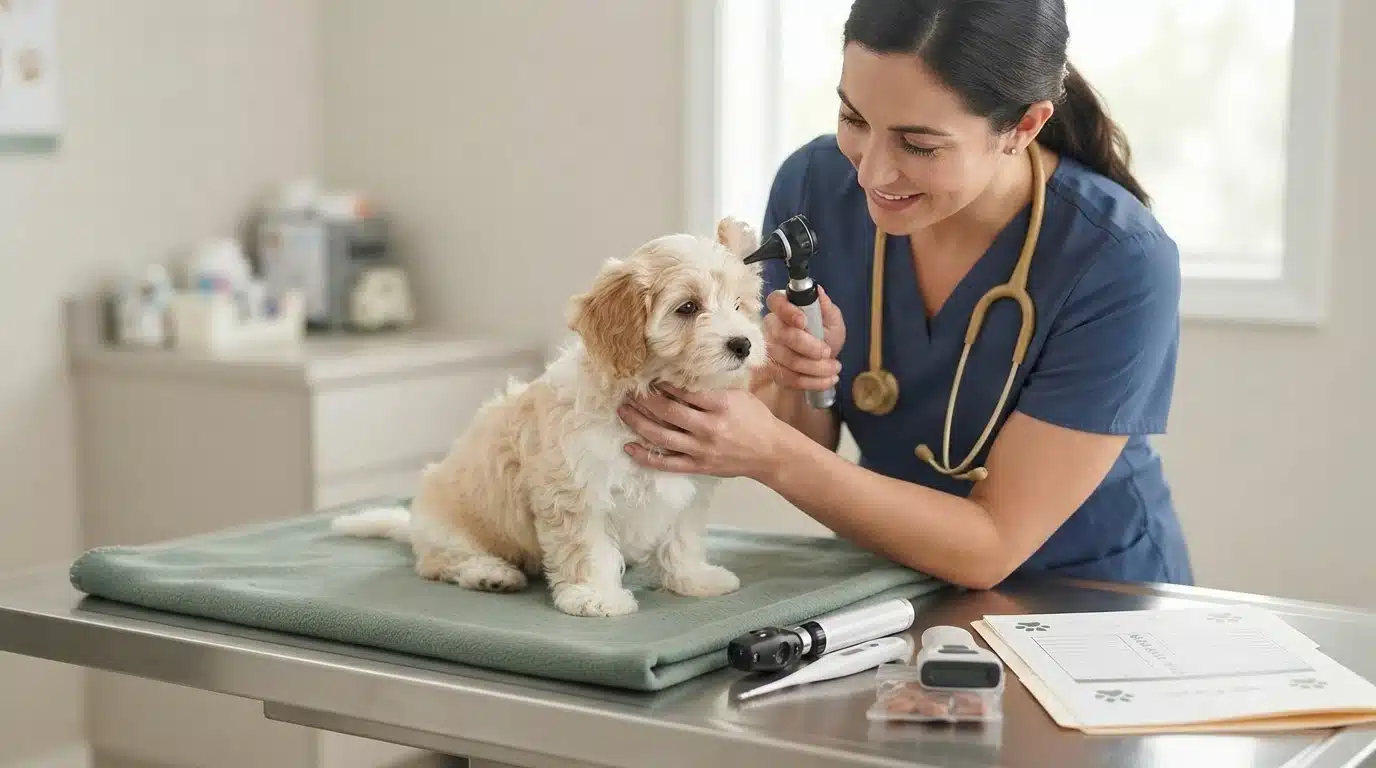
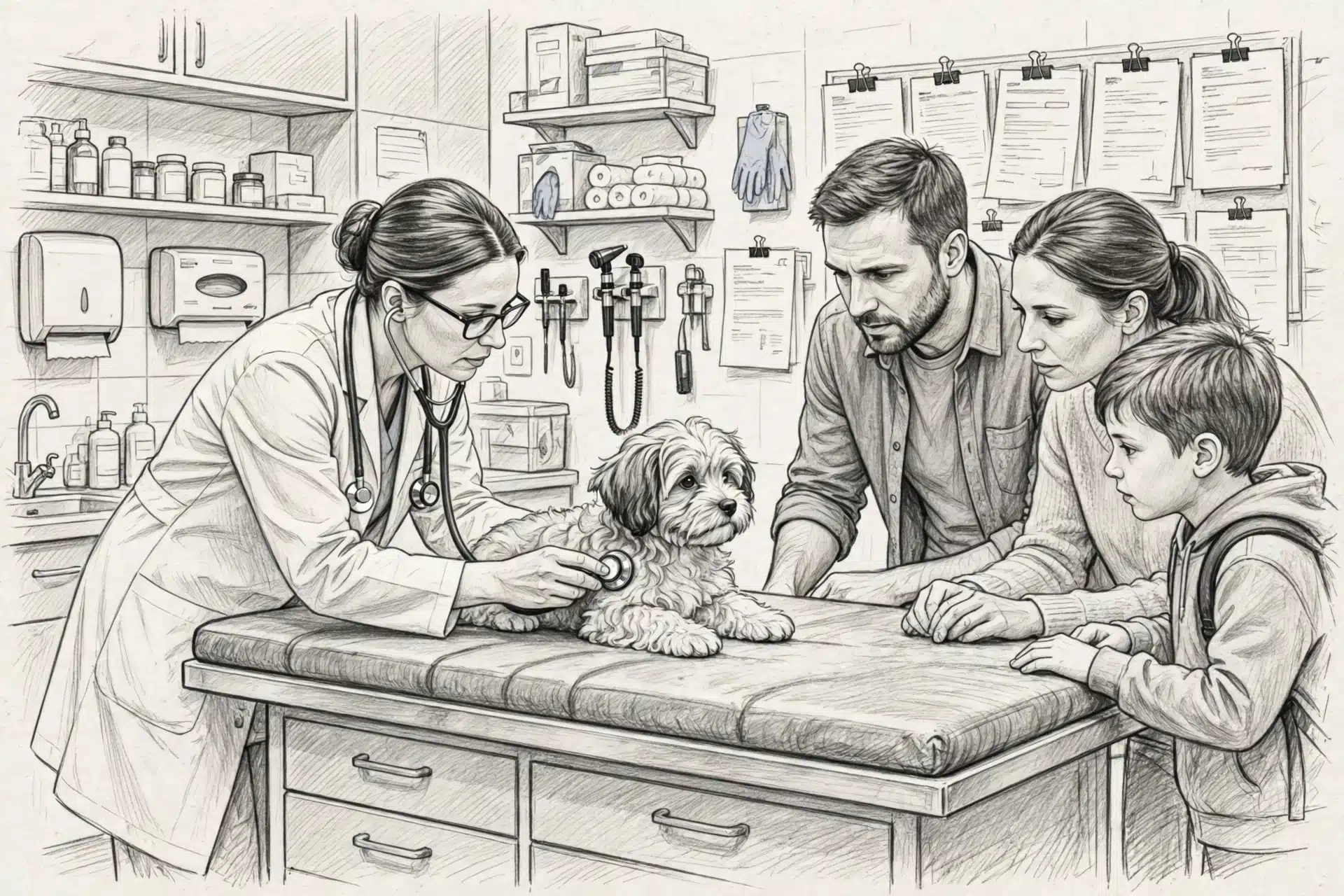
Ask for a dated vet exam record, the vaccine series given, deworming dates, and the microchip number. Each shot should list the vaccine type and the clinic that gave it. A local program such as Sage Puppies publishes how parent health testing works, which gives you a model for what to expect anywhere. Then match the shop’s paperwork line by line against what the breeder handed you.
Contracts, Records, and the Paper Trail
A good breeder hands you a written contract before money changes hands. A puppy shop often hands you a receipt. That difference tells you who expects to stay accountable after you drive home.

What Should Be in the Contract
Ask to see the full contract before you place a deposit. A complete one names the buyer and seller, states the price, and covers the puppy’s identifying details like microchip number and birth date. The AKC’s guide to breeder contracts points to several clauses worth reading closely: spay or neuter terms, a return-to-breeder clause, and any health guarantee. You should also see what the buyer promises, such as keeping up with vet care. Breeders who sell through a clear, written process, including reservation-based programs, usually share their terms early, so ask how the deposit works before you commit.
Guarantee Versus Return Policy
These are two different promises, and shops often blur them. A health guarantee states what the seller covers if a genetic problem appears, and for how long. A return policy says what happens if you cannot keep the dog. The strongest contracts do both: they commit the breeder to take the dog back at any age, and they spell out covered conditions in writing. A shop that only offers “store credit” has promised you very little.
Ask for the return clause in writing, even if the conversation feels friendly. Verbal comfort is not a policy.
Where the Puppy Was Raised and How It Was Socialized
Ask where the puppy sleeps, eats, and plays during the first weeks. A reputable breeder raises puppies in the home, around normal household sounds and people, because the first three months are the most important window for socialization. A puppy shop, by contrast, often keeps puppies in kennel runs or store enclosures with little variety in sights, sounds, or handling.
The question that tests a shop’s claim is simple: “Who handled this puppy daily, and what did the puppy see and hear each week?” If no one can answer, the puppy likely missed key early experiences.

Observing Socialization in Person or on Video
Good socialization is easy to spot. Watch a puppy approach new people without freezing, recover from being startled, and show curiosity toward surfaces, toys, and sounds. Ask for a video call if you cannot visit, and ask the breeder to handle each puppy’s paws, ears, and mouth on camera. Confident puppies seek contact; anxious ones hide or cower.
Programs like ours raise Havanese, Havapoo, and Cavapoo litters in the home precisely so this early handling happens naturally, every day, before matching begins.
Age, Home Readiness, and Travel
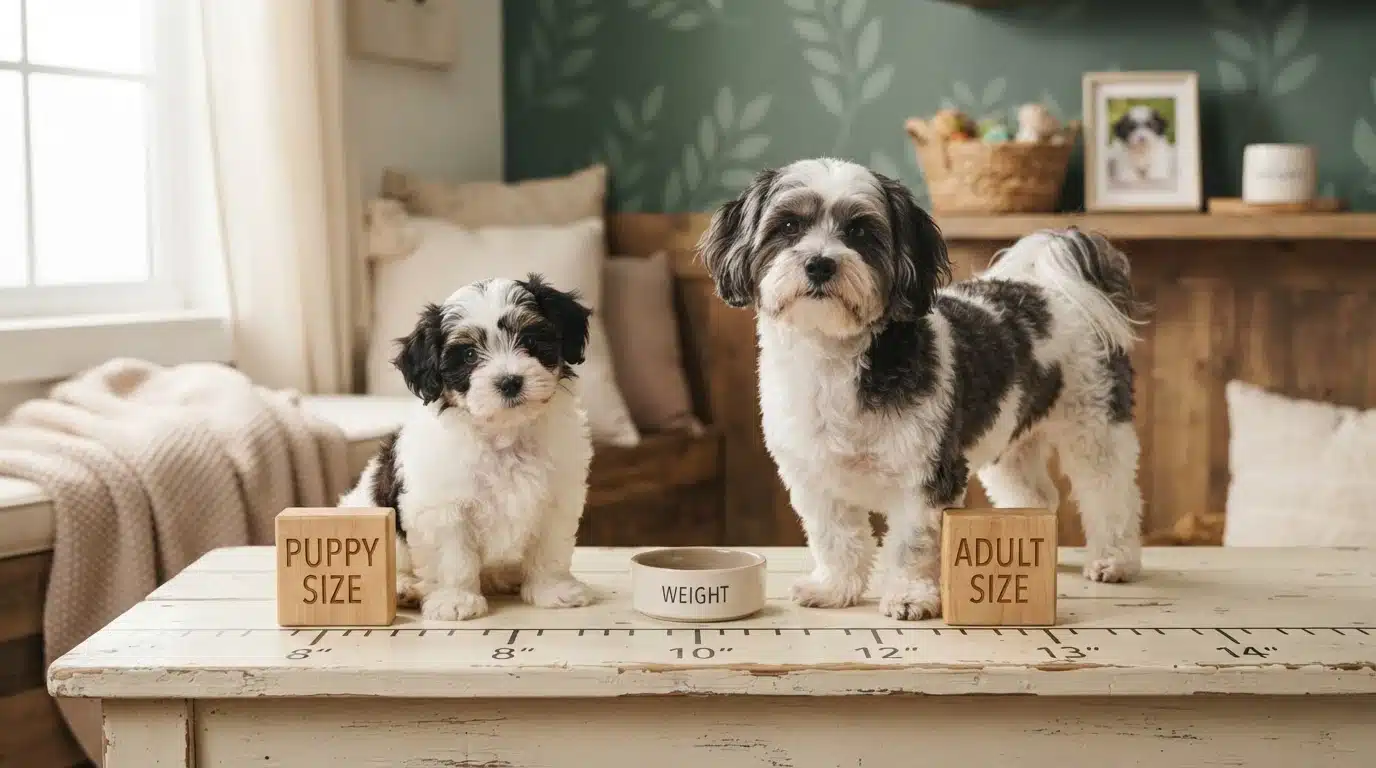
Most breeders release puppies between 8 and 10 weeks, after the strongest early socialization has taken hold. Shops often send puppies home younger because stock must keep moving. Ask exactly when the puppy can leave and why.
Then check your own readiness. Set up a quiet space, food, and a carrier before pickup day, and review how to travel home with a new puppy so the first ride feels calm rather than frightening.
Pricing, Deposits, and Total Cost Clarity
Reading a Breeder’s Price Range and Deposit Terms
A reputable breeder quotes a range, then explains what moves a puppy to the top of it: coat, size, or the demand for a specific pairing. Ask what the deposit holds, whether it transfers to a future litter, and what happens if no match is born. Some states now limit non-refundable deposits, and California’s 2026 law pushed in that direction, so ask for refund terms in writing before you send anything. Good breeders put the whole structure in their contract, a habit AKC’s guide to breeder contracts recommends for every sale. Sage Puppies documents its deposit and refund terms on its own reservation pages so buyers see them before paying.
Costs Buyers Commonly Miss
The sticker price is not the total. Plan for a vet visit within the first week, spay or neuter, starter gear, and food, which for a Havanese or Havapoo often adds several hundred dollars in year one. Delivery is another quiet variable, since some shops list a puppy cheap and recover the margin on transport. Ask whether delivery is flat-rate or billed by mileage, and whether sales tax applies. Add the first grooming appointment too, because doodle coats need trims every six to eight weeks. A written total, pickup to first year, tells you what you are actually committing to.
Licensing, Laws, and Accountability
What Licensing Does and Does Not Tell You
Federal licensing is narrower than most buyers assume. Under the Animal Welfare Act, a breeder needs a USDA license only if they keep more than four breeding females and sell puppies sight unseen, such as online or to pet stores. Someone selling face to face is exempt from that rule, and the standards themselves are minimal, so a license proves little about how dogs are raised. According to the ASPCA, USDA care standards leave wide room on dog welfare, so the license is a legal baseline, not a quality mark. The real accountability comes from paperwork: health records from a licensed vet, a written contract, and a breeder who invites you to meet the puppy’s mother.
Local and State Rules for Utah Buyers
Utah buyers should check two layers of rules. First, cities and counties set their own kennel and breeder requirements, so ask your local animal control office what applies where the puppies are raised. Second, federal rules still cover any seller shipping pets sight unseen, per the USDA’s licensing guidelines. A small program like Sage Puppies sits outside USDA licensing because it sells face to face and keeps a tiny breeding group, which is exactly why you verify through records and visits instead.
Which Should You Choose: Direct Breeder or Puppy Shop?
Pick based on what you want to know before the puppy comes home, not on price alone. A breeder shows you the record behind the dog. A shop shows you a listing.
Choose the Direct Breeder When…
You want proof, not promises. A direct breeder can walk you through health testing on the parents, vet records, and how each puppy was raised in the first weeks. You will usually meet the mother or at least see photos and video of her. Ask who handled the puppies, how often, and when they go home. Most breeders release puppies between 8 and 10 weeks, after the strongest early socialization has taken hold. Boutique programs such as Sage Puppies keep this process owner-managed, so one person answers for every step from application to pickup day.
Choose the Puppy Shop When…
You want speed and selection under one roof. A shop lists many breeds at once, so you can compare several litters in a single visit. That convenience comes with a trade: the shop did not raise the puppy, so it can only repeat what its suppliers reported. Treat every claim as a starting point and ask which breeder produced the litter, then apply the breeder questions from earlier in this guide. If the answers stay vague, keep looking.

Want those questions answered with real paperwork, not a sales pitch? At Sage Puppies, Cassie shares health records, parent details and matching guidance for every Havanese, Havapoo and Cavapoo. Start the application, ask anything, and bring home a puppy that’s wisely bred and beautifully loved.
Frequently Asked Questions
Q1: Breeder questions vs puppy shop claims – what to ask?
Ask a breeder for parent health test results and a written contract. Ask a shop which breeder produced the litter, by name, and request records in writing.
Q2: How do I verify OFA health testing myself?
Search the puppy’s parents by registered name in the OFA’s public database. Accept only results you can look up, not photos of certificates.
Q3: What does “vet certified” actually mean?
It means one vet exam at one moment, not a promise about genetics. Ask instead what conditions both parents were screened for.
Q4: When should a puppy come home?
Most breeders release puppies between 8 and 10 weeks. Ask a shop for the exact age and why.
Q5: Is a USDA license a quality mark?
No. It is a legal baseline for sight-unseen sellers, not proof of care. Records, contracts, and visits tell you more.
Conclusion
Ask for the record behind every claim. A breeder proves health testing with registry results you can look up yourself, puts the contract and guarantee in writing, and invites you to meet the mother. A puppy shop hands you a receipt and a polished phrase, so each claim deserves one test question: which breeder, by name, and can you share the paperwork?
For most families, the direct-breeder route wins because documentation comes before the deposit. Choose a shop only when same-day convenience matters most, and apply the same questions there. Whichever channel you pick, an answer you cannot see on paper is not an answer yet.