Quick Summary: A Bichon Frise usually costs about $1,000 less upfront, while a Havanese often costs $3,500 to $4,500 from boutique breeders such as Sage Puppies. Over five years, the Bichon’s more frequent professional grooming, every 4 to 6 weeks, usually erases its purchase-price advantage within two to three years. Choose the Havanese if you can brush it daily and trim it every 8 to 10 weeks, or the Bichon if you prefer its lower upfront price and plan to outsource more frequent grooming.
Two puppies that look nearly identical in a photo can differ by about a thousand dollars up front. The Bichon Frise price usually starts lower, but that sticker gap is the smaller half of the bill. Across five years, the Havanese grooming cost often flips the math, because a coat that needs professional trims every few weeks quietly outspends the puppy you paid less for.
First-time small-breed buyers rarely see this coming. They compare purchase prices, bring a puppy home, then discover that grooming appointments, food, training and vet visits decide the real budget.
This guide puts both breeds on one five-year ledger, from deposit through training, so you can total both options before you call a breeder. Sage Puppies raises Havanese in South Jordan, Utah, and we price every step openly.
Havanese vs Bichon Frise: Cost Comparison at a Glance
| Havanese | Bichon Frise | |
|---|---|---|
| Typical puppy price | Sage Puppies Havanese puppies: $3,500 to $4,500; breeders nationally often list about $2,200 to $3,000 | Listings commonly run about $2,140 to $3,000; individual pets have been reported from $600 to $4,500 |
| Professional grooming cost | Long silky coat brushed daily; frequent trims and blow-dry time, one lifetime estimate puts grooming alone at roughly $5,600 to $14,400 | About $50 to $80 per full groom every 4 to 6 weeks; roughly $700 to $1,500 per year |
| Health testing and vet setup | HCA CHIC calls for annual eye exams, hip radiographs and patella certification | Eye, knee and hip screening plus dental care; small-breed gum disease is a recurring vet line item |
| First-year budget | One published first-year breakdown for Havanese estimates about $2,500 to $5,600 | Often $3,500 to $5,500 when grooming every 4 to 6 weeks is included |
| Best for | Families wanting a calmer, more adaptable companion in many coat colors | Owners who love the trimmed white look and can meet a higher-energy, more playful dog |
How Havanese and Bichon Frise Compare
Havanese
The Havanese is a silky-coated companion breed from Cuba, known for a calm, adaptable temperament and a coat that comes in many colors. Small-scale programs, including Sage Puppies in South Jordan, Utah, price Havanese puppies at $3,500 to $4,500, which shapes the whole cost story here.

Key strengths
- Calmer, easygoing companion for first-time owners
- Many coat colors and a soft, silky texture
- Daily brushing at home can stretch time between trims
Bichon Frise
The Bichon Frise is a bright white, powderpuff-coated companion breed whose puppies are widely listed online, with a typical Bichon Frise price of about $2,140 to $3,000 from reputable breeders. It suits owners who love the trimmed round look and can keep up with a more playful dog.
Key strengths
- Lower typical purchase price than a Havanese
- Cheerful, playful personality that suits active families
- Classic trimmed white coat that photographs beautifully
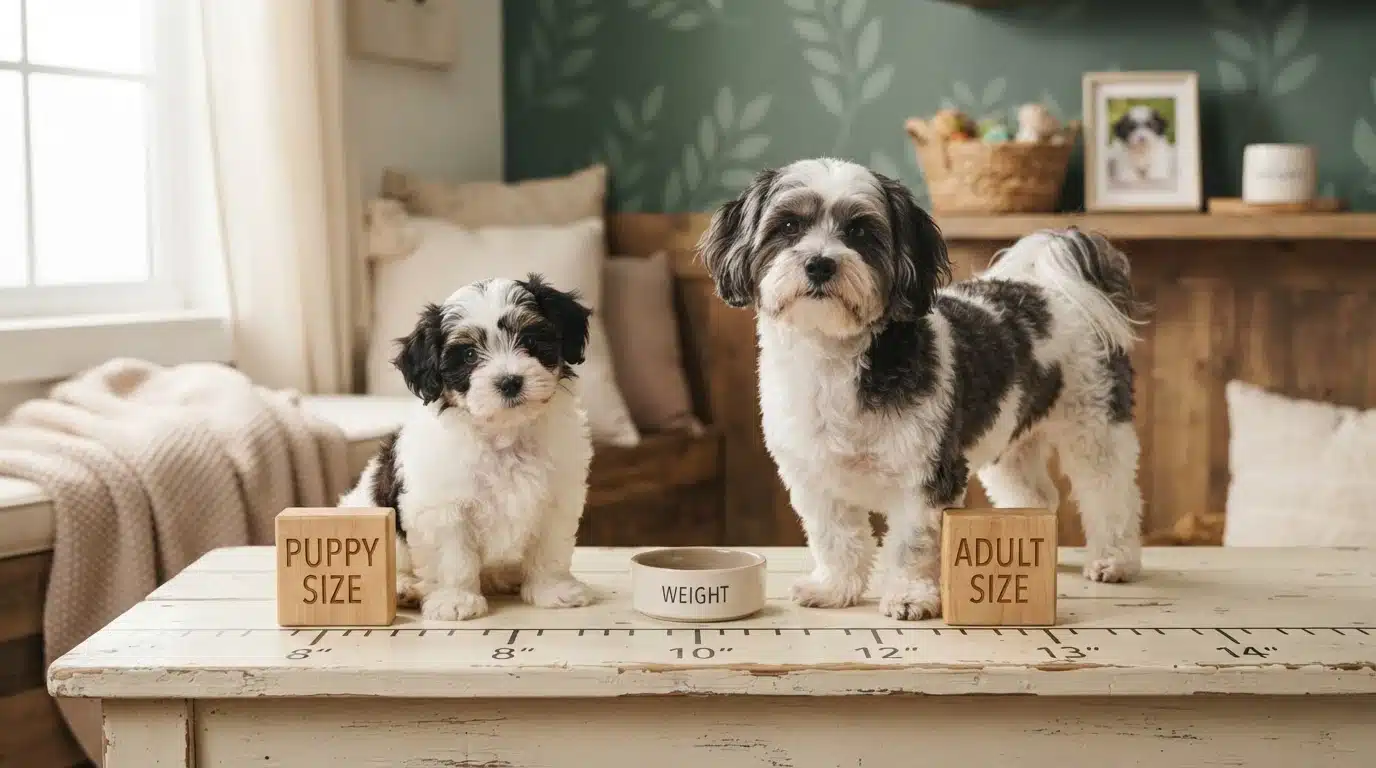
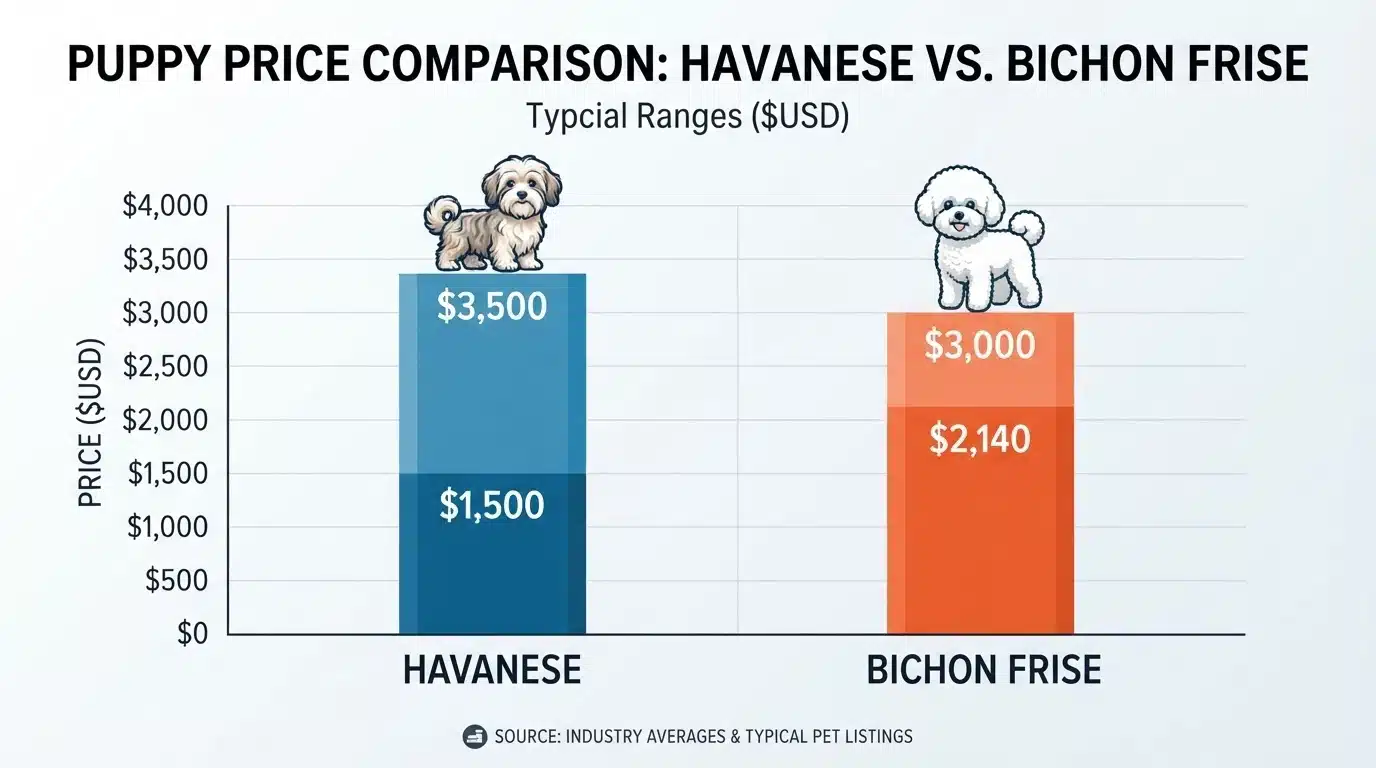
A Havanese puppy usually costs more up front. Well-bred Havanese puppies often run $3,500 to $4,500 from small programs, while a typical Bichon Frise price lands closer to $2,140 to $3,000. So the up-front gap is often $1,000 or more, depending on the breeder, bloodlines and what the price includes.
Where Bichon Frise prices tend to fall
Bichon Frise puppies from reputable breeders commonly list between about $2,140 and $3,000. Top show lines, health-tested parents and small-scale programs can push a Bichon Frise price past $3,000, but most family-pet listings sit in that middle band. Location matters too, and puppies shipped across the country often carry a premium over local litters.
Where Havanese prices tend to fall
Havanese pricing splits into two tiers. Breeders nationally often list puppies for about $2,200 to $3,000, which matches the Bichon range. Boutique programs that health-test parents and raise litters in the home charge more: small-scale programs, including Sage Puppies in South Jordan, Utah, price Havanese puppies at $3,500 to $4,500. If you want a sense of what that care looks like day to day, this guide to raising a Havanese puppy at home shows the routine behind it.
The gap narrows once deposits and delivery are counted
The sticker price rarely tells the whole story. Most breeders hold puppies with a deposit of a few hundred dollars, and each program sets its own refund terms. Local pickup keeps travel costs near zero, while flight or courier delivery can add several hundred dollars. Price both puppies the same way, deposit through pickup, before you compare.
Where the Real Cost Difference Appears
The Bichon usually costs more per year in professional grooming: roughly $50 to $80 per session every 4 to 6 weeks adds up to about $500 to $900 a year. The Havanese often spends less at the salon but asks for far more brushing at home. That trade is the real price gap.
The Bichon Frise trim schedule and what it costs
A Bichon’s tight powderpuff curl keeps growing and holds debris, so most groomers want these dogs on a 4 to 6 week schedule, with typical sessions running $50 to $80. Skip a visit and mats form fast, and de-matting fees follow. Budget monthly grooming if you want the classic round head and clean face.
The Havanese coat: daily brushing, less frequent professional visits
The Havanese carries a long, silky double coat that tangles if ignored, so plan on a 10 to 15 minute brush most days. In return, many owners stretch professional trims to every 8 to 10 weeks, cutting annual salon costs well below the Bichon’s. Our Havanese grooming guide for first-time owners walks through the routine. Many owners also choose a shorter puppy cut to lighten the workload.
Doing it yourself versus going to a groomer
Home grooming changes the math. A $60 clipper kit, comb, slicker brush and dog-safe shampoo cover most of both breeds’ needs between salon visits, though Bichon trims take practice to look even. A practical middle path: brush at home daily, book a professional every 6 to 8 weeks, and bathe yourself in between.
Health Testing and Vet Setup Costs
What screening to expect from either breed
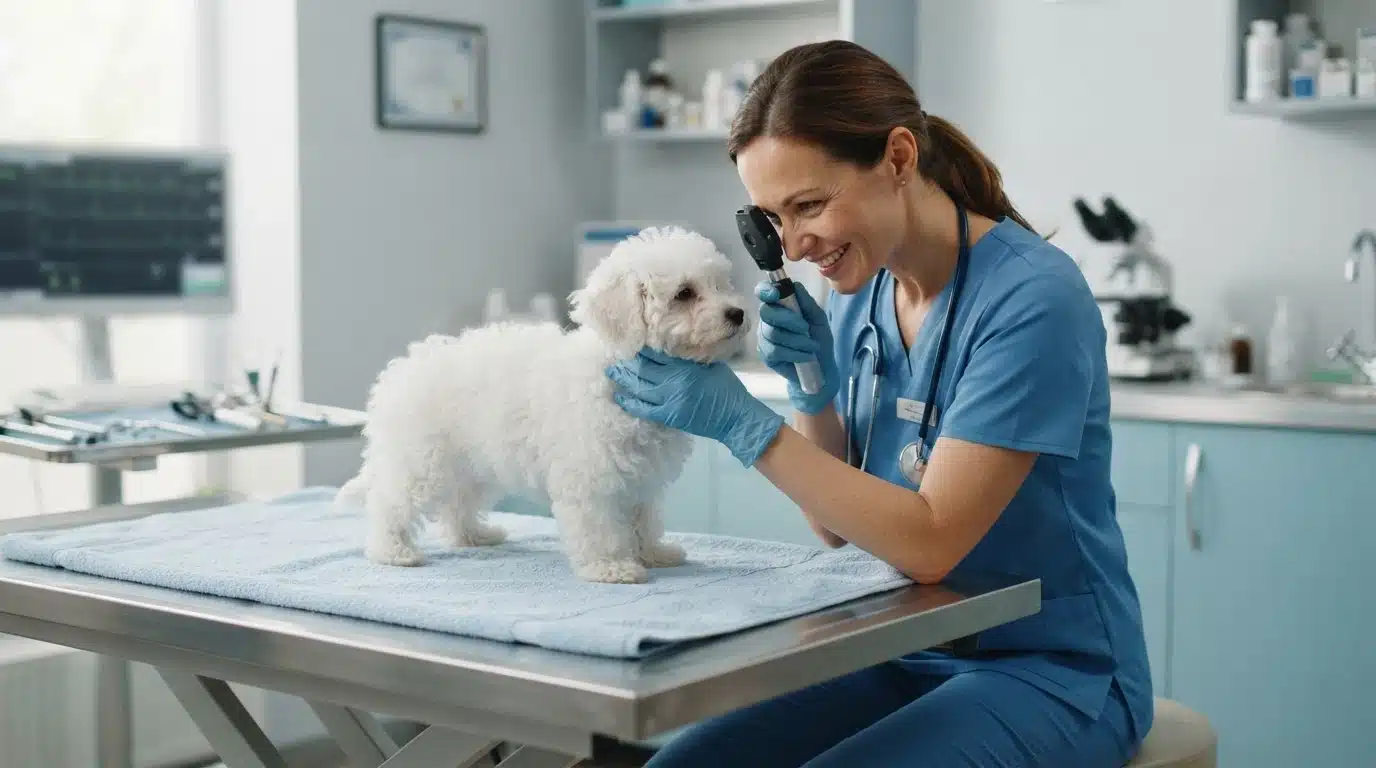
Both breeds need the same core parent tests, so expect no price advantage from screening. The Havanese Club of America requires three tests for a CHIC number: an annual eye exam, a hip x-ray and patella certification. Bichon Frise breeders screen for similar issues, mostly knees and eyes, plus some DNA panels. Ask any breeder for proof, not just a verbal yes. Well-bred puppies from tested parents cost more up front because that work is expensive, but it lowers your risk of paying for orthopedic or eye problems later. Either way, the Havanese and Bichon numbers here are close enough that health testing should not decide the match.
Recurring vet costs both owners should budget
After pickup, both breeds run similar vet bills. Plan for the first visit, core vaccines, spay or neuter, and monthly prevention. A realistic year-one wellness budget for either breed lands between $700 and $1,500, excluding emergencies. Havanese knees and Bichon allergies are the two issues most likely to add surprise costs. Before you commit, it helps to learn how to verify health testing claims on puppy listings, since documentation varies a lot between programs.
Food, Supplies and the First-Year Budget
Neither breed costs much more than the other here. Both are small dogs, so food bills stay low and supplies overlap almost completely.
One-time puppy setup costs
A crate, baby gate, bowls, leash, harness, toys and a bed usually run $200 to $400 for either breed. Chew toys matter more for teething Havanese and Bichon puppies than fancy beds do. Add a gate if you plan to block stairs, and a playpen for the alone-time hours before training kicks in.
| Item | Typical range |
|---|---|
| Crate and bedding | $60 – $150 |
| Bowls, leash, harness | $40 – $80 |
| Toys and chews | $30 – $80 |
| Grooming basics | $50 – $100 |
| Training class (optional) | $100 – $200 |
Chewy’s 2025 cost guide puts first-year vet care at $480 to $2,400, and that matters more than any gear choice.
Food and routine appointments
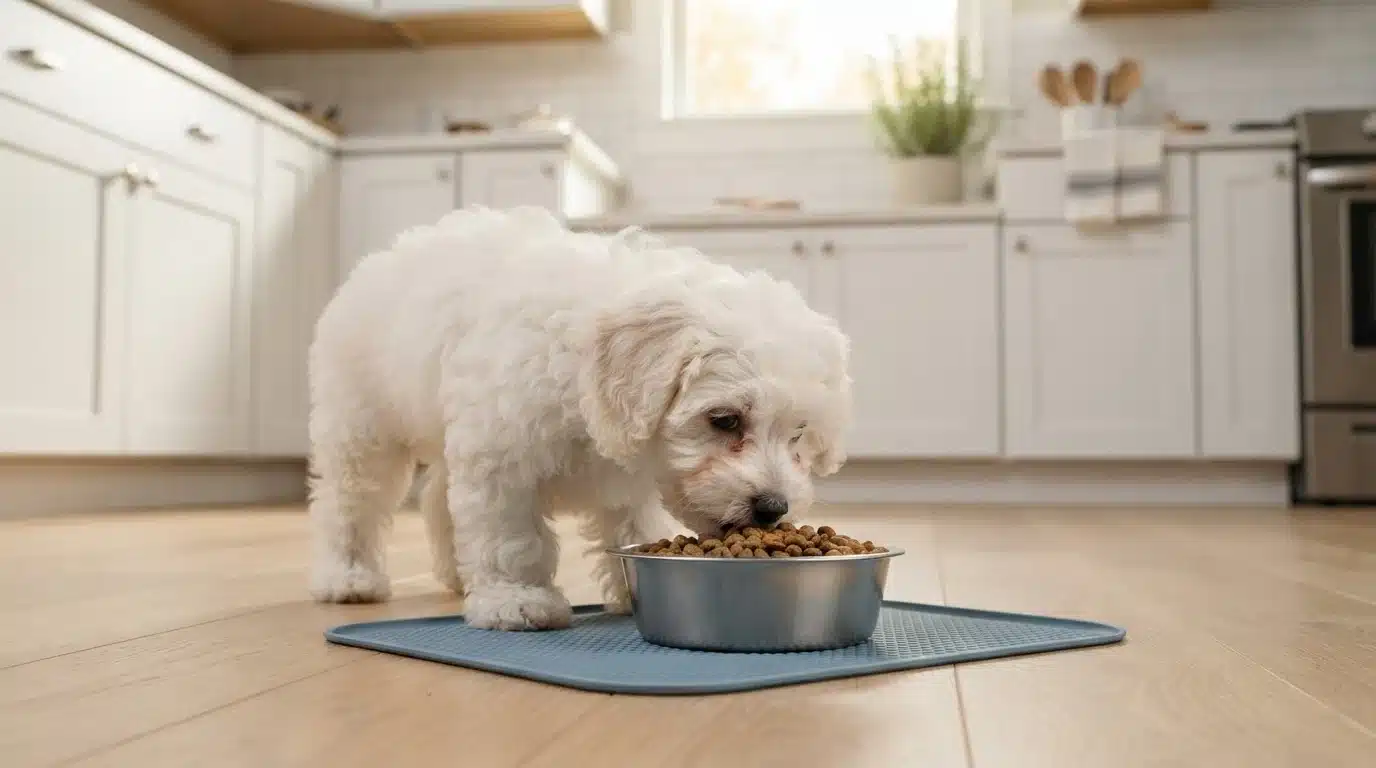
Budget $20 to $40 per month for quality small-breed kibble. Both breeds eat roughly the same amount, so food is a tie. The first year adds three vet visits for vaccines, plus a spay or neuter that often runs $300 to $700. Plan a $700 to $1,500 wellness budget, which matches the estimates above.
Choose food sized for small mouths, and keep treats under 10% of daily calories. That habit protects both budgets and waistlines.
Energy, Training and the Hidden Cost of Time
Both breeds need modest exercise, but both demand real training hours. That time has a price too, especially if you hire help.
Daily exercise requirements
Neither breed is a marathon partner. A Havanese usually needs about 30 to 45 minutes of activity a day, split between a walk and indoor play. A Bichon Frise lands similar, roughly 30 minutes, and both happily burn extra energy with fetch or a short training game. Play counts double as exercise, so small homes work fine. Skip the walk entirely for a few days, though, and both breeds get restless, noisy or chewy. Budget energy, not just money.
Training time and class costs
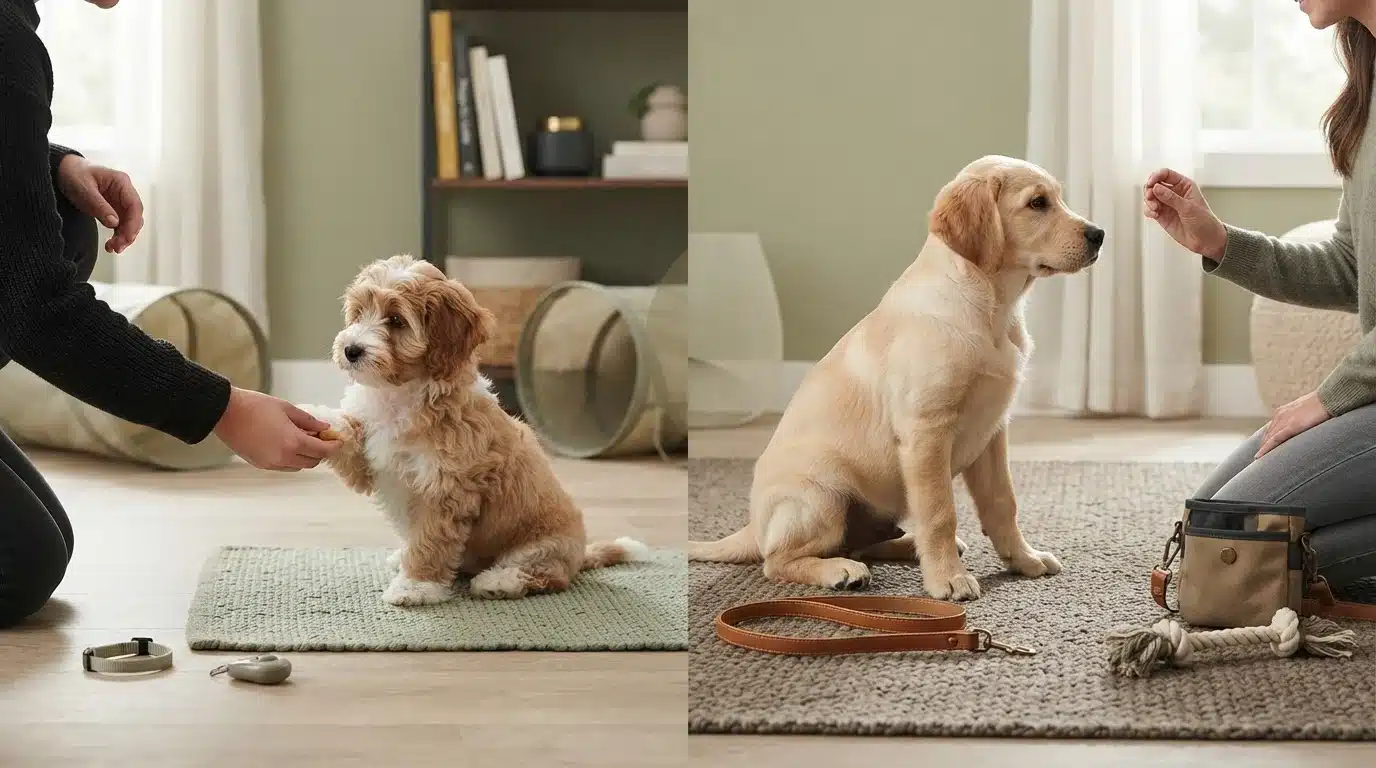
Both breeds are smart and want to please, which makes house training and basic manners faster than with many small dogs. Still, plan on 10 to 15 minutes of practice most days for the first year. A six-week puppy class often runs $100 to $250, and a private trainer charges more. Costs climb if problems settle in, so start early. Bichons can be slow to house train, so patience there saves carpet, sanity and later trainer fees.
Five-Year Totals: Which Breed Costs More Overall
| Five-year snapshot | Havanese | Bichon Frise |
|---|---|---|
| Puppy price | $3,500 to $4,500 | $2,140 to $3,000 |
| Grooming, five years | About $3,750 to $5,500 (every 8 to 10 weeks) | $2,500 to $4,500 (every 4 to 6 weeks) |
| Supplies and routine care | $200 to $400 setup, $700 to $1,500 a year in wellness | Similar, based on your vet and area |
| Overall | Havanese often wins after year three | Costs more over time despite the lower puppy price |
Adding up five years of grooming
Multiply the intervals out and the picture flips. A Bichon groomed every 4 to 6 weeks at $50 to $80 a session runs $500 to $900 a year, or $2,500 to $4,500 over five years. A Havanese trimmed every 8 to 10 weeks comes in lower, often $750 to $1,100 a year. So the Bichon’s cheaper puppy price erodes within roughly two to three years of grooming bills.
When the higher puppy price makes sense
If you brush daily and keep up with home baths, the Havanese earns back its premium. The math works differently for busy households: someone who skips brushing on a Bichon faces matted curls either way, so the salon schedule dominates the budget. Choose on coat care time first, price second. Both totals above assume you keep the schedule.
Which Should You Choose: Havanese or Bichon Frise?
Both breeds are cheerful, people-loving companions. The real decision comes down to money and coat care. A Havanese usually costs more up front but less at the salon, while a Bichon Frise flips that equation.
Choose a Havanese if
You want a lower Bichon Frise grooming cost alternative without giving up the fluffy look. The Havanese’s silky coat tolerates professional trims every 8 to 10 weeks instead of every 4 to 6, so annual salon bills drop well below the Bichon’s $500 to $900. You should also lean Havanese if you enjoy a wider range of coat colors, want a slightly calmer housemate, and can handle a daily 10 to 15 minute brush. Just budget more at purchase, since well-bred puppies often run $3,500 to $4,500.
Choose a Bichon Frise if
The Bichon Frise price matters most. Listings commonly sit between about $2,140 and $3,000, so you often save $1,000 or more on day one. Pick this breed if you love the classic white powderpuff look, don’t mind more frequent grooming appointments, and want a perky, playful dog that thrives on family activity. You’ll trade some up-front savings for a tighter 4 to 6 week salon schedule at $50 to $80 per visit.
Questions to ask before you commit to either
- What does the puppy price include, such as vaccinations, microchip and health testing of the parents?
- What is the deposit amount and refund policy?
- How often does the breeder expect you to groom between professional visits?
- Can you meet the puppy’s parents?

Sticker price is only the start, and the grooming math decides the winner. If a Havanese fits your budget and your calendar, see the Havanese puppies currently available at Sage Puppies, or ask about delivery outside Utah. Cassie will match you honestly.
Frequently Asked Questions
Q1: How much does a Havanese puppy cost compared to a Bichon Frise puppy?
Havanese puppies often run $3,500 to $4,500 from boutique programs, while a typical Bichon Frise price lands near $2,140 to $3,000. The up-front gap is often $1,000 or more.
Q2: Which is more expensive to own, a Havanese or a Bichon Frise?
Over five years, the Bichon usually costs more. Grooming every 4 to 6 weeks adds $2,500 to $4,500, erasing the cheaper purchase price within two to three years.
Q3: How much does a Havanese puppy cost in 2025?
Breeders nationally list Havanese puppies around $2,200 to $3,000, and boutique programs that health-test parents charge $3,500 to $4,500.
Q4: Does the puppy price include deposits and delivery?
Usually not. Most breeders hold puppies with a deposit of a few hundred dollars, and flight or courier delivery can add several hundred more.
Q5: Can I groom either breed myself to save money?
Yes. A basic clipper kit, brush and shampoo cover most needs at home, though Bichon trims take practice to look even.
Q6: Do both breeds have similar vet costs?
Yes. Plan $700 to $1,500 in first-year wellness care for either breed, excluding emergencies like knee or allergy issues.
Conclusion
The Bichon Frise price wins on day one, often by $1,000 or more. The Havanese wins by year three, because trims every 8 to 10 weeks cost less than the Bichon’s 4 to 6 week salon schedule. Setup, food and vet care run nearly identical for both breeds.
So decide on coat care first. If a daily 10 to 15 minute brush fits your routine, the Havanese’s higher puppy price pays for itself over five years. If you’d rather outsource grooming entirely, budget for the Bichon’s tighter schedule. Either way, total the whole ledger, deposit through year five, before you choose.