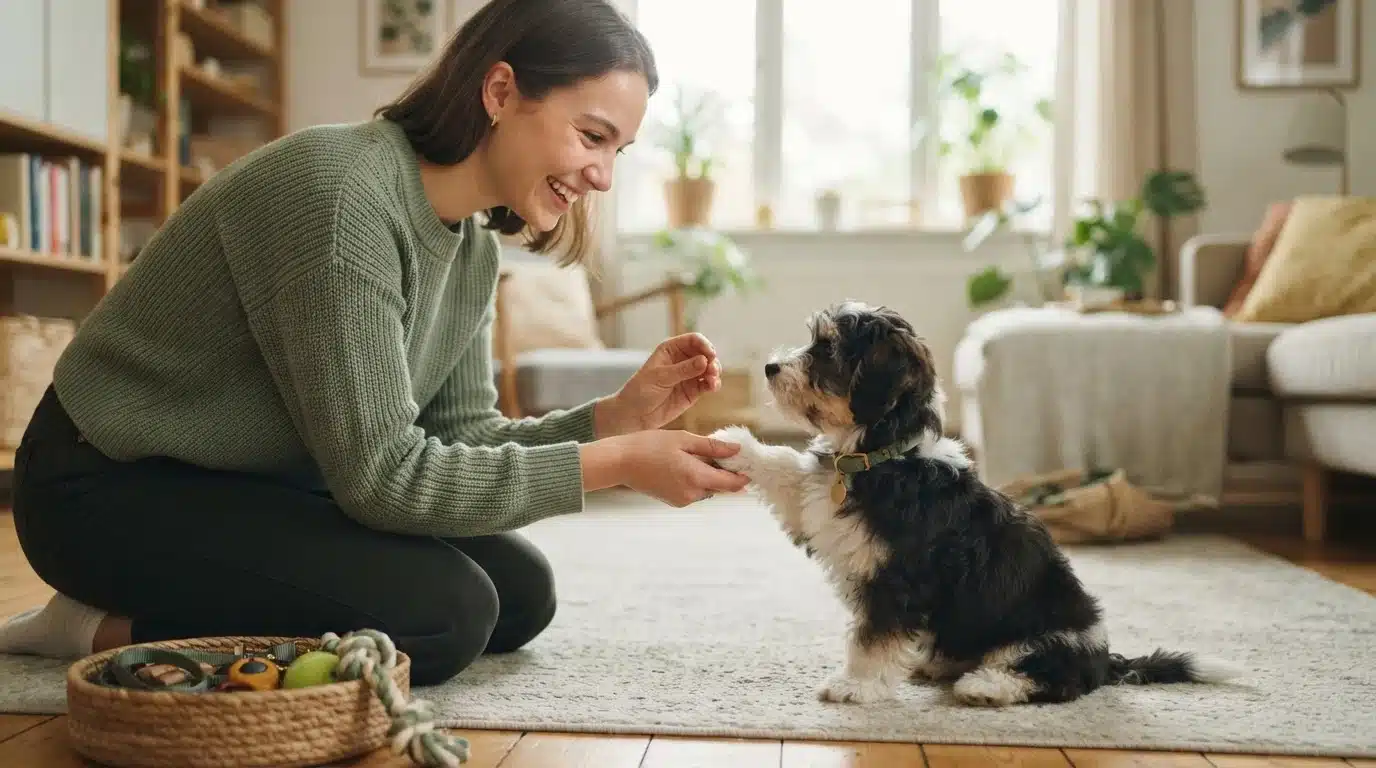
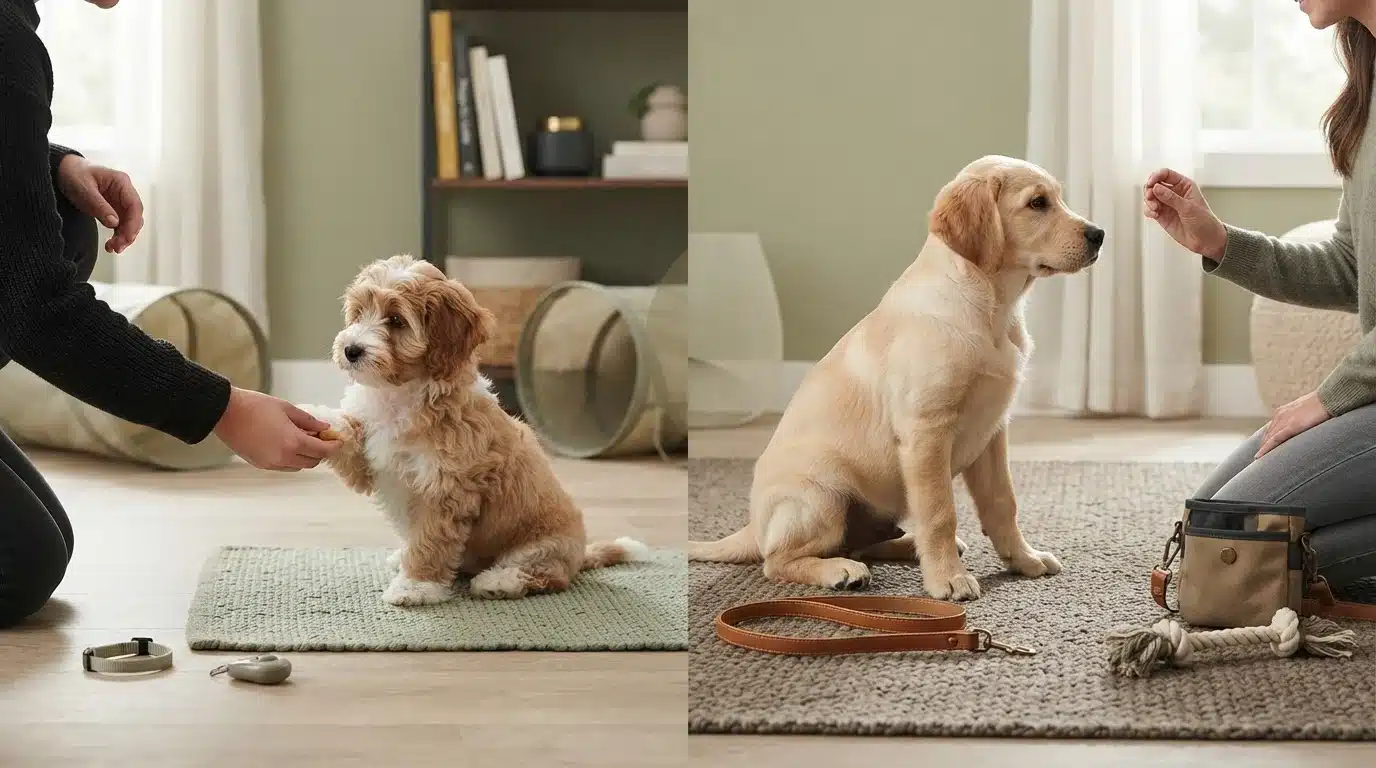
Quick Summary: Havapoo puppies are usually easier to train than Shih Tzus because their Poodle heritage often brings faster learning, strong food motivation, and eagerness to work with handlers. Shih Tzus are intelligent but more independent, so basic obedience and housebreaking usually take longer and require more patience. Individual temperament and consistent reward-based training matter more than breed alone, and Sage Puppies matches families with puppies based on each puppy’s traits.
Standing between two puppy blankets and wondering which one will learn sit, stay and settle faster? A Havapoo usually wins, and the reason has less to do with the Havapoo label than with the Poodle half of the cross. Shih Tzus are genuinely smart, but Shih Tzu training happens on their terms, and they will negotiate. A Havapoo takes the treat, learns the pattern and repeats it. The catch: no puppy is a blank slate, so a strong-willed Havapoo can test you more than an easy Shih Tzu.
This guide compares Havapoo trainability, motivation, stubbornness and housebreaking side by side, then hands you a first-month plan for either breed. It draws on what a small Havanese and Havapoo program in South Jordan, Utah sees in its puppies every day, so your Havapoo training expectations start from real parent-breed traits, not guesses.
Havapoo vs Shih Tzu Training: At a Glance
| Havapoo | Shih Tzu | |
|---|---|---|
| Overall trainability | Generally high, quick to pick up cues and patterns | Smart but selective, learns at its own pace |
| Motivation to learn | Very food-motivated and people-focused, responds well to reward-based work | Loves attention and company, less driven by food rewards |
| Stubbornness level | Low to moderate, varies by individual puppy | Moderate to high, especially once a behavior is established |
| Housebreaking ease | Usually quicker, responds well to frequent outdoor routine | Slower, needs consistency, management and frequent outings |
| Grooming and handling cooperation | Typically willing to be handled, brushed and checked over | Mixed, can be sensitive about feet, face and coat handling |
| Best for | Owners who want a responsive small dog and enjoy training sessions | Owners wanting a calm lap dog who is content with less activity |
How Havapoo and Shih Tzu Compare
Havapoo
The Havapoo is a cross between a Havanese and a Toy or Miniature Poodle, and it approaches Havapoo training with real enthusiasm. Quick to learn and eager to please, this mix suits owners who enjoy short, reward-based training sessions. Stubbornness runs low to moderate, but it varies by puppy.

Key strengths
- Picks up cues and patterns fast
- Very food-motivated and people-focused
- Usually quicker to housebreak with frequent outdoor trips
- Typically accepts brushing and handling willingly
Shih Tzu
The Shih Tzu is a small companion breed with a long show-dog history and a calm, affectionate nature. Shih Tzu training works best for owners who want a relaxed lap dog and can be patient with a slower pace. These dogs learn, but on their own terms.
Key strengths
- Loves attention and company
- Content with less daily activity
- Affectionate, easygoing temperament
Why the Poodle Half Changes Everything
A Havapoo is a Havanese Poodle mix, and that Poodle half is the reason Havapoo training usually moves faster than Shih Tzu training. Poodles rank second among all breeds in Stanley Coren’s well-known intelligence survey, which measured how quickly breeds pick up new commands. Havanese bring their own strengths, but they were bred to be companions, not problem solvers.
What Each Parent Breed Brings to Learning
Havanese are eager, social and very tuned in to people. That makes them willing students. They learn tricks and manners well, but they can be a bit slow to housebreak, and their sensitivity means harsh corrections shut them down.
Poodles are thinkers. In Coren’s ranking, a Poodle typically learns a new command in fewer than 5 repetitions, and the AKC places the breed second for working smarts. Poodles also love games, puzzles and food rewards, so training sessions feel like play.
Shih Tzus, by contrast, were bred to sit on laps in the imperial court. They are affectionate and cheerful but famously independent. They can learn everything a Havapoo learns. They just decide differently whether today is the day they feel like doing it.
Where the Cross Breaks the Pattern
Here is the honest part: a crossbred puppy is not a math problem. A Havapoo does not automatically get the Poodle’s brain, and some lean Havanese in temperament while others are little Poodles with curly coats. Individual personality, the parents’ temperaments, and your consistency all matter more than breed averages.
What the mix usually gives you is a puppy that wants to work with you. That willingness, more than raw intelligence, is what makes the first month smoother. Sage Puppies matches families with puppies based on those individual traits, not just coat color.
Watch how your puppy responds in week one. That tells you more than any breed chart. If you want a sense of what milestones to expect, our Havapoo growth and milestones guide breaks down the first year week by week.
Is a Havapoo Easier to Train Than a Shih Tzu? The Honest Answer
For most families, yes, a Havapoo is easier to train than a Shih Tzu. The Havapoo’s Poodle parent ranks near the top for working intelligence and the breed usually wants to work with you. The Shih Tzu is smart too, but it was bred to be adored, not to obey, so it often has a stubborn streak that slows training down. Breed tendency points one way, but your individual puppy, your consistency, and your first month matter just as much.
Short answer: A Havapoo learns basic obedience faster because Poodle-type smarts and eagerness to please stack together. A Shih Tzu can learn the same skills, just on a slower timeline with more patience and better rewards. Neither breed is “hard” – the difference is speed and motivation.
When the Answer Flips the Other Way
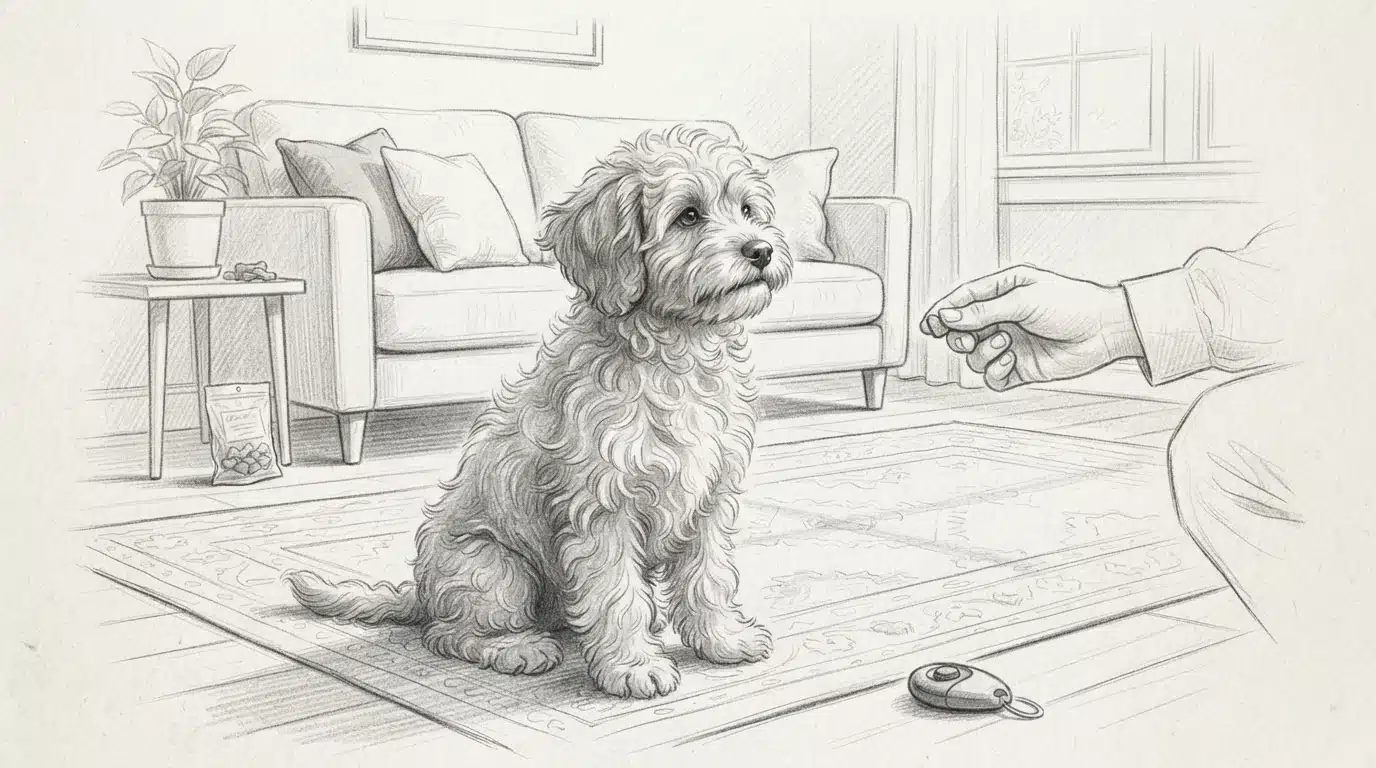
Breed averages are not promises. Some Havapoos take after the Havanese side and get easily distracted, while some Shih Tzus are food-driven and surprisingly quick. Individual breeding matters: how much Toy Poodle intelligence a puppy inherited shapes how readily it offers behaviors. Training style matters even more. Reward-based sessions win with both breeds, but a Shih Tzu trained with harsh corrections will shut down completely, and a Havapoo with no motivation will wander off. A motivated Shih Tzu can outpace a bored Havapoo in the same week. The honest comparison is “usually faster,” never “always easier.” That’s why breeders watch each puppy’s temperament before matching it to a family, and it’s the approach behind the owner-managed matching at Sage Puppies.
How Fast Can a Havapoo Learn Basic Obedience?
Expect a Havapoo puppy to pick up name recognition and sit within the first week or two of home training, and a reliable down, come, and loose-leash start over the first month. Housebreaking usually trails the obedience timeline by several weeks, because bladder control is physical, not mental. Shih Tzu training on the same skills often takes roughly twice as long, mostly due to motivation, not ability. Track wins in a simple log so progress stays visible. Our first-weeks guide walks through that early routine step by step.
Treats, Attention and What Each Breed Works For
Food drives most puppy training, but not every puppy cares about food the same way. A Havapoo usually works hard for treats. A Shih Tzu often works for something else entirely.
Working With a Food-Motivated Havapoo
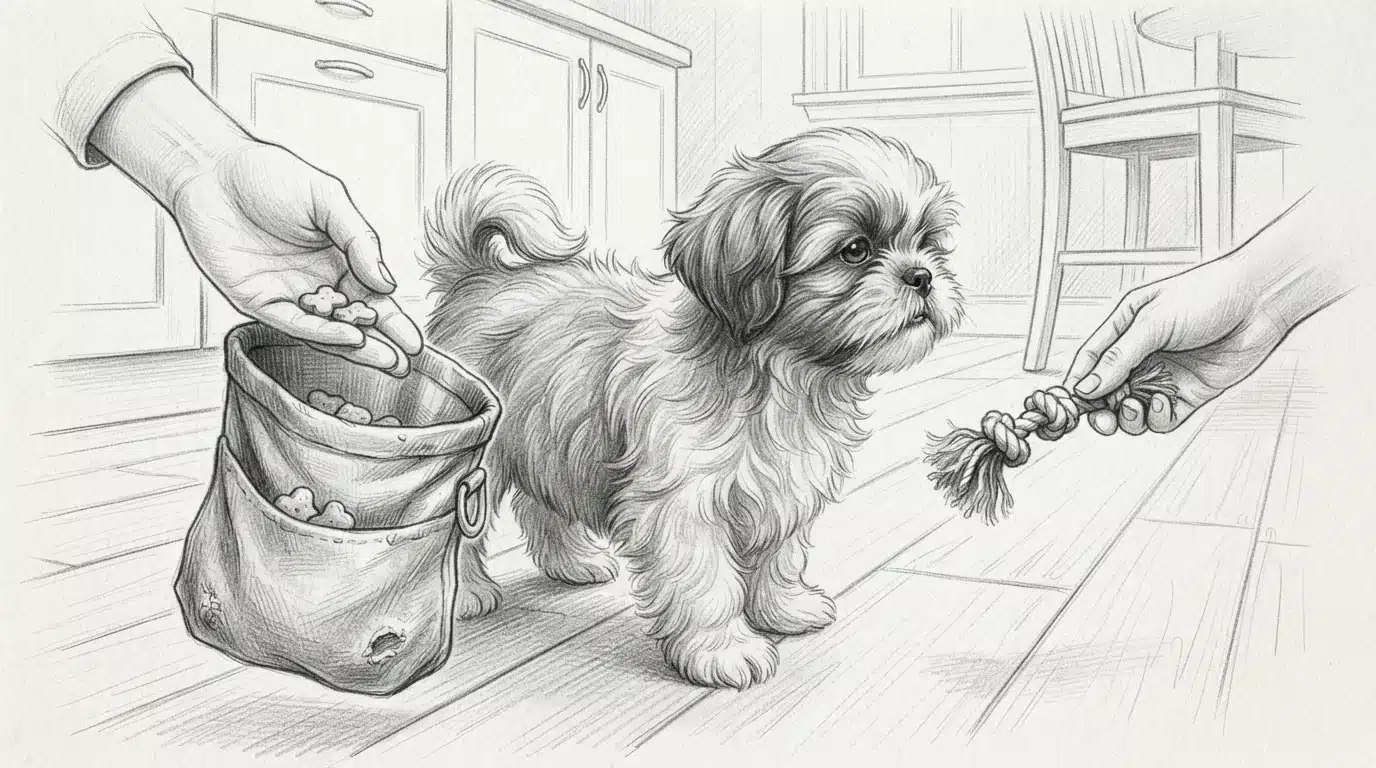
Most Havapoos inherit the Poodle’s love of working for a payoff, so treats make training fast and fun. Use small, soft pieces the size of a pea. A puppy can swallow one in a second and keep working, which matters when you’re running five-minute sessions before breakfast.
Match the treat to the task. Kibble works for easy cues at home. Save high-value rewards like chicken or cheese for harder work, such as recall in the yard, because a better reward earns a better response. Trainers who use food rewards consistently recommend starting with something the dog truly wants, not just what’s convenient.
Keep the treat pouch clipped and loaded. If you’re fumbling in your pocket, you’re rewarding too late, and the puppy learns the wrong thing. Reward within one second of the behavior you want.
What Works for a Shih Tzu That Ignores Treats
Why is a Shih Tzu so stubborn in training? Usually it isn’t stubbornness. The dog simply isn’t hungry, is distracted, or finds your reward boring. Shih Tzus also lose interest fast, so long sessions fail.
Try these fixes:
- Train before meals, not after.
- Upgrade to a high-value treat like tiny bits of chicken.
- Cut sessions to two or three minutes.
- Reward with praise, a toy, or a short game instead.
- End each session while your puppy still wants more.
If the treats still fail, look at the environment. A quiet room beats a busy kitchen.
The Task Small Dog Owners Actually Struggle With
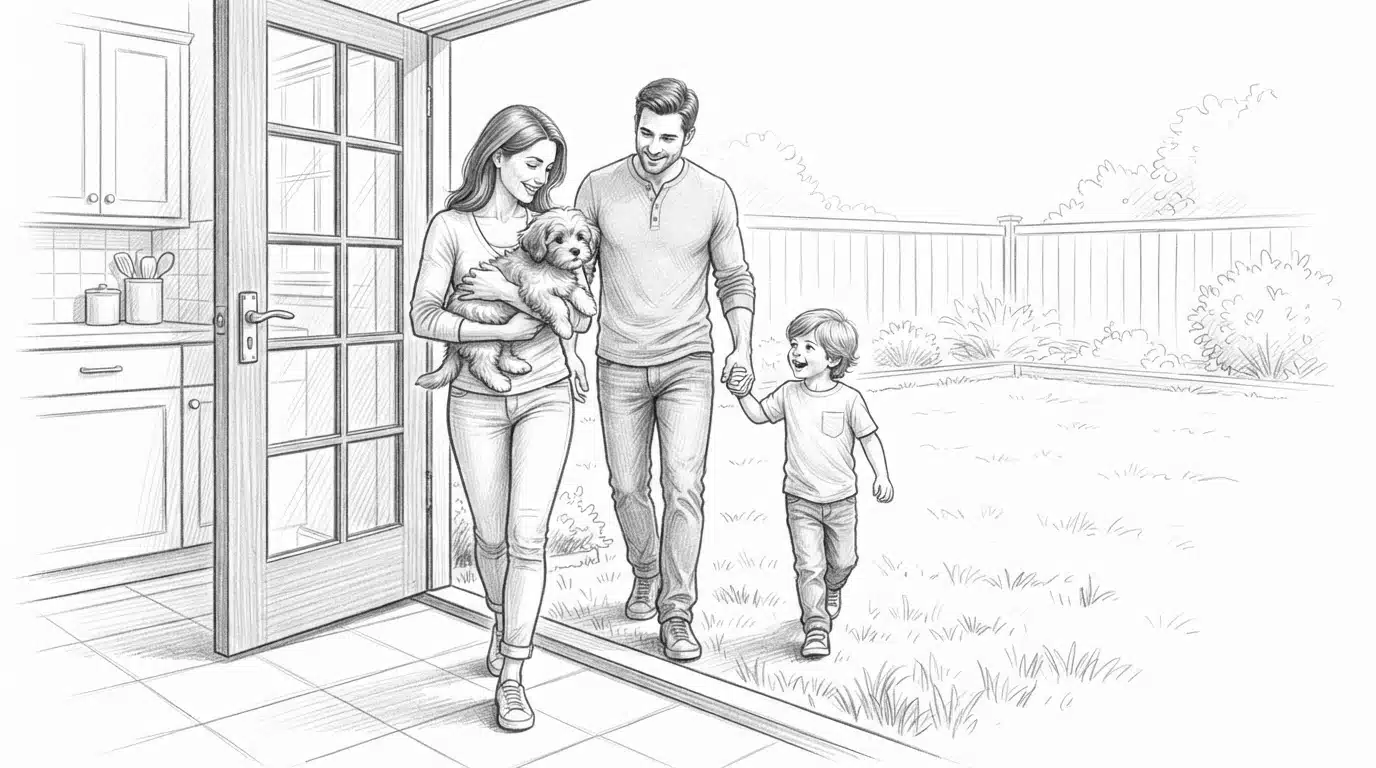
Ask almost any small-breed owner which task gave them trouble, and the answer is rarely “sit” or “shake.” It is house training. Toy breeds have small bladders, a strong sense of their own opinions, and owners who pick them up before they can signal they need to go. The fix is the same for both puppies: control the schedule, reward the right spot, and never give the puppy a chance to fail.
Here is the direct answer. To house train a Havapoo or Shih Tzu puppy:
- Take the puppy outside within 15 minutes of every meal, nap, and play session.
- Use one consistent potty spot so the scent builds a habit.
- Praise and treat the moment your puppy finishes, not after you come back inside.
- Confine your puppy to a crate or small pen when you cannot watch it.
- Clean accidents with an enzyme cleaner so no scent remains.
Do this for four to six weeks and most puppies get reliable, whatever the breed.
A Simple Schedule That Works for Both Breeds
Puppies thrive on predictability. A written routine removes the guesswork that causes most accidents.
- 7:00 am – potty first, then breakfast, then potty again.
- Midday – potty break after lunch and a short play session.
- 5:00 pm – dinner, followed by a trip to the same spot.
- 10:30 pm – one last potty before bed, then crate for the night.
Keep meals on a timer, not free-fed, because predictable input makes predictable output. If you are planning your first month with a new puppy, write this schedule on the fridge before pickup day and log every trip for two weeks.
Why Shih Tzus Often Take Longer
Shih Tzu training usually includes housebreaking, and it is the part owners underestimate. The breed was developed to be a palace companion, not a working dog, so it has little built-in drive to please a handler. Add a famously independent streak and a small bladder, and house training can stretch to six months or more.
This is Shih Tzu stubbornness at work, though it is really a motivation gap. A Havapoo inherits eagerness from the Poodle side, so it connects the reward to the behavior faster. Neither breed is hard to train once you pay well: high-value treats, short sessions, and patience win with both. The difference is pace, not ability.
Handling, Grooming and Training Your Dog to Accept Care
Both breeds need grooming for life, so cooperative care training starts the week your puppy comes home. The goal is simple: your dog learns to lie still while you brush, trim and check, because staying calm earns rewards.
Teaching a Settle on a Mat
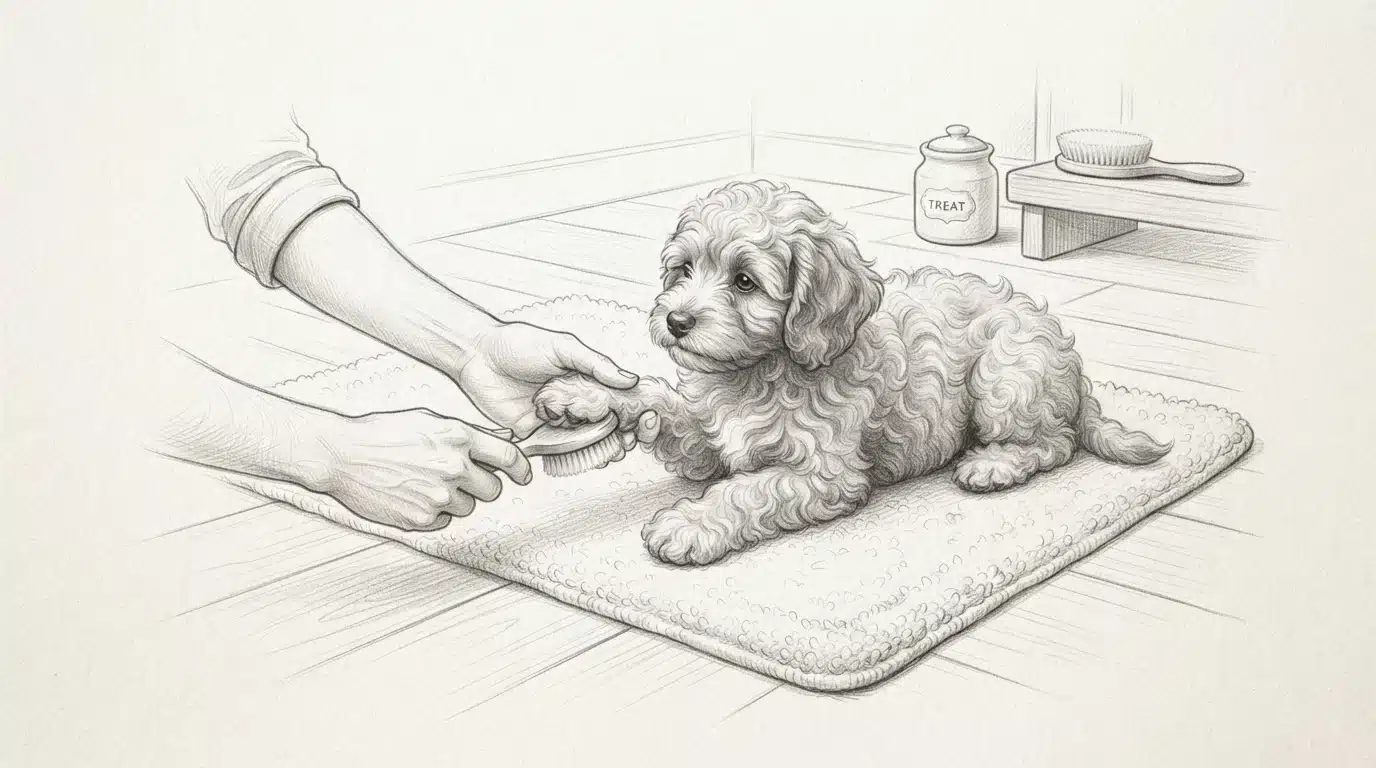
Start with a non-slip mat or bath towel. Toss a treat on it, let your puppy step on, and mark the moment with a calm “yes.” Feed two or three more treats while all four paws stay on the mat, then release with a word like “free.” Repeat a few times per session.
Next, add duration. Space treats a few seconds apart so your puppy learns that lying down pays. Once she holds a settle for 30 seconds, add light handling: touch an ear, lift a paw, then reward. This settle becomes the position for brushing, nail trims and eye cleaning later. A Havapoo usually picks it up in a handful of short sessions; a Shih Tzu may need more repeats before it clicks, and that is fine.
Cooperative Care Step by Step
Cooperative care training means your dog consents to handling instead of being restrained. Build it in small steps:
- Week 1: Handle ears, paws and mouth daily during meals, one second at a time.
- Week 2: Introduce the brush for two strokes, then treat.
- Week 3: Touch clippers to each nail without cutting, then treat.
- Week 4: Trim one nail per session and end on a win.
Stop if your puppy pulls away, and go back one step. Short, winning sessions beat long struggles every time.
Which Should You Choose: A Havapoo or a Shih Tzu?
Questions Worth Asking a Breeder About a Specific Puppy
Breed averages tell you what to expect. The puppy in front of you tells you what you’ll actually get. So once you’ve settled on a breed, ask about the individual litter before you commit.
Start with health. Ask what health testing the parents have completed and whether you can see the certificates. Reputable breeders answer this without hesitation and often reference OFA records, the orthopedic screening registry many breeders use.
Then ask about temperament and early training:
- How are the puppies raised and socialized? Puppies handled daily from birth settle into new homes faster.
- Can I meet the mother, or see video of her? Her calmness around people says a lot about how a puppy will respond to training.
- How does this puppy act compared to its littermates? A bold pup suits an active family; a softer one often suits a quieter first-time home.
- What have you already started? Crate introductions, handling practice, and early potty routines give you a head start on that first month.
If you’re choosing a Havapoo, ask how the parents’ drives differ. With a Shih Tzu, ask how the breeder motivates a stubborn streak, because that tells you how honest they are about the breed.
A good breeder will also ask you questions right back, about your schedule, your yard, and your experience. That back-and-forth matters more than any breed comparison chart, and it’s how matching at Sage Puppies works, owner to family, before money ever changes hands.

Either breed can succeed with the plan above; the difference is matching the puppy to your routine. A Havapoo often picks up commands faster, while a Shih Tzu rewards patience with charm. See the Havapoo puppies available at Sage Puppies, apply for owner-managed matching, and start training on day one.
Frequently Asked Questions
Q1: Is a Havapoo easier to train than a Shih Tzu?
Usually, yes. The Havapoo’s Poodle half brings fast learning and eagerness to please, so most pick up cues quicker than a Shih Tzu.
Q2: Which breed is more trainable, Havapoo or Shih Tzu?
The Havapoo for most families. Shih Tzus are smart but independent, so training moves on their terms and takes more patience.
Q3: Can a Havapoo learn basic obedience commands as fast as a Shih Tzu?
Faster, typically. A Havapoo often learns sit within a week or two; a Shih Tzu may need twice the repetitions.
Q4: Are Havapoos easier to housebreak than Shih Tzus?
Usually. Both need a strict schedule, but Shih Tzu housebreaking can stretch six months or more.
Q5: Can a Shih Tzu still be trained successfully?
Yes. Short sessions, high-value treats and reward-based methods work; harsh corrections make them shut down.
Conclusion
For most families, a Havapoo is the easier puppy to train. Its Poodle half brings fast learning, food motivation and a real eagerness to work with you, so basic obedience and housebreaking usually move faster. A Shih Tzu is smart and affectionate too, but training happens on its own terms, so expect a slower pace and more patience, especially with housebreaking. The honest answer is “usually faster,” never “always easier,” because every puppy is an individual. Your consistency, reward-based sessions and a solid first month matter as much as breed. Match the puppy’s temperament to your routine, and either breed can thrive.