Quick Summary: Train small breed puppies early with short, reward-based sessions lasting 3 to 5 minutes, three to five times a day. Teach name recognition, marker words, sit, down, stay and wait, come, leave it and drop it, loose leash walking, place and doorway manners, and calm settling in that order, adjusting for their short attention spans and sensitive handling needs. Sage Puppies in South Jordan, Utah, begins these foundations before Havanese, Havapoo, and Cavapoo puppies go home, so owners can continue the same plan and build safety, focus, and good manners without expecting housetraining to happen overnight.
A Havapoo puppy can learn to sit on cue in one afternoon. Yet the same puppy who pulls three steps ahead on every walk, lunges at the cat, and ignores his name at six months usually missed out on small breed puppy training during his first weeks at home. Early skills matter more than early tricks. This guide walks you through eight skills to teach in the first eight weeks: name recognition, recall, loose leash walking, leave it and drop it, settle, handling, crate comfort, and housetraining basics. At Sage Puppies in South Jordan, Utah, our Havanese, Havapoo, and Cavapoo puppies start these foundations before they go home, so you are continuing a plan rather than starting from scratch. Each skill below includes a simple setup, an honest practice schedule, and fixes for the problems small breeds most often hit.
Before You Start: Set Up a Training Routine That Works
Small breed puppy training works best when the setup comes first. Short wins, one clear marker word, and one reward system beat long, scattered sessions every time. Puppies this size learn fast, but they tire faster.
How long should sessions last? For small dogs, keep training sessions to 3 to 5 minutes, repeated 3 to 5 times a day. End each one while your puppy still wants more. A Havanese or Cavapoo who finishes on a success will beg for the next round, so always stop before boredom sets in.
If your puppy walks away, yawns, or starts mouthing, the session is over. Pushing past that teaches nothing.
Keep Sessions Short and Successful
Plan each mini-session before you start: one skill, one reward, a clear finish. Practice after a potty break and before meals, when food still matters. Quit while you’re ahead so your puppy remembers the win, not the struggle.
Choose One Marker Word and One Reward System
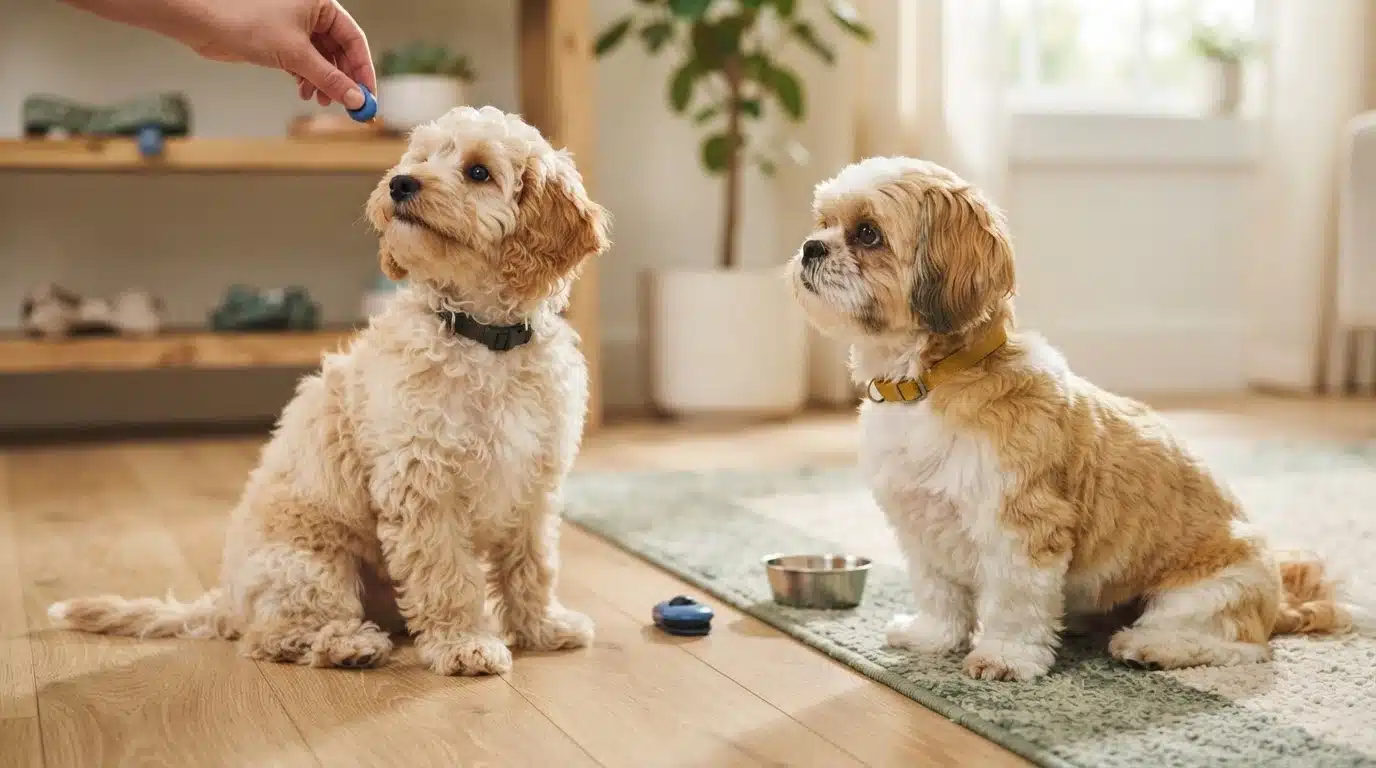
Pick one marker word, like “yes”, or a clicker, and reward within a second every time. Whole family, same word, same treats. Small breeds do well with pea-sized soft treats, not kibble they have to chew.
Know When to Pause and Ask a Professional
Call a certified trainer if fear, snapping, or no progress after two weeks shows up. Reward-based puppy training should feel steady, not frustrating. If sessions keep stalling, an outside eye helps.
Step 1: Build the Foundation, Name Recognition, Marker Word, and Hand Targeting
Three small skills make every later skill easier. Your puppy learns that her name means “look at me,” that a marker word means a treat is coming, and that touching your hand pays off. Keep each session to 3 to 5 minutes.
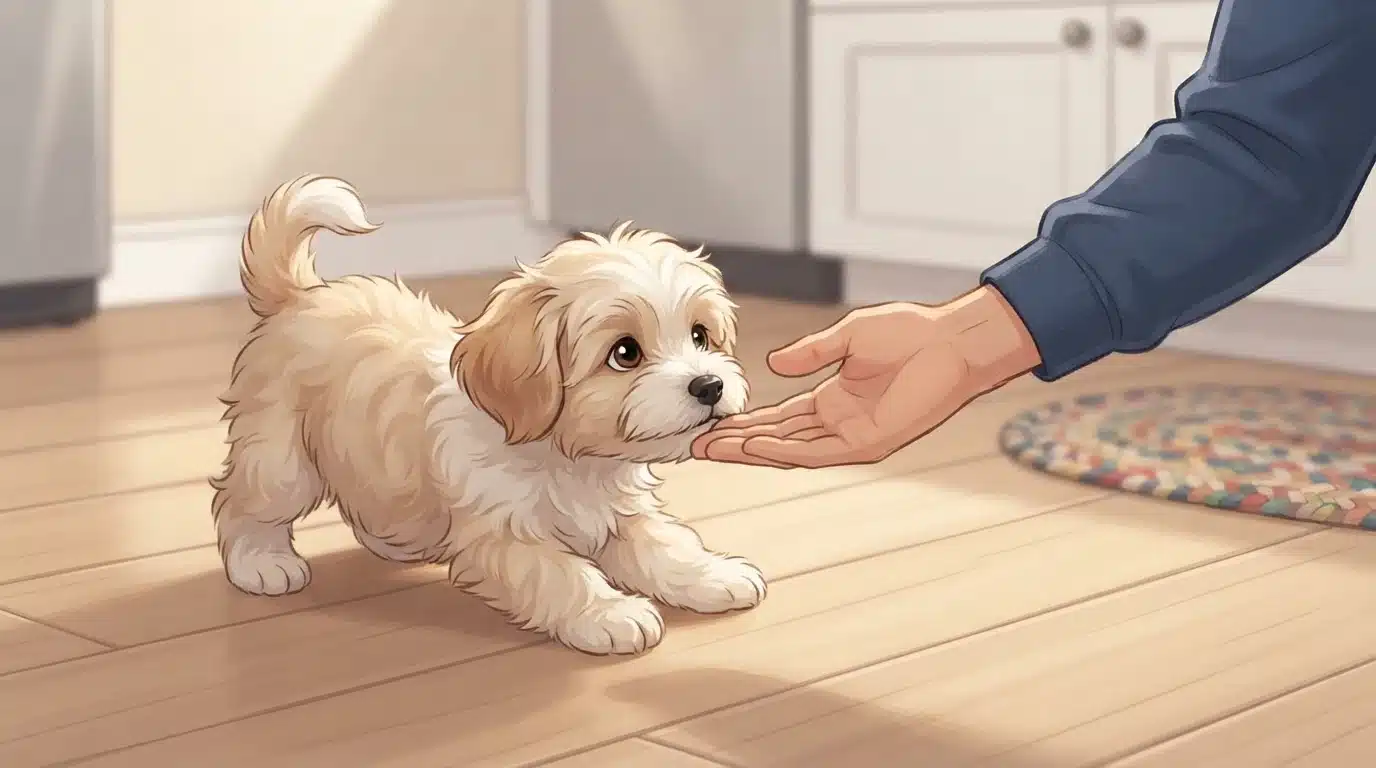
Teach Name Response With a Tiny Reward
- Say your puppy’s name once, in a happy voice.
- The moment she turns toward you, mark it and give a treat.
- Repeat from different spots in the house until the turn is quick and reliable.
Use pea-sized treats so short sessions don’t fill her up. Never repeat the name twice; if she ignores it, move closer and try again. Name response is the seed of every puppy recall training session you’ll do at home.
Mark the Behavior, Then Reward It
A marker word, often just “Yes,” tells your puppy exactly which action earned the treat. Say the word the instant she does the right thing, then deliver the treat within a second or two. Pick one word and let everyone in the house use it the same way. According to Preventive Vet’s marker word guide, consistent marking speeds up learning because the reward lands at the right moment.
Use Hand Targeting to Build Focus and Control
Present your flat palm near her nose. When she bumps it with her nose, mark and reward. Practice with the hand in new positions, then use the touch to guide her past distractions or onto a leash. Hand targeting gives small breeds a polite way to move with you, a point we cover in more depth when we compare small and large breed training needs.
Step 2: Teach the Eight Core Skills in Order
Small breed puppy training works best when you teach skills in a set order, because each one builds on the last. The eight core skills are: sit, down, stay and wait, come, leave it and drop it, loose leash walking, place and doorway manners, and calm greeting with settling on command. Teach them roughly in that sequence, using your marker word, tiny treats, and short sessions of 3 to 5 minutes.
The American Kennel Club lists sit, down, stay, come, and loose leash walking among the first cues every puppy should learn, and the order below adds the safety and manners skills small breeds need most Teach Your Puppy These 5 Basic Cues.
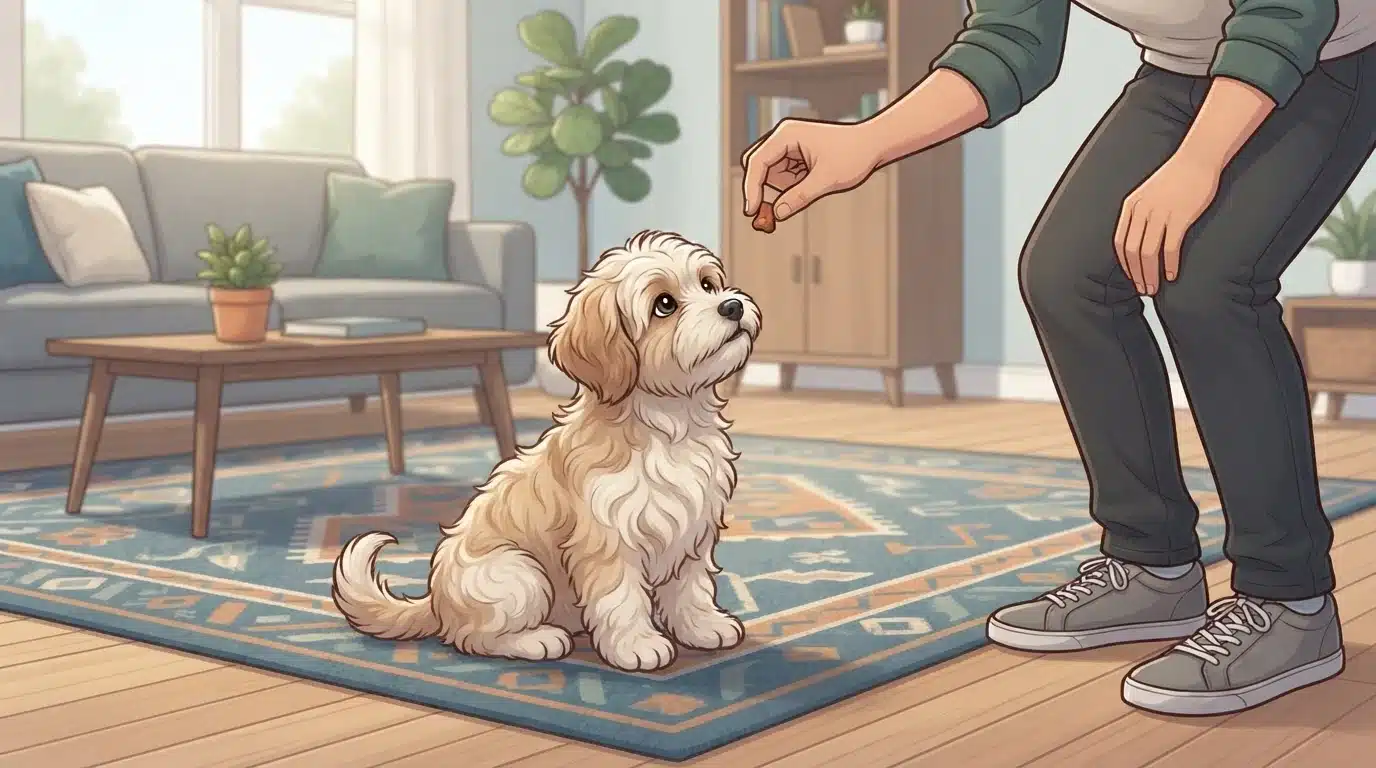
Skill 1: Sit
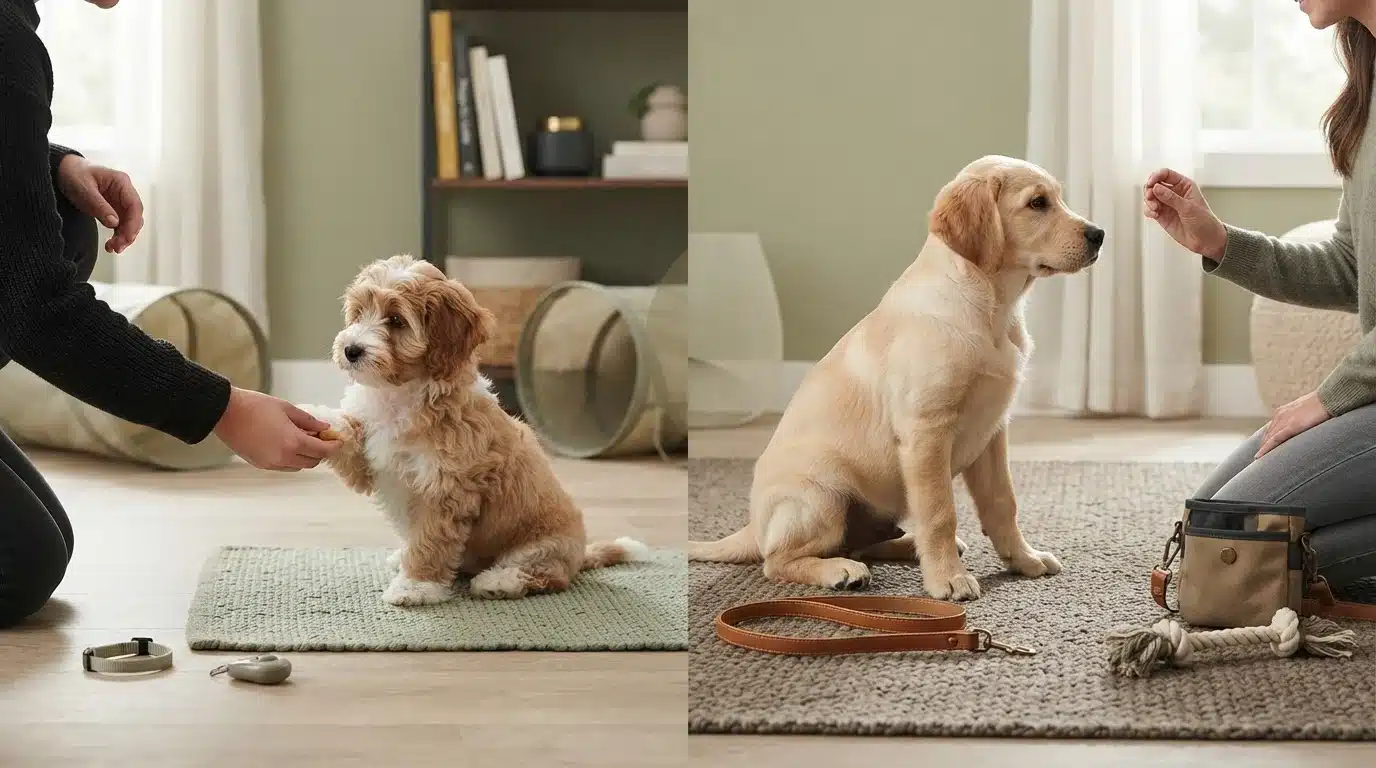
Sit is the easiest win and the foundation for everything else. Hold a treat at your puppy’s nose, lift it slowly back over her head, and mark the moment her bottom touches the floor. Reward, then repeat four or five times. Skip pushing her down; luring works faster and keeps trust intact. Practice before meals so she is motivated.
Skill 2: Down
Once sit is solid, lure the nose straight down from the sit position to the floor between her paws. Some small breeds find this awkward, so a low coffee table or your bent knee can guide the treat’s path. Mark and reward the instant her elbows rest on the ground. Keep sessions to a few minutes, because down takes more physical effort than sit.
Skill 3: Stay and Wait
These are two different skills. As Cornell’s veterinary behavior team explains, “stay” means hold that position until I come back to you, while “wait” means pause at a boundary until released Training ‘stay’ vs. ‘wait’. Start with two seconds, mark, and reward in position. Build duration before you add distance, and always return to her to release, so staying never depends on you walking away.
Skill 4: Come
Recall is the skill that keeps a small dog safe, so pay generously for it. Kneel down, use a happy voice, and reward with her very best treat every single time she reaches you. Never call her for anything she dislikes, like nail trims or bath time, or the word loses value. Practice indoors first, then in a fenced yard with a long line.
Skill 5: Leave It and Drop It
These two commands prevent scavenging and resource guarding. For “leave it,” show a treat in your closed hand, wait for her to back off, then reward from your other hand. For “drop it,” offer a trade: a bland treat or toy in exchange for whatever is in her mouth. Trading teaches her that giving things up pays, which matters in a breed small enough to swallow things fast.
Skill 6: Loose Leash Walking
A pulling 10-pound puppy becomes a pulling adult who drags on the leash, and collars can strain small throats. Start indoors. Stop moving the instant the leash tightens, and walk on when it slackens. Reward position at your side every few steps. A well-fitted Y-front harness spreads pressure safely; our Havapoo puppy checklist covers sizing, because a loose harness lets tiny dogs slip out backward.
Skill 7: Place and Doorway Manners
Teach a portable “place,” such as a mat or open crate, where she goes on cue and stays until released. Lure her onto it, mark, reward, and slowly add duration. Then use “wait” at doorways: she holds until you step through first. This stops door-dashing, which is the top escape route for small breeds.
Skill 8: Calm Greeting and Settling on Command
Small puppies get picked up and fussed over, so jumping feels harmless. It isn’t. Ask every greeter to ignore her until all four paws are down, then let them say hello. Pair this with a “settle” cue: reward calm lying on her mat during evenings, and gradually expect it in busier spots. A puppy who can settle anywhere travels, dines out, and visits the vet without drama. That skill, more than any trick, is what makes a small dog welcome everywhere you go.
Small breeds change how training looks, not what you teach. Three adjustments make every cue in this sequence easier for a Havanese, Havapoo, or Cavapoo puppy.
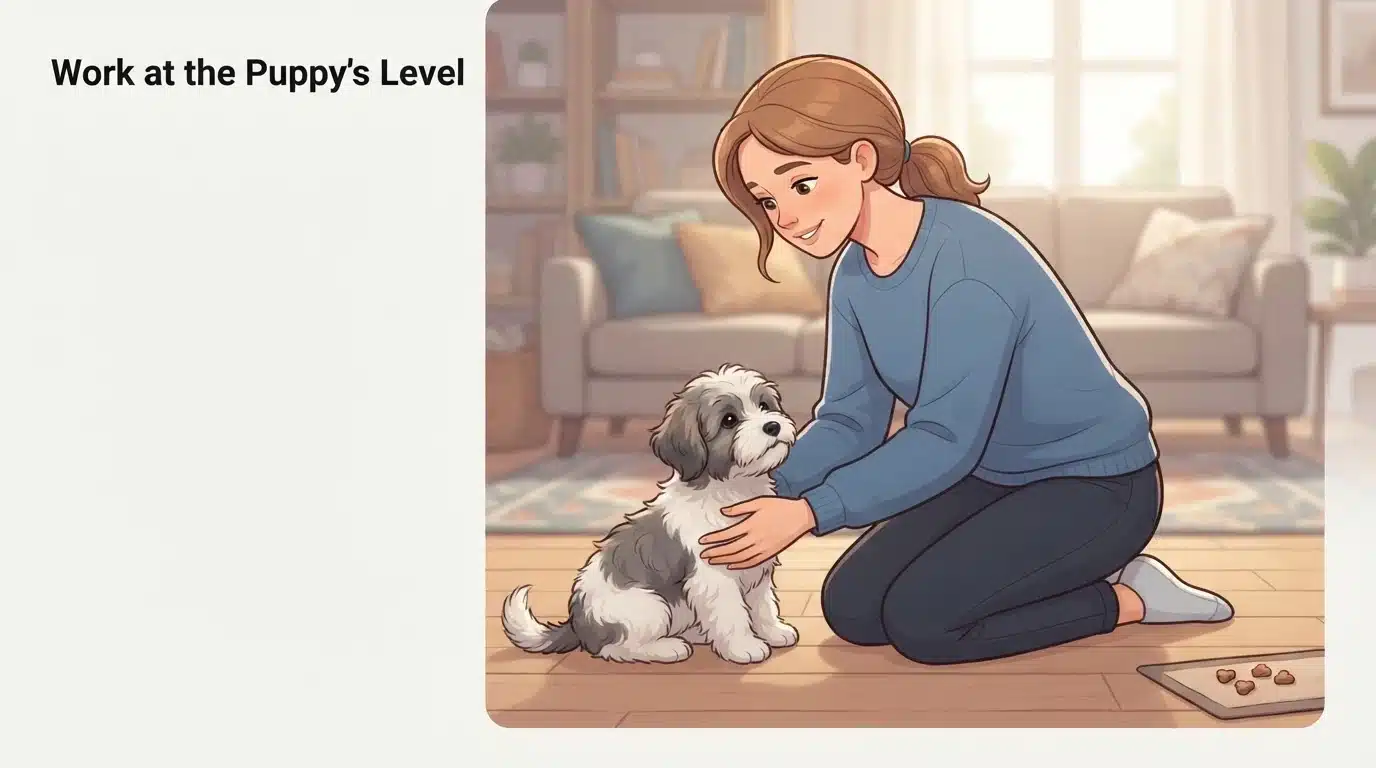
Work at the Puppy’s Level
Crouching over a 6-pound puppy can look threatening, so get low. Sit on the floor or a step and let your puppy come to you instead of looming over to reach for the collar. Handling practice works the same way: pick the puppy up briefly, reward calm, and set him down before he squirms. Frequent, gentle lifts teach that being touched and carried is routine, which pays off at the vet and groomer.
Adjust for Coat and Handling Sensitivities
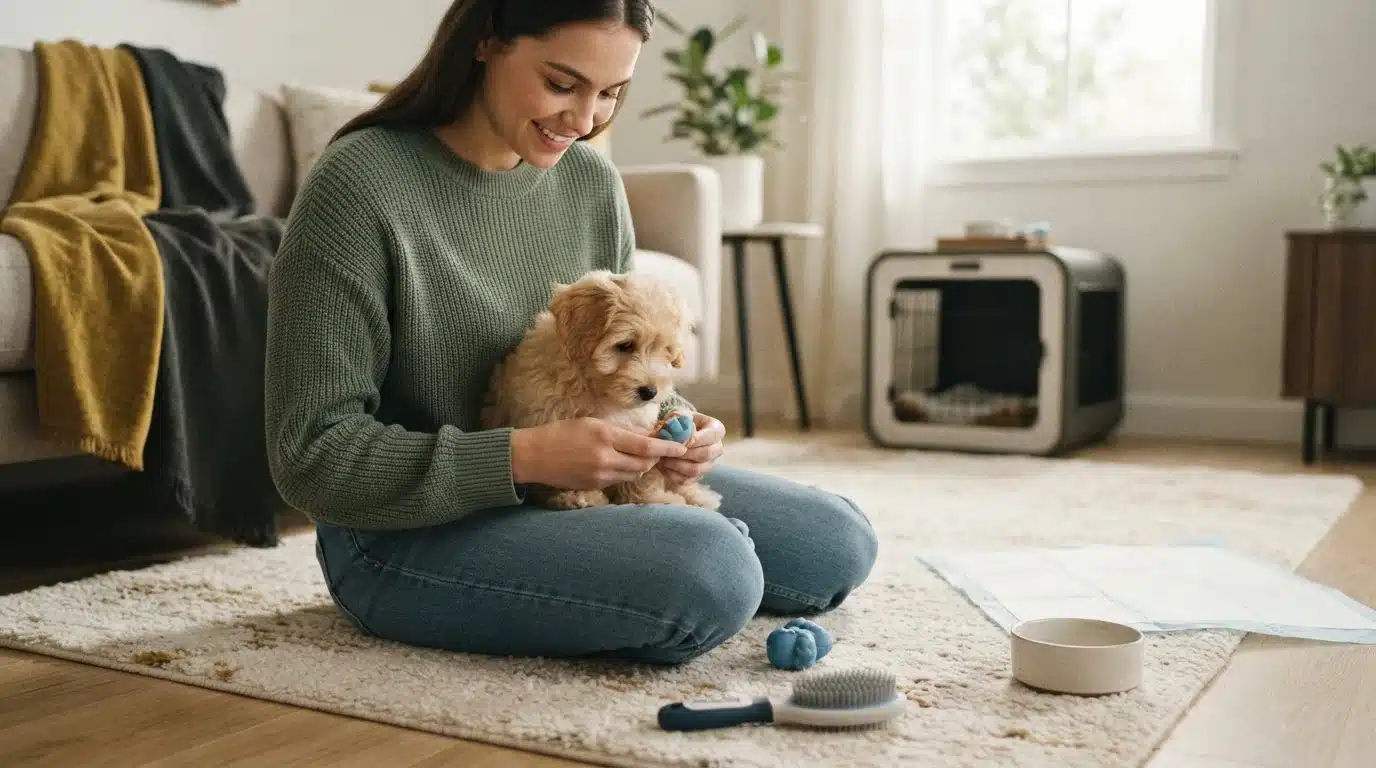
A Havanese double coat mats quickly, so build in short brushing practice during calm moments rather than after a full play session. Reward one stroke at a time, and touch paws, ears, and muzzle daily in tiny doses. Doodle coats shed less but still need the same gentle desensitization.
Match Sessions to a Short Attention Span
Keep sessions to 3 to 5 minutes, as with every other skill here. End each one while your puppy still wants more, then try again a few hours later. A tired or hungry puppy stops learning, so train after a nap and before meals.
A Realistic Weekly Training Plan
Puppies learn through repetition, not marathon sessions. Plan on three to five short sessions a day, each 3 to 5 minutes, and attach them to things you already do: after a potty break, before meals, or during a commercial break.
A Sample Daily Routine
- Morning: One minute of name recognition and recall during breakfast, then a quick sit before the door opens.
- Midday: Two or three minutes of loose leash walking in the hallway or yard.
- Afternoon: Practice “leave it” and “drop it” with a toy trade.
- Evening: One session on stay or crate manners, then calm handling before bed.
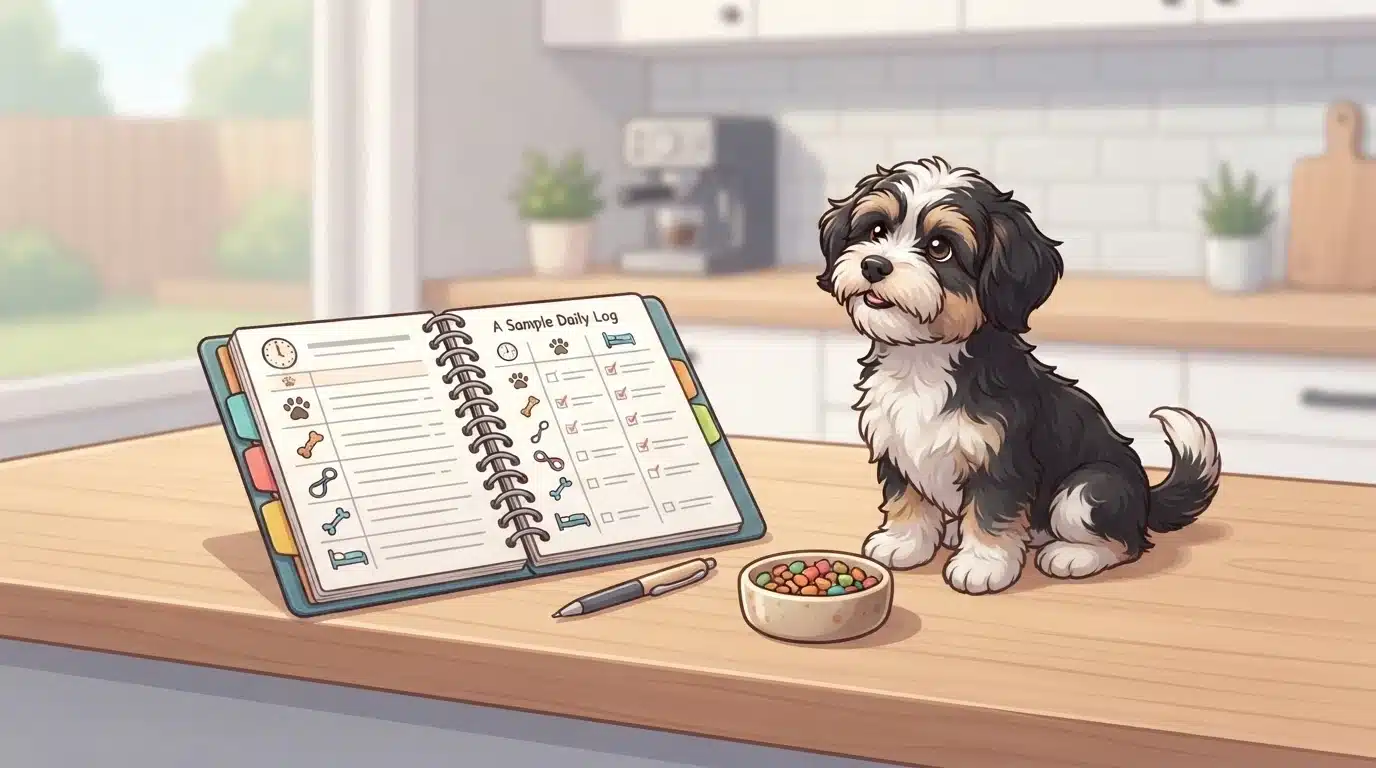
Track Progress With a Simple Log
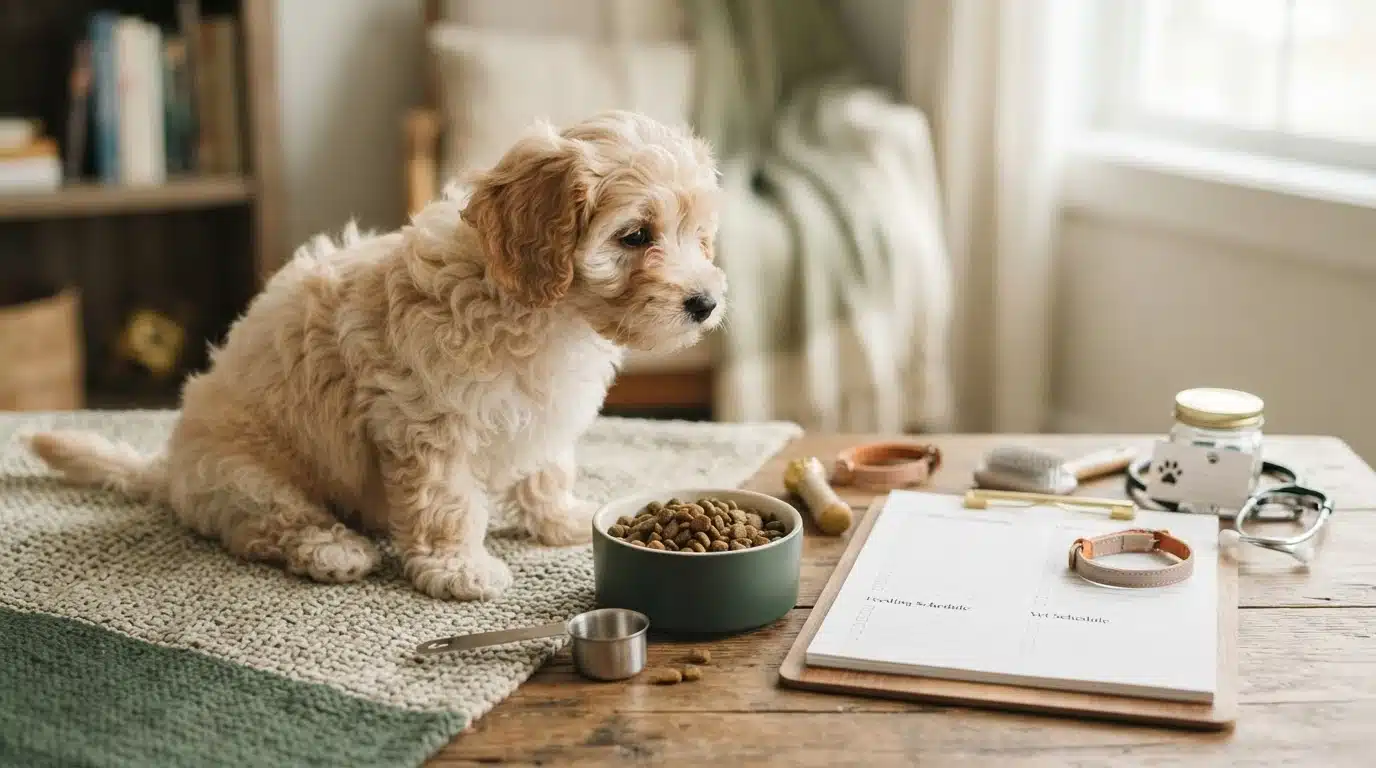
A training log turns guesswork into data. Use a notebook or phone note and record four things after each session: the skill, how many reps your puppy got right, the biggest distraction, and anything that confused him. After a week, patterns show up fast. Maybe “come” is solid indoors but falls apart in the yard, which tells you exactly where to practice next. Keep entries to a single line so you actually keep doing it.
Most families see real progress across a full week of short, daily reps.
Common Mistakes to Avoid
Punishment and Intimidation Slow Learning
Yelling, leash pops, or scolding a puppy after the fact teaches fear, not skills.AVSAB recommends reward-based training as the most effective and humane method link down.Breed animals learn faster when they trust you. Havanese and doodle mixes are especially sensitive, so keep every session positive. – but never a dash, fine.
Watch for one more trap: skipping help. ### Repeating the Cue Without Helping
If you say “sit” six times and your puppy finally sits, you have just taught her to wait for the sixth cue. Say the word once, then help her succeed with a lure or gentle guidance, and reward the moment it happens. Silence and patience beat nagging every time.
Expecting a Small Puppy to Be Reliable Too Soon
A four-month-old Cavapoo who potties outside all week can still have accidents at five months. Small breeds mature slower and have tiny bladders, so treat setbacks as normal. Housetraining usually needs months of consistency, not weeks, so stay calm and keep the schedule going. – internal link earlier: “Housetraining usually needs months” → link words “potty training schedule by age”? Better: link in that sentence on “keep the schedule going”? Link naturally: “keep a steady potty training schedule by age” hmm. Reword: “so stay calm and stick to a potty training schedule that matches her age.” Good.
Word check ~180. Fine. Output clean, no stray drafting notes.## Common Mistakes to Avoid
Punishment and Intimidation Slow Learning
Yelling, leash pops, or scolding a puppy after the fact teaches fear, not skills. The American Veterinary Society of Animal Behavior recommends only reward-based training, because punishment often creates anxiety and stalls progress. Small breeds feel this more than most. A sensitive Havanese or Cavapoo learns faster from a treat and a marker word than from a stern voice.
Repeating the Cue Without Helping
If you say “sit” six times and your puppy finally sits, she has learned to wait for the sixth cue. Say the word once, then help her win with a lure or gentle guidance. Reward the instant she gets it right. Silence and patience beat nagging.
Expecting a Small Puppy to Be Reliable Too Soon
A four-month-old Havapoo who potties outside all week can still have accidents at five months. Small breeds have tiny bladders and mature on their own timeline, so treat setbacks as normal. Stay calm and stick to a potty training schedule that matches her age. Consistency over months, not weeks, is what builds real reliability.
When a Skill Is Not Clicking: Troubleshooting
Every puppy stalls on something. A stuck skill usually means the setup, not the dog, needs to change. Work through the fix below before assuming your puppy “can’t” learn it.
The Puppy Does Not Respond to the Cue
If your puppy ignores a cue, lower the difficulty first. Move to a quiet room, go back to an easier version, and reward every correct try. Say the cue once, then wait two seconds. If nothing happens, lure the motion again so the word stays tied to the action. If a skill stalls for more than a week, a reward-based trainer can spot what you’re missing.
The Puppy Performs Only When a Treat is Visible
A treat in plain sight becomes part of the cue, so the puppy works only when it sees one. Keep the reward hidden in a pocket or pouch, cue first, then pay after the puppy succeeds. Fade the visible food within a few sessions. Occasionally reward with praise or a quick game instead, so the behavior holds up without food on the counter.
The Puppy Barks, Jumps, or Bites
Wiggly behavior usually means arousal, not defiance. Small breeds get wound up fast, and a nipping Havapoo has often simply had enough. End the session calmly, add a short break or a stuffed chew, and try again later. If bites draw blood or barking never settles, shorten sessions to two minutes and ask your vet or a trainer for help.

These eight skills shape how your puppy behaves for life, and short daily sessions are all it takes. Want a head start before your puppy comes home? Explore Sage Puppies, where Havanese, Havapoo, and Cavapoo puppies are wisely bred and matched with care.
Frequently Asked Questions
Q1: What are the 8 early skills to teach in small breed puppy training?
Start with name recognition, marker word, sit, down, stay and wait, come, leave it and drop it, loose leash walking, and settle on a mat. Each skill builds on the last, taught in 3 to 5 minute sessions.
Q2: How long should each puppy training session be?
Three to five minutes, three to five times daily. End while your puppy still wants more, ideally after a potty break and before meals.
Q3: When should I start training my Havanese or Cavapoo puppy?
The day she comes home. Puppies learn fastest in the early socialization window, roughly three to fourteen weeks, so short daily sessions start paying off immediately.
Q4: What treats work best for small breed puppies?
Pea-sized soft treats. Kibble takes too long to chew and breaks the rhythm of marking and rewarding.
Q5: My puppy only listens when she sees a treat. What now?
Hide the reward, cue first, then pay after success. Fade visible food within a few sessions and mix in praise or a quick game.
Q6: When should I call a professional trainer?
If fear, snapping, or stalled progress lasts more than two weeks, bring in a certified reward-based trainer for an outside look.
Conclusion
Small breed puppy training comes down to eight skills, taught in order: name recognition, recall, leave it and drop it, loose leash walking, settle, handling, crate comfort, and housetraining basics. Keep every session to 3 to 5 minutes, reward within a second, and practice daily rather than in long weekend marathons. When a skill stalls, change the setup before blaming the puppy. Stay patient through setbacks, especially with housetraining, because small breeds mature on their own timeline. Taught early and gently, these eight skills shape a Havanese, Havapoo, or Cavapoo who settles anywhere, walks politely, and comes when called, which makes small breed puppy training the most valuable hour you will ever split into tiny pieces.