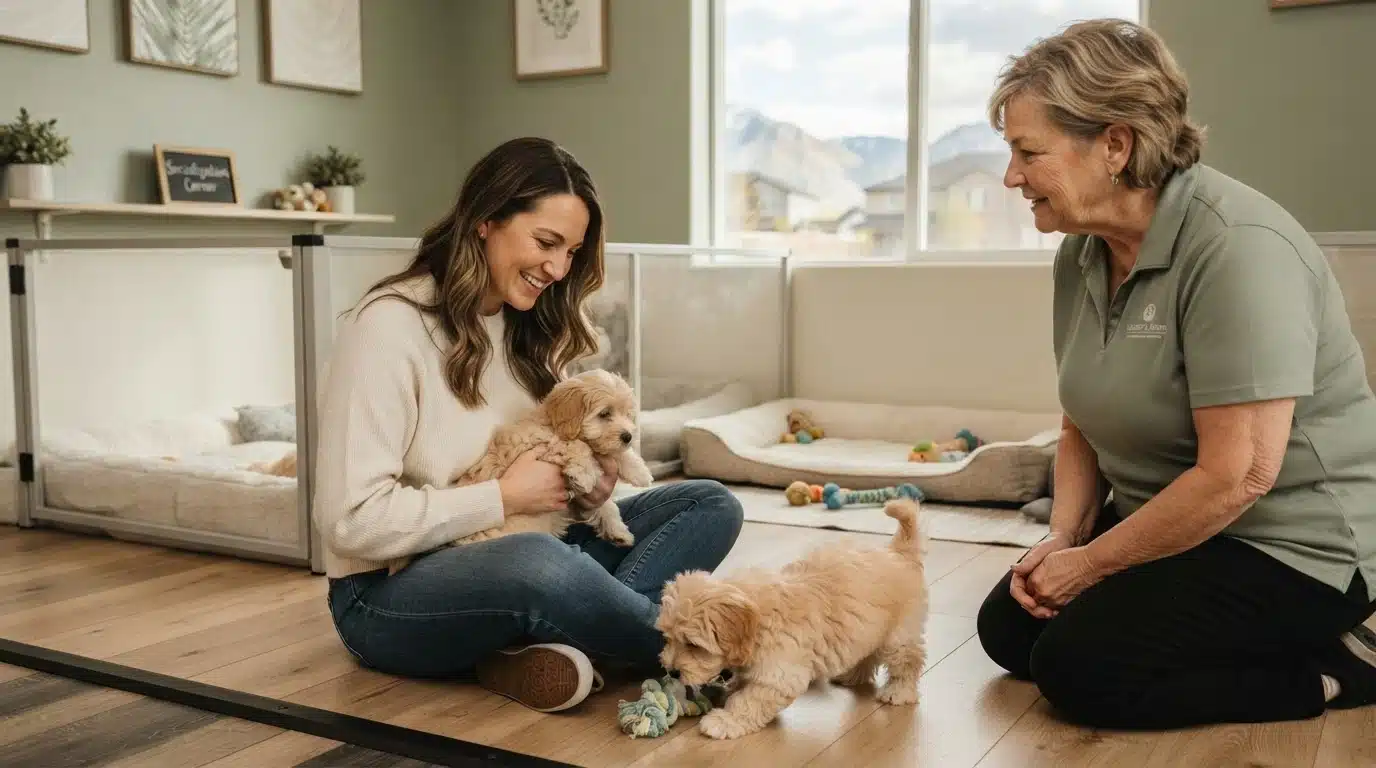
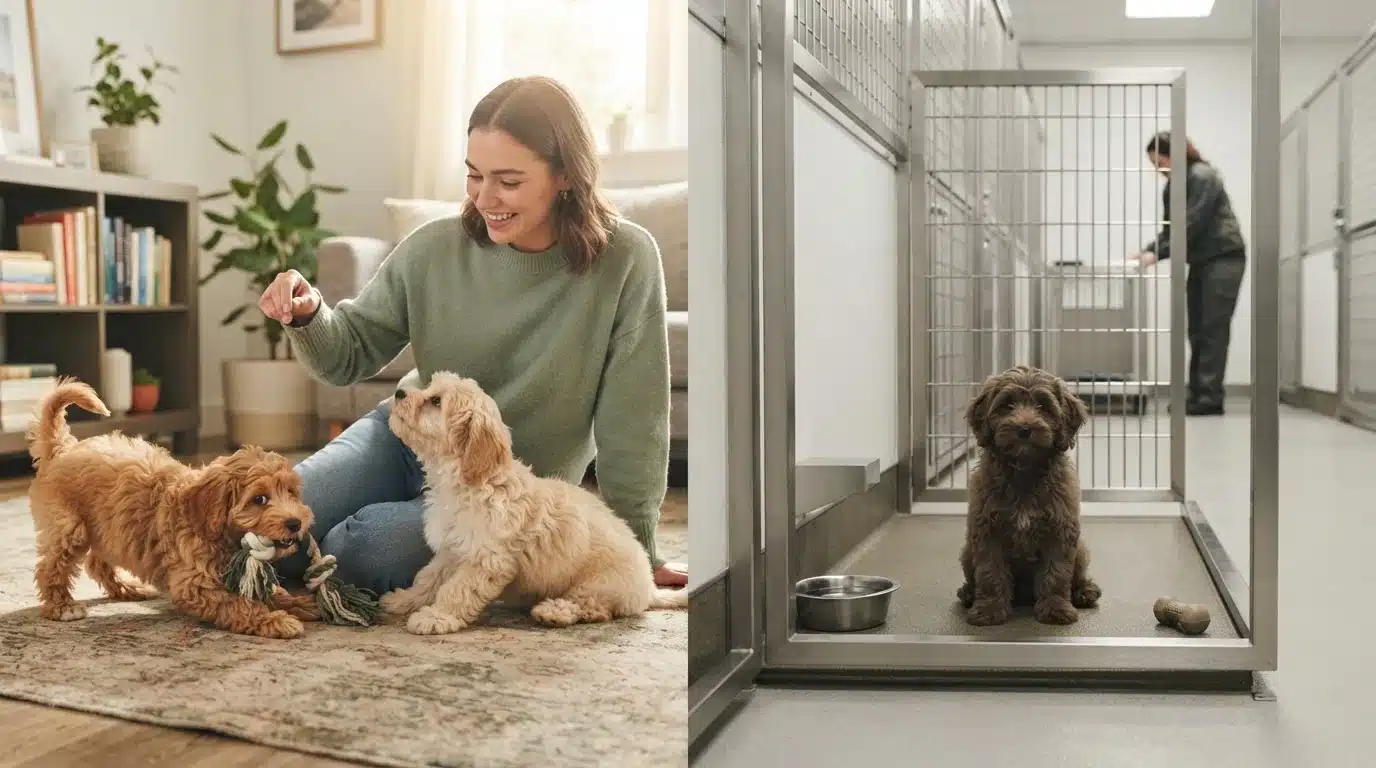
Quick Summary: For most Utah buyers, a reputable breeder offers safer, clearer records than a pet store, which rarely provides parent health screening or DNA results. Before paying, request parent screening, the puppy’s vet and vaccination records, and a written contract with clear deposit and return terms. Sage Puppies supports this approach with home-raised Havanese, Havapoo, and Cavapoo puppies, documented health histories, and in-person pickup in South Jordan.
The Utah breeder vs pet store question is easier to settle here than in most states. Salt Lake County became the first Utah municipality to ban retail pet sales unless animals come from a shelter or rescue, and Utah has no statewide breeder license. So nobody checks the records for you. You have to verify them yourself.
That puts buyers in a bind. A breeder you can visit, or a store puppy you can walk out with the same afternoon, often sit at similar headline prices. Either way, you pay before you see the full records. First-time owners feel it most, since a real vet record or parent screening result is unfamiliar.
This guide compares the Utah breeder vs pet store routes on what you can actually check: permits, health records, breed transparency, socialization, contracts and payments, plus a checklist you can run on any seller, including us. We also note where puppies for sale in Utah differ from what out-of-state stores promise.
Utah Breeder vs Pet Store: At a Glance
| Sage Puppies | Pet store puppy sales in Utah | |
|---|---|---|
| Health testing and screening | Parent clinical screening and DNA variant results documented per parent, kept separate from each puppy’s own exam record | Usually limited to a store or broker paperwork; parent screening is rarely accessible to buyers |
| Genetics and breed transparency | Three breeds only: Havanese, Havapoo (Havanese and Poodle), Cavapoo (Cavalier and Poodle) | Breed labels vary; many retail listings are designer mixes with limited parentage documentation |
| Raising environment and socialization | Owner-managed home program in South Jordan, Utah with in-home visits before pickup | Puppies typically raised in a commercial kennel or broker facility, not a household |
| Vet records and early care | Puppy exam and vaccination history provided before go-home day, including Rabies and DHPP series as scheduled | A vaccination card or certificate is typical; full exam notes are often limited |
| Price and payment structure | Puppies priced at $3,500 to $4,500 with a written contract and a reservation deposit | Often $800 to $3,000 or more, frequently with store financing or add-on supplies at the register |
| Regulation and oversight | Not USDA licensed because puppies are sold directly to families in person; subject to Utah local kennel and business rules | Restricted in some Utah jurisdictions; sales from shelters and rescues are commonly permitted |
How Sage Puppies and Pet store puppy sales in Utah Compare
Sage Puppies
Sage Puppies is a boutique home breeder in South Jordan, Utah, founded in 2025, raising only Havanese, Havapoo and Cavapoo puppies. Families apply, reserve, and pick up in person after reviewing each parent’s screening records and each puppy’s own vet exam history.
Key strengths
- Parent health screening and DNA results documented per parent
- Written contract, reservation deposit, and $3,500 to $4,500 pricing
- In-home socialization with pre-pickup visits
Pet store puppy sales in Utah
Pet stores sell puppies on the retail floor, usually sourced through brokers or commercial kennels rather than households. Some Utah municipalities now restrict retail puppy sales, so availability and paperwork vary widely by location.
Key strengths
- Immediate browsing and same-day purchase
- Store financing and bundled supplies at the register
The Short Answer: Where Most Utah Buyers Should Buy
For most Utah families, a licensed breeder is the safer choice. You meet the breeder, see the mother, and get the puppy’s care record plus the parents’ health testing. Pet stores rarely show any of that, and several larger chains have faced puppy mill sourcing claims, so your questions matter more than the store’s answer.
What changes when you buy in Utah specifically
Utah has no statewide retail pet sale ban, so pet stores can legally sell puppies. The rules that protect you are local: Salt Lake County’s retail pet sales ordinance, plus city breeder licenses and kennel permits. Those cover housing and record-keeping, not the parent dogs’ DNA or joint screening. That part stays on you to verify.
When a pet store puppy is still workable
A store puppy can still work if you insist on paper. Ask for a signed vet exam record, a real health certificate (not just shot dates), and the name of the actual breeder. If the store stalls on the breeder’s identity, walk away. The puppy may be fine, but you would be guessing.
A short, honest checklist before you pay anyone
- Ask for the breeder’s name and license number
- Get parent health testing and DNA results in writing
- Confirm vaccination dates and vet exam records
- Read contract and deposit terms before signing
- Visit in person when you can
Whether you choose a breeder or a store, the questions above are the same. Small breeds like the Havanese, Havapoo and Cavapoo are prone to a few inherited conditions, so screening records are worth asking for before you pay.
Health Testing: What Is Documented and What Is Assumed
What documents should you ask for before paying for a puppy? Ask for three layers of evidence:
- Parent screening results, such as OFA or PennHIP evaluations on the dam and sire
- DNA panel results showing the parents are clear of known breed conditions
- The puppy’s own care record, including vet exam, vaccinations and deworming dates
A puppy’s vet visit proves the puppy was healthy that day. It says nothing about problems the parents may carry. Ask for each layer in writing before you put down a deposit.

Reading breed-specific requirements correctly
Each breed carries different risks, so the testing list differs. Havanese breeders screen for eye disease, deafness, knee and hip problems, and cardiac issues, which is why the OFA’s breed-specific requirements matter more than a generic panel. For a mix like a Cavapoo, both parent breeds’ tests apply. If a breeder cannot name the tests their dogs have had, treat that as a missing answer, not a minor detail.
Why retail puppies rarely come with this paperwork
Pet stores buy from brokers, and a broker’s file shows origin and transport, not generations of screening. Some stores operate under USDA licensing rules written for kennels, not health testing. What is documented is the puppy’s care record. What is assumed, silently, is the parents’ health. Ask anyway; the answer tells you a lot.
Breed Identity, Crosses, and Paperwork You Can Actually Read
A pedigree lists ancestors; it does not list health. Ask for both the family tree and the parents’ test results.
What a pedigree or ancestry document can and cannot tell you
A pedigree proves lineage and, for purebreds, registration with a kennel club. It tells you nothing about the hips, hearts, eyes or DNA behind those names. Good breeders supply AKC Canine Health Information Center style testing records alongside pedigree papers, so you can see the evidence, not just the family tree.
Havanese, Havapoo and Cavapoo mixes
Havanese are a recognized purebred breed with a documented standard. Havapoos and Cavapoos are first-generation crosses, Havanese or Cavalier mixed with a Poodle, and no registry certifies them. Ask which parent is which, and whether both parents were screened. Honest breeders of these mixes, including Sage Puppies, describe the blend rather than pretend it is a breed.
Store labeling versus accurate breed description
Pet stores often label crosses with cute, invented names that hide the parentage. A label like “teddy bear puppy” is marketing, not ancestry. Ask for the sire and dam by breed, age and test results in writing.
Raising Environment and Early Socialization
Where a puppy spends its first eight weeks shapes how it handles new people, sounds and handling for life. The AVSAB position statement puts the most important socialization window in the first three months, so early weeks matter more than most buyers realize.
What a home environment looks like in practice
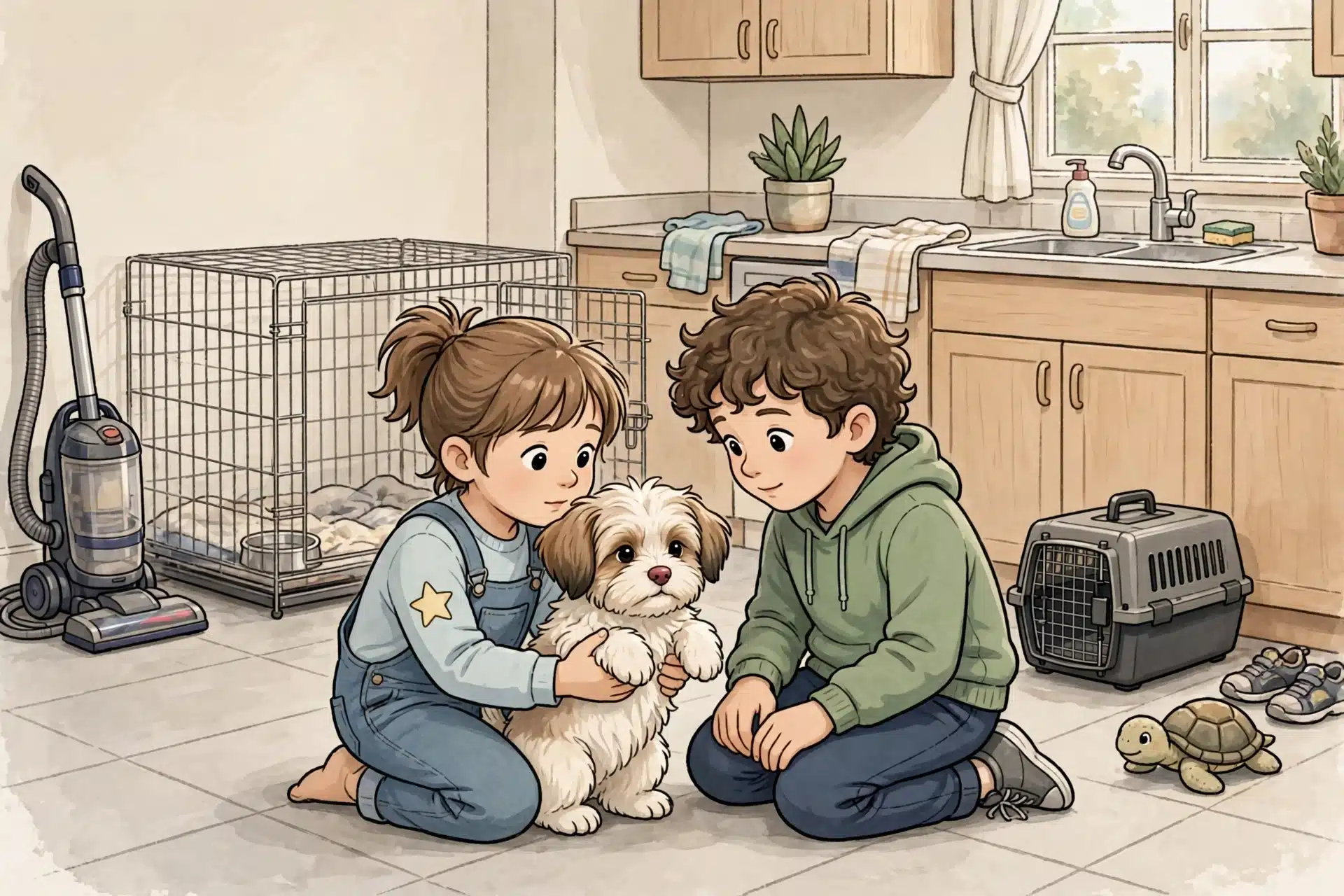
A true home-raised puppy lives in the breeder’s house, not a separate kennel building. That means household noise, vacuum cleaners, children, car rides and daily handling from birth. Puppies that grow up on hard floors with no enrichment often startle easily and struggle with crate training. Ask what the puppies actually experience each week, not just where they sleep.
How to evaluate a kennel claim honestly
Many websites say “home raised,” so verify it. Ask for photos or video of the whelping area, and request a video call to see puppies moving through a real living space. Some breeders share updates throughout the litter’s first weeks. A socialization plan you can review before buying tells you far more than a label on a website.
Temperament without pass or fail tests
Pet stores cannot show you parents or the litter at all. With a breeder, watch how each puppy responds to a stranger kneeling down: curiosity, cautious approach and quick recovery are healthy signs. There is no pass or fail. The goal is matching a puppy’s energy to your household, which careful breeders do through weeks of observation rather than a single visit score.
Records, Vet Care, and the First Weeks at Home
The paperwork tells you where a puppy really came from. Check it before money changes hands, and walk away if a seller hesitates.
Checklist: what to request from any pet store seller
- A puppy health certificate signed by a licensed veterinarian
- Vaccination and deworming records with dates
- Written details on where the puppy was born and raised
The paperwork that should arrive with any puppy includes a current vaccination record, a deworming log, and a veterinary health certificate issued days before pickup. Good breeders add the parents’ health testing results, a written contract, and feeding instructions. If the breeder’s file and the vet’s records tell the same story, you are on solid ground.
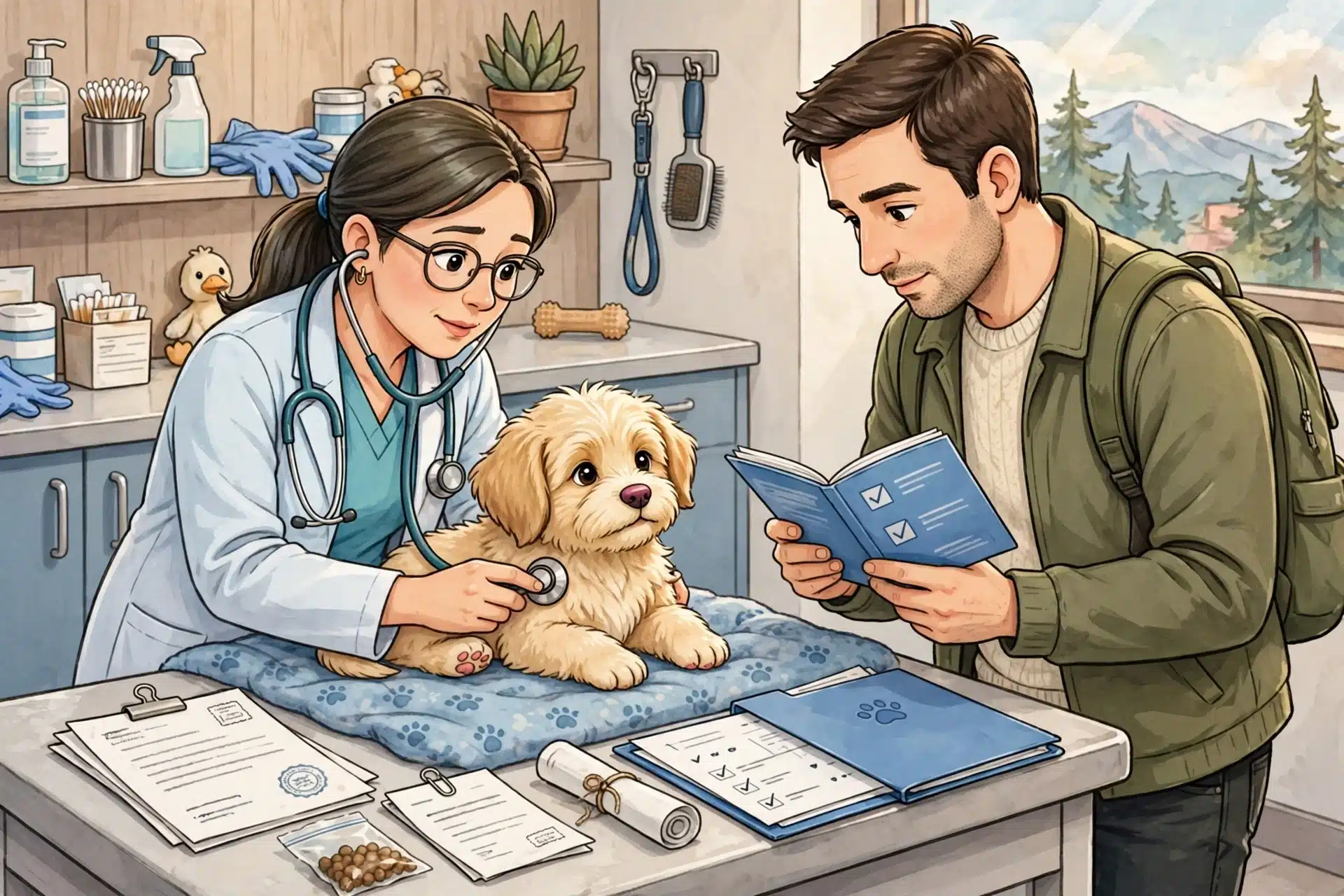
What retail paperwork usually omits is the parent side of the record. Stores can show a health certificate for the puppy and still have no proof the parents were screened for inherited disease, or that the puppy saw a vet before shipping day. Ask who examined the puppy and when. A blank answer matters more than a laminated certificate.
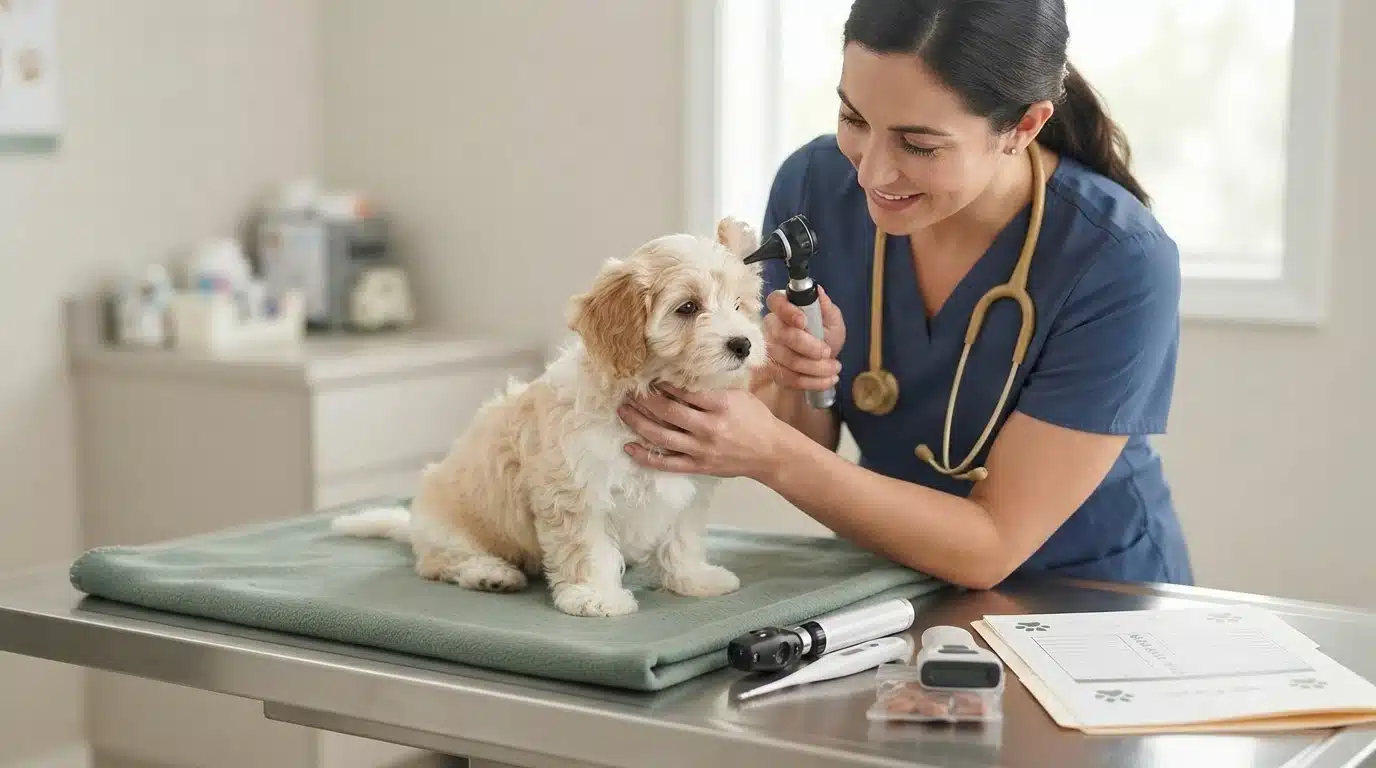
Scheduling the first veterinary appointment should happen before pickup day. Most vets want to see a new puppy within a few days of arrival, and a pre-purchase exam clause in your contract protects you if something surfaces then. Some programs, including Sage Puppies, help families line up that first visit during the handoff.
The paperwork that should arrive with any puppy
Ask for three documents by name: the puppy’s vaccination and deworming record, a health certificate from a licensed veterinarian, and the breeder’s written contract. Responsible breeders also share the parents’ health test results. If a seller offers only a care sheet, keep looking.
What retail paperwork usually omits
Pet store files rarely include proof of parent health screening or DNA results, and some cannot say where the puppy was whelped. That is the gap most buyers miss: a healthy-looking puppy can still carry inherited risk. Verification beats presentation.
Scheduling the first veterinary appointment
Book a wellness exam within 72 hours of bringing your puppy home, and confirm your contract covers it. Utah families picking up locally can often use their own vet right away; delivered puppies need a vet near home. Either way, bring every record you received.
Price, Contracts, and How Payment Works
Reading total cost rather than sticker price
A fair comparison starts with the full cost, not the number on the cage card. A $4,000 breeder puppy that includes a written contract, vaccination records, and a parent’s health testing can cost less overall than a $2,000 store puppy with financing charges and surprise vet bills. Budget for the first-year basics too: shots, spay or neuter, food, gear, and training classes.
Contract terms worth reading closely
Before you pay anything, ask for the contract in writing and read three parts. First, the health terms: what the seller covers, for how long, and what proof they need. Second, the return clause: a responsible breeder will take the dog back at any age. Third, what the contract requires of you, such as a wellness exam within 72 hours of pickup. Vague promises spoken across a counter are hard to enforce later.
Warning: Walk away if a seller refuses a written contract or wants cash with no receipt.
Deposits and payment protection
Deposits hold your spot in a litter, so ask whether yours is refundable, transferable, or applied to the balance. Pay by card or a traceable method when possible, and get the deposit terms in writing. Avoid paying the full price before you have met the puppy.
Utah Rules, Licenses, and Verifying Any Seller
Short answer: yes, pet stores can still sell puppies in most of Utah. No statewide ban exists, so retail sales remain legal in most cities and towns. But two local ordinances restrict them, and Utah has no breeder license for you to check, so verification falls on you.
Utah has no statewide breeder license
Many buyers expect to look up a Utah dog breeder license. There is no such statewide credential. Cities may require a kennel or business permit, which covers zoning, not animal care. Local rules do cut against retail stores: Salt Lake City’s ordinance bars pet stores from selling dogs unless they come from shelters or rescues, under section 8.04.195, and unincorporated Salt Lake County passed a similar ban in 2015.
What a USDA license does and does not tell you
A USDA license is required only for breeders selling wholesale, such as to brokers or stores, and for larger operations. It confirms inspections for basic housing and care, not health testing of parents. A hobby breeder who sells only directly to families may be unlicensed and still excellent. So treat USDA status as a starting point, never a guarantee, and ask for parent screening and DNA results separately.
A verification routine you can run on any Utah seller
Run the same checks whether you visit a store, a broker, or a family program. Ask to see the puppy with its mother, request the health certificate and vaccination records, and read the contract before paying any deposit. A reputable seller welcomes the questions. The same vetting applies to a puppy application with any breeder you consider.
Which Should You Choose: Utah Breeder or Pet Store?
For most families buying Havanese, Havapoo or Cavapoo puppies for sale in Utah, a licensed breeder is the safer choice. But the right answer depends on your timeline, budget and how much of the puppy’s history you need to see.
Choose a Utah breeder when
You want documented parent health testing, DNA results and a care record that follows the puppy from birth. A breeder lets you meet the mother, ask about the early socialization window and get answers in writing. If you want Havanese puppies for sale in Utah with real history behind them, a breeder gives you that.
Consider a pet store or shelter partnership when
A store may fit if you need to bring a puppy home this week and accept unknown parent history. Note that Salt Lake City’s ordinance limits retail dog sales to shelter and rescue sources, so store inventory varies by city. Shelters and rescues suit families open to adult dogs or mixed backgrounds.
Next steps for families ready to move forward
Start with a written puppy application, review puppy pricing and deposit terms before you commit, and confirm your puppy reservation is in writing. Ask about Utah puppy pickup or delivery options, then book a wellness exam within 72 hours of homecoming. Programs like Sage Puppies handle matching owner-direct, so you know exactly who raised your puppy.

Ready to meet a puppy raised with care instead of guesswork? Sage Puppies matches families in Utah and nationwide with Havanese, Havapoo and Cavapoo puppies through a clear application, honest records, and owner-managed matching. Start your application today, ask about pickup or delivery, and bring home a puppy you can trust.
Frequently Asked Questions
Q1: utah puppy breeder vs pet store | where to buy safely
Most Utah families are safer with a breeder. Pet stores can legally sell puppies here, but parent health testing is rarely available, so verify records yourself.
Q2: Does Utah require a breeder license?
No. Utah has no statewide breeder license. Cities may require kennel or business permits, which cover zoning only.
Q3: Can pet stores in Salt Lake City sell puppies?
No. The city ordinance limits retail dog sales to shelter and rescue sources, so store inventory varies by location.
Q4: What records should I get before paying a deposit?
Parent health screening, DNA results, vaccination and deworming records, a vet health certificate, and a written contract.
Q5: How much do breeder puppies cost in Utah?
Small breeds like Havanese or Cavapoos often run $3,500 to $4,500 with records and contracts included.
Q6: Are Havapoo and Cavapoo puppies registered breeds?
No. They are first-generation crosses with no registry, so ask which parent is which and request both parents’ test results.
Conclusion
For most Utah families, a breeder wins the utah puppy breeder vs pet store comparison, because Utah has no statewide breeder license to check and stores rarely share parent health testing. Verify three layers yourself: parent screening and DNA results, the puppy’s own vet record, and a written contract with clear deposit terms. Remember the local rules, too. Salt Lake County’s retail pet sales ordinance restricts stores, but most of Utah does not. A Havanese, Havapoo or Cavapoo raised in a home with documented history costs more upfront and less in surprises.