Quick Summary: Genetic DNA tests reveal inherited variants that a healthy-looking puppy may carry, while veterinary checks find current physical problems such as loose kneecaps, heart murmurs, eye issues, and joint disease. A clear DNA panel does not guarantee health, and a single vet exam cannot rule out conditions that appear later, so buyers should request both. Before reserving a puppy, verify the parents’ full DNA reports and OFA or CAER records, then review the puppy’s own veterinary record; Sage Puppies is described as providing these records for every puppy.
A lab DNA report and a one-page vet certificate describe two different dogs, in a sense. The DNA report covers inherited variants carried by the parents. The vet certificate records what one veterinarian saw in one puppy on one day. In the debate over genetic health testing vs vet checks, the honest answer is that you want both, not one in place of the other.
Buyers comparing health-tested puppies for sale near me often see breeders lean on one document and skip the other. That leaves you guessing which risk each paper actually covers. This comparison sorts it out: what each check examines, what it can and cannot catch, how results are recorded, and what to ask before you reserve a Havanese, Havapoo or Cavapoo puppy.
Genetic Health Testing vs Vet Checks: At a Glance
| Genetic health testing | Veterinary health checks | |
|---|---|---|
| What it examines | Specific DNA variants, read from a cheek swab or blood sample | The living dog, including joints, eyes, heart, teeth, skin, weight and growth |
| Conditions it can catch | Inherited variants on the panel, such as degenerative myelopathy or hereditary cataract markers | Patellar luxation, hip and elbow findings, eye disease, heart murmurs, dental and skin issues |
| Conditions it cannot catch | Joint and orthopedic disease, allergy, dental, ear, heart and other acquired or multifactorial conditions | Inherited variants that are silent until later in life and untested disease risks |
| Who performs it | A testing laboratory, on a sample the breeder or owner submits | A veterinarian or veterinary specialist, in person at a clinic |
| When results arrive | Typically in weeks, since samples are often processed off-site | Same day for an exam, weeks for specialist results and radiographic readings |
| How results are recorded | A lab report with variant results and an OFA-recorded DNA test entry | A veterinary certificate or report, with OFA numbers for radiographs and eye exams |
How Genetic health testing and Veterinary health checks Compare
Genetic health testing
This is a lab analysis of a cheek swab or blood sample. It identifies specific inherited DNA variants and reports whether a dog is clear, a carrier, or at risk for conditions on the panel, such as degenerative myelopathy. Breeders use it to screen breeding stock before puppies are ever conceived, and results can take weeks because samples are processed off-site.
Key strengths
- Catches inherited variants that a physical exam will never reveal
- Results are recorded as a lab report and an OFA DNA test entry
Veterinary health checks
A vet check is a hands-on examination of the living dog, covering joints, eyes, heart, teeth, skin, weight, and growth. It can spot things DNA cannot, like a heart murmur or patellar luxation, but it misses silent variants that show up later in life. Findings are documented in a veterinary report, with OFA numbers for radiographs and eye exams.
Key strengths
- Describes what is actually observable in the dog today
- Same-day results for exams; OFA-numbered records for X-rays and eye screenings
What Each Approach Actually Catches
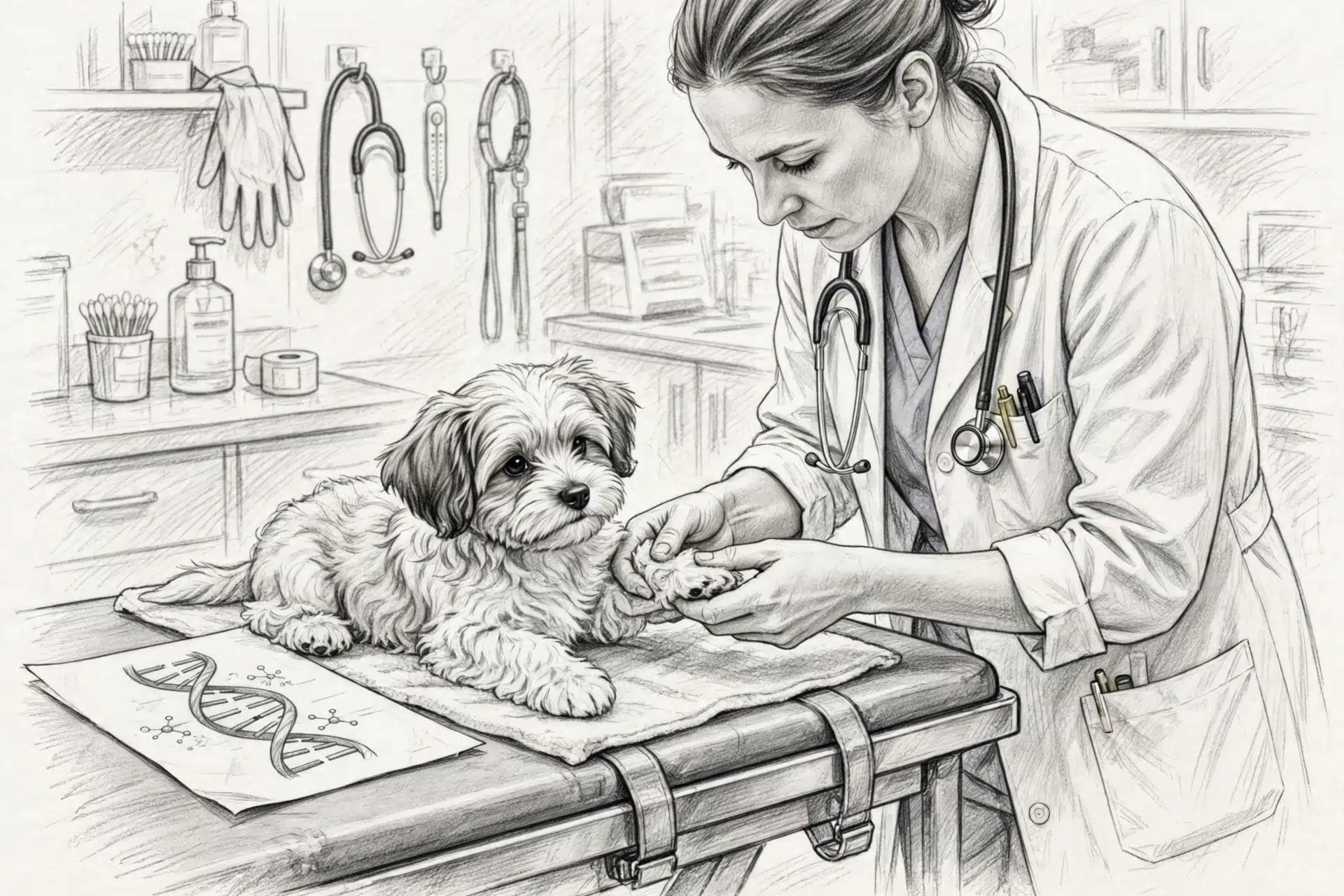
A DNA panel and a vet exam catch different problems. Genetic testing reads inherited variants, like the ones behind degenerative myelopathy and hereditary cataracts. A physical exam finds what the body shows today, such as a kneecap that slips or a heart murmur. Both matter, and neither replaces the other.
The Risks Only a DNA Panel Can Flag
A cheek swab can reveal variants a puppy looks completely healthy for. Examples include degenerative myelopathy, a late-onset spinal disease, and the HSF4 variant linked to hereditary cataracts. These conditions appear years later, so no exam can spot them in an eight-week-old puppy. DNA results also show carrier status, which guides responsible breeding decisions rather than puppy care.
The Problems Only an In-Person Exam Can Find
A vet catches what DNA cannot, because structure and current health are physical facts. A puppy exam typically covers:
- Joint and kneecap checks, including patellar luxation, plus hip radiographs in parents
- Eyes, through a board-certified CAER exam, and hearing tests
- Heart murmurs, teeth, skin and ears
- Vaccination and parasite status from the puppy’s own record
DNA says nothing about any of these, since a clean panel does not rule out a murmur or loose kneecaps.
Where the Two Approaches Overlap
Some conditions benefit from both tools. For Havanese, the breed club requires OFA hip and patella screening plus annual eye exams for a CHIC number, alongside DNA tests such as the one for hereditary cataracts, as the Havanese Club of America’s testing guide explains. So ask breeders for parent test results in public databases and the puppy’s own vet record. Breeders who do both, and explain what each result means, give families the full picture rather than half of it.
What a DNA Result Can and Cannot Predict
A DNA panel answers one narrow question: does your puppy carry specific gene variants on the list the lab tested? It does not promise a healthy dog. A panel covers only a defined list of variants, so conditions shaped by many genes, body structure, or environment simply are not on it. That is why breeders pair DNA results with clinical screening and a vet exam rather than treating any single test as a verdict.
Clear, Carrier, At-Risk: How to Read a Report
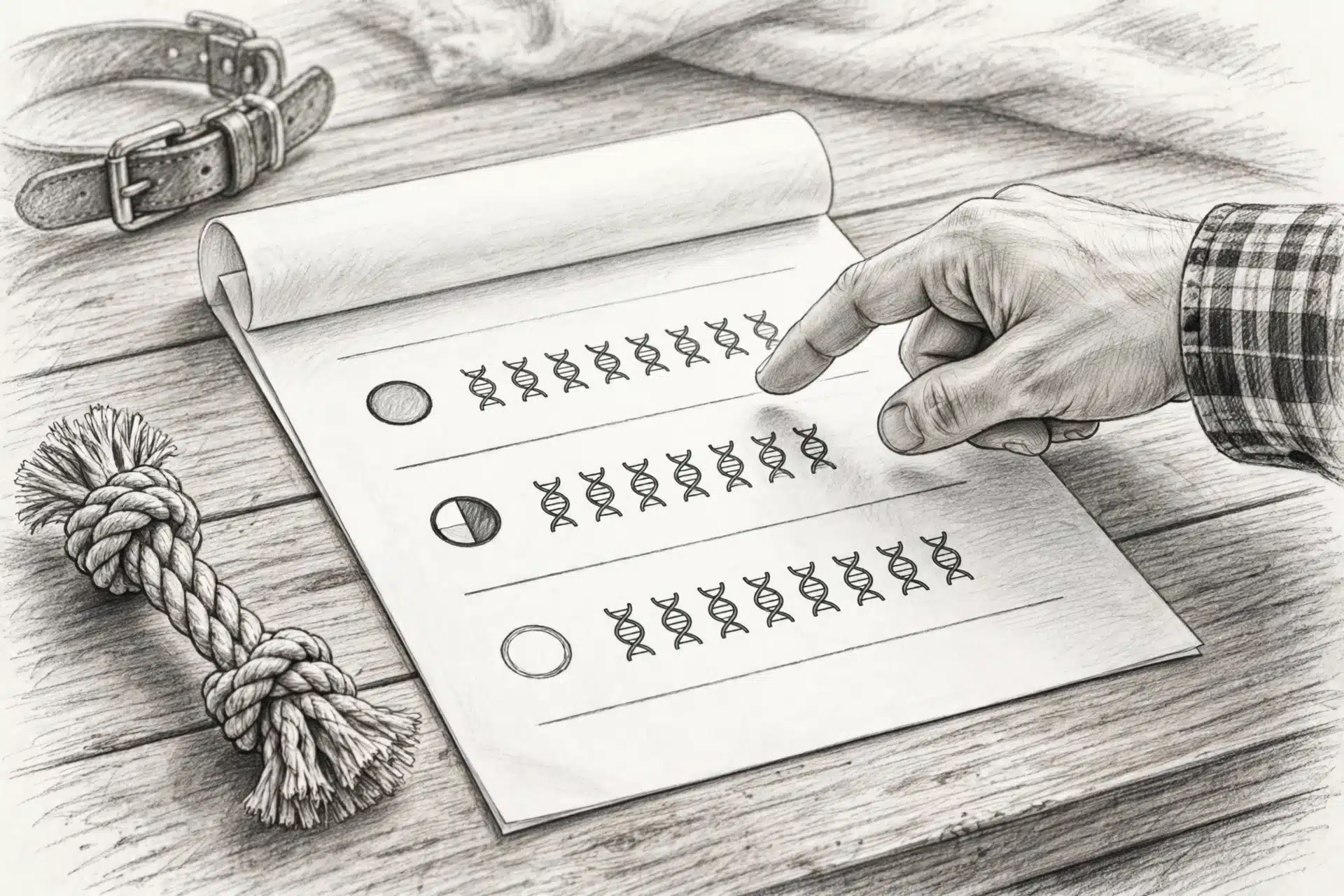
Each condition on a dog DNA panel gets one of three labels. Clear means no copies of the tested variant. Carrier means one copy, so the puppy is usually healthy itself but could pass the variant to its own puppies one day. At-risk means two copies, or one copy of a dominant variant, so the dog may develop the condition. Read the report one line at a time, because a single result never defines the whole dog. Breeders use these labels to pair dogs sensibly, a method covered in our own breeder guide to genetic testing.
Why a Clear Panel Is Not a Guarantee
A clear report only clears the variants the lab actually tested. Many common problems in small breeds, such as patellar luxation or hip dysplasia, come from multiple genes plus body structure and growth, not one mutation. Labs test single-letter changes they can identify, and as NIH-backed research on canine DNA testing notes, available tests cover only a slice of known inherited disease. So treat a clear panel as one layer of proof, then verify the parents’ clinical exams and the puppy’s vet record.
What a Veterinary Health Check Adds
The Pre-Purchase Puppy Examination
A vet exam looks at the puppy in front of you, not its genes. Your veterinarian checks the heart for murmurs, the eyes, ears, teeth, skin, and abdomen, and reviews the puppy’s vaccination and parasite records. Many breeders also arrange an independent exam within a few days of pickup, so a neutral vet signs off before the sale closes.
At Sage Puppies, each puppy leaves with its own veterinary record so your family’s vet has a starting point.
Radiographs, Orthopaedic Assessment and Specialist Eyes
Some conditions only show up on a hands-on exam or imaging. A patellar luxation examination is a physical test: the vet watches your puppy’s gait, then feels the kneecaps to check whether they slip out of place, grading any looseness from 1 to 4. Hip dysplasia radiography uses X-rays, and a board-certified ophthalmologist performs a CAER eye exam to catch inherited eye disease a DNA panel may miss.
Limits of a Single Snapshot
The catch: an exam captures one day. A clean knee at eight weeks can still luxate at two years, and X-rays of young hips have limits. That’s why vet findings and genetic results work together. For a fuller picture, pairing your puppy’s records with parent health screening tells you far more than either alone.
Breed and Cross Specific Screening Requirements
What health tests are required for Havanese? As of March 11, 2025, the Havanese Club of America’s CHIC program lists three:
- CAER eye exam by a board-certified ophthalmologist, renewed annually
- Patellar luxation examination to check for loose kneecaps
- Hip dysplasia radiography, with X-rays read by OFA or another approved registry
BAER hearing testing was once a fourth requirement, but the club removed it because congenital deafness is now rare in the breed. It remains recommended, not required.
What Havanese Require Today
A CHIC number confirms the breeder completed those three tests. It does not promise passing results; dogs earn the number even with failed scores, so read the actual results, not just the listing. The HCA’s own health and testing guide tracks these requirements, and they change as the breed’s health picture changes.
How the Crosses Change the Picture
Havapoos and Cavapoos have no breed-specific CHIC list of their own. Responsible breeders screen each parent against its parent breed’s requirements instead. That means Havanese parents follow the list above, while Cavalier King Charles Spaniel parents need heart and eye screening, and Poodle parents typically have hip and eye checks. This is how breeders producing health-tested Havapoo and Cavapoo puppies build a screening plan for a cross.

Reading the Current Requirement Lists Carefully
Parent club websites are the source of truth, and old breeder pages still quote retired rules. Check the requirement date before you judge a pedigree.
Verifying Records Before You Reserve
Checking a breeder’s health testing records takes three searches, and you can do all of them before you pay a deposit. Start with the OFA database, then verify DNA results in full. Here is how.
- Go to ofa.org and search the sire or dam by breed and registered name.
- Check the results page for a CHIC number, which means the dog met that breed’s required health tests.
- Click each listed test and confirm the exam date and result fall within the breed’s stated age requirements.
- Compare what you find against what the breeder told you. Any gap is a fair question to ask.
Looking Up Clinical and Radiographic Records
The OFA database covers more than hips. For a Havanese parent, look for a passing patellar luxation examination, a current CAER ophthalmology examination by a board-certified eye vet, and hearing results where relevant. Hip dysplasia radiography may appear too, though it is optional for Havanese under the CHIC program. A missing category is not always a red flag, but it should match what the breeder explains. Any breeder should gladly send the dog’s OFA page link, and a good one will do it before you ask. A vet exam certificate alone is not proof of screening, because it usually documents a sick visit, not a planned clinical screen.

Requesting DNA Results in Full
A partial screenshot is not enough. Ask the breeder for the complete lab report, the kind issued by Orivet or Embark, showing every variant tested, not just the clear ones. The full report lists the dog’s registered name, the lab, and the date, so you can confirm it matches the parent you found in the OFA database. Watch for two honest outcomes: a carrier result means the dog is healthy but could pass one copy to puppies, and an at-risk result means the dog carries two copies. For recessive conditions, two carrier parents are the pairing to avoid, so ask which partner was tested as well. Responsible programs share these reports openly. Sage Puppies sends full DNA pages for both parents during the application process, and any breeder using health-tested puppies for sale near you should do the same.
Cost, Turnaround and Practical Trade-Offs
Genetic Panel Pricing and Turnaround
Most consumer DNA panels sit in the $109 to $159 range. Embark’s breed plus health test lists at $159 regular price, $139 on sale, and its breeder-focused kits return results in two to four weeks, according to Embark’s product page. The clock starts when the lab receives the swab, so mailing time adds a few days. Breeders usually run these panels on parent dogs before breeding, so buyers typically see the results rather than pay for them. That is the real trade-off: a panel costs little, but a “DNA tested” puppy claim means nothing unless the tested dog is the parent, not the puppy.
Exam, Radiograph and Specialist Scheduling
Clinical screening moves slower and costs more because it needs appointments. A patellar luxation examination happens during a standard office visit, while hip dysplasia radiography requires sedation and a submitted image, and a CAER ophthalmology exam needs a boarded eye specialist. Availability varies by region, so breeders book these months ahead. Ask when the parents were last examined and request copies, because a well-run program like Sage Puppies builds these records before puppies are ever listed.
Which Should You Choose: Genetic Testing or Vet Checks?
The honest answer is that you shouldn’t pick one. DNA panels and veterinary exams catch different problems, so treat them as two halves of one health picture.
When to Insist on Each
Ask about genetic screening when the disease hides in DNA. Degenerative myelopathy and the HSF4 cataract variant won’t show up in a puppy exam, so the parents’ DNA results matter more than anything a vet can see that day.
Ask for clinical screening when the problem is structural or physical. A patellar luxation examination, hip dysplasia radiography, and a CAER eye exam by a specialist all measure the actual dog. Loose kneecaps and faulty heart valves don’t appear on any DNA report.
For a Havanese puppy, insist on both: the breed club’s CHIC requirements cover variant testing and physical exams.
The Buyer’s Rule of Thumb
DNA results tell you what a puppy might develop later. Vet checks tell you how the puppy is today. You need both records before you commit money.
Ask each breeder for three things: parent DNA reports, parent OFA or CAER results you can verify in public databases, and the puppy’s own veterinary record with vaccination and parasite notes.
If a breeder shows only a vet check for a breed with known inherited risks, or only DNA results with no exam history, that gap tells you something. Good programs welcome the question. At Sage Puppies, both kinds of records come with every match, because “health-tested puppies for sale near me” should mean you can actually see the testing.

Now you know exactly what to ask for: parent DNA results, clinical screenings and a puppy exam record. Every Sage Puppies puppy comes with documented health testing behind it. Start your application today, and we will walk you through each record before you commit.
Frequently Asked Questions
Q1: genetic health testing vs vet checks | what each one catches
DNA panels find inherited variants a puppy looks healthy for. Vet exams find murmurs, loose kneecaps and joint problems DNA cannot.
Q2: Can I skip the vet exam if the parents’ DNA is clear?
No. A clear panel misses patellar luxation, murmurs and eye disease. You need both records.
Q3: Does a CHIC number mean the parents passed?
No. It only means required tests were done. Read each actual result.
Q4: How do I verify a breeder’s claims?
Search ofa.org for the parents, check the CHIC number, then request the full lab reports.
Q5: Should I DNA test my puppy myself?
Usually no. Breeders test parents before breeding, so ask for their results first.
Conclusion
DNA panels and vet checks answer different questions. Genetic results reveal hidden variants like degenerative myelopathy or hereditary cataract markers, while a hands-on exam catches murmurs, loose kneecaps and eye or joint issues no swab can see. Neither alone makes a healthy puppy. Before you reserve, verify three records: parent DNA reports in full, parent OFA or CAER results you can look up yourself, and the puppy’s own veterinary record with vaccination and parasite notes. For Havanese families, that means checking the breed club’s CHIC requirements; for Havapoo and Cavapoo buyers, screening each parent against its parent breed’s list. When you search for health-tested puppies for sale near me, choose a breeder who shows both layers of proof.