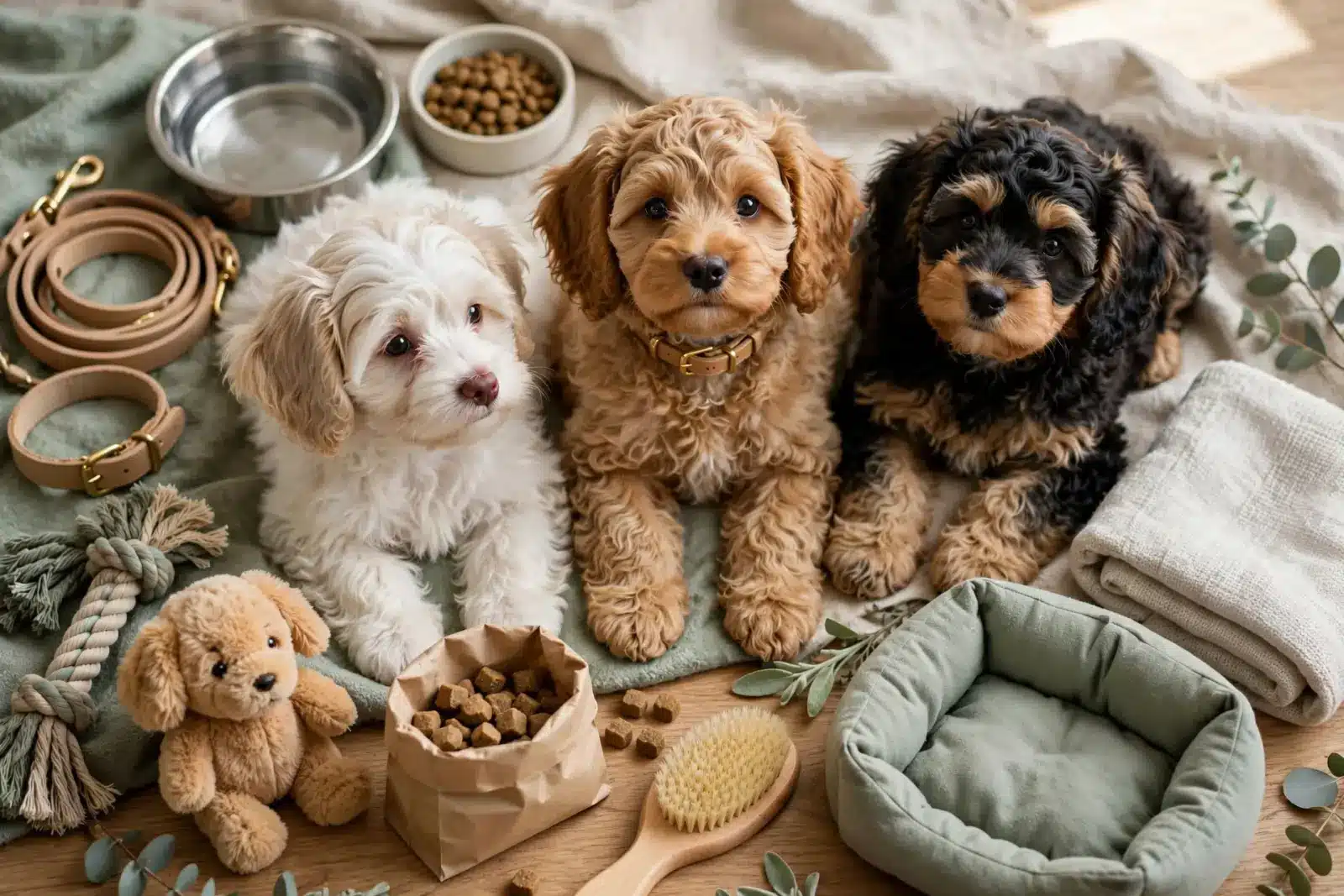
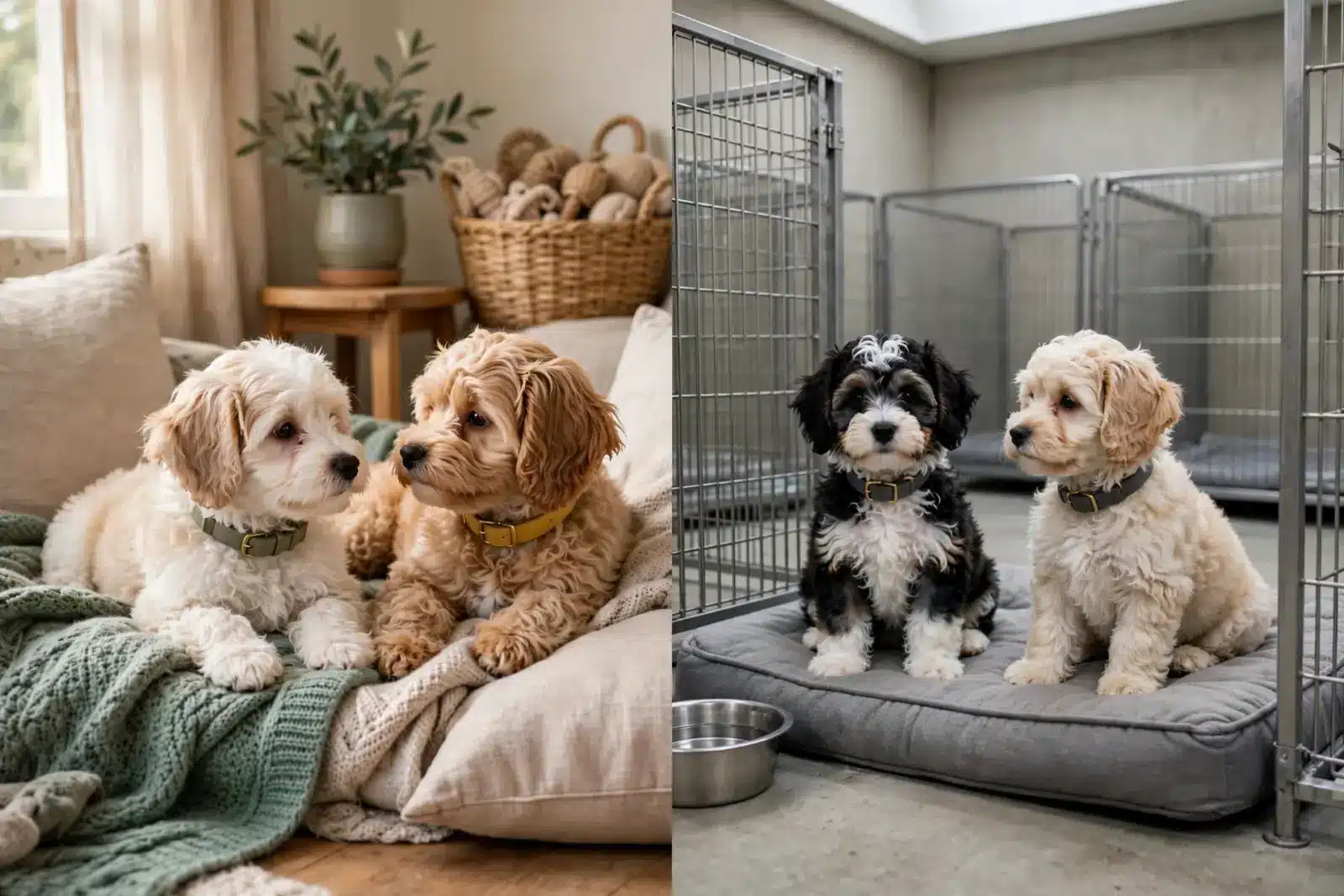
Quick Summary: The first 3 to 14 weeks are critical for puppy socialization, so exposure to new sounds, surfaces, people and handling must be paired with treats, play and the puppy’s voluntary participation. Families should verify a breeder’s specific plan, including daily handling, positive pairings and how the 8-to-10-week fear period is handled, then continue with calm, low-risk exposure after pickup. Sage Puppies raises its Havanese, Havapoo and Cavapoo puppies in a South Jordan home with early handling and real household sounds before matching them with families.
Most family-raised Havapoo and Cavapoo puppies come home during a narrow window of development. From about 3 to 14 weeks, a puppy’s brain is built to treat ordinary household life as safe. By the time you unpack the crate, much of that window has already closed, and whatever the breeder did or skipped shapes how your dog handles the next ten years.
That’s the problem this guide addresses: “family-raised” is easy to claim, but real family raised puppy socialization is specific and verifiable. Drawing on primary sources like the AVSAB position statement and Penn State Extension, we’ll show what a genuine program includes, how exposure differs from interaction, and how to check a breeder’s work before and after pickup.
A family raised puppy socialization plan matters because it cannot be repeated later. At Sage Puppies, Cassie’s litters grow up in our South Jordan home, so the proof is in the daily routine.
The Socialization Window: Why the First 14 Weeks Matter Most
The puppy socialization window is the early stretch of life, from about 3 weeks to 14 weeks, when a puppy’s brain is most open to new experiences. Anything a puppy meets calmly during this period tends to feel normal for life. The UC Davis School of Veterinary Medicine calls roughly 3 to 14 weeks the critical social development period, because puppies are most accepting and least cautious then. The window breaks down in stages:
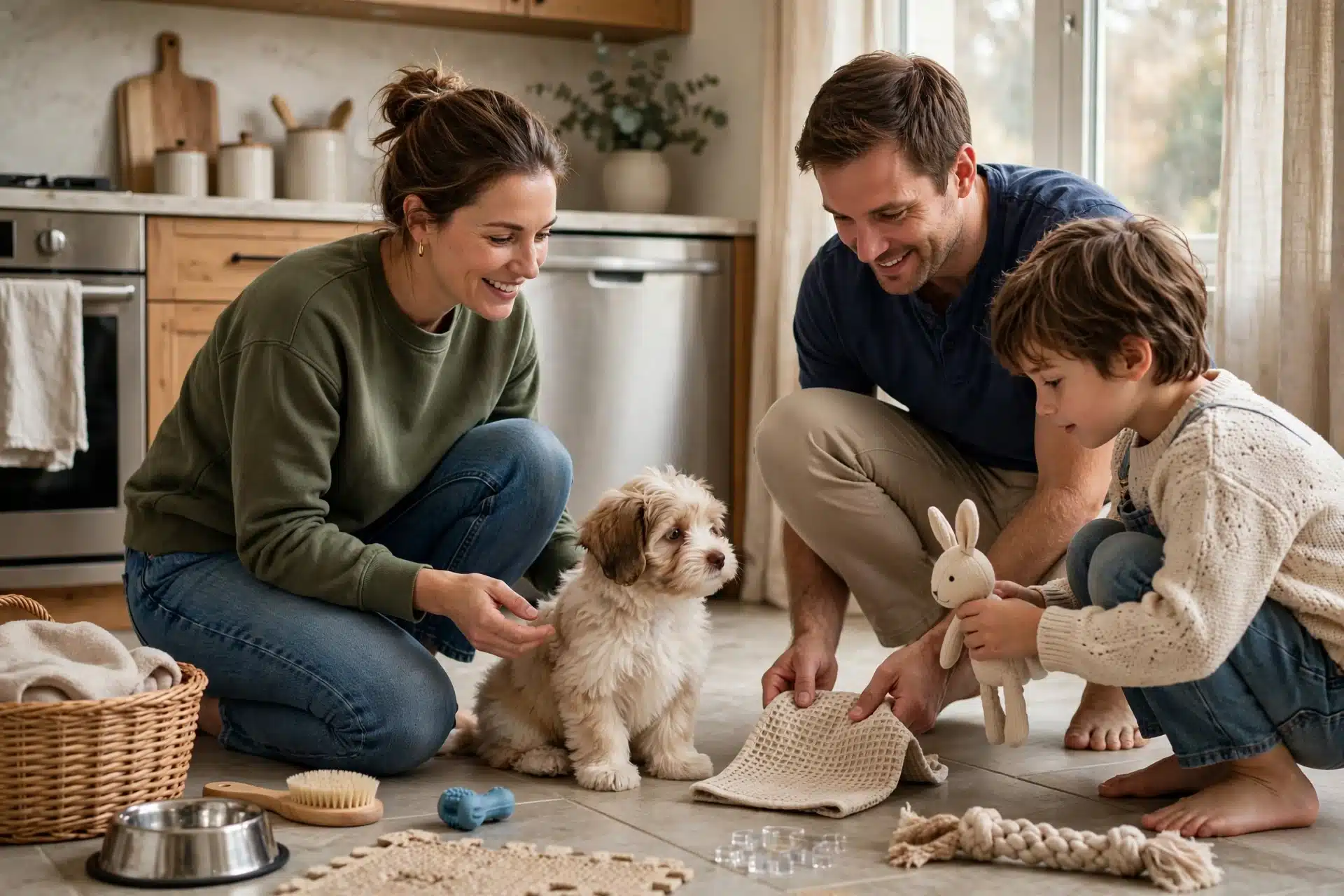
- 3 to 5 weeks: puppies first notice people, sounds and handling
- 5 to 8 weeks: curiosity peaks and positive associations form fast
- 8 to 14 weeks: puppies learn quickly, but fear responses also begin
Family raised puppy socialization starts in this window, long before a puppy ever meets you.
How the 3-Week to 12-14-Week Window Is Defined
Researchers call this the sensitive period for socialization. It opens around three weeks, when puppies’ eyes and ears work well enough to explore, and it fades between 12 and 14 weeks. The AVMA literature review notes puppies respond most to unfamiliar dogs and people during these weeks. After it closes, new things no longer feel automatically safe, so habits formed now are much harder to add later.
What Changes in the Puppy Brain During This Period
During these weeks, the brain is building connections fast, and experience decides which ones stay. New sights, sounds and surfaces get filed as safe or scary, depending on how the puppy meets them. This is also when a fear period around 8 to 10 weeks can appear, so one bad scare can outweigh many good days. Gentle, varied handling during this stage builds puppy resilience that lasts.
Why Pickup Age Overlaps the Critical Period
Most puppies go home at 8 to 10 weeks, with up to half the window still open. That means the weeks right after pickup matter as much as the breeder’s weeks before it. Good breeders socialize early, and family raised puppy socialization continues the pattern once home. Families picking up a Havanese, Havapoo or Cavapoo puppy should plan calm introductions for those first weeks.
What Socialization Actually Is: Exposure vs. Interaction
| Exposure | Interaction |
|---|---|
| A puppy sees, hears or passes a new thing | A puppy engages with it in a good way |
| Vacuum runs in the next room | Vacuum on, treats dropped, puppy chooses to approach |
| Creates familiarity only | Builds a positive association |
| Can still leave a puppy uneasy | Builds trust and resilience |
The AVSAB position statement is blunt: puppies need to meet new people, animals and settings in a way that stays safe and never floods them with fear. That word meet is the difference the table shows. A puppy that merely watches life from a playpen has been exposed. One that gets a treat while the broom sweeps past has learned the broom predicts good things.
Exposure, Interaction, and the Three Goals of a Protocol
A real socialization plan has three goals. First, cover variety: surfaces, sounds, people of different ages, handling and grooming. Second, keep every new thing paired with something pleasant, like food or play. Third, let the puppy opt in, never force it.
The Checklist a Family Raiser Should Be Working From
Ask any breeder what is on their list. Strong answers sound specific: nail trims brushed daily, car rides, steps, kids, other calm dogs, umbrellas, vacuum cleaners, being alone briefly. Vague answers, such as “they’re around the family,” mean exposure happened but nobody managed it. That gap is exactly what separates a planned program from luck.
Why Quality Beats Quantity
Fifty scary or neutral encounters teach less than ten happy ones, because the goal is a feeling, not a count. Especially during the fear period around 8 to 10 weeks, one bad surprise can undo weeks of work. Watch for puppies that approach new things willingly. That is the outcome to judge, and it’s what well-run family-raised puppies show in daily home life.
What Family-Raised Puppies Encounter That Kennel-Raised Puppies Do Not
The Household Environment as a Socialization Curriculum
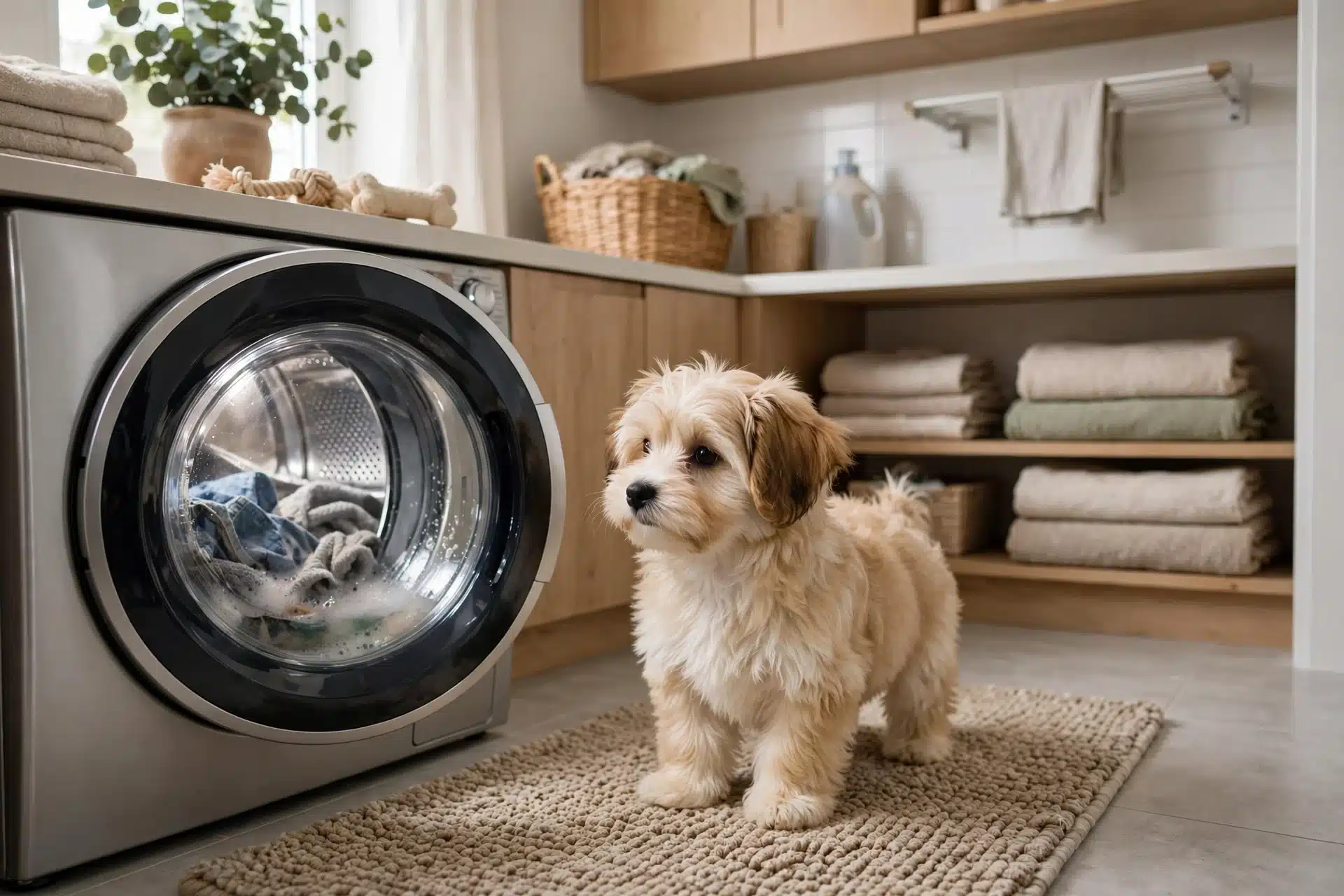
A kitchen is a busy classroom. A family-raised puppy hears dishwashers, doorbells, vacuums and kids running past, then learns each one predicts nothing bad. The AVSAB position statement calls for exposing puppies to as many people, animals and stimuli as possible, safely, during the first three months. Daily home life supplies that input on a schedule no kennel can match. This is the difference family-raised vs kennel-raised puppies show most clearly by their first birthday.
Where Home Raising Falls Short Without a Protocol
Living in a house is not the same as being socialized. A puppy raised in one quiet room with two adults may miss crowds, car rides, handling by strangers and varied surfaces. Exposure without positive pairing can backfire, especially in the puppy fear period around 8 to 10 weeks, when one scare can outweigh many good days. Good breeders work deliberately: gentle handling, grooming practice, crate introductions and short car trips, each paired with treats.
Separating a Real Program From a Marketing Word
“Family-raised” appears on almost every breeder website, so ask what it includes. A real program can name the sounds, surfaces, people and handling each puppy met, and describe how new experiences were paired with rewards. Ask for a socialization log, video of puppies meeting new people, and details on potty and crate routines. A puppy that merely shares a kitchen got atmosphere. A puppy on a written plan got a head start. One can verify the difference before pickup.
Fear Periods: When Socialization Must Slow Down
Puppy fear periods are short stretches when a puppy suddenly treats familiar things as threats. Here is when they land and what to do:
- 8 to 10 weeks: lower the intensity, keep the routine, never flood or punish
- Around 6 to 14 months: a second, milder window; keep positive exposure going
- Any sudden fear: pause new places, rebuild confidence with treats and play
The 8 to 10 Week Fear Period
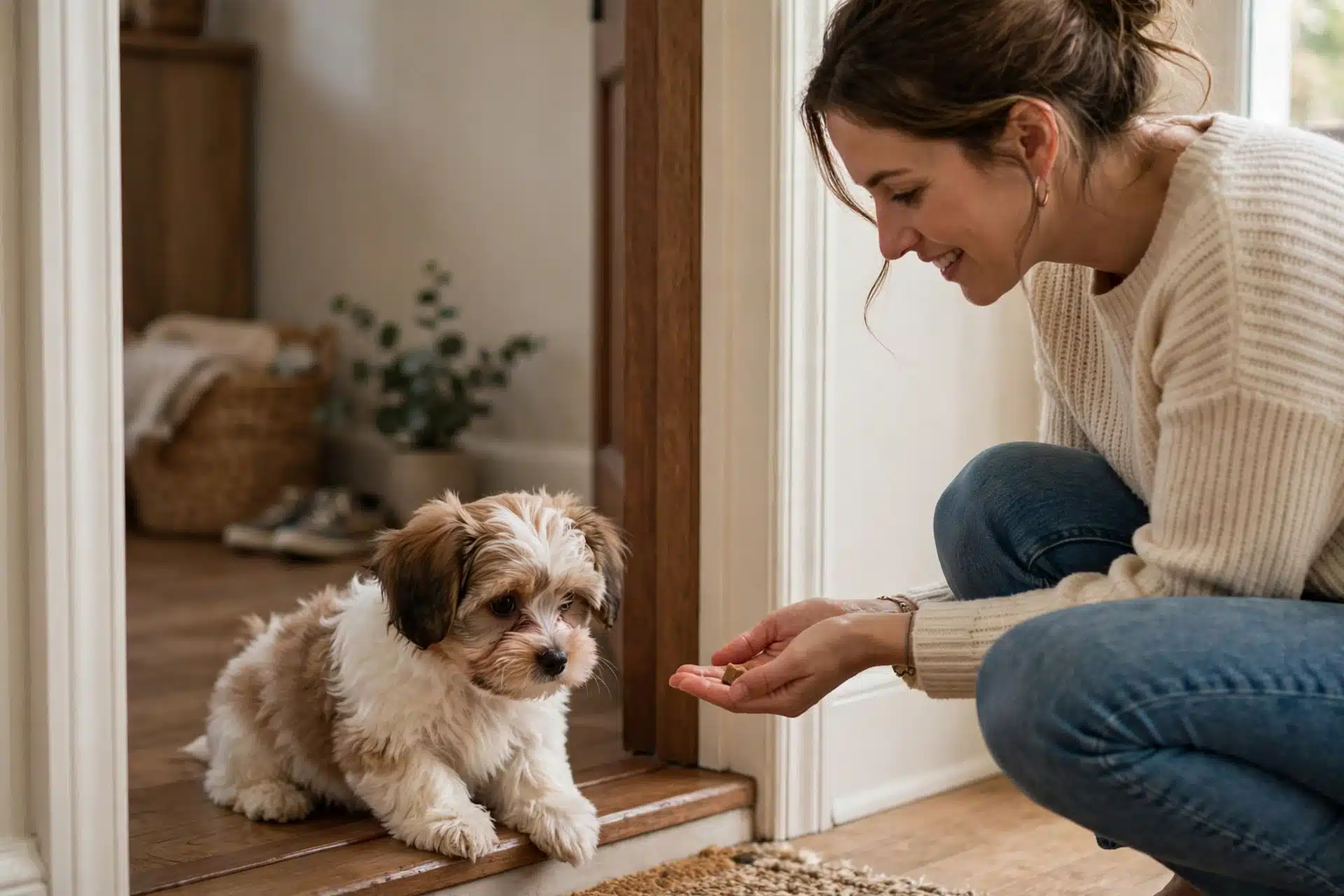
Penn State Extension describes this first fear period as a stage of heightened sensitivity, and it lands right when most puppies go home. A pup who greeted the vacuum happily last week may now bark at it. That is normal, not a setback. The fix is calm repetition and no forced encounters during these weeks.
Adjusting Exposure Without Stopping It
Slowing down does not mean stopping. Keep gentle handling, short car rides, and quiet praise going, but skip crowded streets and loud events. Watch your puppy’s body: a tucked tail or refusal to take treats means the moment is too big. AVSAB’s position statement still urges steady socialization before 14 weeks, so stay in the game at a softer pace.
Why Timing Matters for the Pickup Date
Because this fear period overlaps typical pickup ages, the first week home should stay low-key. Ask your breeder what the puppy has already met, then add one small novelty a day. Families planning bringing a puppy home should block off a quiet settle-in window before visitors arrive.
Socializing Before Vaccinations Are Complete, Safely
The Veterinary Position on Early Socialization
Waiting until the vaccine series ends means the socialization window closes first. That is why the AVSAB position statement urges socialization to start before vaccines finish, with classes possible from 7 to 8 weeks. The group argues that behavior problems, not infectious disease, kill more young dogs.
Balancing Exposure and Disease Risk
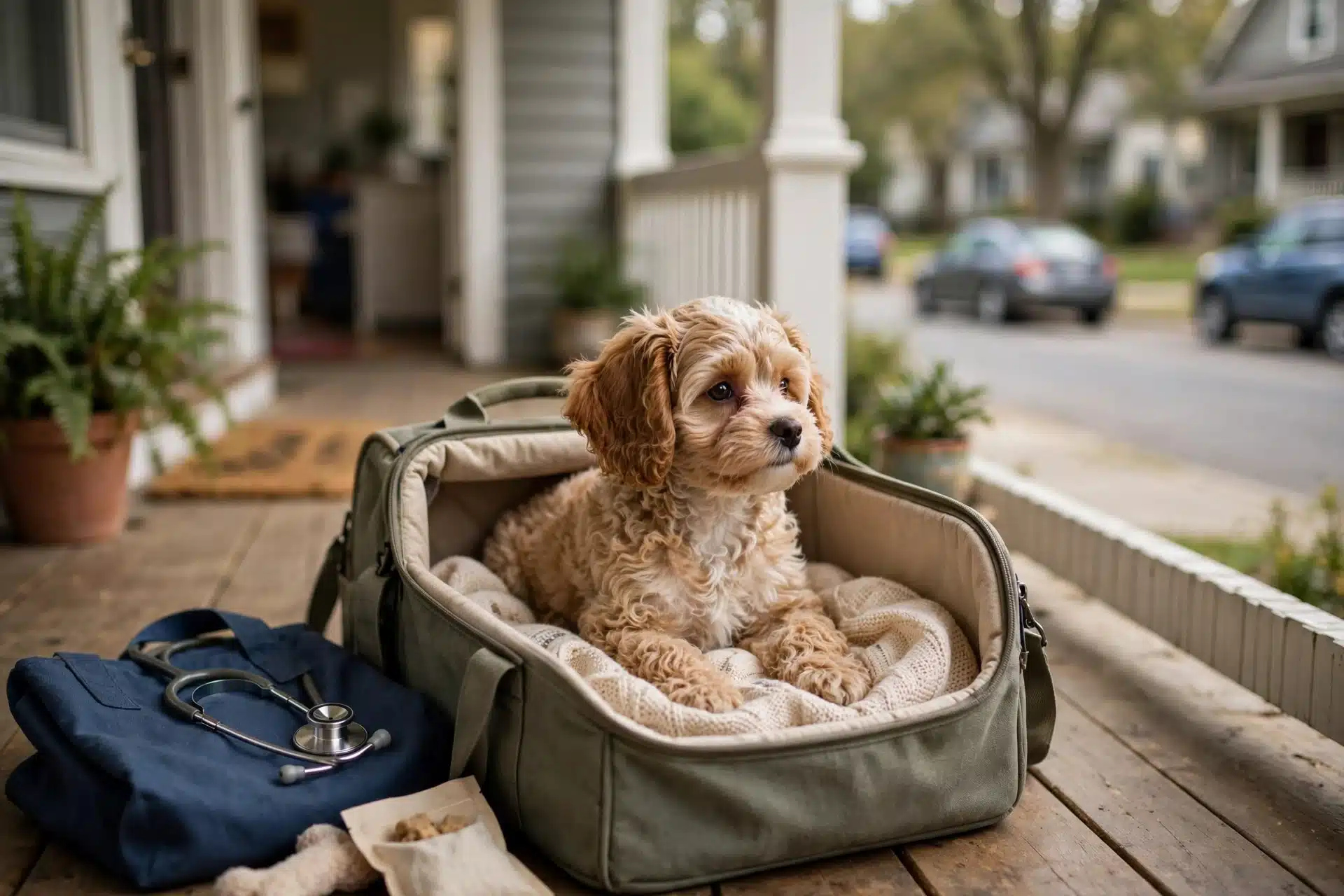
Safe does not mean sterile. It means choosing places where sick dogs are unlikely to have been. Avoid dog parks, pet store floors and grass at busy trailheads until your vet clears them. Favor surfaces you control: your car, a friend’s clean home, a relative’s fenced yard. Ask your veterinarian which risks matter in your area, then skip the rest.
Low-Risk Ways to Socialize a Young Puppy
- Carry your puppy through hardware stores that allow dogs, so paws stay off the floor
- Hold short rides in the car, ending before any queasiness
- Host one calm visitor at a time, with treats
- Play recordings of traffic, thunder and fireworks at low volume
- Handle paws, ears and mouth daily to ease future grooming
Keep each new thing brief and paired with food, and stop while your puppy still looks confident.
Building Resilience: The Skill That Outlasts the Window
What Resilience Means in a Young Dog
Resilience is a puppy’s ability to bounce back from a surprise. A startled puppy that recovers, explores again and eats normally is showing it. A puppy that freezes, hides or panics is not. You build it with many small, good experiences, not one dramatic test. Calm recovery is the goal, so praise it whenever it happens.
Four Ways to Build It in the First Months
- Pair new things with food. Every new surface, sound or person should predict something tasty. That creates a positive association, not just exposure.
- Let the puppy choose. Offer the experience, then let your puppy approach or retreat. Choice itself lowers stress.
- Keep sessions short. Two minutes of confidence beats twenty minutes of worry. End while your puppy is still curious.
- Stay calm yourself. Puppies read your voice and posture. A relaxed handler teaches a relaxed dog.
What the Research Found About Adult Outcomes
The evidence backs this up. A peer-reviewed review reports that puppies given early stimulation were more resilient to stress as adults, with measurable physiological benefits (Howell et al., 2015). Penn State Extension notes that well-socialized puppies adjust to new settings and show fewer behavior problems later (Penn State Extension). Habits learned now outlast the window.
Questions to Ask Before You Bring a Puppy Home
What should I ask a breeder about puppy socialization? Ask these seven questions and listen for specifics, not reassurance.
Seven Questions That Reveal the Real Program
- How many new sounds, surfaces and handling experiences does each puppy get daily?
- Who handles the puppies, and how often?
- What do you pair new experiences with, so they build positive associations?
- How do you introduce grooming touches like nail trims and brushing?
- How do you manage the puppy fear period around 8 to 10 weeks?
- Can I see photos or videos of daily handling, not staged ones?
- What written plan do you follow, and can you explain why?
A breeder who answers with routines, names and examples runs a real program. Vague answers like “they’re around our family” describe mere exposure, not interaction.
Continuing the Program After Pickup
Your job starts where the breeder’s ends, usually with half the socialization window still open. Ask how the breeder eases the handoff: what the puppy already knows, which sounds and surfaces are familiar, and what to keep doing first. A thoughtful breeder sends home notes and stays available. The questions reputable breeders answer go well beyond socialization, so ask early.
Common Mistakes to Avoid
Forcing Interaction and Flooding
Pushing a puppy toward something that scares it, or holding it still while the trigger stays close, is called flooding. During the fear period at 8 to 10 weeks, this often makes fear stronger instead of weaker, because one bad scare can outweigh many good days. Let the puppy choose the distance, then pair the moment with treats or play. Good trainers avoid forcing interactions or correcting fear responses for exactly this reason.
Treating a Checklist as the Goal
Meeting twenty people matters less than how each meeting felt. Exposure without a positive pairing is just stress with company. Watch your puppy’s body: a loose, curious puppy is learning; a stiff, tucked one needs space. Pace beats volume every time, so two calm visits often teach more than a busy weekend.

If you want a puppy whose first weeks were shaped by this kind of deliberate socialization, not just “she met a few kids once,” talk with Sage Puppies. Our family-raised Havanese, Havapoo and Cavapoo puppies are raised in our South Jordan home with early handling and real household sounds, then matched to your family. Start with the application and ask us how your puppy’s socialization has gone.
Frequently Asked Questions
Q1: family-raised puppies | why early socialization matters
Family-raised puppies live through the 3 to 14 week critical socialization period inside a home, so household sounds, handling and people become normal early. The breeder’s weeks plus your first weeks together decide how confidently your dog handles new situations for life.
Q2: Can socialization start before vaccines are finished?
Yes. AVSAB recommends starting before the series ends, with puppy classes from 7 to 8 weeks. Choose low-risk settings like your car, a friend’s home or carried trips, and skip dog parks until your vet clears them.
Q3: What is the difference between exposure and interaction?
Exposure means a puppy sees or hears something. Interaction pairs it with food or play so the puppy forms a positive association and chooses to engage.
Q4: What if my puppy gets scared during the 8 to 10 week fear period?
Stay calm and slow down. Keep routines going, skip crowds and loud events, and never force contact. Let your puppy set the distance and pair the trigger with treats.
Q5: How can I verify a breeder’s socialization claims?
Ask for specifics: a written plan, daily handling counts, videos of puppies meeting people, and how new things are paired with rewards. Vague answers suggest exposure only.
Q6: What should I do in the first week home?
Keep it low-key. Add one small novelty a day, continue crate and handling practice, and let your puppy settle before hosting visitors.
Conclusion
The 3 to 14 week window does the most work, and it closes whether or not anyone plans for it. Real family-raised puppy socialization is interaction, not exposure: new sounds, surfaces and people, each paired with something good, paced around the 8 to 10 week fear period. It can start safely before vaccines finish, and the research links early socialization to calmer, more resilient adult dogs. Ask a breeder for specifics: a written plan, handling counts, videos. Vague answers usually mean a puppy shared a house but never got a program. That difference shows up for the next ten years, so verify it before pickup and keep the plan going during your first weeks home with your Havanese, Havapoo or Cavapoo.