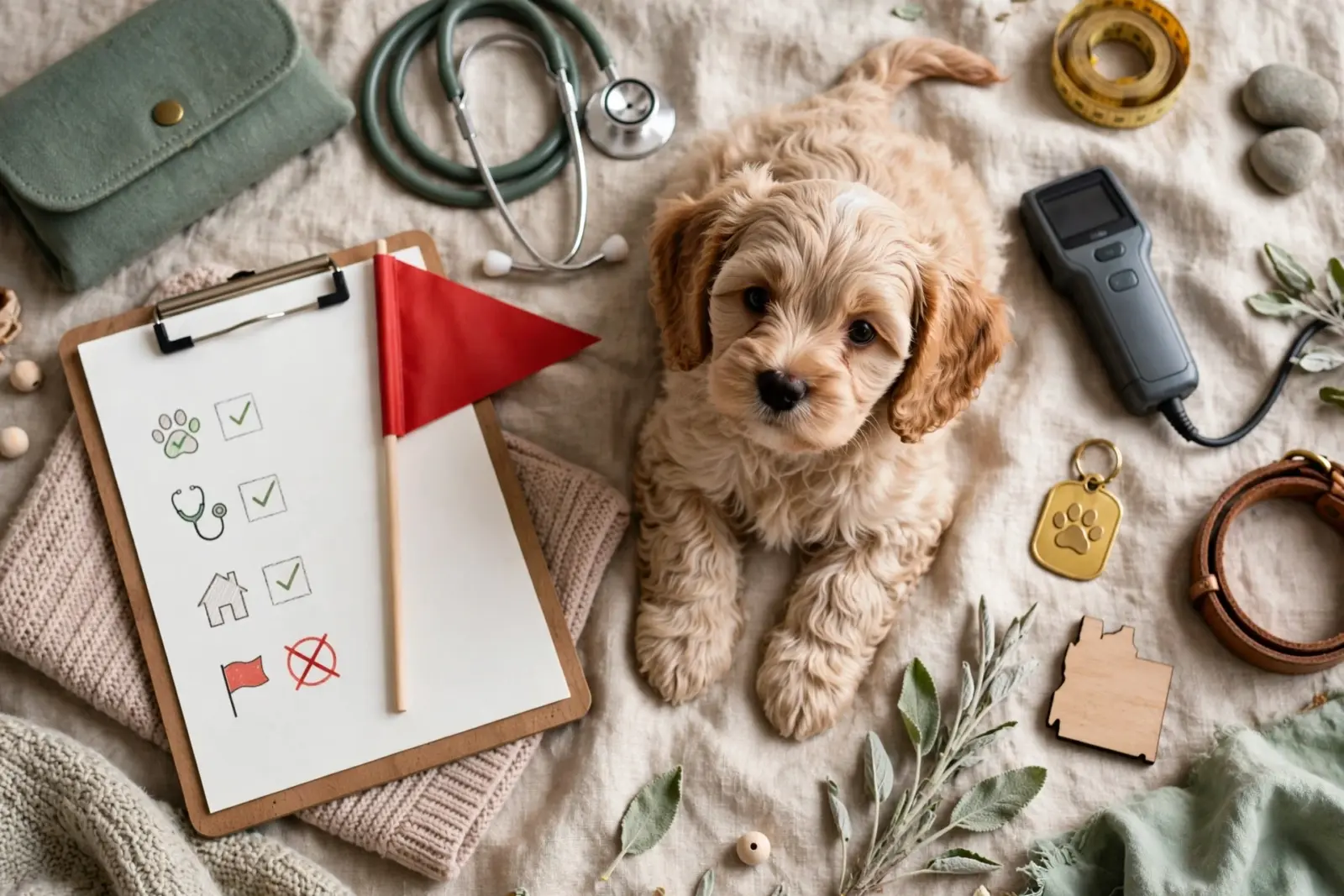
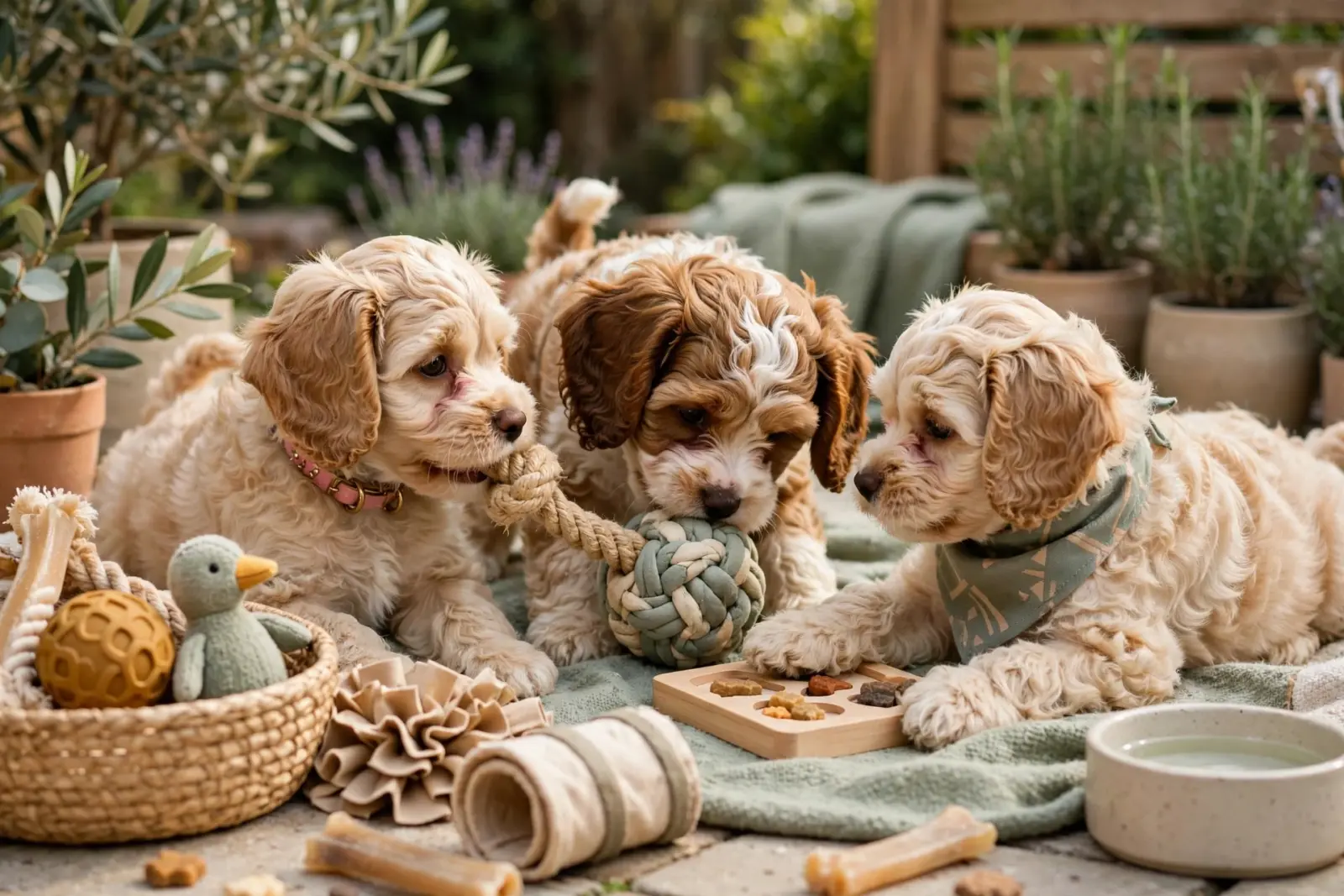
Quick Summary: Prepare a small, puppy-proof room with a crate, then bring a secure carrier, leash, collar, three days of the breeder’s food, a familiar blanket, and all health and contract records. Keep the puppy’s routine quiet and consistent for the first 72 hours, schedule a vet visit within two or three days, and avoid dog parks and busy lobbies until she is cleared. Utah licensing rules vary by city and county, so check local deadlines and rabies requirements, while Sage Puppies provides an organized record handoff for its Havanese, Havapoo, and Cavapoo puppies in South Jordan.
The paperwork handoff on go-home day takes about five minutes, and that is exactly when Utah buyers forget to ask for the vaccination record, the feeding instructions, and the written terms promised before the deposit. The gap shows up three days later, when your vet asks for vaccine dates you cannot find. Most pickup-day checklists stop at a bag of food and a crate. But a Utah puppy home setup also has to handle cold snaps, dry winter air, and licensing rules that differ between Salt Lake City and Utah County. This guide walks through the whole first day in order: what to pack, what to confirm in writing before you leave, how to arrange the room before the puppy arrives, and which local license steps come next. It is written from the daily routine at Sage Puppies in South Jordan, where Havanese, Havapoo, and Cavapoo litters go home year-round.
Set Up the Utah Home Before Pickup Day
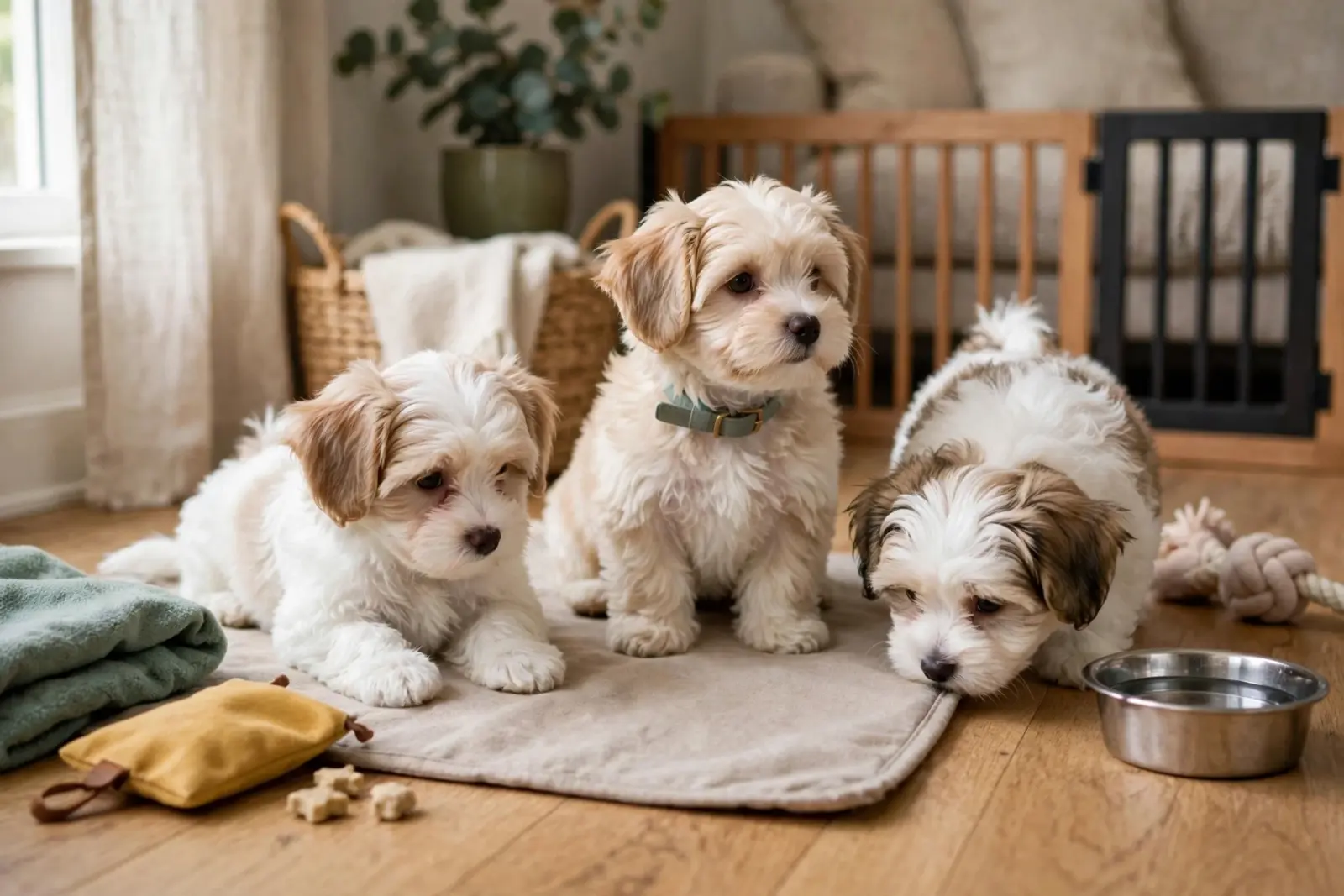
A solid Utah puppy home setup comes down to one small, boring room your puppy can’t hurt or be hurt in. Pick a spot with easy-to-clean floors, like a laundry room or a corner of the kitchen. Set it up in this order:
- Choose one small room and close it off with a gate or pen.
- Place the crate inside, lined with a washable bed.
- Add a water bowl, a few toys, and puppy pads near the door side.
- Sweep for cords, socks, and trash until nothing loose remains.
That’s it. Small breeds like Havanese, Havapoos, and Cavapoos settle fastest in a space that feels den-like, not wide open.
Build the Safe Room and Crate Setup
The crate should be big enough for your puppy to stand, turn, and lie down, and no bigger. Extra room invites accidents. Put the crate against a wall away from vents and direct sun, and keep a playpen around it for longer stretches. Puppies sleep 18 or more hours a day at first, so comfort matters more than space. Add a chew-resistant bed and two or three toys, nothing with stuffing that can be shredded. Per Rover’s puppy-proofing guide, a washable bed and a few safe toys help the crate feel like a safe spot instead of a cage. Feed meals in or near the crate so it carries good associations from night one.
Puppy-Proof for Utah Conditions Specifically
Utah adds a few wrinkles to a standard Utah puppy home setup. Winters are cold and the air is dry, so drafty entryways and hard floors get uncomfortable fast. Keep the puppy room away from exterior doors, and lay a non-slip rug or mat near the crate. At Utah’s altitude, water matters too; fresh water should always be down, especially after car rides from the Salt Lake City area. Cord covers and locked trash cans matter year-round, but stock up before snow season so you’re not hauling a new puppy out for supplies. Finish the sweep, then rest.
Step 1: Pack the Go-Home Day Supply Kit
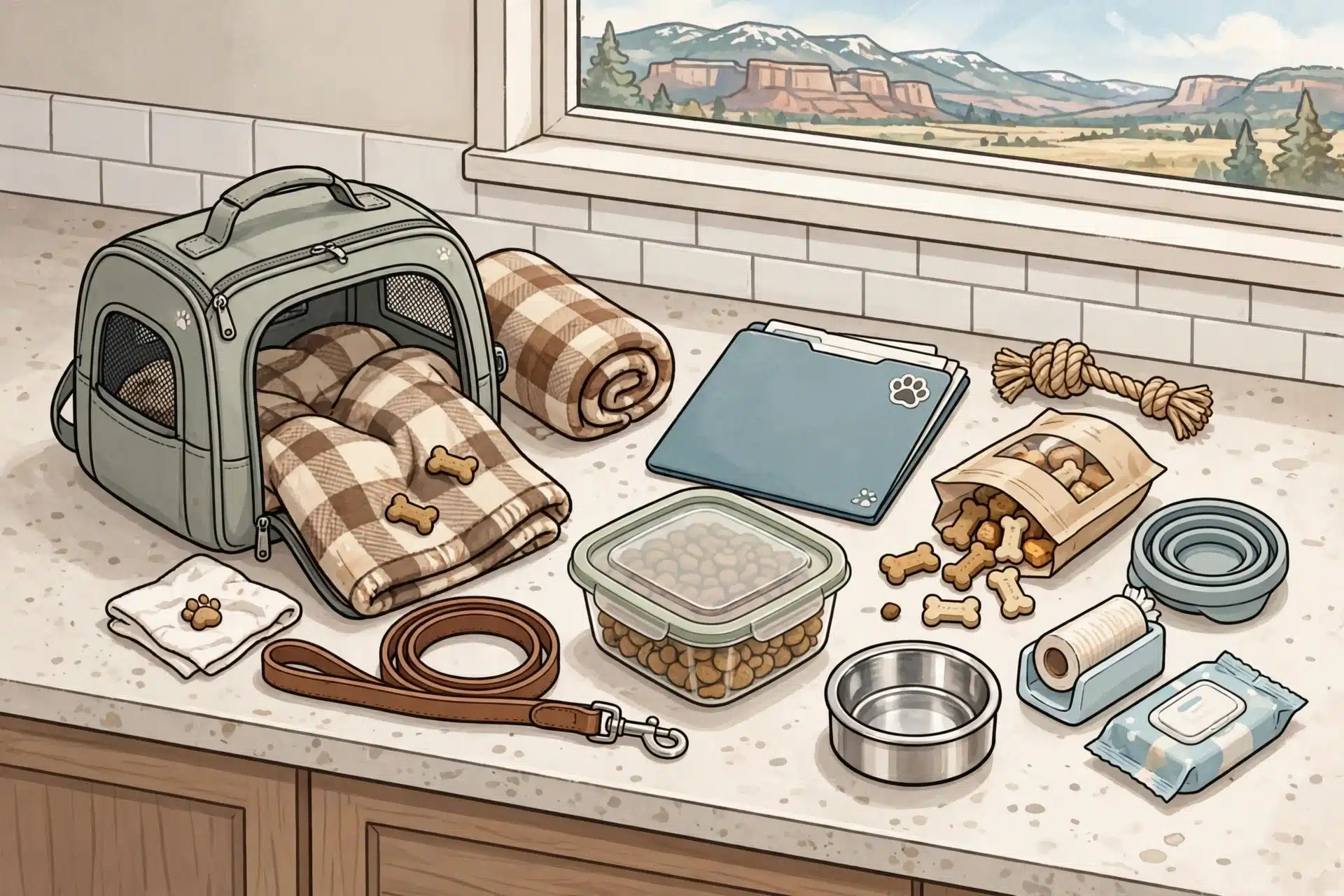
Wondering what to bring when you pick up your puppy in Utah? Pack these five things first: a secure travel carrier, a small collar and ID tag, a four-foot leash, a bottle of the food your breeder already feeds, and a soft blanket that smells like the litter. Add treats, waste bags, and your paperwork folder, and you are covered for pickup day and the drive home. Everything else can wait until your puppy is settled.
Tip: Ask your breeder for a small bag of the puppy’s current food a week before pickup. Sudden food swaps cause stomach upset, so plan any change as a gradual transition over seven to ten days.
The Non-Negotiable Day-One Checklist
These items leave the house with you. A hard-sided carrier sized for a small breed keeps your Havanese, Havapoo, or Cavapoo safe on the ride; experts at Cornell’s canine health center recommend a well-ventilated, securely latched crate for any car trip. Skip loose laps and collars-only rides on day one.
- Travel carrier or crash-safe crate, buckled in the back seat
- Buckle or harness setup, so you are not improvising at pickup
- Collar that fits two fingers snugly, plus a tag with your phone number
- Short leash for potty stops
- Current food, about three days’ worth, in a sealed container
- Water and a collapsible bowl
- Printed or digital copies of your contract and vet records
- Treats and high-value rewards for the first crate and potty wins
Families driving in from out of state should plan longer stops, and our guide to the drive home with a Utah puppy covers the route timing in detail.
Small-Breed Grooming and Feeding Kit
Havanese coats mat fast, so start gentle handling now. Bring a slicker brush and a metal comb, blunt-tipped puppy scissors for between the toes, and puppy-formulated shampoo for later. For meals, grab two shallow stainless bowls and a scoop that matches your food’s portion chart. Avoid raised feeders for tiny pups; a low bowl keeps necks level and digestion easy. Add a slow-feeder bowl only if your puppy gulps.
Clean-Up, Potty, and Comfort Supplies
Set the back of your car up like a tiny recovery room. Line the carrier with an absorbent pad, pack enzyme cleaner, paper towels, and three spare pads for accidents on the road. Toss in a soft toy and the blanket from the breeder, since familiar smells calm a nervous puppy faster than anything you can buy. Keep a backup leash and collar in the car from then on, because a loose dog in a parking lot is the one mistake day one punishes hardest.
Step 2: Collect the Paperwork and Health Records at Pickup
What documents do you need from the breeder on pickup day? Ask for these five items, in this order:
- A health record showing the puppy’s dewormings and any vaccines given so far
- A vet examination certificate dated within a few days of pickup
- The parent health testing summary for the mother and father
- A written purchase agreement listing price, terms, and any return policy
- Microchip registration papers with the chip number noted
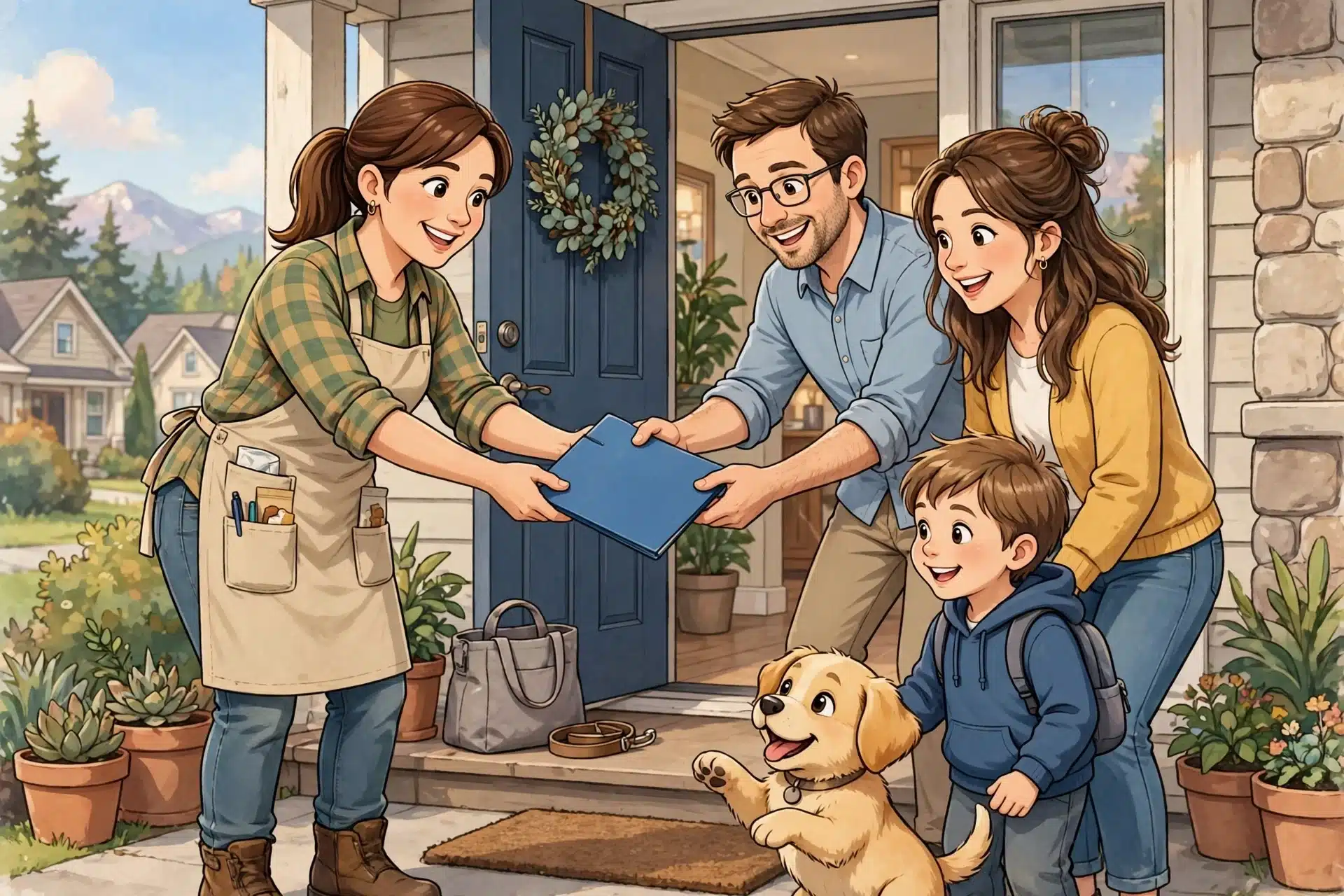
Paperwork feels less exciting than the puppy squirming at your feet, but this stack follows your dog for life. Your vet will want the health record at the first visit, and your city will ask for a rabies certificate when you license the dog. Keep everything in one folder and photograph each page before you leave the driveway.
Documents to Take in Hand
Start with the health record. It should list dates and products for each deworming and each vaccine, with the breeder’s vet clinic identified. Next, confirm the vet check certificate shows the exam date, the puppy’s age and weight, and any findings. If your puppy is a Havanese, Havapoo, or Cavapoo, ask for the parent testing results, such as OFA or genetic panels. Then check the contract against what you agreed on: purchase price, spay or neuter terms, and what happens if a health issue appears. Finally, get the microchip number in writing. At Sage Puppies, the handoff includes this paperwork in an organized folder so nothing rides home on memory. Snap photos of every page as a backup before you drive off.
Questions to Ask Before You Leave
Bring a short list and ask it while the puppy is still in the breeder’s care. Ask what food the puppy eats now and how much, so the transition to your food stays gentle. Ask when the next vaccine is due and whether the vet has noted anything to watch. Ask about the first night: where the puppy sleeps, how it has been crated, and what settles it fastest. Ask the breeder how to reach them in the first week if something comes up. And ask which vet clinic has seen the puppy, so records can follow if needed. Good breeders welcome these questions. If you want more practice, use these questions to ask a Utah puppy breeder before your visit.
Step 3: Move the Puppy Home Safely
Securing the Puppy for the Ride
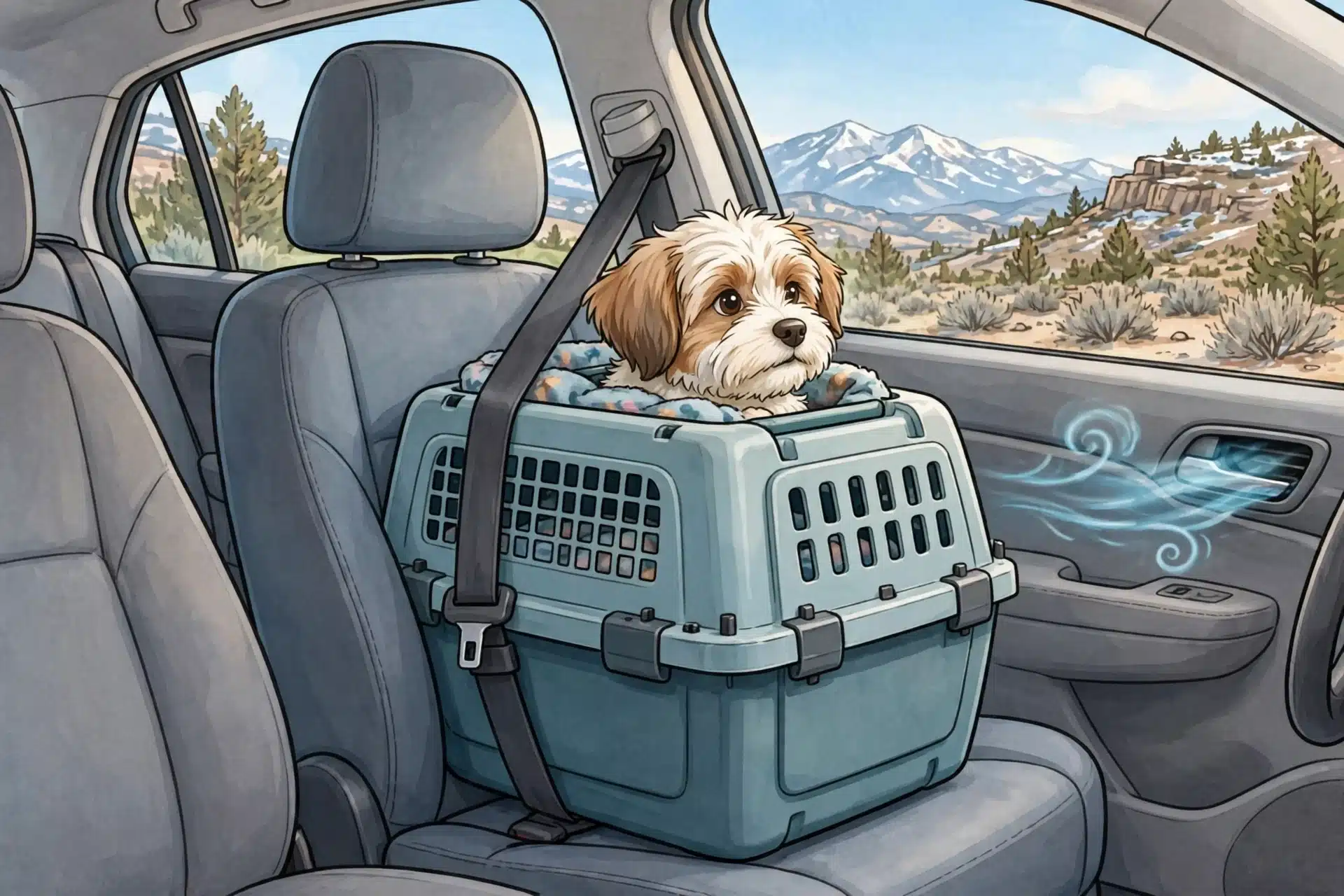
A Havanese or Cavapoo puppy rides best in a small, hard-sided carrier lined with an absorbent pad and a soft blanket from the breeder. The familiar scent helps settle her during those first car miles. Place the carrier in the back seat, never the front, and buckle it in or wedge it snugly against the seat back. The AVMA recommends a crash-tested harness, crate, or carrier so a sudden stop does not turn a loose puppy into a projectile.
Skip improvised restraints like a leash clipped to a collar, a cardboard box, or a lap hold. They give no real protection, and a scared puppy can slip out at a fuel stop. Plan one quick break on a longer drive for water and a potty try, and keep the leash on before any door opens. Air conditioning matters in a Utah summer, and a warmed car matters on a January go-home day.
The First Hour at Home
Keep the first hour quiet and boring. Carry her from the car straight to her designated potty spot, wait a few minutes, and praise calmly if she goes. Then show her the crate or playpen area and let her explore it on her own terms.
Hold off on visitors, loud music, and the whole neighborhood tour. Everything is new, so low stimulation helps her rest. Puppies sleep 18 or more hours a day at first, so a nap in the crate after the drive is normal and healthy. Offer small amounts of the same food the breeder sent home to avoid stomach upset, and keep water fresh and close. Save the cuddle sessions for when she wakes up settled.
Step 4: Hold the Line Through the First 72 Hours
Your puppy’s body is doing a lot right now. A new home, new people, new air, and a car ride all land at once, and small breeds feel it fast. The best thing you can do is boring: keep everything the same for three days, then change one thing at a time after that.
Schedule the First Veterinary Visit
Book the appointment before go-home day, not after. Aim for a visit within the first two or three days home, because many breeders build a three-day veterinary check into their contracts, and a quick look catches things early. Bring the health record folder from pickup so your vet can see vaccine dates and deworming on paper rather than from memory.
Call ahead and ask the clinic to have you carry the puppy in from the car and straight into the exam room. That avoids the lobby, where unvaccinated puppies can pick up bugs. Write down your questions the night before, and ask your vet to confirm the next shot date before you leave. If you want a full walkthrough of what happens at that appointment, this first vet visit checklist covers it step by step.
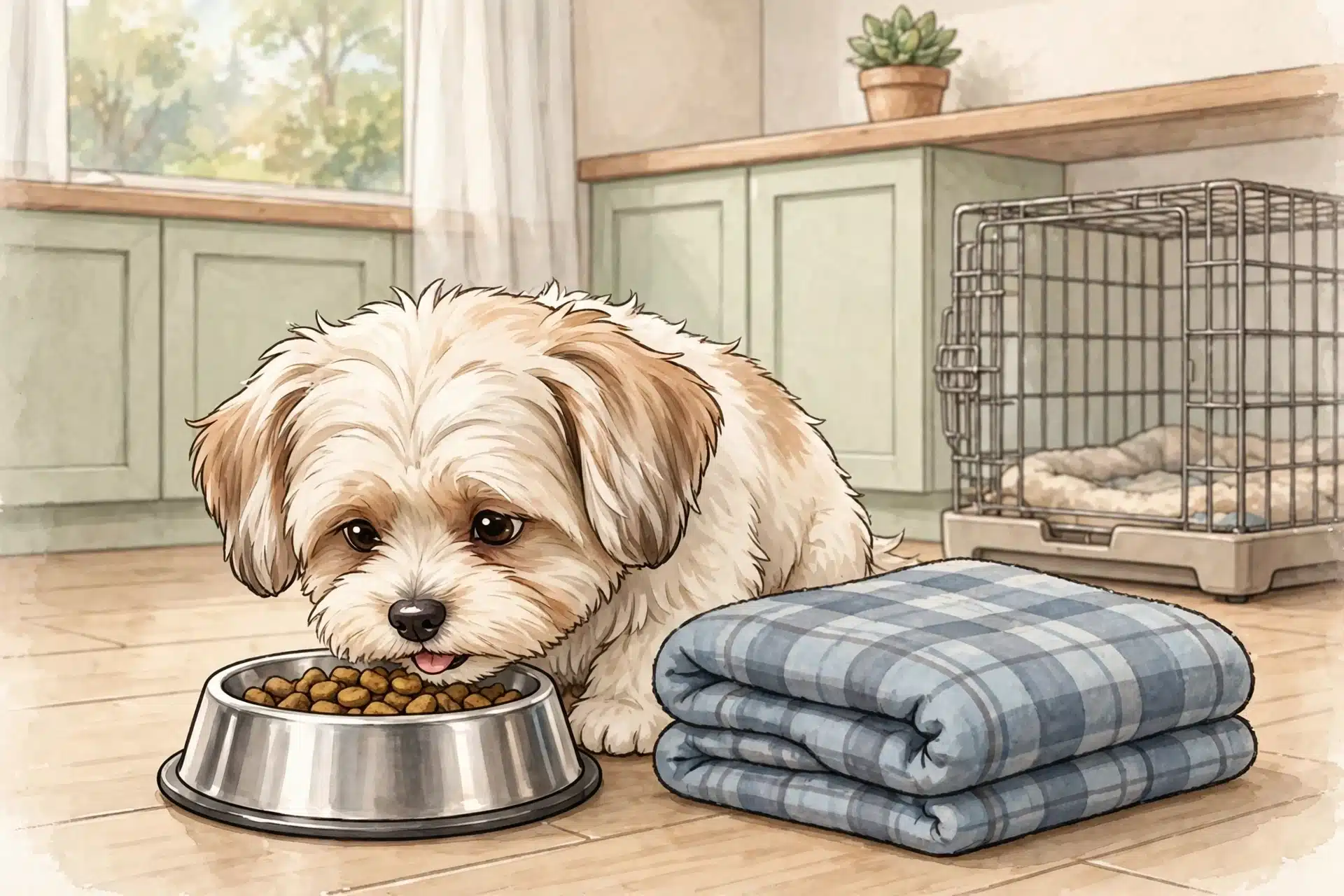
Keep the Diet Exactly Steady for the First Week
Feed whatever food the breeder sent home. Nothing else. A puppy’s gut adjusts to new food slowly, and a fast switch often causes loose stools, which then look like illness and complicate your first vet visit.
Ask for a few days’ worth of the current food at pickup if the breeder does not include it. If you want to change brands, do it later, over seven to ten days, blending a little more new food into the old each day. In week one, though, the safest puppy food transition is no transition at all. Skip the extra treats and table scraps too. A consistent bowl at consistent times tells you far more about how your puppy is doing.
Sleep, Potty, and What to Watch
Expect lots of naps. Puppies sleep 18 or more hours a day at first, so a quiet crate in a low-traffic corner matters more than a big play area. Carry the puppy outside to the same potty spot after every wake-up, meal, and play session, and reward calmly when she goes.
Watch the basics: eating, drinking, energy, and stool. One soft stool or a skipped meal is often just stress. Call your vet if vomiting, diarrhea lasting more than a day, or low energy shows up together. When in doubt, ask.
Handle Utah Registration and Local Requirements
Utah has no single statewide dog license. Rules are set by each city and county, so the deadline depends on where you live. In Salt Lake County, your puppy must be licensed by the time it is 5 months old, or within 30 days of moving in or bringing a pet home. In Utah County, every dog over 6 months needs a current rabies vaccination and a license. Check your own city’s rules first, since nearby towns can differ.
Licensing Rules in Utah
Most Utah cities tie licensing to the rabies shot. Puppies typically get their first rabies vaccine around 4 months of age, so the license usually follows soon after that first vet visit. Bring proof of that vaccination; most offices will not issue a tag without it. Some jurisdictions also charge less for spayed or neutered dogs. In Washington City, for example, a fixed dog costs $20 and an unfixed dog $40, and licenses there run on a two-year cycle. Fees and renewal terms change, so confirm current amounts with your local office.
If you live outside Utah and pick up your puppy here, you still license at home. Ask your own city or county about its age deadline and rabies requirements.
Where to Apply and What to Bring
Apply through your city hall, county animal services, or the local animal control office. Many Salt Lake County cities let you license online through county animal services, while smaller towns handle it in person.
Bring four things:
- Proof of current rabies vaccination
- A spay or neuter certificate, if it applies
- Your photo ID showing your address
- Payment for the fee
Some communities cap the number of dogs per household. South Jordan-area families should also confirm whether their city processes licenses directly or routes them through a county portal. One quick call saves a second trip.

Pickup day feels less stressful when you know exactly what to pack and what to ask for. Sage Puppies raises Havanese, Havapoo and Cavapoo puppies in South Jordan with an honest application and matching process. Browse available puppies and start your application today.
Frequently Asked Questions
Q1: what to bring home when picking up a puppy in Utah
Pack a hard-sided carrier, a snug collar with ID tag, a short leash, three days of the breeder’s current food, water, a familiar-smelling blanket, and a folder for the health record, contract, and microchip papers.
Q2: How much does a Havanese puppy from a Utah breeder cost?
Budget roughly $3,500 to $4,500 for a well-bred Havanese, Havapoo, or Cavapoo. Confirm the exact price in your written purchase agreement before you pay any deposit.
Q3: When should my Utah puppy’s first vet visit happen?
Book it within two or three days of go-home day. Many breeders build a three-day check into the contract, so schedule before pickup.
Q4: When does my puppy need a dog license in Utah?
Salt Lake County requires licensing by 5 months old; Utah County at 6 months. Bring the rabies vaccination certificate.
Q5: Should I switch my puppy’s food right away?
No. Feed the breeder’s food for the first week, then transition over seven to ten days if you want a change.
Q6: Can I take my unvaccinated puppy on errands after pickup?
Avoid it for the first weeks. Carry her into the vet, skip dog parks and lobby waiting areas until your vet clears her.
Conclusion
Bringing home a puppy in Utah comes down to four things done in order. Set up a small, safe room with a crate before pickup day, and plan for cold floors, dry air, and drafty doors. Pack the go-home kit: carrier, collar, leash, current food, and a familiar blanket. Collect the paperwork in hand, from the health record to the microchip number, and photograph every page. Then hold things steady through the first 72 hours, book the first vet visit early, and check your city’s deadline for the rabies vaccination and dog license. Do those four things and day one sets up the whole first month. Browse available Havanese, Havapoo, and Cavapoo puppies at Sage Puppies to plan your go-home day.