Quick Summary: Book a Havanese puppy’s first wellness exam within 72 hours of pickup, then follow DHPP shots at 6-8, 10-12, and 14-16 weeks, with rabies near the end. At every visit, ask your vet to check the knees for patellar luxation and listen for heart murmurs, while tracking teeth, skin, ears, weight, and parasites. Schedule a veterinary ophthalmologist exam around 12 months, and expect first-year veterinary costs of roughly $600 to $1,200.
The Havanese puppy you just brought home likely arrived with a vaccine card and a deworming log in hand. What matters now is the appointment most families book too late: a wellness exam within 72 hours of pickup, while the paperwork is still fresh.
That first visit sets up your Havanese puppy vet schedule for the entire first year. The challenge is that standard advice rarely covers what a small breed like this needs beyond the basics, so owners miss breed-specific checks or pay for things their puppy does not require.
This guide lays out the full Havanese puppy vet schedule, from the 72-hour exam through boosters, spay or neuter timing, and the one-year ophthalmologist check. You will also find the health paperwork to request from your breeder and an itemized budget for the year.
It draws on what a well-run breeding program documents for every puppy, which is exactly the record you should expect to receive.
Your First Vet Visit: The 72-Hour Window
Why the First Visit Cannot Wait
Book a wellness exam within 72 hours of bringing your puppy home. Here’s how the first visit usually goes:
- Book the appointment before pickup day.
- Bring your breeder’s vaccine and deworming records.
- Bring a fresh stool sample from that morning.
- Expect a full exam, a fecal test, and a vaccine plan.
The visit catches problems like parasites or a heart murmur while your purchase terms still offer options, and it lets your vet build a Havanese puppy vet schedule from day one.
What the First Physical Exam Covers
The vet checks your puppy from nose to tail: eyes, ears, teeth, skin, coat, and abdomen. Two points matter extra for Havanese. First, the vet flexes each knee to check for patellar luxation, a loose kneecap common in small breeds. Second, the vet listens to the heart with a stethoscope, a check called auscultation, to catch murmurs. Eyes, hips, and weight round out the visit. If you’re still choosing a litter, it helps to read puppy health records before pickup so you know what has already been screened.
Parasite Control, Microchip, and Safe Handling in the Office
A fecal test checks for roundworms, hookworms, and giardia, since many puppies carry them without symptoms. Your vet will start heartworm and flea prevention based on your puppy’s weight. If the breeder has not placed a microchip, this visit is the ideal time; keep the registration in your name and your phone number current. In the waiting room, carry your puppy rather than letting paws touch the floor, because fully vaccinated dogs frequent these spaces. A distinct Havanese puppy vaccination schedule starts here too, with the next first-year appointments mapped out before you leave.
Core Puppy Vaccinations From 6 to 16 Weeks
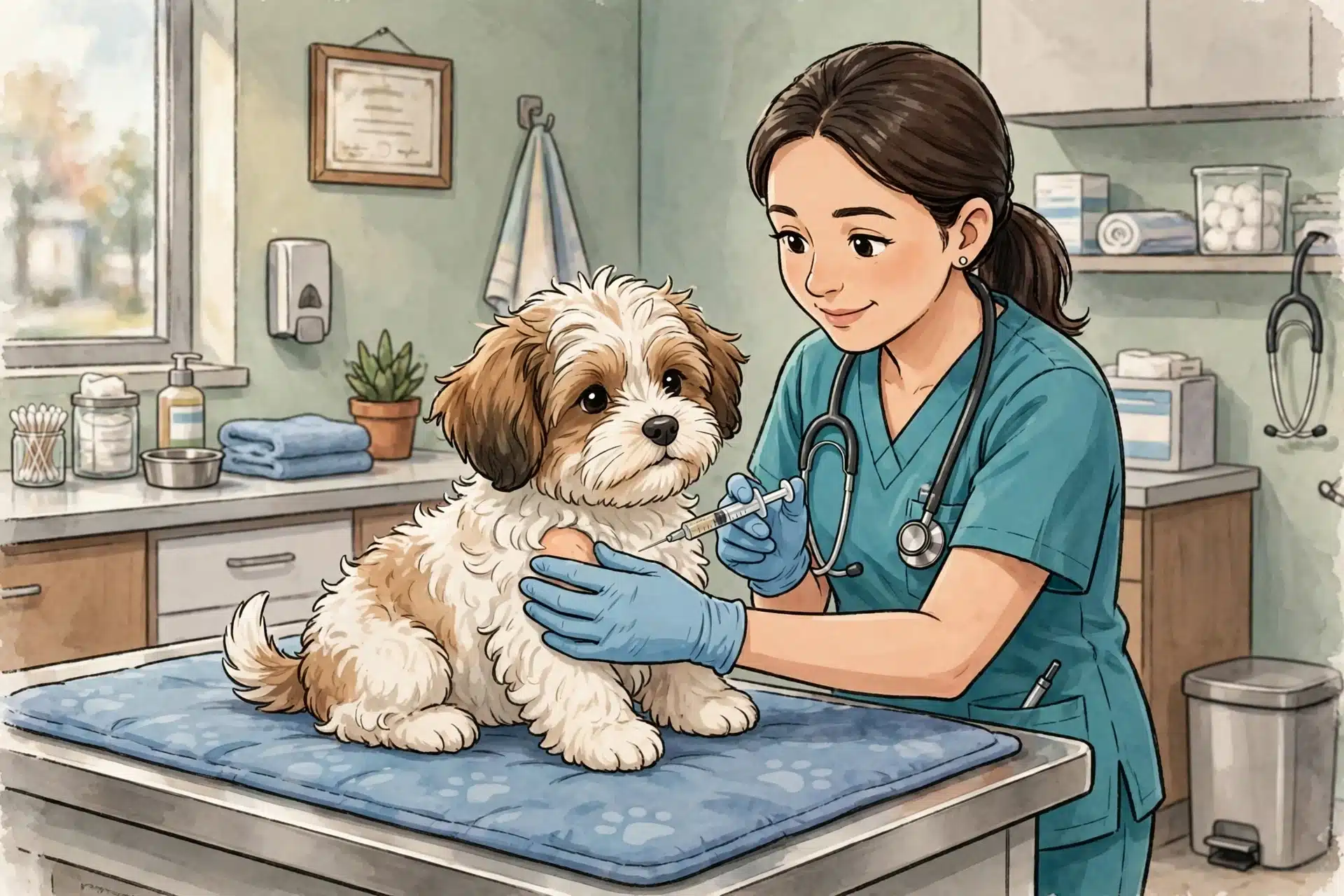
The backbone of any Havanese puppy vaccination schedule is the DHPP series: three doses given between 6 and 16 weeks of age, spaced two to four weeks apart, plus a rabies shot near the end. A typical first-year plan looks like this.
| Age | Visit | Vaccines Given | What the Vet Checks |
|---|---|---|---|
| 6-8 weeks | First puppy visit | DHPP (round one), deworming | Weight, ears, teeth, heart, skin |
| 10-12 weeks | Second visit | DHPP (round two) | Weight, growth, parasites |
| 14-16 weeks | Third visit | DHPP (round three), rabies | Weight, heart, teeth, overall wellness |
Per the AAHA core vaccine recommendations, at least three combination doses in this window is the standard, and your vet will fit the rounds to your puppy’s exact start date.
The DHPP Series and Why It Is Repeated
DHPP stands for distemper, hepatitis (adenovirus), parainfluenza, and parvovirus. It is repeated because antibodies from the mother’s milk protect early puppies but also block vaccines. No simple test pins down when that protection fades, so the series covers the whole gap. The final dose at 14 to 16 weeks is the one that sticks, so skipping it leaves real openings for parvo and distemper.
Rabies Timing and the Legal Requirement
Rabies is usually given once, between 12 and 16 weeks, often at the third visit. Unlike the rest of the series, it is a legal matter: every US state requires rabies vaccination for dogs, with timing and booster rules set by state or local law. Rabies is also core for human safety, so most vets schedule it firmly.
Recording and Tracking Each Dose
Ask for a written record after every visit. Each entry should show the vaccine name, manufacturer, serial or lot number, date given, and your vet’s signature or clinic stamp. Breeders supply the first round’s history, so keep those papers in the same folder. This matters later for boarding, training classes, and travel.
Why Intervals Matter and How to Handle a Delayed Dose
Keep doses two to four weeks apart. If you slip past that window, do not restart from zero; call your vet, who will simply resume the series.
Lifestyle and Optional Vaccines
How Core and Lifestyle Vaccines Differ
Core vaccines protect every dog from serious, widespread disease: distemper, adenovirus, parvovirus, parainfluenza, and rabies. Lifestyle (noncore) vaccines depend on where your puppy goes and what she meets. Boards at a kennel? Visits dog parks? Those risks shape which extras your vet suggests. AAHA lists Bordetella, Lyme, and canine influenza as noncore choices.
The Age Floor and the Havanese Caveat
Most lifestyle vaccines cannot start before 8 weeks, and some, like influenza, need two doses a few weeks apart. Timing matters because maternal antibodies, the immunity puppies absorb from their mother’s milk, can block early doses from taking hold. That is why the 14 to 16 week DHPP dose matters so much: it is the one that reliably sticks.
Small breeds add one caveat. Havanese puppies are tiny, so vets often spread out combination products and watch for reactions at each visit. Ask your vet to give noncore shots at a separate appointment from the DHPP series if your puppy runs sensitive. Your breeder’s records should note anything the litter reacted to already.
Bordetella, Influenza, and Other Extras
Three extras come up most for Havanese families:
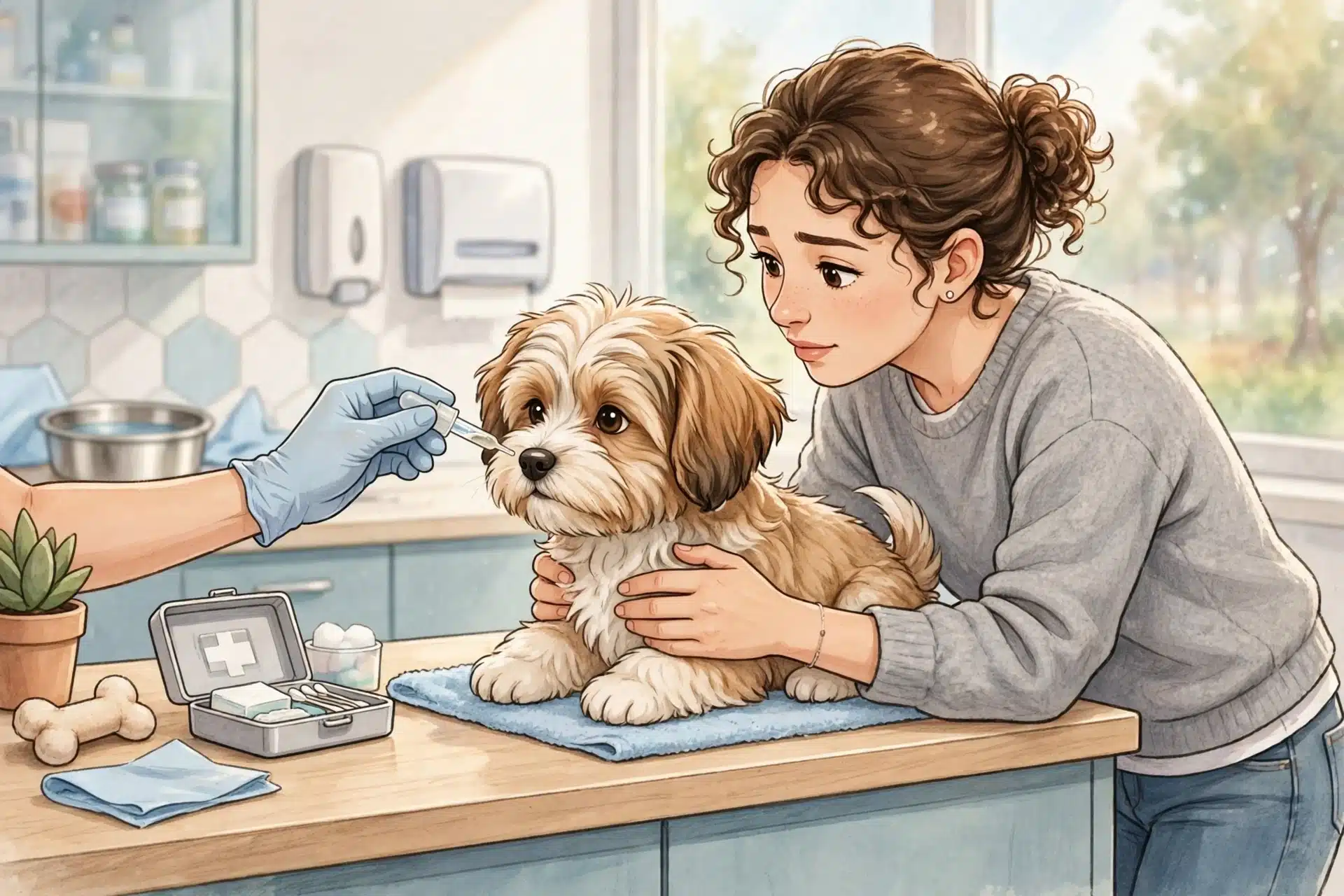
- Bordetella (kennel cough): usually required by boarding, grooming, and daycare facilities, often as nose drops.
- Canine influenza: two-strain vaccine for dogs around many other dogs, per the AAHA lifestyle calculator.
- Leptospirosis: now suggested for most dogs because the bacteria spreads through water and wildlife urine.
Pass on extras your puppy’s actual life does not call for.
Havanese-Specific Checks at Every Visit
Vets check every puppy for the basics, but Havanese puppies carry a few breed-specific risks worth flagging at each appointment. Ask your vet to cover these points every time:
- Patellar luxation: kneecaps checked at every visit, starting with the first exam
- Heart: auscultation each visit for murmurs, plus a liver shunt review before spay or neuter
- Eyes: full ophthalmologist exam at 12 months
- Teeth, skin, and ears: examined at every appointment
Joints, Weight, and Patellar Luxation
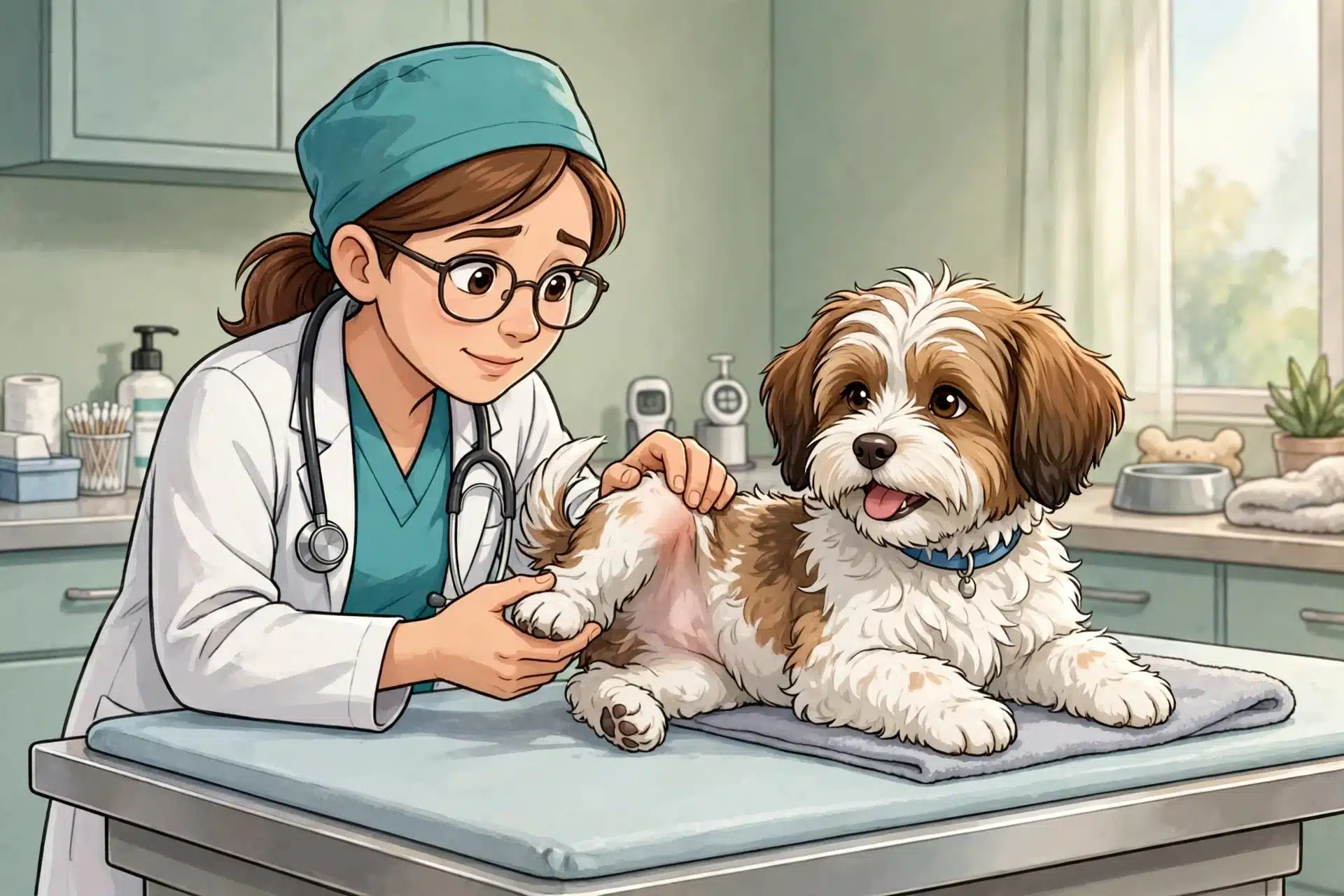
Patellar luxation, where the kneecap slips out of its groove, shows up often in small breeds like the Havanese. Your vet should flex each hind leg and feel the kneecap track properly. Weight matters too: keeping your puppy lean reduces stress on those joints. Report any skipping, bunny-hopping, or sudden sitting mid-run.
Heart, Liver Shunt, and Eye Screening
At each visit, the vet listens to the heart for murmurs, a first clue to valve problems that can appear in the breed. Before any spay or neuter, mention liver health: a portosystemic shunt is a blood vessel bypass that lets toxins skip the liver, and puppies may show poor growth, confusion after meals, or urinary stones. A pre-surgical blood panel helps screen for it. Then schedule the big one early: a full eye exam with a veterinary ophthalmologist around 12 months, since Havanese can develop cataracts and retinal problems that respond best to early care.
Teeth, Skin, and Ears
Small mouths crowd teeth, so ask your vet to track adult tooth placement and flag retained baby teeth that may need extraction. Part the coat and check skin for flaking, bumps, or hot spots, which food or grooming habits can trigger. Drop ears trap moisture, so have the vet show you a healthy ear canal at your first visit.
Well-Puppy Visits Between Shots
The 30-Minute and 3-Month Appointments
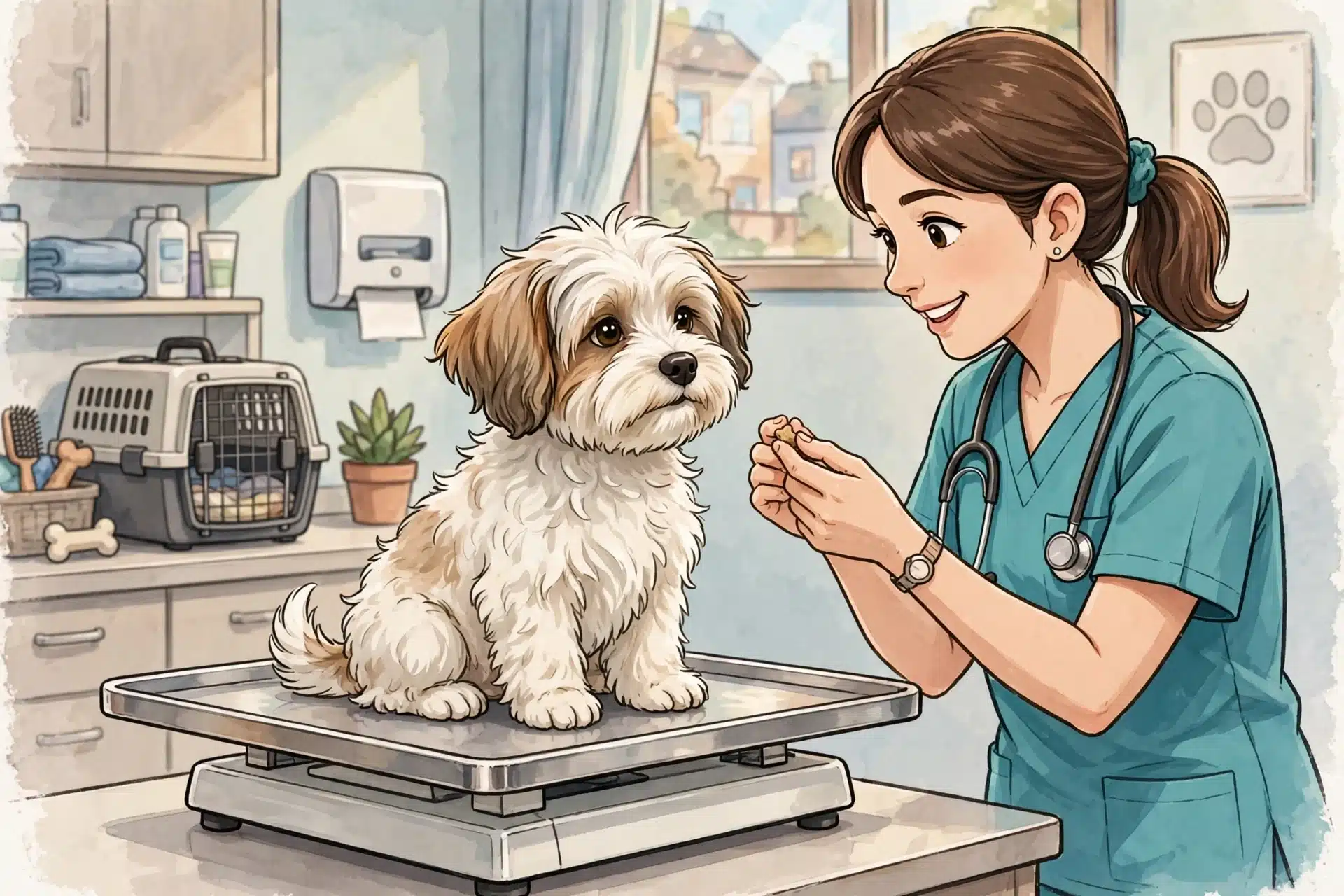
Your puppy sees the vet far more than just when a needle is due. Vets recommend puppy visits every three to four weeks until roughly 16 to 20 weeks, and most shots happen during those same appointments. So the second DHPP visit is also a growth check: weight curve, ears, teeth, heart, and skin, plus a patella and heart listen. Expect 30 minutes or less.
Socialization, Handling, and Environment
These visits double as socialization practice. Ask staff to offer treats and gentle handling so the clinic becomes a good place, not a scary one. A short vet visit early on helps your vet learn your puppy’s normal baseline, which makes problems easier to spot later. Between visits, the critical socialization window runs to about 14 weeks, so keep exposing your puppy to new floors, sounds, people, and car rides. Carry an unvaccinated puppy; save the dog-park floor for after the 16-week dose.
Rechecks, Retests, and Record Updates
Not everything resolves in one visit. A positive fecal test means a second stool check after deworming. A lingering ear infection or mild heart murmur deserves a recheck within a few weeks. Each visit, ask the front desk to update your puppy’s written record, or log dates, weights, and products yourself the same day. That file makes booster timing simple.
From 16 Weeks to One Year and Beyond
The Final Puppy Dose and the One-Year Booster
Once the 14 to 16 week DHPP dose lands, the puppy series is done. The next vaccine date matters just as much: a booster around 12 months, one year after the series finished. Per the AAHA guidelines, a booster is recommended one year after the last puppy dose, no matter which vaccine form was used. Rabies gets its own one-year booster, then typically repeats every three years. Mark both dates now so they do not slip past.
Yearly and Adult Wellness Care
After the first birthday, plan one wellness exam per year. Your vet checks weight, teeth, heart, skin, and knees, since patellar luxation can show up in small breeds as young adults. Heartworm and flea prevention continue every month, all year. Core DHPP boosters usually move to a three-year interval after the one-year shot. Annual fecal testing catches parasites even in a clean, indoor Havanese.
The 12-Month Eye Examination
Book this one early, because Havanese eye checks are breed-specific and easy to overlook. Around 12 months, a veterinary ophthalmologist should dilate and examine both eyes, screening for juvenile cataracts and early retinal changes. Catching these at a year old gives you the widest set of treatment options. Keep the exam report with your other Havanese puppy health records so future breeders and vets have it.
Planning and Paying for the First Year
An Example Budget for the First Year
So how much does a Havanese puppy’s first year of vet care cost? Most families land between $600 and $1,200, depending on region and clinic. Here is a labeled example budget:
| Cost | Type | Example Range |
|---|---|---|
| Wellness exams (4 visits) | One-time series | $200-$400 |
| DHPP series and rabies | One-time | $100-$200 |
| Fecal tests and deworming | One-time | $50-$120 |
| Spay or neuter | One-time | $250-$600 |
| Heartworm and flea prevention | Recurring, monthly | $120-$240/year |
| 12-month eye exam and booster | One-time | $150-$300 |
Check your own clinic’s prices; totals vary.
Ways to Manage Cost Without Skipping Care
Wellness plans spread visits and vaccines into a flat monthly fee, and many include the exams your puppy already needs. Pet insurance works differently: it covers accidents and illness, not routine shots, so buy it early, before anything is documented.
What Breeder Records Should Cover
Your puppy’s health records should list vaccination dates and products, deworming dates, a vet exam note, and microchip details. Ask for the breeder’s vet contact too. A transparent program such as Sage Puppies hands these over at pickup, so your own vet starts with real history.

A good first year starts with dates on the calendar. If your Havanese comes from Sage Puppies, you already have breeder records in hand, so book that 72-hour wellness exam today and set reminders for each booster. Then relax and enjoy your puppy, because the health plan is done.
Frequently Asked Questions
Q1: Havanese puppies | vet visits shots and health schedule?
Book a wellness exam within 72 hours of pickup. The typical Havanese puppy vaccination schedule runs DHPP doses at 6-8, 10-12, and 14-16 weeks, plus rabies near the end.
Q2: When can my Havanese puppy go outside safely?
Carry her until the final DHPP dose at 14-16 weeks. Avoid dog-park floors and clinic waiting rooms, but keep socialization going on new surfaces, people, and car rides at home.
Q3: What should be in my breeder’s health records?
Vaccine dates and products, deworming history, a vet exam note, and microchip details. Ask for the breeder’s vet contact too, so your clinic starts with real history.
Q4: Which vaccines are optional for a Havanese puppy?
Bordetella, canine influenza, and leptospirosis are lifestyle choices. Bordetella is usually required for boarding, grooming, or daycare; otherwise match extras to your puppy’s actual exposure.
Q5: What Havanese-specific checks should my vet do?
Patellar luxation checks and heart auscultation at every visit, a pre-surgical liver panel, and a full ophthalmologist eye exam around 12 months.
Q6: How much does the first year of vet care cost?
Most families spend $600 to $1,200, covering exams, shots, fecal tests, spay or neuter, and monthly prevention. Prices vary by clinic, so ask for an itemized estimate.
Conclusion
A Havanese puppy’s first year follows a clear pattern. Book a wellness exam within 72 hours of pickup, complete the DHPP series between 6 and 16 weeks, add rabies near the end, and return for boosters at 12 months. Between shots, your vet checks breed-specific points: kneecaps for patellar luxation, heart auscultation for murmurs, and teeth, skin, and ears at every visit. Keep your breeder’s health records and every clinic entry in one folder, and budget roughly $600 to $1,200 for first year puppy vet costs. Do that, and the schedule handles itself. What remains is the fun part: a healthy, well-socialized Havanese who greets every vet visit with a wagging tail.