Quick Summary: Verify a Havanese puppy’s purebred status through records, not appearance: request the AKC litter number, pedigree certificate, parents’ registration details, and OFA health results before paying. Check AKC and OFA records yourself, and confirm the seller is the breeder of record. Appearance and DNA tests can support your assessment, but neither proves purebred ancestry on its own.
Two puppies can look remarkably alike on the same afternoon visit. One comes with a documented pedigree and its AKC litter number; the other comes with a photo and the word purebred typed into a listing. Only one of them can be verified.
So how can you tell if a Havanese puppy is purebred? Work through four layers in order: check the paperwork, run an AKC lookup, review parent health screening in the OFA database, and compare the dog’s traits against the breed standard. Those purebred Havanese traits, from the silky double coat to the plumed tail carried over the back, support a claim but never prove one. Real Havanese pedigree verification depends on records, not looks.
That mix of documents and purebred Havanese traits is what this guide ranks for you, layer by layer, before money changes hands. It draws on documented breeder experience with Havanese, Havapoo and Cavapoo programs in South Jordan, Utah.
Step 1: Ask for the Pedigree Paperwork Before You Pay
Responsible Havanese purebred verification starts with a simple request: see the paperwork before any money changes hands. A serious breeder will send copies right away. Ask for:
- The AKC litter number assigned to the puppy’s litter
- The registered names and AKC numbers of both parents
- A pedigree certificate showing at least three generations
- The registration type offered: full or limited
If a breeder stalls, excuses, or offers only photos of papers you can’t read, treat that as a red flag.
The AKC pedigree certificate and what it actually lists
An AKC pedigree is a printed family tree, usually four generations deep. It lists each ancestor’s registered name, AKC registration number, and often titles earned in the show ring. Keep in mind what it proves: only that the dogs in that line were registered as Havanese with the AKC. It does not guarantee health, and it says nothing about whether a puppy shows the classic purebred Havanese traits in the coat, size, and temperament. Paperwork is the starting point, not the finish line.

Why the litter number and registered parent names matter
The AKC litter number ties one specific litter to one specific registered breeding. With it, you can contact the AKC and confirm the litter was actually recorded. The parents’ registered names let you check whether the same names appear on the pedigree and on any health testing records. Numbers that don’t match, or a “litter number” the breeder can’t produce, usually mean the puppy is not AKC registrable, no matter how convincing the story sounds.
Full registration and limited registration explained
Both types confirm the puppy has two AKC-registered parents. The difference is breeding rights. Limited registration means the dog is registered but cannot be bred, and any puppies would be ineligible for AKC registration, while full registration carries no such limit, according to the AKC’s own explanation. For a family pet, limited is normal and nothing to negotiate over.
Step 2: Verify the Records Yourself Instead of Trusting the Listing
Paperwork on a website proves nothing by itself. Anyone can type “AKC registered” into a sales page. The good news is that both AKC and OFA records are public, free to search, and take minutes to check. Do this before a deposit leaves your account.
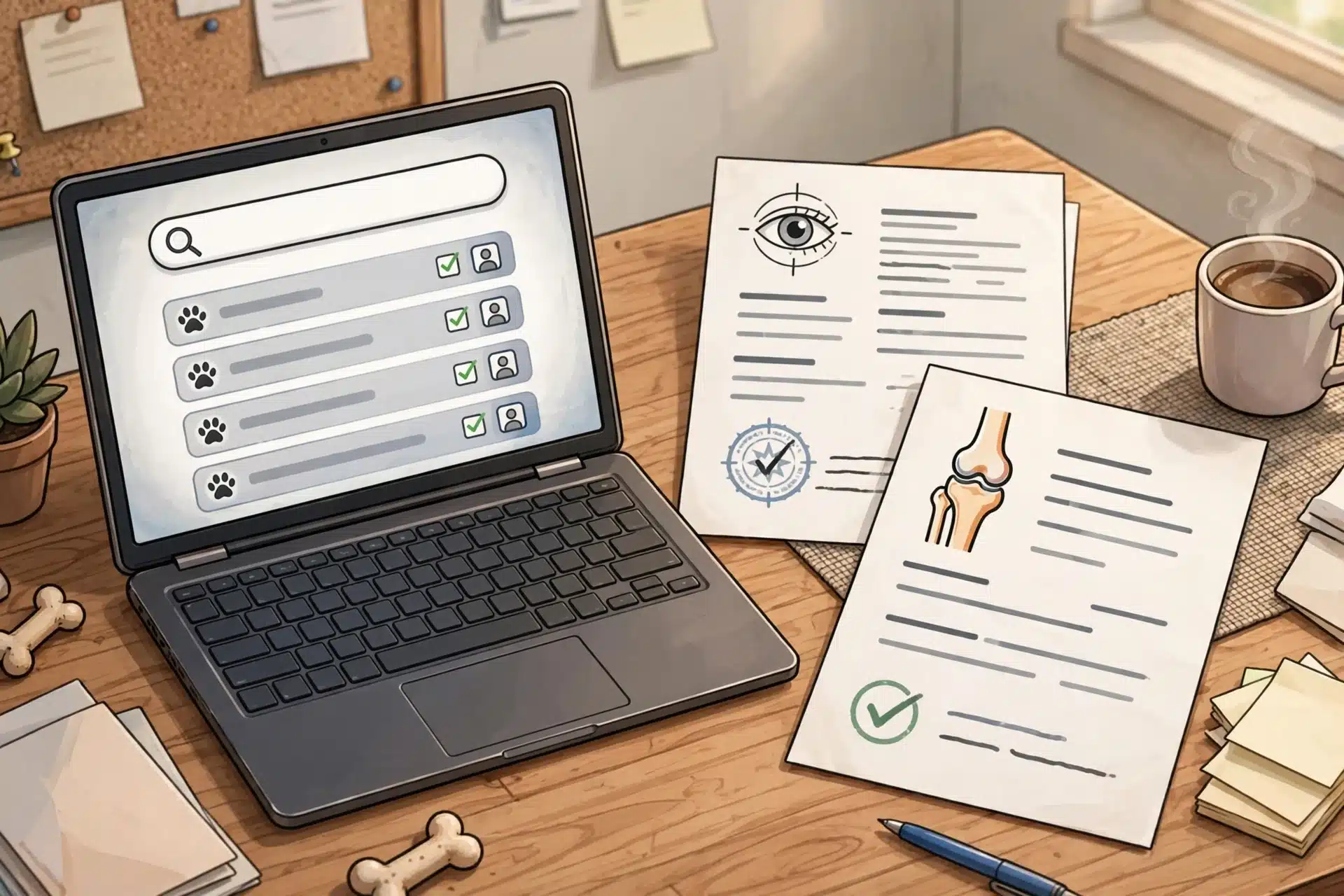
Searching the AKC public records for your puppy and its parents
The AKC’s marketplace and registration records let you confirm a few concrete things: the litter number, the dam and sire’s registered names, and the breeder of record. Ask the breeder for the litter number and the registered names of both parents, then look them up yourself. If a breeder hesitates to share an AKC litter number, treat that as an answer. Registration only proves ancestry on paper, so run this check even when the listing looks polished.
Checking parents in the OFA database for CHIC and screening results
The OFA runs a searchable database of health screening results, and a CHIC number shows a dog met the breed’s required tests. For the current Havanese CHIC requirements, that means an annual eye exam from a board-certified ophthalmologist plus hips and patellas evaluated by a vet. Havanese breeders who meet the standard also typically screen hearing and cardiac health. Search each parent by registered name and confirm results are normal, not just “on file.”
Asking the breeder for the actual test reports
A screenshot of “OFA Good” means little. Ask for the actual reports: the eye exam certificate with its date, the patella evaluation, and any cardiac results. Match the dog’s registered name and microchip or tattoo number on each report against the pedigree. A confident breeder sends these without drama, and many programs, including health-focused small breeders like Sage Puppies, expect buyers to ask. If the reports arrive redacted, blurred, or delayed past a few days, walk away and keep your deposit.
Step 3: Compare the Puppy Against the Havanese Breed Standard
The AKC breed standard describes what a purebred Havanese should look like as an adult: a small, sturdy dog that is slightly longer than tall, with a long, untrimmed double coat and a plumed tail carried over the back. Puppies only hint at adult traits, so use the standard as a filter, not proof.
Coat, color and size cues to look for
Start with the coat. A Havanese puppy has a soft, slightly wavy coat that grows long and silky, never wiry or tightly curled. All colors are allowed, from cream to black, often with white markings, so color alone tells you nothing. Size matters more. The AKC standard sets adult height at 8.5 to 11.5 inches at the shoulder, with most dogs weighing 7 to 13 pounds. Beware of anyone selling “teacup” Havanese; the standard has no such size. Check the puppy’s parents when you can, since adult size is easier to judge there. For what the breed looks like as it grows, the AKC’s Havanese profile includes photos and the full standard.
Breed-cluster and ancestry context
Havanese belong to the Bichon family, along with the Bichon Frise, Bolognese and Coton de Tulear. These breeds share small size, silky coats and cheerful temperaments, so a puppy from mixed Bichon lines can look convincingly “Havanese.” Doodle crosses such as the Havapoo add another layer: a curly-coated Havapoo puppy can resemble a Havanese with a bad coat day. Read the official AKC standard yourself and compare the details, like the straight topline and moderate bone, rather than the overall fluffy-dog impression. Breeders who raise Havapoos alongside purebreds, as at Sage Puppies, know these look-alike traps well.
Why appearance alone settles nothing
Here is the hard truth: no visual check proves ancestry. Two look-alike breeds, a mixed heritage and normal puppy development all fool the eye. A fluffy, friendly 10-pound puppy checks the trait boxes but could still carry mixed genes you will never see. Treat appearance as the weakest of your verification steps. It can raise a red flag, such as a coarse coat or outsized paws promising a 20-pound adult, but it can never clear the puppy on its own. Paperwork and DNA do that job, which the next steps cover.
Step 4: Use a DNA Test as Supporting Evidence, Not as Proof
Short answer: no, a DNA test alone cannot confirm your puppy is a purebred Havanese. Breed panels estimate ancestry, and even a 100% Havanese result is an estimate, not a certificate. The AKC states plainly that its DNA testing does not determine breed or purebred status. Use a DNA result as one piece of evidence alongside pedigree papers and health records.
What a breed panel can and cannot show
A consumer panel like Embark or Wisdom Panel compares your puppy’s DNA against reference groups of known breeds. A strong result, say 100% Havanese, supports the breeder’s claim. A clear result with two or three breeds mixed in tells you the puppy is not purebred, which matters a lot if you paid a purebred price. What the panel cannot do is certify lineage. Every purebred breed started as a mix, so the test measures similarity to modern breed groups, not family history. Treat it as a sanity check.

Reading a mixed result honestly
Results are estimates, and accuracy depends on each company’s reference database. Rare breeds like the Havanese are sometimes underrepresented, which can blur results. So read them honestly. A result showing mostly Havanese with small percentages of related breeds may reflect database limits rather than a mixed puppy. A result showing substantial poodle, Bichon, or other breed ancestry deserves a direct question to the breeder. Ask for the parents’ DNA profiles or registration papers before you accept an explanation. If the seller brushes off the result, that is its own answer.
Why registries rely on pedigrees, not DNA, for purebred status
This confuses many buyers: registries define purebred status by documented pedigree, not by genetics. The AKC explains that breed heritage tests are not purity tests and that purebred recognition comes through recorded parentage across generations. AKC DNA profiles exist mainly to confirm parentage, so a breeder cannot register puppies from unverified sires or dams. That is why Steps 2 and 3, the pedigree lookup and health database check, carry more weight than any swab result. A DNA test rounds out the picture. It should never replace it.
Step 5: Confirm the Seller and the Litter Behind the Claim
Papers prove a dog exists in the AKC system. They do not prove the person selling you the puppy had anything to do with that litter. So your last check ties the breeder’s name to the paperwork.
Matching breeder identity to registration records
Ask who the breeder of record is. The litter owner files the AKC litter registration application, and that person’s name goes on record as the breeder. Compare it to the name on your contract, the invoice, and the puppy’s registration application. If a broker or middleman is involved, the names will not match, and you may be buying from a reseller who never met the dam. A straightforward breeder program, whether large or boutique like Sage Puppies’ reservation process, will tell you plainly who bred the litter and who holds the registration rights.

Watching how the breeder handles documentation
How someone shares records tells you as much as the records themselves. A confident breeder sends the AKC litter number without prompting, walks you through the pedigree, and explains whether the puppy comes with full or limited registration. Hesitation is a signal. So is a request to pay first and “get paperwork later.” Reputable breeders document willingly because registration with the AKC is voluntary and takes real effort, as the AKC registration FAQ notes.
Questions worth asking in one conversation
Keep this short list ready:
- Who is the breeder of record on the litter?
- May I have the AKC litter number before I pay?
- Is the puppy full or limited registration, and why?
- Are both parents health tested, with OFA results I can find?
- Can I visit, or see a video of the dam with the litter?
One honest, unhurried conversation answers more than any certificate.
Common Verification Mistakes to Avoid
Accepting a photo of paperwork instead of a record
A screenshot of a pedigree is easy to fake and hard to check. Ask for the AKC litter number or the parents’ registration numbers instead, then run the lookup yourself on the AKC site. Real records stay searchable after the puppy goes home, so there is no reason a breeder should resist showing you the original.
Treating a DNA panel as a verdict
Even a 100% Havanese result is an estimate, not a certificate. Breed panels are good at flagging a problem, but they cannot replace a pedigree or the parent health screening behind Havanese CHIC requirements. Use the swab to raise questions, then confirm the answers through records you can verify independently before you commit.
Paying before the documents arrive
Deposits create pressure, and scammers count on it. Agree on which papers you will receive, including registration details and OFA results for both parents, and review them before money changes hands. A responsible program will walk you through the records; at Sage Puppies, for example, the paperwork comes as part of the matching process, not as a promise for later. If documents stall or stories shift, walk away.

Still unsure whether that puppy is truly purebred? You do not have to guess. At Sage Puppies, every Havanese comes with documented ancestry you can verify yourself, plus honest answers before you commit. Browse our available puppies, review the pedigree and health records, and reserve your puppy with confidence. Wisely Bred. Beautifully Loved.
Frequently Asked Questions
Q1: How can I tell if a Havanese puppy is purebred?
Check paperwork first, then verify the AKC litter number and parent health records yourself. Appearance supports a claim but never proves ancestry.
Q2: What paperwork proves a Havanese puppy is registered with the AKC?
A pedigree certificate, the litter number, and both parents’ registered names and AKC numbers. Run the lookup yourself before paying.
Q3: Can a DNA test confirm my puppy is a Havanese?
Not alone. A breed panel estimates ancestry, so treat it as supporting evidence alongside pedigree records and health screenings.
Q4: Does limited registration mean my puppy is not purebred?
No. Limited registration still confirms two AKC-registered parents; it only restricts breeding rights.
Q5: What should I check in the OFA database?
Search each parent’s registered name for normal hips, patellas, and eye exam results.
Q6: Can I verify a puppy before paying a deposit?
Yes, and you should. A confident breeder shares the litter number and records before money changes hands.
Conclusion
Verifying a purebred Havanese comes down to layers, and some matter more than others. The AKC litter number and a pedigree you check yourself carry the most weight. OFA health records on both parents come next. Appearance against the breed standard helps filter, and a DNA panel only rounds out the picture.
No single document settles it, so confirm the records before money changes hands. A confident breeder welcomes that. When you’re ready to bring one home, our guide to raising a Havanese puppy at home covers what comes after the paperwork checks out.