Quick Summary: Beware of fake ‘family-raised’ puppy listings that lack proof like live videos, clear records, or in-person visits. Scammers often use stock photos, push for quick deposits, and avoid showing the actual living environment. Verify health records, ask detailed questions, and insist on transparent communication before paying. Reputable breeders welcome questions, provide proof, and avoid high-pressure tactics, making trust based on evidence rather than claims.
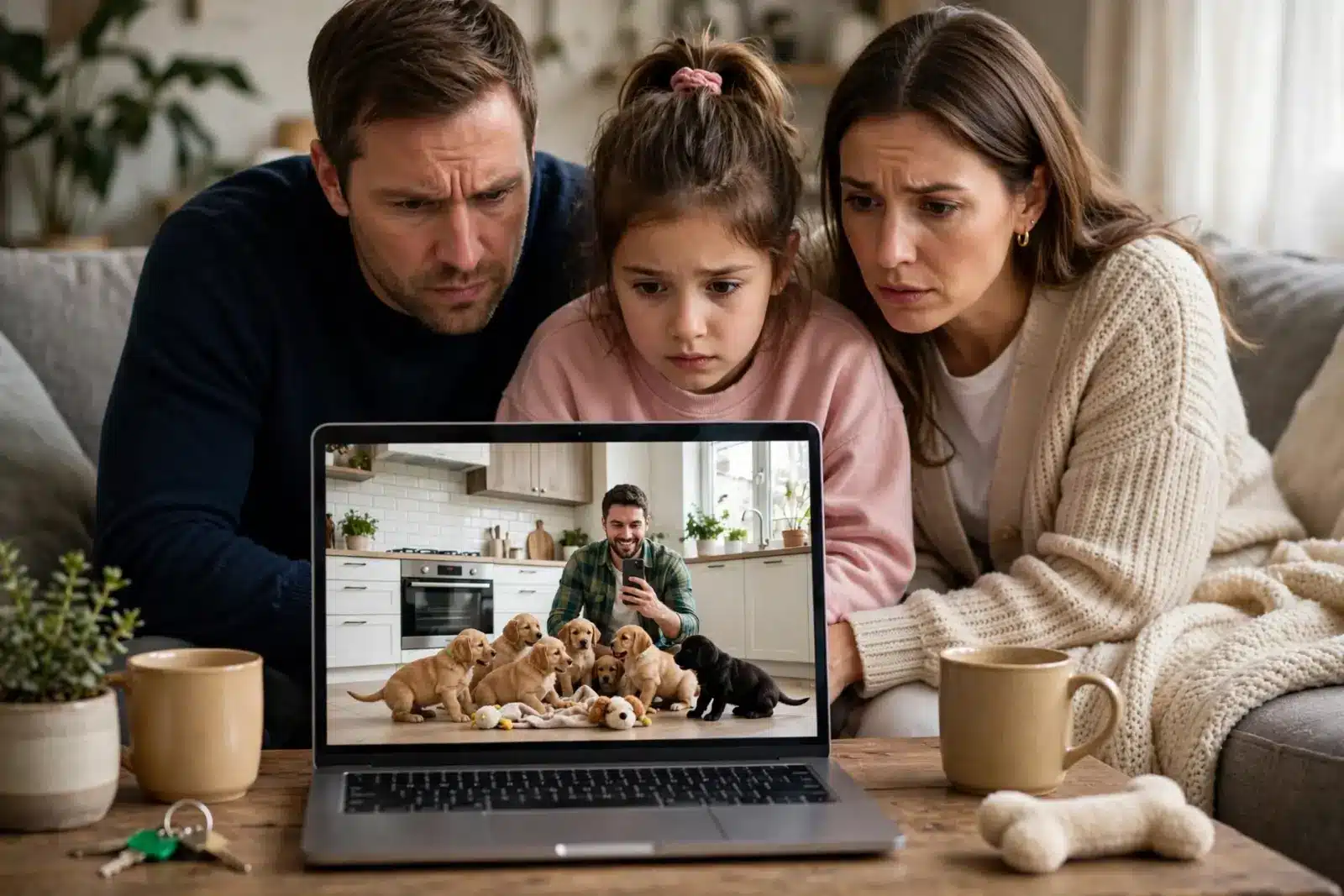
A lot of buyers get burned at the same point. A “family-raised” puppy ad looks warm and local, but there is no live video, no clear address, and the seller wants a deposit before answering basic questions. Those are not small issues. They are early Puppy Red Flags.
This guide is for families trying to sort real breeders from polished listings. Most Family Puppy Concerns start with the same problem: nice photos, vague claims, and little proof. That leaves first-time buyers guessing, especially when searching for Family-Raised Puppies near home.
Here, you will learn how to check the facts first. We will cover the signs that matter, what evidence to ask for, and how to compare breeders without getting pushed into a fast deposit. We will also walk through the Family Puppy Concerns that show up most often online, plus the Family Puppy Concerns that deserve a hard pass.
This advice comes from a verification-first view of ethical puppy buying, shaped around what careful families should confirm before trust starts.
1. Check Whether the ‘Family-Raised’ Claim Has Real Evidence Behind It
A real family-raised breeder can show you what daily life looks like. They do not just say the puppies are loved. They show where they sleep, who handles them, and how they meet normal home sounds.
Legitimate home-raising details often include:
- Photos and videos from different weeks, not one staged day
- Clear notes on early social time, crate intro, grooming, and handling
- A chance to meet the mother, and sometimes the father
- A home visit, live video tour, or both
- Straight answers about where puppies are born and raised
The ASPCA says responsible breeders raise pet puppies in a home environment, socialize them daily, and encourage buyers to visit where dogs are bred and raised, according to the ASPCA criteria for responsible breeding.
| Claim on website | Real proof behind it |
|---|---|
| “Raised with our family” | Photos over time, home tour, routine details |
| “Well socialized” | Specific exposures like kids, sounds, grooming, play |
| “Loved like our own” | Meet the dogs, see living spaces, ask follow-up questions |
Soft words can hide weak facts. “Spoiled,” “pampered,” and “raised with love” sound nice, but they prove nothing on their own.
Watch for wording like:
- “Home-like setting” instead of in our home
- “Handled daily” with no examples
- “Family breeder” with no family members ever shown
- “Local pickup available” but no visit to where puppies live
- “USDA licensed” used like a quality badge
Warning: USDA records can be useful, but a license is not the same as proof of good home raising.
If the breeder avoids specifics, press a little. Ask who handles the litter each day, where the puppies spend most of their time, and what the room looks and smells like.
To verify the breeder’s real footprint, use a short checklist:
- Search the breeder’s business name, city, and phone number.
- Check whether names and locations match across the site, socials, and listings.
- Ask for a live video call from the actual puppy area.
- Look up any USDA record in the USDA Animal Care Public Search Tool.
- Refuse parking lot handoffs or rush deposits.
Also Read: Family-Raised Puppies for Sale Near Me: Buyer’s Guide
2. Watch for Scam Signals in Photos, Videos, and Response Patterns
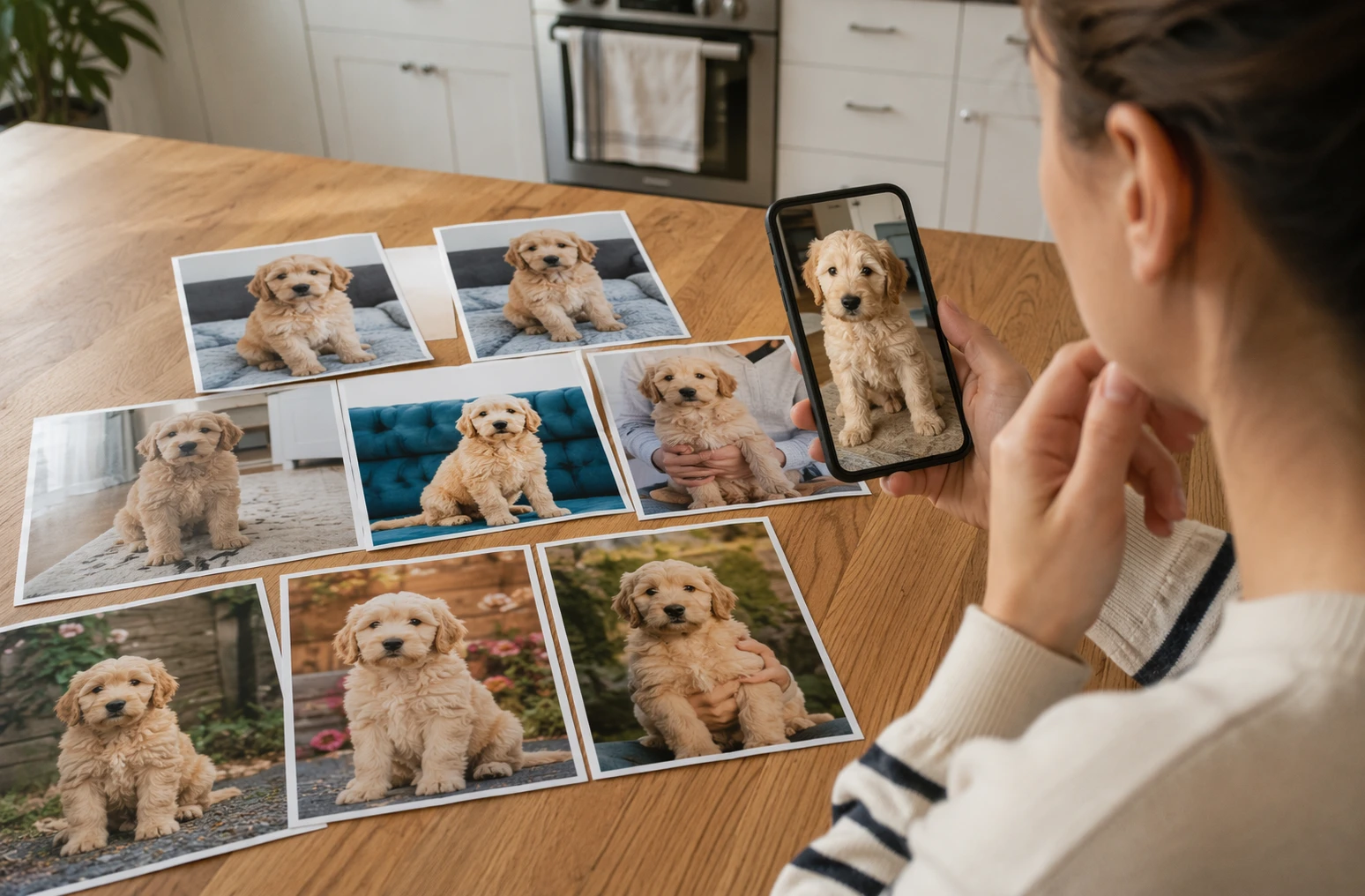
Cute photos prove almost nothing. Scammers know families lead with emotion, so they borrow trust from pictures, short clips, and fast replies. The FTC says to reverse image search pet photos and insist on an in-person or video visit before paying anything FTC consumer advice.
How to test puppy photos for reuse or deception
Start with the listing photos, then get picky.
- Run a reverse image search on every puppy photo.
- Check whether the same image appears on other breeder sites, old ads, or random social posts.
- Look for mismatched details:
- different backgrounds across “same day” photos
- cropped-out faces or hands
- heavy filters that hide eyes, coat, or size
- repeated poses across multiple puppies
| Photo check | Good sign | Red flag |
|---|---|---|
| Background | Normal home setting with consistent rooms | Different homes for the same puppy |
| Image quality | Clear, varied, casual shots | Overedited, studio-like, oddly polished |
| Age progression | Photos match stated age | Puppy looks younger in newer posts |
| Uniqueness | Seller can send fresh photos on request | Seller re-sends the same gallery |
If a breeder cannot send one new photo with today’s date and a simple object you requested, slow down.
What a real live video call should answer
A real video call should remove doubt, not create more of it. BBB warns buyers to request a live video call to see the animal, meet the breeder, and evaluate the facility, and notes that reverse image search can expose reused photos BBB pet scam guidance.
Ask the breeder to show these things live:
- the exact puppy from the listing
- the puppy walking, being held, and responding naturally
- the mother dog, if she is on site
- the sleeping area, play area, and feeding setup
- a quick view of the home environment
Use this simple test list:
- Ask them to say your name live.
- Ask them to show the puppy from head to tail.
- Ask for one specific action, like picking up a blue toy.
- Ask to pan slowly, not just show close-ups.
Pre-recorded clips are not enough. A scammer can recycle video too.
Communication habits that should make you pause
The message pattern often gives the scam away before the paperwork does.
Watch for sellers who:
- avoid phone calls
- answer fast but vaguely
- ignore direct questions about parents, health testing, or pickup
- push deposits before a live call
- create urgency like “another family is paying now”
- change names, email addresses, or payment instructions
A trustworthy breeder sounds steady. They ask about your home, explain their process, and welcome careful questions. Sage Puppies, for example, would be stronger for a cautious buyer if the conversation stays clear, local, and easy to verify.
Fast replies do not equal honest replies. Clear, specific answers do.
3. Verify Health, Parent Information, and Documentation Before You Deposit
A real family-raised breeder should answer health questions clearly, not vaguely. Ask what issues are common in that breed or mix, what testing the parents had, who performed it, and whether results can be verified. The AKC says responsible breeders should share proof of health screenings and be honest about genetic risks in their lines according to AKC guidance.
Use this quick checklist:
- What breed-specific tests were done on both parents
- Whether the breeder has OFA or other screening records
- What the puppies have received so far, like vaccines, deworming, and exams
- What support happens if a health issue appears soon after pickup
- Whether they can explain the difference between a wellness exam and parent health testing
If the answer is “our vet checked them” and nothing more, slow down.
| Health question | Good answer | Red flag |
|---|---|---|
| Parent testing | Names the tests and shows records | Says “parents are healthy” only |
| Puppy care | Gives dates and vet details | Gives no timeline |
| Genetic risk | Explains known breed concerns | Claims “zero issues ever” |
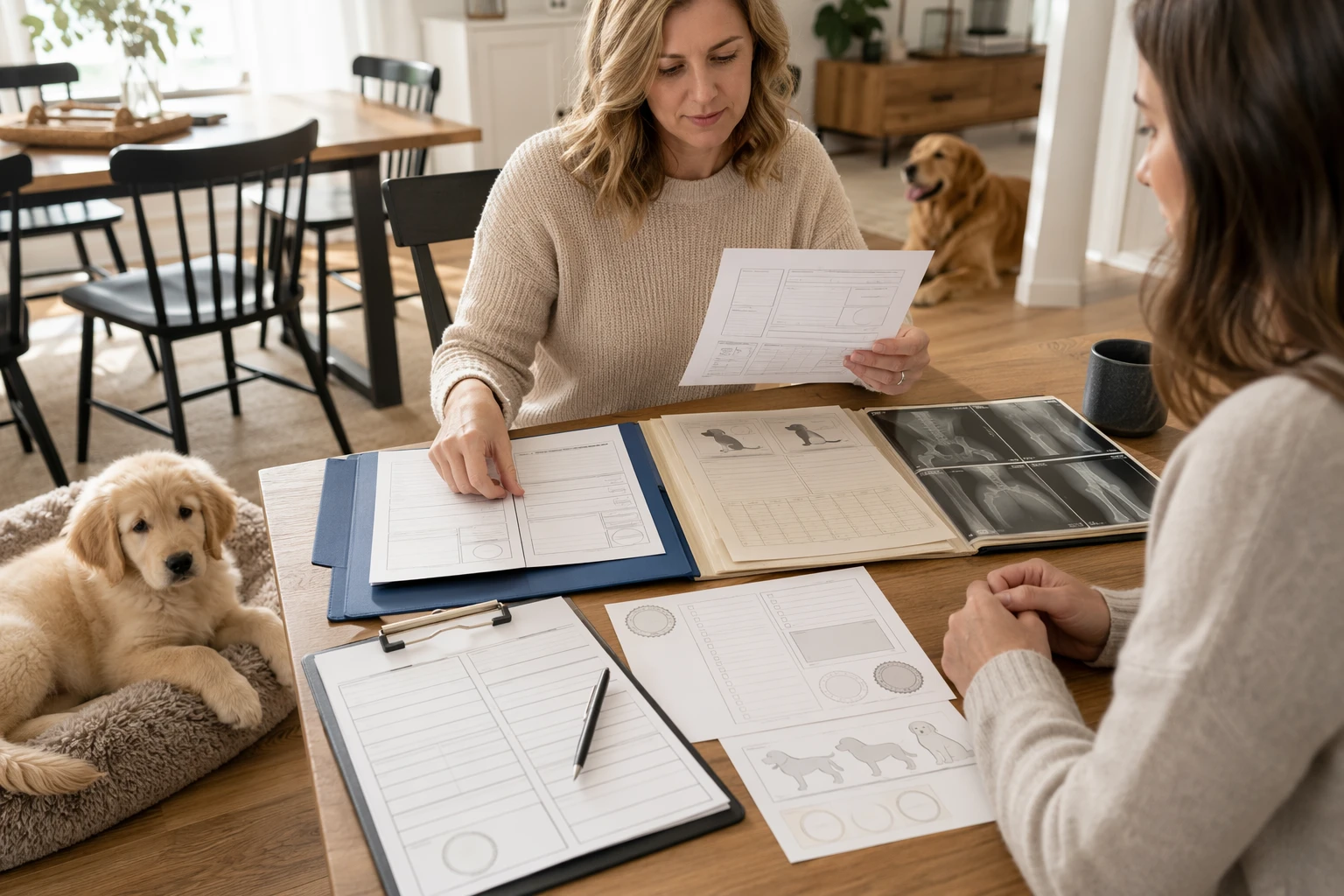
Before you send a deposit, key paperwork should already exist. You may not receive every final paper that day, but the breeder should be able to show you core records now. OFA advises buyers to ask for health screenings, pedigree details, and a written sales contract before moving forward in its breeder interview guide.
Ask to see:
- Parent health test records
- Puppy exam or wellness record
- Vaccine and deworming record
- Written contract with pickup terms, return terms, and what happens if the puppy cannot stay with you
- Pedigree or parent identity records, if applicable
- Microchip details, if already assigned
Do not accept these substitutes:
- Screenshots with cropped names
- Promises to “send papers later”
- A deposit request before any contract review
- Records that do not match the parent names shown to you
Parent visibility matters because it helps you judge both temperament and truthfulness. A breeder may not have both parents on site, especially if a sire lives elsewhere, but they should show at least one parent and provide clear records for the other. OFA notes that seeing where dogs live and how they act around people gives buyers useful clues.
Watch for these signs:
- The mother seems calm, clean, and comfortable in the home
- The breeder can explain each parent’s role in the litter match
- Photos, videos, and records all match the same dogs
- The breeder does not dodge live viewing requests
Marketing says “family-raised.” Parent access helps prove it.
4. Protect Yourself From Payment and Reservation Pressure
Money stress is where many puppy scams close the deal. If a seller pushes hard, slow down. The FTC warns that scammers often demand payment methods that are hard to reverse, including wire transfers, crypto, gift cards, and some payment apps when they ask you to pay that way.
Safer payment behavior versus high-risk payment requests
Use the payment method as a trust test. A real breeder should be able to explain the total price, deposit amount, refund terms, and timing before asking for money.
| Safer signs | High-risk signs | What to do |
|---|---|---|
| Credit card option or clear invoice | Wire transfer only | Pause and verify identity |
| Written deposit terms | Gift cards or crypto | Walk away |
| Deposit after a call or video visit | Full payment before proof | Ask for live proof first |
| Name on payment matches breeder | Payment sent to another person | Stop the deal |
- Ask for an itemized breakdown before you pay.
- Confirm the puppy, breeder, and payment name all match.
- Save screenshots, invoices, and messages.
If the payment path feels more urgent than the puppy match process, treat that as a red flag.
The most common pressure tactics to say no to
Scammers push speed because speed kills questions. The FTC says fake pet sellers often insist you pay up front and act fast before the puppy is “gone” in pet scam listings.
Say no to lines like these:
- “Another family is paying now.”
- “Send the deposit in 10 minutes.”
- “The airline crate fee just changed.”
- “Our card system is down, use Zelle.”
- “Refundable today only if you act now.”
A calm breeder answers questions. A scammer punishes questions.
Never let guilt, scarcity, or a sad puppy photo rush your wallet.
What a clear reservation process should include
A solid reservation process is boring in the best way. It should be easy to read and easy to check.
Look for:
- The puppy’s date of birth, parents, and current status
- Exact deposit amount and final balance due date
- Written refund or transfer policy
- Pickup or delivery terms
- What happens if the breeder, not you, cancels
Ask these before paying:
- Is this deposit refundable, transferable, or neither?
- When do I get the signed agreement?
- What proof shows this puppy is the one being reserved?
Programs like Sage Puppies should be able to walk you through each step without pressure or confusion.
Also Read: 10 Unique Care Tips For Small Breed Puppies In Urban Settings
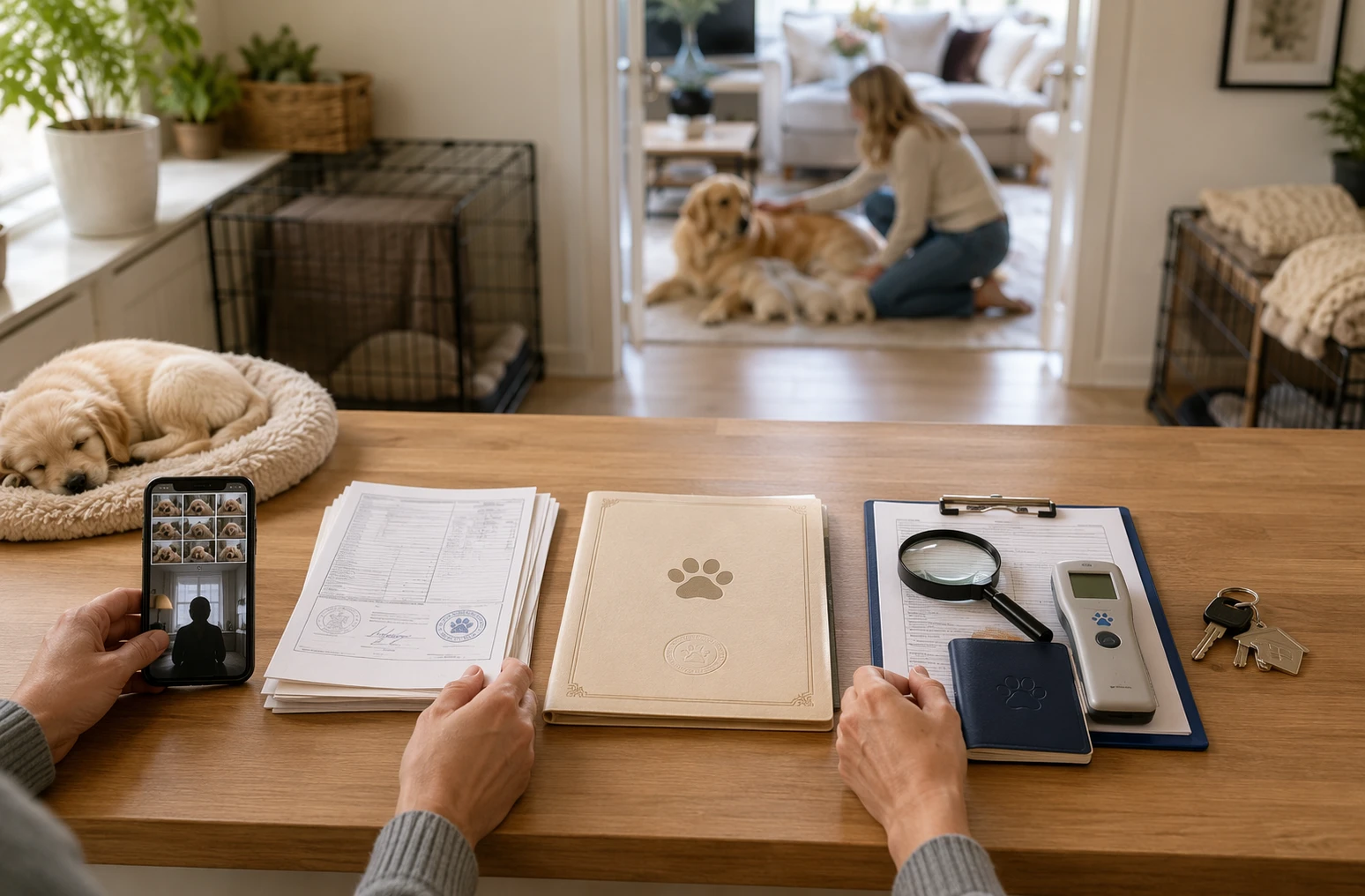
5. Use a Simple Legitimacy Checklist Before You Commit
A pretty website proves almost nothing. Run a short checklist before you send a deposit, book delivery, or say yes to a puppy.
The five checks that matter most
Use these five checks in order:
- See the real setup – Ask for an in-person visit or a live video walk-through with the puppy, mother, and living area.
- Verify records – Ask for parent health testing, puppy vet records, and a written contract.
- Check how the breeder sells – The USDA public search tool lets buyers look up certain licensed facilities and inspection records.
- Watch the questions they ask you – OFA says responsible breeders screen buyers too, not just the other way around, and they should welcome an on-site visit and discuss health clearances openly in their breeder interview guide.
- Match claims to proof – “Family-raised,” “home-raised,” and “health tested” should come with names, dates, and documents.
| Check | What you ask for | What good looks like |
|---|---|---|
| Living setup | Visit or live video | Clean space, mother present, normal home life |
| Health proof | Parent and puppy records | Clear paperwork, not vague promises |
| Sales method | License or exemption details | Calm answers, no dodging |
| Buyer screening | Questions about your home | Breeder cares where puppy goes |
| Written terms | Contract and pickup details | Clear process, no surprise fees |
When to walk away immediately
Leave fast if you see any of these:
- They refuse to show where the puppy lives
- They want to meet in a parking lot or ship before you verify anything
- They push same-day deposits
- They avoid paperwork
- They add surprise transport, crate, or “insurance” fees
- They say USDA, AKC, or nice reviews are all the proof you need
A license, registry, or polished listing is not the same as a transparent breeder relationship.
When a breeder is worth a second look
Keep talking if the breeder:
- Shows the home setup without acting annoyed
- Explains what tests were done and why
- Shares records before payment
- Tells you when to walk away if the fit is wrong
- Asks about your family, schedule, kids, and training plan
That last point matters. Programs like Sage Puppies usually slow the process down on purpose. That is a good sign, not a sales problem.
Also Read: 10 Things To Know Before Buying Puppies For Sale In Idaho
If you want a clearer, safer way to compare breeders, start with a program that shows its process instead of hiding behind cute photos. Sage Puppies helps qualified families review health-tested parents, early socialization, pickup or delivery options, and a transparent next-step process before they commit.
Frequently Asked Questions
Q1: What red flags indicate a family-raised puppy scam near me?
Watch for sellers who avoid live video, rush payment, or refuse to show where puppies live. Other red flags include stock photos, no parent info, vague health claims, and prices far below similar local listings.
Q2: How can I verify the legitimacy of a family-raised puppy breeder in the US?
Ask for dated puppy photos, live video, vet records, parent testing, and a clear contract. Check if details stay consistent across calls, forms, and updates. A real breeder answers calmly and welcomes careful questions.
Q3: What questions should I ask to avoid red flags when buying a family-raised puppy?
Ask who raised the puppy daily, how socialization works, what health testing parents had, and when the puppy can go home. Also ask about pickup, delivery, deposits, refunds, and what support comes after adoption.
Q4: Is a deposit always a scam warning?
No, but pressure is. A normal deposit comes with clear terms, timing, and written paperwork. If someone demands instant payment through hard-to-trace apps and dodges basic proof, step back.
Q5: Can a breeder be trustworthy if they offer delivery?
Yes. Delivery alone is not a red flag. The issue is proof. Good programs, including Sage Puppies, explain pickup or delivery clearly, share puppy updates, and confirm identity, timing, and handoff details in writing.
Conclusion
Finding family raised puppies near me should feel calm, not rushed. The safest choice is a breeder who welcomes questions, shows clear proof, and stays consistent from first message to pickup. This article covered the biggest warning signs: no live visit, vague health records, copied photos, pushy deposits, and surprise shipping fees. That caution matters. The FTC warns families to avoid sellers who refuse video or in-person meetings and who ask for gift cards, wire transfers, or crypto FTC scam warning. BBB also reports that many online pet ads may be fake BBB pet scam guide. Good breeders earn trust with evidence, not claims.