Quick Summary: The safest puppy comes from a seller who proves its source, health testing, living conditions, paperwork, and support after pickup. A reputable breeder names both parents, shares verifiable OFA results, welcomes visits or live video, uses a written contract, and accepts returns if needed, while dealers often hide origins, resist access, and demand fast, irreversible payment. Verify names and health records, meet the puppy where it lives, review contracts and vet records, and walk away from urgency or vague answers.
The listing looks generous. Two litters available now, a low price, and a puppy that has already had its shots. Then the seller says the kennel cannot be visited until the deposit clears, the parents are off-site, and payment must be a wire transfer. That is the point where the reputable breeder vs puppy dealer question stops being theory. More puppies change hands through dealers than most first-time buyers realize, and the difference is not polish or price. It is whether anyone can show you where the puppy came from.
Families searching for a reputable puppy breeder near me face a wall of classifieds, social posts and word-of-mouth leads. They know what a breeder should offer, but a dealer rarely announces itself. This comparison defines what a dealer is, lines the two up on six dimensions, and shows which records, contract terms and pickup questions actually prove the source. It ends with a clear rule for who should choose which, and what to do first if a listing feels wrong.
Reputable Breeder vs Puppy Dealer: At a Glance
| Reputable breeder | Puppy dealer | |
|---|---|---|
| Who produces the litter | Breeds a small number of litters, often on a planned schedule, sometimes with a waitlist | Rarely breeds; sources puppies from breeding operations it may not name |
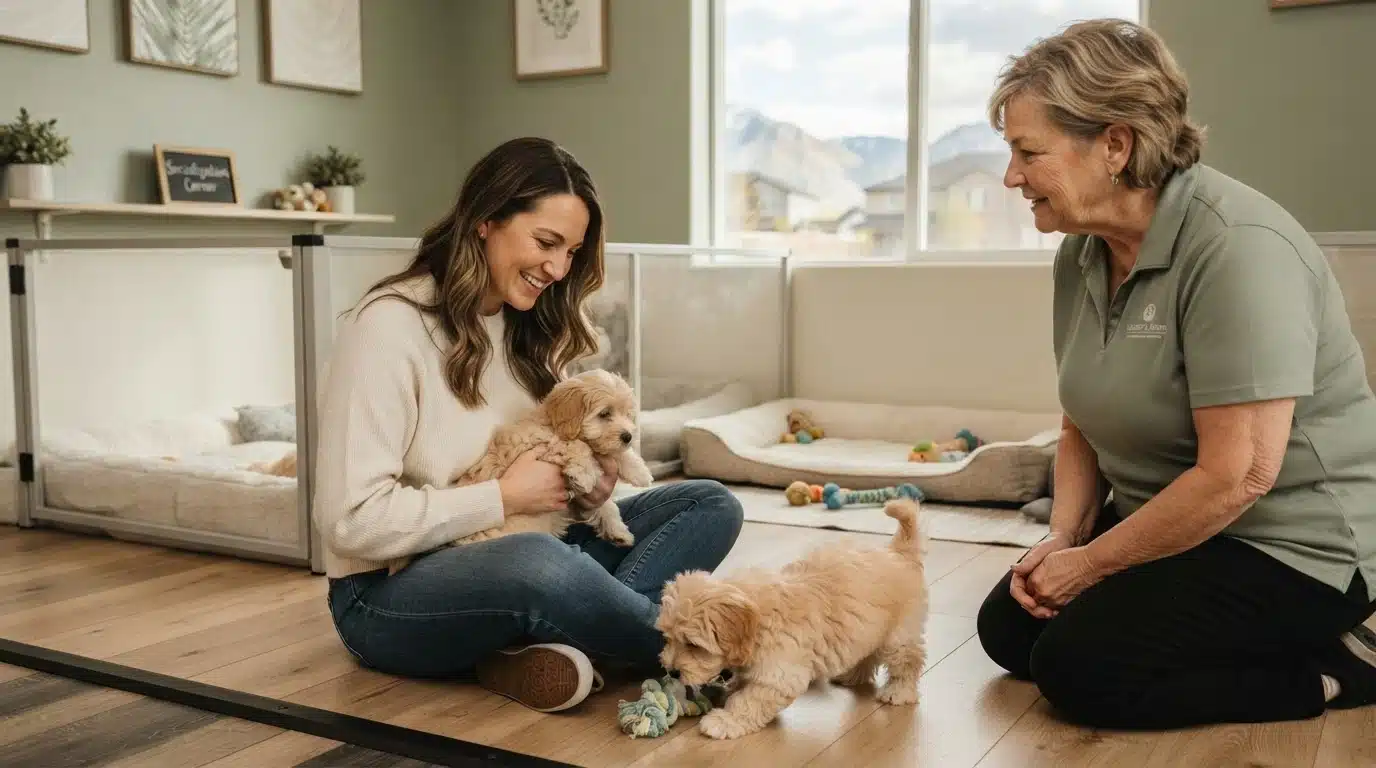
| Where the puppy spends its first weeks | Raised indoors in a home or small kennels with people, sound and routine exposure | May pass through one or more transport steps, sometimes very young, before reaching a buyer |
| Health and genetic evidence | Parent clinical screening and puppy exam and vaccine records, with results explained rather than promised | Limited paperwork, often generic, with no named parent records to verify |
| Contract and deposit terms | Written contract with spay or neuter terms, health terms, and a stated return policy | Thin or digital-only terms, with pressure to pay quickly and refunds rarely spelled out |
| Parent access and visiting | Welcomes a visit or live video of the home, litter area and the dam | Visits are often refused, and parents may be unavailable or off-site |
| After the sale | Stays reachable for questions and check-ins, and helps with the return process if a home cannot continue | Support is usually limited to the return window, with little contact afterward |
How Reputable breeder and Puppy dealer Compare
Reputable breeder
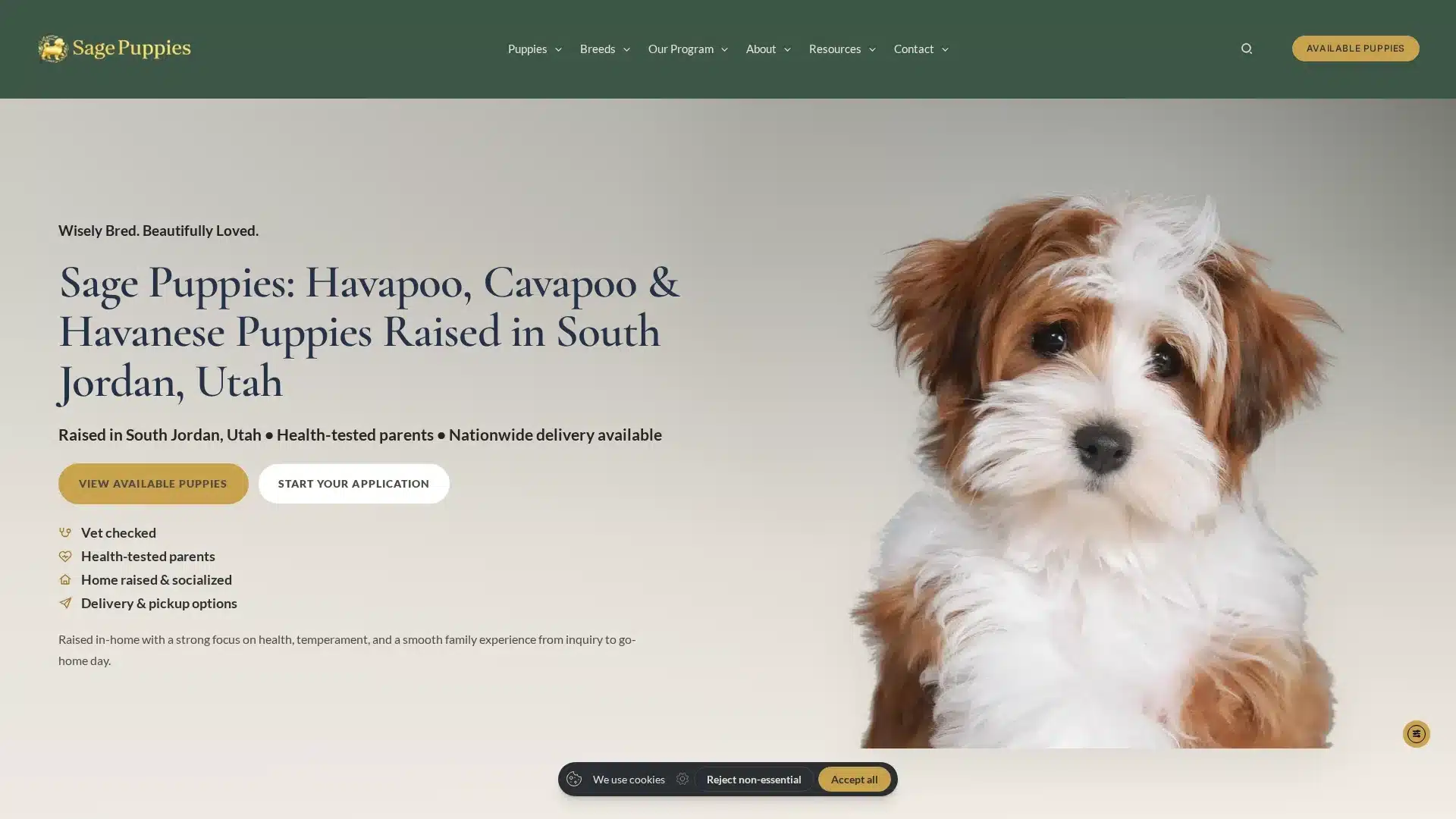
A reputable breeder is a small, breed-focused program that raises litters in a home, screens buyers, and documents the parents’ health. It suits families who want a known puppy with a real contract. This is the model Sage Puppies follows in South Jordan, Utah.
Key strengths
- Planned litters with a waitlist, raised indoors with routine exposure
- Parent screening plus puppy exam and vaccine records, explained in full
- Written contract with spay or neuter terms and a stated return policy
- Welcomes visits or live video, and stays reachable after the sale
Puppy dealer
A puppy dealer is a reseller or broker that buys puppies from multiple sources and resells them quickly, usually without breeding any litter itself. It appeals to buyers who want a puppy fast and at a set price. The trade-off is that the puppy’s origin, early weeks and parents often stay hidden.
Key strengths
- Wider breed choice and often immediate availability
- Simple online checkout, sometimes with transport to your area
What a Puppy Dealer Actually Is (and Why the Middle Matters)
Most buyers picture two options: a loving family breeder or a distant puppy mill. In reality, the seller you meet is often neither. This middle seller is the one most families actually encounter, which is why it matters.
The three-part supply chain most buyers never see
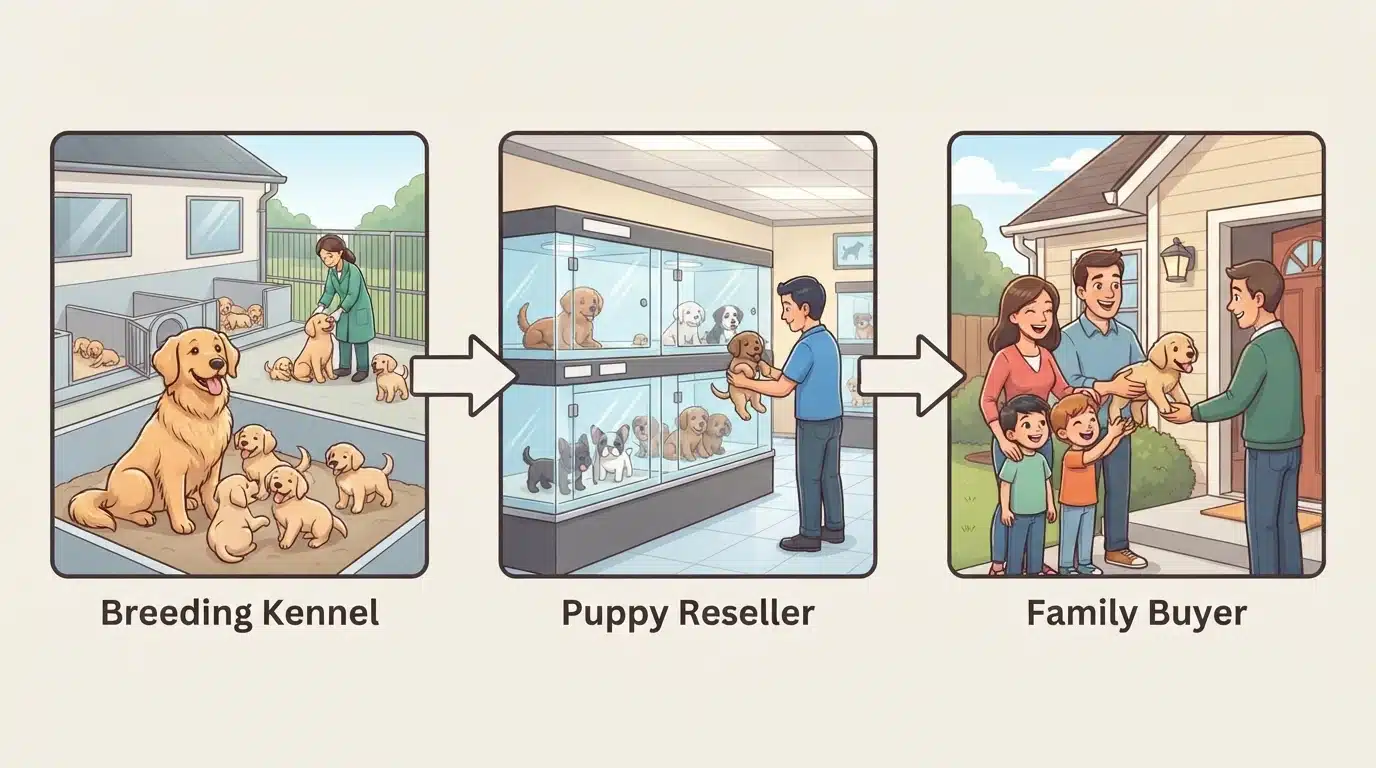
Puppies usually move through three layers before they reach your living room. At the top is the breeding source: a commercial kennel or mill that produces litter after litter, often with little health testing and little human contact. In the middle sits the puppy dealer, who buys puppies wholesale, resells them, and rarely owns either parent. At the bottom is you, seeing only a tidy website and a cute photo.
Some dealers are upfront about reselling. Many are not, so they describe themselves as family breeders even when every puppy arrives from somewhere else. Our breakdown of puppy dealers versus breeders shows how quickly the two separate once you ask the right questions.
Why the label itself tells you very little
Here is the uncomfortable part: “breeder” is not a protected word. Anyone with a litter can use it, and so can anyone reselling litters. The title alone tells you nothing about where puppies come from, whether the parents were health tested, or who answers your questions six months later. So judge sellers by evidence, not by what they call themselves.
What Each Side Can Actually Show You
Talk is cheap in the puppy world. Any seller can claim “health tested parents” or “great bloodlines.” What separates a reputable breeder from a puppy dealer is the paperwork they can produce on the spot, and the fact that you can verify it yourself without taking anyone’s word for it.
Three kinds of health evidence, kept separate
Ask for three things, and keep them separate in your mind.
First, parent health testing. Reputable breeders screen breeding dogs for the problems common in their breed and post results publicly. The OFA database holds records on millions of dogs, and you can look any registered dog up by name. A dealer usually cannot, because the parents may live in someone else’s care or in another state.
Second, puppy-level proof. That means a vet exam record, deworming dates, and vaccination dates with the vaccine maker and lot number. This shows care, but it is not the same as parent screening.
Third, ancestry. A pedigree tells you who came before, but a pedigree alone proves nothing about health. A four-generation pedigree with no testing behind it is decoration.
A CHIC number from the Orthopedic Foundation for Animals means a dog finished its breed’s required health panel, and the results are shared automatically with the CHIC program.
This evidence checklist is the backbone of finding an ethical puppy breeder, because it works the same whether the breeder is in Utah or across the country.
How to read a pedigree and results database entry
You do not need to be a genetics expert. Start at the OFA advanced search page and enter the registered name of a parent dog. A breeder will have that name ready in seconds.
Then read the entry for three details:
- Which tests appear. Hips, elbows, eyes, heart, and breed-specific DNA tests. Missing tests matter as much as passing ones.
- The result itself. Hip ratings run from excellent down to dysplastic. “Fair” is a pass, but ask why the dog was bred over a sibling with a stronger score.
- Which dogs in the pedigree have entries. A breeder’s line shows testing across generations. One tested dog in a line of five is a red flag.
If a seller says “the parents are tested” but has no registered names, you have learned what you need. A breeder hands you names; a dealer hands you excuses.
The Paper Trail: Contracts, Deposits and Receipts
A breeder hands you paperwork. A dealer usually hands you a payment app and a puppy. The documents tell you which one you’re dealing with before you ever meet the dog.
What a real contract spells out
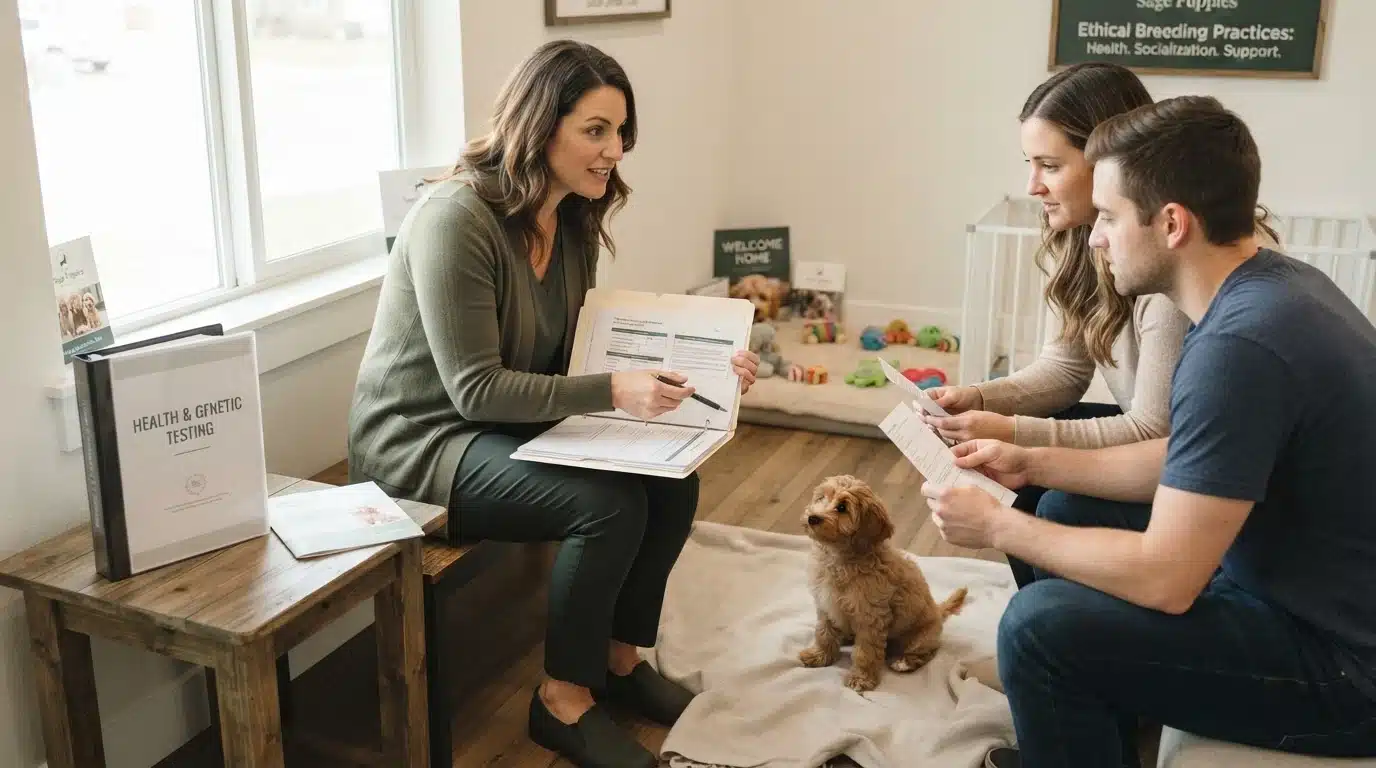
A legitimate breeder puts the deal in writing and reviews it with you. Expect the contract to name both parties, identify the puppy by date of birth and microchip, and state the purchase price. It should also cover the terms most reputable programs use: a spay or neuter requirement for pet-quality puppies, a health guarantee with clear deadlines for a vet exam, and a take-back clause that obligates the breeder to accept the dog back at any point in its life. That last clause matters most. Breeders who plan to keep a puppy out of a shelter will insist on it.
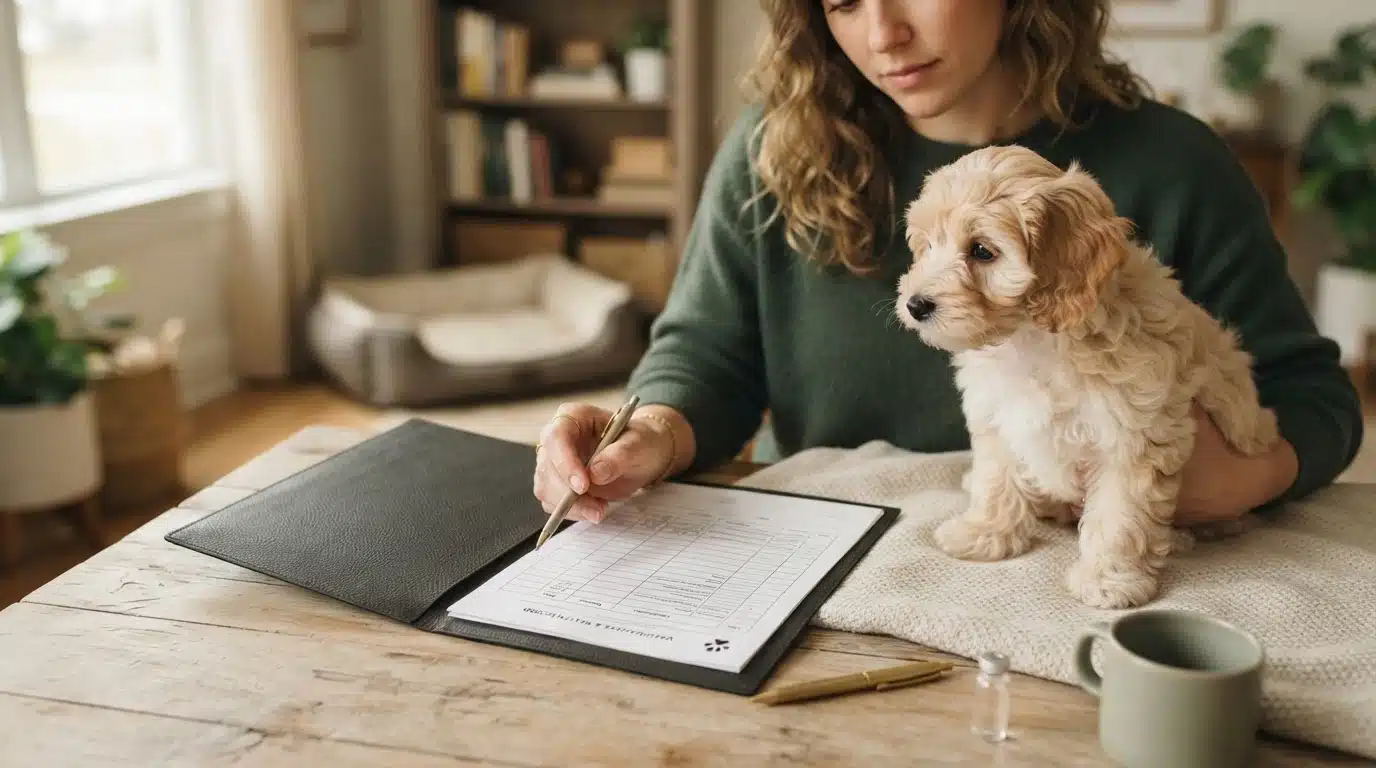
Read every line before you sign, and keep a signed copy. A breeder who won’t provide a written contract, or who pressures you to sign on the spot, is telling you something. Our own reservation terms spell out deposit, refund and matching conditions in full, because vague payment promises benefit no one.

Payment red flags worth stopping over
How someone asks for money reveals as much as any contract. Treat these as stop signs:
- Deposit first, puppy “to be picked.” You pay before any puppy is even born or matched.
- Irreversible payment apps. Wire transfers, gift cards, Zelle or crypto leave you no recourse if the deal falls through.
- No receipt. A legitimate program documents every payment in writing.
- Refusal to explain refund terms. If you ask what happens if the puppy gets sick or the sale cancels, and the answer is silence, walk away.
Small breeders typically take a modest deposit against the total price and send a written receipt immediately. Dealers often demand full payment up front, in cash or fast apps, before you’ve seen proof the puppy exists. If the payment plan feels built to be unrefundable, it usually is.
Access and Screening: Who Asks Questions About You?
Screening runs in both directions. A good breeder interviews you as carefully as you interview them, because they are placing a puppy they have raised for eight weeks or more. A dealer rarely asks much at all. That difference in questions is one of the fastest signals you will get.
Questions a breeder asks before saying yes
Expect a real conversation. Reputable breeders usually want to know who lives in your home, whether children or other pets are there, your work schedule, and where the puppy will sleep and spend the day. Many ask about your experience with dogs and whether you have a vet lined up. Some ask about a fenced yard or your plan for potty training and alone time.
A dealer, by contrast, often jumps straight to which puppy you want and how you will pay. Little or no screening means the seller has no stake in the match. If nobody asks about your home or schedule, the puppy is a product, not a placement.

Boutique programs such as Sage Puppies use an application and owner-managed matching for this reason: the questions protect the puppy as much as the buyer.
What to look for during a visit or live call
Watch how the seller behaves, not just what they say. A breeder welcomes your questions and answers them plainly. They let you meet the mother, see where puppies live, and describe each pup’s temperament. They also ask you things back.
A dealer controls the setting. You may only see puppies in a parking lot, a staging home, or on a video call where the background stays hidden. Pressure to decide fast, vague answers about the parents, and reluctance to let you visit are warning signs.
Our guide to finding an ethical puppy breeder walks through what to ask and verify before you commit.
Price, Availability and the Pressure Timeline
The fastest warning sign in puppy buying is urgency. A reputable breeder has a waiting list because good litters are planned, not produced on demand. A puppy dealer has litters sitting in a kennel right now, so the sale has to happen today.
Discounts, flash sales and urgency
Healthy puppies from health-tested parents hold their price. When a seller cuts $800 “this weekend only” or claims two families are fighting over the same pup, ask why the puppy needs to leave so badly. Real breeders rarely discount; they simply place the next family on the list. Flash sales, “last pup left” texts and deposit deadlines built to expire in hours all point to a middleman moving inventory, not a breeder choosing a home. A boutique program like Sage Puppies quotes a set range and walks families through matching without countdown timers, which is the pattern to expect anywhere.

Comparing total cost, not sticker price
Sticker price hides the real number. Budget for the first year beyond the purchase itself, and label each estimate yourself so totals stay honest:
| Cost Item | Typical First-Year Range |
|---|---|
| Purchase price | $3,500-$4,500 for a well-bred Havanese or doodle |
| Vet exams, vaccines, spay/neuter | $500-$1,000 |
| Food, gear, grooming | $600-$1,200 |
| Training classes | $150-$500 |
A $1,200 dealer puppy plus a $2,000 vet bill after a failed health check often costs more than the breeder priced fairly from the start. Compare the total, then compare the terms.
After You Bring the Puppy Home
A sensible first week with paperwork in hand
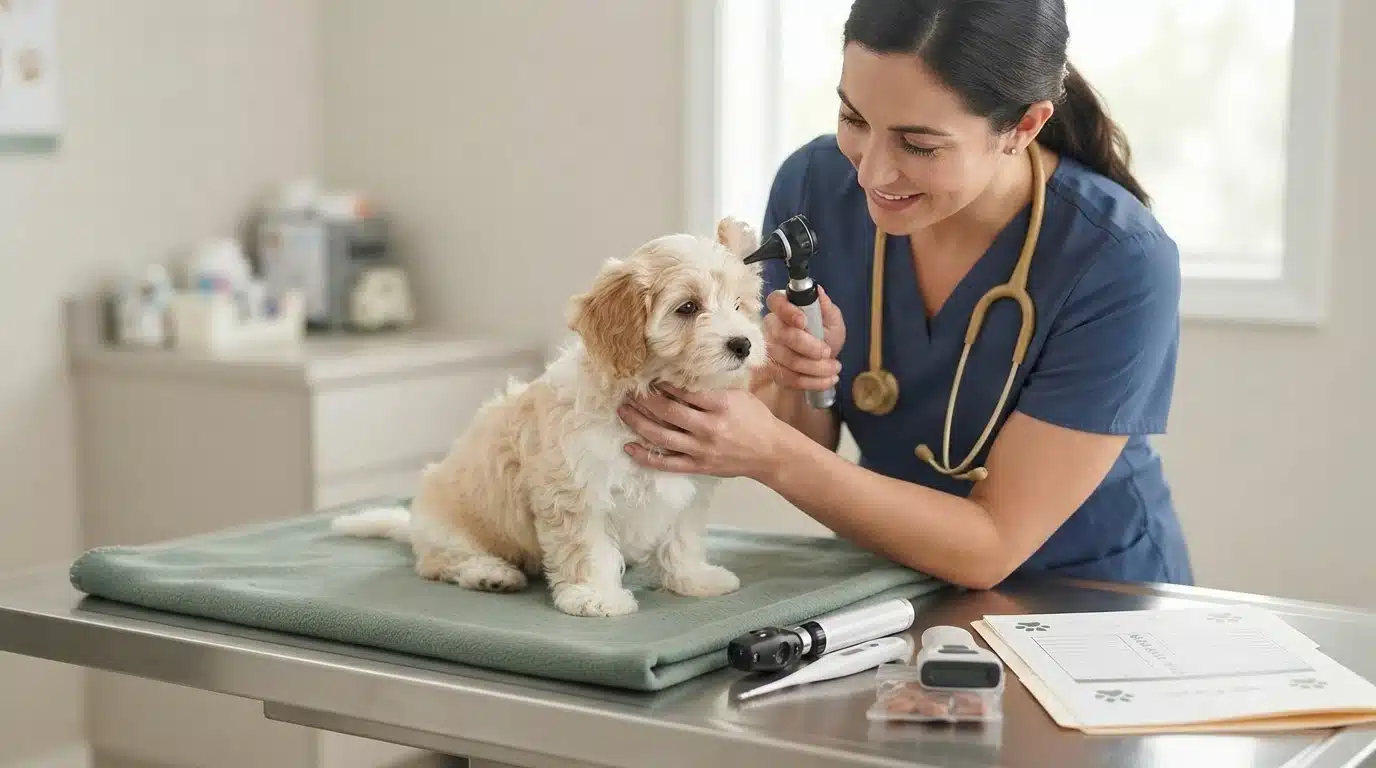
The work is not over at pickup; it shifts to setup and care. Book a vet visit within the first week, a step most vets recommend so hidden problems surface early and your own vet establishes a baseline. Bring the paperwork with you: the health record, vaccine dates, deworming history and any contract or health guarantee. The vet uses those records to time future shots, since puppy vaccines usually run every three to four weeks until about four months old.
Keep the first week calm. A small space, a steady potty routine and short handling sessions beat a full social calendar. Hold food changes gradual, and ask the breeder what the puppy was eating. If your puppy came from Sage Puppies, Cassie’s preparation guidance covers the crate, feeding and first-night setup, so follow it rather than guessing.
Tip: Photograph and store your contract and health records the day you get home. If a question comes up later, dated files settle it fast.
Returning a puppy is hard, so settle it early
No family plans to give a puppy back, but the contract should say what happens if life changes. Before pickup, read the return terms. A reputable breeder takes the puppy back at any age; a dealer often vanishes after payment. Ask who pays transport, whether any refund applies and how rehoming works. Settling these questions while you are excited is far easier than negotiating them while you are hurting.
Which Should You Choose: Reputable Breeder or Dealer?
For most families, the answer is a reputable breeder. You pay more up front, but you get proof of health testing, a written contract, and someone who answers the phone after pickup day. A dealer offers a lower price and a faster yes, then hands you a puppy with an unknown past and no one to call when problems surface.
When a dealer path might still make sense
There are a few honest reasons families choose a dealer or broker. Local availability matters if you need a puppy quickly and cannot travel. Some dealers do screen the breeders they work with, and a transparent one will share the breeding source, vet records, and where the puppy was raised. If a licensed facility passes an in-person visit, answers your questions openly, and offers a written health guarantee with return terms, the risk drops. But if those boxes stay unchecked, walk away. A bargain puppy with hidden health issues can cost more than a fairly priced breeder pup, once vet bills enter the picture.
The five-step verification sequence
Run any seller through these five checks before money changes hands. The AKC’s breeder guidance and the OFA’s owner checklist back most of these steps.
| Step | What to Verify | Green Light Looks Like |
|---|---|---|
| 1 | Health testing | OFA or CERF results for both parents, in writing |
| 2 | Meet the source | You visit the breeder or see where the puppy lives |
| 3 | Paperwork | A contract covering returns, health terms, and spay/neuter |
| 4 | Vet records | Vaccines, deworming, and a recent exam from a named clinic |
| 5 | Aftercare | The seller asks you questions and offers lifetime support |
A seller who skips or dodges any step has told you what you need to know.

You now know how to spot a puppy dealer before money changes hands. If you want a Havanese, Havapoo or Cavapoo raised with full records, a written contract and lifelong support, start your application at Sage Puppies and meet the difference yourself.
Frequently Asked Questions
Q1: How do I compare a reputable breeder with a puppy dealer in Utah?
Ask for the parents’ registered names, look up their OFA results, and request a visit or live video. A breeder complies quickly; a dealer offers excuses, off-site parents or fast-payment pressure.
Q2: Can a puppy dealer be legitimate?
Sometimes, but only if transparent. A licensed dealer should name its breeding source, share vet records, allow an in-person visit and offer written health and return terms. Without those, walk away.
Q3: Why won’t a dealer let me meet the mother?
Because the mother rarely lives there. Dealers resell puppies from outside breeding operations, so the dam is off-site or unknown. A breeder raises the dam and proudly introduces her.
Q4: Are puppy vaccines alone proof of good health?
No. Vaccines, deworming and a vet exam show decent early care, but they say nothing about inherited conditions. Only parent health testing, verifiable through OFA, addresses genetics.
Q5: What deposit terms should a real breeder use?
A modest deposit against the total price, a written receipt immediately, and refund terms spelled out in a contract. Avoid wire transfers, gift cards, Zelle, crypto or full payment before pickup.
Conclusion
The safest puppy comes from a seller who can prove its source. A reputable breeder names both parents, shows OFA results, welcomes a visit or live video, and signs a contract with return terms. A puppy dealer hides the origin, resists visits, and pushes fast, irreversible payment. Judge evidence, not labels: “breeder” is not a protected word, so verify health testing, paperwork and access yourself. When in doubt, walk away, because a cheap puppy with hidden problems often costs more than a well-bred one. For most families, especially those seeking a Havanese, Havapoo or Cavapoo, a breeder who documents everything is the safer, kinder choice.