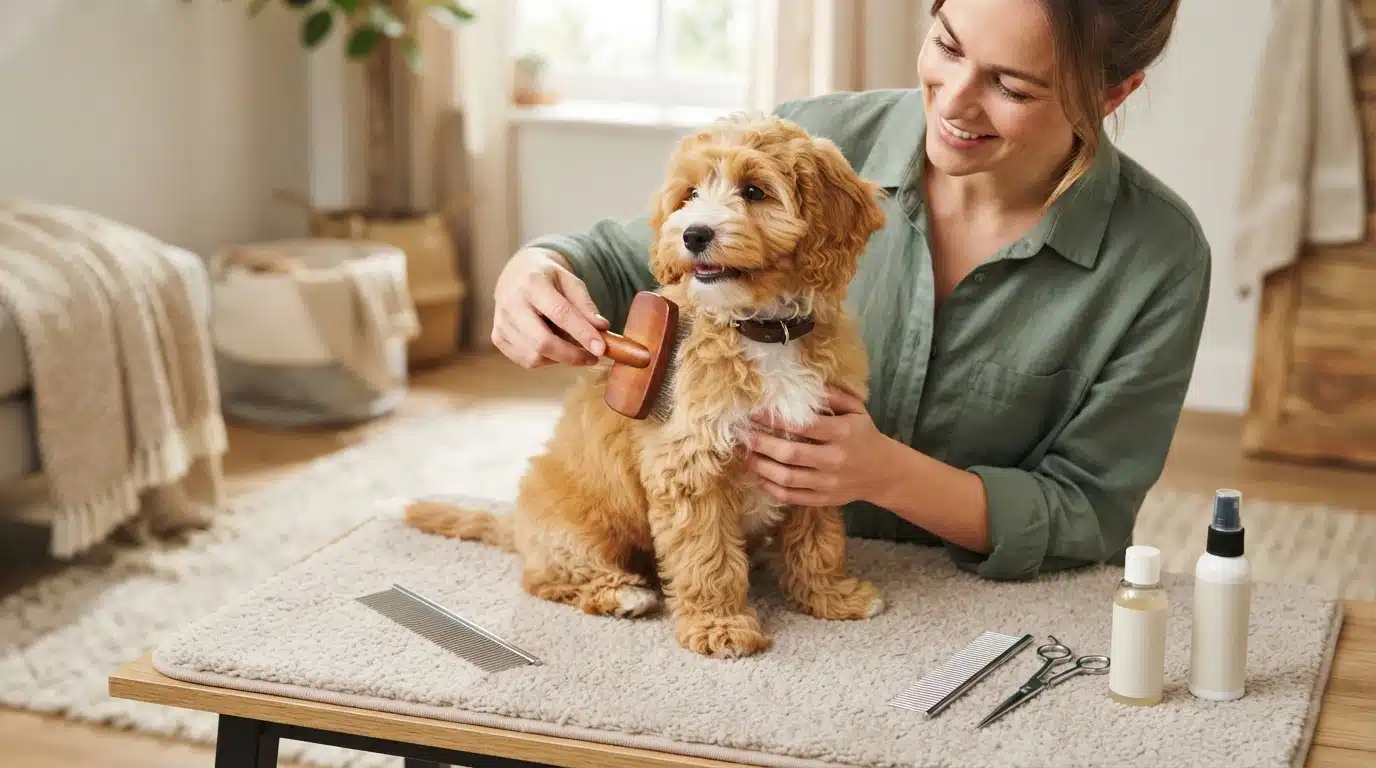
Quick Summary: A Havapoo puppy’s first vet visit goes smoothly when you bring health records, a stool sample, and a written list of questions. Expect a full exam, vaccine schedule planning, and costs ranging from $75 to $350, with many families paying around $225. Ask for an itemized estimate, confirm next steps before leaving, and book follow-up visits every 3-4 weeks until 16 weeks old. The article, written by Sage Puppies, a Utah breeder, emphasizes preparation and clear communication with your vet.
Your new Havapoo’s first checkup feels much easier when you know which records to bring and what the vet may want to review before booking the next vaccine. Yet most first-time owners walk into that first vet appointment unsure what to ask or expect.
That uncertainty is the problem this guide solves. We walk you through the whole puppy first checkup: what happens during the exam, which papers matter, how vaccine timing works, and what a typical visit costs.
A good new puppy veterinarian will also want to hear about your puppy’s background, so we cover that too. As a home-raised Havapoo program in South Jordan, Utah, Sage Puppies sends every puppy home with detailed health records, so you will arrive prepared. We also explain how to choose a new puppy veterinarian who fits your family long term. Here is what to expect.
Prepare Your Havapoo’s Records and Questions
A little prep makes your puppy’s first vet visit smooth and stress-free. Your new puppy veterinarian will want two things from you: paperwork and a list of questions. Bring both, and you’ll get far more out of the 30 minutes you have together.
Gather Health and Vaccine Paperwork
Ask your breeder for every record before pickup or delivery day. A quality program hands these over without being asked. If you’re adopting through Sage Puppies, your puppy comes with a full health record folder, so pack it in the car with the crate and toys.
Here’s what to bring:
- Vaccine records. Dates and types of shots already given. Most puppies leave their breeder with their first round done.
- Deworming history. Products used, dates, and dosages.
- Microchip number. Your vet can scan and confirm it matches your paperwork.
- Parent health testing results. Records showing both parents passed screening for inherited conditions.
- Feeding details. Current food brand, amount, and schedule. Sudden diet changes cause tummy upset.
- Any health notes. Loose stools, coughing, or a scratchy ear your puppy had last week.
Call the clinic a day or two ahead. Confirm they have your puppy’s records if they were emailed, and ask what to bring that isn’t on this list. Some clinics want a fresh stool sample, so collect one that morning.
Tip: Photograph every page of the paperwork and keep the copies on your phone. If the folder gets lost, you still have proof for the vaccine schedule.
Write Down Questions Before the Appointment
First-visit time flies. Write your questions on your phone the night before so nothing slips.
Ask about:
- Vaccine timing. When is the next round due, and which shots matter most for your area?
- Food and weight. Is your puppy growing well for a small breed?
- Grooming and coat care. Havapoo coats need regular brushing. Ask for a starting routine.
- Parasite prevention. Which flea, tick, and heartworm products are safe at this age?
- Spay or neuter timing. Small breeds often have specific timing, so get your vet’s view.
- Training and socialization. Ask when group classes or daycare are safe after vaccines.
Keep questions short so your vet can give clear answers. Most will happily schedule a follow-up if you run out of time.
Check our guide on how it works if you’re still preparing for pickup day, and bring those records with you.
Understand What the Veterinarian May Check
Your Havapoo’s first vet visit is mostly a careful look. The vet gathers records, weighs your puppy, and checks the whole body from nose to tail. Knowing what happens helps you relax and ask better questions.
A Head-to-Tail Wellness Examination
The exam usually starts with the basics. The vet records your puppy’s weight, temperature, heart rate, and breathing. Then comes the hands-on check, and it covers a lot in a few minutes.
Expect the vet to look at:
- Eyes and ears for redness, discharge, or wax buildup
- Mouth and teeth to check the bite, gums, and how puppy teeth are coming in
- Skin and coat for fleas, ticks, dry patches, or bald spots
- Heart and lungs with a stethoscope, listening for murmurs or odd rhythms
- Belly by touch, feeling for organs, lumps, or tenderness
- Joints and hips, since small breeds can have loose kneecaps, called patellar luxation
- Hernia check at the belly button and groin
The vet also watches how your puppy moves around the exam room. A wobbly gait or a limp tells them something a still exam cannot.
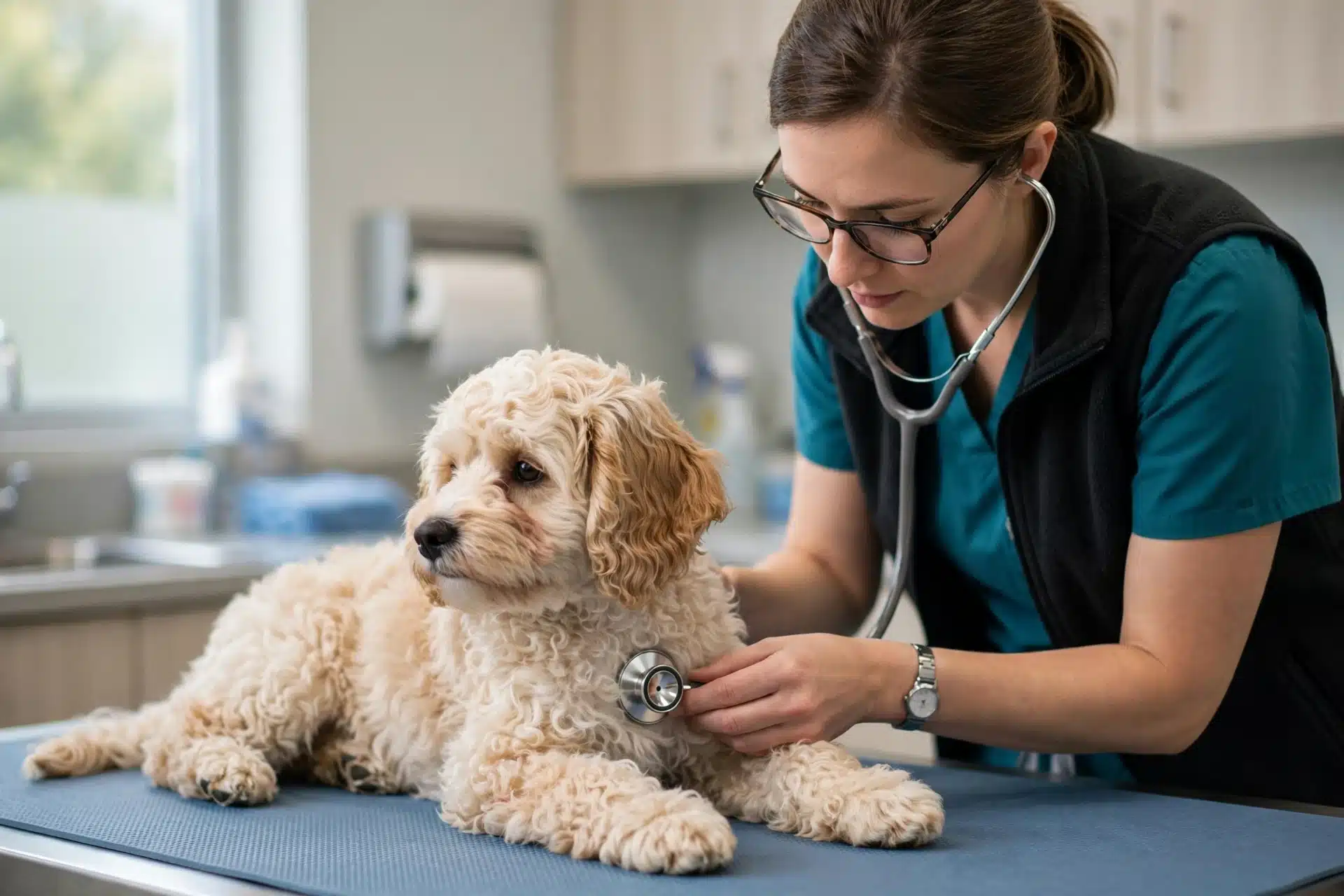
Bring any paperwork you have from the breeder. A health record from a breeder like Sage Puppies gives the vet vaccine dates, deworming history, and parent health testing details in one place. That context makes the exam sharper.
Tip: Jot down questions before the visit. Once your puppy is on the table, it is easy to forget what you wanted to ask.
Stool Testing and Parasite Questions
Most vets ask you to bring a fresh fecal sample. Puppies get intestinal parasites easily, even with good care, because roundworms can pass from mother to puppy before birth.
The lab checks the sample under a microscope for worm eggs and protozoa like Giardia and Coccidia. Results often come back the same day. If the test finds something, the vet will prescribe a dewormer and tell you when to repeat it.
Your vet will also ask:
- Has your puppy had diarrhea, soft stool, or scooting?
- Any vomiting, a pot-bellied look, or low energy?
- What dewormings has the puppy already had, and when?
If you adopted through delivery and no longer have access to the breeder’s records, tell the vet. They will simply assume a standard deworming schedule and treat accordingly.
Many vets recommend a second fecal test in a few weeks, after the dewormer finishes. Plan on it.
Discuss Vaccines as an Individualized Plan
Your vet will not hand you one standard vaccine list and move on. Good practices build a plan around your puppy’s age, health history, and daily life. Bring the records from your breeder so the vet can see exactly which doses have already been given and when the next ones are due.
Core Protection and Follow-Up Doses
Core vaccines are the shots every dog needs, no matter its size or lifestyle. For puppies, that means a combination vaccine against distemper, adenovirus, parvovirus, and parainfluenza (often called DA2PP), plus rabies. These diseases are serious, and parvo in particular can kill a young puppy fast.
One dose is never enough for a puppy. Maternal antibodies passed from the mother can block part of each vaccine dose, so vets repeat the combination shot every 2 to 4 weeks until your puppy is past 16 weeks old, according to the AAHA vaccine guidelines. Rabies is usually given once around 12 to 16 weeks, depending on your state’s rules.
Expect your vet to explain the whole series on day one. Ask two simple questions:
- How many more visits does my puppy need to finish the series?
- What date should I book the next appointment?
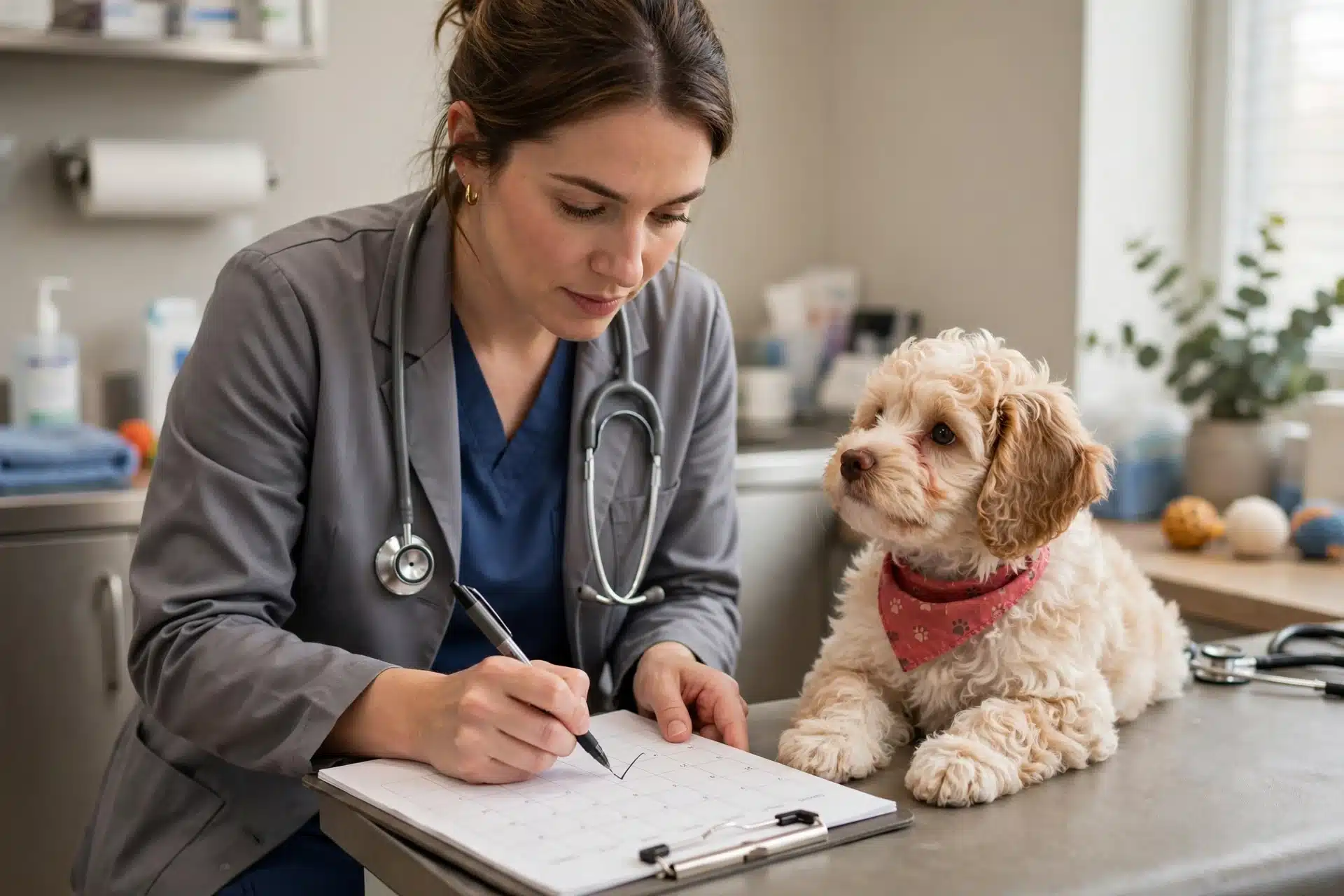
At Sage Puppies, puppies go home with documented vaccine records, so your vet starts from real data instead of guesswork. That first-year schedule matters more than any single visit, so set reminders now.
Lifestyle Vaccines and Local Risk
Non-core vaccines depend on how your puppy will live. These include Bordetella (kennel cough), leptospirosis, Lyme disease, and canine influenza. Your vet will ask about your plans before recommending any of them.
Tell your vet if your Havapoo will visit groomers, boarding kennels, dog parks, or puppy classes. Bordetella and canine influenza spread easily in those crowded settings, so many facilities require proof of those shots.
Two lifestyle shots deserve special attention. AAHA updated its guidelines in 2024 to list leptospirosis as a core vaccine for all dogs, because the bacteria now show up in cities and suburbs, not just wooded areas, and it can pass to humans. Lyme disease matters more if you live in or travel to tick-heavy regions.
Utah families should still ask about leptospirosis, since wildlife and standing water exist near South Jordan too. Your vet knows local risk best, so treat their recommendation as the final word for your puppy’s plan.
Plan for the Visit’s Cost Without Guesswork
Vet pricing surprises new puppy families more than anything else. The exam fee sounds small until shots, lab tests, and deworming get added at the front desk. A little planning removes that stress entirely.
In the U.S., a puppy’s first visit often runs $75 to $350, with many families paying around $225 when the visit covers the exam, first vaccines, a fecal test, and deworming, according to SpectrumCare’s cost guide. Where you live matters too. Clinics in big cities usually charge more than suburban or rural ones, a point the AKC also makes.
Ask What the Estimate Includes
Call the clinic a few days before your appointment and ask one simple question: “What will the first visit cost, and what does that include?” Then get specific. Ask which services are part of the quote and which would cost extra.
A good itemized estimate usually lists:
- The wellness exam fee (often $40 to $85 on its own)
- Vaccines due that day, based on your puppy’s age and records
- A fecal test for intestinal parasites
- Deworming, even if the stool sample comes back clean
- Optional add-ons like microchipping or a flea and heartworm preventive starter
If your puppy already came home with vaccine records and a health check from the breeder, share those at booking. The vet can skip anything already done, and that alone can shrink the bill. Ask the clinic to confirm which past services they will accept.
Tip: Ask for the estimate in writing or by email. A phone quote is easy to forget. A written one becomes your checklist at checkout.
Budget for the whole series, not just day one. Boosters every few weeks, plus monthly preventives, often bring a healthy puppy’s first-year vet total to roughly $450 to $1,800, with many families near $1,050. Ask your clinic if they offer a puppy wellness plan. Spreading costs into flat monthly payments makes the whole first year easier to absorb.

Planning this visit is one part of a bigger picture, of course. Our Havapoo pricing and reservation guide breaks down what to expect before your puppy ever comes home, so the budget is clear from the start.
Leave With Clear Next Steps for Your Havapoo
A first vet visit ends well when you walk out with a plan, not just a pat on the puppy’s head. Before you pay and pack up, make sure every open question has an answer.
Confirm the Plan Before You Go
Ask the team to repeat the schedule out loud. You want three things locked in before you leave the lobby.
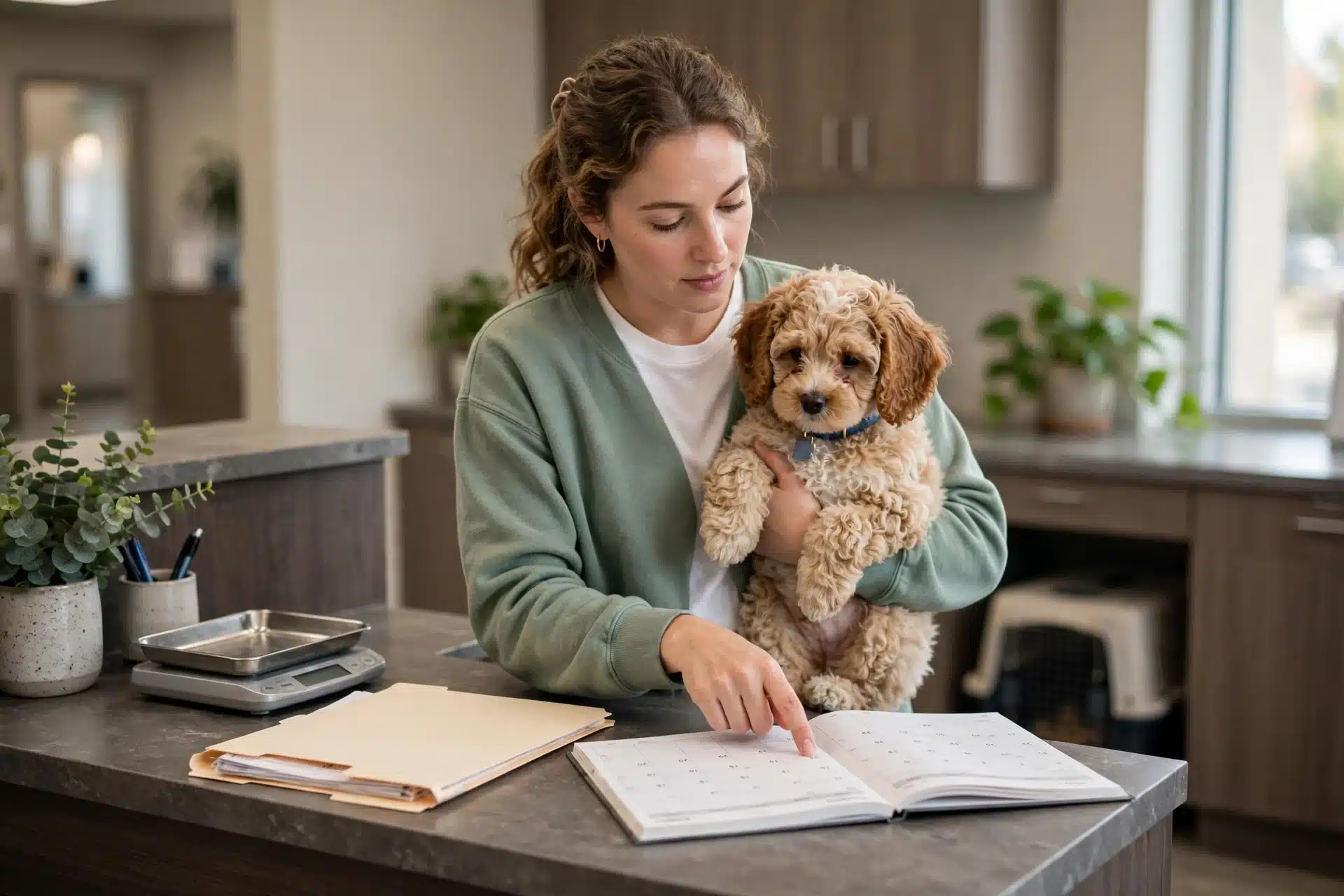
- Vaccine dates. Confirm which shots your puppy got today and when the next round is due. Write them in your phone calendar with a reminder a week ahead.
- Deworming and preventives. Note what was given, the dose, and when to start flea, tick, and heartworm protection.
- Follow-up visit. Book it before you leave. Puppies need booster visits every three to four weeks until about 16 weeks old, and clinics fill up fast.
- Weight and growth record. Ask for today’s weight so you can track steady gain at home.
Tip: Ask for a printed or emailed summary before you drive off. Your memory of a 30-minute visit fades faster than you think.
If your Havapoo came from Sage Puppies’ home-raised program, bring any breeder health records with you so the vet can match them to today’s notes.
Know When to Call the Clinic
Some things can wait until tomorrow. Some cannot. Ask the vet today which signs they consider urgent for your puppy, then save the clinic’s number in your phone.
Call the same day if you notice:
- Vomiting or diarrhea that lasts more than a few hours
- Refusing food or water
- Coughing, sneezing, or eye discharge
- Low energy that does not match a big day of new experiences
- Limping, crying when touched, or a swollen belly
Puppies dehydrate quickly, so trust your gut. A quick call costs nothing and the front desk would rather answer a small worry than treat a big one.
Keep the notes simple: what you saw, when it started, and how long it lasted. That one sentence helps your vet act fast.

A healthy first vet visit starts with a well-bred puppy. At Sage Puppies, our Havapoos come from health-tested parents with early care and socialization already underway. Browse our available Havapoo puppies or start your application today, and we’ll help you welcome a confident companion to your family.
Frequently Asked Questions
Q1: What does a vet check at a Havapoo puppy’s first visit?
The vet checks heart, lungs, eyes, ears, teeth, skin, and weight, and screens for hernias or parasites. Puppies from health-tested parents, like those raised at Sage Puppies, often arrive with vet records to share.
Q2: How much does a Havapoo puppy’s first vet visit cost?
Expect $50 to $150 for the exam, plus vaccines, deworming, or tests that can bring the total to $100 to $300. Ask for an itemized estimate first.
Q3: What vaccinations does a Havapoo puppy need at their first checkup?
Most puppies get the DHPP shot, and rabies if they’re old enough. Your vet will set the remaining schedule through 16 weeks.
Q4: What should I bring to the appointment?
Bring health records, any breeder paperwork, a stool sample, and your puppy’s food brand.
Q5: When should the first vet visit happen?
Within three to five days of bringing your puppy home, even if they seem healthy.
A Confident Start With Your Havapoo
Your puppy’s first vet visit comes down to a few simple things: bring the records you have, ask about vaccines and costs before you agree to anything, and let your vet guide the exam and any treatment decisions. Write down your questions ahead of time so nothing gets forgotten in the moment.
A calm visit now sets the tone for a lifetime of easy vet trips. Havapoos from health-tested, well-socialized parents like those raised at Sage Puppies usually walk in ready for it. Trust your preparation, trust your vet, and enjoy watching your puppy grow.