
Quick Summary: Choosing a healthy Havanese puppy requires verifying parent health tests like hips, eyes, and patellas through official records. The breed has a beautiful but high-maintenance coat that needs regular grooming, and puppies thrive in homes with steady socialization and daily attention. Families should match the puppy’s temperament and grooming needs to their lifestyle, ensuring they understand the time and care involved before bringing one home.
Before you get attached to a face, check the proof. The first real question is whether the puppy’s parents have current Havanese health testing for eyes, hips, and patellas. That step helps you sort careful breeding from nice marketing.
Many families run into the same problem. They see cute photos, hear that a puppy is “healthy,” and still do not know what Havanese health testing should include, how much coat care a Havanese needs, or whether this breed truly fits their home.
This guide clears that up fast. You will learn the basics of Havanese health testing, what daily and long-term coat care looks like, and the home, schedule, and budget that fit this breed best.
We built this as a buyer-first guide for families who want facts, not pressure. If you are comparing breeders in Utah or looking at nationwide delivery, this page gives you a practical starting point before you choose a litter.
What Makes a Havanese a Good Home Fit
A Havanese fits well in many homes because the breed was developed as a companion dog and is known for being friendly, playful, and bright, according to the AKC breed standard. That said, they do best when people want a dog that stays close, learns routines, and needs regular grooming.
The Havanese personality in everyday life
Most Havanese are cheerful little shadows. They like to follow their people, join daily routines, and stay near the action instead of off on their own. The FCI breed standard describes them as affectionate, playful, easy to train, and loving with children.
That often looks like:
- greeting guests with curiosity
- learning house rules fast
- enjoying short play sessions and walks
- barking to alert, then settling with guidance
A Havanese is usually a poor fit for a home that wants a very independent dog.
Who tends to do well with a Havanese
This breed tends to work well for:
- Families who want a small dog with a social, gentle style.
- First-time owners who will train kindly and stay consistent.
- Apartment or suburban homes where the dog gets daily attention.
- Older kids or respectful young children who know how to handle a small dog.
- Buyers planning for coat care, brushing, and regular grooming help.
A Havanese may be less ideal if your dog will be alone most of the day or if you want a low-maintenance coat. For many families, though, the mix of size, trainability, and steady companionship is exactly the point. Programs like Sage Puppies appeal to buyers who want that family-first fit, plus clear Utah pickup or nationwide delivery options.
Also Read: Havanese Puppies: Temperament, Coat Care, and Family Fit
How Havanese Health Testing Should Be Verified
The core tests every buyer should ask about
Start with the parent dogs, not the puppy. Most Havanese puppies are too young for many formal screenings, so your job is to verify the sire and dam.
According to the Havanese Club of America health statement, the classic core checks included BAER hearing, annual CAER eye exams, patella evaluation, and hip testing. Current HCA guidance also centers buyers on hips, patellas, and annual eye exams, with some breeders adding cardiac or other tests.
Ask for:
- Registered names of both parents
- OFA or PennHIP hip results
- OFA patella results
- Current CAER eye exam results
- Any extra testing the breeder chose to do
| Test | What you want to confirm | Timing |
|---|---|---|
| Hips | OFA or PennHIP result tied to the parent dog | Permanent result when age eligible |
| Patellas | OFA patella clearance on each parent | After 12 months |
| Eyes | Current CAER exam by a specialist | Annual |
| BAER or cardiac | Optional but useful context when offered | Varies by test |
A breeder saying “our dogs are healthy” is not proof. Named parent dogs and matching records are proof.

What public records and documentation should look like
The cleanest setup is simple. The breeder gives you the parents’ full registered names, copies of test results, and enough detail for you to check those records yourself.
The OFA CHIC program says a dog earns CHIC recognition only when it completes the breed’s required screenings and the results are publicly available. That public part matters.
Look for:
- Matching names across certificates, pedigree, and sales paperwork
- Dates that make sense, especially for annual eye exams
- Permanent ID such as a microchip or tattoo on the record when available
- Public OFA listings, not just screenshots or cropped images
Red flags include:
- Refusal to share registered names
- Old eye exams presented as current
- “Clear by vet check” used in place of breed testing
- A promise to send records later, after deposit
Why health testing is about stewardship, not hype
Health testing does not promise a perfect puppy. It shows the breeder is making careful, informed choices and sharing the facts in the open.
That is the real point. Good breeders use testing to lower risk, track family lines, and avoid breeding decisions based on guesswork alone. They also know that a CHIC number is not the same as a pass on every result. It shows required screening and public reporting happened.
For families comparing options, this helps you separate marketing from stewardship:
- Testing is planned before a litter
- Records are easy to verify
- Questions get clear answers
- The breeder welcomes informed buyers
For a program like Sage Puppies, that level of openness fits the kind of calm, trust-first process serious families want.
Also Read: Puppy Care Blog & Resources | Sage Puppies
What to Expect from the Havanese Coat
Why the coat is beautiful but not low-maintenance
The Havanese coat looks soft and easy, but it needs steady care. The official breed standard describes it as long, abundant, wavy, and double-coated, with a soft, light feel according to the AKC standard. That airy texture is part of the charm.
The catch is simple:
- Loose hair often stays trapped in the coat
- Friction spots can tangle fast
- Puppy coat can change as your dog matures
The Havanese Club of America says these dogs are non-shedding, not no-maintenance, and need a regular grooming plan with brushing and combing built in.
A low-shed coat is not the same thing as an easy coat.
Families often do best when they expect grooming to be part of normal care, not an occasional fix.
A simple coat-care rhythm for busy families
A realistic routine works better than an ambitious one you cannot keep.
- Daily: quick check behind ears, under collar, armpits, belly, and legs
- Several times a week: full brush and comb-through
- Every few weeks: bath, blow-dry, nail trim, and tidy-up
- As needed: professional grooming for a shorter pet trim
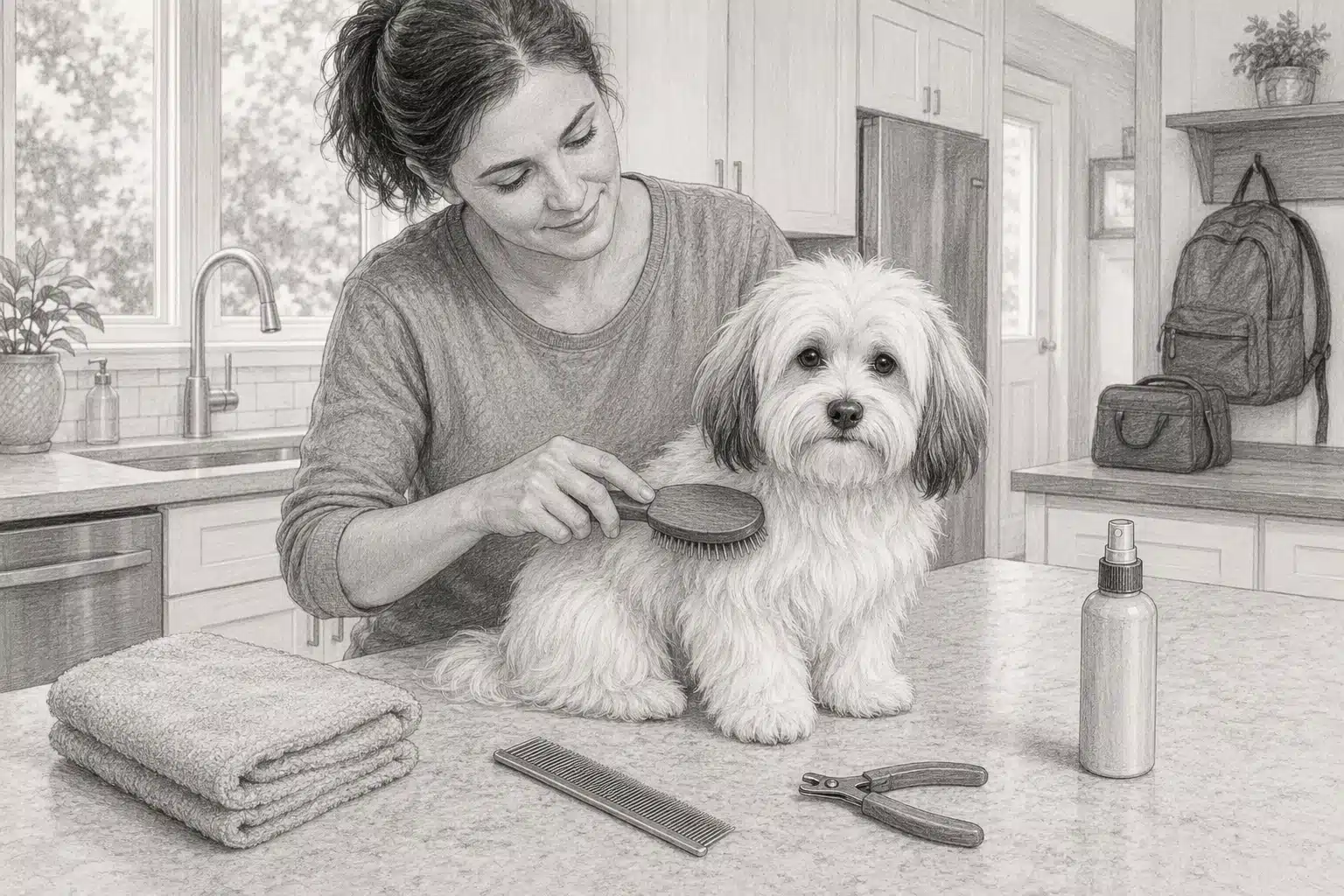
A shorter pet cut can lower the work, but it does not erase it. Mats still show up where there is rubbing or moisture.
Try this simple order:
- Check for tangles
- Brush in small sections
- Follow with a metal comb
- Stop before your puppy gets frustrated
Short, calm sessions beat one long grooming battle every time.
Coat care questions to ask before placing a reservation
Before you reserve a puppy, ask direct coat-care questions. You want clear answers, not vague promises.
- What is the parents’ coat texture like?
- Is this puppy likely to have a fuller or easier-care coat?
- What grooming rhythm do you recommend at this age?
- How often should we brush if we keep a pet trim?
- What tools should we buy before pickup or delivery?
- Has the puppy already started gentle grooming practice?
A thoughtful breeder should help you match coat reality with your home routine. At Sage Puppies, that matters because the right puppy fit includes care fit, not just color or size.
Also Read: Health-Tested Puppies for Sale Near Me: Questions to Ask Breeders
How Puppies Are Raised for Confidence and Temperament
Family-raised care should feel calm, clean, and personal. Puppies should live around normal home life, not in a detached kennel with little daily contact. That means regular handling, gentle grooming starts, short crate exposure, and time around household sounds like dishes, doors, and vacuums. A good breeder also watches each puppy as an individual, not just as part of a litter.
- Daily touch and lap time
- Age-appropriate play and rest
- Early potty and crate routines
- Exposure to normal family noise
Ask where the puppies spend most of their day. The answer should be specific and easy to picture.

Early socialization shapes how a puppy meets the world. According to the AVSAB puppy socialization position statement, the first three months are the key window, and puppies should get safe exposure to people, places, sounds, and handling before full vaccination is complete. The AKC’s breeder guidance also notes that quality matters more than quantity.
Look for a breeder who uses:
- Short, positive one-on-one sessions
- New surfaces, toys, and sounds
- Calm introductions to trusted people
- Recovery time if a puppy seems unsure
Good socialization is not flooding a puppy with chaos. It is steady, safe practice that builds trust.
Breeder communication tells you a lot. Strong breeders explain their routine, share videos, and talk honestly about each puppy’s energy, confidence, and needs. They do not just say every puppy is “great with kids.”
A simple check:
- Can they describe daily care in detail?
- Do they explain how they match puppies to homes?
- Do they welcome questions about pickup or nationwide delivery?
At Sage Puppies, this kind of clear communication matters because families need to know not just which puppy is available, but how that puppy has been prepared for real home life.
Choosing the Right Puppy for Your Family
Pick the puppy that fits your home, not just the face you love most. Havanese are small, social, and usually very people-focused, but the AKC notes they do best with families who have time, attention, and a plan for grooming and training AKC’s Havanese lifestyle guide.
Match the puppy to the household
- Choose a calmer puppy for young kids, older adults, or quieter homes.
- Choose a more playful puppy for active families who want daily games and short walks.
- Be honest about your schedule, noise level, and patience for coat care.
- Watch how the puppy handles touch, sound, and new people.
The right match feels steady, not rushed.

Questions that reveal breeder quality
- What health testing was done on both parents?
- Can I see the actual results, not just a promise?
- How are the puppies raised and socialized in the home?
- What support do you offer after pickup or delivery?
The Havanese Club of America states breeder-list parents should have current CHIC-related testing, including eye, hip, patella, and BAER exams in its health statement. At Sage Puppies, these are the kinds of questions thoughtful families should ask before they apply.
When a different breed may be a better fit
A Havanese may not suit every home. If you want a very low-maintenance coat, long hours away from home, or a dog built for rough play with big kids, look at your options again.
- A Havapoo may suit families wanting a different coat texture.
- A Cavapoo may appeal if you prefer a slightly different look and feel.
- Waiting for the right puppy is better than forcing the wrong fit.
Also Read: 10 Signs a California Puppy Listing Is a Scam – Sage Puppies
Preparing Your Home for the First Weeks
Set up the space before arrival
Pick one small, easy-to-clean area for your puppy’s first days. Add a crate, water bowl, bed, and a few safe chew toys. Keep cords, shoes, kids’ toys, and rugs out of reach. The AKC recommends limiting access at first so a new puppy does not get overwhelmed and can learn one safe zone at a time on day one.
Remove food, gum, toothpaste, medicine, and cleaners from low shelves before your puppy comes home.
Plan the first routine
Start a simple routine on day one. Feed at the same times, take potty trips after sleep, meals, play, and excitement, and keep bedtime calm. Write the plan down so everyone in the home follows it.
- Wake up and potty
- Breakfast and short play
- Nap and potty again
- Dinner, quiet time, bedtime potty
A steady rhythm helps puppies settle faster and helps you spot problems early.
Create consistency from day one
Use the same potty door, same cue word, and same sleep spot every day. Keep rules clear. If the puppy is not allowed on the couch later, do not allow it now. According to Cornell’s toxin guide, xylitol, chocolate, grapes, raisins, and many household products can be dangerous, so family habits matter as much as supplies.
- Reward calm behavior
- Keep visitors light at first
- Supervise children closely
Also Read: Havanese Dog Breed: Complete Care Guide for First-Time Owners
Common Mistakes Families Can Avoid
Mistaking a cute puppy for the right fit
Looks matter less than daily fit. A Havanese puppy may be sweet, small, and easy to fall for, but your real question is simple: does this breed match your home, schedule, kids, and grooming habits? Families often choose with their eyes first and regret the work later.
Skipping health verification
Do not stop at “vet checked” or “parents are healthy.” Ask for proof. The Havanese Club of America says current CHIC-related testing has included hips, patellas, and annual eye exams in public records through OFA health testing guide and CHIC program. If a breeder cannot clearly show results, slow down.
A good breeder welcomes careful questions. Evasive answers are your warning sign.
Underestimating coat care and time commitment
A Havanese coat needs regular brushing, bathing, trims, and patient handling from puppyhood. Mats can form fast, especially behind ears and under the legs. Families also forget the training, potty trips, and social time a puppy needs every day. A great match feels manageable, not rushed or chaotic.
Also Read: 10 Must-Ask Questions Before Buying a Puppy Locally

If you want a Havanese puppy with clear next steps, start with Sage Puppies. Their South Jordan, Utah program focuses on health-tested parents, family-raised care, and a simple adoption process, with local pickup and nationwide delivery. Review available puppies, pricing, and delivery details, then submit an application when the fit feels right.
Frequently Asked Questions
Q1: Home-raised Havanese puppies from ethical breeders?
Look for parents with documented health testing, puppies raised in the home, clear socialization steps, and honest pickup or delivery details. A good breeder answers questions plainly and screens families too. That usually signals care, not pressure.
Q2: What health tests should a Havanese breeder discuss?
Ask about eye, heart, hip, and patella screening, plus breeder knowledge of common Havanese issues. You want proof, not vague promises. A strong breeder explains what was tested, why it matters, and how results guide pairings.
Q3: How much coat care does a Havanese puppy need?
Expect frequent brushing, routine bathing, and regular trims if you keep a longer coat. The coat is low-shedding, not no-work. Daily face cleanup and early grooming practice help your puppy stay comfortable and easier to maintain.
Q4: Is a Havanese a good fit for apartments or busy families?
Usually yes, if your home can give daily attention, short walks, play, and companionship. Havanese are small and adaptable, but they do not like long isolation. Families with realistic schedules tend to do best.
Q5: Can I safely buy a Havanese puppy with delivery?
Yes, if the breeder explains transport clearly and prepares puppies well for travel day. Ask about timing, handoff details, and support after arrival. Sage Puppies serves Utah pickup and nationwide delivery with a family-first process.
Conclusion
A good Havanese puppy starts with proof, not promises. The safest path is to confirm parent health testing, understand the real coat-care work, and make sure your home fits a cheerful, people-focused breed. The Havanese Club of America health statement says core screening has included BAER, annual eye exams, patella evaluation, and hip testing for breeder-list dogs seeking current CHIC certification, with some breeders also adding cardiac testing in its official health statement. Breed guidance also describes the Havanese as friendly, playful, alert, and intelligent, which helps explain why they do best with close family life and steady handling per the Havanese breed information. Put those three filters first, and your puppy search gets much clearer.

