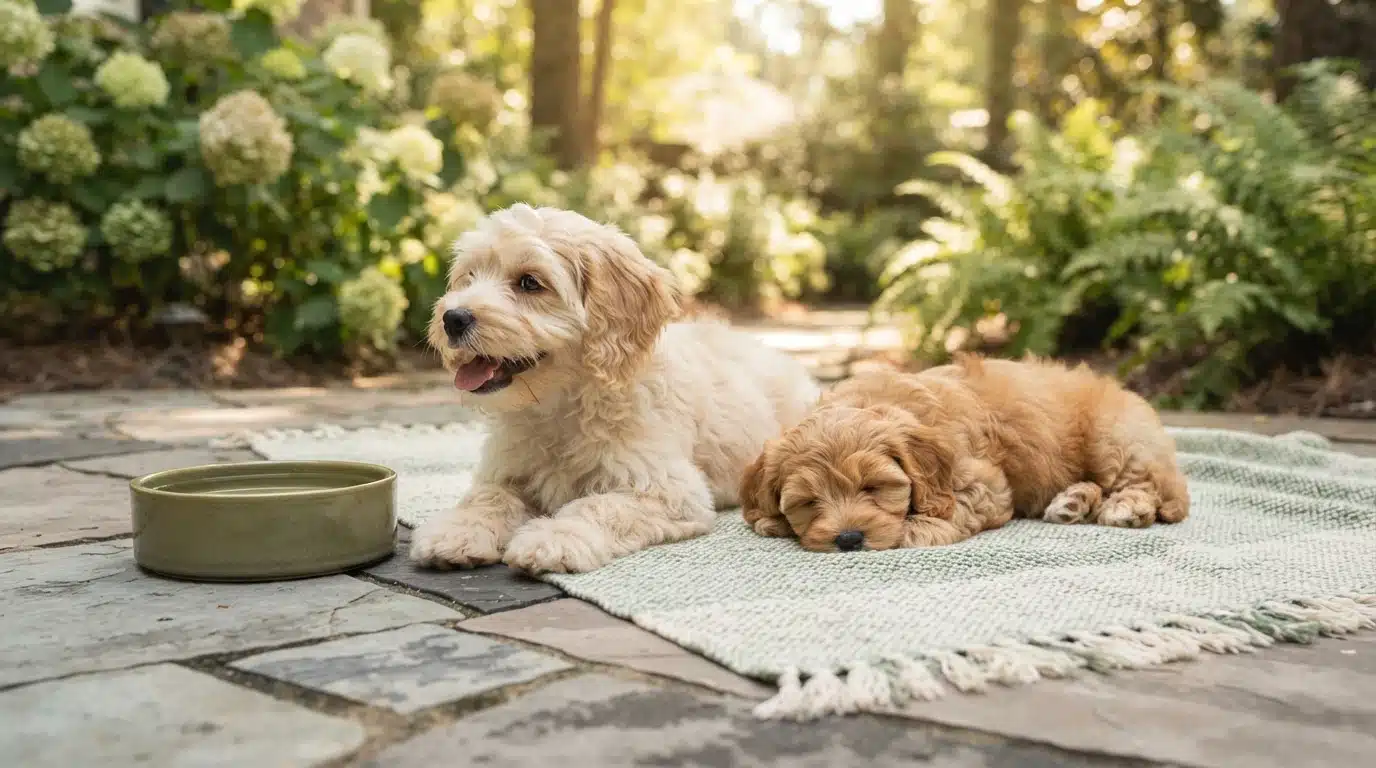
Quick Summary: A cooling mat alone won’t protect a Nevada puppy from heatstroke, so pair it with shade, water, airflow, and supervision in a cool indoor zone. Introduce the mat slowly, keep it out of sun, and never treat it as emergency treatment, since heavy panting or collapse requires cool water and a vet. Plan walks before 8 a.m. or after sunset, test pavement with your hand, and pack a portable cooling kit for car travel. Sage Puppies breeds Havanese, Havapoo, and Cavapoo puppies, and the guide emphasizes routine over gadgets for their first summer.
A puppy cooling mat can feel reassuring on a hot Nevada afternoon, but a mat alone will not keep a young Havanese, Havapoo, or Cavapoo safe. Place it on sun-warmed tile or artificial turf and it stops working fast. Puppy heatstroke can develop quickly in desert heat, so the mat has to be one part of a wider plan.
This guide walks through the full routine: choosing the right mat, introducing it so your puppy actually uses it, positioning it in the house, and adding backup steps like shade, fresh water, and a cooling dog vest for short outings. We raise these breeds at Sage Puppies, so the advice here is built around small, home-raised puppies and their first weeks in a hot climate.
Step 1: Build an Indoor Cooling Zone Before Your Puppy Arrives
Set up the cool zone days before your puppy comes home, not after. Puppies under six months struggle to regulate body heat, and Nevada afternoons push indoor rooms well past comfort. USDA guidance lists very young dogs among the most heat-vulnerable.
Choose a Cool, Shaded Location
Walk your home at its warmest hour. Look for a room with tile or hardwood flooring, since cool surfaces let a puppy release heat through contact. Close blinds on sun-facing windows before afternoon light hits. Skip upstairs rooms and spots near dryers or sunny windows; they hold heat into the evening. Pick one room and make it the default rest space from day one.
Pair the Mat With Water, Airflow, and Rest
The cooling mat works as part of a setup, not alone. In that same room, arrange:
- A shallow water bowl within a few steps of the mat, refilled often
- A fan or AC vent for airflow, since dogs cool mostly by panting and stagnant air limits that
- A regular bed or blanket as an alternative spot, so your puppy can choose
Secure fan cords and keep everything chew-safe. Vets warn a fan alone does not cool a hot room; it only helps when air can move. Let your puppy settle there after meals and naps so the habit sticks before summer peaks.
Also Read: How to Prepare a New Puppy for Florida’s Heat and Humidity
Step 2: Choose and Introduce a Puppy Cooling Mat Safely
A cooling mat can be a great comfort tool for a Havanese or Cavapoo puppy in a Nevada summer. The catch: puppies chew. Pick a mat built for that reality, then introduce it slowly.
Look for a Stable, Puppy-Appropriate Design
Not all mats suit a young puppy. Skip plush covers with thin gel inserts. A teething puppy can tear through soft fabric in minutes, and gel from a punctured pad should never be swallowed.
The ASPCA has warned about pets getting sick after chewing certain hydrogel cooling pads, so chew resistance matters more than price. When shopping, look for:
- Durable, wipe-clean nylon with reinforced seams
- Pressure-activated gel that needs no electricity or freezing
- Non-slip backing so the mat stays flat
- A size that fits your puppy’s whole body, since partial contact barely helps
- A rated weight range your puppy fits comfortably
Introduce It Without Forcing Your Puppy
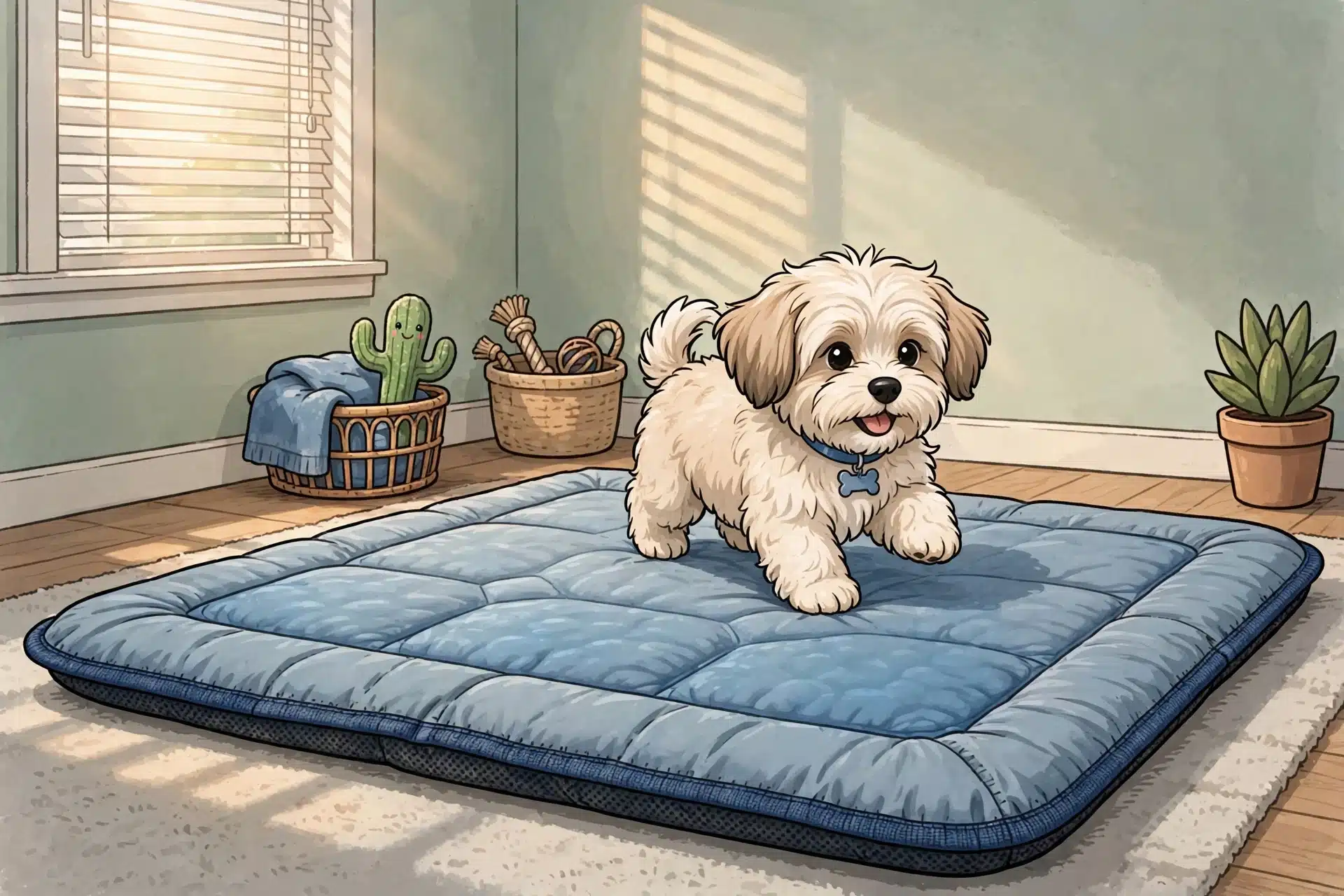
Set the mat in a spot your puppy already naps, ideally out of direct sun. Gel mats absorb heat from their surroundings, so shade keeps them working. Toss a treat on it, or place a favorite toy nearby. Let your puppy step on and off freely. Never push or hold them down.
Supervise the first few sessions. If your puppy digs, chews, or scratches bedding, remove the mat at any sign of damage and check the seams weekly. Most puppies accept the cool surface within a few days.
Also Read: 10 Red Flags to Avoid When Visiting a Local Puppy Breeder
Step 3: Use the Cooling Mat During Nevada’s Hottest Hours
In Nevada, the danger zone runs from late morning through early evening. Cornell’s veterinary team notes the day peaks around 3 to 5 p.m., not noon. This is when your cooling mat earns its spot.
Make Midday an Indoor Rest Period
From about 11 a.m. to 6 p.m., treat the outdoors as a drive-through, not a playground. Keep your puppy inside with air conditioning and the mat in their favorite shady spot.
Puppies nap hard. Use that. A Havapoo or Cavapoo that sleeps through the hottest hours on a cool surface needs less panting, less water churn, and less risk. Set up a routine:
- Morning potty and a short play session before 9 a.m.
- Lunch and a long rest indoors on the mat.
- Quiet toys or a snuffle mat for mental exercise.
- Evening play once the air and ground cool down.
If your puppy seems restless at midday, resist the walk. Trade it for indoor enrichment and an early dinner.
Callout: A cooling mat is comfort support, not treatment. If your puppy pants heavily, drools, or seems confused, move them to cool air and call your vet.
Plan Short Potty Breaks With a Cool-Down Return
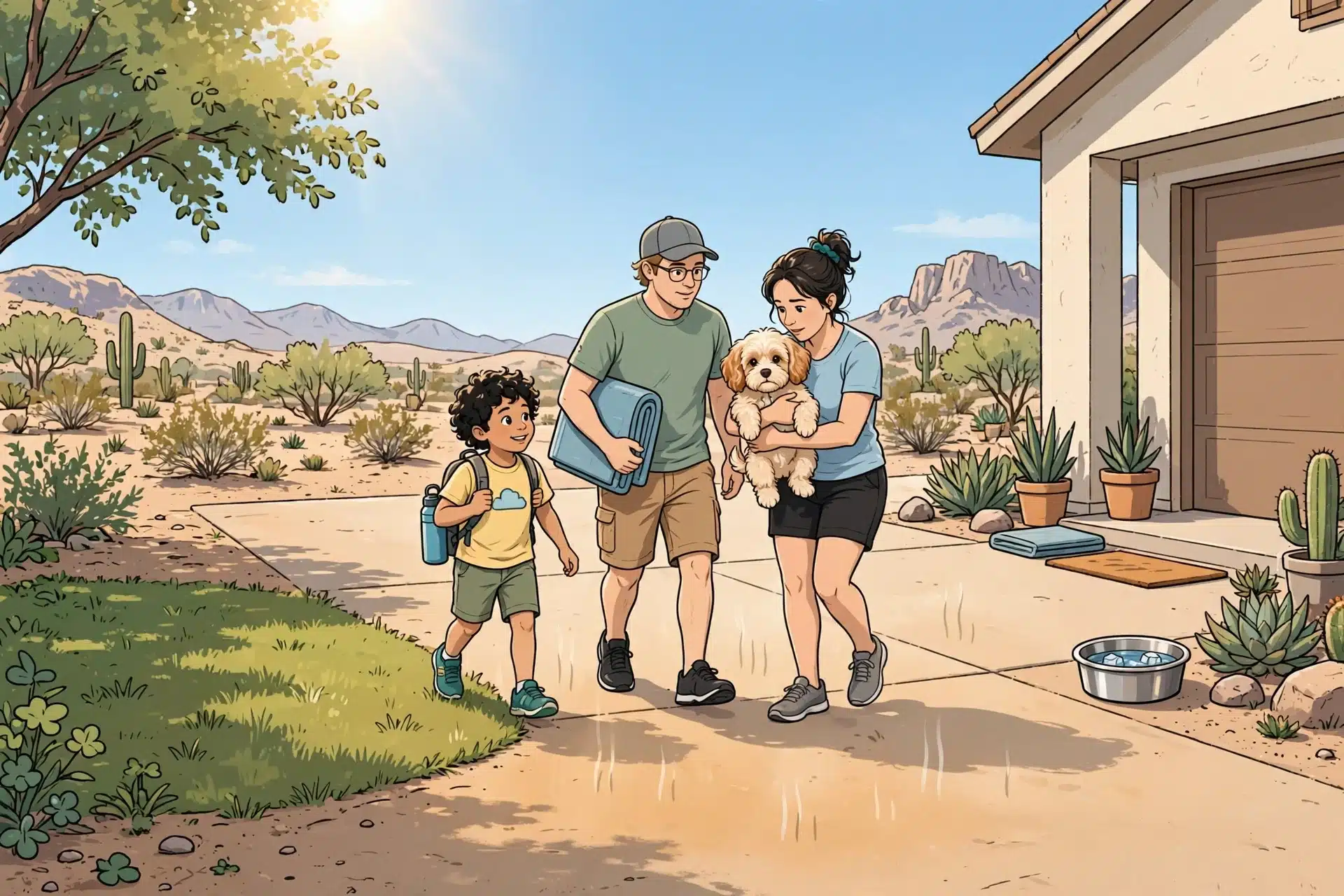
Puppies still need out at noon. Make it count. One study measured ground surfaces exceeding 150°F on summer afternoons, which burns paw pads fast.
Before heading out, do the hand test: hold the back of your hand on the pavement for seven seconds. If you can’t, carry your puppy to grass.
- Pick grass or shaded dirt, never asphalt.
- Keep the trip under five minutes.
- Return straight to the cooling mat and offer water.
Also Read: Havanese, Havapoo & Cavapoo Puppy Care Blog
Step 4: Monitor Your Puppy Instead of Trusting the Cooling Mat Alone
A cooling mat is a comfort tool, not a safety net. Puppies are in the highest-risk group for heat illness because they cannot regulate body temperature as well as adult dogs, and nearly three quarters of canine heatstroke cases start with play or exercise, according to the PDSA. Your eyes matter more than the mat does.
Notice Early Signs of Overheating
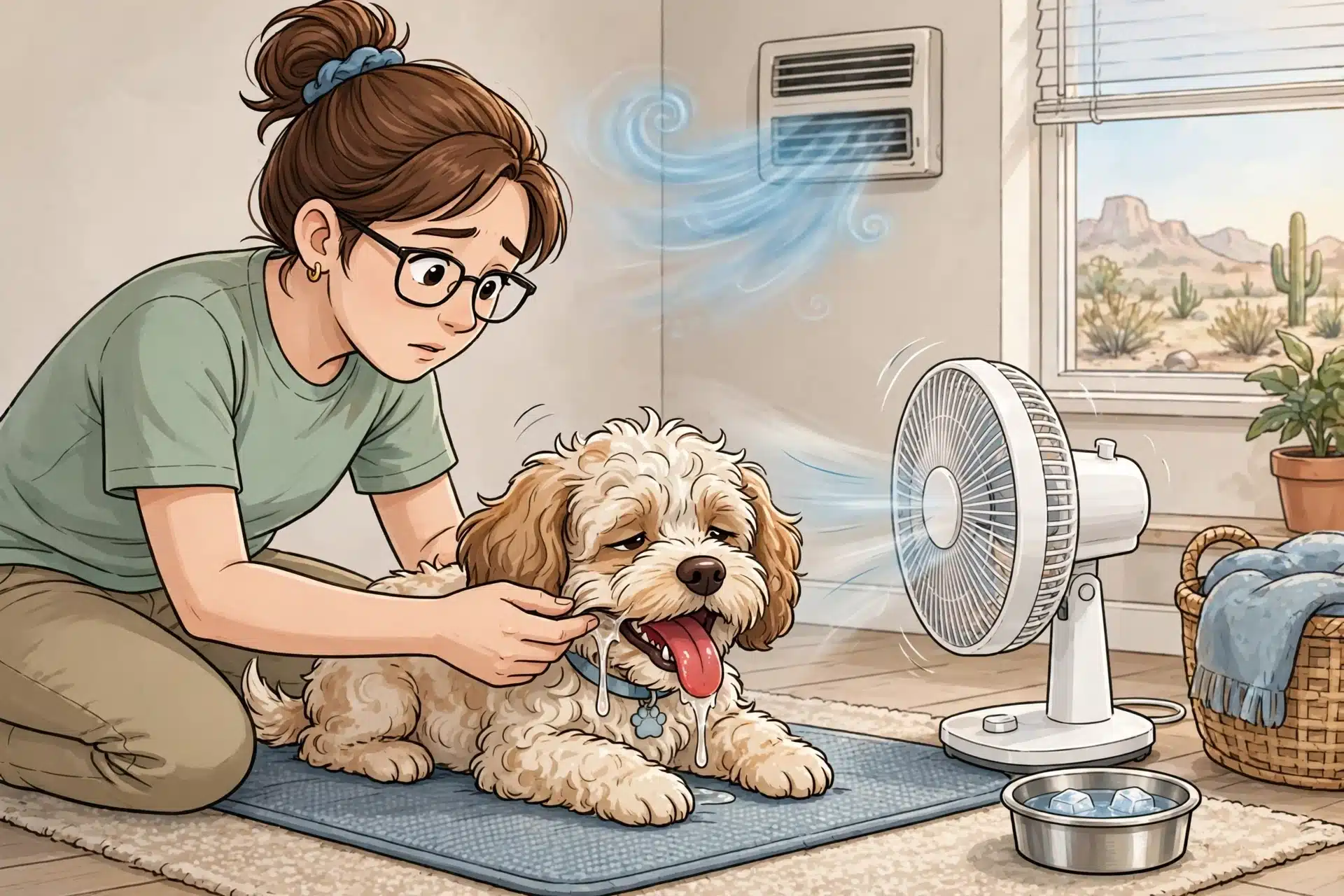
Check on your puppy every few minutes during hot spells. Early signs include:
- Heavy panting that does not slow down after rest
- Thick or sticky drooling
- Bright red gums or tongue
- Restlessness, pacing, or searching for shade
- A fast heartbeat
If you spot these, move your puppy to an air-conditioned room, offer small sips of water, and stop all play.
Know When Heatstroke Requires Immediate Veterinary Care
Heatstroke is an emergency once signs escalate. Vomiting, diarrhea, stumbling, wobbling, pale or bluish gums, collapse, or seizures all mean: cool first, transport second. Pour cool (not ice-cold) water over your puppy’s belly and paws, use a fan, then head to the nearest emergency vet. Starting first aid before the trip has been shown to raise survival odds significantly, notes PetMD.
Call the clinic on the way so the team is ready. Even if your puppy perks up, keep the appointment. Delayed organ damage can appear hours later.
A cooling mat supports comfort. It never replaces water, shade, supervision, or a vet.
Also Read: Guides – Sage Puppies
Step 5: Add Cooling Support for Car Travel, Pickup, and Delivery Days
Whether you drive to meet your Sage Puppies puppy or wait on a delivery, Nevada heat turns travel day into a heat-safety day. Even a mild 70-degree afternoon can push a parked car past 110 degrees within an hour, according to the AVMA’s vehicle safety data.
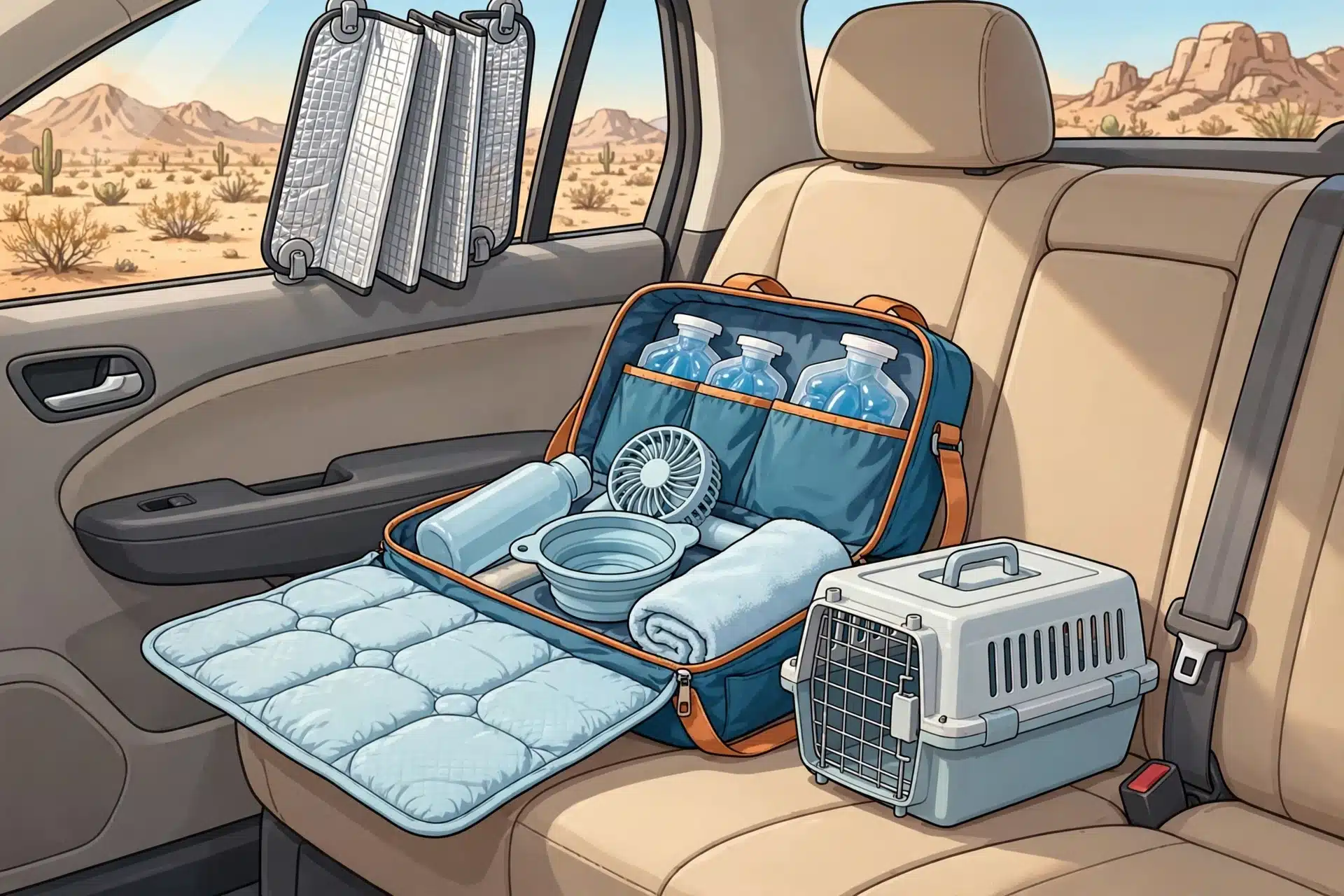
Pack a Portable Cooling Kit
Build a small kit before pickup day so you’re never improvising:
- A flat cooling mat that fits the bottom of the puppy’s crate
- A collapsible water bowl and one gallon of bottled water
- Sunshades for the rear windows
- A cooling bandana or towel you can wet at a rest stop
- A thermometer so you can check the crate area, not just the cabin
Place the crate out of direct sun and run the air conditioning the whole trip. AAA’s summer travel guidance recommends offering water at least every two hours and using sunshades to cut cabin heat. Pack the kit in the trunk, but pre-cool the car with the mat inside before the puppy ever climbs in.
Keep Every Vehicle Stop Heat-Safe
Stops cause most travel-day trouble, not the driving itself. Follow these rules without exception:
- Never leave the puppy alone in the car, even for two minutes, even with windows cracked
- Let one adult stay with the puppy and the running AC during any stop
- Take potty breaks on grass, not hot asphalt, and test the surface with your hand
- Offer small sips of water, then settle the puppy in shade before eating or playing
If you spot heavy panting, drooling, wobbliness, or bright red gums, move the puppy to air conditioning and call a vet right away.
Also Read: Puppy Weather Safety Guide for Heat, Cold, and Severe Storms
Step 6: Adjust the Setup for Small, Social Companion Puppies
Havanese, Havapoo, and Cavapoo puppies handle Nevada heat differently than big, aloof breeds. They’re small, people-focused, and they push through fatigue to stay near you. Your cooling-mat setup has to account for that.
Balance Play, Training, and Recovery
Companion breeds want to be with you constantly, and that eagerness masks tiredness. Watch for slower steps, a dropped tail, or a puppy who flops down mid-play – those are your cues to stop.
Structure the day like this:
- Morning session – short training or play while the patio is still cool, under 80°F.
- Midday rest – crate or pen near the cooling mat, away from windows.
- Evening social time – gentle interaction after sunset when surfaces cool down.
Keep each active block under 15 minutes in summer. A puppy who overheats once learns to hide rest, which makes every future day harder.
Social puppies rarely announce they’re hot. You schedule the breaks; they don’t.
Keep Coat and Comfort Checks Individual
Havanese and the poodle mixes in Sage Puppies’ program carry distinct coat types, and they cool themselves at different speeds. A thick Havanese double coat holds heat longer than a wavy Havapoo fleece. Grooming choices matter here – according to the AKC’s guidance on Havanese care, their long coats need regular brushing but should never be shaved, which actually exposes skin to sun damage.
Build a quick daily check:
- Feel the ears and belly – warm and dry means time on the mat.
- Weigh the coat – damp fur that never dries holds heat close to the skin.
- Watch the paws – small dogs sit on hot concrete faster than you expect.
Adjust placement too. Small puppies can’t reposition a heavy mat, so set it where they already rest, then let them find it. Your breeder can tell you what coat your specific puppy has; use that to time your checks.
If you’re arranging delivery into Nevada from Utah, ask what cooling habits your puppy already has – a well-started puppy adjusts faster.
Common Mistakes to Avoid With a Puppy Cooling Mat
A cooling mat is a comfort tool, not a fix for everything. These four mistakes catch most new puppy families.
Mistake 1: Treating the Mat as Heatstroke Treatment
A mat cannot lower core body temperature during a true emergency. Signs like heavy panting, drooling, vomiting, weakness, or collapse need wetting with cool (not ice-cold) water and immediate vet care, per Cornell’s canine health center. Cool first, transport second.
Mistake 2: Leaving the Mat in Sun or on Hot Surfaces
Direct sun defeats a cooling mat fast. Keep it on tile or concrete in shade, or indoors. A mat baking on a Las Vegas patio does more harm than good.
Mistake 3: Ignoring Chewing, Avoidance, or Continued Panting
Puppies chew. Damaged gel mats are unsafe, so check daily. If your puppy avoids the mat or keeps panting on it, something else is wrong – go back to shade and water, and call your vet.
Mistake 4: Using a Cooling Vest as a Substitute for Shade and Rest
Vests and mats are extras. Shade, water, and midday rest prevent overheating, which matches RSPCA guidance for puppies and senior dogs who handle heat poorly.
Also Read: How to Protect Florida Puppies From Heat and Humidity
Create Your Puppy’s Nevada Summer Plan Before Pickup
Nevada summers are hard on small puppies. July highs in the state often reach 104 degrees, and pavement gets even hotter than the air (Animal Emergency Center of Las Vegas). Plan before your Havanese, Havapoo, or Cavapoo arrives.
Your Pre-Arrival Checklist
- Set up one cool indoor zone with air conditioning and your cooling mat in place.
- Pick walk windows: early morning before 10 a.m. or evening after 6 p.m., per the Nevada Humane Society.
- Test pavement with the back of your hand. If it burns you in seven seconds, it burns tiny paws.
- Stock fresh water bowls and a travel bottle.
- Find your nearest emergency vet and save the address in your phone.
- Skip outdoor play between 10 a.m. and 4 p.m.
A cooling mat is comfort support, not treatment. Any heavy panting, drooling, or collapse needs a vet right away.
Choose a Thoughtful Next Step
When your puppy comes home from Sage Puppies, you get more than a well-started companion. You get guidance on the first weeks, including delivery or pickup details, so nothing about the arrival day feels rushed. Browse our Available Puppies, submit an Application, or review Pricing and How It Works to plan a summer pickup that fits the forecast.

A cool, confident first summer starts with a well-bred, well-socialized puppy. At Sage Puppies, our home-raised Havanese, Havapoo, and Cavapoo puppies arrive ready to settle in. Browse our Available Puppies or start your application today. Pickup in South Jordan or nationwide delivery, your choice.
Frequently Asked Questions
Q1: How do I keep my puppy cool in Nevada summer heat?
Combine shade, water, and a cooling mat. Offer short potty breaks before 8 a.m., keep indoor air moving with a fan or AC, and let your puppy rest on a cooled mat during the hottest hours between 10 a.m. and 6 p.m.
Q2: What are the signs of heatstroke in puppies?
Watch for heavy panting, thick drool, bright red gums, wobbliness, vomiting, or collapse. Move your puppy to shade or air conditioning, offer cool (not ice) water, and call your vet right away if symptoms persist.
Q3: When is it too hot to walk a puppy in Nevada?
When air temperatures pass 85°F, or if the pavement feels hot for five seconds against your hand. Plan walks before 8 a.m. or after sunset instead.
Q4: Are cooling mats safe for Havanese or Cavapoo puppies?
Yes. Choose a pressure-activated gel mat, supervise the first few sessions, and check for chewing. Replace any mat with punctures or leaks immediately.
Q5: How do I know if the pavement is safe?
Press the back of your hand flat on the asphalt for five seconds. If you cannot hold it comfortably, the surface will burn your puppy’s paws. Stick to grass or shaded paths.
Q6: Should I shave my Havanese coat for summer?
No. The coat actually insulates against heat and protects skin from sunburn. Keep it brushed and lightly trimmed instead, and provide plenty of shade and fresh water.
Conclusion
Keeping a Nevada puppy cool comes down to routine, not gadgets. A cooling mat helps most when you introduce it slowly, place it in one shady spot, and watch how your puppy uses it. Pair it with early morning walks, fresh water, and cool indoor time during peak heat.
Remember the key limit: cooling mats offer comfort. They do not treat heatstroke. Heavy panting, drooling, or wobbliness means call your vet right away.
Havanese, Havapoos, and Cavapoos handle desert summers well with this kind of planning, as guidance from Cornell’s veterinary college on hot-weather puppy care confirms. Set the routine now, and your puppy’s first summer stays safe and calm.