Quick Summary: To confirm a Mississippi puppy listing is still active, screenshot the ad with its URL and date, then run a reverse image search on the photos to spot stolen or recycled images. Verify the seller by matching their contact info to their official website, and demand a live video call where the puppy holds a card with your name and today’s date. Check written terms for price, deposit, and health records, and never pay via gift cards, wire transfers, or payment apps like Zelle or Cash App. If the seller pressures you, adds surprise fees, or refuses video proof, walk away and report the listing to the FTC and Mississippi’s Attorney General.
The same Havanese, Havapoo, or Cavapoo photo can show up in a Mississippi classified ad, a social media post, and a breeder page that has not been touched in months. So the real question is not whether the puppy looks right. It is whether that puppy listing is active and tied to the actual seller.
Old and copied ads are how most puppy scams start. Before you send a deposit, you need a simple way to verify a puppy ad and check puppy scam warning signs.
This guide walks you through a step-by-step process built for Mississippi buyers: how to spot stale listings, confirm the seller is real, and protect your money before you commit. If a listing is live and honest, you will know it within minutes.
Step 1: Capture the Listing Before It Changes
Before you call anyone, freeze the ad exactly as you found it. Listings change fast, and scammers delete them once they have your money. The FTC tells shoppers to keep records of a seller’s name, website, and promises for exactly this reason – it gives you something to compare against later when you verify puppy ad details and confirm the puppy listing active.
Record the Details That Identify the Puppy
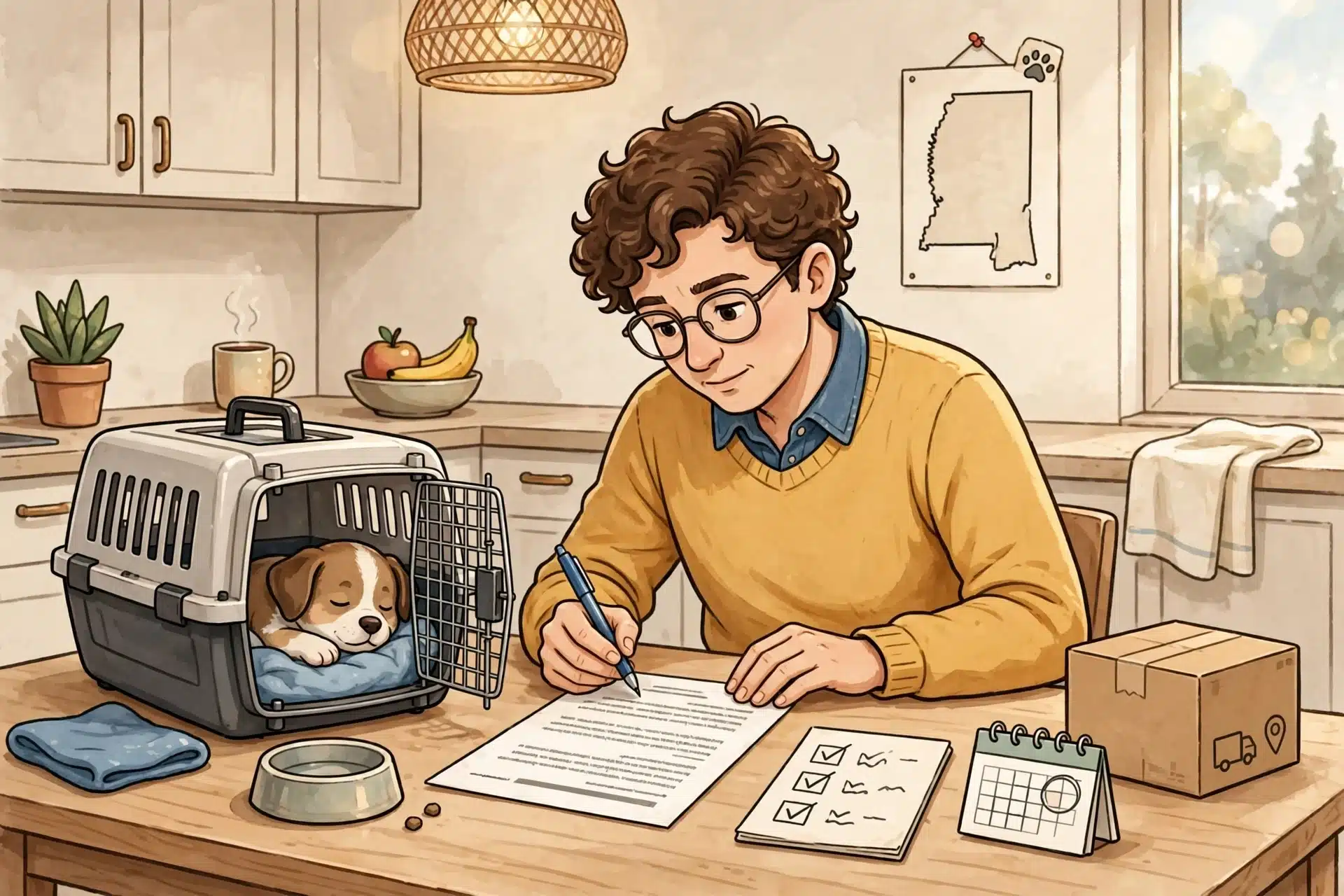
Screenshot the whole page, including the web address in the URL bar, the date, and the price. Then jot down the specifics:
- Breed and color, including any listed markings
- Date of birth and current age if stated
- Price, deposit amount, and any fees mentioned
- The ad’s original post date and last-updated date
- Photo descriptions, then run a reverse image search to see if the pictures appear in older ads
If you revisit the page in a few days and the price, photos, or age have quietly shifted, you will catch it because you saved the original. That single habit tells you whether a puppy listing active is being honestly maintained.

Save the Seller’s Contact Trail
Write down the seller’s full name, phone number, email, and the exact platform or website where you found them. Keep every message in one place. The FTC advises checking whether a listing includes real contact information before you buy, so a missing phone number is itself a finding. When you later confirm the puppy listing active, you will need this trail to reach the same person who posted it.## Step 1: Capture the Listing Before It Changes
Before you call anyone, freeze the ad exactly as you found it. Listings change fast, and scammers delete theirs once they have your money. The FTC tells shoppers to keep records of a seller’s name, website, and promises, which gives you something to compare against later when you verify puppy ad details and confirm the puppy listing active.
Record the Details That Identify the Puppy
Screenshot the whole page, including the web address in the URL bar, the visible date, and the price. Then write down the specifics:
- Breed and color, including any listed markings
- Date of birth and current age if stated
- Price, deposit amount, and any fees mentioned
- The ad’s original post date and last-updated date
- Photo details, then run a reverse image search to see if the pictures appear in older ads
If you revisit the page in a few days and the price, photos, or age have quietly shifted, you will catch it because you saved the original. That one habit tells you whether a puppy listing active is being honestly maintained.
Save the Seller’s Contact Trail
Write down the seller’s full name, phone number, email, and the exact platform or website where you found them. Keep every message in one folder. The FTC also advises checking that a listing includes real contact information before you buy, so a missing phone number is itself a finding worth noting. When you later confirm the puppy listing active, you will need this trail to reach the same person who posted it, not a copycat using the same photos.
Also Read: 7 Puppy Breeder Red Flags First-Time Dog Owners Should Know
Step 2: Find the Official Source and Compare Every Detail
Third-party listings go stale fast. Some are copies of copies. The safest test is simple: does the ad match what the seller publishes on their own site?
Use the Seller’s Own Contact Information
Never call the number printed in the classified ad alone. Look up the breeder’s website, then use the phone number, email, and address listed there. The FTC’s pet scam guidance recommends researching the seller’s name and business before any money moves. If the ad’s contact info does not match the official site, ask why. A real program like ours lists one set of contact details and uses them everywhere.
Compare Photos and Wording
Scammers steal photos and copy text from real breeders. The FTC suggests a reverse image search to see where else a photo has appeared.
Use this quick comparison:
| Detail | Check It Against | Red Flag |
|---|---|---|
| Puppy photos | Breeder’s own site | Appears on unrelated sites |
| Price | Official pricing page | Far below listed prices |
| Breed names | Breeder’s program focus | Dozens of mixed breeds |
| Reviews | Independent sources | Only on-site testimonials |
Word-for-word duplicate descriptions are another warning sign. Search a full sentence from the ad in quotes.
Check Whether the Listing Is Current
- Look for a posted or updated date.
- Ask which puppies from the litter are still available by name.
- Confirm pickup or delivery details match today’s process, not last year’s.
If details feel recycled, move on.
Step 3: Request Fresh Proof That the Puppy Exists and Is Available
Photos prove nothing on their own. Scammers lift pictures from real breeders, and some listings use the same photo across multiple sites. The Better Business Bureau recommends requesting a live video call to view the animal, meet the breeder, and see where the puppy actually lives.

Ask for a Live Video Conversation
This is the single strongest test. Ask the seller to join a video call and move the phone while holding the puppy, so you can see it from every angle. Legit breeders happily do this. Scammers rarely do. The AKC notes a reputable breeder will always talk by phone or video before selling a puppy, and a seller who only wants email is a red flag. At Sage Puppies, video conversations are a standard part of how we meet families, since we want you to see the puppy and its parents long before pickup or delivery day.
If the seller keeps refusing a video call but keeps sending photos, treat the listing as inactive or fake and walk away.
Use a Current Identifier
Make it impossible to recycle old footage. Ask the breeder to do something unique on camera:
- Write your name and today’s date on a card and hold it next to the puppy.
- Show the puppy moving, not just sleeping.
- Ask for a short clip of the puppy with its littermates.
Stolen photos and videos cannot pass this test.
Ask Questions a Real Breeder Can Answer
Real breeders know their puppies. Ask things like:
- What is the puppy’s birth date and current weight?
- Which shots has it had, and when is the next one?
- What can you tell me about the parents’ temperament and health testing?
Hesitation, vague answers, or pressure to send a deposit fast means the listing is not safe to pursue.
Also Read: 10 Signs a California Puppy Listing Is a Scam – Sage Puppies
Step 4: Verify the Seller, Terms, and Payment Path
A puppy can still be listed and still be fake. The final check happens with the seller, the written terms, and how they ask you to pay.
Confirm the Person and Business Match
Ask for the seller’s full name, phone number, and mailing address, then search each one with words like “scam” or “complaint,” as the FTC recommends for pet buyers. The business name on the listing should match the name on their website, payment receipt, and health paperwork. If the ad says one kennel and the invoice says another, stop and ask why. A real breeder can explain any name differences in one sentence. A scammer stalls, changes the subject, or goes quiet.
Read the Written Terms Before Paying
Get everything in writing before money moves: the price, deposit amount, deposit refund policy, what happens if the puppy is already adopted, delivery date, and pickup or shipping details. Ask how they’ll confirm the puppy is ready and healthy before handoff. Reputable programs, including ours at Sage Puppies, put these terms in plain language and share them early. Vague or shifting terms are a reason to walk away.
Reject Pressure and Unexplained Extra Charges
Two patterns show up in almost every puppy scam. The first is pressure: pay now, only two left, price goes up tonight. The second is the “extra fee” chain. According to the Better Business Bureau’s puppy scam study, scammers often add surprise charges for crates, vaccines, or airline fees after the first payment, then ask again.
Follow these rules:
- Pay by credit card whenever possible. It offers the strongest dispute protection.
- Never pay with gift cards, wire transfers, Zelle, Cash App, Venmo, or crypto. Requests like these are scam signals, per the FTC.
- Refuse any charge that wasn’t in the written price.
- If the seller pushes urgency more than they answer questions, walk away.
A seller who resents basic verification isn’t a seller you want a puppy from.
Step 5: Match the Listing to a Responsible Puppy-Family Process
A listing that checks out is only half the job. The real question is whether the process behind it follows the pattern of responsible breeders everywhere. The American Kennel Club points out that a good breeder should interview you as much as you interview them, and that red flags show up fast when the first question is how soon you can send a deposit.
Look for Evidence of Development and Temperament
Responsible breeders keep puppies with their mother until at least eight weeks. Toy breeds often stay longer. The ASPCA notes that confident, friendly behavior comes from parent dogs who are healthy and well socialized, plus early handling by the breeder. Look for details in the listing or your conversations: daily handling, exposure to household sounds, littermate time. Vague “ready to go today” claims from a seller pushing eight weeks? Walk away.
Review Health Information Carefully
Health proof should be specific, not general. Ask for:
- Parent health screenings, including eye, hip, and heart checks
- The puppy’s first vaccinations and deworming dates
- A vet exam record you can verify with the clinic
- A written contract with health terms
Serious breeders share records without hesitation. If the seller stalls, changes the subject, or offers photos instead of documents, the listing is not safe to pursue.
Use the Application as a Trust Signal
Here’s a counterintuitive sign: a waitlist and a detailed application are good news. A breeder who asks about your home, schedule, and experience cares about the match. That’s how a program like Sage Puppies works – an application, a conversation, then placement. An instant “pay and we’ll ship today” offer deserves your suspicion, not your deposit.
Also Read: Puppy Care Blog & Resources | Sage Puppies
Step 6: Decide Whether to Proceed, Pause, or Walk Away
You have run every check. Now comes the judgment call. Sort your findings into three outcomes: proceed, pause, or walk away. A clear framework keeps excitement from overriding common sense.
Proceed When the Core Facts Align
Move forward when the listing checks out on all fronts. The seller answers by phone or video, shares recent photos of the puppy with your name and the date, lets you meet the mother dog, and provides vet records and health testing proof. Payment happens through a traceable method, and the price matches what well-bred Havanese, Havapoo, and Cavapoo puppies typically cost. Transparent, family-raised programs like Sage Puppies welcome every one of these questions.
Pause When Information Is Incomplete
Hold off if the seller answers some questions but dodges others. Maybe the photos are two months old, or the breeder will talk email but not phone. Request one more round of proof: a dated video call, a vet reference, or a current health certificate. A real seller will cooperate. If they stall or the story shifts, treat that as an answer.
Also Read: How to Safely Reserve a Puppy From a Connecticut Breeder
Walk Away When the Pattern Looks Fraudulent
Leave immediately if you see the classic scam stack: a deep-discount price, demands for gift cards, wire transfers, or payment apps, extra “shipping” or “crate” fees after you pay, and refusal to let you see the puppy live. The FTC warns that scammers insist on hard-to-refund payment methods because they expect you to lose that money. BBB data shows most pet scams start on search or social media, and repeated fee demands are the signature move. Report it, block the seller, and keep searching.
Step 7: Report a Suspicious Mississippi Puppy Listing
If a listing fails your checks, don’t just walk away. Report it. The FTC asks buyers to flag puppy scams because every report helps them build cases and warn other families.
Preserve a Complete Evidence Packet
Before you report anything, gather proof. Screenshots taken now matter more than screenshots taken next week, since scammers delete fast.
- Screenshot the original ad, including the URL and date
- Save all texts, emails, and chat messages
- Record payment details: amount, method, and recipient name
- Capture the seller’s phone number, email, and website
- Save any photos or “shipping documents” they sent
Report Through Federal and Marketplace Channels
File a report at ReportFraud.ftc.gov. It takes about ten minutes and creates a federal record. If you already paid, call your bank or card company right away and dispute the charge.
Then report on the platform where you found the listing. Facebook Marketplace, Craigslist, and puppy sites all have “report” buttons. Flagging the ad protects the next family who sees it.
Reporting rarely gets your money back, but it puts the scammer on record and slows them down.
Contact Mississippi Consumer Protection Officials
For in-state issues, file a consumer complaint with the Mississippi Attorney General’s Consumer Protection Division. Their consumer mediators review complaints and enforce the Mississippi Consumer Protection Act against deceptive sellers.
You can also report to BBB Scam Tracker and your local sheriff if money changed hands. Ethical breeders, like Sage Puppies, welcome verification steps. Scammers resist them.

Ready to skip the guessing game? At Sage Puppies, every listing is current, every family gets direct updates, and pickup or nationwide delivery is arranged clearly from the start. Browse our available Havanese, Havapoo, and Cavapoo puppies today, or submit an application and we’ll confirm next steps within one business day.
Frequently Asked Questions
Q1: How can I verify if a puppy listing in Mississippi is still available?
Contact the seller directly within 24 hours and ask for current photos with today’s date written on a note beside the puppy. Ask when it was last seen in person and request a live video call.
Q2: What are the signs that a Mississippi puppy listing is a scam?
Watch for prices far below breed norms, sellers who only text, requests for payment apps or gift cards, refusal of video calls, and photos that reverse-image search to other states or websites.
Q3: Who can I contact to report a fraudulent puppy listing in Mississippi?
File a report with the Mississippi Attorney General’s Consumer Protection Division, the FTC at ReportFraud.ftc.gov, and the platform hosting the ad. Local police can help if money already changed hands.
Q4: Should I send a deposit before seeing the puppy?
Never pay a deposit on a listing you have not verified. Ask for a video call with the puppy and its surroundings first. Ethical breeders expect this request and will agree without hesitation.
Q5: How fresh should a listing be before I trust it?
Listings older than 30 days deserve extra scrutiny. Puppies sell within weeks at most reputable programs, so ask directly why the puppy is still available and confirm the answer makes sense.
Q6: Are video calls a reliable way to confirm a puppy is real?
Yes. Ask the seller to move the camera around the room and interact with the puppy live. A genuine seller happily complies. Scammers usually claim “the video isn’t working” or send pre-recorded clips.
Conclusion
Confirming a Mississippi puppy listing is still active comes down to four checks: verify the posting date, reverse-search the photos, talk to the seller live, and confirm health records and pickup or delivery details in writing. Skip any seller who rushes you or demands wire transfers or gift cards. The FTC warns that scammers now use stolen photos and even AI-generated images, so slow down and trust real proof over a cute picture. Ethical breeders like Sage Puppies welcome these questions and answer them gladly, whether you visit in person or connect nationwide.