
Quick Summary: Verify Illinois puppy listings by checking evidence before contacting sellers, starting with capturing listing details and matching them against state and USDA license records. Scammers often use stolen photos, fake kennel names, and pressure tactics like wire transfers, so reverse-image search photos, confirm the puppy’s age and health records, and test seller reachability. A green, amber, or stop system helps decide whether to contact, ask questions, or walk away, since no single check proves legitimacy. Ethical breeders, like Sage Puppies, welcome these verification steps and offer transparent records and video calls.
An Illinois listing can show a charming puppy photo, a nearby town, and a friendly-sounding breeder label before it gives you a single verifiable detail. That gap is where most trouble starts. Scammers copy photos, borrow real kennel names, and price puppies just low enough to feel like luck.
Good Illinois breeder verification flips the order. You check the evidence first, then decide if the seller deserves your message. This guide walks through the checks that matter: matching license records, reading breeder scam warnings in the listing itself, confirming location claims, and asking questions that are hard to fake. The goal is puppy buyer safety without slowing you down. Most checks take minutes.
One caveat before we start. Verification is layered. No single record proves a breeder is ethical, and a clean result does not replace your own eyes, calls, and visits. We’ll show you where each check stops and what to do next.
Step 1: Capture the Listing’s Claims Before They Change
Good Illinois breeder verification starts before you send a single message. Listings change. Sellers edit prices, swap photos, or delete ads once buyers start asking hard questions. So save everything now, while it’s still on the screen.
Screenshot the full ad. Copy the exact text, the price, the puppy’s age, and the photos. Note the date and the web address. Save the seller’s name, phone number, and email. The FTC advises asking for the seller’s full name, phone number, and mailing address before any payment talk, so having a written record makes it easy to compare answers later.
Make a Claim-by-Claim Record
Open a simple note and list each claim separately:
- Breed, age, and date of birth
- Price and any deposit amount
- Claimed health testing or vaccines
- Registration papers offered
- Where the puppy is located and how delivery works
Keep it in one place. If the seller later changes a price or story, your notes become evidence, not memory.

Notice Details That Deserve a Pause
Some claims in Illinois listings deserve a second look. AKC guidance flags sellers who avoid phone calls, push for a fast deposit, or use photos that appear on other sites.
Pause if you see:
- A price far below typical for the breed
- Pressure to pay today
- Only-text communication
- Multiple unrelated breeds “ready to ship”
Also Read: Reviewing Puppy Breeder Profiles: What Deserves a Closer Look
Step 2: Match the Seller’s Identity to Independent Records
A listing tells you what the seller wants you to believe. Records tell you what the government has on file. Illinois breeder verification works because you compare the two before you ever send a message.
Search the Illinois Animal-Welfare License Information
Start at the state level. The Illinois Department of Agriculture’s Bureau of Animal Health and Welfare licenses and inspects dog breeders, kennel operators, dog dealers, and pet shops under the Illinois Animal Welfare Act (225 ILCS 605). The bureau publishes a list of licensees, so you can check whether the name on the listing actually holds a current Illinois license.
Here’s how to run the check:
- Copy the exact name, kennel name, and city from the listing.
- Open the state’s list of licensees and search each one.
- Note the license type. A breeder license and a dealer license are not the same thing, and the difference matters for where the puppy came from.
- Check the expiration. State animal welfare licenses expire annually on June 30, per the department’s licensing page, so an old certificate may not mean an active one.
Then layer in the federal check. Breeders with more than four breeding females who sell dogs sight-unseen need a USDA license under the Animal Welfare Act. You can confirm one through the USDA APHIS Public Search Tool, which lists active licensees and their inspection reports. Certificate numbers follow the format XX-X-XXXX, like 33-A-0633.
Resolve a Name or License Mismatch
A mismatch is not always a scam, but it always needs an explanation before you move forward.
| What you find | What it might mean | What to do |
|---|---|---|
| Kennel name listed, personal name licensed | Common and often fine | Ask the seller to connect the two names in writing |
| No state license found | May be a small hobby breeder, or unlicensed | Ask which exemptions apply and verify locally |
| License expired June 30 | Lapsed renewal, or a fake claim | Walk away unless they show a current renewal |
| Certificate number doesn’t match | Copied or faked credentials | Treat it as a red flag |
Ask directly: “Can you tell me the license name and number your facility operates under?” An honest breeder answers fast. This is the same transparency standard we hold at Sage Puppies, where every puppy family can trace exactly who raised their puppy and how.
Also Read: 10 Red Flags to Avoid When Visiting a Local Puppy Breeder
Step 3: Check the Puppy Details Against Illinois Disclosure Rules
Illinois law expects sellers to give buyers certain written facts before a puppy sale. If a listing skips those details, treat it as a warning sign and ask questions before you send money. This step helps you compare what a listing says against what Illinois sellers are supposed to share.
Compare the Listed Facts With Required Sale Information
Illinois requires a written statement at the time of sale that covers the animal’s basic record and any known health issues. Sellers connected with licensed facilities must follow state rules for pet shop and kennel sales under the Animal Welfare Act.
Here is what a trustworthy listing should show:
- Age of the puppy, stated in weeks or an actual birth date
- Breed and mix, described plainly
- Sex and color
- Vaccinations given so far, with dates
- Deworming history
- Health status, including any known conditions
- Price, with no hidden fees
Some listings hide most of these facts and push you toward a phone call right away. That urgency is a classic scam tactic. Good breeders share details freely. When we list a puppy at Sage Puppies, we include age, vaccination dates, and parent health testing up front, because families deserve the full picture before they commit.
Check the Puppy’s Age and Origin Claims
Illinois law also ties into minimum age. Puppies under 8 weeks old cannot be sold in the state. If a listing shows a 5-week-old puppy available for pickup this weekend, that seller is either out of state or ignoring the rule. Both cases deserve a closer look.
Origin claims matter too. Watch for these red flags:
- The puppy “just arrived” from another state with no breeder name given
- The same photo appears on several listings with different ages or locations
- The seller says the puppy is “ready now” when the listed birth date says otherwise
Legitimate breeders keep records consistent. A mismatch between the stated birth date and the puppy’s readiness is a small detail that exposes big problems.
Cross-check every listed fact with the breeder’s license record from Step 2. If the ages, breeds, or location don’t line up, walk away.
Step 4: Verify Photos, Puppy-Specific Evidence, and Health Claims
Most fake listings borrow their puppy from someone else. Scammers lift photos from breeder sites, social media, or old ads, then repost them with a new story. The FTC recommends a reverse image search before you fall in love with a picture. Right-click the photo, copy the image address, and paste it into a search engine’s image search. If the same puppy appears in older ads or on a different seller’s site, walk away.
Check Whether Images Belong to This Listing
Run these checks on every photo in the listing:
- Reverse image search each photo, not just the main one. Scammers often use one stolen puppy photo with generic filler images.
- Look for signs of editing. Odd backgrounds, mismatched lighting, or a puppy that looks pasted onto a couch are warnings. The FTC now warns that scammers also use AI-generated pet images, so a polished picture proves nothing.
- Ask for fresh, specific photos. Request a picture of the puppy holding a dated piece of paper, or a short video with your name spoken aloud. A real breeder does this easily. A scammer stalls or refuses.
- Match details. Does the puppy’s age, color, and coat in the photos match the listing text? If the ad says 8 weeks but the photo came from a years-old post, you have your answer.
Keep in mind the FTC’s own caveat: a clean image search doesn’t guarantee a real listing. It’s one signal, not proof.

Ask for Records That Match the Specific Puppy and Parents
Legit breeders keep records, and they tie those records to one puppy, not a generic template. Before you send money, ask for:
- A vet exam record naming this puppy, with the exam date and clinic info.
- Vaccination and deworming dates that fit the puppy’s age. An 8-week-old should have started its first round.
- Parents’ health test results, especially for inherited conditions common in the breed. Ethical programs like Sage Puppies share parent health testing openly because it’s central to how they breed.
- The dam’s location. The AKC advises meeting or at least seeing the mother and confirming no puppy leaves before 8 weeks.
Compare what they send against the listing. A scammer sends a blurry template. A real breeder sends paperwork with consistent names, dates, and a vet you can call.
Also Read: Havanese, Havapoo & Cavapoo Puppy Care Blog
Step 5: Confirm the Contact Channel and Protect Your Money
You’ve verified the listing. Before you send a single dollar, check how the seller wants to communicate and get paid. This is where many scams either fall apart or succeed.
Cross-Check How the Seller Can Be Reached
A real breeder is easy to reach in more than one way. Look for a phone number, an email, and a physical address that match across the listing, the website, and any license records you checked.
Then test them:
- Call the number. A real breeder answers or calls back.
- Email the address on the website. Does the same person reply?
- Search the phone number online with the word “scam” next to it. The FTC recommends this exact search before you pay anyone.
Be cautious if the seller only texts, refuses a video call, or pushes you to a messaging app you’ve never heard of. Scammers hide behind one channel so they can vanish fast.
Do Not Let a Deposit Deadline Replace Verification
“This puppy has three other families interested. Deposit due tonight.” Pressure like that is a red flag, not a reason to rush. Honest breeders want a good match and will answer your questions first.
Payment method matters even more than timing. The FTC warns that scammers insist on gift cards, payment apps, crypto, or wire services like Western Union because the money is nearly impossible to recover.
| Safer to use | Walk away from |
|---|---|
| Credit card | Wire transfers |
| Seller with a written contract | Gift cards |
| Deposit after a video call or visit | Zelle or Venmo to a stranger |
Also refuse any “extra fee” that appears after your deposit, like a special crate or surprise insurance. That’s a classic follow-up scam.
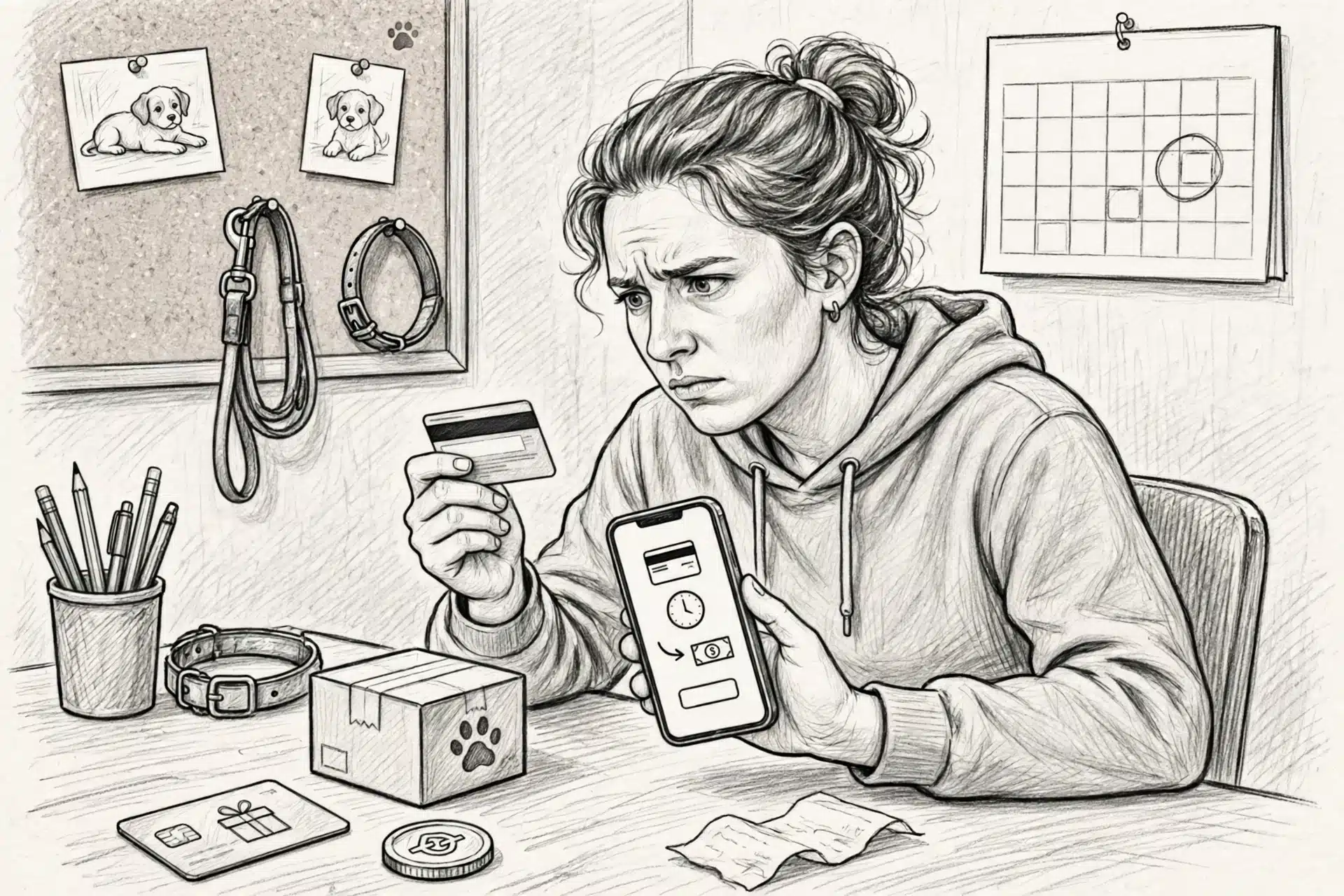
At Sage Puppies, we walk families through each step before any deposit, and we’re happy to schedule a video call first.
Also Read: 10 Signs a California Puppy Listing Is a Scam – Sage Puppies
Step 6: Decide Whether the Listing Is Ready for Contact
You’ve run the checks. Now turn your notes into a simple yes, wait, or walk-away call.
Use a Green, Amber, and Stop Decision
Score what you found against three buckets:
| Signal Level | What You Found | What To Do |
|---|---|---|
| Green | Active license or valid exemption, clean inspection record, Illinois address that checks out, health testing named, real photos of the puppy and parents | Contact them |
| Amber | A missing item or two, like no license number listed or vague answers about parents, but nothing conflicting | Ask questions first |
| Stop | No verifiable location, recycled photos, price far below market, pressure to pay a deposit today | Walk away |
Green means the listing passed every layer: location, seller category, and records. Amber is common and not a red flag on its own. Many ethical small breeders keep fewer than five breeding females, so they fall outside federal licensing and may not appear in a search of USDA-licensed Illinois breeders. That’s an exemption, not a warning. Put these sellers in Amber and resolve it with a phone call.
Stop signals are different. If two or more appear together, don’t negotiate or explain. Close the tab.
Honest breeders, including transparent programs like Sage Puppies, welcome early questions about health testing and parents. If someone gets defensive before you’ve even asked about a puppy, that tells you everything.
Also Read: Guides – Sage Puppies

Ready to skip the guesswork? At Sage Puppies, every Havanese, Havapoo, and Cavapoo puppy comes from health-tested parents, raised in our South Jordan, Utah home. Browse our available puppies, review our transparent process, and apply today. Local pickup or nationwide delivery – your well-started companion is waiting.
Frequently Asked Questions
Q1: What are the warning signs of a puppy scam in Illinois listings?
Watch for prices far below breed norms, stock photos that reverse-image search to other sites, requests for wire transfers or gift cards, and sellers who refuse video calls showing the puppy live.
Q2: What red flags should I look for in Illinois puppy ads?
Vague locations, no vet records, pressure to pay deposits fast, multiple litters of many breeds, and excuses whenever you ask to visit. Ethical sellers like Sage Puppies answer questions openly and invite calls.
Q3: How do I verify a breeder’s credentials in Illinois?
Ask for the license number, then check it against official state and USDA records. Confirm vet references, health testing on parents, and contracts in writing before sending any money.
Q4: Should I ever pay a deposit before seeing the puppy?
Only after a live video call, verified references, and a written contract. Never use wire transfers, gift cards, or payment apps that offer no buyer protection.
Q5: Is an Illinois license alone proof a seller is trustworthy?
No. A license confirms registration, not care quality. Pair it with parent health testing, references, and your own visit or video call.
Q6: What if the seller says pickup is the only option, no video calls?
Treat that as a serious warning sign. Reputable breeders accommodate video meetings, and many, including Sage Puppies, offer scheduled pickup or delivery options.
Conclusion
Verifying a listing before your first message takes ten minutes and saves months of regret. Check the seller’s category, look up state and USDA licenses, reverse-search the photos, and confirm age, health records, and payment terms. No single check proves everything, so stack the evidence.
Puppy scams stay common in Illinois. The state’s Attorney General recently charged a Lake County man over online puppy ads where victims paid through money transfers and never got a dog. His advice matches this guide: research the seller first and skip nontraditional payments.
Ethical breeders, including small home-based programs like Sage Puppies, welcome these questions. Trustworthy sellers answer clearly, share documentation, and never rush you. Slow down, verify, then reach out with confidence.


