Quick Summary: Before visiting a Delaware puppy breeder or sending a deposit, demand proof: a current license, parent health-test results, puppy vet records, and a written contract. A license only shows legal compliance, not ethical breeding, so verify records match the actual puppy and parents. Walk away if the breeder pushes payment before sharing documents or won’t identify the puppy’s source. Use a documented checklist to make a calm, fact-based go or no-go decision before emotions take over.
Ask for proof before you fall for a puppy photo. Before you drive across Delaware or send a reservation payment, request license details, parent test results, puppy records, and written sales terms.
Many Delaware puppy breeders look trustworthy online, but polished posts do not confirm responsible care. The real challenge is telling legal paperwork from meaningful breeding evidence before a visit becomes an emotional decision.
This guide gives you a clear pre-visit standard for checking puppy breeder credentials. You will learn what documents to request, how to review breeder health testing, and which gaps should make you pause. Strong puppy breeder credentials protect your family and the puppy. Use this process to compare Delaware puppy breeders with calm, fact-based questions and spot puppy breeder credentials that hold up.
Step 1: Identify the Breeder and the Operation You Are Actually Buying From
Match Names, Locations, and Payment Details
Before you schedule a visit or send a deposit, make sure every detail points to the same business or person. A polished puppy listing is not proof of who raised the litter.
Check these items side by side:
| Item | What should match |
|---|---|
| Website and social profiles | Breeder or business name |
| Contract and receipt | Legal seller name and address |
| Payment request | Name tied to the contract |
| Visit location | Where the puppy was raised, or a clear explanation |
Delaware distinguishes a home breeder from a retail dog outlet. Dogs bred, raised, and sold by someone living on that property may fall outside the retail outlet definition, according to the Delaware Office of Animal Welfare.
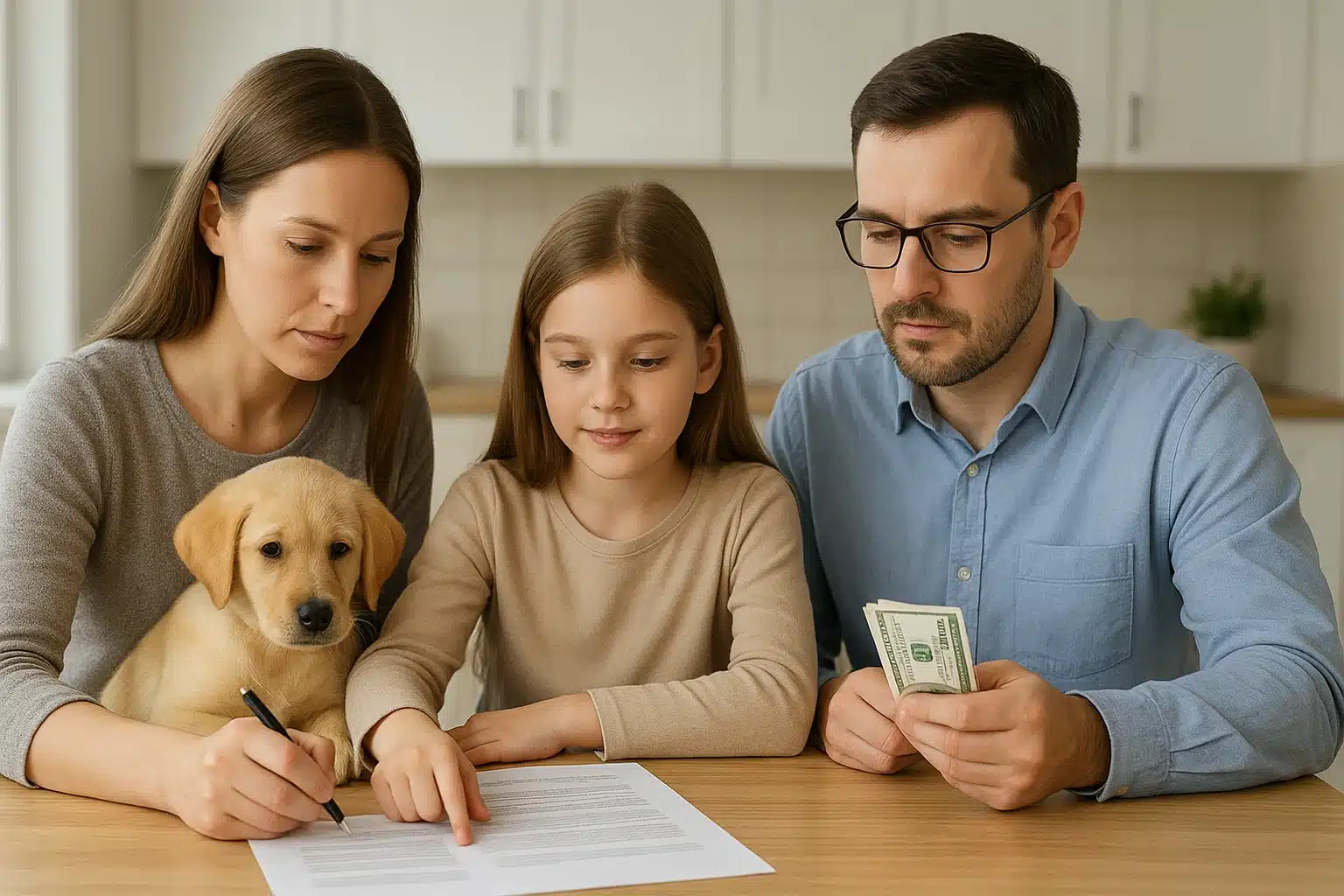
A different payment name is not always a scam. Ask why it differs, and get the answer in writing before paying.
Ask Who Bred, Raised, and Owns the Puppy
Ask direct questions, then listen for clear answers:
- Who owns the dam and sire?
- Who whelped and raised this litter?
- Has the puppy lived anywhere else?
- Are you the breeder, a co-owner, or a broker?
A responsible seller can name the breeder and provide the breeder’s address. Delaware law requires covered sellers to give that information at sale when known, along with health and care records, under the state pet warranty law.
Do not accept “our partner breeder” as the final answer. Ask for the partner’s full name, location, and parent-dog records.
Also Read: How to Verify Delaware Puppy Breeders Before Placing a Deposit
Step 2: Verify the Delaware License That Applies
Know the Difference Between a Kennel and Retail Outlet License
Ask which license fits the breeder’s setup. In Delaware, a kennel license may apply when more than four dogs are kept for breeding, sale, shows, or other purposes. A retail dog outlet license applies to premises selling dogs at retail, with key exceptions for dogs raised and sold by a resident at that same property. Review the state’s license definitions before you judge the answer.
| License type | Common fit | What to ask |
|---|---|---|
| Kennel | More than four dogs kept for breeding or sale | “Is this property licensed as a kennel?” |
| Retail dog outlet | Dogs sold from a retail sales location | “Is this a retail outlet license?” |
| Individual dog license | Small-scale or exempt situation | “Why does no premises license apply?” |
A home-raised breeder may fall under an exception. That does not end your review. It tells you what to check next.
Check the License Number, Date, and Premises
Request a clear photo of the current license before you send a deposit. Match it to the exact place where the puppies and parent dogs live.
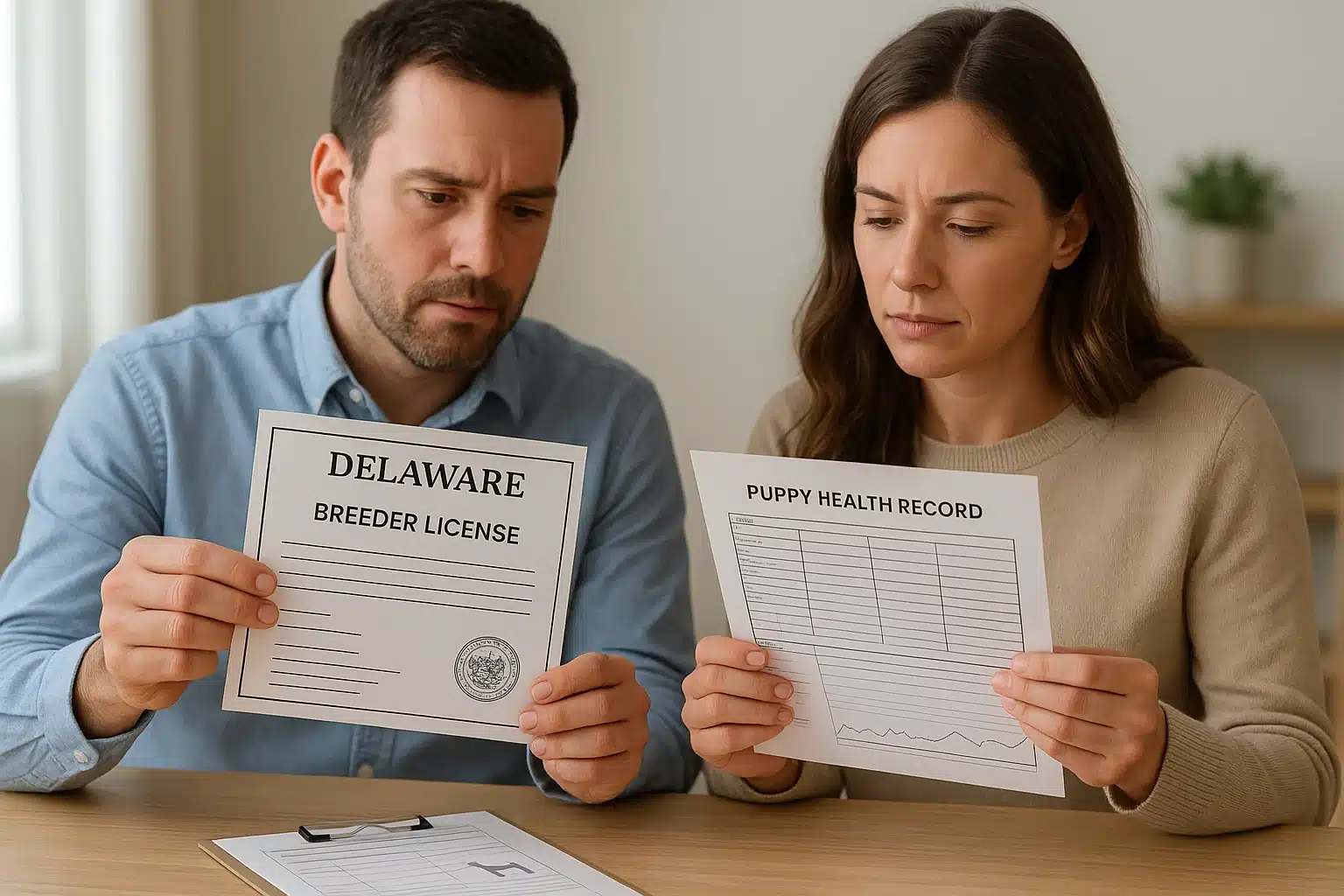
Check these details:
- License type and number
- Issue and end dates
- License holder’s name
- Street address of the licensed premises
- Whether the planned visit occurs there
Delaware says kennel licenses are valid for one year from purchase, and listed premises can face unannounced inspections. See the state’s kennel license guidance.
A license for one address does not prove care standards at another address. Ask directly if puppies are raised off-site.
Treat Licensing as a Baseline, Not an Ethical Seal
A valid license shows basic legal compliance. It does not prove thoughtful breeding choices, clear health testing, stable temperaments, or good puppy socialization.
Use licensing as one part of your audit. Then request:
- Parent health test results
- A visit or live video tour
- Veterinary and vaccination records
- A written contract and return terms
A breeder who shares records calmly and answers follow-up questions is easier to assess than one who only points to a license.
Also Read: 10 Red Flags to Avoid When Visiting a Local Puppy Breeder
Step 3: Determine Whether Federal or Retail Credentials Should Be Reviewed
Ask Whether the Breeder Sells Directly or Through Another Party
Ask one clear question before you book a visit: “Did you breed this puppy, and will I buy directly from you?”
A direct breeder should name the puppy’s parents, explain where it was raised, and handle the contract. A broker, retailer, or online listing service may connect you with another source.
| Sale path | What to verify |
|---|---|
| Direct from breeder | Parent records, health tests, home or facility visit |
| Through retailer or broker | Original breeder, source records, retail paperwork |
| Shipped or delivered | Breeder identity, transport plan, all signed records |

A polished website is not proof of who raised the litter. Get the original breeder’s full name and location.
Request Applicable Federal or Retail Information
Federal review depends on how the business operates. The USDA states that businesses regulated under the Animal Welfare Act must hold an APHIS license or registration, and its tool helps determine which status applies. See the USDA licensing guidance.
Request the records that match the sale path:
- Ask for the USDA license number if the seller says federal oversight applies.
- Ask a retailer or broker for the original breeder’s name and records.
- Compare every name and address with the contract and veterinary paperwork.
- Keep screenshots and documents before sending a deposit.
Federal credentials matter, but they do not replace proof of health testing, clean care, and honest answers.
If the seller will not identify the puppy’s source, pause the process.
Also Read: 10 Adorable Havapoo Colors You Need to See (2026)
Step 4: Request and Authenticate Parent Health-Testing Records
Ask for Records for the Actual Sire and Dam
Ask for the registered names of the exact sire and dam before you place a deposit. Then request each parent’s test reports, not a general statement that the breeder “health tests.”
Use this quick check:
- Match the dog’s registered name, breed, sex, and birth date across records.
- Ask whether the sire lives elsewhere. Outside studs are normal, but their paperwork should still be available.
- Search each parent in the OFA records database.
- Save copies of the records with your puppy paperwork.
A healthy-looking parent is not proof of genetic screening. Paperwork must match the litter you are considering.
Check What Each Test Shows
Health testing is not one test. It may include DNA screening and exams for joints, eyes, heart, or kneecaps. The right list depends on the parent breeds behind the puppy.
| Record detail | What to confirm | Why it matters |
|---|---|---|
| Dog identity | Registered name and permanent ID | Links the result to the correct parent |
| Test type | DNA test or veterinary exam | Shows what health risk was checked |
| Result | Clear, normal, carrier, or affected | Prevents vague claims |
| Test date | Date and dog age | Helps you judge if the record is current |
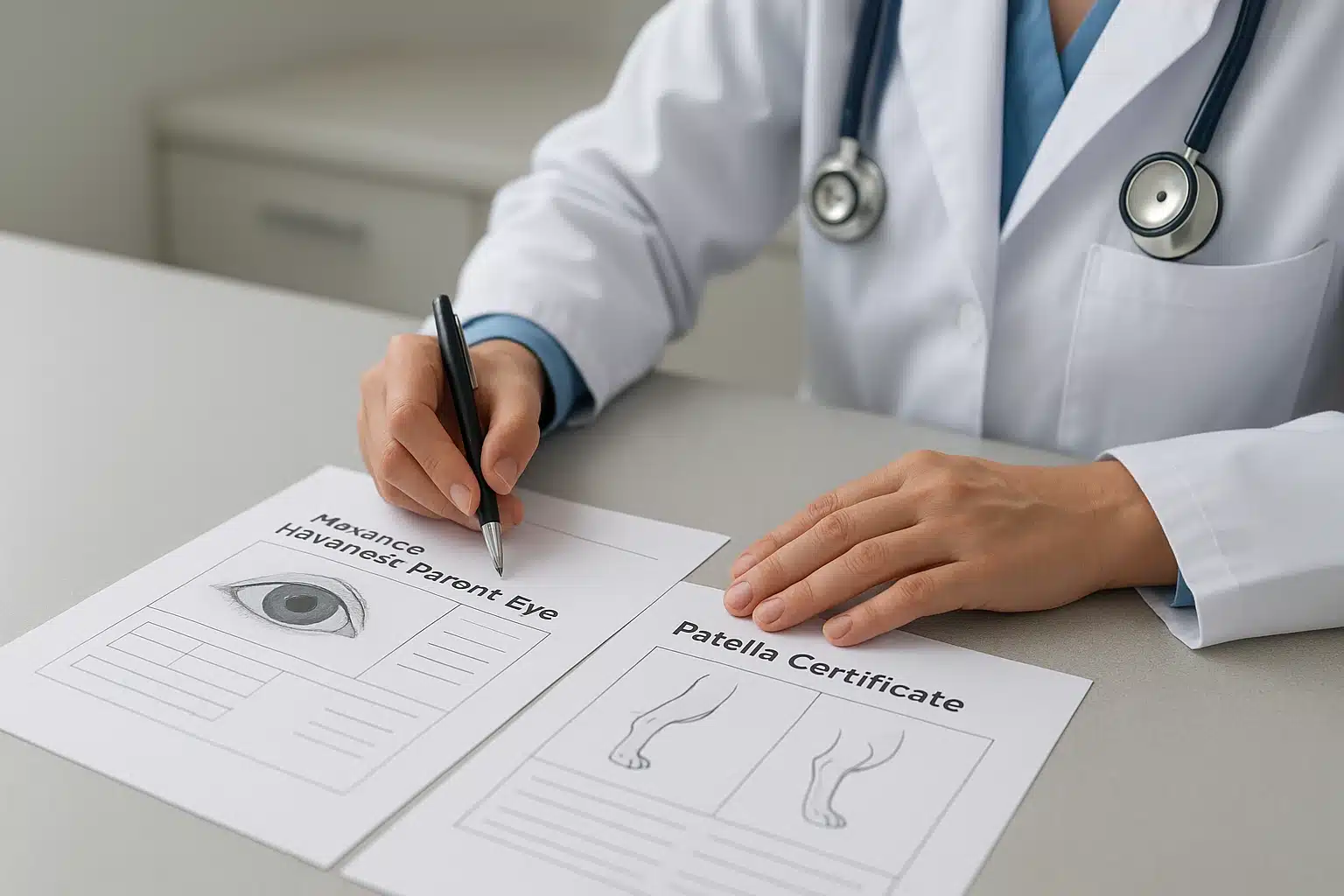
Read the result, not only the certificate title. A carrier result does not always rule out a breeding, but the breeder should explain the mate choice. OFA notes that normal submitted results are public, while owners may choose whether to disclose some abnormal results, so an empty search result needs a direct follow-up question. OFA’s buyer guidance recommends asking to see parent screenings and verifying them.
Look for Transparency About Findings and Limitations
A careful breeder speaks plainly about what testing can and cannot predict. No set of records can promise that a puppy will never become ill.
Ask these questions:
- Which risks were screened in both parents?
- Were any results carriers, borderline, or monitored?
- What did you consider when pairing these dogs?
- Can I review the records before visiting or reserving?
Walk away if records arrive cropped, names do not match, or the breeder pushes you to pay before answering.
Strong documentation does not replace your own vet visit after pickup. It does show that the breeder made health decisions with evidence, not guesswork.
Also Read: Puppy Care Blog & Resources | Sage Puppies
Step 5: Review the Puppy’s Medical and Identification Records
Request a Complete Puppy Record Packet
Ask for the packet before you visit or place a deposit. A careful breeder should be able to explain each item without rushing you.
Request:
- A dated vaccine record showing product names and dates
- Deworming dates, products, and doses
- Veterinary exam notes or a health-check record
- The puppy’s date of birth, sex, breed or mix, and litter details
- Parent health-testing proof, when offered
- A microchip number and transfer steps, if the puppy is chipped
Puppies need a vaccine series, not one single shot. The AVMA puppy vaccination guidance explains that the series often begins at 6-8 weeks and continues through at least 16 weeks. Plan a first visit with your own vet soon after pickup to set the next doses.
Warning: A handwritten list with no dates, clinic details, or puppy identity is not a complete medical record. Pause the process until the breeder can clear it up.
Match the Documents to the Puppy
Check every page against the puppy you are considering. Names can change, so use fixed details too.
| Checkpoint | What should match |
|---|---|
| Puppy details | Birth date, sex, color, and litter |
| Vaccine record | Puppy name or ID, dates, and provider |
| Microchip record | The exact chip number and registry steps |
If a microchip is listed, ask the breeder to scan it in front of you. The AVMA notes that the chip holds a unique ID number, and you must register your contact details for it to work.
- Photograph the packet.
- Save the chip number.
- Bring both to your first vet visit.
Also Read: 7 Documents a Reputable Puppy Breeder Should Provide
Step 6: Read the Contract and Deposit Terms Before Sending Money
Confirm the Deposit and Reservation Rules
Ask for the full contract before you send a deposit. It should name the breeder, identify the puppy or litter, state the total price, and explain exactly what your payment reserves.
| Contract item | What to confirm |
|---|---|
| Deposit amount | The dollar amount and due date are clear |
| Refund policy | It states when a deposit is refundable, transferable, or kept |
| Puppy choice | It explains how and when families choose a puppy |
| Final payment | It lists the balance, due date, and accepted payment method |
Read for extra fees tied to transport, paperwork, or delays. Do not accept vague promises in a text message.
A seller who pressures you to pay by wire, gift card, crypto, or payment app is a major red flag. The FTC advises using a credit card when possible because it offers more protection.
Check Health, Return, and Support Terms
A sound agreement explains what health records come home with the puppy and what happens if a vet finds a serious issue soon after pickup.
Look for:
- Parent health-testing details and puppy vet records
- Any health guarantee limits, deadlines, and required proof
- Return or rehoming terms if your family cannot keep the dog
- The breeder’s contact process after pickup
Never sign a contract you do not understand. Ask questions in writing, then save the signed copy and every receipt.
Also Read: 10 Signs a California Puppy Listing Is a Scam – Sage Puppies
Step 7: Use the Visit to Test Transparency, Care, and Temperament Development
Observe the Puppies and Mother Without Staging Pressure
Ask to see where the puppies live and meet their mother if she is on site. The space should be clean, warm, and suited to their age. Puppies should look alert, have clean eyes and noses, and move with normal curiosity.
Watch how they respond to the breeder, each other, and you. A puppy may pause around a new person. That is normal. Ongoing fear, lethargy, dirty bedding, or a breeder who will not show the living area deserves a closer look.
The mother should appear comfortable and cared for. The sire may live elsewhere, which is common. AKC guidance also notes that the mother should be present and settled with her litter.
Do not expect a puppy to perform on command. Look for calm handling and honest access, not a polished sales presentation.
Evaluate the Breeder’s Questions and Answers
Bring your checklist, then ask how the breeder handles daily care, early exposure, grooming, and each puppy’s personality. Clear answers should match the records you reviewed before visiting.
A careful breeder also interviews you. Expect questions about children, work hours, other pets, training plans, and who will care for the puppy. That two-way screening is a positive sign, as responsible breeders ask families questions too.
- Ask what each puppy enjoys and finds hard.
- Ask how they match puppies to homes.
- Ask who to contact after pickup.
Leave without placing a deposit if answers feel rushed, vague, or inconsistent.
Also Read: How to Verify Delaware Puppy Breeders Under New State Rules
Step 8: Make a Documented Go or No-Go Decision Before the Deposit
Use a Pre-Deposit Verification Checklist
Put every answer, record, and promise in one folder before you pay. A Delaware kennel license is useful, but it is only one part of the review. The state says kennel licenses are renewed yearly and facilities may face unannounced inspections, according to the Delaware Office of Animal Welfare.
| Check | Go only if |
|---|---|
| Parent health records | You received clear results for both parents |
| Contract | Deposit, refund, and health terms are written |
| Puppy records | Vaccine, deworming, and vet details are dated |
| Breeder contact | Answers match the documents |
Save screenshots, emails, and signed forms. Verbal promises are not enough.
Know When to Walk Away
Choose no-go if the breeder pushes for payment before sharing records, changes answers, or will not identify the puppy’s parents. Walk away if the contract conflicts with the listing.
Delaware law requires covered sellers to provide health and treatment records at sale, including vaccine and deworming details, under Delaware’s pet warranty law.
- Do not let a “last puppy” claim rush you.
- Do not send a deposit to fix missing proof.
- Keep looking until the paper trail feels clear.
Also Read: Havanese, Havapoo & Cavapoo Puppy Care Blog

Before you visit or place a deposit, choose a breeder who welcomes clear questions. Sage Puppies offers health-tested parents, home-raised care, and a transparent adoption process for Havanese, Havapoo, and Cavapoo families nationwide.
Frequently Asked Questions
Q1: What documents should I request from a Delaware puppy breeder before paying a deposit?
Ask for parent health-test results, a sample contract, vaccination record, pedigree if promised, and license details. Confirm the records match the parents and puppy you are considering.
Q2: How do I verify a Delaware puppy breeder’s license is active and valid?
Request the license number and issuing agency. Contact that agency directly to confirm its status, expiration date, and whether it applies to the breeder’s current address.
Q3: Does a Delaware kennel license prove a breeder is ethical and responsible?
No. A license shows legal compliance, not breeding quality. Also review health testing, living conditions, socialization, buyer communication, and willingness to answer hard questions.
Q4: Should I visit before sending a deposit?
Yes, if possible. Meet the breeder, see where puppies are raised, and observe how adult dogs act around people.
Q5: What is a red flag in breeder paperwork?
Watch for missing parent names, vague health claims, altered records, pressure to pay fast, or a contract you cannot review before sending money.
Conclusion
Check credentials before you travel, not after emotions take over. Confirm any claimed license or registration with the right Delaware agency, but remember that legal status alone does not prove careful breeding.
Ask for parent health-test results, clear veterinary records, a written contract, and honest details about home raising and social time. Meet the breeder, see where puppies grow, and watch how they answer hard questions.
The Delaware Department of Agriculture’s animal health section handles animal disease and welfare concerns. A breeder who welcomes proof, questions, and a visit gives your family a far stronger basis for trust.