
Quick Summary: Finding a reputable puppy breeder requires checking for health testing, transparency, and proper socialization, not just cute photos. Ask detailed questions about health records, environment, and support, and avoid breeders who hide information or pressure for quick deposits. A responsible breeder prioritizes health, temperament, and ongoing support, making verification essential before committing.
If you search for a reputable puppy breeder near you, many sites look the same. Cute photos are easy. Proof is harder. The real question is not who has puppies today, but who can show that each puppy was carefully bred, well raised, and matched to the right home.
That is where most families get stuck. It is hard to tell the difference between polished marketing, Local Puppy Breeders, and truly ethical programs. Many first-time buyers also feel unsure about health testing, socialization, and the full Puppy Adoption Process.
This guide gives you a simple way to sort through the noise. You will learn how to compare Best Puppy Breeders, what red flags to catch early, and how to ask smart questions before you reserve. We work from a trust-first standard shaped by what qualified families want most from Best Puppy Breeders. That includes health, temperament, clear pickup options, and honest answers from Best Puppy Breeders.
Step 1: Define What “Reputable” Should Mean for Your Family
A reputable breeder should fit your family’s standards before you fall for a puppy photo. Start with your non-negotiables, then screen every breeder against them.
What a responsible breeder prioritizes
Good breeders focus on health, temperament, and fit, not fast sales. Cornell says responsible breeders do breed-specific health testing, keep puppies in a clean setting, provide early socialization, and offer lifelong support if problems come up Cornell’s breeder guidance.
Use this checklist early:
- Health-tested parents with proof, not vague promises
- Clear records for vaccines, deworming, and vet care
- Home or family-raised puppies with daily handling
- Temperament matching, not first-come, first-served pressure
- Return policy or breeder take-back commitment
- Pickup or delivery details explained before you reserve

For small-breed families, socialization and handling matter just as much as size or coat.
A boutique program like Sage Puppies should be easy to understand. You should know how puppies are raised, what testing is done, and what happens after you bring your puppy home.
What should raise concern right away
Some red flags are simple. If a breeder avoids questions, move on. The ASPCA warns against breeders who sell through third parties, hide where puppies are raised, or skip full health and background records ASPCA responsible breeding criteria.
Watch for these signs:
- No proof of parent health testing
- Multiple litters always available
- No questions about your home or schedule
- Meeting only in a parking lot
- Pressure to pay a deposit today
- No contract, no return plan, no support
If the breeder seems most interested in your payment, not your family, that tells you a lot.
Also Read: Reputable Puppy Breeder Near Me: 9 Signs to Trust
Step 2: Check the Breeder’s Breed Focus, Experience, and Transparency
Why breed specialization matters
A breeder who stays focused on a small number of breeds usually knows those dogs far better. That matters because good breeding is not just about cute puppies. It is about health, temperament, coat care, size range, and matching the right puppy to the right home. The AKC notes that responsible breeders learn their breed deeply and breed to improve it, not just increase numbers, according to AKC’s guide to responsible dog breeding.
Look for signs like these:
- They can explain why they chose that breed or mix
- They know common health and behavior concerns
- They talk clearly about grooming, exercise, and family fit
- They are not offering many unrelated breeds at once
A focused program often gives you better answers, better planning, and fewer surprises.
If you are comparing small companion breeders, a tight focus like Havanese, Havapoo, or Cavapoo is usually stronger than a long menu of puppies.
How to assess transparency from a website or social media
Start with what the breeder shows without being pushed. A transparent breeder makes it easy to see who they are, where puppies are raised, what parents are like, and how the process works. The ASPCA says responsible breeders should share accurate health information, explain practices clearly, and encourage buyers to meet the dogs and see where they are raised through its responsible breeding criteria.
Check for:
- Parent dog photos and details
- Real puppy updates over time
- Clear pickup or delivery info
- Plain-language contracts and policies
- Honest answers to hard questions
Red flags include:
- Only glamour shots
- No parent information
- No home-raising context
- Pressure to reserve fast
If a breeder hides basic details online, expect more gaps after you pay.
Also Read: Puppy Health Guarantees: What Good Breeders Include
Step 3: Verify Health Testing and Veterinary Records
Ask for proof, not promises. A good breeder should show you clear records for the puppy and the parents before you place a deposit.
What documents to ask for
Start with a short list and get copies, not screenshots with missing details. Ask for:
- Parent health testing records
- Vaccination and deworming records
- Vet exam record for the puppy
- Microchip paperwork, if already done
- Health guarantee or contract terms
- Parent registration names so you can match records
For breed-related screening, ask whether the sire and dam have results listed through OFA’s CHIC program. OFA explains that CHIC uses breed-specific screening protocols and public results, which helps buyers verify more than a breeder’s verbal claim.
A careful breeder will also tell you which tests matter for that breed mix and why.

How to tell testing from a routine exam
A routine puppy exam is good, but it is not the same as health testing on the parents. A vet check usually covers weight, heart, lungs, bite, basic body condition, and general wellness. AAHA notes that routine preventive care includes physical exams, vaccines, parasite checks, and age-based diagnostics, which are part of normal care, not proof of inherited disease screening AAHA canine life stage guidance.
Use this quick filter:
| Record type | What it shows | What it does not prove |
|---|---|---|
| Puppy wellness exam | Current puppy health on exam day | Parent genetic screening |
| Vaccine record | Preventive care given | Long-term soundness |
| OFA or DNA result | Breed-related screening result | That every issue is impossible |
If a breeder says “our vet checked them” but cannot show parent test results, slow down.
What a transparent answer sounds like
Look for calm, direct answers. Good breeders do not get defensive. They say things like:
- “Here are the parents’ names and test records.”
- “Here is what was screened, and here is what was not.”
- “Your puppy’s exam, vaccines, and deworming are in this folder.”
- “Ask your vet to review everything before pickup.”
That tone matters. At Sage Puppies or any breeder you trust, you want openness, plain language, and zero pressure.
Also Read: 10 Must-Ask Questions Before Buying a Puppy Locally
Step 4: Ask the Right Questions Before You Visit or Reserve
Good breeders welcome clear questions. If someone gets vague, defensive, or pushes for a fast deposit, slow down.
Questions about the puppy’s start in life
Ask how the puppy has been raised from day one. You want facts, not general promises. Cornell notes that strong breeders do breed-specific health testing, provide early socialization, keep a clean space, and stay involved for the dog’s lifetime in its guide to selecting a puppy.
Use a short checklist:
- What health testing was done on both parents?
- Which results can you show me before I reserve?
- Where is the litter raised – home, nursery room, kennel, or elsewhere?
- What sights, sounds, people, and handling has the puppy experienced?
- Has the breeder started crate, potty, grooming, or basic routine work?
- What food, vaccine record, and deworming schedule will come home with the puppy?
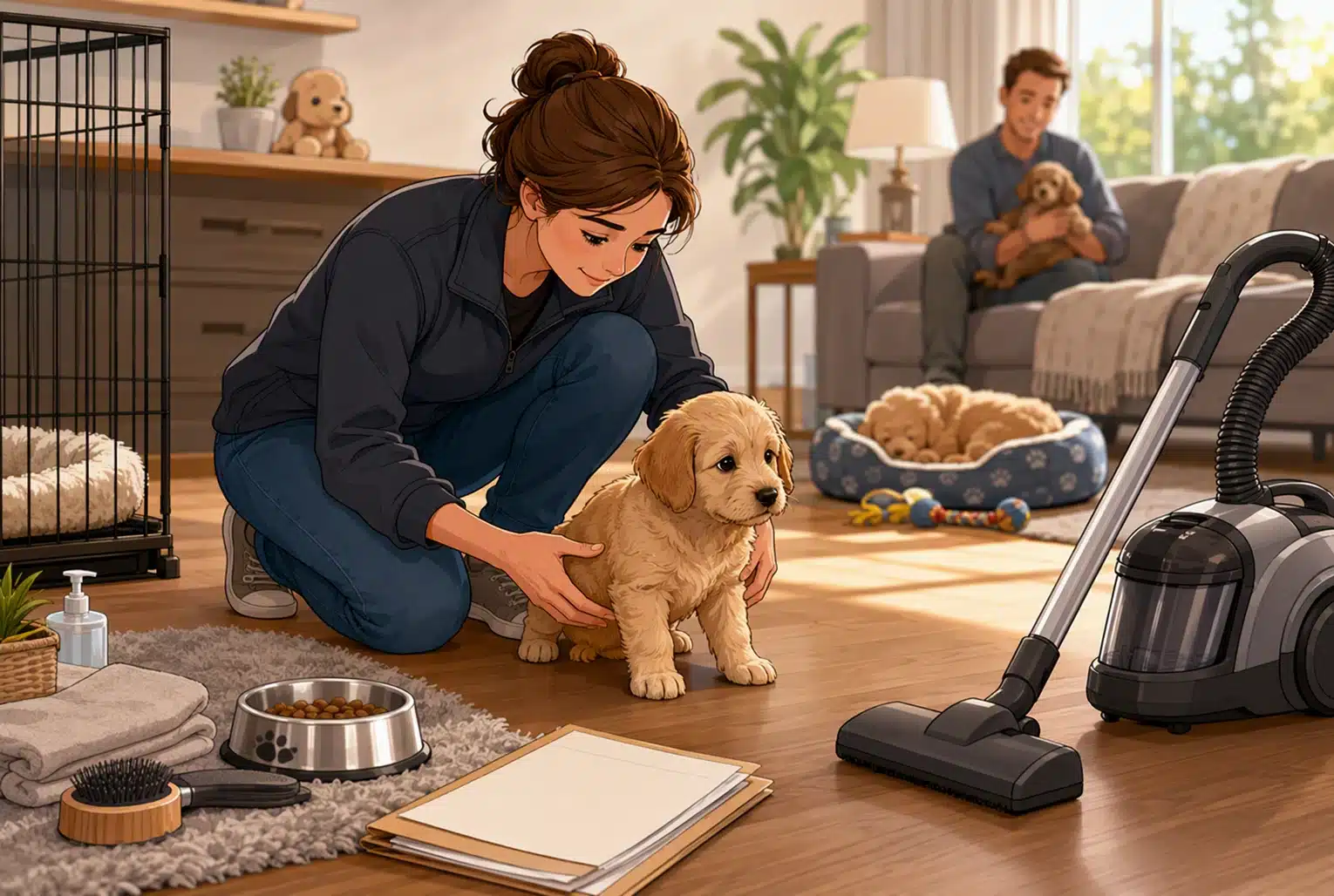
Ask what the breeder has noticed about each puppy’s energy, confidence, and recovery after new experiences. That answer tells you a lot.
Questions about fit, support, and contracts
Ask how the breeder matches puppies to families. A careful breeder should ask about your home, kids, travel, grooming, and daily schedule. The AKC also says reputable breeders usually send puppies home at 8 to 12 weeks, provide a contract, and will often take the dog back if life changes in the future, according to its advice on responsible breeders.
Before you reserve, ask:
- How do you decide which puppy fits which family?
- What support do you offer after pickup or delivery?
- What does the contract cover?
- Is there a return-to-breeder clause?
- What happens if a health issue appears early?
- How do pickup, flight nanny, or delivery options work?
| Ask about | Good sign |
|---|---|
| Matching | Breeder guides placement, not color alone |
| Contract | Clear terms, no pressure |
| Support | Ongoing help after go-home day |
Step 5: Visit, Video Tour, or Evaluate the Puppy’s Environment
A real visit tells you how puppies are actually raised. If you cannot visit in person, ask for a live video tour of the full space, not just cute close-ups.
What to observe during the visit
Look at the setting before you focus on the puppy. Cornell notes that responsible breeders keep the environment clean, give puppies good footing, and provide early socialization with people, sounds, and daily life Cornell’s breeder guidance.
Check for:
- Clean floors, bedding, food, and water
- Room to move, play, and rest
- Normal household exposure like voices, surfaces, and gentle activity
- Puppies that seem curious, not shut down or panicked
- A calm, comfortable mother dog, if she is available to meet
Ask simple questions while you watch:
- Where do the puppies sleep?
- How are they introduced to sounds and handling?
- What does a normal day look like?
- What happens before pickup or delivery?

Why photos alone are not enough
Photos can hide a lot. The ASPCA says responsible breeders should encourage buyers to see where dogs are bred and raised, while internet-only buying can keep bad conditions hidden ASPCA breeding criteria.
A strong video tour should show:
- The full room
- The dam with the litter, if possible
- Puppy pens, play areas, and rest areas
- How the breeder handles and responds to the puppies
If a breeder only offers polished photos, refuses a live tour, or wants to meet in a parking lot, walk away.
Also Read: Health-Tested Puppies for Sale Near Me: Buyer Checklist
Step 6: Compare Pickup, Delivery, Waitlist, and Reservation Details
A good breeder makes the puppy process easy to follow before you pay anything. You should see each step in plain language, not piece it together from texts and guesses.
What a clear puppy process should include
Look for a simple path from first contact to go-home day. It should cover:
- Application or inquiry
- Approval steps
- Reservation amount and whether it is refundable, transferable, or final
- Waitlist order and how puppy matches are made
- Balance due date
- Go-home timing
- What records come with the puppy
A breeder should also explain who holds your spot, what happens if your timing changes, and when you can reasonably expect updates. If delivery is offered through a hired transporter, that business may be regulated under the Animal Welfare Act, and commercial animal carriers must meet USDA transport rules according to APHIS.
If you cannot find the breeder’s reservation, refund, or waitlist terms in writing, pause.
How local Utah pickup and national delivery should be explained
Pickup and delivery details should feel just as clear as pricing. For local Utah families, that means pickup location, available dates, and what happens if weather or timing changes. For national buyers, ask whether the puppy travels by ground, cabin flight, or another method.
The breeder should explain:
- who handles the puppy
- how long travel may take
- what health paperwork is included
- what fees are separate from puppy price
USDA notes that dogs and cats transported in commerce must be at least 8 weeks old and fully weaned for air travel, with crate and handling standards in place on its pet travel guidance. Sage Puppies should be able to explain both South Jordan pickup and nationwide delivery in that same clear, low-stress way.
Also Read: 10 Adorable Havapoo Colors You Need to See (2026)
Step 7: Watch for Common Mistakes That Lead Families to the Wrong Breeder
Small mistakes can point you toward the wrong puppy source fast. The most common problem is not asking for enough proof before sending money. The FTC warns families to walk away if a seller will not talk by phone or video, pushes hard for fast payment, or asks for gift cards, wire transfers, or crypto in its pet scam warning.
Mistakes that look harmless at first
Families often trip over simple choices:
- Falling for a polished website
- Trusting “AKC registered” as proof of quality
- Focusing on color, size, or price before health and temperament
- Treating a deposit like a small risk
- Skipping questions because the puppy feels “meant to be”
Cornell notes that good breeders share breed-specific health testing, early socialization, and ongoing support in its guide to selecting a purebred puppy.
A clean site, cute photos, and fast replies do not prove ethical breeding.
How to slow the decision down wisely
Use a simple pause plan before you reserve:
- Sleep on the decision for one night.
- Ask for health testing proof and parent details.
- Schedule a real phone or video call.
- Read the contract start to finish.
- Confirm pickup or delivery terms.
- Compare at least two breeders side by side.
A careful breeder will respect your pace. If someone gets irritated when you ask clear questions, keep looking. That pause can save you money, stress, and heartbreak.

If you want a breeder you can verify with confidence, start with Sage Puppies. Sage Puppies helps families compare the right things – health-tested parents, early socialization, clear reservation steps, and pickup or nationwide delivery. View available puppies, review the process, and submit an application when you’re ready.
Frequently Asked Questions
Q1: What are the key signs of a responsible and reputable puppy breeder?
A reputable breeder shows health testing, welcomes questions, explains parent temperament, and raises puppies in a home setting. They screen buyers too. Watch for clear contracts, age-appropriate socialization, and no pressure to send a deposit fast.
Q2: What questions should I ask when visiting a puppy breeder to ensure quality and ethics?
Ask who the parents are, what health tests were done, how puppies are socialized, what food they eat, and how pickup works. Also ask what support comes after take-home day and whether you can meet the mother.
Q3: How can I verify a puppy breeder’s health testing and certifications in the US?
Ask for the exact test names and parent records, not vague claims like “vet checked.” For breed-related risks, request proof from recognized labs or registries. A good breeder explains results in plain English and shares paperwork.
Q4: Is it a red flag if a breeder always has puppies available?
Sometimes, yes. Frequent litters across many breeds can mean volume over care. A smaller program, including Sage Puppies, usually has limited planned litters and a waitlist because matching, raising, and screening each puppy takes time.
Q5: Should I choose local pickup or delivery from a breeder?
Choose the option that gives you the clearest, safest process. Ask who handles transport, travel timing, handoff details, and what your puppy receives before leaving. Good breeders explain both options without hiding cost, stress, or logistics.
Conclusion
Finding a reputable puppy breeder near you comes down to proof, not promises. The safest choice is a breeder who shares health testing, raises puppies with early social time, explains pickup or delivery clearly, and stays responsible after the puppy goes home.
Use a simple filter:
- Verify breed fit and breeder ethics.
- Ask for health records and parent testing.
- Confirm how the litter is raised.
- Review the contract, timing, and transport plan.
- Walk away from pressure, vague answers, or missing paperwork.
Cornell notes that good breeders test for recommended breed conditions and provide early socialization and lifelong support in many cases, according to Cornell Veterinary Medicine. That matters even more as USDA APHIS reviews updated dog welfare standards.



