Quick Summary: Always request detailed health and identification records before paying for a puppy in Ohio. Verify that vaccination, deworming, and microchip details match the puppy in front of you, and be cautious of vague or missing paperwork. Ohio law supports thorough recordkeeping, helping buyers confirm the puppy’s health history and breeder transparency.
If someone lists puppies for sale in Ohio but will not show dated vaccine, deworming, and vet records before you send a deposit, pause. You do not have enough facts to judge that puppy’s health story yet. Cute photos, short texts, and vague promises cannot replace paperwork.
That is the problem many families run into with puppies for sale in Ohio. Records may be missing, incomplete, or too general to mean much. First-time buyers often do not know which dates, names, and exam notes matter.
This guide fixes that. You will learn which records to ask for, how to read them, what Ohio buyers should double-check, and which breeder trust signals carry real weight. If you are comparing puppies for sale in Ohio, this helps you sort polished listings from well-documented puppies. We focus on small-breed family puppies and the practical record checks careful buyers use before saying yes.
What Health Records Should Come With a Puppy
Ask for the records before you pay a deposit, not after pickup. The AVMA says providers should give buyers up-to-date health records, and breeders under veterinary oversight must maintain medical records according to AVMA guidance.
The minimum record set to request
You should receive a simple paper or digital file with the puppy’s key care history. At minimum, ask for:
- Exam record with the puppy’s date of birth and exam date
- Vaccination record with vaccine names and dates
- Deworming record with product used and treatment dates
- Breed and litter details so the record matches the puppy offered
- Seller and vet contact details for follow-up questions
A quick table helps you spot gaps fast:
| Record | What it should show | Why it matters |
|---|---|---|
| Vet exam | Puppy ID, date, notes | Confirms recent health check |
| Vaccines | Product name, date given | Helps your vet plan next shots |
| Deworming | Medication and dates | Shows parasite prevention history |
| Puppy identity | Birth date, color, sex | Confirms records match your puppy |
If a breeder says, “the vet has it all,” but cannot send copies, slow down.
Why vaccination and deworming dates matter
Dates tell your vet what comes next. They also show whether care happened on a real schedule. The AVMA notes puppies usually start vaccines at 6 to 8 weeks and finish the first series at 16 weeks or older in its vaccination guide.
Watch for these details:
- Exact date given
- Product name or vaccine type
- Next due date, if listed
- Deworming dates that fit the puppy’s age
Why this matters:
- A missing date can force your vet to restart or adjust timing.
- Long gaps may leave a puppy underprotected.
- Clear deworming history helps your vet decide if fecal testing or repeat treatment is needed.
Rabies often is not given before a very young puppy goes home, so do not expect that record on every small-breed puppy.
What microchip and identity details should show
If the puppy is microchipped, the paperwork should match the puppy exactly. Good records should show:
- Microchip number
- Registry name
- Registration status
- Puppy’s name, sex, color, and birth date
- Breeder and buyer transfer steps
The AVMA explains that a microchip works only if the linked contact details stay current. The chip itself holds a unique ID number, not live tracking.
Before pickup, confirm:
- The chip was implanted already, if promised
- The number on the record matches a scanner check
- You know how to transfer registration into your name
Also Read: Puppy Health Guarantees: What Good Breeders Include
How to Read the Records Before You Reserve
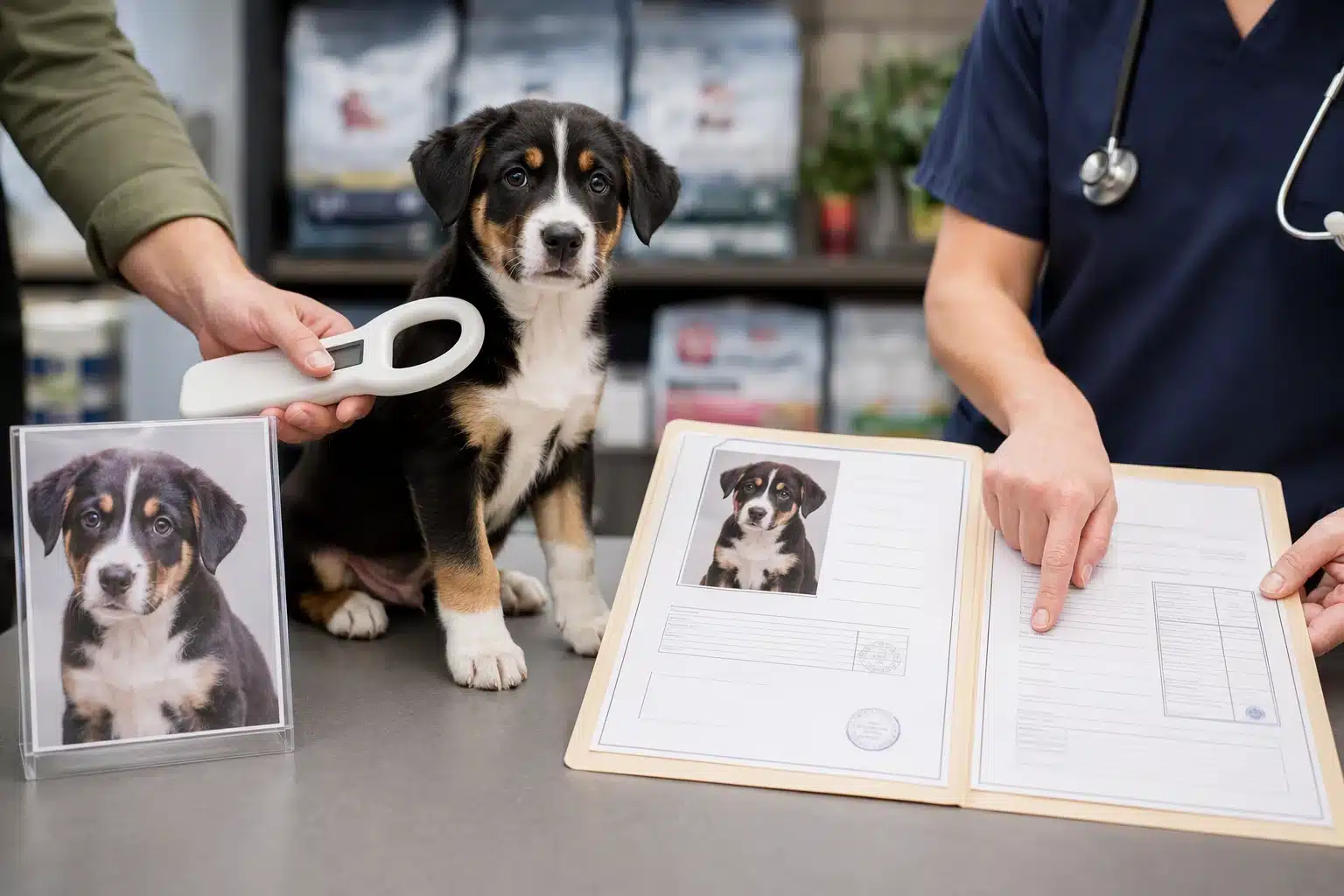
Match the puppy to the paperwork
Start with identity, not vaccines. The puppy in front of you should match every line on the file. In Ohio pet store rules, records must track the dog’s breed, sex, color, identifying marks, birth date if known, source, and microchip number under Ohio recordkeeping rules.
Use this quick check:
| Record item | What should match | Red flag |
|---|---|---|
| Birth date | Listing, health record, sales form | Different dates across forms |
| Sex and color | Puppy and all documents | Vague wording like “mixed” or “tan-ish” |
| Markings | White chest, socks, blaze, spot | No identifying details at all |
| Microchip | Chip number on record and scanner | “Will be chipped later” |
If the breeder cannot clearly tie one puppy to one file, stop there.
Look for age-appropriate care, not just labels
A record that says “up to date” is not enough. You want dates, products, and timing that fit the puppy’s age. Ohio law says pet stores cannot transfer a dog under eight weeks old and cannot sell one without a health certificate signed by an accredited veterinarian under Section 956.20.
Check for:
- Exam date close to pickup or delivery.
- Vaccination dates that make sense for the puppy’s age.
- Deworming dates listed more than once, not just a single note.
- Microchip placement before transfer if required in that sales setting.
- Weight and general condition noted by a vet, not just a seller.
A six-week-old puppy should not have a long vaccine history. A ten-week-old puppy should not have zero care dates listed.
Good records show a timeline. Weak records use labels without proof.
Separate breeder records from veterinary records
Breeder notes matter, but they are not the same as vet documents. Ask to see both side by side.
- Breeder records may show feeding, socialization, litter ID, and early deworming.
- Veterinary records should show exam findings, treatments, and signed medical documents.
That split helps you spot gaps fast. If a breeder says “our vet checked everyone” but there is no signed exam sheet, treat that as missing, not pending. Trusted programs, including boutique breeders like Sage Puppies, make this separation easy because clear files lower stress for buyers and for the breeder too.
Reserve only after the puppy’s identity, timeline, and vet paperwork all line up.
Also Read: Puppies for Sale in Ohio: How to Evaluate Health Records
Ohio Rules That Support Better Recordkeeping
Ohio gives buyers a useful paper trail to check. State law says pet stores and dog brokers cannot sell a dog in Ohio unless that dog has a permanent microchip and a health certificate signed by an accredited veterinarian, and certain seller details must be shared before the sale under Ohio Revised Code 956.20. That matters because you can match one puppy to one set of records.
For buyers, that means you should ask for:
- The microchip number
- The health certificate
- The breeder or broker name and address
- The puppy’s birth date, breed, sex, color, and markings
If a seller cannot tie the puppy in front of you to those exact details, pause the deal.
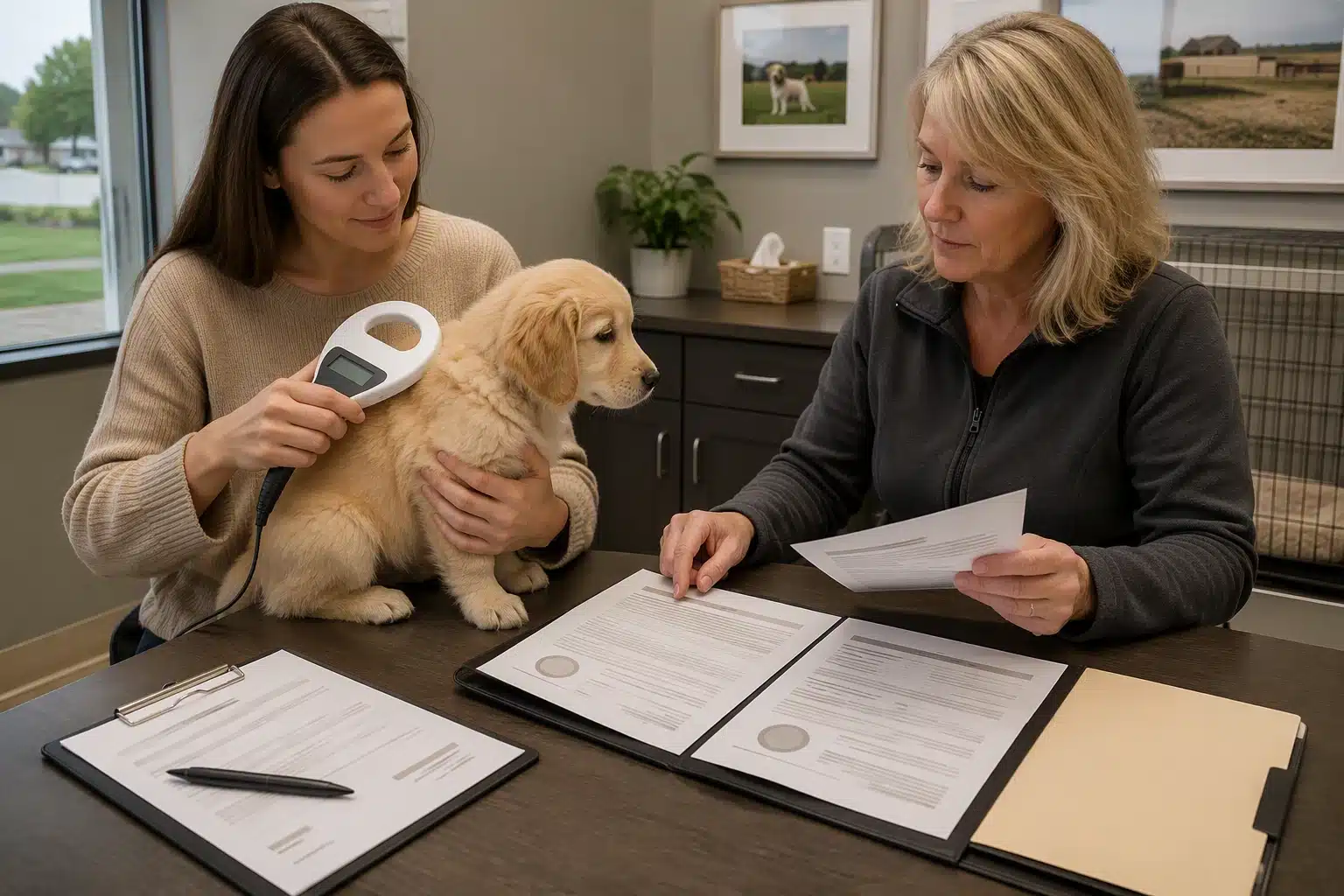
Ohio also requires pet stores to document key intake facts within 24 hours and keep records for two years after the puppy leaves the store, according to Ohio pet store recordkeeping rules. Those rules support better recordkeeping because they push sellers to log the source, possession date, identifying marks, microchip number, and certificate of veterinary inspection fast, not weeks later.
| Record item | Why it helps buyers | What to verify |
|---|---|---|
| Source name and address | Confirms where the puppy came from | Match to breeder paperwork |
| Intake date | Shows chain of custody | Compare with age and travel dates |
| Birth date and description | Confirms identity | Check sex, color, markings |
| Microchip number | Links puppy to records | Scan and match digits |
| Vet inspection certificate | Confirms legal transport paperwork | Check date and puppy details |
Out-of-state or retail sellers should still give you enough to verify the puppy clearly. Ohio law requires out-of-state retailers doing business in Ohio to provide a valid health certificate from the state of origin plus the names, addresses, and phone numbers of breeders, brokers, or private owners who had the dog before retail sale. Ask for that before you send money.
A careful breeder will make this easy. That level of record clarity is one reason families often prefer a transparent, family-raised program over a retail chain.
Also Read: Health-Tested Puppies for Sale Near Me: Buyer Checklist
Red Flags When Health Records Are Missing or Vague
If records show up only after you pay, slow down. In Ohio pet stores, a dog cannot be sold without a health certificate signed by an accredited veterinarian, and certain written details must be given before the transaction according to Ohio Revised Code 956.20. A breeder or seller who says, “We will send that later,” is asking you to buy first and verify later.
Watch for delays like these:
- “The vet sheet is still being uploaded”
- “We share records after the deposit clears”
- “You can review everything at pickup”
Good records are part of the decision, not a reward after payment.
Vague wording is another problem. Phrases like vet checked, healthy, or up to date sound fine, but they do not prove much on their own. You want dates, vaccine names, exam notes, microchip number, and the puppy’s exact ID. If a document does not tie those details to that puppy, it is weak paperwork.

Use this quick check:
| Record phrase | Why it is weak | What you want instead |
|---|---|---|
| Vet checked | No date or findings | Exam date and signed findings |
| Up to date | No list of care given | Vaccine and deworming details |
| Cleared | No condition named | Specific test or issue noted |
Paperwork should also match across the litter. Ohio pet stores must document key intake details, including microchip number and certificate of veterinary inspection, within twenty-four hours of getting the dog under Ohio Administrative Code Chapter 901:1-8. If one puppy has a full file and its littermate has scraps, ask why.
Red flags include:
- Different breeder names on sibling records
- Missing birth dates on some puppies
- Microchip numbers that skip or do not match
- Handwritten edits with no initials
The Questions to Ask Before You Pay
Pay only after the answers match the records in front of you. In Ohio, pet store and broker sales require a health certificate, a microchip, and written source details before the sale under Ohio law. That makes your questions simple: what care happened, who the parents are, and what support comes next.
Questions about the puppy’s care so far
Ask direct, plain questions:
- What vaccines and deworming has this puppy had?
- What dates were they given?
- Who did the last exam?
- Has the puppy had any illness, treatment, or medicine?
- What food is the puppy eating now?
You want answers that match the record, not a sales pitch.
If the seller hesitates on dates, product names, or exam details, slow down.
Also ask how the puppy has been raised:
- Was the puppy home-raised or kennel-raised?
- What daily handling and social time has the puppy had?
- Has the puppy started crate, grooming, or potty routines?
Questions about the parents and litter
Ask to see more than cute photos. Ask:
- What health testing was done on the mother and father?
- Have the parents had eye, heart, patella, or genetic screening?
- How many puppies were in the litter?
- Were there any health concerns in the litter?
- Can you see the parents’ temperament on video or in person?
Ohio rules for high volume breeders require veterinary care records and recordkeeping for dogs and puppies under state breeding rules. That does not replace breed-specific health testing, so ask for both.
Questions about handoff and follow-up
Before money changes hands, ask:
- What exact documents do I get at pickup or delivery?
- Will the microchip number be listed before handoff?
- Is there a health window to see my own vet?
- Who do I contact if the puppy is stressed, not eating, or has diarrhea in the first days?
A strong breeder welcomes these questions. That is one reason families often prefer a transparent program like Sage Puppies over a faster, less personal listing experience.
A Simple Health-Record Checklist for Ohio Puppy Buyers
What to confirm before you reserve
Ask for records before you send a deposit. In Ohio pet stores, buyers must get key dog details before the sale, including breeder name, birth date if known, color, markings, and any known disease or hereditary issue noted by an accredited vet under Ohio Revised Code 956.20.
Use this quick screen:
- Puppy date of birth
- Parent health testing summary
- Current vaccine and deworming record
- Microchip status
- Vet exam date
- Any known issue disclosed in writing
If a seller says, “We will send records later,” pause the reservation.
| Record | Why it matters | Ask for it now? |
|---|---|---|
| Vet exam note | Confirms recent health check | Yes |
| Vaccine record | Shows age-appropriate care | Yes |
| Parent testing | Helps flag inherited risk | Yes |
What to confirm before pickup or delivery
Before the puppy travels, match every record to the puppy in front of you.
- Puppy name, sex, color, and markings match paperwork
- Microchip number matches the record
- Vaccine dates and products are listed
- Deworming dates are listed
- Signed health certificate or inspection form is included if required
- Delivery packet includes breeder and prior source details
Ohio requires pet stores to keep records such as the microchip number and certificate of veterinary inspection under Ohio rule 901:1-8-04.
For national delivery, ask whether your state also needs a recent CVI.
What to do if something is missing
Do not fill in blanks with trust alone.
- Ask for the missing document in writing.
- Ask the seller to confirm the puppy will not travel until records are complete.
- Save screenshots, invoices, and messages.
- Walk away if dates, names, or chip numbers do not match.
Missing paperwork is not a small clerical issue. It can signal weak recordkeeping, rushed transport, or poor breeder oversight. Calm, clear sellers fix this fast.

If you want a small-breed puppy and need records you can actually review, start with Sage Puppies. Their family-first process, health-tested parents, and clear pickup or nationwide delivery options help Ohio buyers move forward with more confidence. Check Available Puppies, review How It Works, then submit an application when you are ready.
Frequently Asked Questions
Q1: best Ohio puppy breeders
Start with records, not ads. The best Ohio puppy breeders show parent health testing, vet exam notes, vaccine and deworming dates, and clear pickup or delivery terms. Ask for sample documents before you place a deposit. A polished website is never enough.
Q2: What health records should I ask for first?
Ask for the puppy’s vet exam, shot record, deworming log, birth date, microchip details if used, and parent test results. For small breeds, confirm patella, heart, eye, and breed-specific screening when relevant. Written records matter more than verbal promises.
Q3: Can an Ohio breeder send records before I visit?
Yes, and they should. A serious breeder can send clear copies before a visit, video call, pickup, or delivery booking. If records only appear after payment, slow down. Good breeders welcome careful questions because informed families usually make better long-term homes.
Q4: What is a red flag in puppy paperwork?
Watch for missing dates, unreadable vet names, vague vaccine entries, or records that list products but no timing. Another red flag is paperwork that does not match the puppy’s age, color, sex, or microchip number. Small errors can signal bigger issues.
Q5: If I am buying from out of state, what should I verify?
Confirm the same records you would ask for locally, then check transport timing, who handles handoff, and what support you get after arrival. Sage Puppies, for example, keeps the process clear for pickup and nationwide delivery, which helps families avoid last-minute confusion.
Conclusion
Buying a puppy in Ohio gets safer when you slow down and check the paperwork first. The best records show who bred the puppy, what care it received, how it was identified, and whether travel documents match the puppy in front of you. Ohio rules also back up that caution – the state requires recordkeeping for veterinary care and movement, and interstate retail transport into or out of Ohio requires a health certificate for retail sale under Ohio Revised Code Section 955.50. Ohio also requires key breeder records, including veterinary care records kept for three years, under Ohio Administrative Code Rule 901:1-6-07. Good families do not just ask if a puppy is healthy. They ask for proof.