
Quick Summary: Vet puppy sellers in New York by asking for health records, breeder details, and legal compliance before paying. Look for transparency in health testing, clear paperwork, and consistent stories. Avoid sellers who rush deposits, hide information, or pressure for quick decisions, especially since New York bans pet stores from selling dogs, cats, and rabbits.
If a seller cannot show a puppy’s health records, source details, and written sale terms before asking for a deposit, slow down. That is one of the clearest warning signs buyers miss when looking at Puppies for sale in New York.
The hard part is not finding listings. It is telling the difference between a careful, transparent seller and one who hides key facts until after you pay. Many families searching Puppies for sale in New York see cute photos first and ask the right questions later. That order can cost you money, stress, and heartache.
This guide shows you what to check before you commit. You will learn how to verify seller records, confirm where the puppy came from, review health paperwork, and spot weak or vague sale terms. You will also see how to ask better questions if you are comparing breeders, brokers, stores, or online listings for Puppies for sale in New York.
We work from the standards serious puppy families care about most: health transparency, clear process, and honest documentation. If you want a broader overview before this deep dive, start with the parent guide on vetting puppy sellers, then come back here to compare New York options with a sharper eye.
1. Confirm the seller is operating transparently in New York
A clean listing is not enough. You want proof that the seller is real, reachable, and willing to show paperwork before you send money. If you have not read the parent guide yet, go back to Puppies for Sale in New York: How to Vet Sellers first, then use this section as your quick screen.
Look for a real business identity, not just a social media page
Start with basic business facts. A trustworthy seller should clearly show:
- Full name or business name
- Phone number and email
- Physical location
- Website with puppy details, not only Instagram or Facebook
- Clear pickup or delivery terms
If the seller hides behind DMs, walk away. You should know who owns the puppy, where it was raised, and who will appear on the contract.
A real breeder or program does not make you chase basic facts.
Ask how the puppy was raised and who is actually handling the sale
Next, ask direct questions. Keep it simple:
- Was the puppy raised in a home, kennel, or third-party facility?
- Who handled feeding, cleaning, and social time each day?
- Is the person advertising the puppy the breeder, a broker, or a transport middleman?
This matters because the answers reveal whether the seller knows the puppy well or is just flipping inventory. Good sellers can describe routine, litter setup, early socialization, and vet care without sounding vague.
A transparent program, including boutique breeders like Sage Puppies, should be able to explain the process in plain English and tell you exactly who raised the litter.
Verify whether the seller can show New York compliance where applicable
If the seller meets New York’s pet dealer threshold, they should be able to show licensing and required records. New York says sellers with more than 25 dogs or cats born and raised on their premises per year must be licensed, and pet stores and brokers can no longer sell dogs, cats, and rabbits under the state’s pet dealer rules. At sale, pet dealers must also give written notice of consumer rights under New York’s notice of rights rule.
Ask for:
- License number, if applicable
- Health and vaccine records
- Written sale terms
- Source and breeder information
- Consumer rights paperwork
If a seller gets defensive when you ask for records, treat that as your answer.
Also Read: 10 Signs a California Puppy Listing Is a Scam – Sage Puppies
2. Review the health proof before you fall in love
Request the puppy’s veterinary history in writing
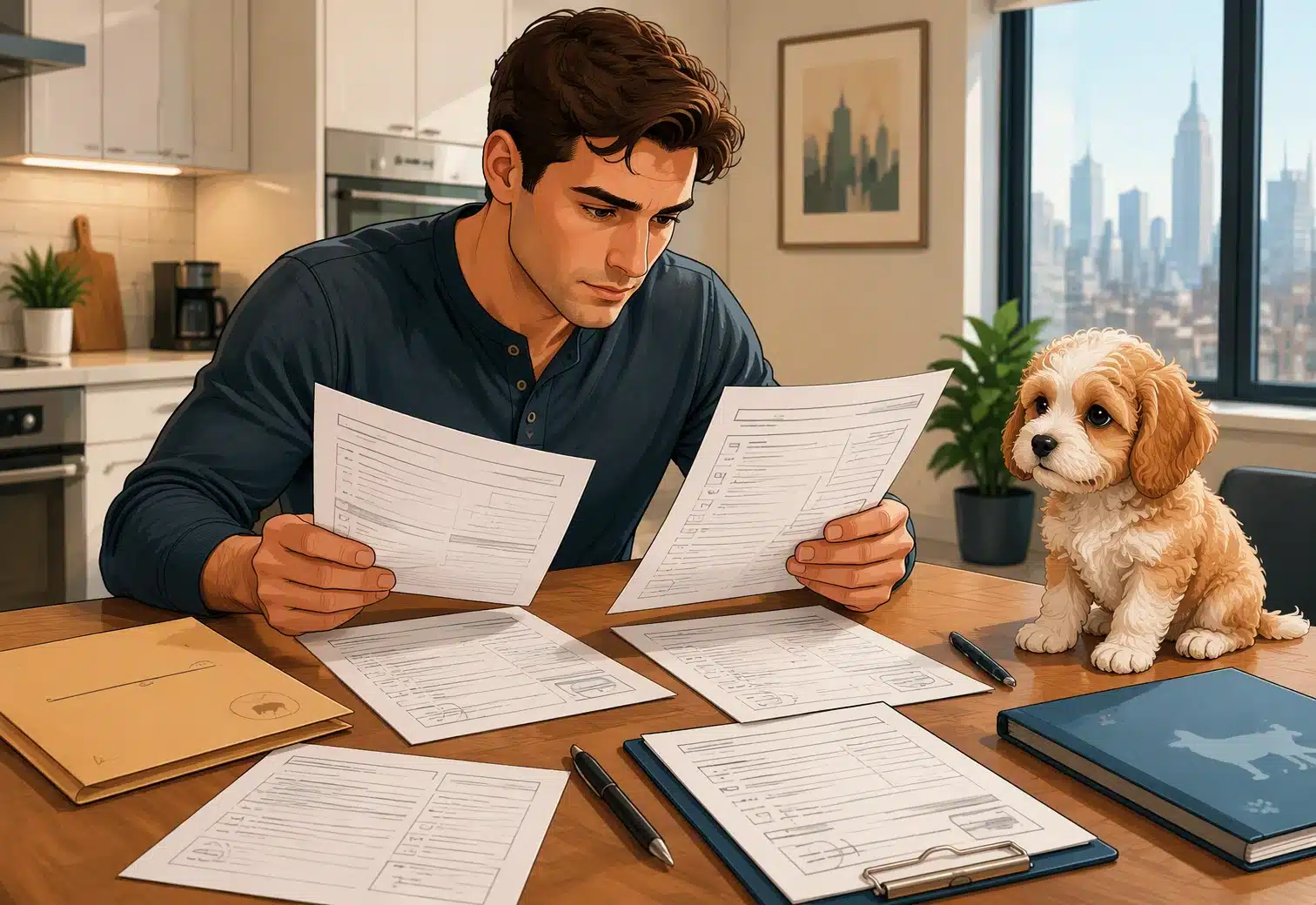
Ask for the puppy’s health record before you place a deposit. A good seller should send it without drama.
You want clear paperwork, not a vague line like “checked by our vet.” In New York, dogs entering from another state generally need a Certificate of Veterinary Inspection or health certificate issued within 30 days according to the New York State Department of Agriculture and Markets. That does not replace a full puppy record, but it does tell you what legal paperwork may be part of the file.
Ask for:
- Vaccine dates and product names
- Deworming dates and medication used
- Exam date and clinic name
- Microchip number, if placed
- Any illness, treatment, or follow-up note
If a seller says “the vet papers come later,” slow down. Health proof should come before payment, not after pickup.
| Document | What it should show | Red flag |
|---|---|---|
| Vet record | Dates, findings, clinic details | No clinic name |
| Health certificate | Recent exam for travel or transfer | Expired or missing |
| Vaccine record | Exact dates and products | “Up to date” only |
Ask about parental health testing and why it matters
Puppy records tell you about the litter. Parent testing tells you about risk. Both matter.
The OFA says DNA tests are the gold standard for specific inherited diseases, and when no DNA test exists, other health screenings still help breeders reduce the odds of affected puppies through selective breeding decisions. For many small companion breeds and mixes, you may see testing for eyes, heart, patellas, hips, or breed-specific DNA issues.
Ask these questions:
- What tests were done on the sire and dam?
- Were the results normal, carrier, affected, or pending?
- Can I see the registered names or OFA links?
- Were results made public?
“Vet checked parents” is not the same as health testing. A wellness exam cannot replace breed-relevant screening.
Use a veterinarian’s perspective, not just the seller’s description
A seller may honestly love the puppy and still miss a problem. Your own vet gives you a neutral read.
The AVMA advises getting proof of vaccination, medical records, and a veterinary exam tied to travel or transfer needs when dogs move across state lines or by air. Once you bring the puppy home, book your exam fast and bring every document.
Use this checklist:
- Send records to your vet before the visit
- Ask if the vaccine schedule looks age-appropriate
- Ask whether the seller’s parent testing matches the breed mix
- Ask what should be monitored over the first year
At Sage Puppies or any ethical program, health proof should hold up when your vet reviews it.
Also Read: Find a Reputable Puppy Breeder Near You: Step-by-Step
3. Read the required paperwork before you place a deposit
Expect a clear information statement at the time of sale
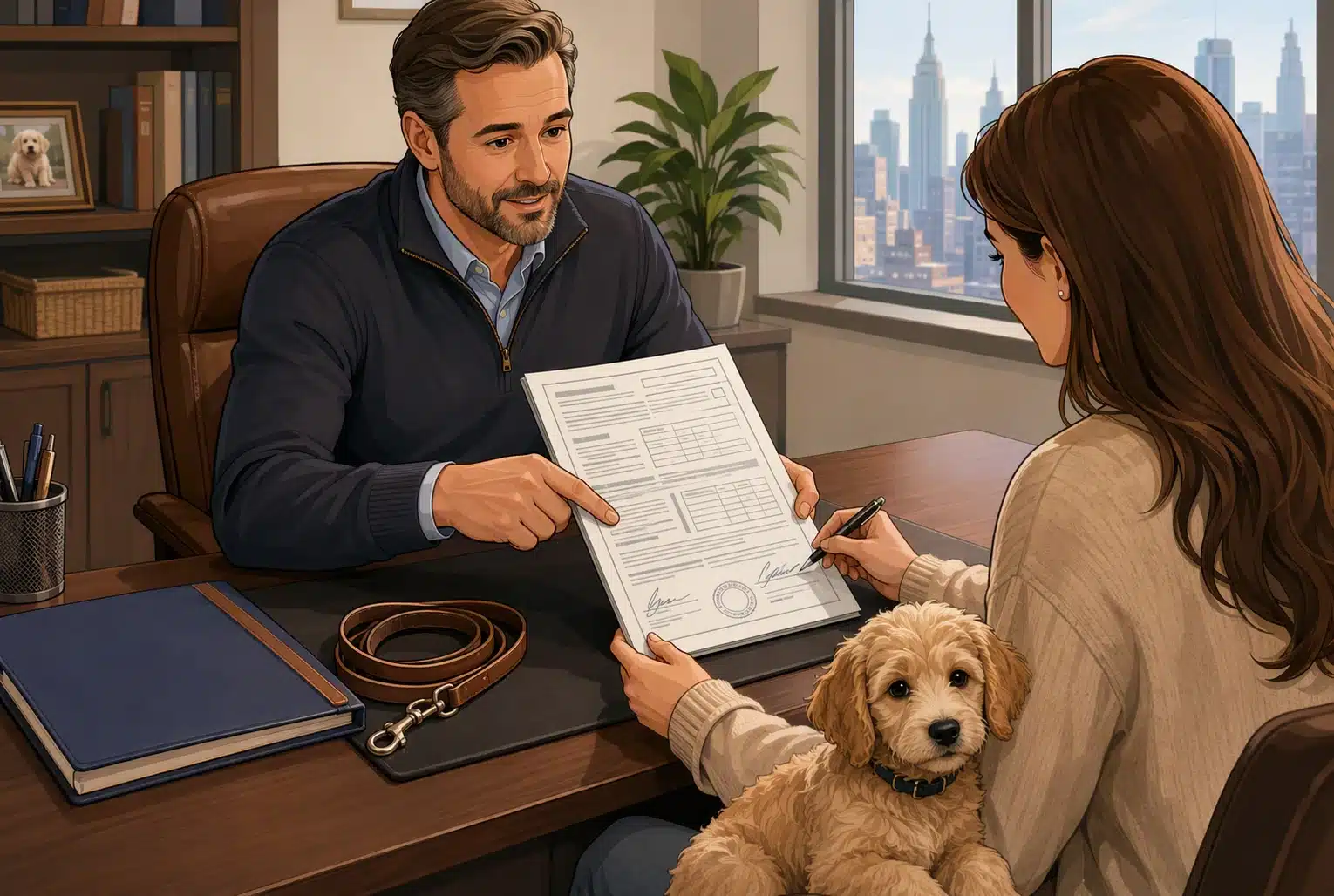
Do not send money until you have seen the seller’s paperwork. In New York, pet dealers must give buyers an information statement at the time of sale. The state form covers the puppy’s source, date of birth or intake date, breed details, vaccines, worming, treatment, and any known illness or hereditary issue, according to the New York information statement form.
Ask for a copy early, even before pickup. Read it line by line.
Use this quick check:
- Seller identity matches the website, contract, and payment name
- Puppy details match the dog you were shown
- Vaccine and deworming dates are filled in, not vague
- Known conditions are either clearly denied or fully disclosed
- Both parties sign the form
If a seller says, “We’ll give you that later,” slow down.
A clean puppy photo is not proof. A complete paper trail is.
Understand your written notice of rights
New York buyers should also receive a written notice of rights. This matters because it explains what happens if a vet finds the puppy unfit for purchase. Under New York’s notice, buyers may have options like a refund, an exchange, or reimbursement for certain vet costs. The notice also explains key timing rules, including the 14-day illness window and the seller’s response deadlines, as outlined in New York’s notice of rights regulation.
Read the dates twice. Rights can depend on fast action.
| Paper | What it should tell you | Why it matters |
|---|---|---|
| Information statement | Source, care, vaccines, known issues | Confirms health history and seller transparency |
| Notice of rights | Your legal options and deadlines | Helps you act fast if a vet finds a problem |
Watch for these red flags:
- The seller gives verbal promises only
- The notice is missing
- The dates are blank
- The wording tries to waive your legal rights
If the paperwork feels rushed or incomplete, the sale is rushed too.
Do not skip the contract details
The contract deserves the same attention as the health records. Read the deposit terms, pickup timeline, refund rules, delivery terms, and what happens if the puppy is found unfit by your vet.
Look for clear answers to these points:
- Is the deposit refundable, transferable, or neither?
- What paperwork do you receive on pickup day?
- Who pays if delivery is delayed or canceled?
- Does the contract conflict with the seller’s legal duties?
A strong breeder makes this easy to read. That is one reason families often prefer transparent programs like Sage Puppies, where next steps, pickup or delivery, and puppy records are explained upfront. If a seller pushes for a deposit before you review the documents, walk away.
4. Spot the red flags that matter most in a New York puppy search
Start here: if a seller pushes speed, hides health details, or keeps changing their story, walk away. In New York, that matters even more because retail pet stores cannot legally sell dogs, cats, or rabbits as of December 15, 2024, according to the New York Attorney General’s notice on the Puppy Mill Pipeline Act.
Watch for pressure tactics and rushed deposits
A good seller gives you time to read, ask, and verify. A bad one wants money before you think.
Common pressure signs:
- “Send a deposit in the next hour.”
- “Another family is coming now.”
- “Take the puppy home today, no need to prepare.”
- Refusing a live video call or visit before payment
New York’s Department of State warns buyers to be careful with online pet scams, stolen puppy photos, and sellers who rush payment before you verify who they are through an in-person meeting or live video call.
If the seller creates panic, they are trying to shut down your judgment.
| Pressure tactic | What it often means | Smart response |
|---|---|---|
| Immediate deposit demand | Scarcity trick | Pause and verify identity |
| Same-day pickup push | No real screening | Ask for contract first |
| Cash-only pressure | Harder to dispute | Use a traceable payment |

Be cautious when health details stay vague
Health transparency should be specific, not warm and fuzzy.
Ask for:
- Vaccine dates
- Deworming dates
- Vet exam record
- Parent health testing
- Any known illness, treatment, or defect
Red flags include:
- “The puppy is healthy” with no paperwork
- Records with missing dates
- No parent testing for breed-related issues
- Vague answers about who examined the puppy
Clear records beat kind words every time.
Treat inconsistent stories as a serious concern
Listen for gaps. One day the puppy is home-raised. The next day it just arrived. The ad says one breed mix, but the contract says another. Those are not small mistakes.
Watch for:
- Different breeder names across texts and documents
- Conflicting age, birthdate, or location details
- A seller using several business names or social accounts
- A story that changes when you ask for proof
In a careful program, the details line up from first message to pickup day. That kind of consistency is what qualified families should expect.
Also Read: 10 Questions to Ask Before Buying a Puppy Locally
5. Compare breeders the right way before you decide
Use a side-by-side checklist before you pick anyone. New York gives buyers real protections, but a good breeder should still be easy to compare on the basics. If you missed the legal screening steps, go back to the parent guide on puppies for sale in New York before you put down a deposit.
Compare communication quality, not just puppy photos
Pretty photos prove almost nothing. Strong communication does.
Ask each breeder the same 5 questions:
- What health testing was done on both parents?
- What is included in the puppy packet?
- How do you raise and socialize the litter?
- What support do you offer after pickup?
- What happens if a health issue appears right away?
A solid breeder answers clearly, without dodging. In New York, licensed pet dealers must provide buyers with health, medical history, and origin information under the state pet dealer program. That matters because clear answers should match real records.
If someone gets warm and vague the moment you ask for paperwork, move on.
| What to compare | Strong sign | Weak sign |
|---|---|---|
| Response style | Specific, calm, prompt | Pushy, rushed, partial |
| Health talk | Names tests and explains results | Says “vet checked” only |
| Follow-up | Answers repeat questions patiently | Acts annoyed |

Match the puppy’s environment to your family’s expectations
Your home life should fit the puppy’s early life. Ask where the litter spends its day, what sounds they hear, who handles them, and how rest, play, and potty exposure are managed.
Look for:
- Clean, lived-in spaces
- Age-appropriate play areas
- Gentle handling
- Clear routine
- Honest limits
This matters even more for small breeds like Havanese, Havapoo, and Cavapoo. If you want a family-raised puppy with a calm start, compare that directly. Sage Puppies, for example, makes that home-raised process part of the decision, not a mystery.
Choose the breeder whose process feels clear and accountable
Pick the breeder whose steps are easy to follow. New York buyers should expect written rights at sale, and state law gives remedies if a vet finds a puppy unfit within set timeframes under the buyer notice and sale rules.
Choose the breeder who clearly explains:
- Reservation terms
- Pickup or delivery timing
- Vet records
- Contract terms
- Next-step support
Clear process beats charm every time. If the process feels foggy now, it usually feels worse after payment.

If you want a seller you can actually verify, start with Sage Puppies. Their family-first process, health-tested parent dogs, and clear pickup or nationwide delivery options help New York buyers skip the guesswork. View Available Puppies, review Pricing and Reservation, then submit an Application when you feel ready. It is a calm, transparent next step for families who want to buy wisely.
Frequently Asked Questions
Q1: best New York puppy breeders
The best New York puppy breeders are easy to verify, not just easy to find. Ask for health testing proof, vaccination records, a sales contract, and clear pickup or delivery details. A strong breeder answers questions calmly and shows how puppies are raised at home.
Q2: How do I know if a New York puppy seller is legit?
Start with paperwork. Check the seller’s full name, business name, address, and phone number. Ask for dated vet records, parent health testing, and the exact age of the puppy. If answers stay vague or rushed, walk away.
Q3: What documents should I ask for before I leave a deposit?
Ask for a written contract, health record, vaccine and deworming dates, feeding details, and any health testing tied to the parents. You should also see the puppy’s birth date and microchip details if one is already placed.
Q4: Are online puppy listings in New York safe?
Some are, many are not. Treat listing sites as lead sources, not proof of quality. Verify the actual seller behind the ad. Never trust polished photos alone. Ask live questions and request records before sending money.
Q5: What are the biggest red flags when buying a puppy?
Watch for same-day pressure, cash-only demands, missing parent details, no contract, no vet paperwork, or claims that every breed is always available. A careful seller welcomes questions. At Sage Puppies, families get a clear, step-by-step process instead.
Conclusion
The safest way to shop for puppies for sale in New York is to verify, not assume. Check whether the seller must be licensed, ask for health and origin records, and confirm the puppy’s vet care, vaccine history, and living conditions. New York’s pet dealer program is built to give buyers more transparency about an animal’s health, medical history, and source, according to the New York Department of Agriculture and Markets.
A polished website or friendly text thread is not enough. Good sellers answer clear questions, share real paperwork, and stay consistent from first contact to pickup.
If a seller avoids records, rushes payment, or changes their story, walk away.
That careful approach matters even more now, as regulators keep tightening animal welfare oversight, including stronger federal enforcement against chronic dog welfare violators in 2026 USDA action.



