Quick Summary: When buying puppies in Ohio, focus on verifying health records for consistency, traceability, and honesty. Check that all documents match the puppy’s microchip, birth date, and physical features, and ensure vet exams and vaccinations are appropriate for the puppy’s age. Look for transparent breeder practices, including parent health testing and clear transfer records. Strong, complete paperwork indicates the puppy was raised with proper care and reduces the risk of hidden issues.
If you are comparing Havanese, Havapoo, or Cavapoo puppies in Ohio, skip the photo album first. The paper trail matters more. A solid health record packet should line up with the puppy’s microchip, vet notes, vaccine dates, and transfer documents.
That is where many buyers get stuck. Records can look complete but still leave gaps, mixed names, missing test dates, or no clear link to the right puppy. First-time buyers often do not know what should match, what is normal, or what should stop a sale.
This guide shows you how to check each document, spot weak paperwork, and ask better questions before you reserve. We focus on real buyer-side review steps used to assess health, traceability, and breeder honesty, so you can compare puppies with more confidence and less guesswork.
1. Confirm the puppy’s identity matches every document
Start here before you read vaccines, deworming, or vet notes. If the puppy on paper is not clearly the puppy in front of you, the rest of the file means very little.
Check the exact puppy identifiers
Match every record to the same puppy using at least these details:
- Microchip number
- Date of birth
- Sex
- Breed
- Color and markings
- Litter or registration number, if listed
Ohio requires high volume breeders to track movement records with the puppy’s microchip number, sex, date of birth, breed, and description, according to Ohio recordkeeping rules. USDA guidance also says breeders must use official identification and keep records tied to that ID, including descriptions and medical entries for puppies and litters in many cases under APHIS recordkeeping rules.
| Record | What should match |
|---|---|
| Vet exam | Microchip, sex, DOB |
| Vaccine record | Puppy name or ID, DOB |
| Sales contract | Puppy name, color, breeder info |
| Registration papers | Litter number, sex, markings |
If one document says “female cream” and another says “male sable,” stop and ask why before you reserve.
Look for a clean transfer trail
A clean transfer trail shows where the puppy came from, who handled it, and when. You want no missing handoff.
Check for:
- Breeder name and address
- Date the breeder owned or listed the puppy
- Date of sale or transfer
- Buyer name
- Any broker, store, or transport handoff
Ask one simple question: Can you show me how this puppy moved from birth to me?
Good records look boring. Names, dates, IDs, and signatures line up. Weak records look patched together, with nicknames, missing dates, or a microchip added late.
A trustworthy breeder should answer this fast, without getting defensive.
If Sage Puppies or any breeder says they value transparency, this is where you test it.
Also Read: 10 Adorable Havapoo Colors You Need to See (2026 Guide) – Sage Puppies
2. Read the veterinarian exam like a buyer, not a technician
What a complete exam record should show
A good vet exam should help you answer one simple question: Was this puppy clearly identified, physically checked, and followed up if anything looked off? You do not need medical training to review that.
Under USDA rules for regulated dog sellers, records should include the dog’s identity, age, breed, exam findings, test results when needed, and the names and dates of vaccines or treatments, as outlined in 9 CFR 3.13. If the puppy is moving across state lines, a health certificate or CVI should also identify the animal and shipment details, according to APHIS guidance on movement documents.
Use this quick check:
| Record item | What you want to see | Why it matters |
|---|---|---|
| Puppy identity | Breed, sex, age, color, microchip or collar ID | Confirms the record matches your puppy |
| Exam date | Recent, readable date | Shows how current the check is |
| Vet details | Clinic name, vet name, signature | Proves a real exam happened |
| Findings | Notes on eyes, ears, heart, lungs, skin, stool, bite, joints | Shows the puppy was actually examined |
| Care given | Vaccine names, deworming, meds, follow-up plan | Helps you track next steps |
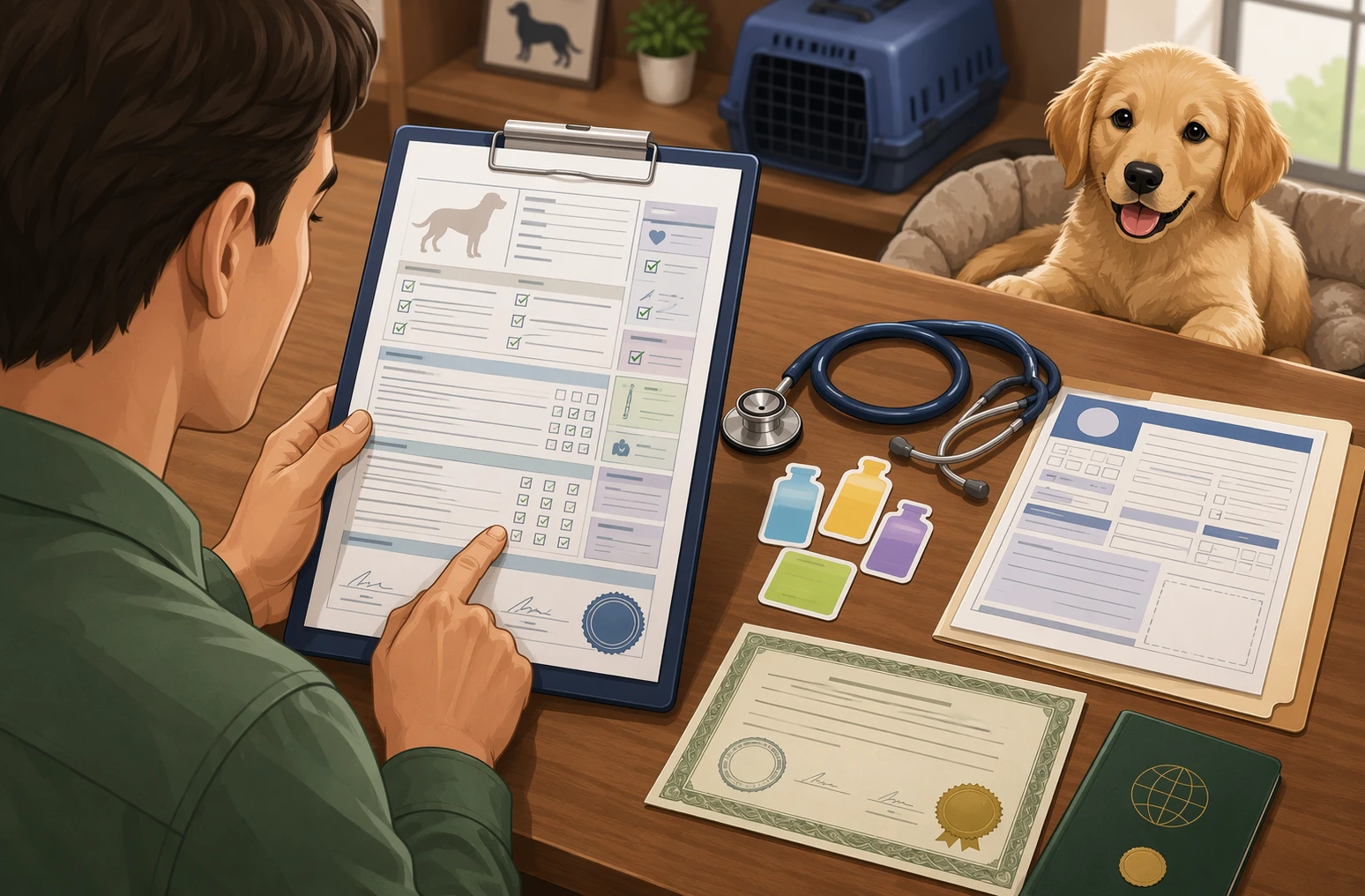
A complete record can still note a minor issue. What matters is that the issue is named clearly and paired with a plan.
How to spot a record that is too vague
Weak records often sound clean, but tell you almost nothing.
Watch for red flags like these:
- Only one line that says “healthy” or “checked.”
- No puppy ID beyond “male puppy” or “Cavapoo.”
- No signature or clinic details.
- No vaccine names or dates.
- No note about a visible issue you can see in person.
Ask direct questions if the record feels thin:
- What exactly did the vet examine?
- Was anything noted about knees, heart murmur, bite, eyes, or hernia?
- If there was a finding, what was the plan?
- Does this paperwork match the puppy’s microchip or litter record?
If a breeder is transparent, they will not act annoyed when you ask for a clearer copy or explanation.
Also Read: 10 Things to Know Before Buying Puppies for Sale in Idaho – Sage Puppies
3. Verify vaccination and parasite-control timing, not just the labels
A vaccine name on a record does not tell you enough. You need to match each entry to the puppy’s age on that date. According to AAHA’s canine vaccine recommendations, core puppy vaccines are given in a series between 6 and 16 weeks, usually 2 to 4 weeks apart. That means an 8-week-old puppy should not show a full finished series, and a 14-week-old puppy with only one shot needs follow-up.
Use this quick sanity check:
- 6 to 8 weeks – first combo vaccine may appear
- 9 to 12 weeks – next dose should usually appear
- 12 weeks and up – leptospirosis may start if the vet recommends it
- Under 16 weeks – records should often show the series is still in progress
If the breeder says “fully vaccinated” for a very young puppy, pause and ask exactly which vaccines were given, on what dates, and what is still due.
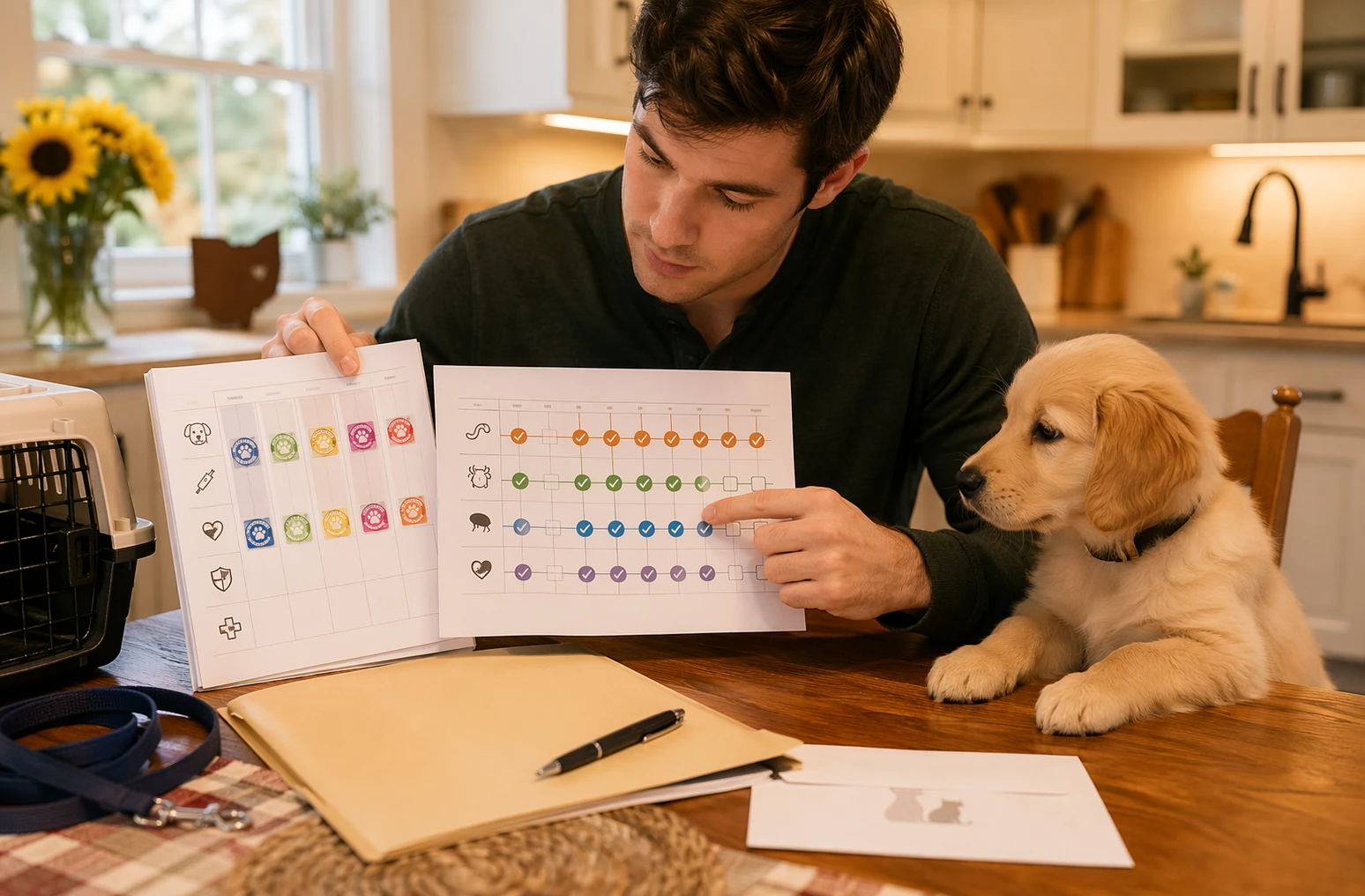
Parasite control works the same way. One deworming entry is not enough proof of a solid start. Young puppies often need repeated treatment because common worms can cycle back after the first dose.
Look for a pattern, not a single line item:
| Record detail | What you want to see | Why it matters |
|---|---|---|
| Vaccine dates | Spaced by age-appropriate intervals | Shows the breeder followed a real schedule |
| Product name | Clear vaccine or dewormer listed | Helps your vet verify what was given |
| Route and provider | Vet clinic or documented breeder protocol | Adds traceability |
| Next due date | Written follow-up plan | Proves care is ongoing |
A stronger record usually includes:
- More than one dated entry
- Consistent spacing
- A next-step plan
- No vague terms like “shots done” or “dewormed”
AAHA notes that maternal antibodies can block early vaccine response, which is why puppies need repeated doses until past 16 weeks in many cases, as explained in its distemper vaccine guidance. That is why timing matters more than labels alone.
4. Check hereditary-risk documentation and what the breeder is willing to disclose
Ask which conditions are screened in the line
Ask a plain question first: Which inherited issues do you screen for in this puppy’s parent line? A good breeder should answer fast and name the actual conditions, not just say “fully health tested.”
For small companion breeds and their mixes, ask for records tied to the parents by name or registration number. You want to see what was screened, when it was done, and who performed it. The OFA explains that CHIC testing is breed specific, and a CHIC number means the dog completed the recommended screenings and the results were made public in the database through OFA’s CHIC program.
Use this quick check:
| What to ask | What good records show | Red flag |
|---|---|---|
| Eye screening | Recent exam from a board-certified ophthalmologist | “Our vet looked at the eyes” |
| Cardiac screening | Cardiac record with exam type and date | No details on who cleared the heart |
| Patella or orthopedic checks | Parent-specific result, not a verbal claim | “No issues so far” |
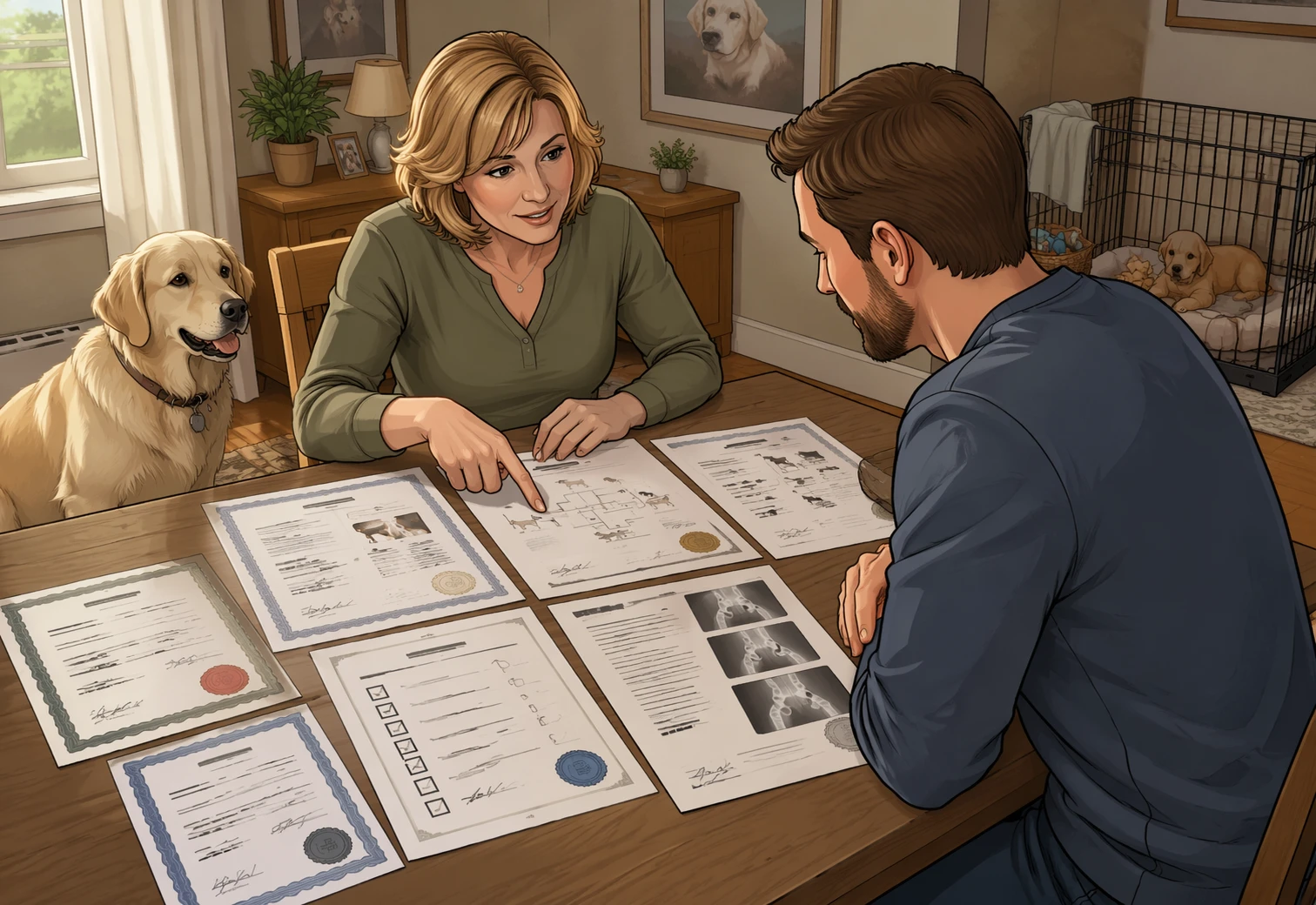
A DNA panel is helpful, but it does not replace eye, heart, or orthopedic exams.
Use the records to test the breeder’s transparency
Records tell you about more than health. They tell you how the breeder handles honesty.
The OFA says a CHIC number requires publicly available results, not just completed tests in the OFA disease and screening database. That matters. A breeder who shares parent names, test dates, and result copies is giving you something you can verify.
Use this short transparency test:
- Ask for the sire and dam’s full names.
- Ask which results are public and which are private.
- Ask if any relative had a concern that changed their breeding plans.
- Ask what they do if a result is unclear, expired, or borderline.
Good breeders stay calm here. They do not get defensive. They explain limits, too. No breeder can promise a puppy will never face a genetic issue. They can show careful screening, smart pairings, and open records.
If the breeder avoids direct answers, sends cropped screenshots, or refuses parent identities before a deposit, step back.
Also Read: 10 Small Breed Puppies That Stay Friendly and Easy Going – Sage Puppies
5. Match the paperwork to Ohio’s transfer and recordkeeping rules
Ohio paperwork should do more than look complete. It should match what the state expects sellers, brokers, and pet stores to track. For buyers, the key items are the puppy’s microchip number, date of birth, breed/sex/color or markings, seller name and address, and any health certificate or vet exam record that follows the puppy through transfer. Ohio’s recordkeeping rule for high volume breeders requires movement records to include the date of transfer, buyer and seller details, and the dog’s identifying facts, including the implanted microchip number, according to Ohio Administrative Code 901:1-6-07.
| Paperwork item | What it should match | Why buyers should care |
|---|---|---|
| Microchip record | Chip number on vet record and sales papers | Confirms identity |
| Birth date | Vaccine and exam timeline | Helps spot age gaps |
| Seller details | Contract and receipt | Confirms traceability |
| Health certificate or exam sheet | Puppy listed by same identifiers | Shows continuity |
Use this quick buyer check:
- Match the same puppy across every page.
- Check that dates move in a normal order.
- Make sure names and addresses stay consistent.
- Ask who kept, housed, or transferred the puppy before sale.
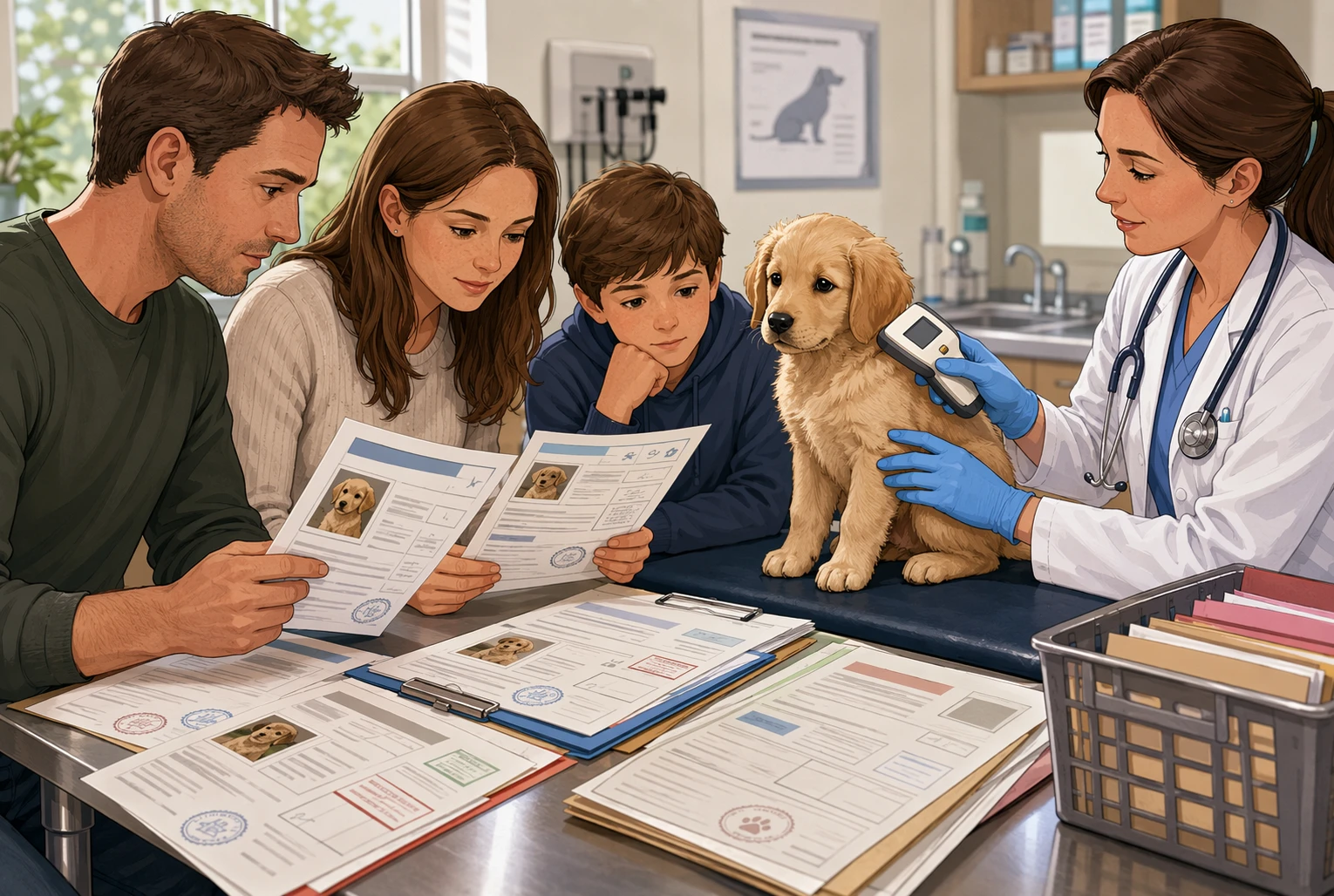
If one page names the puppy but another only lists a litter nickname, ask for written clarification before you leave a deposit.
Missing paperwork is not a tiny admin issue. It can mean the puppy’s history is hard to prove. Ohio also requires dogs sold for retail resale to be at least eight weeks old, and dogs moving into retail sale channels from outside Ohio must be accompanied by a veterinary health certificate under Ohio Revised Code 955.50.
Treat gaps like this as a pause point:
- No microchip number anywhere
- Birth date that conflicts with vaccine timing
- No signed transfer record or seller identity
- Health paper with no clear link to the puppy in front of you
Good breeders expect these questions. Clear records are part of clear care.
Also Read: 8 Illinois Puppy Sale Documents Every Buyer Should Check
6. Use the records to decide whether the puppy feels like the right fit
Green lights that usually support moving forward
Good records should help you feel calm, not rushed. Move forward when the file is clear, complete, and easy to match to the puppy in front of you.
- The puppy’s name, date of birth, breed, sex, and microchip number line up across every document.
- Vaccine and deworming entries show dates, product names, and who gave them.
- A recent vet exam is easy to read and notes normal heart, lungs, eyes, skin, stool, and weight.
- Parent testing is shared without excuses, and the breeder can explain any limits plainly.
- Traceability is strong. Ohio rules for high volume breeders require records tied to identification and movement details, which helps you confirm the puppy’s history Ohio recordkeeping rules.
If the records answer your questions before you ask them, that is usually a very good sign.
When to pause and ask for more information
Some gaps do not mean “walk away” right away. They do mean “slow down.”
- Dates do not match from one paper to another.
- The breeder sends screenshots instead of full records.
- A vet note says “healthy” but leaves out exam findings.
- The microchip is missing, unreadable, or not linked to the puppy.
- Vaccines seem too early, too late, or listed without lot details.
- The breeder avoids questions about parasites, stool checks, or follow-up care.
Federal rules for covered sellers require medical records to include the dog’s identity, vaccine and treatment names, dates given, and exam or test results USDA veterinary care standards.
Also Read: 10 Unique Care Tips for Small Breed Puppies in Urban Settings – Sage Puppies
If you want a simpler, more transparent buying process, start with Sage Puppies. You can review health-focused breeding, family-raised care, and clear next steps before you reserve. Check available puppies, compare breeds, and ask direct questions so you can choose with confidence.
Frequently Asked Questions
Q1: What should I look for when evaluating a puppy’s health records in Ohio?
Check the puppy exam date, vaccine dates, deworming log, microchip details, and the vet clinic name. Match every record to the puppy’s sex, color, and birth date. Ask for parent health testing too, not just the puppy visit.
Q2: How do health records help identify potential hereditary conditions in Ohio puppies?
Health records show more than shots. They can point to missing parent testing for knees, eyes, heart, or genetic issues common in small companion breeds. If a breeder cannot trace family health clearly, treat that as a real warning sign.
Q3: Are health records from Ohio breeders required by law when buying a puppy?
Rules can vary, so do not assume every breeder must hand over strong records automatically. Smart buyers still ask for full paperwork before sending a deposit, including vet notes, vaccine dates, and any parent screening results.
Q4: Should the breeder let me verify records with their vet?
Yes. A good breeder should be comfortable with basic record checks. You can confirm exam dates, vaccine timing, and whether the puppy was actually seen. Transparent programs, including Sage Puppies, know this builds trust and protects families.
Q5: What records matter most before I reserve a puppy?
Focus on the puppy wellness exam, age-appropriate vaccines, fecal or parasite care, and parent health testing. If anything looks incomplete, blurry, or inconsistent, pause the reservation. Clear paperwork often tells you as much as the puppy itself.
Conclusion
Health records should help you verify three things – wellness, traceability, and honesty. If a breeder cannot clearly show exam dates, vaccine details, parasite care, microchip ID, parent testing, and matching names across every document, pause.
Ohio law requires pet stores to provide a health certificate signed by an accredited veterinarian, and dogs sold through pet stores must be microchipped and at least eight weeks old, according to the Ohio Revised Code. A Certificate of Veterinary Inspection is also a legal disease and traceability document when used.
The best records look complete, consistent, and easy to explain. That is usually a strong sign the puppy was raised with care.