Quick Summary: To spot a safe Wisconsin puppy listing, verify the ad looks genuine, check the seller’s licensing and location, and review health records like CVIs and parent testing. Avoid listings with copied photos, vague details, or pressure tactics. Conduct live video calls to confirm the puppy and breeder are real, and only send deposits after thorough verification. Sage Puppies emphasizes transparency and proper documentation to help buyers avoid scams and find trustworthy breeders.
You see a Havanese or Cavapoo ad in Wisconsin Puppy Ads. The photos look great. The puppies are “ready now.” The price feels fair. That is where many buyers get rushed. Safe Puppy Listings do not rely on cute photos alone. They back up the ad with licensing details, health records, clear breeder answers, and a real live conversation before any deposit.
This guide solves a simple but costly problem: scammy or careless listings can look polished. First-time buyers often miss the warning signs until money is gone or the puppy arrives with issues.
Here, you will learn practical Puppy Listing Tips to check Safe Puppy Listings step by step. We will cover Wisconsin-specific checks, paperwork, breeder communication, and what to verify before pickup or shipping. The goal is simple: help you spot Safe Puppy Listings with more confidence and skip the ones that do not hold up.
Step 1: Check whether the listing looks real before you engage
Start with the ad itself. If the listing looks sloppy, copied, or oddly urgent, stop there. Wisconsin DATCP warns that pet scammers often post fake local listings, then move buyers to a second seller and start piling on transport and permit fees later Wisconsin DATCP warning.
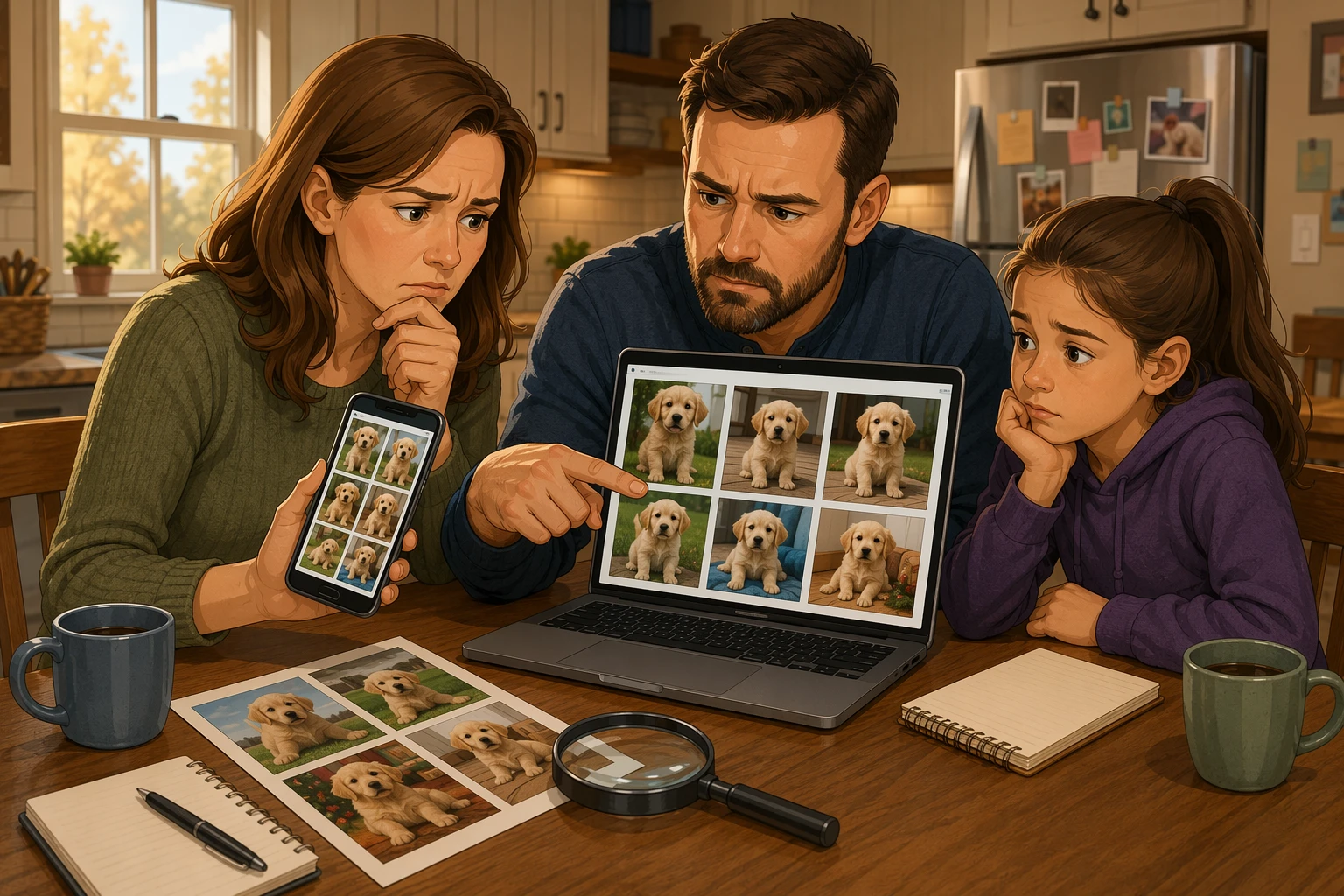
Look for signs the ad was copied or recycled
Read the full listing slowly, not just the puppy photos.
Watch for these clues:
- The same wording appears in other ads when you search one sentence in Google
- Photos look mismatched – different backgrounds, ages, or lighting
- Breed details change between headline, description, and messages
- Location feels vague like “near Madison” with no town, pickup plan, or breeder name
- Grammar errors show up in basic facts, not just one typo
BBB says scammers often clone real pet seller sites and recommends reverse image search plus searching unique lines of text from the ad BBB pet scam guidance.
If the seller will not show a live video call with the exact puppy, assume the ad may be recycled.
| Listing detail | Good sign | Red flag |
|---|---|---|
| Photos | Same puppy, same setting, multiple angles | Mixed puppies and random settings |
| Description | Specific age, location, pickup details | Generic claims and reused phrases |
| Seller identity | Clear name and business trail | First name only or no trace online |
Watch for pressure tactics and payment shortcuts
Scam listings try to rush you before you verify anything.
Common pressure lines:
- “Many families are waiting, send deposit now.”
- “We cannot video call because the puppy is resting.”
- “Pay with Zelle, Venmo, gift cards, or wire only.”
- “Shipping insurance is refundable, just send one more payment.”
DATCP specifically warns buyers not to pay upfront and to avoid untraceable payment methods. It also warns that scammers may add fake transport, license, or permit fees after the first payment.
A real seller can explain the process clearly. A scammer keeps changing the rules.
Read the price and availability language critically
A fake listing often hides behind a “reasonable” price, not just a super cheap one.
Check for:
- Prices far below the breed’s normal range
- “Ready today” language for very young puppies
- Several puppies always available with no waitlist or details
- Free shipping paired with surprise fees later
Also question emotional lines like “must rehome today” or “last puppy unless you pay now.” Scarcity can be real, but rushed wording is often there to stop you from checking records, asking for live proof, or comparing listings.
Before you message, screenshot the ad. If it changes later, that is useful evidence.
Also Read: 10 Signs a California Puppy Listing Is a Scam – Sage Puppies
Step 2: Verify the seller’s Wisconsin identity and licensing status
Start with the seller, not the puppy. In Wisconsin, many breeders, dealers, shelters, and rescues must be licensed by DATCP. The state says breeders selling 25 or more dogs a year from more than 3 litters and certain dealers and rescues should appear in its records, and licenses expire on September 30 each year according to DATCP’s dog seller licensing page.
Check whether the seller should appear in Wisconsin licensing records
Use a simple filter first:
- Ask how many litters they produce each year.
- Ask whether they bred and raised this puppy themselves.
- Ask whether they sell only in Wisconsin or also import dogs.
If the seller says they place puppies often, advertise many breeds, or always have pups ready, they may need a license. If they meet Wisconsin’s threshold but do not show up in the public listing, treat that as a serious warning sign.
Use this quick check:
| Seller claim | Should you expect a DATCP record? | What to do |
|---|---|---|
| Small hobby breeder, few litters | Maybe not | Ask direct volume questions |
| Breeder with frequent puppy ads | Often yes | Check DATCP listing |
| Broker or dealer selling puppies they did not breed | Often yes | Verify license name and status |
A missing license is not automatic proof of a scam. But a seller who dodges basic questions usually is not worth the risk.

Ask for the license and compare it to the listing details
Do not accept “we’re licensed” as enough. Ask for:
- The full legal name
- The doing business as name
- The license number
- The county and physical address
- A photo of the posted license
Then compare that to the Wisconsin public list of licensed dog sellers in the DATCP listing PDF.
Match these details line by line:
- Facebook page name vs. legal entity
- Listing city vs. license county
- Phone number vs. invoice or contract
- Seller name vs. payment account name
If the ad says “family raised in Madison” but the paperwork points to a different county, ask why.
A real seller should answer calmly and clearly. Evasive replies, cropped screenshots, or “my partner handles that” stories are common stall tactics.
Confirm the seller is actually operating from the location they claim
A real Wisconsin seller should be able to prove they work from the place listed.
Ask for:
- A live video call showing the puppy and the space.
- A photo of the outside entry or driveway taken that day.
- A pickup plan with a real address, not “we’ll meet later.”
- A vet paperwork sample with matching seller details.
Watch for edge cases. Some good breeders use home custody or delivery help. That alone is not a problem. The problem is when the seller cannot connect the puppy, paperwork, and location into one clear story.
Use this location check table:
| What you verify | Safe sign | Red flag |
|---|---|---|
| Address | Specific and consistent | Vague or changes twice |
| Video call | Live, current, responsive | Pre-recorded clips only |
| Pickup plan | Home, kennel, or clear meeting point | Parking lot handoff only |
If the seller refuses a live check and pushes for a deposit first, stop there.
Also Read: Family-Raised Puppy Contracts: Key Terms to Review First
Step 3: Confirm the listing includes the health proof Wisconsin buyers should expect
Ask for the puppy’s veterinary paperwork, not just verbal reassurance
A safe listing should show real health proof, not phrases like “vet checked” with no backup. In Wisconsin, dogs sold by licensed sellers must come with a certificate of veterinary inspection, also called a health certificate or CVI, and puppies cannot be sold before 7 weeks old, according to DATCP consumer information.
Ask for copies before you place a deposit:
- CVI or health certificate
- Vaccination record
- Deworming record
- Vet visit date
- Any written health guarantee or return terms
Use this quick check:
| Paperwork | What you want to see | Red flag |
|---|---|---|
| CVI | Vet name, exam statement, puppy ID | Seller says “I’ll send later” |
| Vaccine record | Dates and products listed | No dates or photo proof |
| Deworming record | Clear schedule | “Done at home” only |
| Health guarantee | Written terms | Verbal promise only |
A CVI is helpful, but it is not a full guarantee of lifelong health. It shows the puppy was recently examined and not showing communicable disease at that time.
Look for clear evidence of parent health testing and breeder transparency
The ad should not stop at “parents are healthy.” Ask what testing was done on the sire and dam and request proof. For small companion breeds, that may include patella, heart, eye, or breed-related testing, depending on the breed mix.
Good sellers usually provide:
- Parent names
- Specific tests completed
- Results or certificates
- A clear answer if a test was not done
If the seller avoids details, changes the subject, or says testing is “not needed,” slow down. Ethical breeders know buyers ask this.
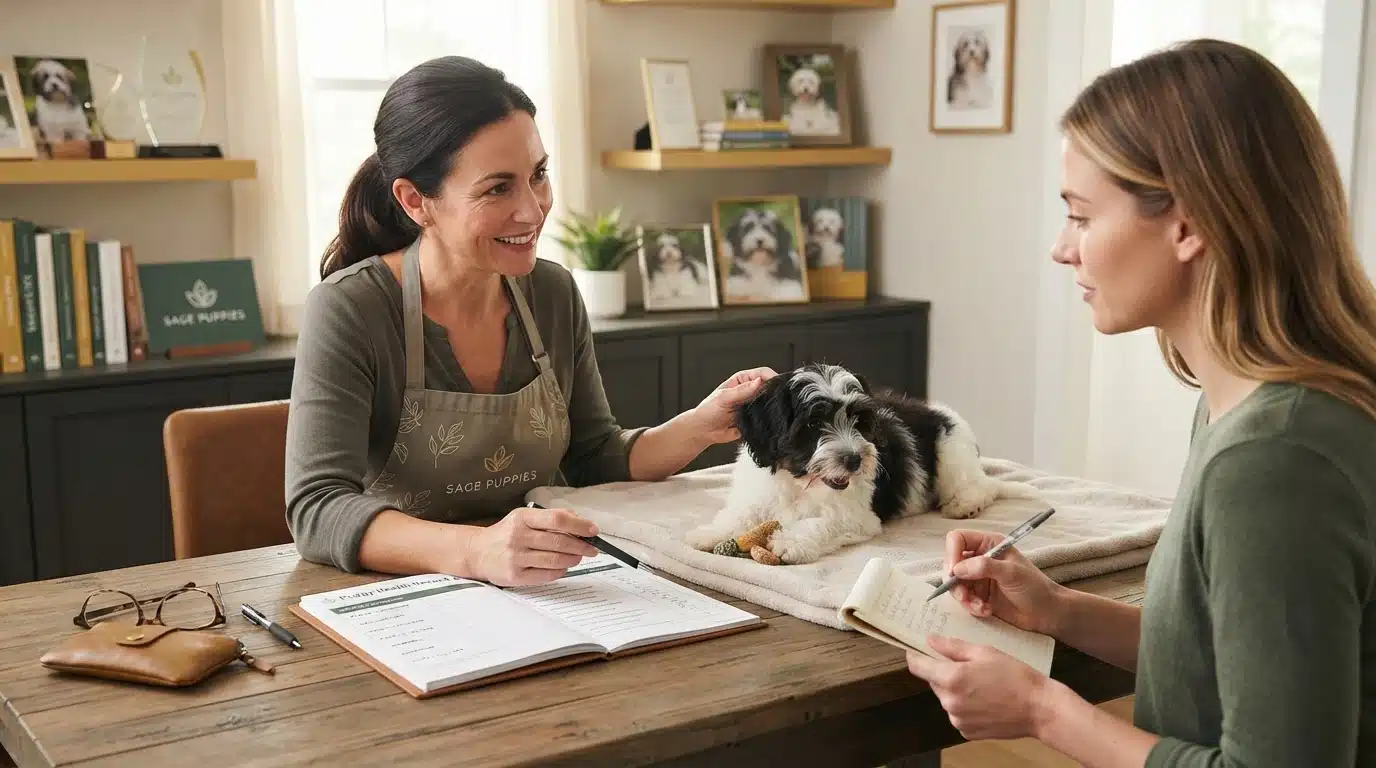
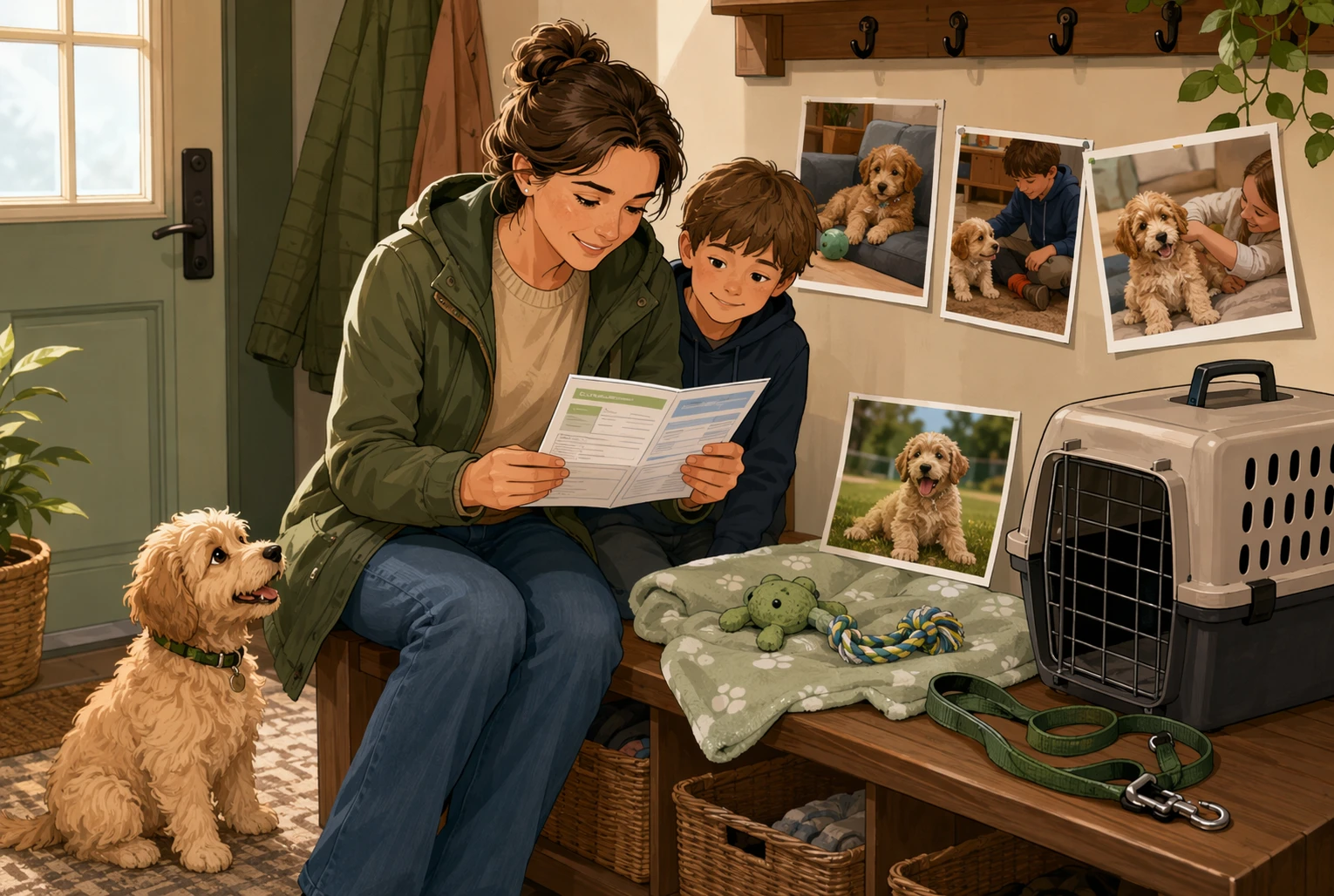
After you understand what proof to request, it helps to see how breeders organize puppy health records and vet documents.
A transparent listing may also mention how the puppy was raised, who handled it daily, and what support comes after pickup. That level of detail is usually a better sign than flashy photos.
If a breeder is careful with records, they are often careful with care.
Verify age, socialization, and care details in the ad
The listing should tell you how old the puppy is now, when it can go home, and how it has been raised. Wisconsin rules say licensed operators must provide daily positive human contact and socialization, and puppies under 4 months have specific care standards under Wisconsin dog seller requirements.
Look for details like:
- Raised in a home or kennel
- Exposure to people, sounds, and handling
- Eating routine
- Potty or crate introduction
- Notes on temperament
If the ad is missing basic care facts, ask:
- How often is the puppy handled each day?
- What food is it eating now?
- Has it been around children or other dogs?
- What is the exact go-home date?
A real breeder answers these with specifics. A scammer stays vague.
Step 4: Test the breeder’s communication before you commit
A real breeder should be easy to talk to. If the seller avoids calls, dodges basic questions, or rushes you to pay, treat that as a red flag. The FTC says legit breeders usually welcome an in-person or video meeting, and Wisconsin DATCP warns buyers to slow down and avoid pressure tactics in pet sale scams FTC guidance.
Use a live call or video chat to confirm the puppy is real
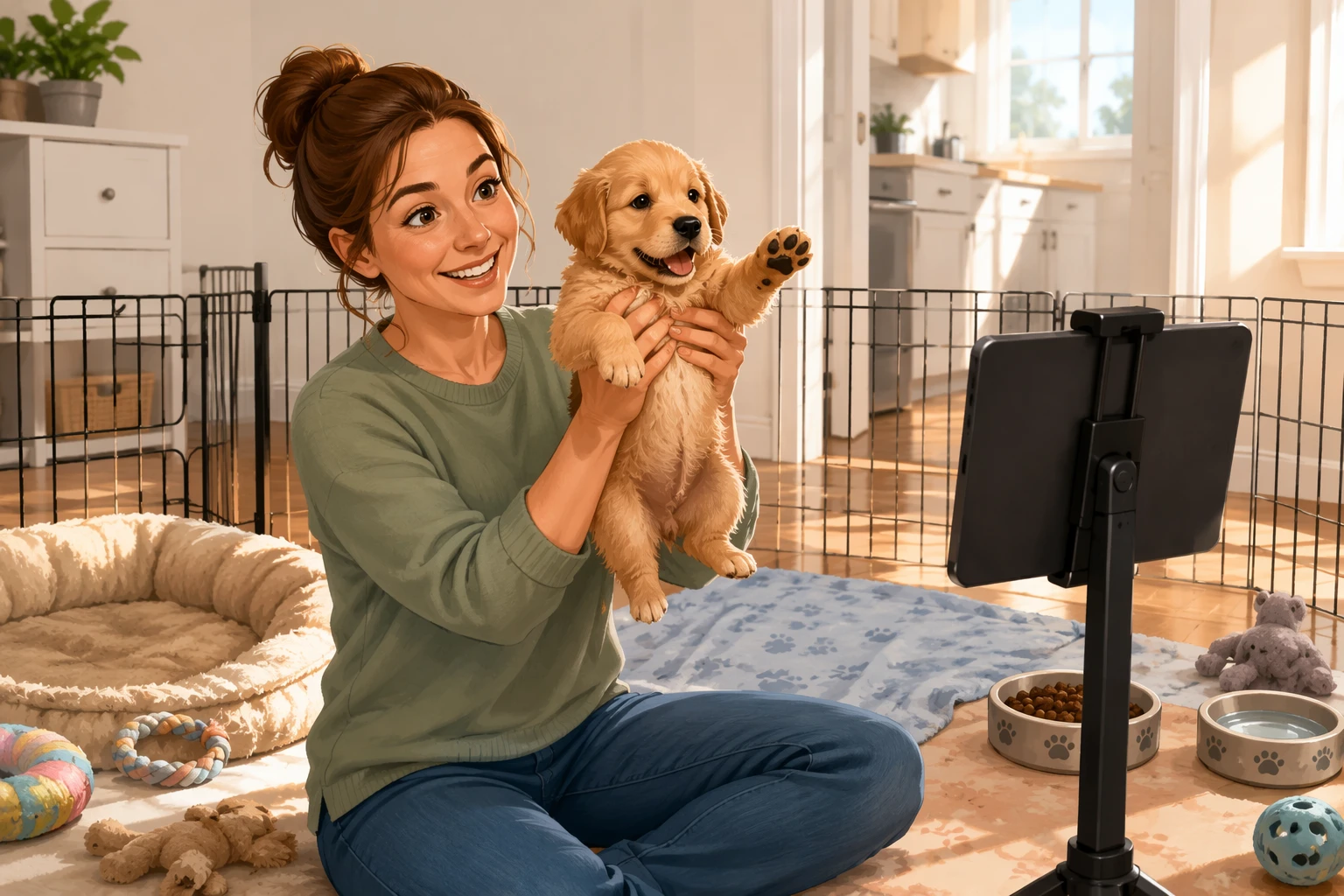
Start with a phone call. Then ask for a live video chat before any deposit.
During the call, ask the seller to:
- Show the actual puppy live, not a clip they send later.
- Pan around the room, bedding, food, and play area.
- Show the dam if she is on site.
- Pick up the puppy and check teeth, paws, and coat on camera.
- Do one small live action you request, like moving to the kitchen or showing today’s newspaper nearby.
If they refuse, stall, or claim the camera is broken, walk away.
In Wisconsin, many higher-volume dog sellers must be licensed, and any ad for dog sales in Wisconsin must include the seller’s license number, according to DATCP consumer information. Ask for that number during the call, not just by text.
Ask the questions that reveal whether the seller knows the litter
Good breeders know each puppy as an individual. Scammers talk in vague, copied lines.
Ask direct questions like:
- What is this puppy’s temperament right now?
- What is the puppy eating each day?
- What age was the last vet check?
- Has this puppy had any loose stool, eye drainage, or scratching?
- How does this puppy act with littermates, kids, or new sounds?
- Why might this puppy be a bad fit for my home?
A strong seller gives clear, specific answers. A weak one keeps saying:
- “All puppies are perfect”
- “Very healthy, no worries”
- “Send deposit first and I’ll explain later”
Notice whether the seller educates or pressures
A careful breeder will screen you too. They should ask about your home, schedule, kids, and breed fit.
Watch for the difference:
| Healthy communication | Risky communication |
|---|---|
| Answers clearly | Dodges details |
| Explains pickup or delivery steps | Pushes payment first |
| Shares records timeline | Says paperwork comes later |
| Talks about fit | Talks only about urgency |
The right seller makes you feel informed, not cornered.
Also Read: Puppy Health Guarantees: What Good Breeders Include
Step 5: Use a final decision checklist before sending any deposit
Before you send money, stop and score the listing one last time. Wisconsin buyers have real protections, but they work best before payment. DATCP says many sellers must be licensed, puppies cannot be sold before 7 weeks, and dogs sold for a fee must come with a health certificate or CVI according to Wisconsin dog seller consumer information.
Green flags that support a safe listing
Use this short checklist. A safer listing usually has most of these:
| Green flag | Why it matters |
|---|---|
| Seller shares full name, address, and phone | Easier to verify identity |
| Wisconsin license status is clear, if required | Shows legal compliance |
| Puppy age is at least 7 weeks | Matches Wisconsin rules |
| CVI, vaccine record, and contract are offered before deposit | Shows real paperwork, not promises |
| Live video call and current puppy photos are easy to arrange | Helps confirm the puppy is real |
| Pickup, delivery, and refund terms are written clearly | Reduces confusion later |
- The seller answers direct questions without getting defensive.
- The listing shows the puppy’s real daily setting, not only glamor shots.
- You can see how the breeder handles health, socialization, and next steps.
If the seller welcomes slow, careful questions, that is usually a good sign.
Red flags that should end the conversation
DATCP warns that pet scammers often push buyers into upfront payments, use hard-to-trace payment methods, and invent extra shipping or permit fees after the first payment in its Wisconsin pet scam alert.
- End the conversation if you see:
- Pressure to pay today to “hold” the puppy.
- Requests for Zelle, wire transfer, gift cards, or crypto only.
- Refusal to show a live video or share new photos on request.
- No written contract, CVI, or health details before deposit.
- Meeting only in a parking lot or along a highway.
- Sudden extra fees for crate, permit, insurance, or weather delay.
One major red flag is enough to walk away.
What a safe next step looks like
A smart next step is simple:
- Ask for the contract, CVI timing, and payment terms in writing.
- Verify identity and Wisconsin license status if the seller should be licensed.
- Pay only after your checklist is mostly green.
- Use a payment method with fraud protection.
- Save screenshots, receipts, and messages before sending any deposit.
If anything still feels off, pause. A good breeder will still be good tomorrow.
If you want a safer path than sorting risky ads alone, start with a breeder who shows the basics up front. Sage Puppies shares a transparent, family-first process, health-tested parent standards, and clear pickup or delivery options, so you can compare listings with more confidence and take your next step carefully.
Frequently Asked Questions
Q1: What are the key red flags to look for in online puppy listings in Wisconsin?
Watch for stock photos, copied text, no breeder name, or pressure to pay fast. Low prices, gift card requests, and no video call are big warning signs. A safe seller should share clear records, recent photos, and pickup details.
Q2: How can I verify a Wisconsin puppy breeder’s registration and health documentation?
Ask for the breeder’s full name, business name, and Wisconsin DATCP license details if required. Check that vaccine, deworming, and exam records match the puppy’s age. Health testing should name the parent dogs, not just say “vet checked.”
Q3: What questions should I ask a Wisconsin puppy breeder before purchasing?
Ask where the puppy is raised, who the parents are, what socialization has started, and what support comes after pickup. Ask for a live video call, health records, and the exact payment process before you send any deposit.
Q4: Is shipping a puppy to Wisconsin automatically risky?
No, but it raises the bar for proof. You need a live video call, recent dated photos, full paperwork, and a clear transport plan. Trusted programs like Sage Puppies explain delivery and pickup steps plainly before payment.
Q5: Should I avoid listings that do not show the breeder’s home or facility?
Usually, yes. A breeder does not need to post their address publicly, but they should show where puppies are raised through video, photos, and honest answers. If they hide basic living conditions, move on.
Conclusion
A safe Wisconsin puppy listing should hold up under simple checks. Verify whether the seller should be licensed, confirm the puppy is at least 7 weeks old, and ask for the CVI, vaccine records, parent details, and a written health agreement. Wisconsin DATCP says many sellers must be licensed and inspected, and dogs sold for a fee must come with a certificate of veterinary inspection. It also warns that Wisconsin does not give puppy buyers a broad “lemon law,” so your paperwork matters before you bring a puppy home. If a listing avoids questions, rushes payment, or pushes a parking lot handoff, treat that as your answer.