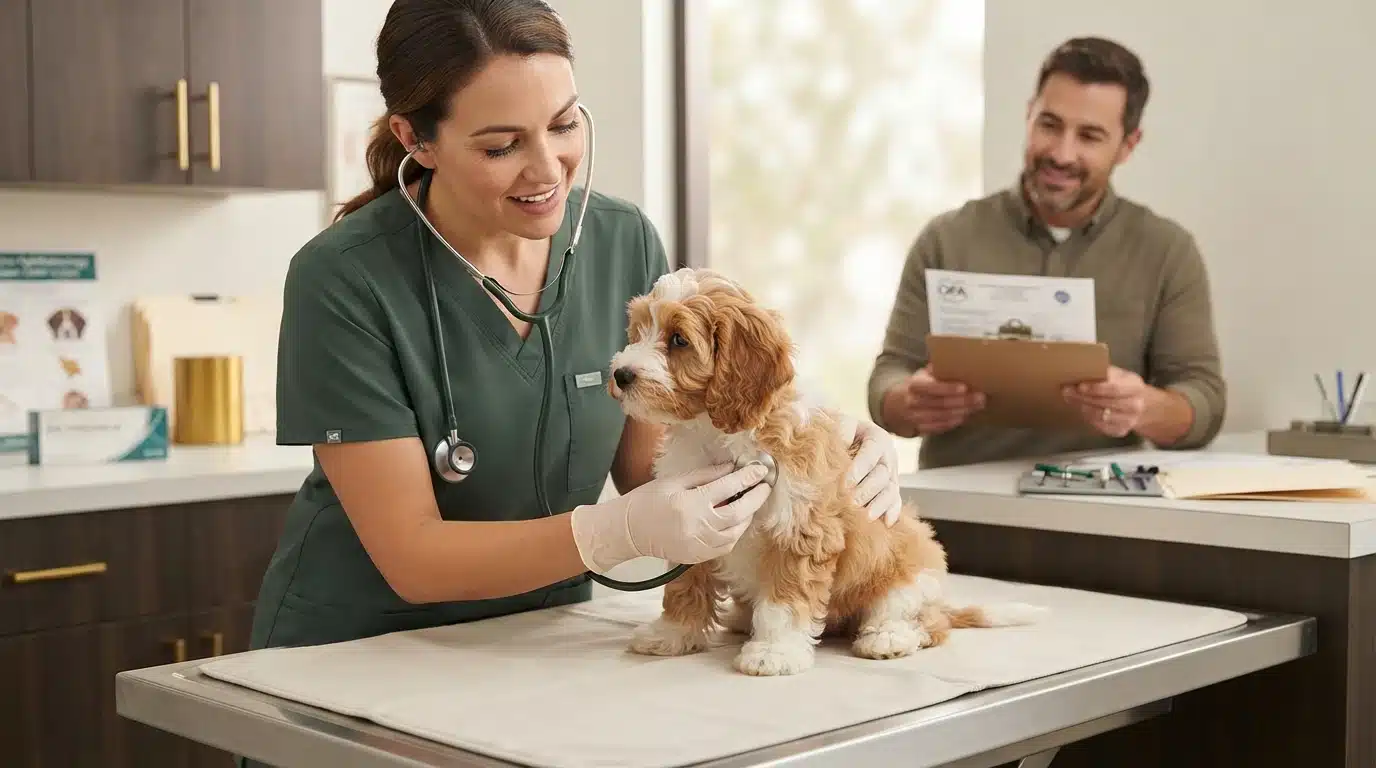
Quick Summary: Buyers in Michigan should watch for red flags like avoiding in-person visits, vague health records, and pressure to pay quickly. Ethical breeders are transparent, show proper paperwork, and allow in-depth facility and health checks. Avoid sellers who push for fast deposits, refuse video calls, or request untraceable payments. Verifying records, asking detailed questions, and walking away from suspicious signs help prevent supporting puppy mills.
A Michigan breeder who will not show you the dam, dodges video calls, or asks for a deposit before paperwork is waving a red flag. Those are not small issues. They are common signs behind real Dog Mill Concerns, scam risk, and sick puppies.
This guide helps first-time families spot what looks normal at first but is not. Many buyers struggle to tell the difference between a polished puppy ad and a breeder who cuts corners. That is where Dog Mill Concerns get missed.
You will learn what to verify, what questions to ask, and when to walk away. This Buyer Guide Puppies article also covers practical Puppy Buying Tips for Michigan buyers comparing breeders, transport options, and health claims.
The advice here is built for careful families who want facts, not pressure. It focuses on ethical breeder checks, scam warning signs, and the kind of Dog Mill Concerns smart buyers should catch early.
1. Check the breeder’s transparency before you talk price
Price should come last. A good breeder makes it easy to verify how puppies are raised before you ever discuss a deposit. In Michigan, large-scale breeders with more than 15 intact female dogs that have whelped must register with MDARD, and any sold or delivered dog from that type of kennel must come with a valid pet health certificate, according to Michigan’s breeder registration rules.
What a legitimate breeder should show you
A solid breeder does not act guarded. They expect questions and answer them clearly.
Ask to see:
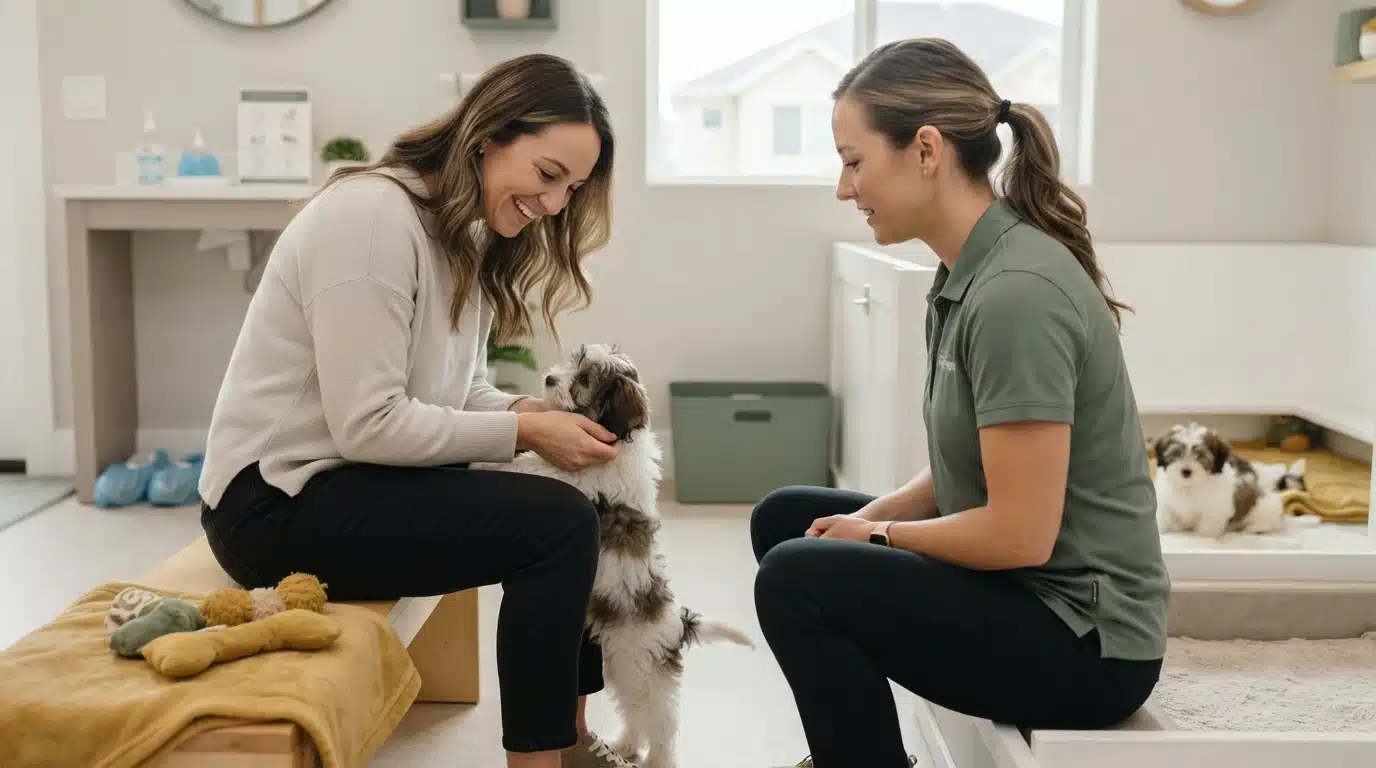
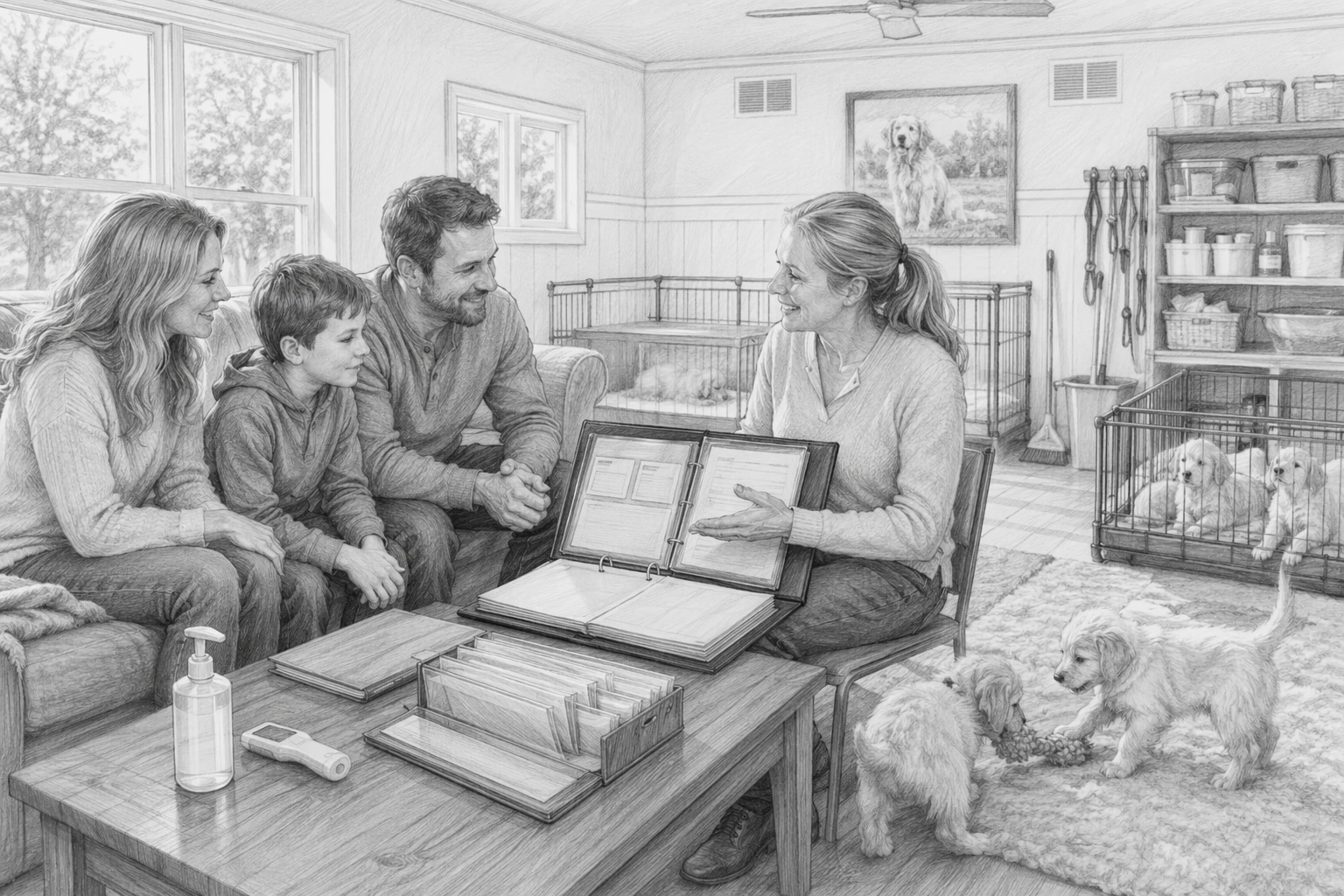
- The home or kennel area where puppies live
- The mother dog, and if possible, information on the father
- Health testing records for the parents
- Vaccination and deworming records
- A sample contract before you reserve
- Clear pickup or delivery details
- Recent photos and videos that match the puppy’s age
Michigan buyers should also look for records that show routine care, housing, and sanitation. MDARD says large-scale breeding kennels must meet rules for housing, ventilation, cleaning, temperature, and recordkeeping under state kennel requirements.
If a breeder says, “Trust me,” but will not show records, move on.
| What you ask for | What a good breeder does |
|---|---|
| Parent health info | Shares test results and explains them |
| Living conditions | Shows where puppies actually live |
| Contract | Sends it before money changes hands |
| Vet records | Provides dated paperwork |
Red flags that usually point to dog mill concerns
Watch for patterns, not just one odd reply.
Common warning signs:
- The seller avoids live video calls
- You cannot see where puppies are kept
- They offer to meet only in a parking lot
- They always have many litters available
- They rush you to send a deposit
- They will not show the mother
- Their ad focuses on color, size, and “rare” traits over health and temperament
- They dodge basic questions about socialization
A clean website is not proof of clean breeding practices.
Questions that quickly expose bad practices
Use direct questions. Bad breeders hate specific ones.
- Where do the puppies sleep and play each day?
- Can I see the mother with the litter live on video?
- What health testing was done on both parents?
- Who is your vet, and what care has this puppy already had?
- How many litters do you raise at one time?
- What happens if my vet finds a serious issue right after pickup?
- How do you socialize puppies before they leave?
If answers feel vague, polished, or copied, stop there. Ethical breeders welcome careful buyers.
Also Read: Family-Raised Puppy Contracts: Key Terms to Review First
2. Verify the paperwork, age, and health records are real
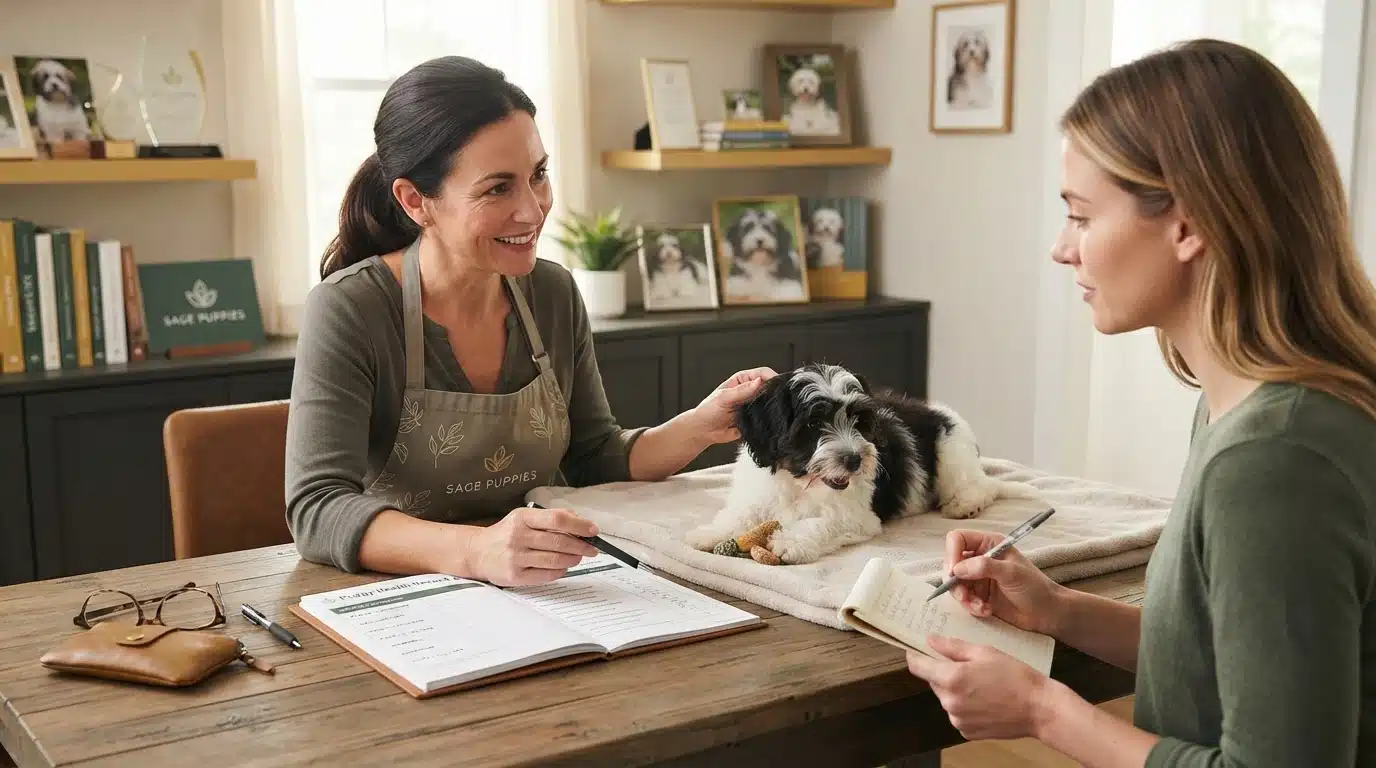
Ask for documents before you send a deposit. A good breeder will not act annoyed by this.
The documents to request before paying a deposit
Request these items in clear photos or PDFs:
- The puppy’s date of birth
- A vet record with exam date
- Vaccine record with product name and date
- Deworming record with dates
- Microchip number, if already placed
- Parent health testing proof, not just a promise
- A sample purchase contract
- Any registration paperwork, if the breeder claims it
If the puppy came from outside the U.S. or is being moved across borders, the paperwork should match the dog’s age, vaccine dates, and microchip details. USDA rules for commercial dog imports say health and rabies certificates should include the dog’s breed, sex, age, identifying details, vaccine details, and the veterinarian’s license number, according to APHIS commercial dog import guidance.
If names, dates, or microchip numbers do not match across records, pause the deal.
Why age mismatches are a serious warning sign
Age lies matter because they often hide bigger problems. A seller may try to move puppies too young, fake vaccine timing, or cover up where the puppy really came from.
Check for these gaps:
- The listing says 8 weeks, but the vet sheet suggests younger.
- The vaccine date comes before the puppy was old enough for that visit.
- The breeder gives no clear birth date.
- The puppy looks much smaller, less steady, or less developed than claimed.
For imported dogs, age details are not minor paperwork. CDC rules say some dog entry documents must include the dog’s age, microchip number, and valid rabies information, and dogs from certain situations must be at least 6 months old, per the CDC dog import FAQs.
| Record item | What should match | Red flag |
|---|---|---|
| Birth date | Listing, contract, vet record | Different dates |
| Vaccine dates | Puppy age and exam timing | Dates out of order |
| Microchip | All forms and receipts | Missing or changed number |
How to spot fake or weak health documentation
Weak paperwork often looks polished at first. Read it slowly.
Watch for:
- A “health guarantee” with no actual vet exam record
- Vaccines listed with no clinic name
- No lot number, no date, or no signature
- A one-page note that says “puppy is healthy” with no findings
- Parent testing claims with no lab report or registry proof
- Records cropped so you cannot see names or dates
Ask one direct question: Which vet clinic created this record, and may I call to confirm it?
Ethical breeders expect buyers to verify records. Evasive answers are the problem, not your caution.
A stronger breeder file usually shows a pattern of care, not one rushed note. That means repeat dates, clear puppy ID, and records that line up from birth to pickup. Sage Puppies-style transparency is what you want to see: organized records, consistent details, and no pressure to “decide today.”
Also Read: 10 Signs a California Puppy Listing Is a Scam – Sage Puppies
3. Look for facility, socialization, and care clues that separate mills from ethical homes
Want the short version? Watch the dogs, not the sales pitch. A clean website means nothing if the space, adult dogs, and puppy behavior tell a different story. For the full Michigan screening process, go back to the parent guide on Michigan puppy mill red flags.
Facility clues that matter most
Start with the ground-level basics. Ethical homes and small programs usually show you where puppies actually live, not just a front room or pickup spot.
Use this quick check:
| What you see | Better sign | Red flag |
|---|---|---|
| Housing | Clean, dry, low-odor, safe flooring | Strong odor, stacked cages, heavy waste |
| Adult dogs | Relaxed, visible, part of daily life | Hidden, shut away, too many to observe |
| Breeder access | Open answers, full walkthrough | Limited tour, excuses, outdoor handoff |
| Care setup | Fresh water, toys, resting areas | Bare pens, dirty bowls, no enrichment |
The USDA itself is reviewing updated standards around exercise and socialization for dogs in breeding facilities, which tells you these care issues matter in real life, not just in marketing copy USDA APHIS request for information.
Warning: “USDA licensed” does not equal warm, home-based, or well-socialized care. It only tells you a breeder falls under a minimum federal system.
Behavior clues in puppies and adult dogs
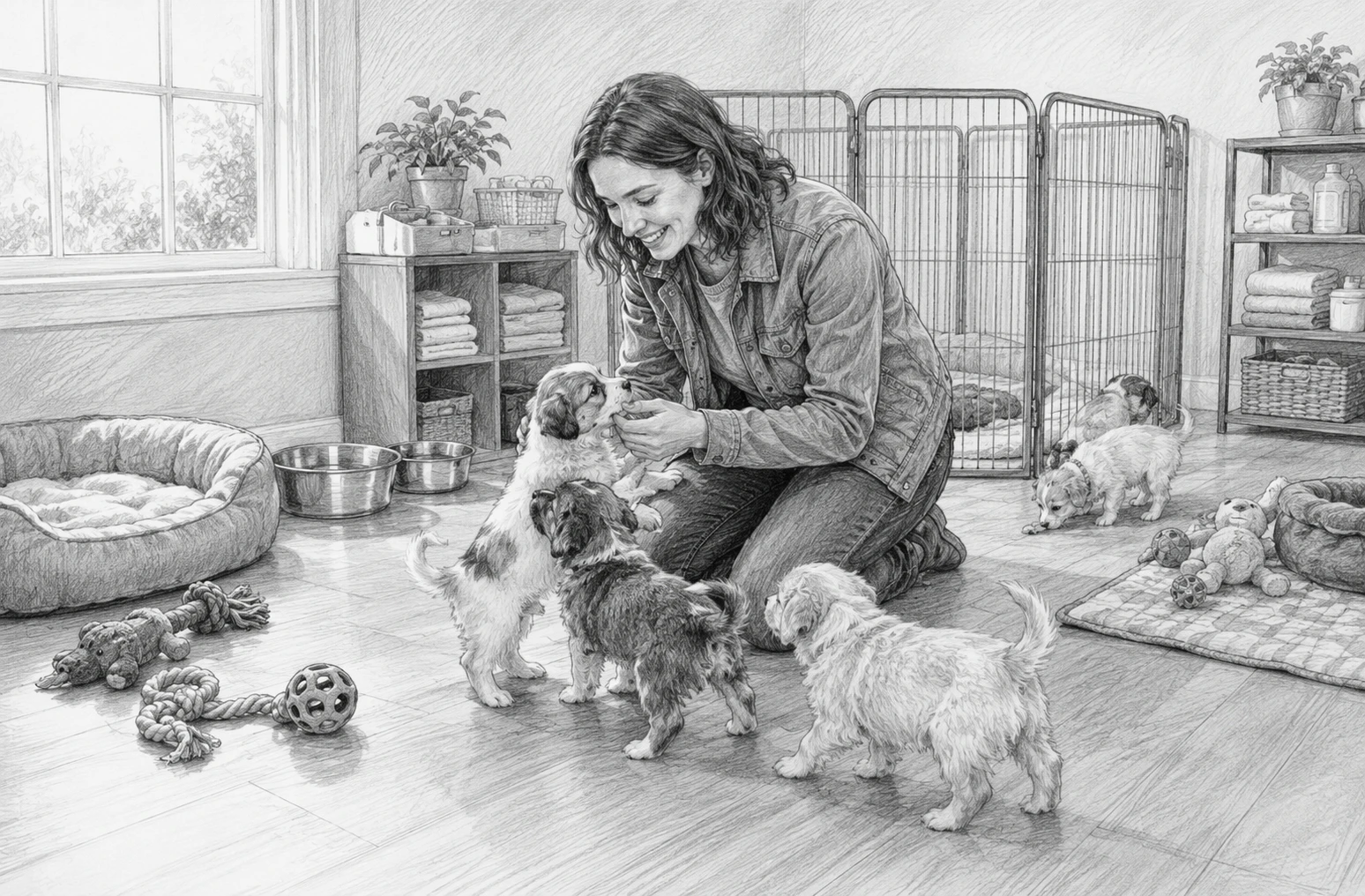
Behavior often gives away what the room hides. A puppy from a poor-care setting may freeze, cower, spin, avoid touch, or startle hard at normal sounds. Adult breeding dogs can show the same signs.
A Purdue-led study on dogs in commercial breeding kennels found fear responses to people and new objects, and noted that broader social exposure can improve welfare Purdue socialization research.
Look for these signals:
-
Good signs
- Puppy recovers fast after a surprise
- Approaches with curiosity
- Accepts gentle handling
- Adult dogs seem calm, not frantic
-
Red flags
- Puppy shuts down or trembles for minutes
- Adult dogs pace, hide, or avoid eye contact
- The whole group erupts into panic at simple movement
- Breeder says fear is “normal for the breed”
One shy moment is not the issue. A pattern of fear across multiple dogs is.
Socialization clues that show real daily care
Ask what puppies do each day. Ethical breeders can answer fast and with detail.
Look for proof of:
- Household exposure such as normal voices, vacuum noise, doors, and TV
- Gentle handling by adults and supervised children
- Age-appropriate surfaces like rugs, tile, grass, and crates
- Simple routine building for sleep, potty trips, and short alone time
- Ongoing updates with videos that show puppies interacting, not posing
A real program sounds specific: “They eat in the kitchen, nap in a pen near us, go outside after naps, and meet new textures daily.” That is very different from vague lines like “well socialized” with no examples.
If a breeder cannot explain daily life, they probably are not giving puppies much of one.
4. Watch for sales tactics that signal a scam or puppy mill operation
A bad seller usually tells on themselves fast. The warning signs are not just about the puppy. They show up in how the seller pushes you, how they ask for money, and how they avoid simple proof. Michigan buyers should treat sales pressure as a safety issue, not just a bad shopping experience.
Pressure tactics buyers should never ignore
Walk away if a seller tries to rush your choice.
Common lines include:
- “You have to send a deposit today.”
- “Another family is waiting right now.”
- “We cannot do a live video call, but trust us.”
- “We only meet in parking lots or at delivery points.”
Michigan’s consumer alert says do not buy a puppy sight unseen and be careful with sellers who refuse to show the puppy, the mother, or the place where dogs are kept according to the Michigan puppy scam alert.
A real breeder wants the right home. A scammer wants fast money.
Use this quick check:
| Sales behavior | What it often means | Best move |
|---|---|---|
| Pushes same-day deposit | Pressure sale | Pause and verify |
| Refuses live video | Puppy may not exist | Stop contact |
| Off-site meeting only | Hiding conditions | Decline |

Shipping and payment warnings that should stop the purchase
Shipping scams often start after you already paid once. Then the “extra fees” begin.
Red flags include:
- Requests for Zelle, Venmo, Cash App, wire transfer, gift cards, or crypto
- Sudden charges for a crate, insurance, weather delay, or airport change
- A seller who says the puppy is ready to ship before you verify anything
- A “discount” that only applies if you pay in full now
Michigan warns that scammers often demand added fees for shipping, crates, insurance, or fake medical issues. The state also says credit cards are safer because you may dispute the charge, while cash apps and wires are hard to recover in this Michigan consumer warning.
If payment must be fast, hidden, or nonrefundable, stop the purchase.
The safest way to confirm a real breeder
Keep it simple. Verify before you send money.
Do these steps in order:
- Ask for a live video call with the puppy and mother.
- Ask for the breeder’s full name, address, and vet paperwork.
- Reverse-search puppy photos.
- Confirm any claimed license or records with the right office.
- Pay only by credit card if you move forward.
Michigan officials investigated a 2025 case where buyers were allegedly given falsified veterinary records, which shows why paperwork alone is not enough in the Attorney General announcement.
Also Read: Puppy Health Guarantees: What Good Breeders Include
5. Know when to walk away and where to verify the seller in Michigan
If a seller gives you one serious red flag, pause. If they give you two, walk away. That rule saves money, stress, and heartache.
Use this quick walk-away list:
- They push a deposit before a live video call.
- They refuse to show where the puppy lives.
- They will not show the mother, when that should be possible.
- They ask for Zelle, Venmo, gift cards, or wire transfer only.
- They offer to meet only in a parking lot or “halfway.”
- Their vet records look altered, vague, or hard to verify.
Michigan’s consumer alert says not to buy sight unseen, to avoid payment apps, and to watch for fake shipping fees and reused photos in the state’s puppy scam guidance.
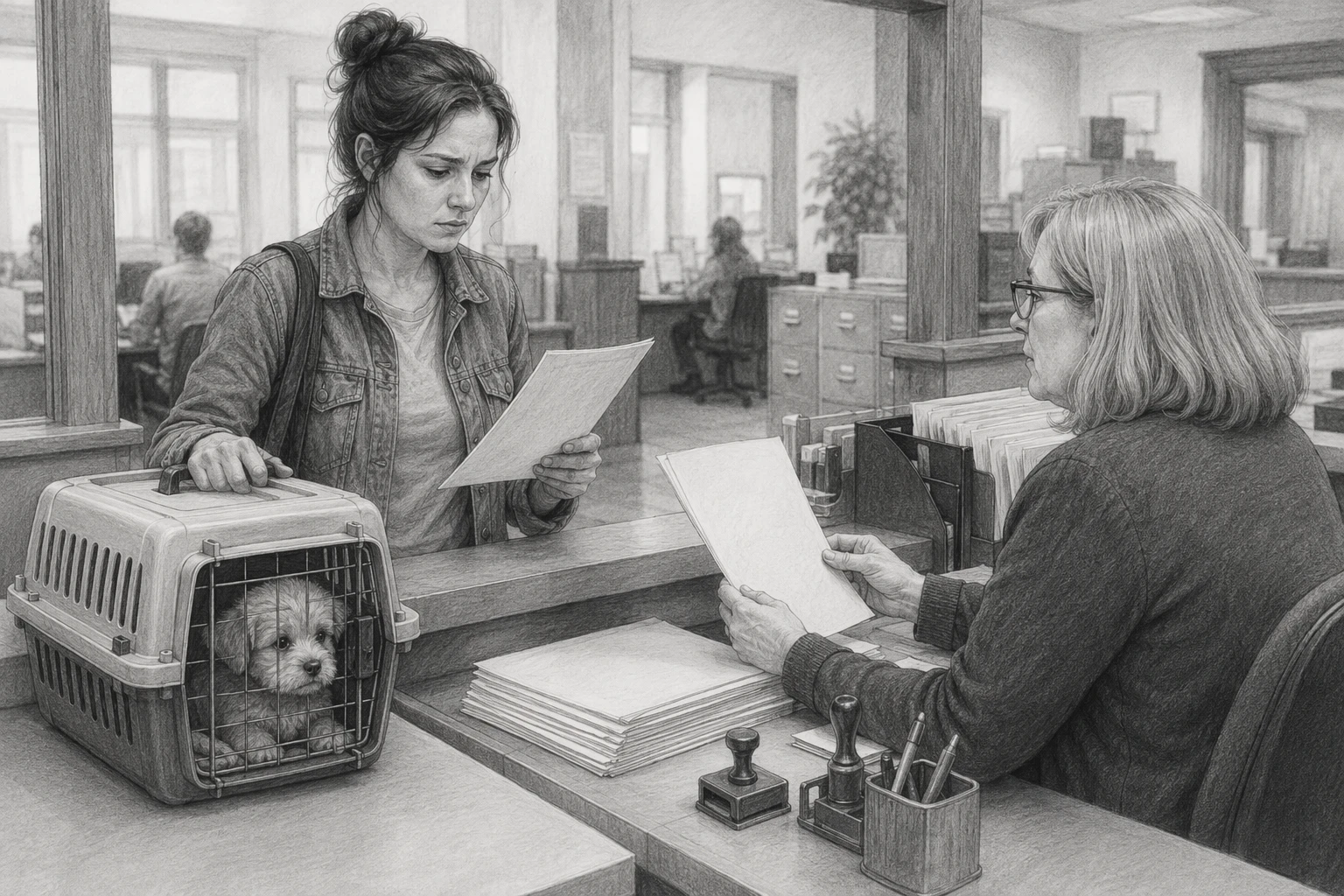
A good breeder expects questions. A bad seller tries to make you feel rude for asking them.
Where should Michigan buyers check concerns?
| Concern | Best place to check | What to ask |
|---|---|---|
| Large breeding kennel | MDARD | Is this facility registered or complaint-worthy? |
| Fraud or fake paperwork | Michigan Attorney General | How do I file a consumer complaint? |
| Small local breeder welfare issue | Local animal control or police | Who handles kennel or cruelty complaints here? |
Michigan says large-scale dog breeding kennels are facilities with more than 15 intact female dogs that have whelped before, and MDARD handles complaints for those operations in its kennel registration page.
If the seller dodges simple proof, do not “hope for the best.” Move on and keep your records.
If Michigan breeder checks keep raising doubts, compare them with a program built around clear proof and family-first care. Sage Puppies offers health-tested parents, home-raised socialization, transparent next steps, and nationwide delivery. Review available puppies, pricing, and the adoption process before you commit.
Frequently Asked Questions
Q1: What are the key red flags to identify a puppy mill when buying puppies in Michigan?
Watch for multiple litters always available, vague parent health info, no in-home visit, pressure to pay fast, and meeting in parking lots. If a seller avoids questions or cannot show where puppies are raised, walk away.
Q2: How can Michigan buyers verify if a breeder is responsible and ethical?
Ask for health testing records, vaccination details, parent information, and a clear contract. A good breeder screens buyers too. They should explain socialization, let you ask hard questions, and stay helpful after pickup.
Q3: Why should Michigan buyers avoid purchasing from puppy mills and backyard breeders?
These puppies face higher risks for illness, weak social skills, and costly vet problems. Buying from poor sources also keeps bad breeding going. Short-term convenience often turns into long-term stress for your family.
Q4: Is it a red flag if the breeder offers to ship without a phone call?
Yes. A careful breeder wants to talk first, learn about your home, and explain the puppy’s routine. Fast checkout with little contact often points to resale behavior, not thoughtful placement.
Q5: What should I bring to a breeder visit in Michigan?
Bring a checklist, your questions, and a family member if possible. Note cleanliness, puppy behavior, and how the breeder handles the dogs. Calm, clean, transparent care matters more than polished marketing.
Conclusion
Buying a puppy in Michigan gets safer when you slow down and verify everything. The biggest red flags are simple: no in-person visit, no proof of health testing, vague breeder answers, pressure to pay fast, and pickup plans that hide where puppies are raised. Michigan also has clear rules for large-scale breeding kennels, including registration for facilities with more than 15 intact females that have whelped, and puppies cannot be sold under eight weeks old, according to MDARD kennel guidance. You can also check federal inspection and licensing records through the USDA Animal Care search tool. A careful buyer asks hard questions, checks records, and walks away when anything feels off.