Quick Summary: Georgia puppy prices vary based on breed, location, and breeder standards. A fair price includes health testing, early socialization, clear contracts, and support, not just the listed number. Buyers should ask detailed questions about health records, reservation terms, and delivery options to ensure value. Higher prices often reflect responsible raising, while lower prices may hide gaps in care or transparency.
A Georgia family looking at Havanese Puppies Cost in the $3,500 to $4,500 range needs more than a price tag. They need to know what that number should cover before they place a deposit. That is where this Puppy Price Guide helps.
The hard part is not finding puppies with different prices. The hard part is judging whether the price reflects real value or just marketing. First-time buyers often compare listings by the lowest number, then miss key details like health testing, early care, pickup or delivery plans, and clear reservation terms. That creates weak Puppy Price Expectations and costly surprises later.
This Puppy Price Guide breaks down what Georgia buyers should expect from a premium small-breed puppy. You will see what usually affects price, what should be included, and which questions help you compare breeders fairly.
This Puppy Price Guide is built for families researching Havanese, Havapoo, and Cavapoo puppies with a careful, long-term view. It reflects the standards serious buyers use when they want responsible breeding, family-raised care, and a smooth pickup or delivery process.
What a Fair Puppy Price Should Include
A fair puppy price is not just the number on the listing. It is the full package behind that puppy. A low price can look good at first, but it often leaves out health work, early care, clear records, and real support after you bring your puppy home.
Price tells you very little by itself. What is included tells you much more.
Use this quick check:
| Price question | Low-value answer | Fair-value answer |
|---|---|---|
| Were the parents screened? | Vague or no proof | Clear health testing records |
| Was early care done well? | Basic feeding only | Socialization, handling, routine care |
| Are terms clear? | Deposit rules feel fuzzy | Reservation, pickup, and delivery terms are easy to read |
| Is there breeder support? | Hard to reach after payment | Ongoing guidance before and after placement |
Responsible breeders usually spend money long before a puppy is ready to leave. The USDA also requires licensed animal dealers to meet care and record standards under the Animal Welfare Act, and buyers can check some facilities through the USDA Animal Care public search tool. Breed-focused health screening matters too. The AKC notes that health testing should follow each breed’s parent club guidance in its breed health testing requirements.

Before placement, fair pricing often helps cover:
- Parent dog health testing
- Prenatal and litter care
- Quality food and daily cleaning
- Early social time with people
- Temperament watching and match support
- Admin work, including contracts and records
- Pickup or delivery planning when offered
That does not mean every high price is fair. Some sellers charge premium rates without premium care. Ask for proof, not polished wording.
Sage Puppies frames premium pricing around a boutique, family-raised model. For many qualified buyers, that means the value is in the setup: health-minded parent selection, strong early handling, transparent communication, and clear help with pickup or delivery. That approach usually fits families who want fewer surprises, not just a cheaper starting number.
Look for breeders who explain why the puppy costs what it costs, what is included, and what happens next if your timing, travel, or reservation changes.
Also Read: Family-Raised Puppy Contracts: Key Terms to Review First
How Location and Breed Type Shape Georgia Puppy Prices
Georgia puppy prices can vary a lot, even when the puppies look similar on a listing page. Your best comparison point is not just the number. It is what that number includes.
Why Georgia buyers may see different prices from different breeders
Location changes breeder costs first. Metro areas often bring higher overhead, transport coordination, and stronger demand. Rural breeders may price lower, but you still need to check what comes with that lower quote.
Georgia rules also shape pricing. Breeders who sell more than one litter in 12 months may need a state pet dealer license, and license fees rise with gross sales under Georgia’s pet dealer license rules. That does not set puppy prices, but it does show why fully compliant programs can cost more.
The state also warns buyers about low-price internet pet scams that later add shipping or surprise fees, according to the Georgia Department of Agriculture pet guidance.
- Common price drivers in Georgia:
- City versus rural overhead
- Pickup versus delivery planning
- Health testing and early care
- Licensing, inspections, and records
- Demand during holidays and school breaks
A breeder with clear pricing, clear pickup terms, and clear health records usually gives you better value than a vague low-price ad.
Why Havanese, Havapoo, and Cavapoo prices may differ
Breed type changes price because demand, parent selection, and litter planning are not the same.
| Breed type | Why price may run higher | What buyers should ask |
|---|---|---|
| Havanese | Purebred lines, predictable coat and size, smaller litter planning | Are parents health tested and temperament screened? |
| Havapoo | Designer mix demand, poodle influence, coat and allergy-friendly appeal | What traits are most predictable in this pairing? |
| Cavapoo | Very high family demand, Cavalier parent quality, popular teddy-bear look | How are heart, knee, and parent health checks handled? |
An individual puppy may also cost more based on:
- Size range
- Coat type and color
- Training foundation
- Age at placement
- Included services like delivery support
How to compare Georgia pricing without getting misled
Use a side-by-side checklist before you place a deposit.
- Ask for the full price, not the starting price.
- Confirm what is included in pickup or delivery.
- Check parent health testing, not just puppy vaccines.
- Ask about reservation terms, waitlist rules, and refund details.
The safest question is simple: “What exactly am I paying for, and what happens if plans change?”
Also Read: 10 Unique Care Tips for Small Breed Puppies in Urban Settings – Sage Puppies
The Questions That Reveal Whether a Puppy Is Priced Responsibly
A fair puppy price should come with clear answers, not vague promises. If a breeder cannot explain what is included, what happens next, and how the puppy was raised, the number means very little. For the full pricing picture, go back to the parent guide, Georgia Puppy Price Guide: What Buyers Should Expect.
Questions about health and early care
Start with the care the puppy received before you ever show up.
Ask:
- What health testing was done on the parents?
- What vet care has the puppy already had?
- What early socialization is included in the price?
- Has the puppy been raised in a home or a kennel setup?
Look for specific answers, not broad claims like “fully healthy” or “vet checked.”
A strong answer should cover:
- Parent health testing
- Age-appropriate vaccines and deworming
- A vet record you can review
- Daily handling, noise exposure, and people time
- Temperament notes for that puppy
A higher price often reflects work you cannot see at first glance, like health screening, home raising, and careful early handling.
| Good sign | Weak sign | Why it matters |
|---|---|---|
| Written records | Verbal-only claims | Proof builds trust |
| Parent testing explained | “Parents are fine” | Lowers avoidable risk |
| Early care timeline | No care details | Shows real investment |

Questions about pricing and reservation terms
The next step is to ask what the price actually covers.
Use these questions:
- What is included in the listed price?
- How much is the reservation fee?
- Is the fee refundable, transferable, or neither?
- When is the final balance due?
A responsible breeder should explain the full structure in plain English.
You want clear terms on:
- Base puppy price
- Deposit or reservation amount
- Pickup or delivery cost
- Final payment timing
- What happens if the breeder keeps the puppy longer
If the seller avoids written terms, treat that as a pricing risk.
A premium program like Sage Puppies should be able to show where your money goes and what support comes with it.
Questions about pickup, delivery, and timing
Logistics matter because travel affects both cost and stress.
Ask:
- When is the puppy ready to go home?
- What pickup options are available?
- What delivery method is used and who handles it?
- What travel paperwork is needed?
For families using flight or out-of-state transport, details matter. The CDC says dogs entering or returning to the U.S. must meet current dog import requirements, and APHIS notes airline and country rules can differ for pet travel depending on destination and route.
Check for:
- A realistic go-home date
- Named pickup or delivery steps
- Clear travel fees
- Backup plans for delays
A responsible price includes a responsible handoff plan.
How to Budget Beyond the Purchase Price
A puppy’s listed price is only the start. Your real budget should cover setup, travel, and the first few months of care so you do not feel squeezed right after bringing your puppy home.
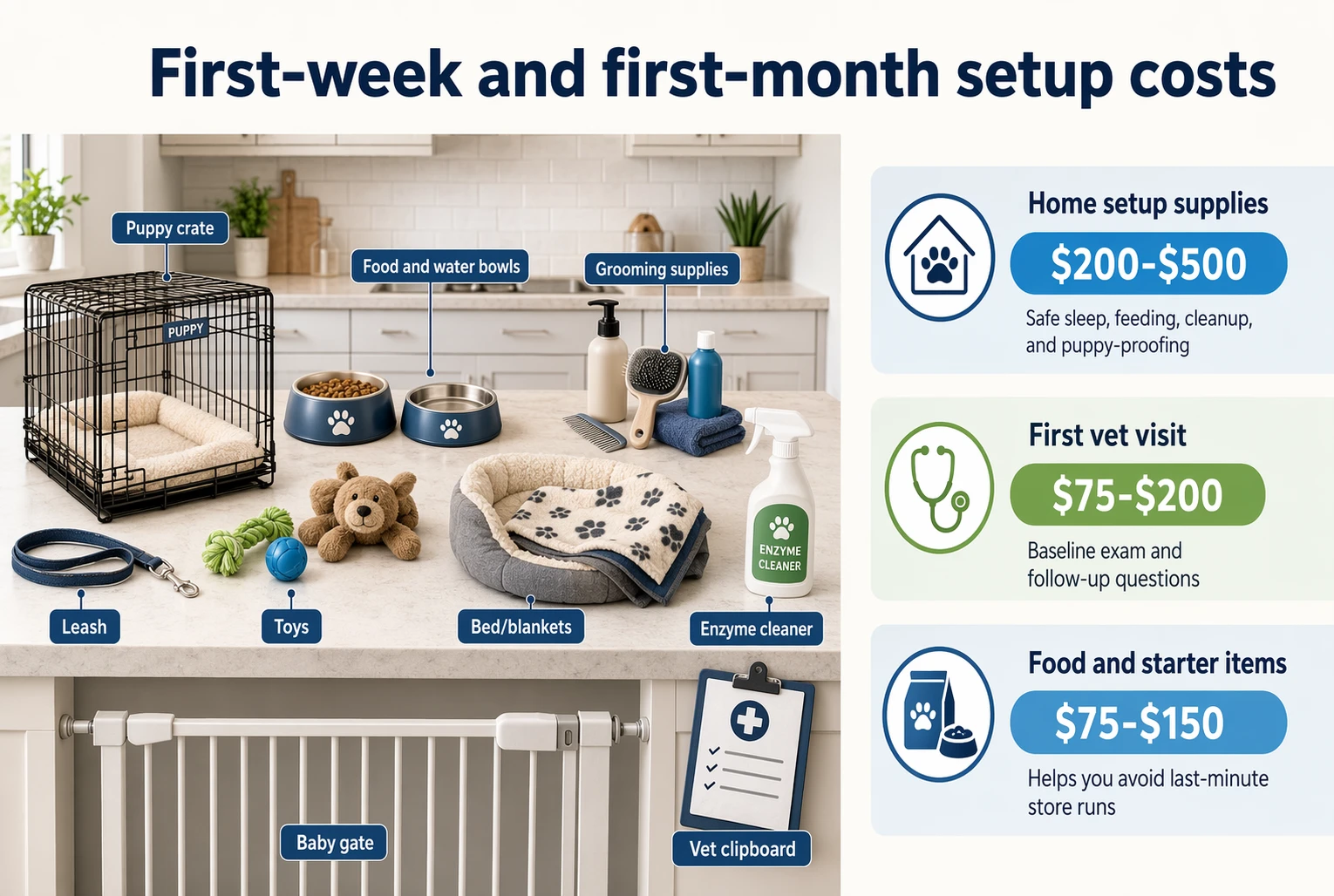
First-week and first-month setup costs
Plan for a one-time setup list before pickup day. Most families spend on the basics, then forget the small add-ons.
- Crate or playpen
- Bed and blankets
- Bowls
- Collar, leash, and ID tag
- Starter food
- Enzyme cleaner
- Toys and chews
- Baby gates
- First vet visit
| Cost area | Typical budget range | Why it matters |
|---|---|---|
| Home setup supplies | $200-$500 | Safe sleep, feeding, cleanup, and puppy-proofing |
| First vet visit | $75-$200 | Baseline exam and follow-up questions |
| Food and starter items | $75-$150 | Helps you avoid last-minute store runs |
Build a first-month cushion of at least a few hundred dollars above your puppy payment. Small-breed puppies need frequent supplies, and costs stack fast in week one.
Travel, pickup, and delivery costs
If your puppy is not local, add travel before you compare breeders. A lower puppy price can end up costing more once you factor in flights, hotel nights, gas, or delivery help.
USDA notes that pets traveling by air need a safe, correctly sized kennel, and some trips also require health paperwork signed close to travel dates according to APHIS pet travel guidance. The AVMA also says interstate or air travel may require a certificate of veterinary inspection and early planning through an accredited vet, per AVMA travel advice.
- Gas, meals, and hotel for pickup
- Airport pet fee or nanny fee
- Travel crate or carrier
- Health certificate if needed
Ask for the full delivery or pickup total in writing, not just the puppy price.
Training, grooming, and routine care
Small companion breeds still need steady monthly care. Budget for habits, not just emergencies.
- Set aside money for puppy training classes.
- Plan for regular grooming, especially coat care.
- Keep room in your budget for vaccines, preventives, and routine vet checks.
| Ongoing cost | Budget approach | Best tip |
|---|---|---|
| Training | Monthly or class-by-class | Start early to prevent bad habits |
| Grooming | Every 4-8 weeks for many coats | Ask about coat upkeep before reserving |
| Routine care | Monthly sinking fund | Spread costs instead of reacting late |
Also Read: 10 Signs a California Puppy Listing Is a Scam – Sage Puppies
When a Premium Puppy Is Worth the Higher Price
Signs the price reflects real quality
A higher price can make sense when you can see where the money went. Cornell notes that good breeders test for breed-related conditions, provide early socialization, and offer lifelong support, not just a pickup date according to Cornell’s breeder guidance.
- Verified parent health testing
- Clear records for vaccines, deworming, and exams
- Early home raising and social time
- A written contract with return terms
- Pickup or delivery details explained in advance
| Quality sign | Why it matters | What to ask for |
|---|---|---|
| Health-tested parents | Lowers avoidable risk | Parent test results |
| Home-raised puppies | Better start with people and sounds | Photos, videos, visit details |
| Clear contract | Fewer surprises later | Reservation and refund terms |
| Ongoing breeder support | Help after go-home day | Post-pickup contact plan |

A premium puppy should come with proof, not just promises.
Signs you should keep looking
Price alone does not equal quality. AKC says buyers should be careful if the breeder focuses on fast deposits, avoids questions, or cannot show health records and a clean raising setup in AKC’s responsible breeder checklist.
- Pressure to pay before you review paperwork
- Vague answers about parents or testing
- No contract or unclear return policy
- No plan for pickup, flight nanny, or ground delivery
- Puppies offered too young
If the breeder acts rushed, hidden, or defensive, keep your money.
What confident buyers do next
Strong buyers compare value, not just the number.
- Ask for parent health records and puppy paperwork.
- Review the contract before sending a reservation fee.
- Confirm how pickup or delivery works, with dates and costs.
- Check that the breeder asks questions about your home too.
That is usually where a program like Sage Puppies stands out – clear process, family-raised care, and transparent next steps matter more than the cheapest listing.
Also Read: 10 Small Breed Puppies That Stay Friendly and Easy Going – Sage Puppies
If you want a puppy price that makes sense on paper and in real life, compare more than the number. Sage Puppies helps families look at health-tested parents, early socialization, clear reservation terms, and pickup or delivery planning before they commit. Review available puppies, pricing details, and the adoption process to see what a well-raised Havanese, Havapoo, or Cavapoo should include.
Frequently Asked Questions
Q1: What factors influence the price of a puppy for sale in Georgia?
Price usually reflects breed, size, breeder standards, health testing, early socialization, and included support. It can also change based on coat type, demand, pickup versus delivery, and whether the breeder clearly explains deposits, reservation terms, and take-home timing.
Q2: What are the typical costs of adopting versus buying a puppy in Georgia?
Adoption fees are often lower up front, but age, history, and breed match can vary. Buying from a responsible breeder costs more because you pay for planned litters, health-focused pairing, early care, and clearer background information.
Q3: What questions should I ask breeders in Georgia to ensure a responsible puppy sale?
Ask about parent health testing, home raising, socialization, deposit terms, pickup or delivery details, and what goes home with the puppy. Also ask how they match puppies to families and what support they offer after take-home day.
Q4: Is the cheapest puppy in Georgia usually the best deal?
Usually not. A low sticker price can hide weak breeding standards, unclear records, or surprise costs later. Compare the full value: health background, temperament prep, contract clarity, and travel planning, not just the first number.
Q5: Should delivery cost change how I compare puppy prices?
Yes. Delivery can add real value if the process is organized and clearly priced. Breeders like Sage Puppies help families compare pickup and delivery with fewer surprises, which matters when you judge the true total cost.
Conclusion
Georgia puppy prices only make sense when you look past the number. A higher price may reflect health testing, careful raising, clear contracts, and honest pickup or delivery planning. A lower price can cost more later if records are vague, terms are loose, or the seller cuts corners.
Key takeaways:
- Compare total value, not just the listing price
- Ask for health records, reservation terms, and delivery details in writing
- Check whether the seller meets Georgia rules for pet dealers through the Georgia Department of Agriculture licensing page
- Use the USDA Animal Care public search tool when federal licensing may apply
- Treat pressure, surprise fees, and unclear answers as red flags
The best puppy fit is not the cheapest one. It is the one backed by real care, solid paperwork, and a breeder you can trust.