Quick Summary: Buying puppies in Georgia requires checking health records, visiting the breeder’s setup, and ensuring transparency. Strong breeders answer questions, show proof of health testing, and match puppies to your lifestyle, while red flags include vague answers, missing records, or high-pressure tactics. Slowing down and verifying details helps find a responsible seller like Sage Puppies, which emphasizes family fit and clear communication.
A polished listing can fool you fast. The photos may look great, the price may feel fair, and the seller may sound friendly. Still, the real story shows up in the health records, access to the parents, and how clearly the breeder answers your first questions. If you want to buy puppies in Georgia, that is where you need to look first.
Most families hit the same problem. They try to buy puppies in Georgia from online listings that all seem clean, kind, and safe. But weak breeders know how to market. First-time buyers often miss the signs that matter most, like missing test results, vague pickup details, or zero interest in your home fit.
This guide helps you buy puppies in Georgia with more confidence. You will learn how to read seller behavior, what health proof to ask for, which red flags should stop the conversation, and what a strong breeder process looks like from first contact to pickup or delivery.
Our approach is simple and practical. We focus on ethical small-breed puppy buying, family fit, and the standards careful breeders follow when they raise puppies the right way.
1. Start With the Breeder’s Proof, Not the Puppy Photos
Cute photos help you notice a puppy. They do not prove the puppy was bred well. Start with records, parent details, and how the breeder answers hard questions. The right seller makes proof easy to see before you send money.
Health testing should be easy to verify
Ask for the exact health tests done on both parents, not vague lines like “vet checked” or “healthy bloodline.” Those are not the same thing. OFA says buyers should ask what screenings were done and whether the results can be verified in its database, and warns buyers to be careful with results that cannot be checked through OFA guidance.
Use this quick filter:
| What to ask for | Good sign | Red flag |
|---|---|---|
| Parent names | Full registered names or clear IDs | “Mom and dad are healthy” only |
| Test results | Copies plus public verification | Screenshots with no source |
| Breed-specific testing | Matches the breed mix involved | Same generic test list for every litter |
| Timing | Done before breeding | “We’ll do it later” |
Check for:
- Parent test records
- Dates on results
- Names that match the parent dogs shown
- A clear explanation of why those two dogs were paired
If proof feels hard to get, assume it will be even harder after payment.
A strong seller welcomes questions before money
A careful breeder will screen you too. That is a good sign, not a hassle. OFA notes that responsible breeders should ask you just as many questions as you ask them. Good sellers care where their puppies go.
Ask these before any deposit:
- What is included in the price?
- Can I review the contract first?
- What happens if the puppy is not the right fit?
- How do you match puppy temperament to family life?
- Can I speak with past buyers?
Look at the tone of the answers:
- Clear and calm beats pushy
- Specific beats vague
- Patient beats rushed
Sage Puppies, for example, puts families through a real fit process. That is what you want from any ethical breeder. A seller who says “send deposit now, ask later” is showing you the process is built for speed, not care.
Good breeders do not fear informed buyers.
Parent dogs and living conditions tell the real story
You learn a lot by seeing where dogs live and how adults act. OFA tells buyers to visit, meet the dogs, and see how they interact with people. If the seller is USDA licensed, you can also check inspection and facility records in the USDA Animal Care public search tool. Federal housing rules also require dog facilities to be structurally sound, sanitary, and supplied with water and power.
Watch for:
- Clean sleeping and play areas
- Friendly, stable adult dogs
- Puppies raised around normal home sounds
- Honest answers if one parent is off-site
A polished puppy photo can hide a poor setup. Calm parent dogs and clean living space are harder to fake.
Also Read: 8 Best Places to Find Puppies for Sale in Georgia
2. Look for Matching, Not Just Selling
The best breeders ask you questions back
A strong seller does not rush to take a deposit. They slow down and learn about your home first. The AKC says responsible breeders question buyers closely so they can match a puppy’s personality to the family’s lifestyle, not just complete a sale, according to AKC guidance on screening puppy buyers.
Expect questions like:
- Who is home during the day?
- Do you rent or own?
- Do you have kids, and how old are they?
- Have you owned a small companion breed before?
- What energy level do you want?
If a breeder never asks about your routine, your home, or your dog experience, that is a red flag.
Good breeders may even say no to the wrong fit. That is a good sign, not a problem.
Application flow should feel organized and clear
A solid process feels calm and easy to follow. It should not feel vague, pushy, or messy. The AKC notes that responsible breeders often use a questionnaire after early calls or emails to gather details about home setup, work schedule, other pets, and goals for the puppy in its breeder response guide.
Look for a process like this:
- First inquiry
- Breeder reply with basic info
- Application or phone call
- Match discussion
- Reservation details
- Pickup or delivery planning
| Sign | Healthy process | Weak process |
|---|---|---|
| Communication | Clear next steps | Random, delayed, confusing |
| Screening | Asks detailed questions | “Available now, pay today” |
| Expectations | Explains timeline and fit | Promises any puppy to anyone |
| Support | Stays available after pickup | Disappears after payment |
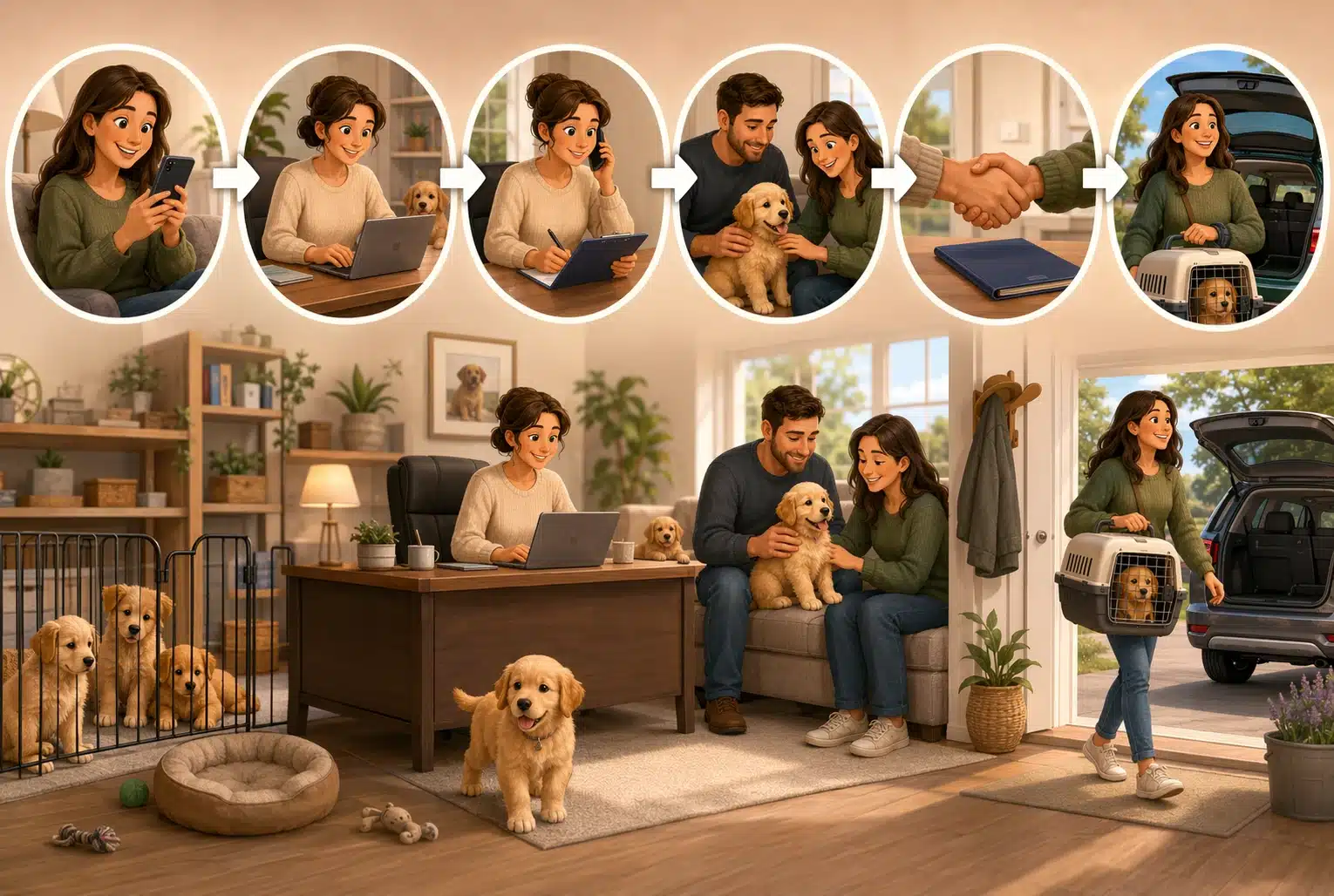
A boutique program like Sage Puppies should make each step easy to understand, especially for first-time families.
Temperament fit matters as much as appearance
Cute matters. Temperament matters more. A family with young kids may need a steady, gentle puppy. A retired couple may want lower energy. A busy home may need a puppy with strong early social skills.
Use this quick fit check:
- Young children – look for patient, tolerant temperaments
- Apartment living – ask about barking and activity needs
- First-time owners – ask which puppy is easiest to train
- Frequent travel – ask how the puppy handles change and crate time
The right breeder talks openly about personality, grooming, energy, and training needs, even if that steers you away from your first choice.
A great match leads to an easier first year. A pretty mismatch often leads to stress.
Also Read: Georgia Puppy Price Guide: What Buyers Should Expect
3. Watch for the Red Flags That Strong Sellers Never Hide
A strong seller does not rush you, dodge questions, or hide basic facts. If anything feels slippery, treat that as useful information. This guide connects back to the main pillar on choosing puppies for sale in Georgia, because red flags matter just as much as cute photos.
Pressure, urgency, and vague answers are warning signs
Bad sellers push emotion first. They want a deposit before you have real answers. You may hear things like “three families are waiting,” “price goes up tonight,” or “this puppy will be gone in an hour.”
That pressure is the point. It keeps you from slowing down.
Watch for this pattern:
- Fast replies when money comes up
- Slow or fuzzy replies when you ask about health, parents, or raising conditions
- Guilt if you ask for time to think
- Refusal to let you review the contract before paying
A reputable breeder should screen you too. The OFA notes that responsible breeders ask buyers plenty of questions and should welcome breeder screening from your side as well according to OFA guidance.
If a seller acts annoyed by normal questions, walk away.
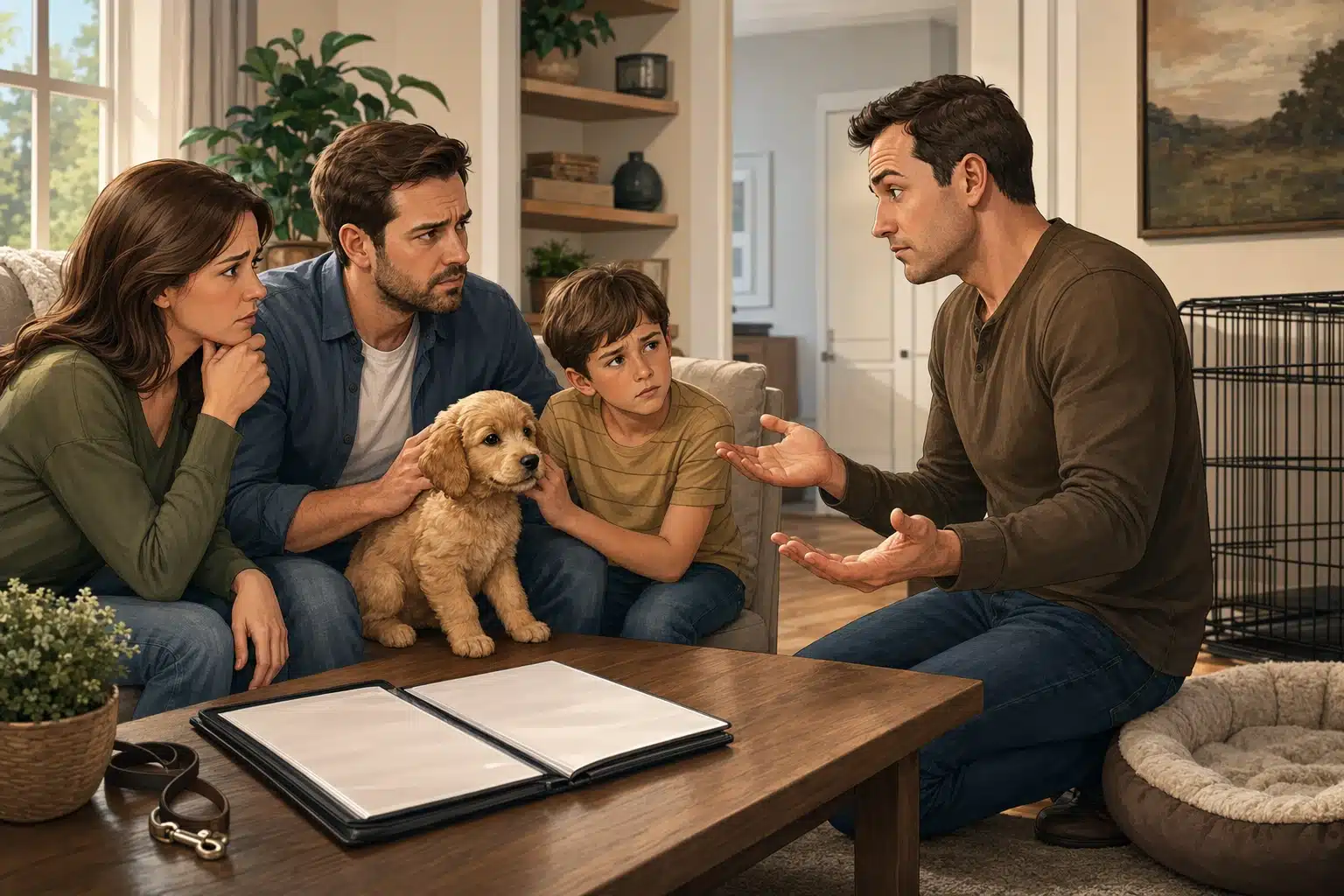
No records, no parents, no transparency
If there are no health records, no proof of testing, and no clear story about the puppy’s parents, stop there. You are not being “too picky.” You are doing your job.
Ask to see:
- Parent health testing
- Vaccine and deworming records
- The dam, if available
- The area where puppies are raised
- A written contract with clear terms
Cornell’s veterinary guidance says responsible breeders should test breeding dogs for breed-relevant conditions, discuss known health risks honestly, and let buyers meet the dam even if the sire is elsewhere in Cornell’s breeder advice.
| What you ask | Strong seller response | Red flag response |
|---|---|---|
| Can I see health records? | Shares records clearly | “You don’t need those” |
| Can I meet a parent? | Explains who is on-site | “Not possible, just trust us” |
| Where are puppies raised? | Shows the setting | Avoids photos or visit details |
Too many breeds and too many promises
One seller offering every popular breed is a problem. So is the one promising “tiny forever,” “no health issues,” “perfect with every child,” or “fully trained” at an early age.
No honest breeder can promise a perfect outcome.
Be careful if a seller:
- Lists many breeds or constant litters
- Guarantees size, color, or temperament too strongly
- Says USDA licensed or AKC registered as if that alone proves quality
- Ships fast but cannot explain how puppies are socialized first
Registration and licensing are not the same as careful breeding. Real quality shows up in transparency, records, fit screening, and calm answers.
Boutique programs like Sage Puppies stand out by staying narrow, showing their process, and focusing on a few small companion breeds instead of trying to sell everything to everyone.
4. Confirm Delivery, Pickup, and Support Before You Commit
Delivery and pickup should be explained in plain language
A strong seller makes the handoff simple. You should know who transports the puppy, where pickup happens, what records you receive, and when final payment is due. If the plan sounds vague, slow down. For interstate travel, the USDA notes that the destination state may set its own animal health rules, including a health certificate or vaccine updates, so ask what applies to your state and get it in writing on the seller’s timeline page or message thread USDA interstate pet travel guidance.
Use this quick check before you say yes:
- Pickup address is clear
- Delivery method is named
- Health record packet is listed
- Travel timing is realistic
- Total fees are spelled out
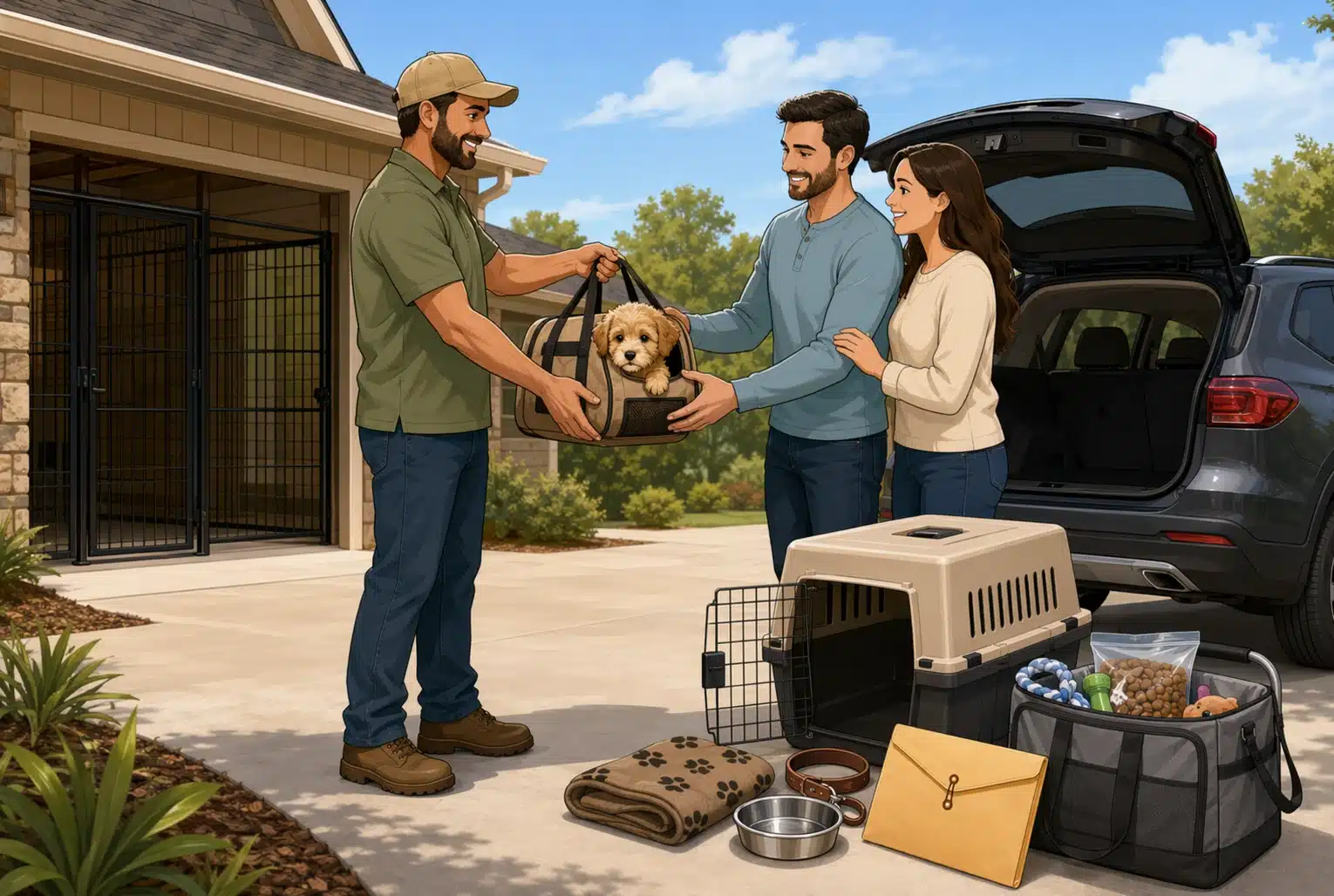
If a breeder cannot explain pickup or delivery in two or three clear sentences, expect trouble later.
Support after the sale matters
Good breeders do not disappear once the puppy leaves. You want help with first-week feeding, crate setup, potty routine, and the normal stress of transition. Ask how support works:
- Can you text or call with early questions?
- Will they explain food, schedule, and routine?
- Do they stay available if your vet spots an issue?
- Will they point you to the right next step without blame?
A boutique program like Sage Puppies should be able to explain support in a calm, direct way. That matters even more for first-time families.
| Support area | What a strong seller does | Red flag |
|---|---|---|
| First 72 hours | Gives clear transition instructions | Says “you’ll figure it out” |
| Records | Sends organized paperwork | Sends partial or messy records |
| Questions | Replies within a reasonable time | Goes quiet after payment |
Reserve only after the fit feels right
Do not reserve just because a puppy is cute or available today. Reserve after the breeder has answered your questions and screened your home, too. That is a good sign, not a hassle.
For families flying home from outside the U.S. later with a dog, the CDC says a CDC Dog Import Form is required for each dog entering the United States, with added rules in some cases. Even if that does not apply now, it shows why clear travel planning matters.
The best match feels calm, informed, and mutual.
Also Read: 10 Must-Ask Questions Before Buying a Puppy Locally
5. Use a Simple Decision Rule Before You Buy
A good shortcut helps when every seller sounds nice. Use three checks. First, legal basics – in Georgia, pet dealers must be licensed in many common sale situations, and the state says buyers can use its license search tool to verify sellers through the Georgia Department of Agriculture. Second, health proof – ask for parent health testing, vaccine records, and clear puppy history. Third, process quality – the breeder should ask about your home, routine, and fit.
- Verify the seller
- Verify the puppy’s records
- Verify how the breeder screens you

If one check is missing, stop acting excited and start asking better questions. A seller who avoids records, rushes payment, or changes their story is telling you enough. Georgia also requires pets entering the state for sale to have a current Certificate of Veterinary Inspection under GDA import rules. If that paperwork should exist and does not, slow down.
A healthy puppy sale should feel easy to follow, not hard to pin down.
Choose the breeder who feels calm, clear, and consistent. You should hear the same answers by phone, text, email, and in writing. The right breeder does not push for a fast deposit or dodge normal questions. They explain pickup or delivery, timing, records, and support in plain English. That is often what families like about a boutique process such as Sage Puppies – fewer surprises, better fit, and more trust before you commit.
Also Read: 10 Adorable Havapoo Colors You Need to See (2026)

If you want a clearer, lower-stress way to compare breeders, start with Sage Puppies. Their home-raised Havanese, Havapoo, and Cavapoo puppies, health-tested parent dogs, and transparent family-first process make it easier to spot what strong sellers do right. Review available puppies, pricing, and pickup or delivery details, then submit an application when the fit feels right.
Frequently Asked Questions
Q1: best Georgia puppy breeders
The best Georgia puppy breeders prove health testing, raise puppies in the home, screen buyers, and explain pickup, delivery, and support clearly. A strong seller asks about your lifestyle too. If a breeder skips questions, that is a warning sign.
Q2: How can I tell if a puppy listing is real?
Ask for recent photos, a live video call, parent details, vaccine records, and the breeder’s full process. Scammers push deposits fast and avoid specifics. Real breeders answer direct questions and stay consistent from first message to pickup day.
Q3: What health records should I ask for?
Request age-based vet records, vaccine dates, deworming history, and any health testing done on the parents. You should also ask what issues are common in that breed mix. Clear paperwork matters more than broad promises about perfect health.
Q4: Should a breeder ask me questions too?
Yes. Good breeders screen families. They ask about kids, schedule, housing, travel, grooming, and budget. That shows they care about fit, not just a sale. Sage Puppies follows this kind of family-first process, which is a strong sign.
Q5: Is delivery a red flag?
Not by itself. Delivery can be fine if the breeder explains who handles transport, timing, handoff, and puppy care during travel. The problem is vague logistics. You should know exactly how your puppy gets from the breeder to you.
Conclusion
A strong puppy seller in Georgia does not hide the basics. They show you where puppies are raised, explain health testing, ask about your home, and give clear records in writing. In Georgia, breeders who sell above certain limits need a state pet dealer license, so checking that status is a smart first filter.
The biggest lesson is simple: slow down. A clean setting, healthy parent dogs, honest answers, and a written contract matter more than cute photos or fast pickup. Georgia consumer guidance also warns buyers to see the puppy in person, review vet records, and watch for scam payment methods and surprise fees, according to the Georgia Attorney General’s breeder tips.
If a seller welcomes questions and screens you too, that is usually a good sign. If they dodge details, move on.