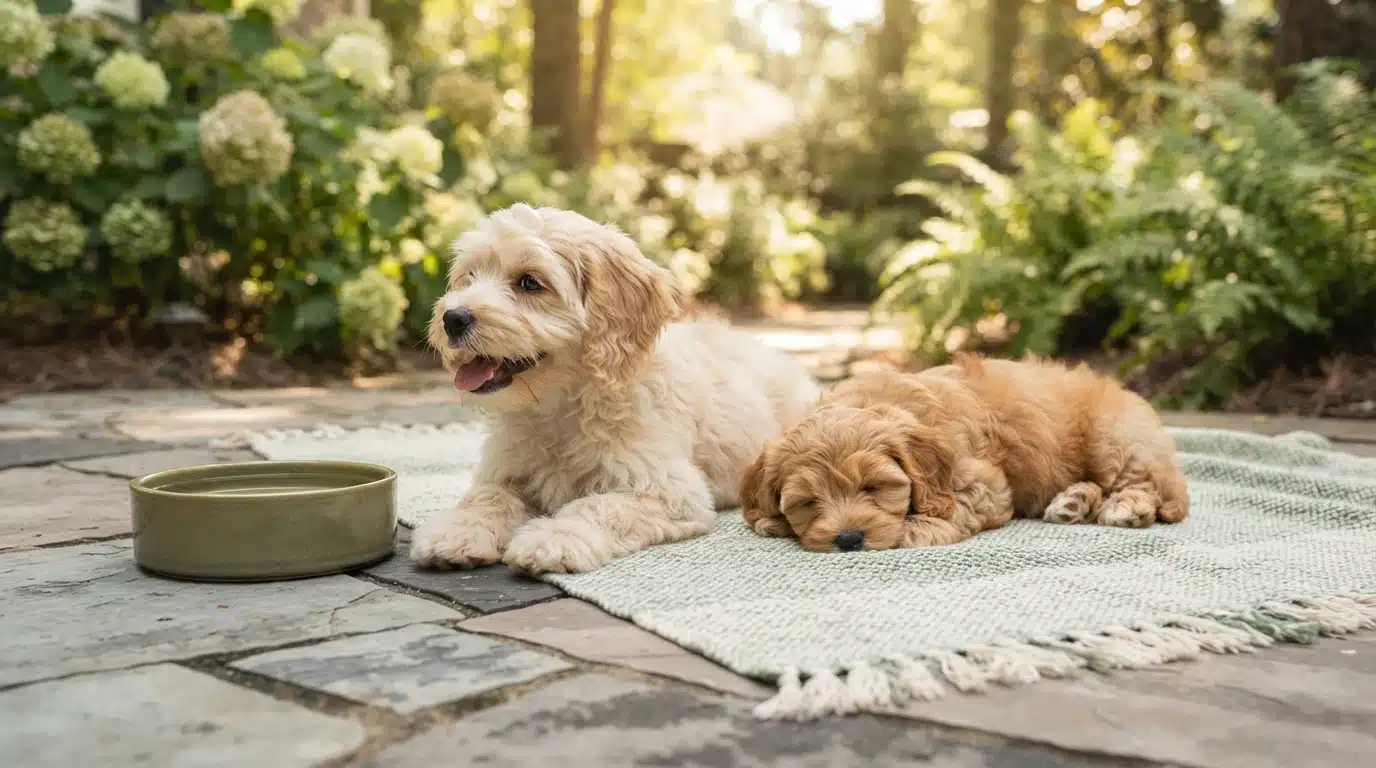
Quick Summary: Small puppies are vulnerable to weather and holiday hazards that can turn dangerous quickly. They overheat easily in summer and get cold fast in winter, so owners should adjust walks, provide shade or warmth, and watch for signs of distress. Holiday risks include toxic foods, decorations, and loud events, so keeping a routine and safety measures in place helps protect puppies year-round.
A 10-pound puppy in South Jordan can get too hot on a shaded patio in July, then struggle on a windy winter walk, then meet new danger from ribbon, lights, and rich table scraps during the holidays. That quick shift is the real problem. Small puppies do not handle weather or home hazards the way people expect.
This guide helps you spot seasonal risk early and build simple routines that protect your puppy year-round. You will get practical Puppy Heat Precautions, clear Holiday Puppy Safety basics, and easy Puppy Cold Safety steps for daily life, travel, walks, and family gatherings.
We work from a puppy-first view that fits small companion breeds and real family homes. For Havanese, Havapoo, and Cavapoo families in Utah and across the U.S., Puppy Cold Safety is not just about snow. Puppy Cold Safety also means wind, wet paws, cold floors, and short legs close to the ground.
Seasonal Risks Every Puppy Owner Should Know
Why Puppies Overheat Faster Than Adults
Puppies heat up fast because their bodies are small, their cooling system is still immature, and many toy or small breeds have less room for error. Dogs cool themselves mostly by panting, not by sweating, so heat, humidity, play, and car rides can push a puppy into trouble quickly, according to the AVMA warm weather guidance.
Watch for these early signs:
- Hard panting
- Bright red gums
- Heavy drool
- Slowing down
- Wobbling or acting confused
A puppy that seems “just tired” after outdoor play may actually be overheating.
Why Puppies Feel Cold Sooner
Puppies lose body heat fast, especially if they are tiny, lean, wet, or have a light coat. That matters for Havanese, Havapoo, and Cavapoo families too, since small-breed puppies can get chilled on winter walks, in cold cars, or even after a bath. The USDA notes that very young dogs, small-breed dogs, wet dogs, and puppies under six months face higher cold-stress risk in low temperatures and wind.
Cold stress often starts with:
- Shivering
- Curling up
- Slowing down
- Lifting paws
- Whining or refusing to walk
If your puppy feels cold to the touch, gets sleepy, or will not settle after coming inside, call your vet.
When a Season Becomes an Emergency
Use this simple rule: if your puppy cannot recover fast with basic help, treat it as urgent.
| Season risk | Early concern | Emergency sign |
|---|---|---|
| Heat | Heavy panting, drooling | Collapse, vomiting, pale gums |
| Cold | Shivering, tucked posture | Weakness, shallow breathing, unresponsiveness |
The USDA says heat stroke over 106 F is a dire emergency, and moderate to severe hypothermia is also an emergency in dogs, per its temperature and humidity guidance.
Go to an emergency vet now if your puppy collapses, has trouble breathing, seems disoriented, or will not respond normally.
Also Read: 7 Seasonal Puppy Safety Rules for Hot Summer Days
How to Prevent Heat Stress in Warm Weather
Choose Cooler Times for Walks and Play
Puppies overheat fast, especially small breeds with short legs close to hot ground. Your safest move is simple: walk early in the morning or later in the evening, and keep sessions short. The CDC advises doing outdoor activity during the coolest parts of the day and taking shade breaks on hot days according to CDC heat guidance.
Use this quick routine:
- Go out early or near sunset.
- Keep play bursts short.
- Head inside at the first sign of heavy panting.
Young puppies do not pace themselves well. You need to be the one who ends the fun early.
Use Shade, Water, and Rest Breaks
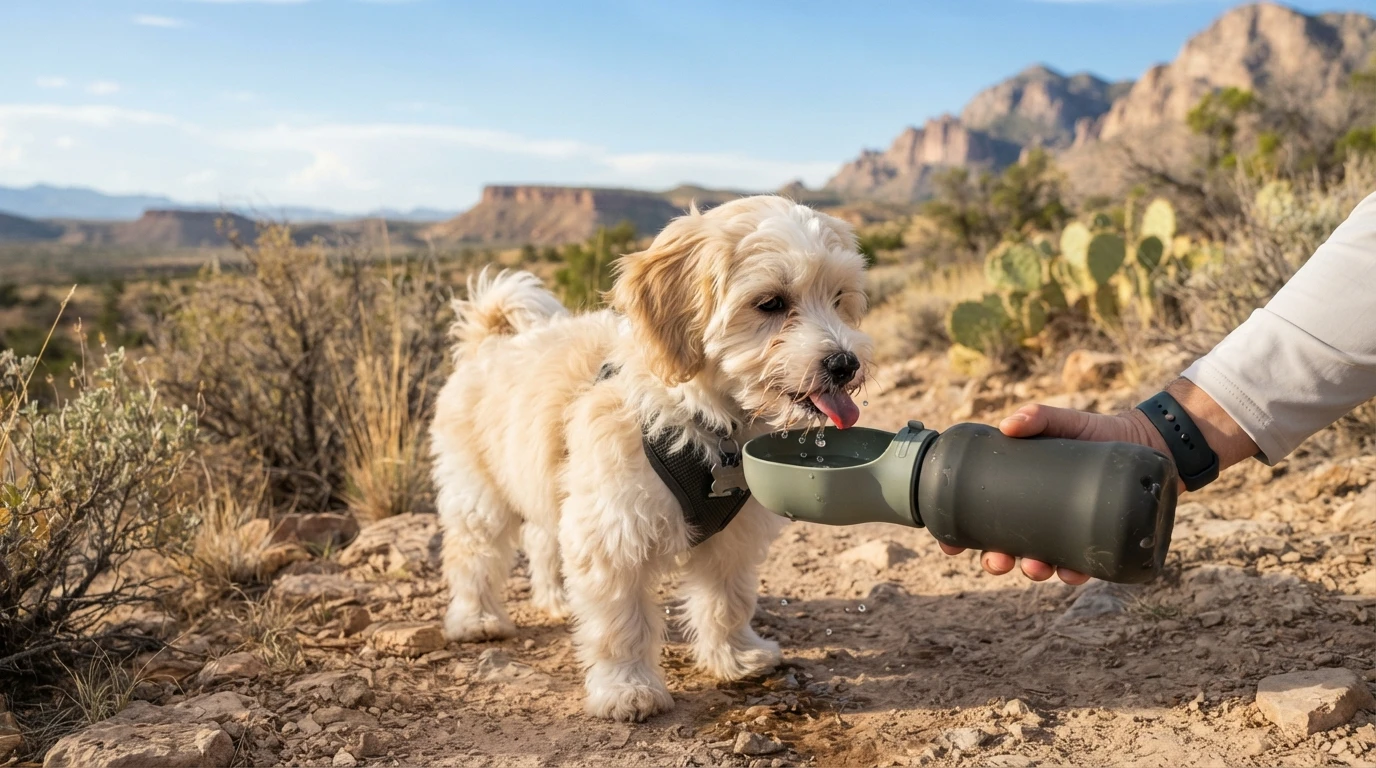
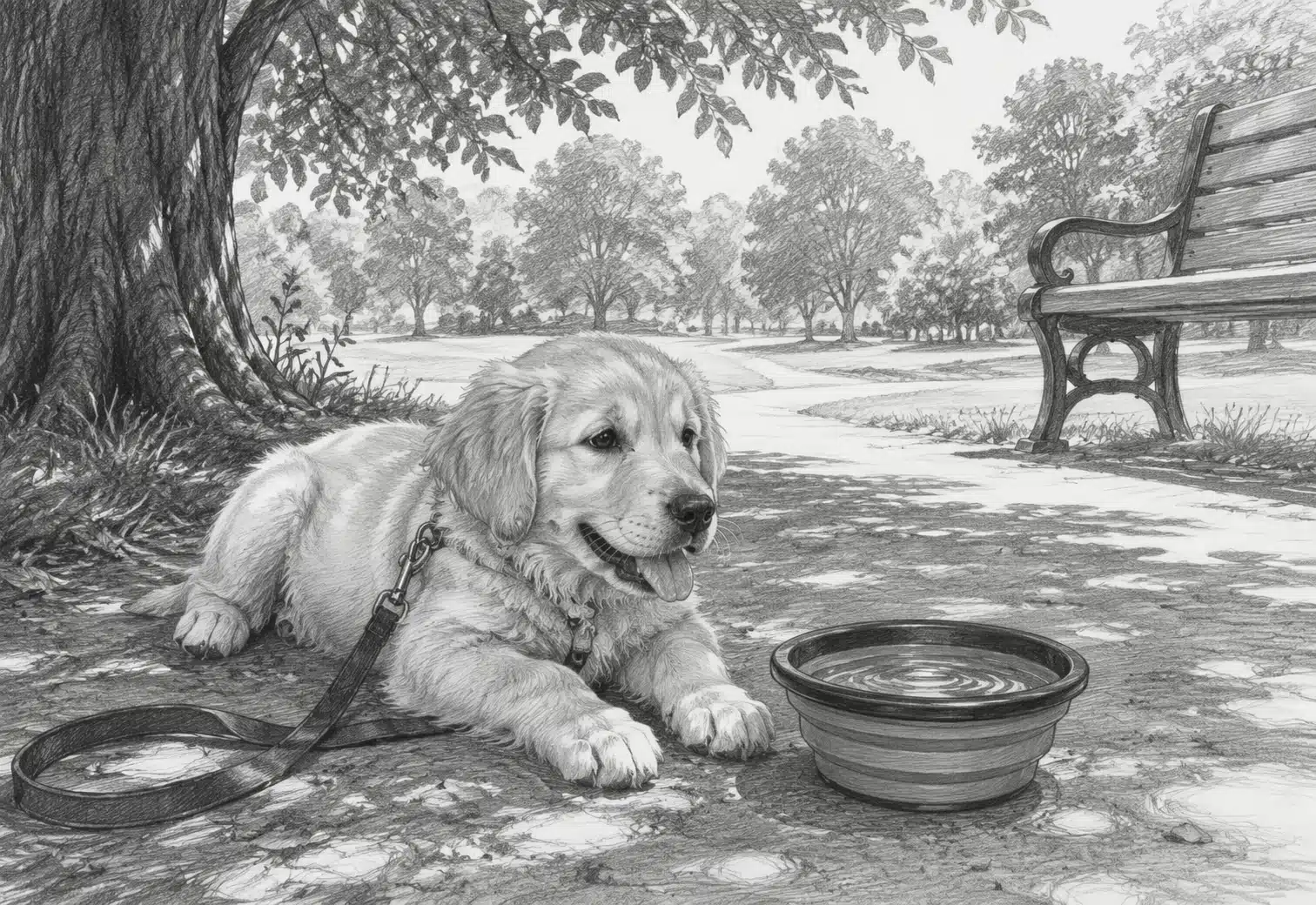
Heat safety is not just about temperature. It is also about how long your puppy stays active without a break. Bring fresh water, stop often, and look for full shade, not thin patchy shade that moves with the sun. The CDC also recommends plenty of fresh water kept in a shady area for pets on hot days.
A simple warm weather setup helps:
- Collapsible water bowl
- Cool drinking water
- A shaded bench, tree, or covered patio
- Rest breaks every few minutes during active play
Watch the Ground, Not Just the Air
The air can feel fine while pavement is still too hot for puppy paws. Asphalt, concrete, turf, and dark decks all hold heat. California public pet safety guidance warns that asphalt and concrete can get hot enough to burn paw pads, and suggests the hand test: if you cannot hold your hand on the ground comfortably, it is too hot for your puppy.
Check surfaces before every walk:
- Pavement
- Sidewalk edges
- Driveways
- Pool decks
- Artificial turf
| Surface check | What to do |
|---|---|
| Ground feels hot after a few seconds | Skip the walk |
| Grass feels cooler | Use grass routes |
| No safe surface nearby | Stay indoors |
Keep Exercise Indoors When Temperatures Spike
Some days are indoor days. Use short hallway recalls, gentle tug, food puzzles, and basic training instead of outdoor exercise. This matters even more for tiny puppies, shy puppies, and flat-faced mixes that may struggle more in heat.
If your puppy seems tired, drooly, wobbly, or unusually quiet, cool them down and call your vet right away.
Also Read: 7 Costs to Budget for Before Buying a Puppy
How to Keep Puppies Safe in Cold Weather
Know Which Puppies Need Extra Winter Protection
Most puppies need shorter winter outings than adult dogs. Small bodies lose heat fast, and puppies cannot regulate body temperature well. Cornell Veterinary Medicine notes that puppies, small dogs, thin-coated breeds, underweight dogs, and dogs with health issues are more likely to struggle in the cold.
Watch your puppy, not just the forecast. Bring them in right away if you see:
- Shivering
- Paw lifting
- Hunched posture
- Sudden refusal to walk
- Whining or anxious behavior
For many Havanese, Havapoos, and Cavapoos, winter is fine in small doses. Long snow play is not.
If your puppy is new to Utah winter or any cold snap, lower outdoor time and build up slowly.
Dress for the Weather Without Overheating Indoors
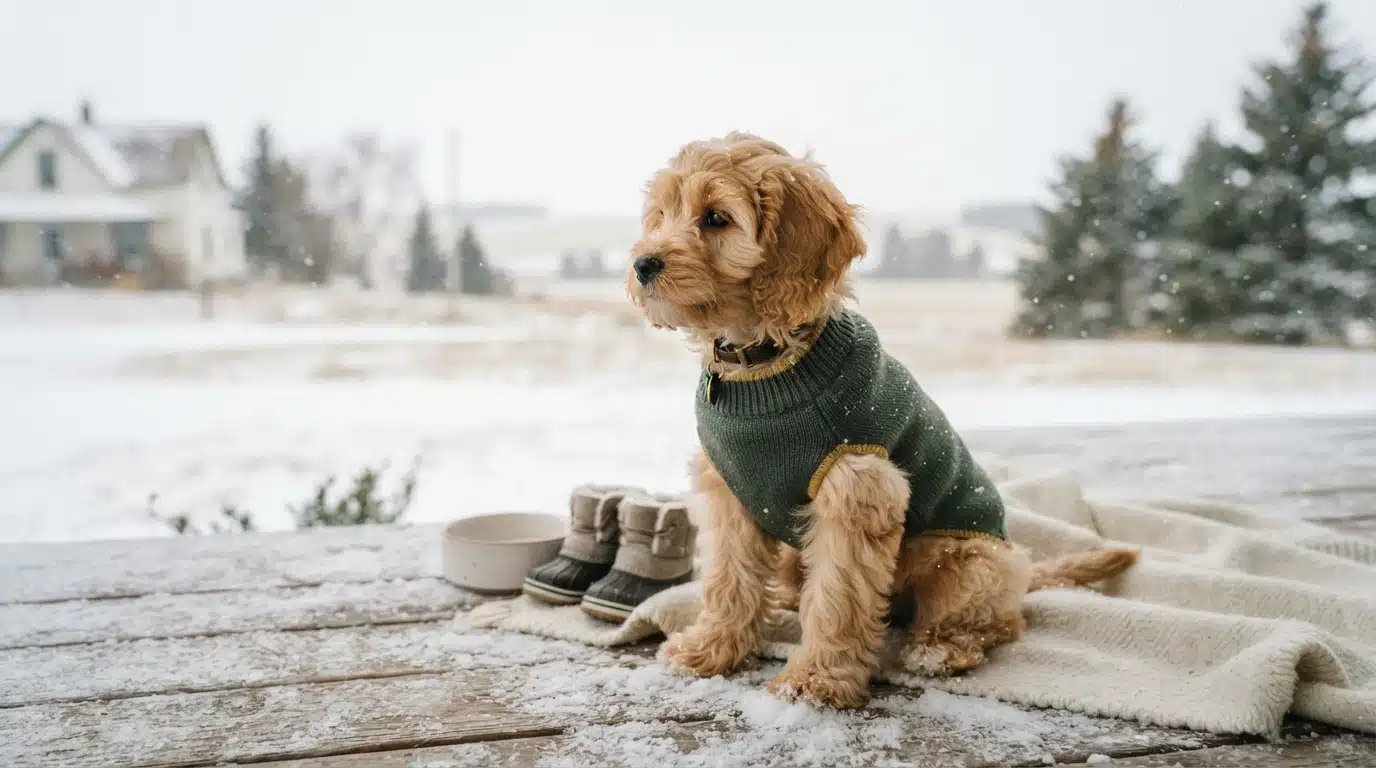
A light sweater or coat helps many small puppies outside. Pick one that covers the chest and back without rubbing the neck, legs, or armpits.
Use this quick guide:
| Situation | Best choice | What to avoid |
|---|---|---|
| Short potty trip | Light sweater | Bulky layers |
| Walk in wind or snow | Water-resistant coat | Loose straps |
| Indoor rest | No coat unless home is chilly | Leaving wet clothes on |
Take the layer off once your puppy comes inside and warms up. Wet clothing can chill them, and heavy layers indoors can make them too warm.
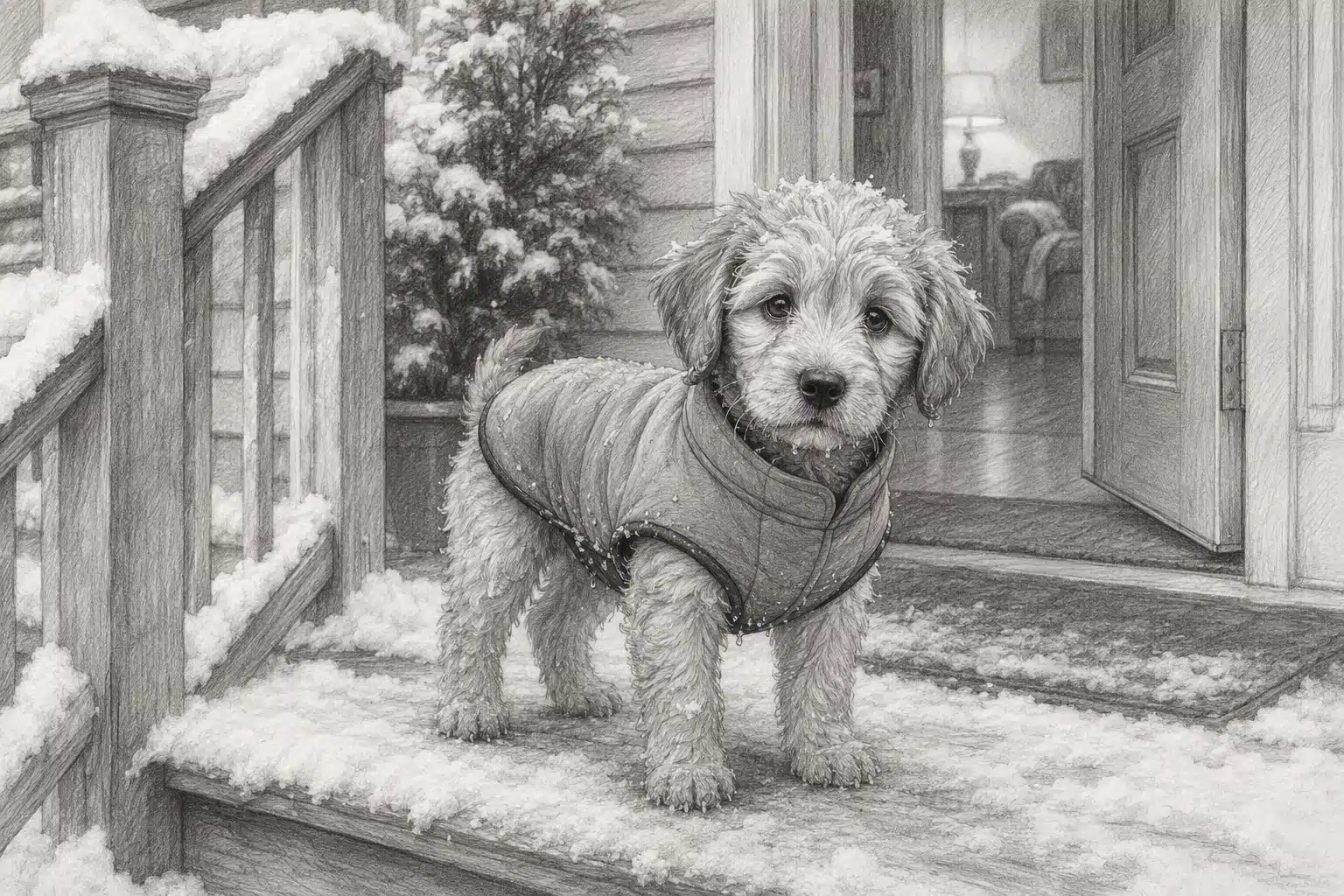
Keep two dry sweaters if you live in a snowy area. A damp one stops helping fast.
Protect Paws From Ice, Salt, and Chemicals
Snow is not the only winter risk. Salt, de-icers, and antifreeze residue can irritate paws and become dangerous if licked off later. The AVMA cold weather guide advises wiping paws, legs, and belly after winter walks.
Use a simple routine:
- Check pads before going out.
- Use booties or paw balm if your puppy tolerates them.
- Stay off heavily treated sidewalks when possible.
- Wipe and dry paws as soon as you come in.
Check for:
- Redness
- Cracks
- Ice packed between toes
- Excess licking
Create a Warm, Dry Rest Space
Cold safety continues indoors. Give your puppy a bed off cold tile, away from drafts, with a washable blanket that stays dry.
A good winter rest spot should be:
- Warm
- Dry
- Quiet
- Easy to reach after potty trips
For small-breed puppy families, this simple setup prevents a lot of winter stress.
Holiday Puppy Safety at Home and on the Go
Keep Food and Treats Puppy-Safe
Holiday food is one of the fastest ways a puppy gets sick. Rich scraps, bones, chocolate, and sugar-free sweets can all cause real trouble. The FDA warns that chocolate, xylitol, fatty foods, and cooked bones are common holiday hazards for pets during the holiday season.
Use a simple food rule:
- Feed your puppy their normal meals.
- Offer only puppy-safe treats you chose ahead of time.
- Keep platters, dessert trays, and trash fully out of reach.
Watch for sneaky risks:
- Turkey skin and gravy
- Candy, gum, and baked goods
- Bones and meat strings
- Guest purses with snacks or gum
Ask guests not to hand-feed your puppy, even “just one bite.”
Make Decorations and Gifts Safer
Puppies treat decorations like toys. That is the problem. Ribbons, tinsel, hooks, batteries, candles, cords, and low ornaments can all lead to choking, burns, cuts, or stomach blockages.
Set up your space with puppy height in mind:
- Move breakable ornaments higher
- Skip edible garlands
- Tape or cover loose light cords
- Use flameless candles when possible
- Pick up ribbon and wrapping scraps right away
| Holiday item | Main risk | Safer move |
|---|---|---|
| Ribbon and tinsel | Swallowing and blockage | Clean up right after gifts |
| Glass ornaments | Cuts to mouth or paws | Use shatter-resistant decor |
| Candles | Burns or fire | Use flameless candles |
| Gift bags | Chewing tissue or treats | Store in a closed room |
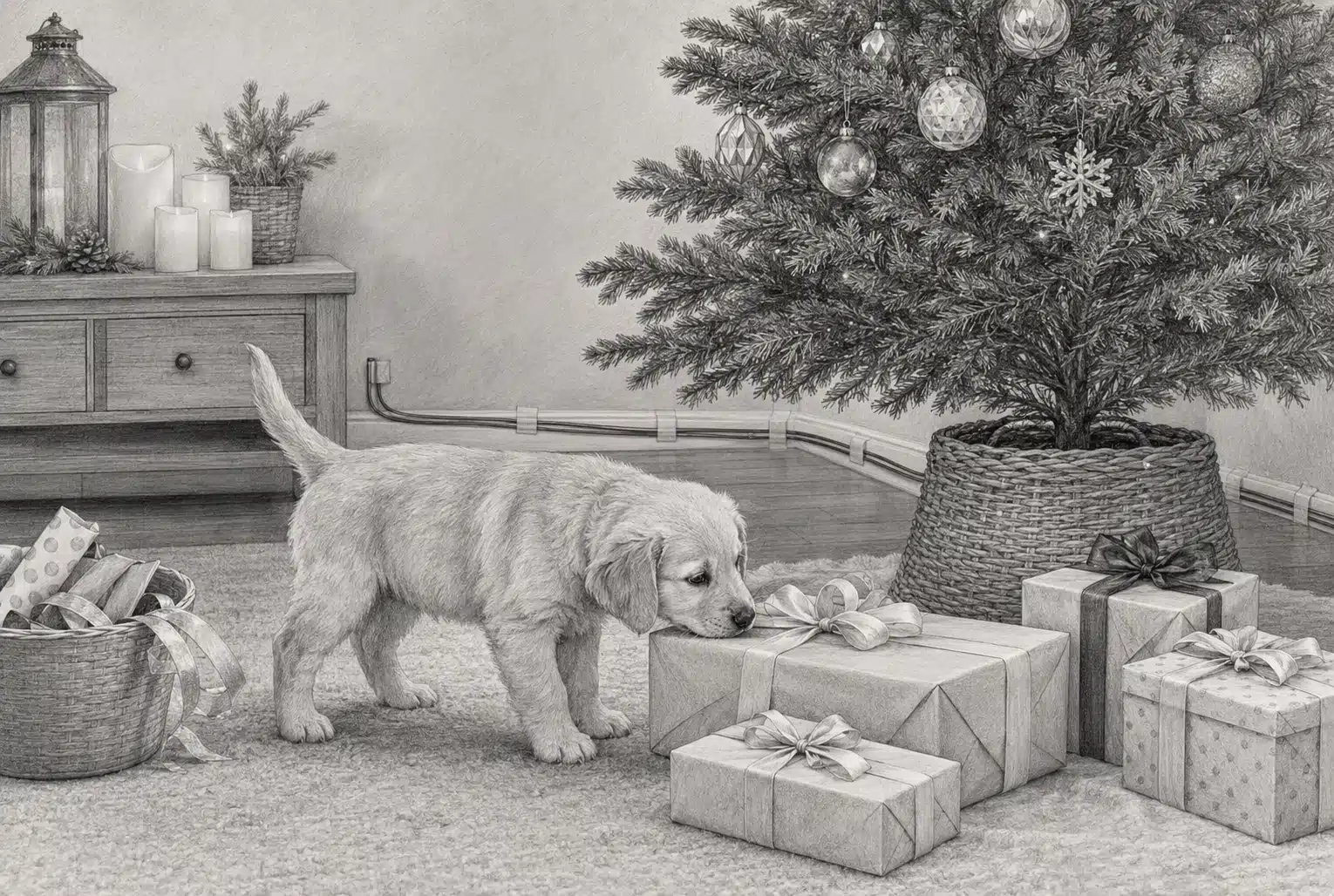
The ASPCA notes that wires, batteries, ornaments, candles, and holiday plants all need extra care around pets during celebrations.
Manage Guests, Noise, and Routine Changes
A busy house can overwhelm a small puppy fast. New faces, loud kids, and missed nap times often lead to stress, accidents, or door-dashing.
Keep things steady with a short plan:
- Give your puppy a quiet room or crate break
- Keep walks, potty trips, and meals on schedule
- Use a leash indoors if guests come and go
- Tell kids to let the puppy rest
A calm puppy does better than a social puppy pushed too far.
Plan Ahead for Fireworks and Travel Days
Fireworks, road trips, and holiday pickups need prep, not luck. Pack water, cleanup supplies, leash backups, and your puppy’s regular food.
Before you leave:
- Exercise your puppy first
- Secure them in a crate or travel seat setup
- Never leave them alone in a car
- Bring records and your vet contact info
What to Watch For: Early Warning Signs and Emergency Action
Signs Your Puppy May Be Too Hot
Heat trouble can turn serious fast, especially in small puppies. Watch for heavy panting, thick drool, restlessness, bright red gums, weakness, wobbling, vomiting, or collapse. The AVMA lists excessive panting, drooling, unsteadiness, abnormal gum color, and collapse as emergency warning signs in pets during warm weather AVMA warm weather pet safety.
If you see these signs:
- Move your puppy to shade or air conditioning.
- Offer small sips of cool water.
- Use cool, not icy, water on paws, belly, and chest.
- Call your vet right away.
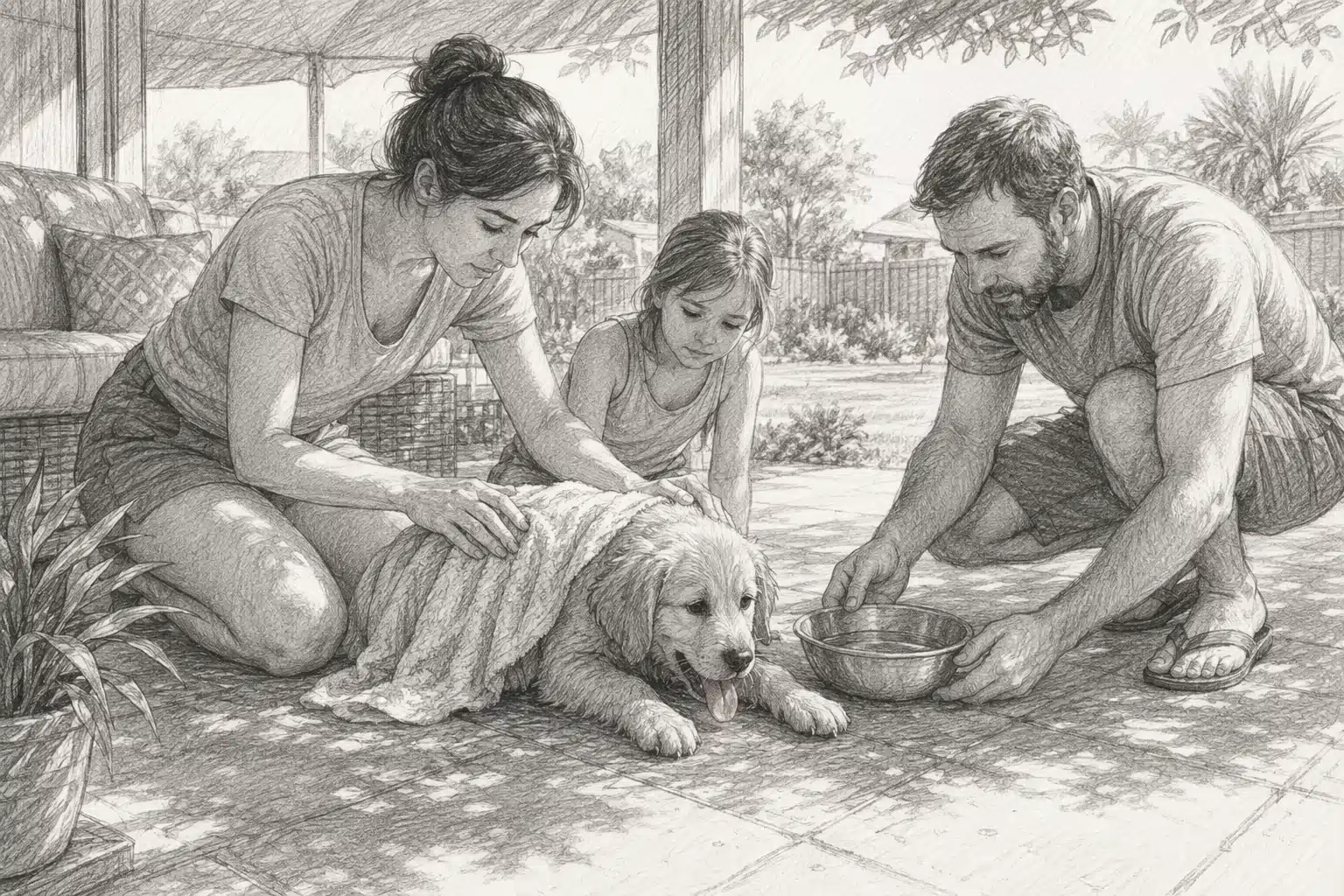
Do not wait for your puppy to “sleep it off.” Heat stress can worsen in minutes.
Signs Your Puppy May Be Too Cold
Cold stress often starts quietly. Your puppy may shiver, lift paws, slow down, seem anxious, hunch up, or refuse to keep walking. As body temperature drops, you may see weakness, confusion, or a sleepy, hard-to-rouse puppy. Small breeds and young puppies lose heat faster, so short outdoor trips matter.
Take these steps fast:
- Bring your puppy indoors right away.
- Dry wet fur and wrap them in a warm towel or blanket.
- Use gentle warmth, not direct high heat.
- Call your vet if shivering does not stop quickly or your puppy seems weak.
A puppy that feels cold and acts dull needs prompt help, not another layer and more outdoor time.
When Holiday Exposure Needs Fast Action
Holiday risks need quick action if your puppy eats chocolate, xylitol gum, rich table food, dough, medication, or swallows string, ribbon, ornament hooks, or batteries. The ASPCA notes xylitol can cause vomiting, weakness, low blood sugar, seizures, and liver damage in dogs ASPCA xylitol warning.
Do this now:
- Remove the item.
- Save the package.
- Call your vet or poison control.
- Go to urgent care for vomiting, tremors, trouble breathing, or collapse.
A Simple Seasonal Safety Routine for Puppy Families
Check the Weather Before You Leave Home
Look at the full picture before every outing – temperature, wind, pavement, and plans. Small puppies lose body heat fast in winter, and hot cars turn dangerous quickly. The AVMA warns that cold tolerance varies by coat, size, age, and health, while the CDC says a parked car can heat up fast even with cracked windows and mild outdoor temps AVMA cold weather guidance CDC heat and pets advice.
If the weather feels questionable, shorten the trip or skip it.
Pack for the Season
Keep one grab-and-go puppy tote by the door. Rotate it as the season changes.
- Fresh water and a small bowl
- Towel and cleanup bags
- Harness, leash, and ID
- Light sweater or coat for cold days
- Paw wipes for salt, mud, or pollen
- Safe chew or small treats
A simple kit helps you act fast instead of guessing.
Use the Same Calm Routine at Home
Puppies do best when your routine stays boring in the best way. Use the same potty path, drying-off spot, and rest area each season. During holidays, give your puppy a quiet retreat away from guests, food, cords, and decorations. The AVMA recommends planning ahead and giving pets a calm indoor space during holiday activity AVMA holiday pet safety.
- Go out
- Come in
- Wipe paws
- Offer water
- Settle and rest

If you want a puppy that starts with thoughtful care, not guesswork, take the next step with Sage Puppies. Their home-raised Havanese, Havapoo, and Cavapoo puppies are bred for health, socialized early, and matched through a clear family-first process, so you can prepare for heat, cold, and holiday routines with more confidence.
Frequently Asked Questions
Q1: What are essential seasonal safety tips for puppies in heat and cold weather?
Keep outings short, watch the ground temperature, and adjust walks to early morning or midday depending on season. Small puppies lose body heat fast and overheat fast too. Use shade, water, sweaters, and close supervision.
Q2: How can I prevent heatstroke and hypothermia in puppies during extreme seasons?
Never leave a puppy in a car, skip long outdoor play in extreme weather, and dry them quickly after snow or rain. Warning signs include heavy panting, shivering, weakness, pale gums, or confusion. Call your vet fast if symptoms start.
Q3: What are the best ways to keep puppies safe during summer holidays and holiday festivities?
Set up a quiet puppy zone before guests arrive. Keep fireworks, grills, cords, alcohol, rich foods, and decorations out of reach. Use a leash or pen during busy events so your puppy does not bolt, beg, or get stepped on.
Q4: When is weather too hot or too cold for a small-breed puppy?
If you feel uncomfortable after a few minutes, your puppy likely does too. Small breeds need extra caution below freezing and during high summer heat. Short potty trips may be fine, but longer walks should wait for safer conditions.
Q5: What should I pack for seasonal puppy travel or pickup day?
Bring water, a bowl, towels, a blanket, pee pads, a secure carrier, and any cold or warm gear your puppy needs. If you are meeting a breeder like Sage Puppies, ask about feeding timing, rest stops, and comfort routines first.
Conclusion
Puppy safety gets easier when you treat each season as a routine, not a surprise. In heat, focus on shade, water, cool surfaces, and never leaving a puppy in a parked car. The CDC warns that a car can heat up fast, even with a cracked window, so that rule stays firm year-round according to CDC heat guidance.
Cold months call for shorter outings, paw checks, dry bedding, and extra care for small breeds that chill fast. Holidays bring a different set of risks, like rich food, bones, cords, ribbons, and toxic plants. The FDA notes that common holiday items can trigger choking, stomach blockages, poisoning, or pancreatitis in pets per FDA holiday pet hazards. A calm plan protects your puppy all year.