Quick Summary: Feed a Cavapoo puppy by age, expected adult weight, and the food’s calories per cup, not by a fixed cup measurement. Most need 150 to 450 calories daily, with four meals from 8 to 12 weeks, three from 3 to 6 months, and two after 6 months; weigh portions weekly and adjust food by 10% based on body condition. Choose complete and balanced growth food, keep treats under 10% of daily calories, and transition foods over 7 to 10 days. Contact a vet if weight stalls, stools worsen, or appetite or energy changes sharply.
Two families can follow the same “one quarter cup per meal” instruction and raise very different puppies. A 5-pound Cavapoo and a 15-pound Cavapoo eating identical kibble are not getting the same calories, so one puppy may grow too fast while the other stays underweight. The real answer to how much to feed a Cavapoo puppy depends on three things: age, expected adult weight, and the calorie density printed on your food bag. This guide gives you a Cavapoo feeding chart that covers all three, plus how to judge your puppy’s body condition and when to call your vet. It draws on documented experience from Cassie Milar’s Sage Puppies program in South Jordan, Utah, where Cavapoo litters are raised and matched with families across the country.
How Much Should I Feed My Cavapoo Puppy Each Day?
The short answer for most Cavapoo puppies
Most Cavapoo puppies need roughly 150 to 400 calories a day, split across three meals until six months old and two meals after. The exact amount depends on your puppy’s current weight, age and expected adult size, so use the chart below as a starting point, not a rule.
| Puppy weight | Age | Daily calories | Daily total |
|---|---|---|---|
| 4-6 lbs | 8-12 weeks | 150-230 | 3 small meals |
| 7-10 lbs | 3-5 months | 230-330 | 3 meals |
| 11-14 lbs | 6-9 months | 300-400 | 2 meals |
| 15-20 lbs | 10-12 months | 380-450 | 2 meals |
Converting cups to calories, and why the label matters
Calorie density varies by brand, so the bag’s label matters more than any chart. A kibble at 450 calories per cup needs smaller portions than one at 350. Divide the daily calories by your food’s calories per cup, then split that across meals. AAHA feeding guidelines recommend vet-checked plans built on calories, not cups alone.
How to adjust the number when your puppy is not tracking the chart
Watch the body condition score: you should feel ribs easily under a thin fat layer. Ribs showing means add 10 percent more food. Ribs hard to feel means cut back 10 percent. Recheck weekly, and call your vet if weight stalls for two weeks.
Cavapoo Feeding Chart: How Often to Feed from 8 Weeks to 12 Months
So how often should you feed a Cavapoo puppy? At 8 to 12 weeks, four small meals a day. From 3 to 6 months, drop to three meals. From 6 to 12 months, two meals a day usually cover it, and many adults stay on that schedule for life.
| Age | Meals per day |
|---|---|
| 8 to 12 weeks | 4 |
| 3 to 6 months | 3 |
| 6 to 12 months | 2 |
| 12 months and older | 2 |
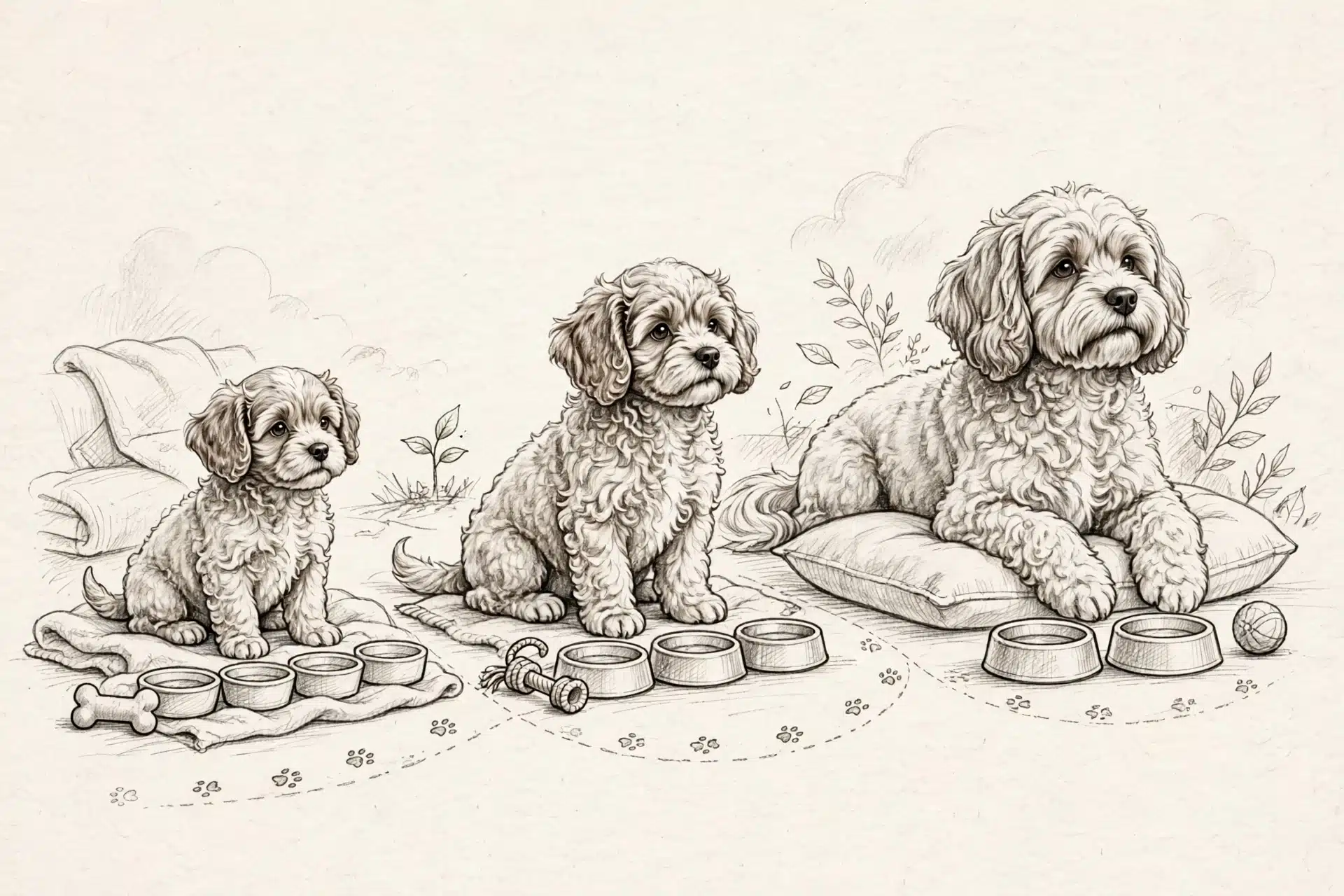
Meal frequency by age at a glance
Young puppies burn through calories fast, so they need frequent refills. Four meals keeps blood sugar steady through the day. By 3 months, three meals is enough. After 6 months, two meals fit most households and most vets prefer it. Keep each meal small, because a tiny stomach can only hold so much at once.
Why small breeds are fed more often
Small breeds like the Cavapoo have a fast metabolism packed into a little body. Skip a meal and a young toy-breed puppy can dip into low blood sugar, which shows up as wobbliness, weakness or shaking. Frequent, evenly spaced meals prevent that dip. This is why a small breed puppy feeding schedule looks different from a large breed’s, not fussy.
Moving from four meals to three, and from three to two
Shift gradually so the stomach adjusts. Merge the mid-morning and midday meals first, then the evening snack a few weeks later. If your puppy steals food, acts ravenous or has loose stools during a change, slow down and hold the current schedule another week before cutting again.
Cavapoo Portion Sizes by Weight and Meal
A Cavapoo puppy eats roughly 50 to 130 calories per meal, depending on adult size and age. Divide the daily total by the number of meals: 300 calories over three meals means about 100 calories each. Use this table to find the portion size that fits your puppy’s expected adult weight.
| Expected adult weight | Calories per meal | Dry cups per meal (400 kcal/cup) |
|---|---|---|
| 4-6 lbs | 50-75 | about 1/8 to 1/5 cup |
| 7-10 lbs | 75-110 | about 1/5 to 1/4 cup |
| 11-14 lbs | 150-200 | about 2/5 to 1/2 cup |
| 15-20 lbs | 190-225 | about 1/2 to 3/5 cup |
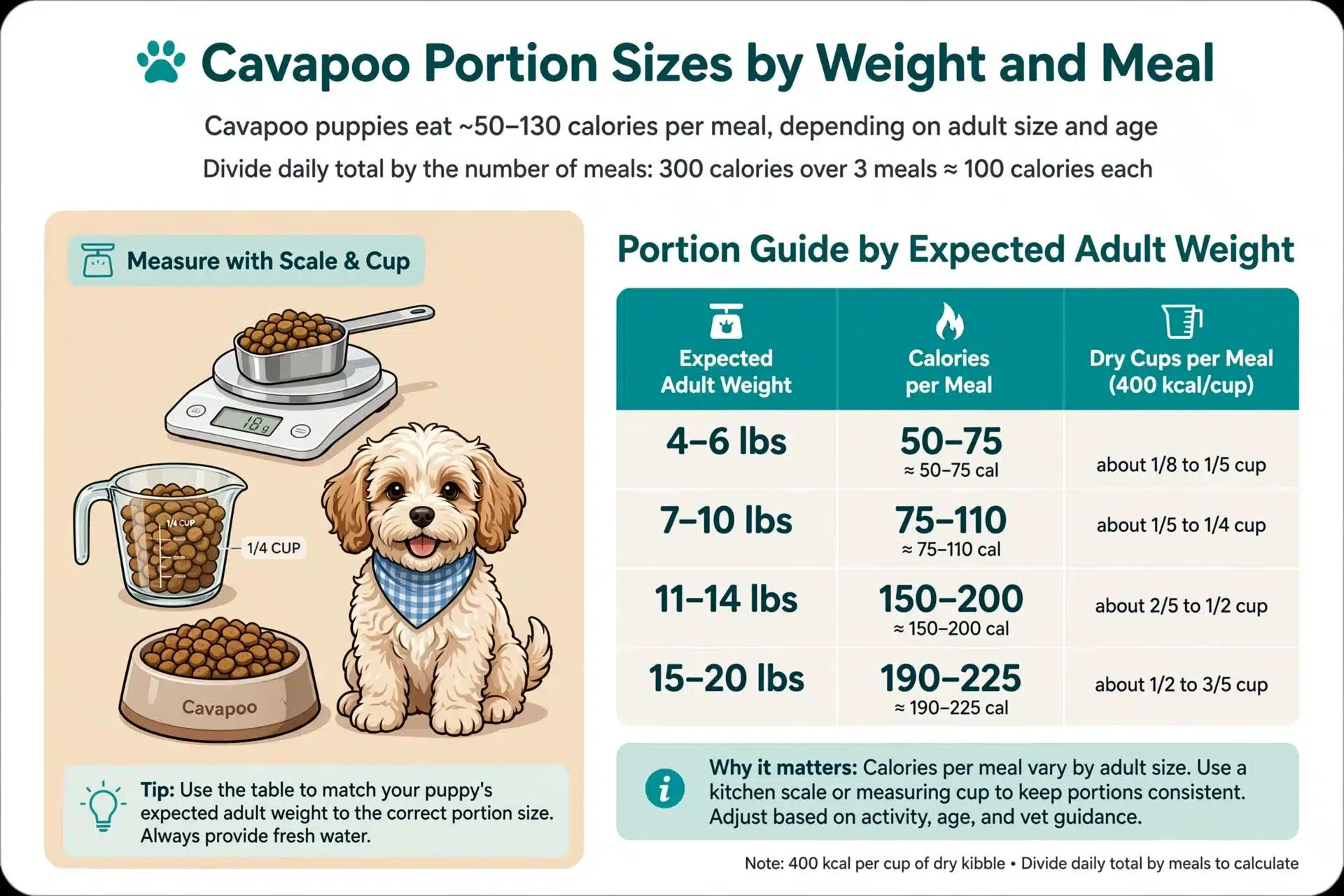
Weighing portions instead of eyeballing cups
Cups mislead. A heaping scoop can add 20 percent more food than a level one, and kibble shape changes how much fits. A $15 kitchen scale removes the guesswork: weigh one day’s food, split it into meals, and adjust weekly as your puppy grows. Grams stay consistent across every bag.
A worked example: a 12-week-old Cavapoo
Say you’re wondering how much to feed a Cavapoo puppy that should reach about 12 pounds as an adult. At 12 weeks she eats three meals a day. If her food holds 400 calories per cup and her daily target lands near 300 calories, each meal gets about 100 calories, or roughly a quarter cup weighed on the scale. Watch her waist and ribs over the next two weeks, then adjust by 10 percent either way.
Choosing the Right Puppy Food for a Cavapoo
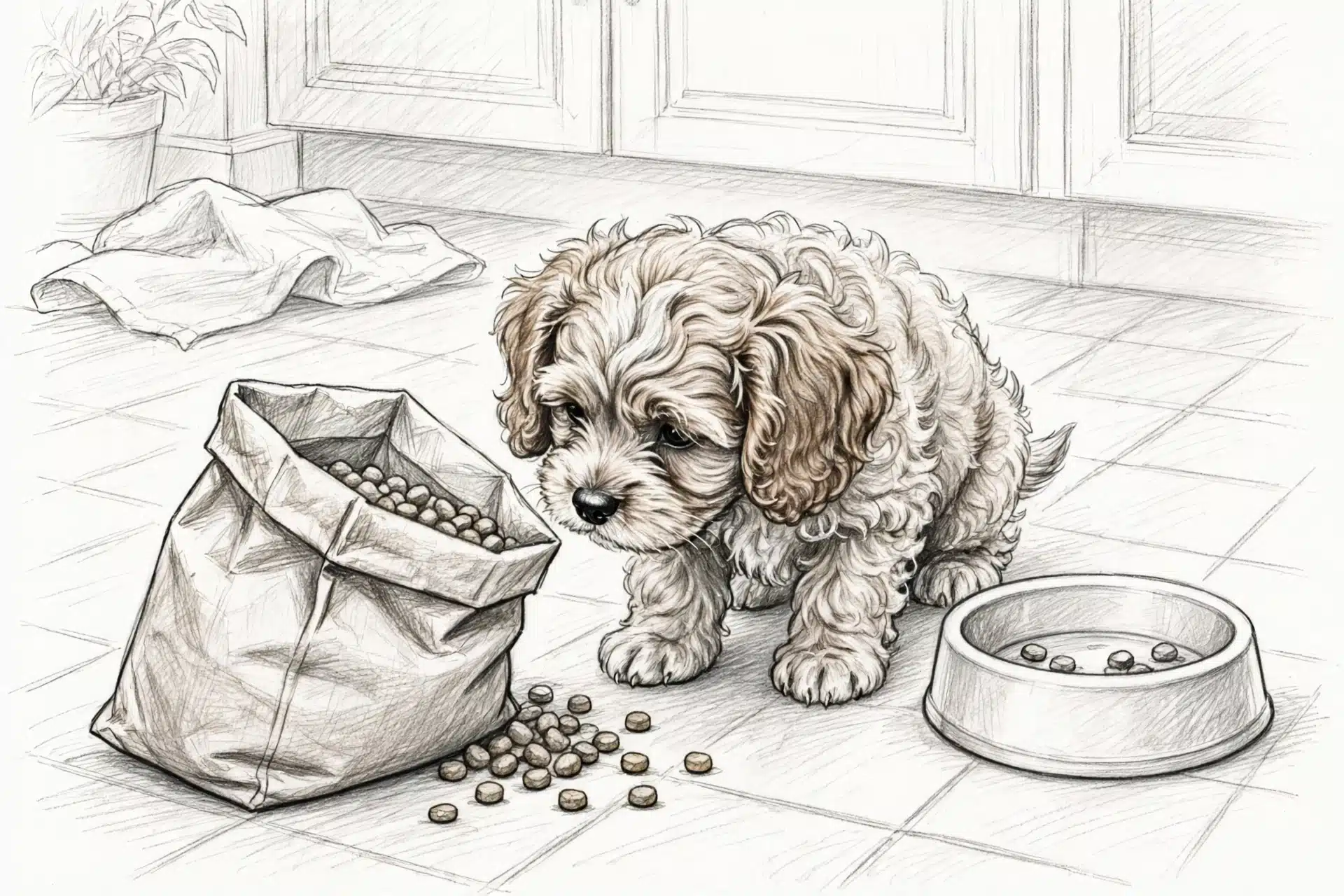
The right food is any puppy food labeled complete and balanced for growth. That phrase, set by AAFCO standards, means the recipe meets a puppy’s full nutrient needs without supplements. Look for it near the ingredient list, and pick a formula made for small breeds, since small kibble fits little mouths.
What complete and balanced means on a puppy label
“Complete and balanced” is the claim that matters most on any puppy food label. It means the food meets AAFCO nutrient profiles for growth, so it supports bone, brain and coat development on its own. Skip foods labeled for “intermittent or supplemental feeding,” and check that a growth or all-life-stages statement appears on the bag.
Kibble, wet food, or fresh: comparing formats
Kibble is the easiest format for most families. It stores well, portions cleanly and helps with small breed dental care through chewing. Wet food smells better to picky eaters but spoils fast and costs more per calorie. Fresh diets work too, if they carry the same growth statement. Mixing formats is fine; just count calories from each one so totals stay accurate.
Ingredients, treats, and what to leave out of the bowl
Read the first five ingredients: you want a named meat, like chicken or turkey, near the top. Keep puppy treat calories under 10 percent of daily intake, or the balanced diet gets thrown off. Leave out grapes, onions, chocolate and cooked bones, and avoid foods that trigger tear staining in cavapoos. Your vet can flag breed-specific sensitivities.
Switching Foods Without Upsetting Your Puppy’s Stomach
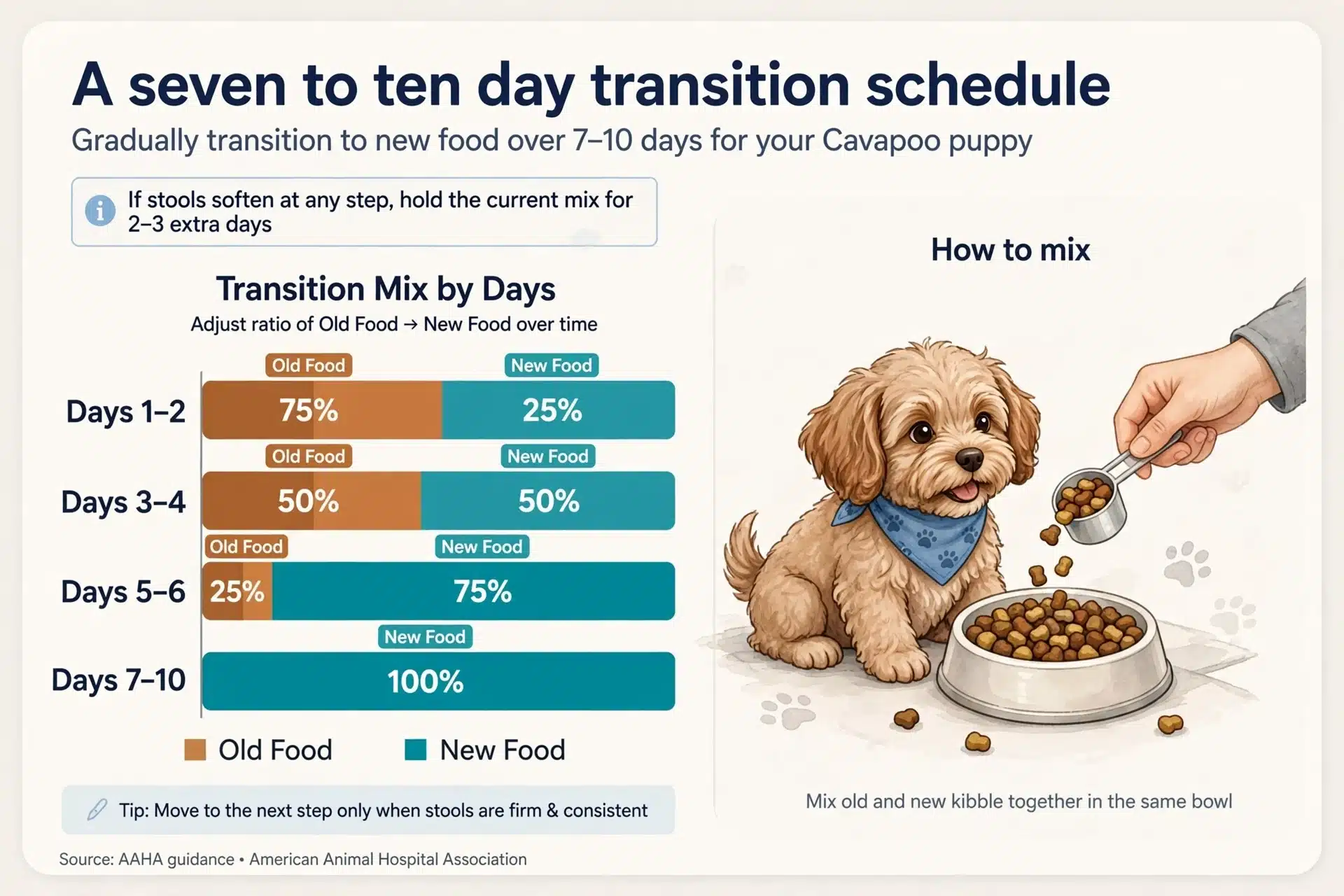
To switch your Cavapoo puppy to a new food, mix the two foods together over seven to ten days, slowly increasing the new food while decreasing the old. A sudden swap often causes loose stools and an upset stomach, so pace matters more than the brand you pick.
A seven to ten day transition schedule
Follow this plan at every meal, whether you feed three times a day or four:
| Days | Old Food | New Food |
|---|---|---|
| 1-2 | 75% | 25% |
| 3-4 | 50% | 50% |
| 5-6 | 25% | 75% |
| 7-10 | 0% | 100% |
If stools soften at any step, hold the current mix for two or three extra days. This schedule matches the guidance from AAHA, the American Animal Hospital Association.
What to do if your puppy refuses the new food
Picky puppies happen. Warm the food slightly with water to boost the smell, or hand-feed the first few bites. Never add gravy or table scraps; they teach begging and upset the calorie budget. Stay calm and give the mix twenty minutes before lifting the bowl. A healthy puppy will not starve itself, so hold the same ratio for two more days instead of restarting from scratch.
Warning signs that need veterinary advice
Call your vet if the transition brings diarrhea lasting more than two days, vomiting, refusal to eat for a full day, blood in the stool, or low energy. Puppies dehydrate quickly, and small breeds lose fluids faster than large ones. Lethargy paired with loose stools deserves same-day attention. A bit of soft stool on day three is common, but anything severe or lasting is not.
Adjusting Portions and Tracking Growth
The feeding chart gets you started. Your puppy’s body tells you when to change it, so weigh regularly and adjust in small steps.
A weekly weighing routine
Weigh your puppy at the same time each week, ideally before breakfast. A kitchen scale works well for small breeds and is more exact than a vet-only check every few weeks. Write the number down. A steady climb of a few ounces a week is what you want; a stall or a sudden jump tells you it’s time to revisit portions.
Body condition scoring in plain language
How do I know if my Cavapoo puppy is overweight? Run through this checklist:
- You can feel the ribs with light pressure, under a thin layer
- Ribs are not visible from the side, just faintly
- There’s a visible waist when you look from above
- The belly tucks up behind the ribs
- No fat pads over the hips or the base of the tail
If you can’t feel the ribs, cut food back 10 percent. Vets grade this on a scale, and a mid-range score is the goal for most dogs, as VCA Hospitals explains.
Growth curves and weight-gain concerns
Plot weekly weights and expect steady, not fast, gains. Extra weight on a puppy stresses growing joints, so slow the gain rather than celebrate it. If your puppy suddenly refuses food, loses weight, or drinks far more than usual, call your vet within a day.
Cavapoo-Specific Feeding Considerations
Tear staining and what food can and cannot do
That rust-colored staining under a Cavapoo’s eyes comes from porphyrin, an iron-based pigment in tears that darkens when it sits on fur. Food rarely causes it. Switching kibble will not fix eyes that drain the wrong way, and persistent staining deserves a vet visit to rule out blocked tear ducts or infection. What food can do: keep the face clean and dry by choosing a kibble that does not crumble into eye gunk.
Picky eating and sensitive stomachs
Cavaliers and Poodles both pass along sensitive digestion, so many Cavapoos refuse food or get loose stools over small changes. Set meals down for 15 to 20 minutes, then lift the bowl. Free feeding creates grazers, not good eaters. When you change foods, blend the old and new over 7 to 10 days. We cover how a switch of puppy food should run, step by step, in our guide to Cavapoo care and home prep.
Dental health and the case for small-breed kibble size
Tiny mouths crowd teeth, and toy breeds build tartar fast. Small-breed kibble is sized so a puppy actually chews each piece instead of swallowing it whole, which adds mild abrasion and slows plaque. It also fits small jaws comfortably, so mealtimes stay pleasant and portions go down reliably.
Common Feeding Mistakes and What to Do Instead
Free-feeding and why scheduled meals work better
Leaving food down all day sounds easier, but it hides appetite changes and makes house training harder. Small breeds do better on fixed meals because you know exactly when digestion starts. Keep to the puppy meal frequency by age you planned: three meals before six months, then two.
Overfeeding, treat creep, and table scraps
Cute begging adds up fast. Treats and chews should stay under 10 percent of your puppy’s daily calories, so count them against the total. Table scraps cause diarrhea and, in some cases, tear staining in cavapoos. If ribs get hard to feel, cut the food back 10 percent first.
Changing food overnight and skipping the vet check
A sudden switch is the classic cause of puppy stomach upset. When you swap brands, blend the old and new food across 7 to 10 days, starting with mostly old and shifting the ratio every two days. Any breeder worth trusting will send a starter bag; if you’re still choosing a program, a transparent one like Sage Puppies documents what each puppy has been eating. And don’t skip weight checks: if your puppy refuses two meals in a row, call your vet the same day.

A feeding plan turns puppy chaos into a calm routine, and you deserve a puppy worth feeding well. If you want a Cavapoo raised with care from day one, meet the families behind Sage Puppies, or bring your questions to your local Utah breeders and keep this guide handy.
Frequently Asked Questions
Q1: How much should I feed my Cavapoo puppy each day?
Most Cavapoo puppies need 150 to 450 calories daily, depending on weight, age and expected adult size. Check your food’s calories per cup, divide the daily total, and adjust 10 percent based on body condition.
Q2: How often should I feed a Cavapoo puppy?
Four meals from 8 to 12 weeks, three meals from 3 to 6 months, then two meals from 6 months onward. Many adults stay on two meals for life.
Q3: How much food should a Cavapoo puppy eat per meal?
Divide the daily calories by the number of meals. A puppy eating 300 calories over three meals gets about 100 calories each, roughly a quarter cup at 400 kcal per cup.
Q4: When should I switch my Cavapoo to adult food?
Most small breeds transition between 9 and 12 months, once growth slows. Blend old and new food over 7 to 10 days and confirm timing with your vet.
Q5: Can I give treats while following the feeding chart?
Yes, but keep puppy treat calories under 10 percent of the daily total and subtract them from meals. Count chews too, since they quietly add up.
Conclusion
Feeding a Cavapoo puppy comes down to three numbers: age, expected adult weight and the calories per cup on your food bag. Start with the chart, weigh portions on a kitchen scale, then let your puppy’s body condition guide the final tweaks. Feed often early on, move to two meals by six months, transition foods slowly over 7 to 10 days, and call your vet when appetite, weight or stools change sharply. Small adjustments every week beat big ones later, so keep treat calories under 10 percent and track growth steadily. For the first days home, our small breed puppy feeding schedule for week one covers the exact routine.